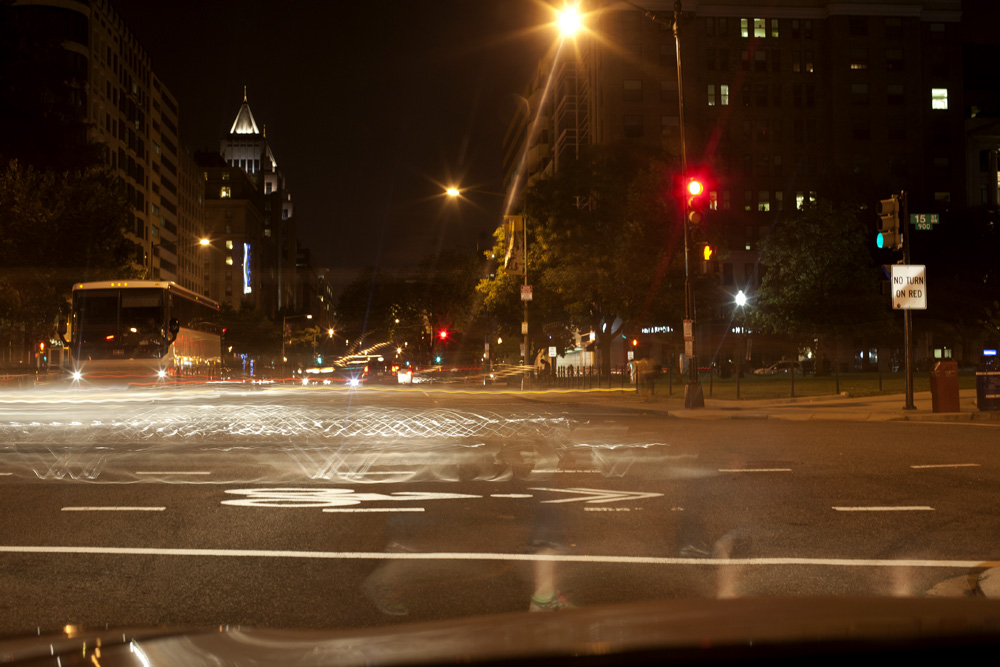
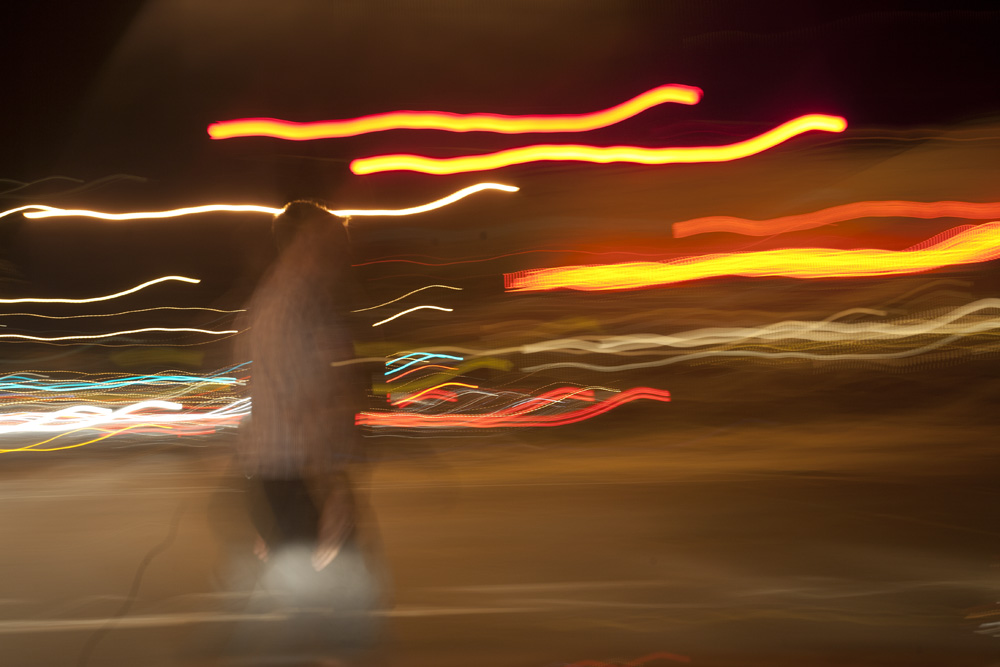
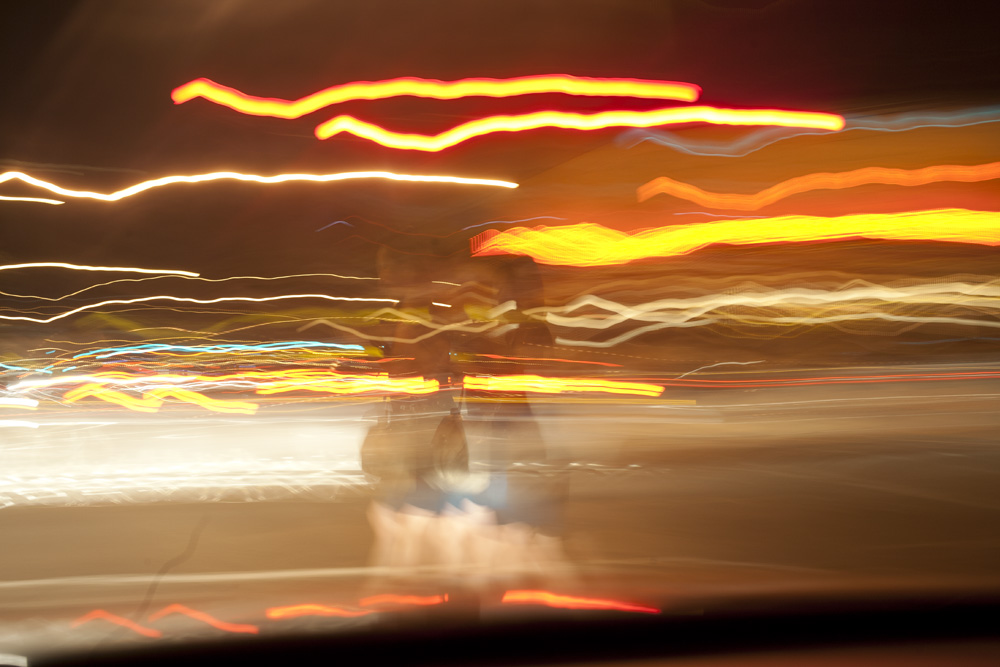
I was coming home from class out at Glen Echo, and had the 5D in the front seat with me. I was feeling bored sitting at traffic lights, and decided to play with long time exposures.
Street Crossing – At the Light
This first one was hand-held, balanced on the steering wheel, while waiting at the light. The exposure is long enough that only the reflectors in the bike wheels, lit by my headlights, and the legs of pedestrians who passed through their beams, recorded.
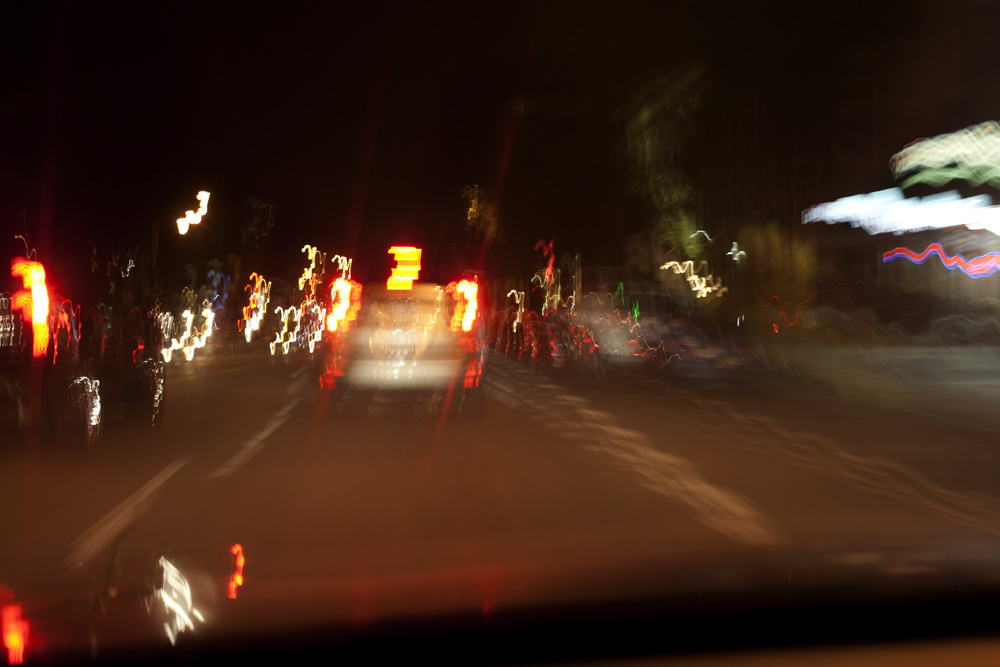
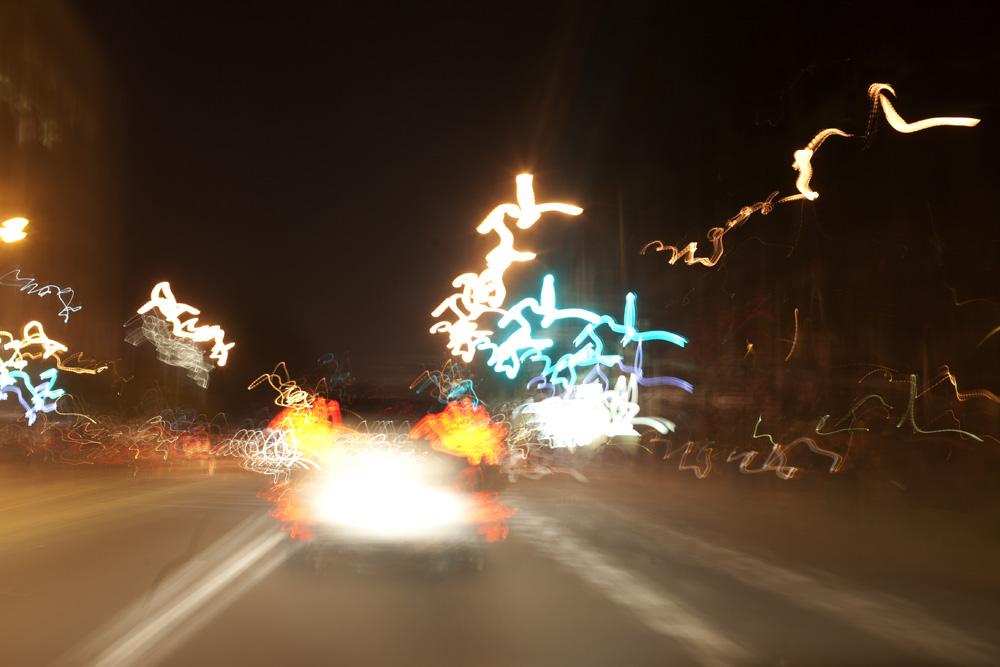
Following Traffic #1Following Traffic #2Following Traffic #3 – Traffic Circle
I realize taking these shots was a bit insane, but I wanted to see what I could get with motion blur of the buildings and oncoming lights, while keeping the vehicle I was following sharp. The following bit didn’t work so well (for that I need some kind of brace I can clamp to the center console), but I think the results are pretty darned cool anyway.
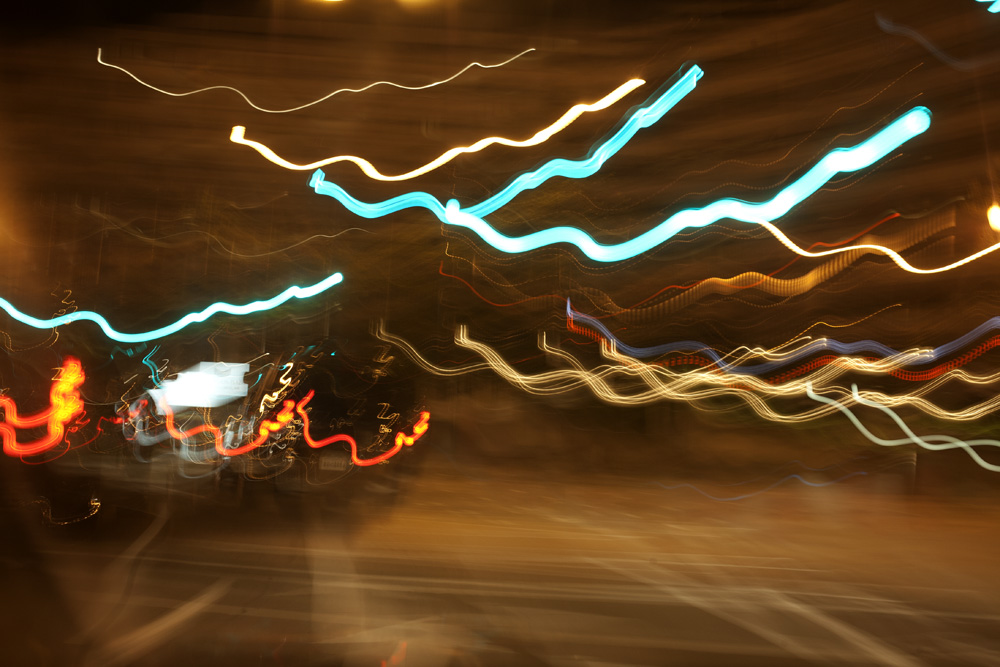
Two more shots from stoplights, watching pedestrians cross. In these cases, though, I was aiming for following the pedestrians. These would have been good candidates for second-curtain flash, but I was in the car, driving, and I don’t have a convertible to hold the flash out the top. So more cool experiments result. And all the more justification for getting a convertible!
Here are some color shots I took on my neighborhood walk around, last weekend. I noticed a theme of small businesses in the shots I was taking, so I decided to make a grouping out of them for this post. The areas I was photographing are actually very bustling and vibrant, but A: this was on a Sunday afternoon, and B: it was about 93 degrees Farenheit outside, so it looks far more desolate than it actually is, but that allowed me to focus on the appearances of the businesses themselves. My interest in photographing them without people is not to portray an economic state that may or may not be true, but rather the overall feel of small businesses that are in a neighborhood in transition – these are businesses, mostly minority-owned, that have not yet been gentrified in an area experiencing rapid gentrification.
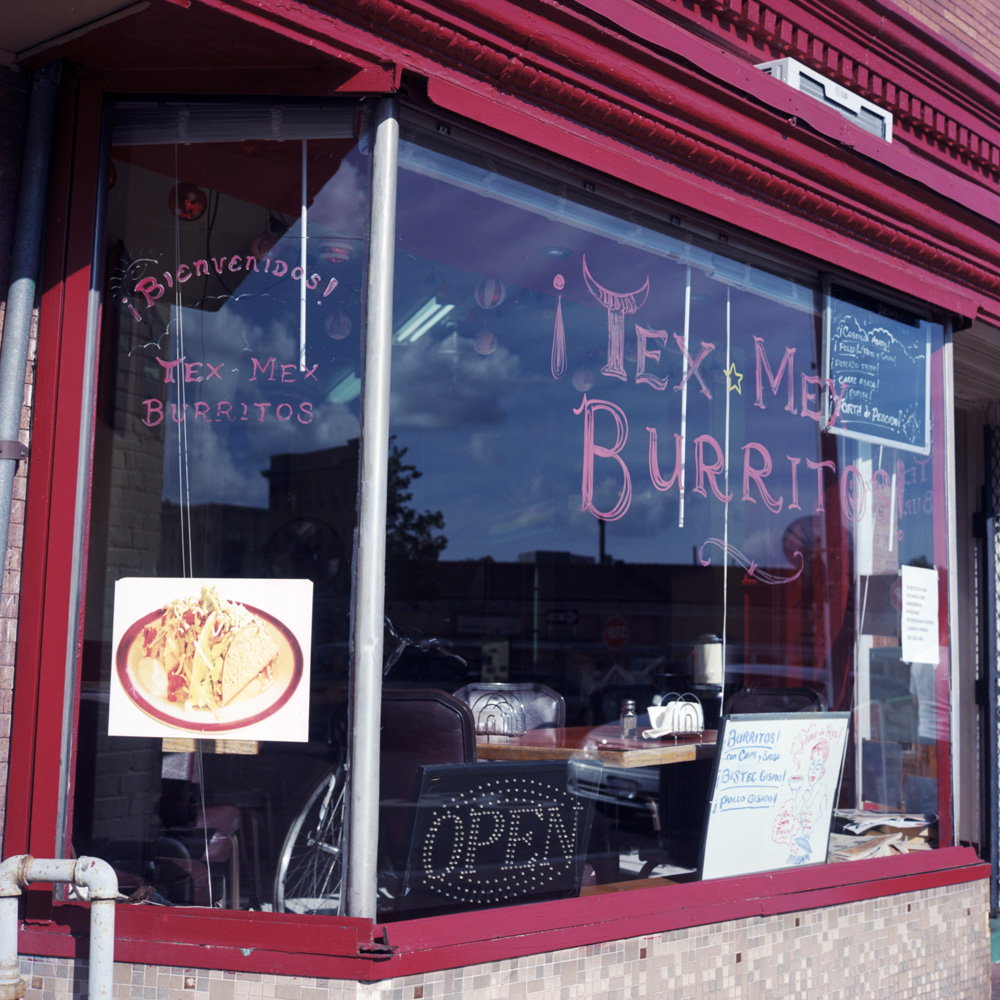
To me, the loss of these businesses to gentrification is the biggest downside to the process. They are what makes up the character of the neighborhood, and why all those gentrifiers moved there in the first place. I will be very sad when Tex-Mex Burritos is displaced for yet another Chipotle.
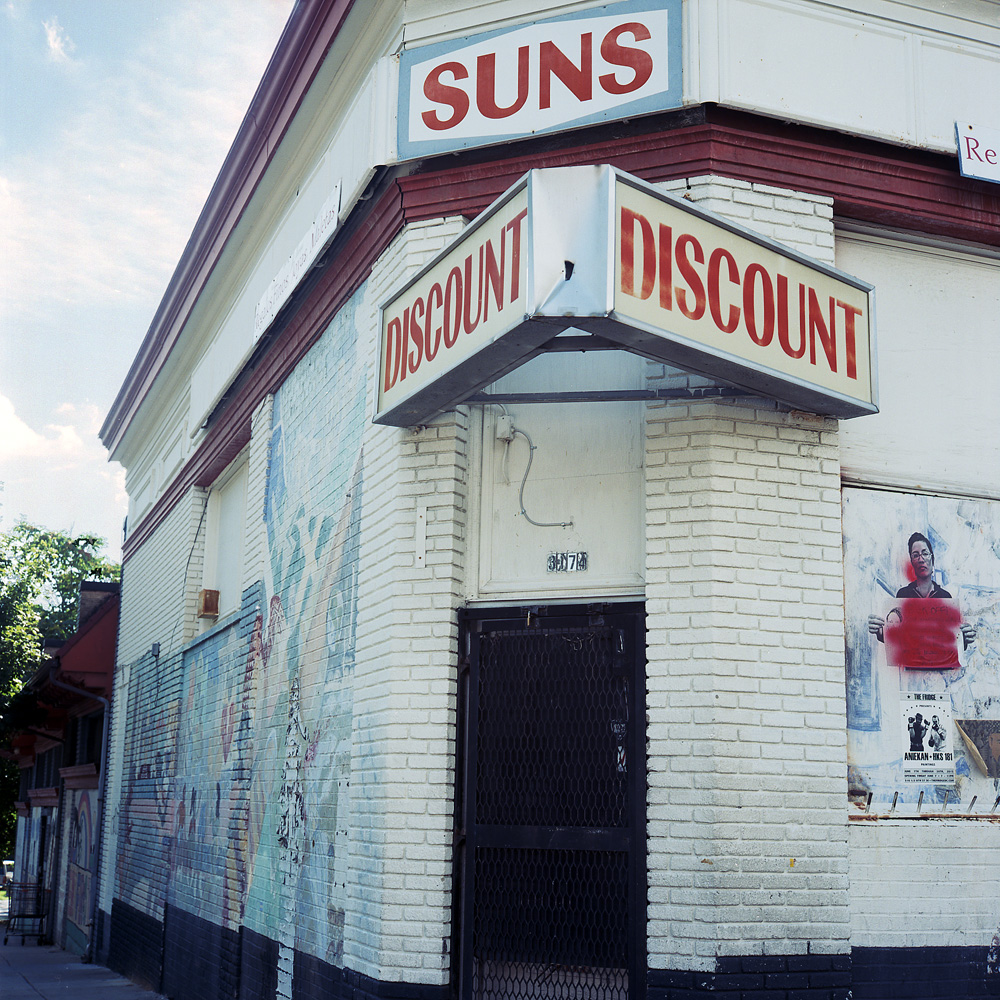
Suns Discount
Sun’s Discount is obviously shuttered. I don’t know how big a space it is on the inside, or what kind of (probably insane) rent the landlord is asking for, but I love the murals on the wall and the protest/message posters plastered on the whitewashed windows. It reflects the character of the neighborhood, and particularly its past – the small ethnic “discount” store that would have carried a hodge-podge of inexpensive products, primarily catering to the Latino community, which has adopted the small business strip along Mount Pleasant Street. Historically a mixed race, upper-middle class neighborhood, after the 1968 Martin Luther King riots, the neighborhood experienced a significant turnover and transformed into a poor Latino barrio in the 1970s. It is in the process of changing back into a largely white, upper-middle class neighborhood, as the housing stock off the business district consists of large, elegant rowhomes and single familys that are being snatched up, fixed up and turned into two and three unit condos.
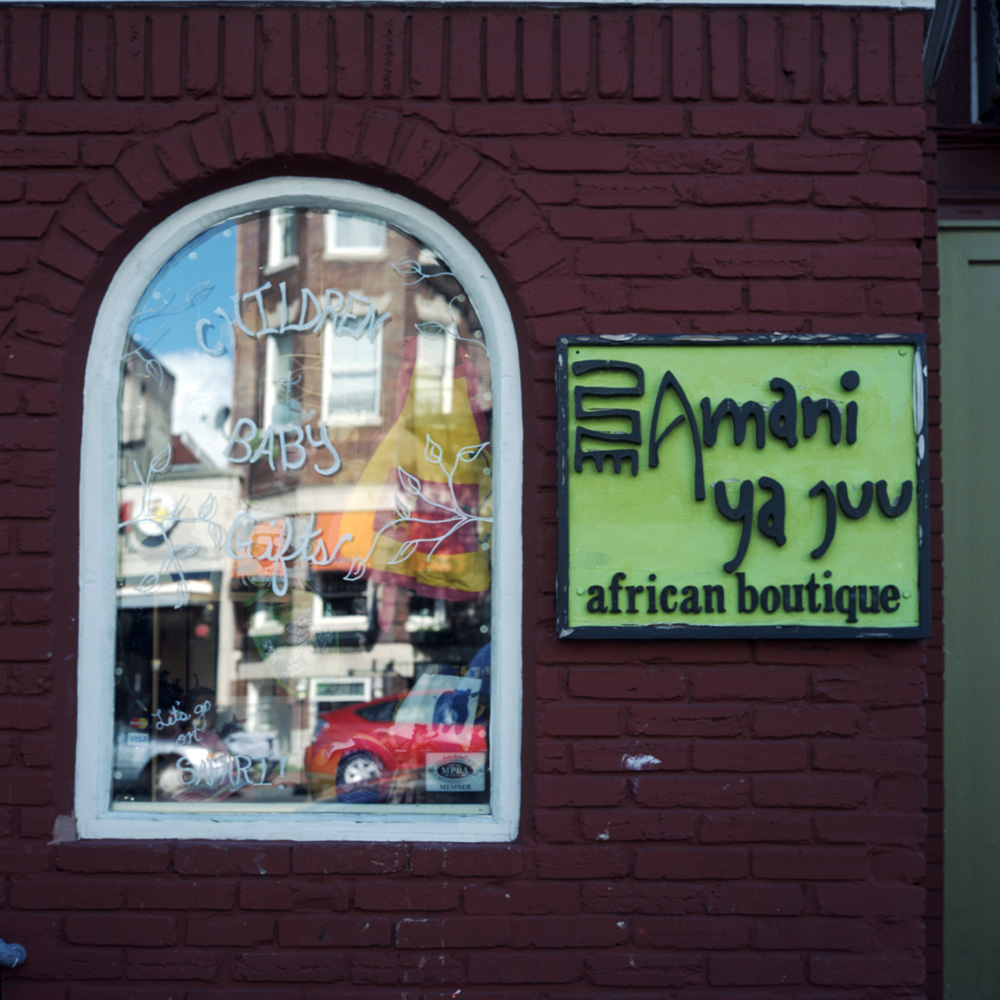
Amani African Boutique
There is still an African-American presence in the neighborhood – a touch of soul remains amidst the sazón. The neighborhood was always multi-ethnic, but the blend has changed over the years.
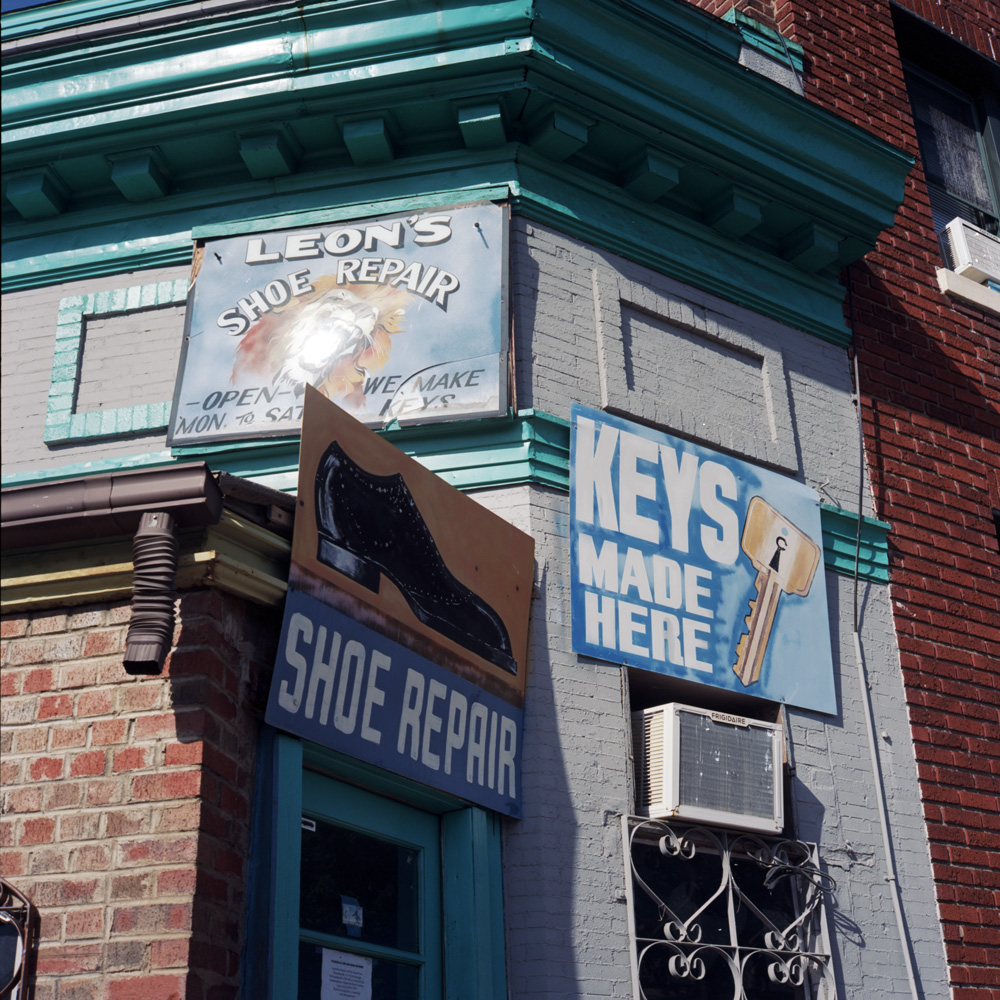
Leons Shoe Repair
Another one of those small businesses that when a real estate developer sets their sights on the block will be one of the first to go. Leon’s operates out of a space not much bigger than a coat closet. In the land of big-box stores and franchises, there’s no room for a 200-sq ft retail operation. And signage like that would never fly in a homogenized shopping mall.
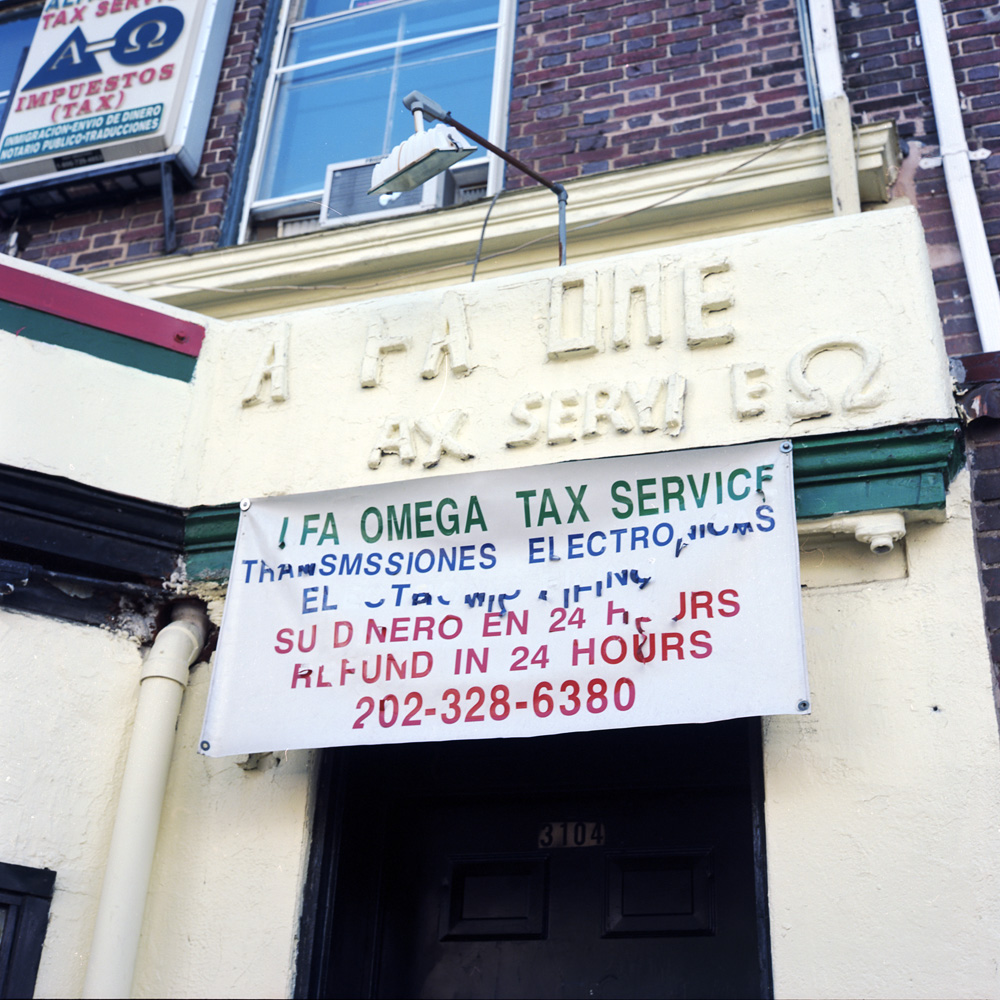
Alfa Omega Tax Services
Here’s one that has been around for decades – witness the missing letters and the layers of paint applied to the original Alfa Omega Tax Service on the wall. Having them there in the 1970s and 80s when this was one of the police patrol beats officers dreaded to be assigned would have been a huge deal to the residents, as there would have been few legitimate businesses willing to provide quality services of any kind in the area.
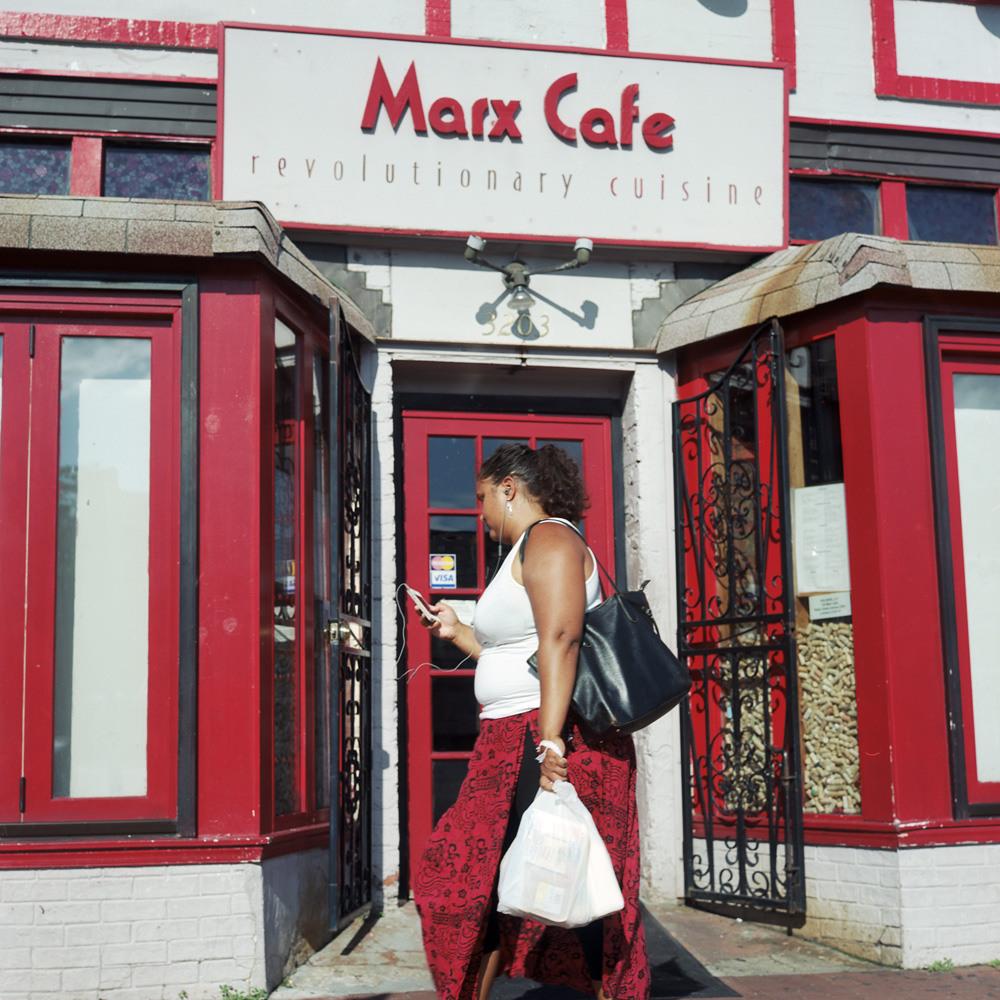
Marx Cafe
The bohemian precursor to gentrification – Marx Cafe (“Revolutionary Cuisine”) brought a little touch of culture and chic.
Tex-Mex Burritos
A typical neighborhood mom-and-pop eatery. This one is newer, keeping within the theme of the neighborhood but brightened up and appealing to the incoming Anglos as well as the long-time residents.
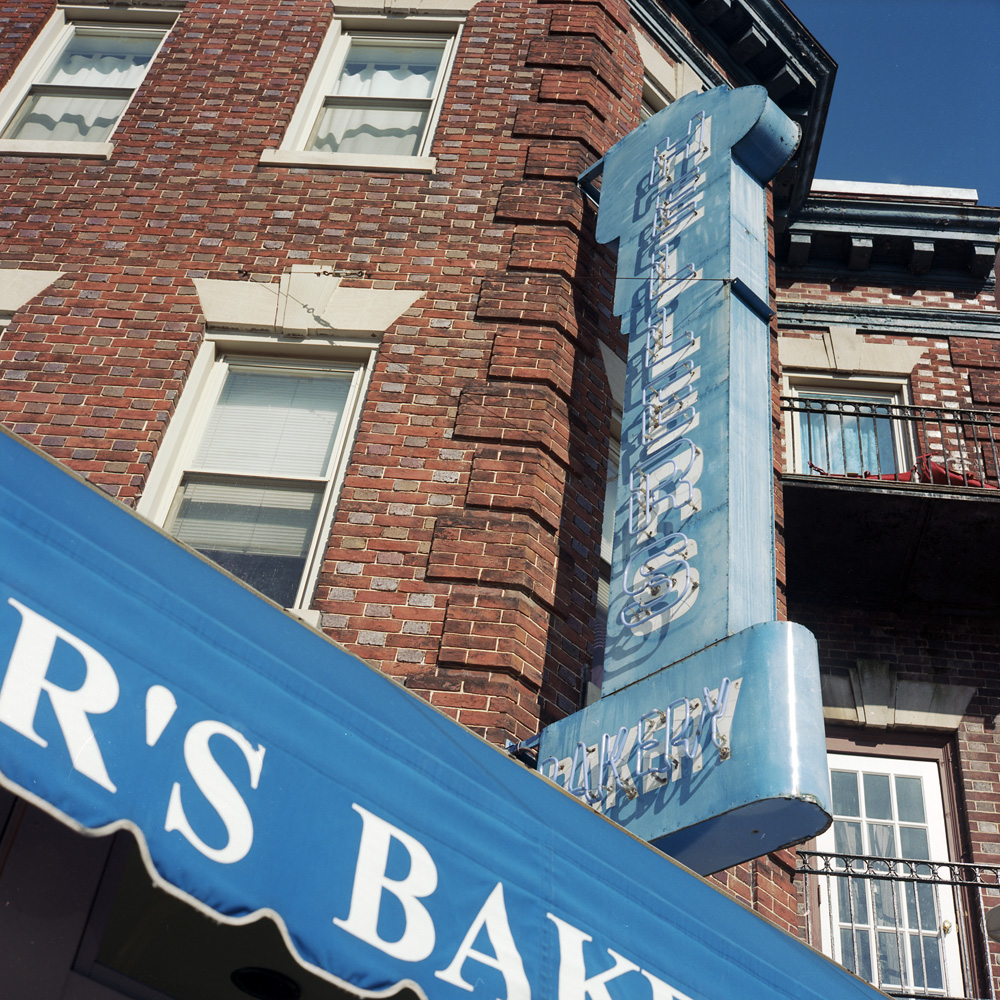
Hellers Bakery
Heller’s Bakery has been here forever, witness the neon sign, from back when the neighborhood was originally an upper-middle-class, white/jewish/African-American neighborhood. It stuck around through the hard times. If you saw the movie, State of Play, starring Russell Crowe, you’ll recognize this as being from outside his apartment.
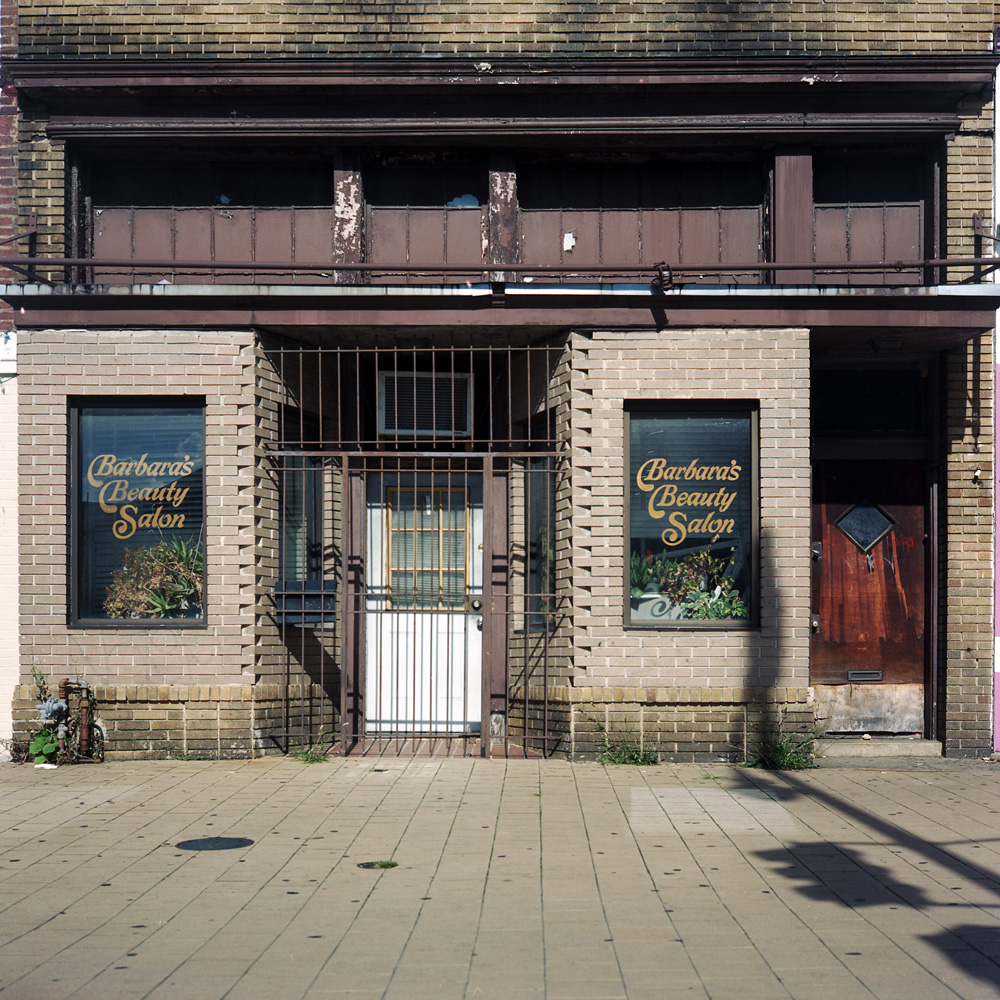
Barbaras Beauty Salon
I’m not sure Barbara’s is still in business – granted I usually never walk by it during the work day mid-week, so it might in fact operate then, but whenever I see it, it’s shuttered, blinds pulled, and half-dead plants in the window. I don’t know if they were a victim of shifting demographics, or just sloppy management – I don’t know that I’d want to trust what little hair I have left to someone whose plants look like that!
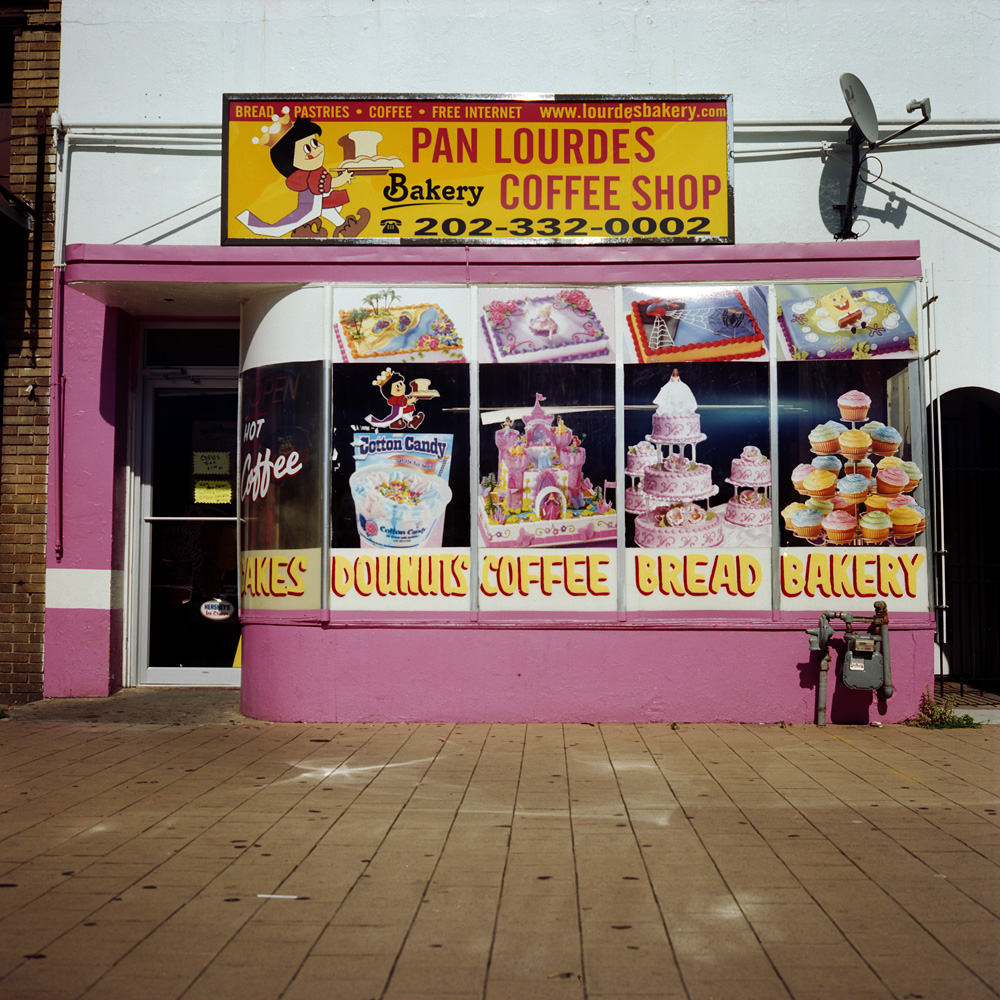
Pan Lourdes, Afternoon
Another small business that will probably be driven out by gentrification in the next ten years. Massive re-development of the neighborhood has happened a few short blocks down the street, with upscale restaurants and pubs, a shopping center with Target, Best Buy, Marshalls, Staples, Radio Shack, GNC, a Washington Sports Club gym, and across the street is Chipotle, a wine store (not a liquor store, but a WINE store), and a FedEx outlet. Like I said earlier, no room in that for a riot of pink selling Central American baked goods. And the neighborhood will be poorer for it.
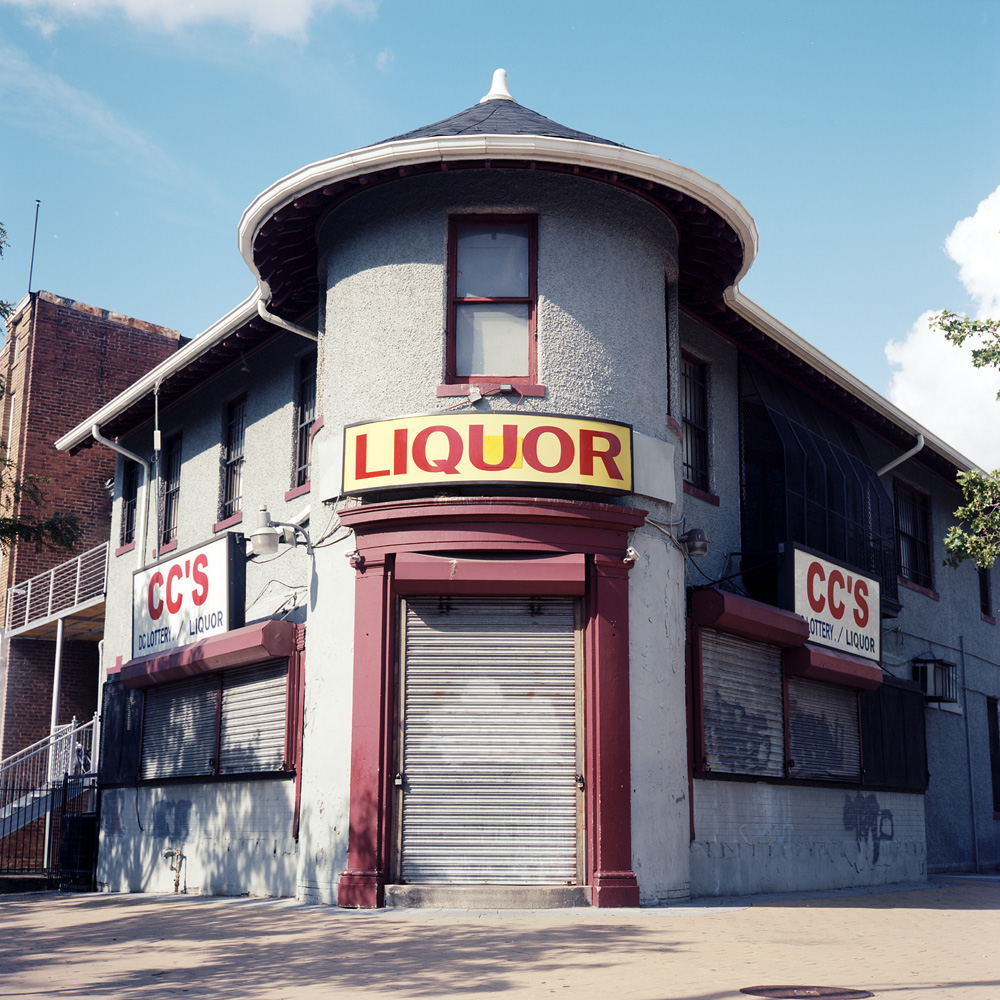
CCs Liquor
In contrast to the wine store down the street, this is a good old-fashioned ghetto liquor store. This one, I could let go, but the Colony Liquor up the street I’d like to see stay around if for no other reason than the fantastic Deco facade and neon sign (see previous posts of mine for pictures).
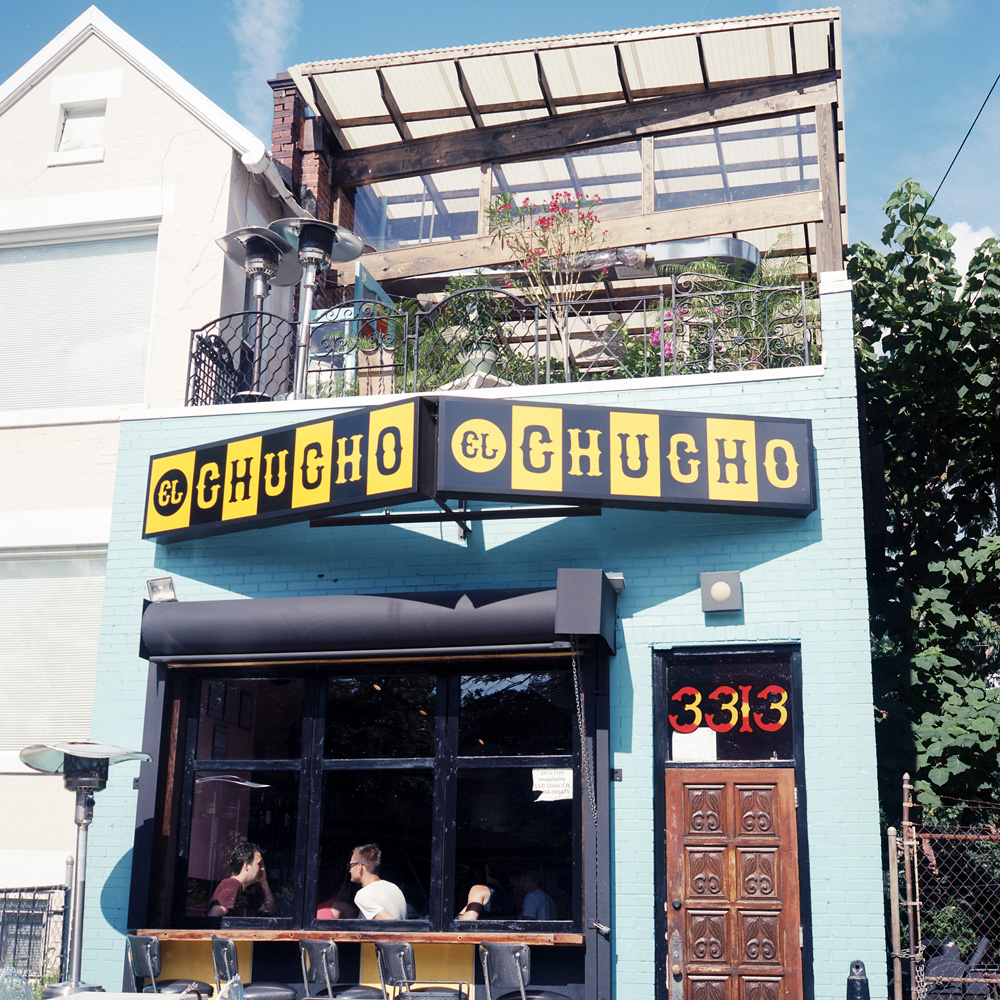
El Chucho Roof Deck
Part of the gentrification wave in my own segment of the neighborhood- its ethnic cuisine by hipsters. Don’t get me wrong, they have very delicious and authentic tacos (and insanely cheap happy hour prices – you can get three tacos and a beer for $10-11!!!), but the truly authentic taquerias don’t have roof decks, bar seating reclaimed from former diners, and waiters wearing plaid flannel, sporting a well-maintained three-days stubble.
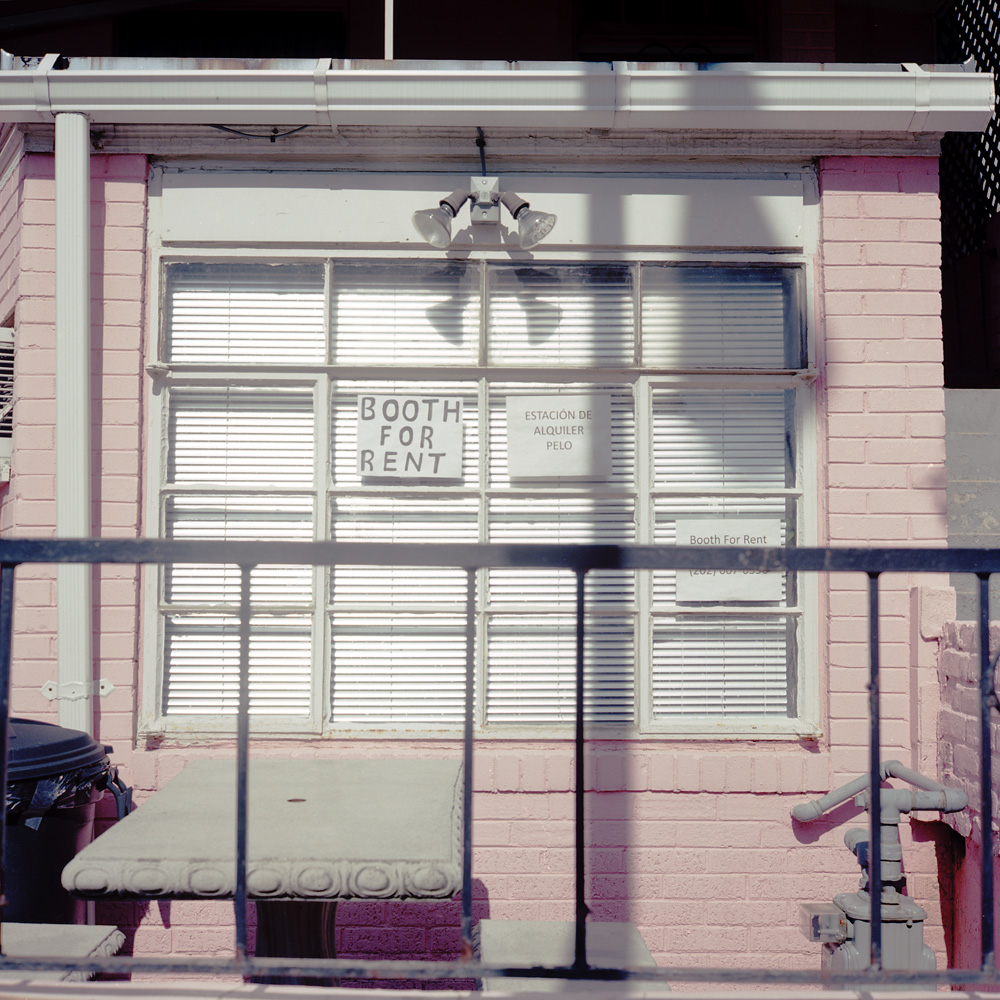
Booth For Rent
Alongside the hipster taqueria you have the basement beauty parlor, which you’d never know was a beauty parlor if not for the booth for rent sign in the window.
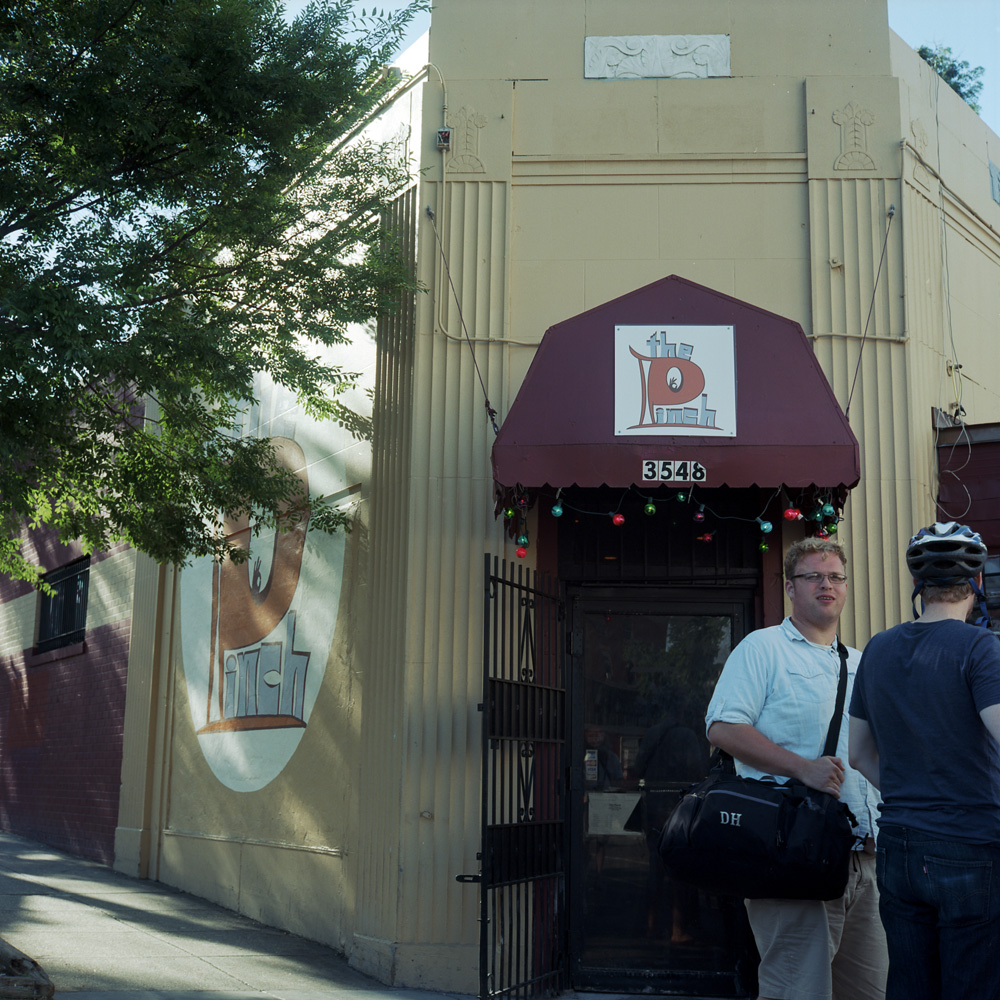
The Pinch Front Door
The Pinch is a neighborhood dive bar featuring live music on the lower level. The graphics outside scream 1970s blaxploitation movie, the patrons now scream suburban white kids who moved to the city to have an “authentic” experience. But it’s good to have a venue that provides space for local live music, where up-and-coming bands needing a break can perform, as there are definitely not enough performance spaces in this town to adequately support the creative talent here.
For wont of anything better to do on Sunday afternoon, I went out for a stroll in the 90+ degree heat (what was I thinking!!!) with the Rolleis for company. I wanted to do a little film and development test to see how well my results would come out. I’d say I nailed it based on these shots. The film I was testing is Ilford PanF, a very slow, fine-grained emulsion. The film speed Ilford recommends for this film is ISO 50. Quite a few folks I know recommend giving it a more generous exposure and rating it at EI 12. I shot some before at EI 25 and got good but not knock-your-socks-off results, so I thought I’d try the 12 and see what difference it makes. I took a risk and changed two variables at once – film speed and development technique. Normally I use Rodinal at a 1:50 dilution and develop for 14 minutes, agitating the chemistry for five seconds out of every 30 seconds. This time, I used Pyrocat HD for my developer, gave it twice the normal dilution (I usually use it diluted 1:1:100, but this time I used 1:1:200) for 45 minutes, with 5 seconds of agitation every 15 minutes.
This development technique is known as semi-stand development. Semi-stand uses highly dilute developers for greatly extended periods of time, with minimal agitation. What this does is it allows micro-contrast areas to form on the film where byproducts of the development process accumulate on the edges of light and shadow. These byproducts serve as a mask and lead to a boost in contrast at that edge, increasing the appearance of sharpness. If you look at the emulsion side of a negative that was developed using semi-stand, stand, or extreme minimal agitation technique (variations on a theme), the emulsion will actually appear in relief as if it had been etched.
This technique is also useful for managing high contrast situations because it allows for greater adjustment of the length of development to manage highlights. When you develop a roll of film, the shadow areas develop first, and once they have reached their maximum recorded density, they stop. Highlights will continue to develop long after the shadows have finished. This is one of the primary means for controlling contrast in an image- if the highlights are known to be too bright before developing the film, you can simply reduce total development time to keep the highlights from becoming unprintable.
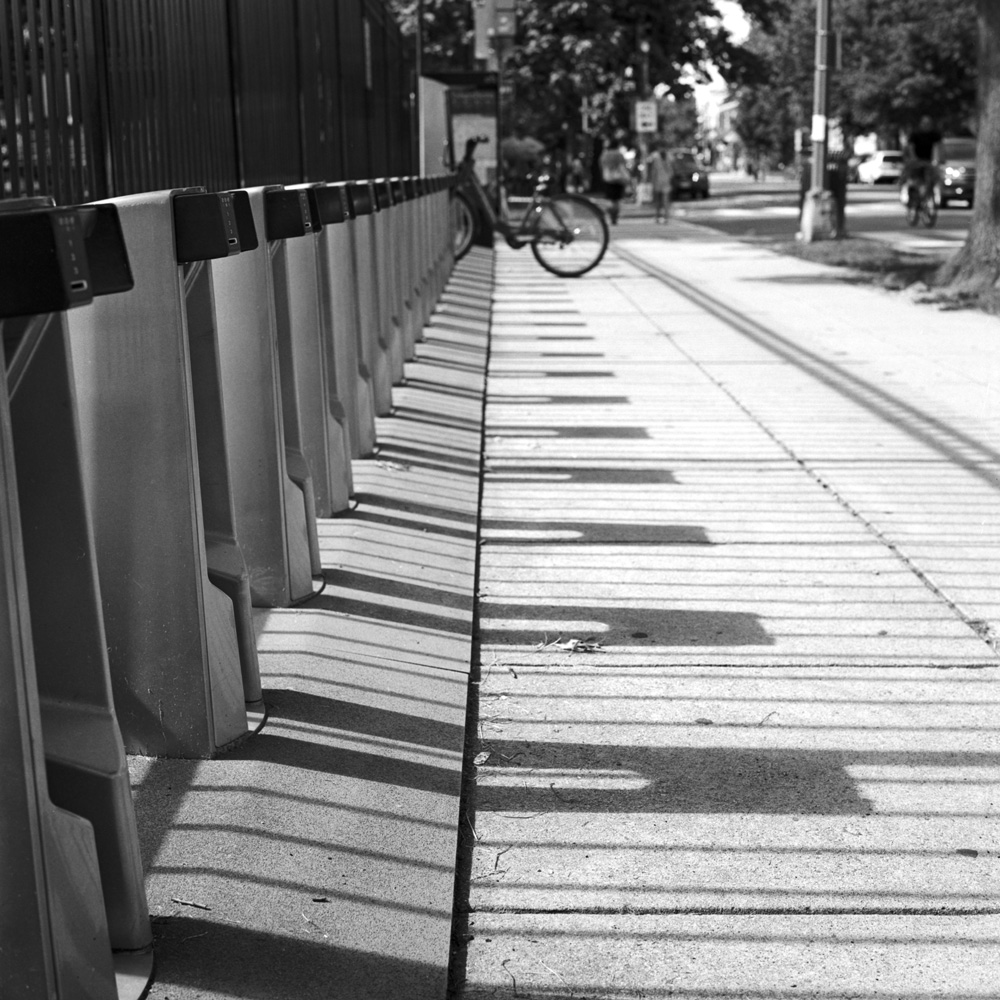
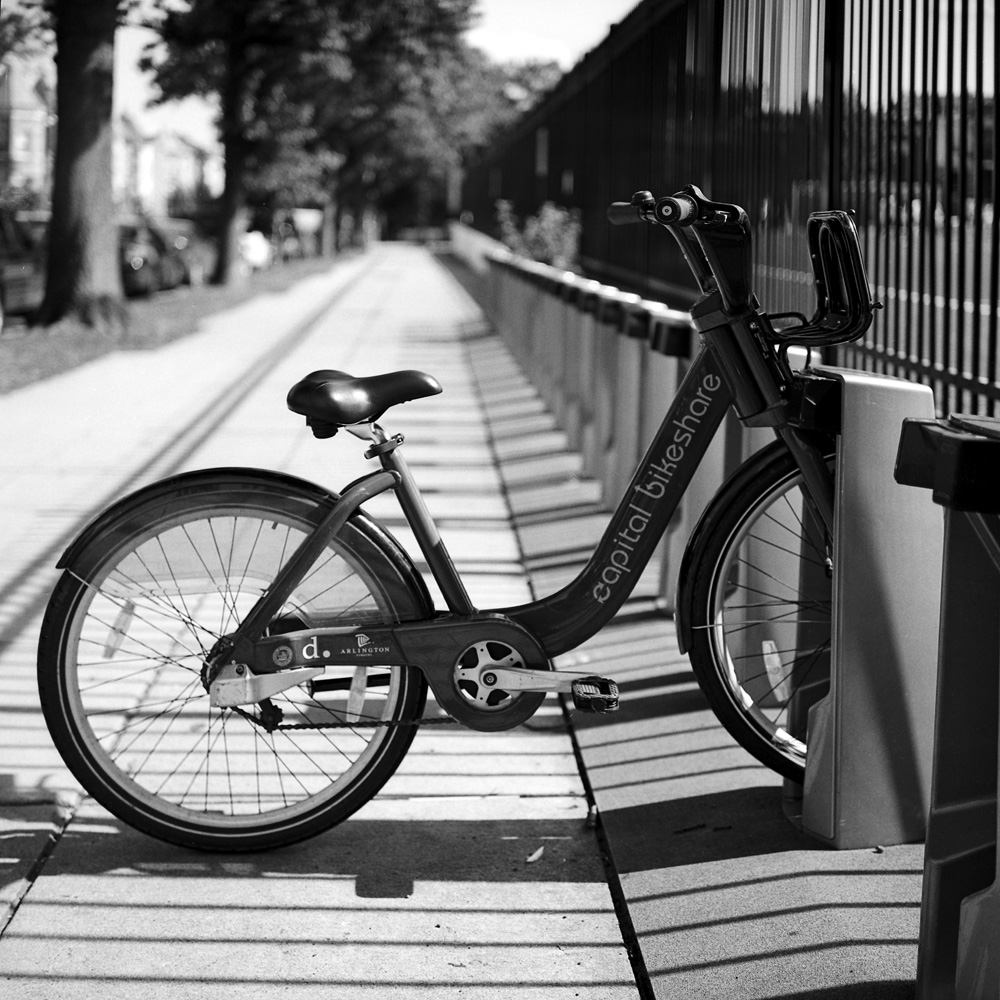
Bike Rack, 11th St. NorthboundBike Share Rack, 11th Street
These first two images are of the Capitol Bikeshare rental rack near my house. I’ve photographed the Bikeshare racks before, with full racks of bikes, to capture the receding perspective of the bike wheels. This time, I shot the bike rack with only one bike in it, to work with the late afternoon shadows created by the rack itself, and also to demonstrate the popularity of the Bikeshare, at least in my neighborhood. As you can see, on a Sunday afternoon, with the heat rising to over 90 degrees F, all but one of the bikes from this rack are in use.
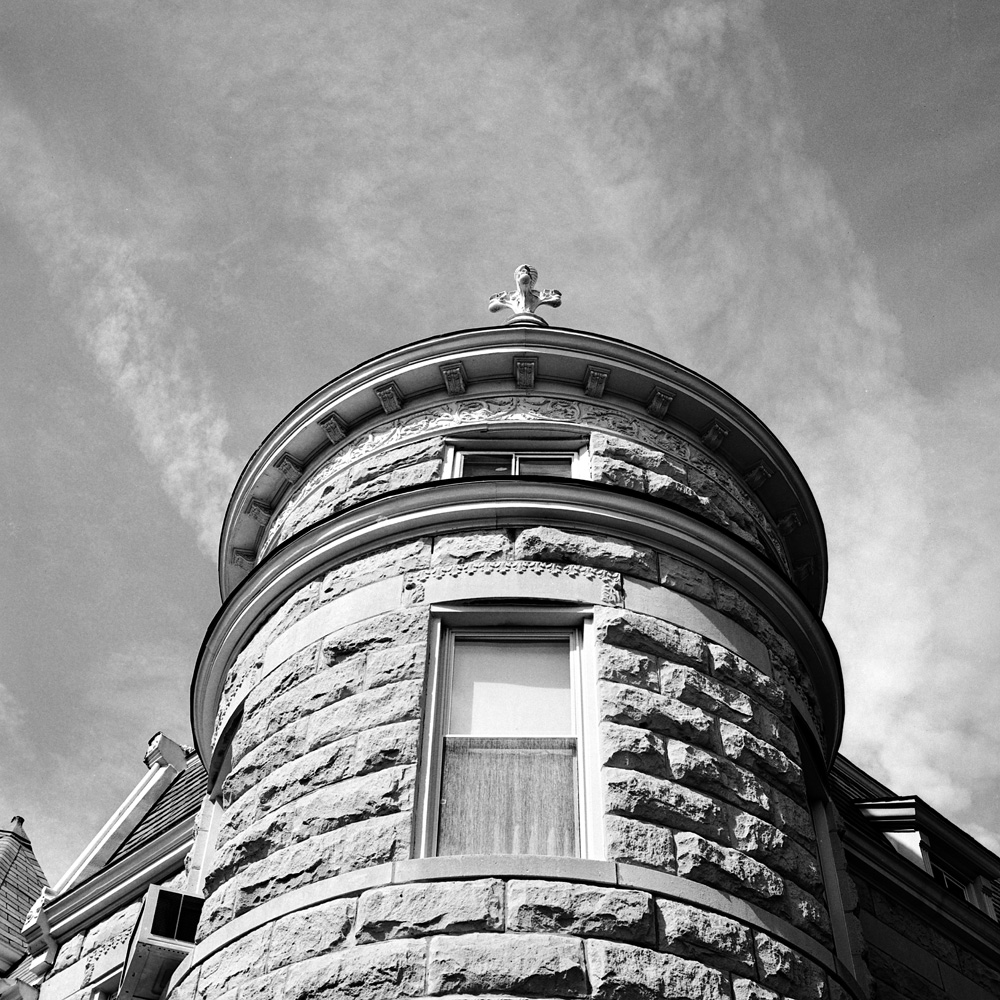
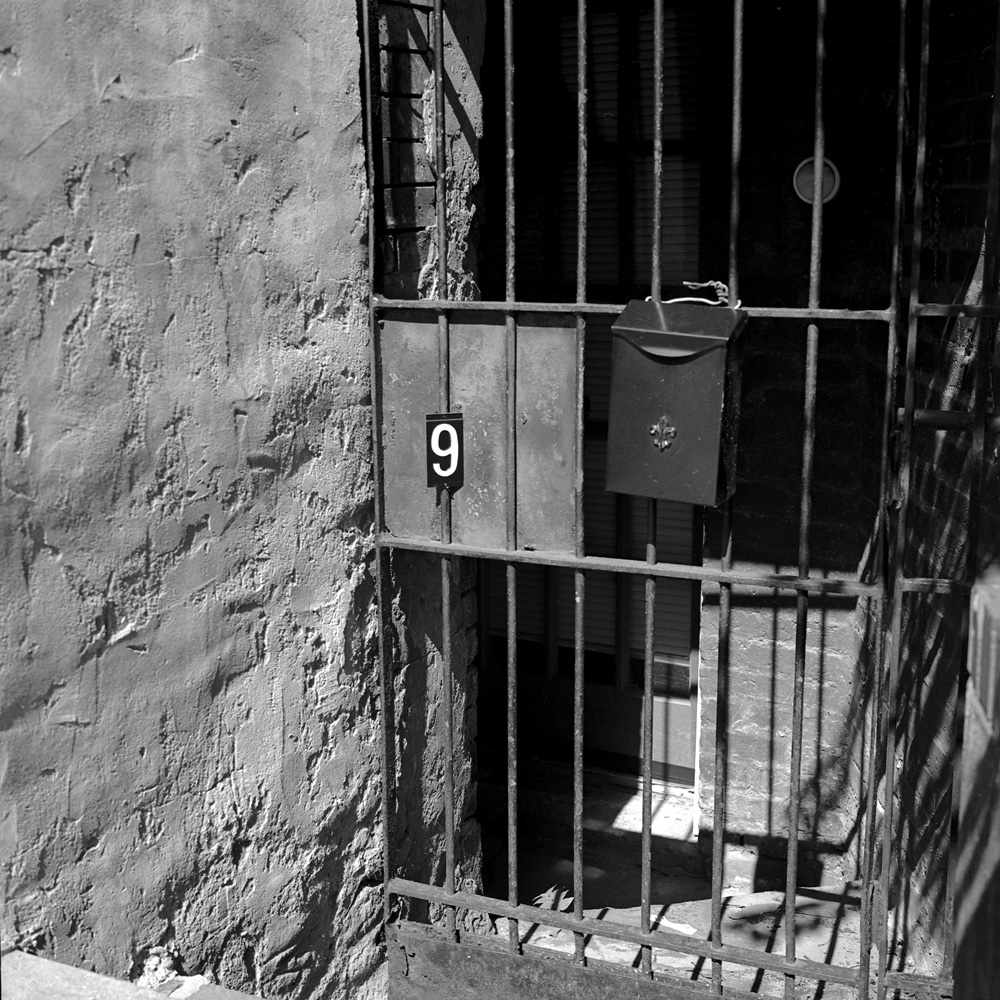
Stone Turret, 11th StreetNumber 9, Basement Door
Very much in the same stretch of 11th Street as the bike rack is where these two scenes can be found. The stone house is a bit of a neighborhood landmark – there are maybe half a dozen or less in the neighborhood with similar facades, and the rest (hundreds of houses) are varying types of brick or stucco over brick. The basement door photo was taken as part of this exercise, not only because I like wrought iron, but because the scene had extremes of contrast that I wanted to see if I could tame with the semi-stand development.
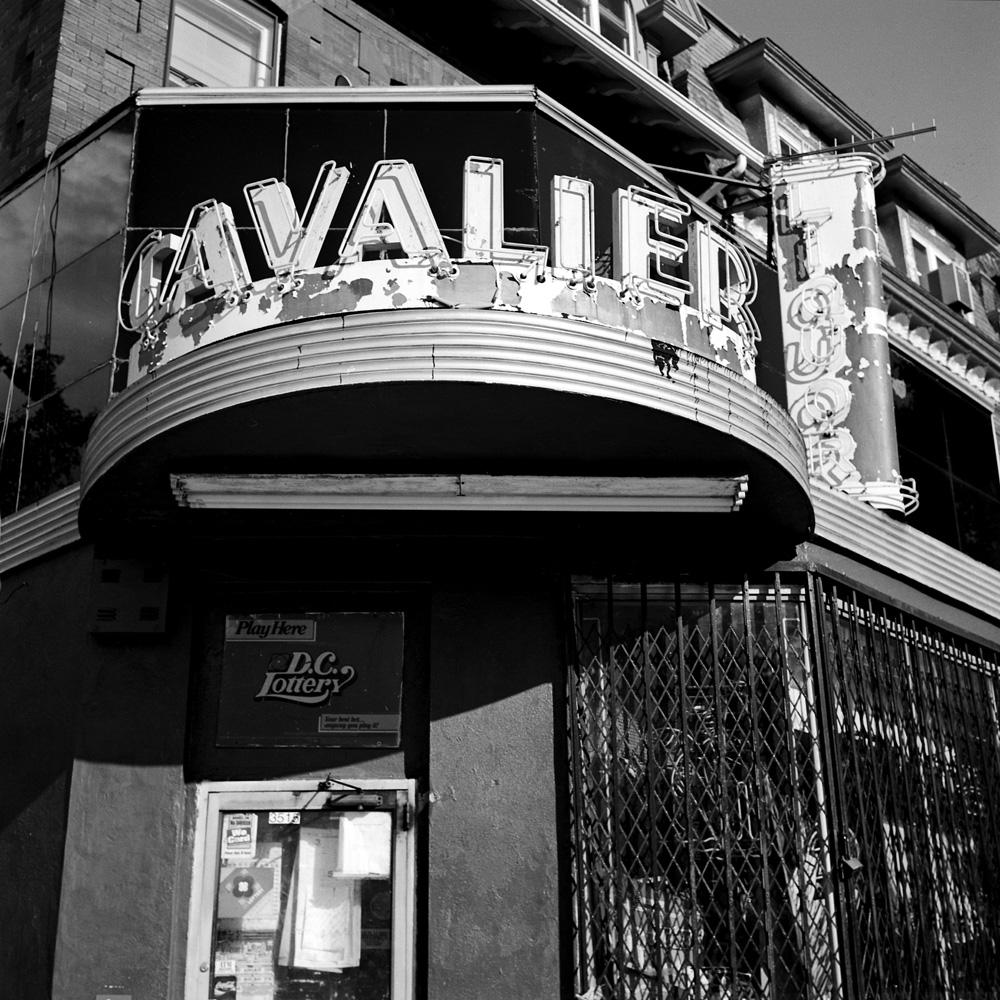
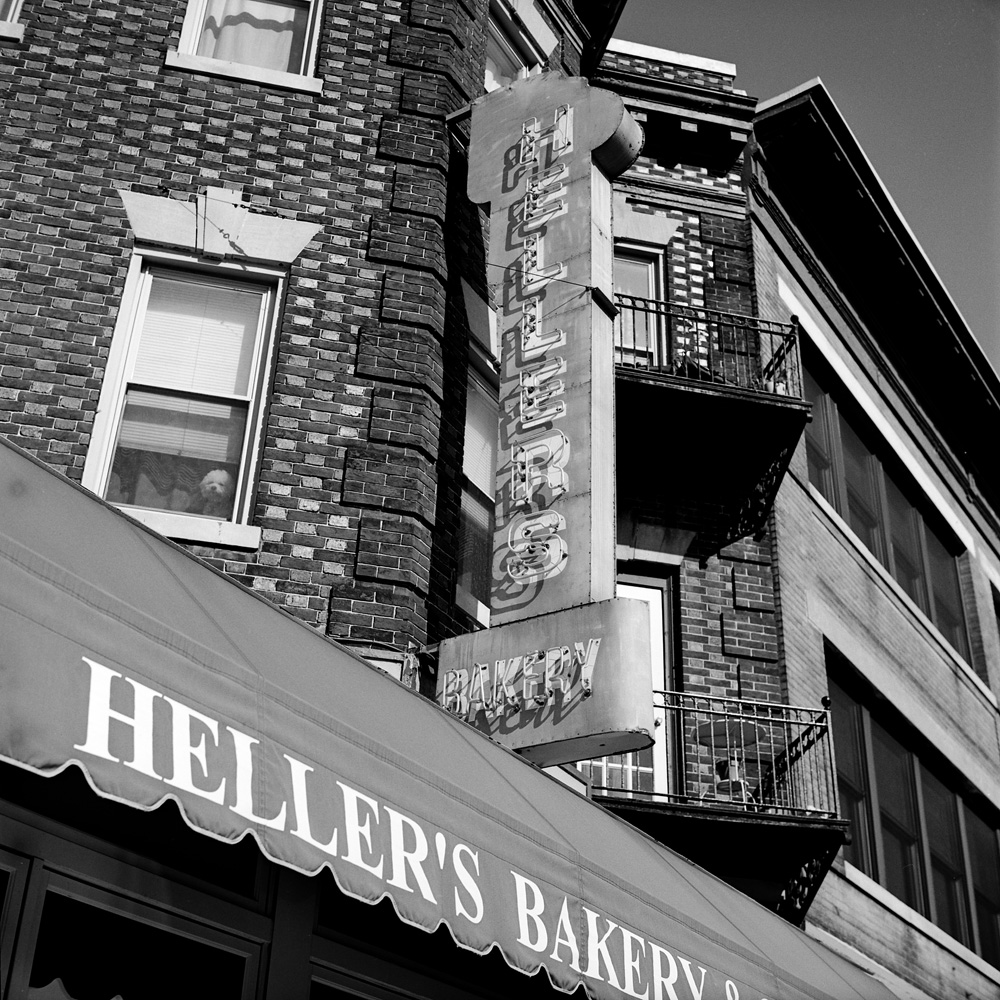
Cavalier Liquor Sunday AfternoonHellers Bakery
These two photos are of neighborhood icons – you’ve seen my color photo of Cavalier Liquor at night before. It has been the subject of many a photograph by fans of urban texture, neon, and Deco architecture. Hellers Bakery has been in their current location for many many years, and if you saw the movie “State of Play” starring Russell Crowe as Cal McAffery, a hard-luck, hard-boiled reporter who uncovers a Washington conspiracy, you’ll recognize their neon sign from below his apartment window. I’m very annoyed with Hellers that they don’t illuminate their sign very often, so it makes it very hard to get a good photo of it after dark!
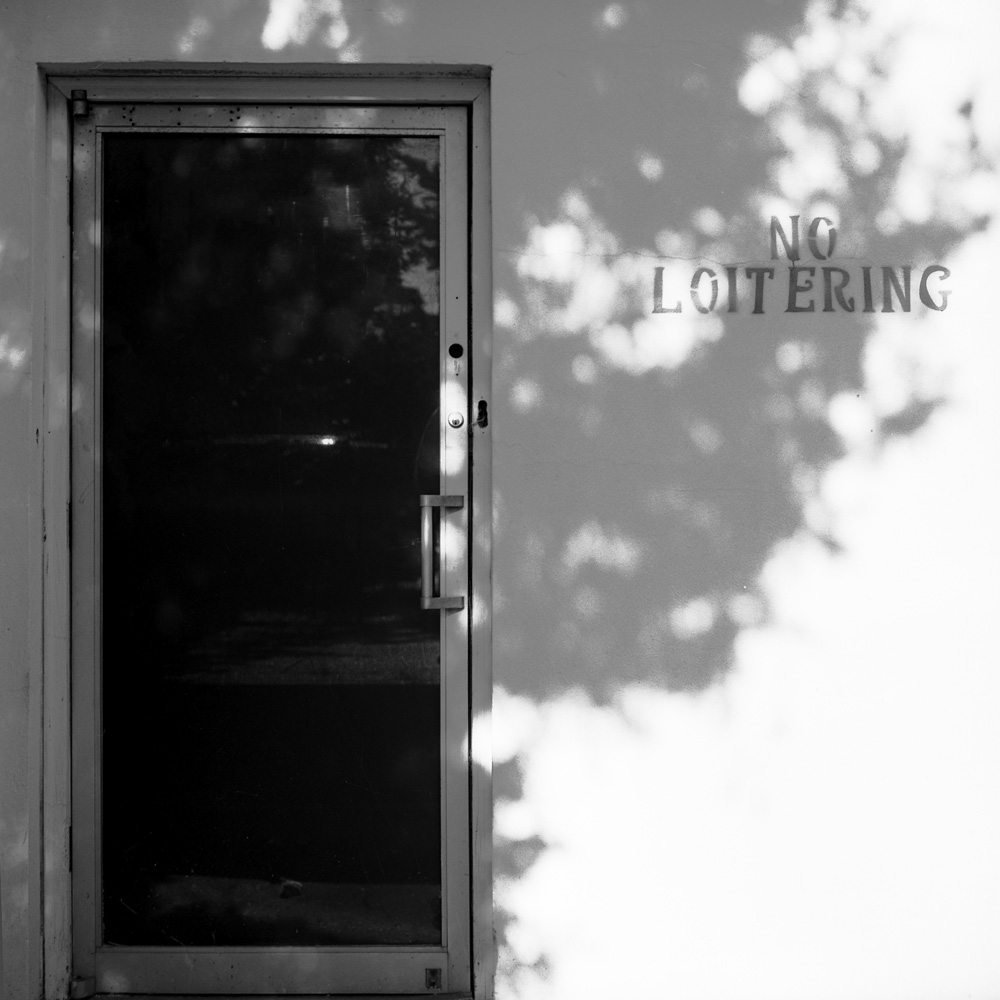
And last but not least, an appropriate sign to end the post with:
Here are the outside shots of Mad Momos Restaurant and Beer Deck.
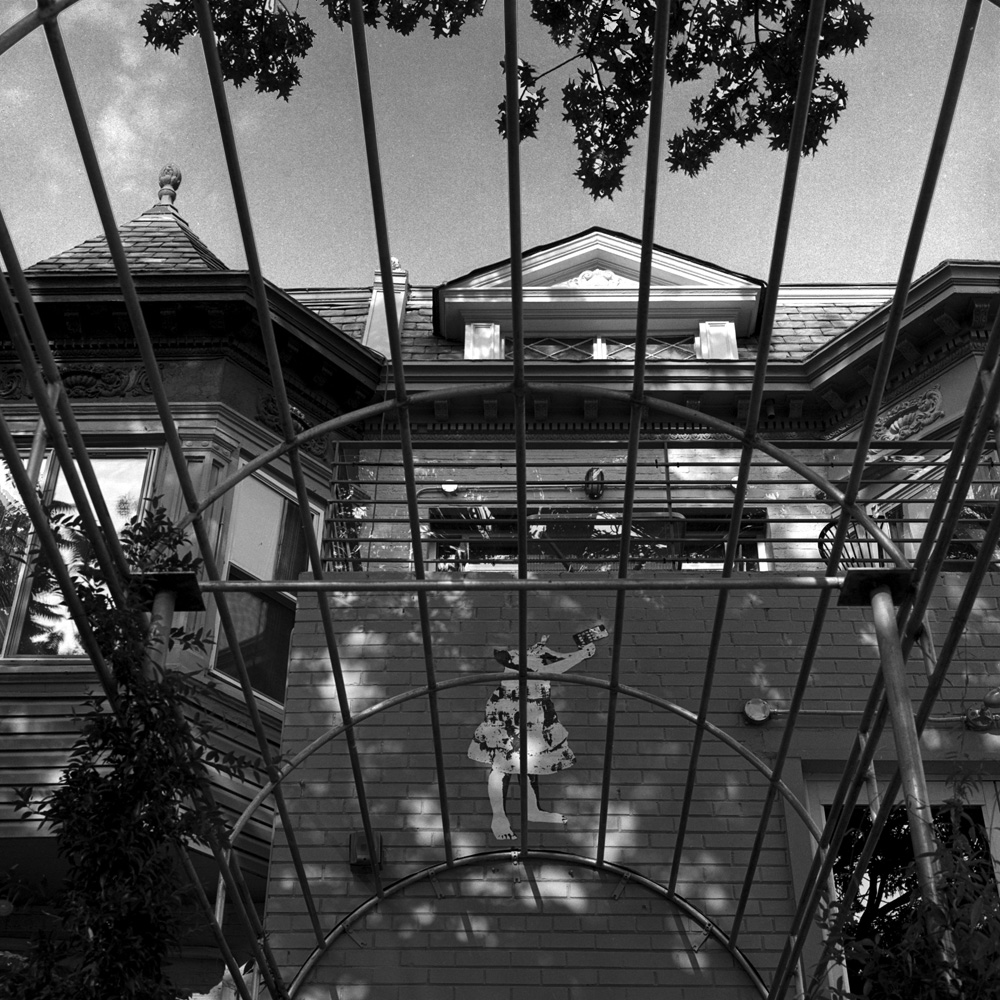
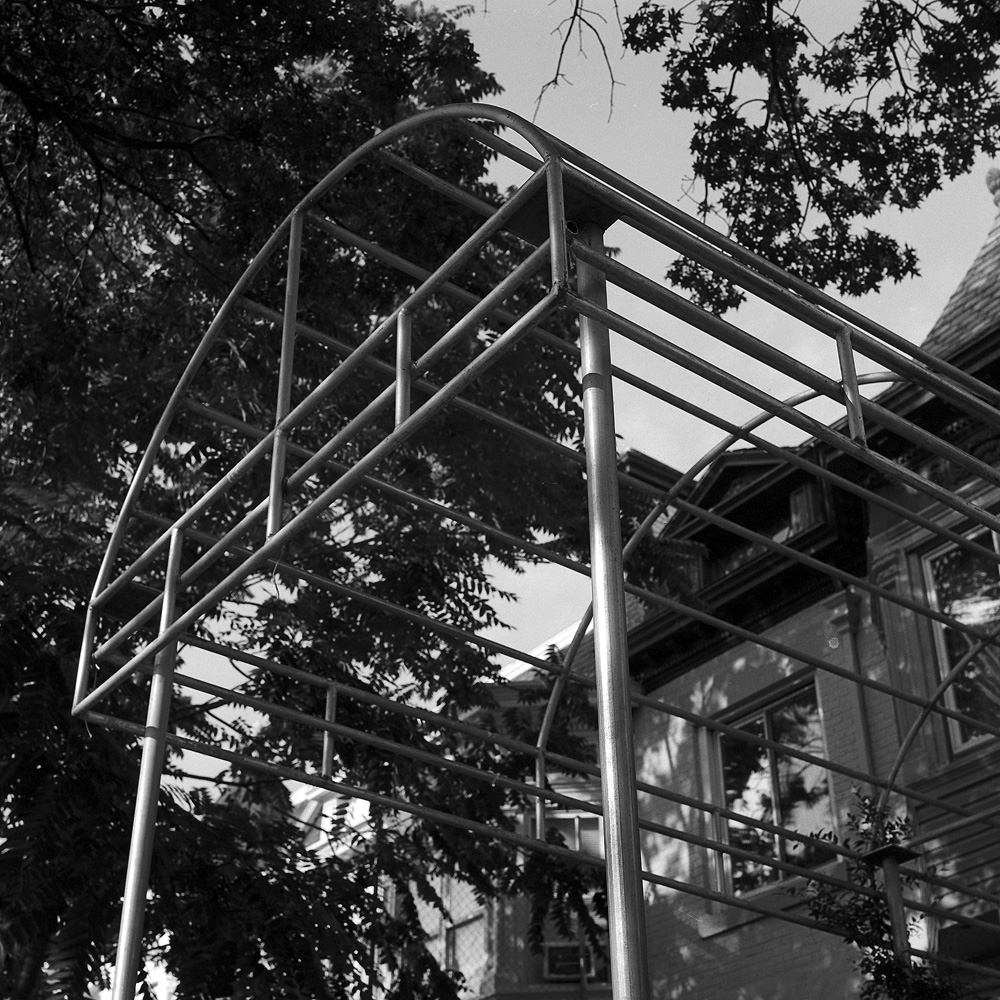
This is the entrance, as viewed from under the awning. When they bought the building, the structure was partially renovated with the intent to turn it into a restaurant. They followed through and finished it out, leaving the awning frame up but not getting a canvas/vinyl cover. Instead, they are training a vining plant in barrels, which will take a couple years to fill in (visible in the second photo of the awning). I just liked the structure of the awning and thought it would be an interesting frame to contrast its geometric structure against the decoration of the building behind it.
Mad Momos Entrance
I don’t recall if the paper cutout figure over the door ever had a head or not, but in any case, it’s a little girl holding an iPhone like a handgun.
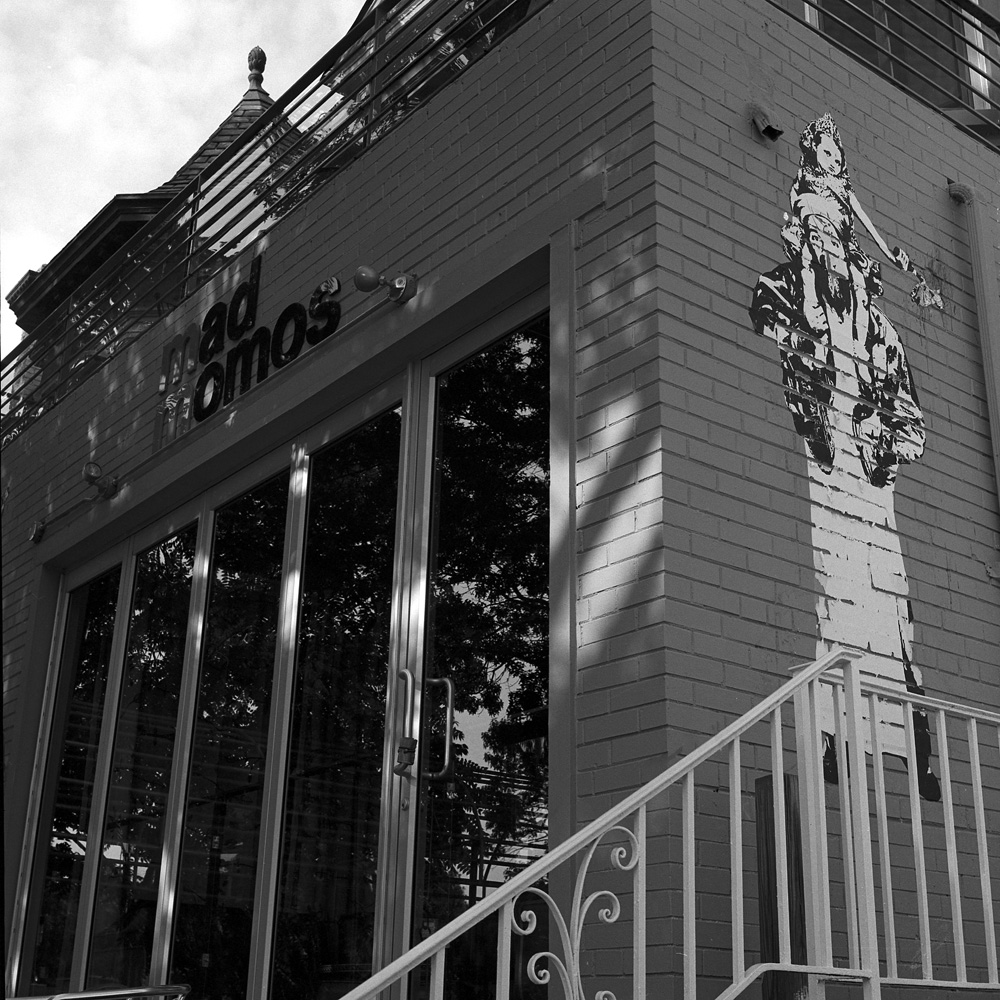
Here is the facade of the building. In case you’re wondering, the paper figures plastered to the wall are Osama Bin Laden giving Honey Boo-Boo a piggy back ride, whilst she’s holding a molotov cocktail. Yeah, the guys have a quirky sense of humor.
Mad Momos
Another view of the awning structure, dappled with sunlight filtered through the tree above.
Awning, Mad Momos
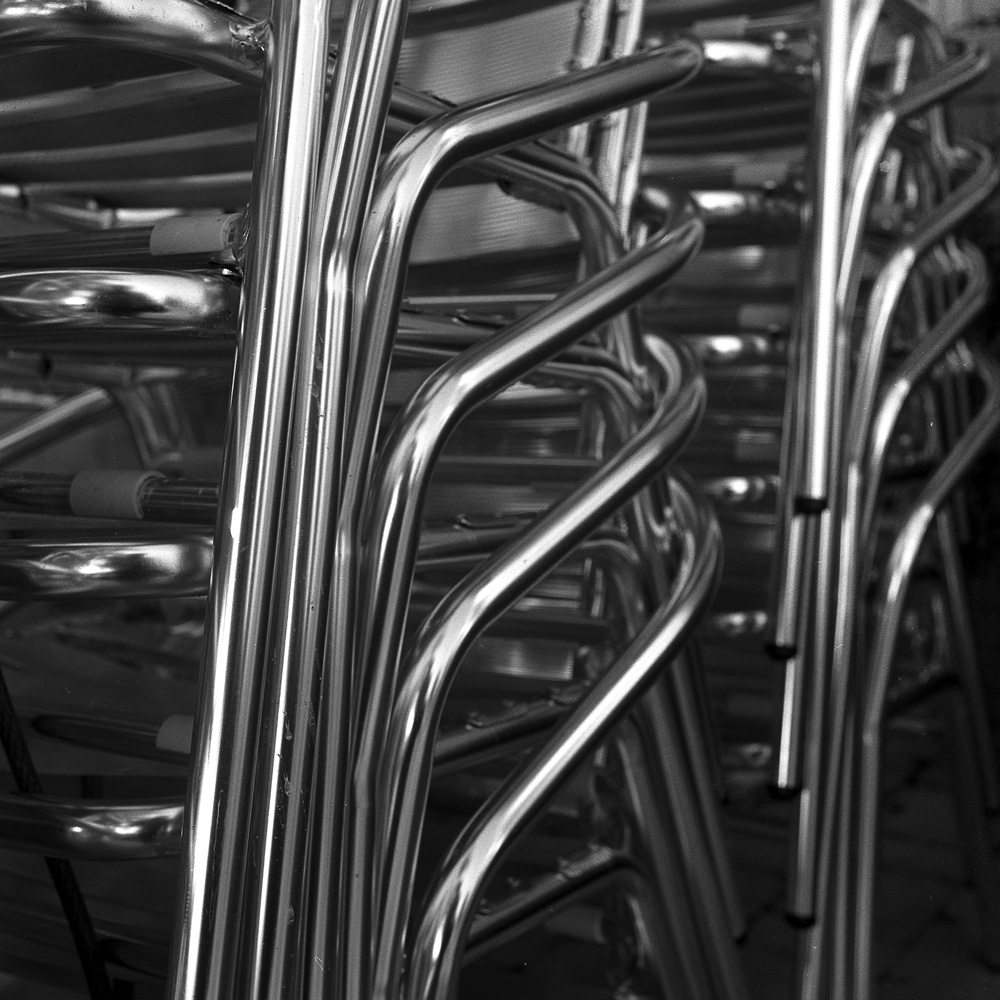
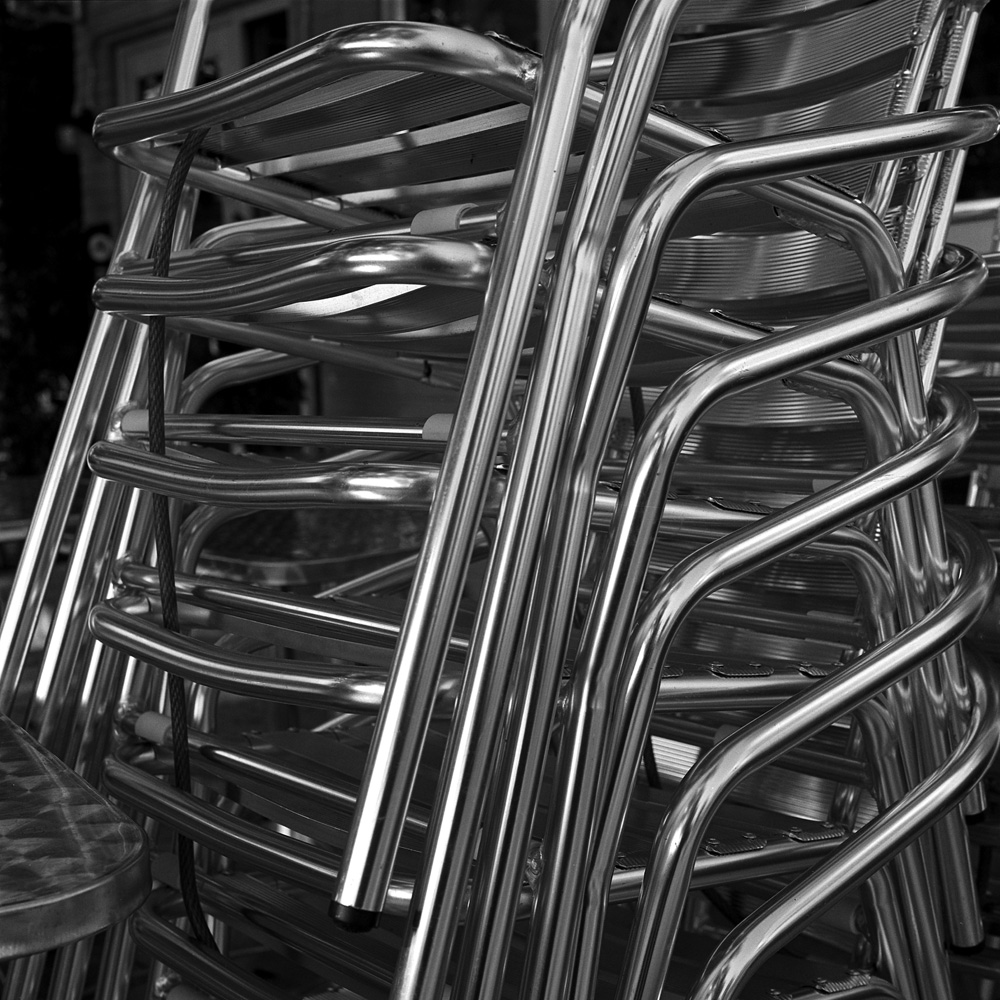
Chrome chairs on the patio at Mad Momos:
Patio Chairs, Mad MomosPatio Chairs #2
The chairs were still stacked from having been stored the night before. I loved the repetition of the shapes of the chairs.
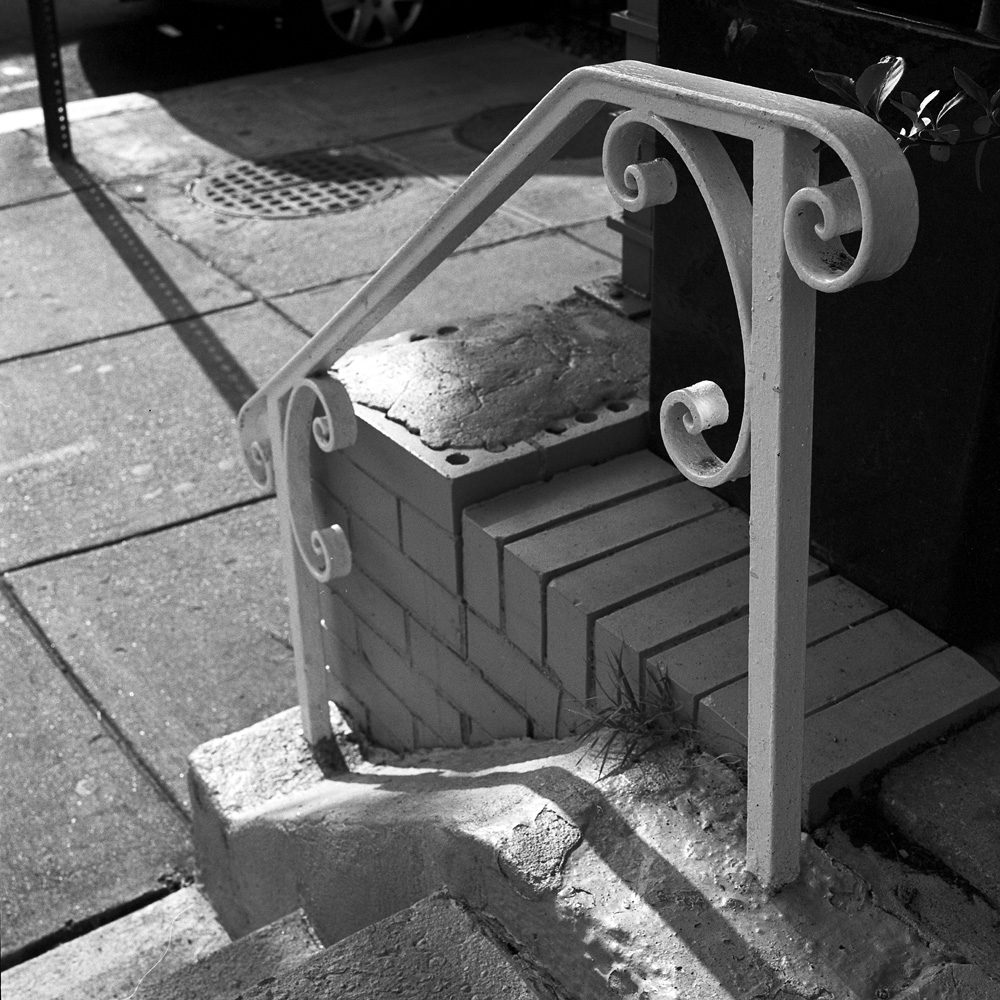
In contrast to the modern awning frame and handrail around the front patio, this 1910s/20s wrought iron hand rail frames the steps on the house next door to their building.
All these photos were taken on a Tuesday – the slowest day of the week, thus the absence of customers. I’m going back there tomorrow after work with some color film to take some night shots – the place gets packed!
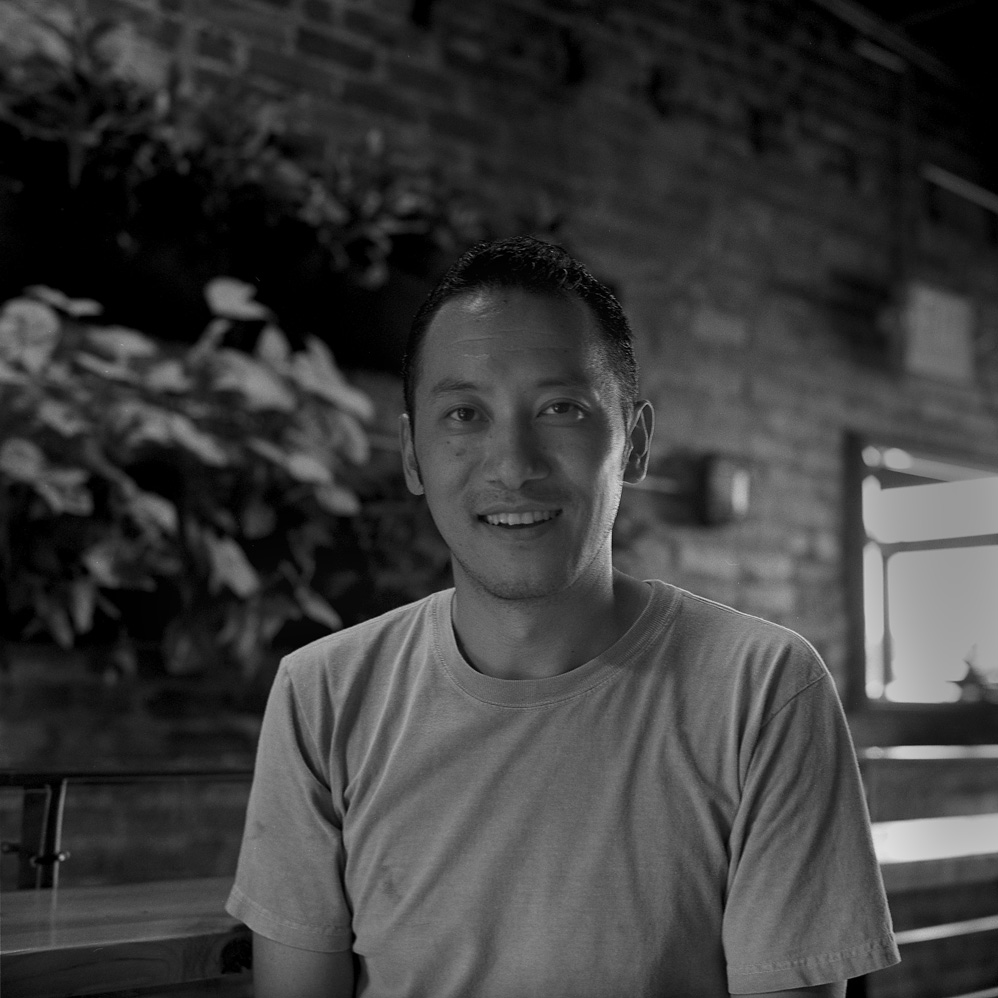
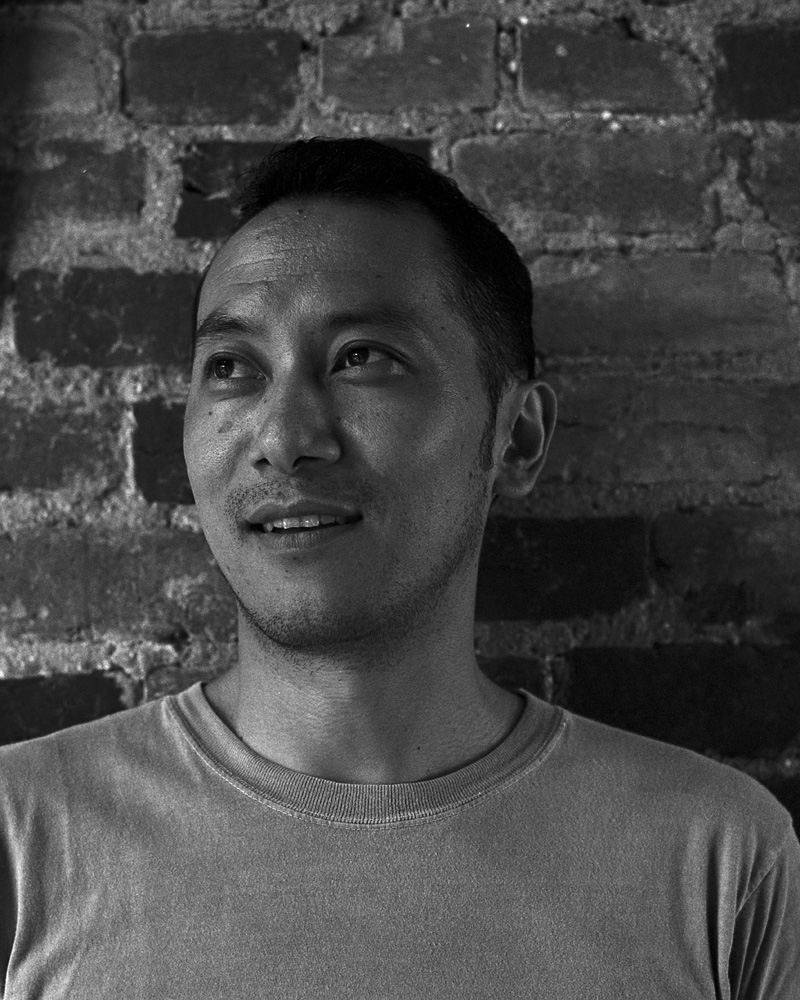
Here are two portraits I took of my friend Wanchuk, who is co-owner with Sam Huang (photo posted previously) of Mad Momos Restaurant & Beer Deck. I’ve known Wanchuk for nearly a decade. He’s from Sikkim, which is now a province of India in the Himalayas between Nepal and Bhutan, but used to be an independent kingdom with close ties to Bhutan.
Wanchuk T., at Mad MomosWanchuk T., Close-up
We met through a common love of photography – at the time he was still in post-college bum-around-the-world mode, and wanted advice on how to take better pictures in the places he was going. Now he’s running a restaurant and giving me a show of my photos. The exhibit will open on August 2nd and run through the end of October. Details about the opening reception will be posted separately.
I took those photos of him after we finished a meeting about the exhibit, then went for a 15 minute walkabout in the neighborhood around the restaurant to see what I could find. There’s an old bar/club across the street called “The Pinch” – I so want to photograph the front door because it has cool architectural detailing and some nifty graffiti, but from the looks of the folks hanging out by the front door, I may have to come back and shoot that early in the morning when they’re closed -their patrons may not take too kindly to being photographed.
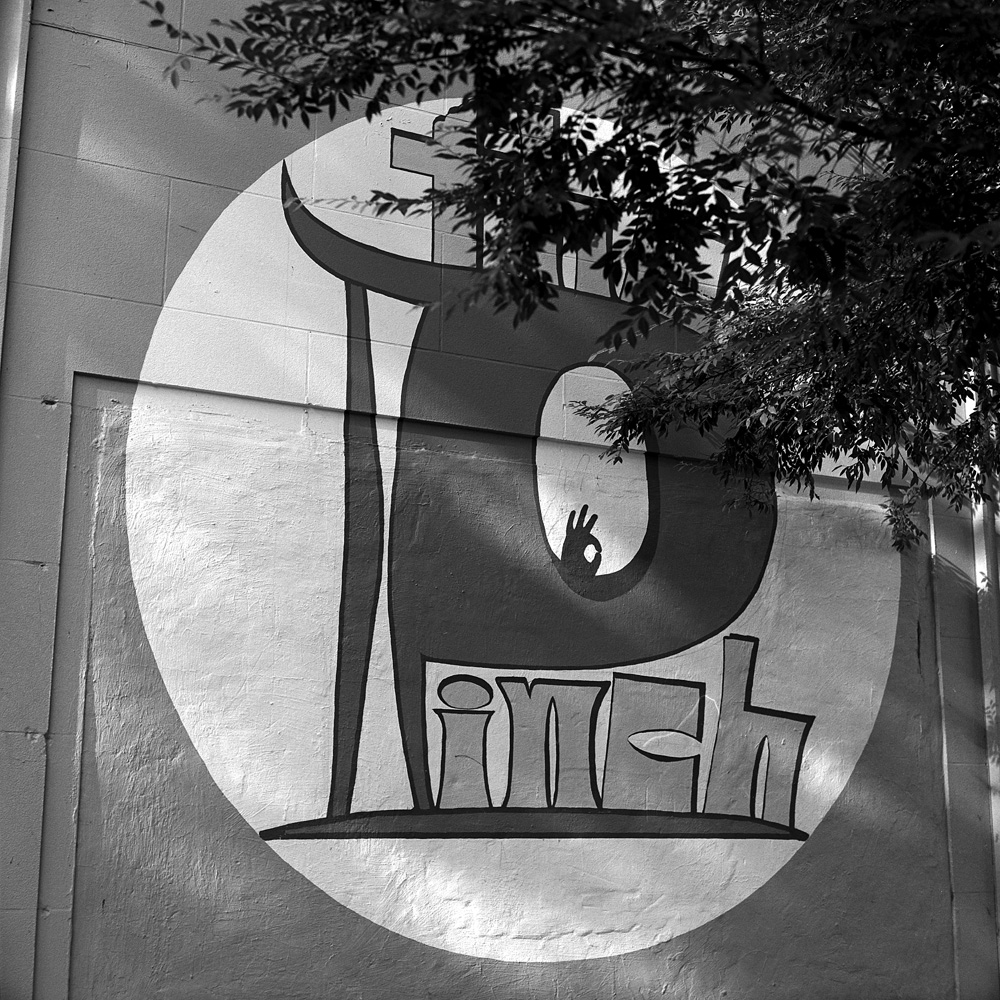
Here’s their logo on the wall facing the side street – it has a very 70’s look to it, but the paint seems very recent.
The Pinch
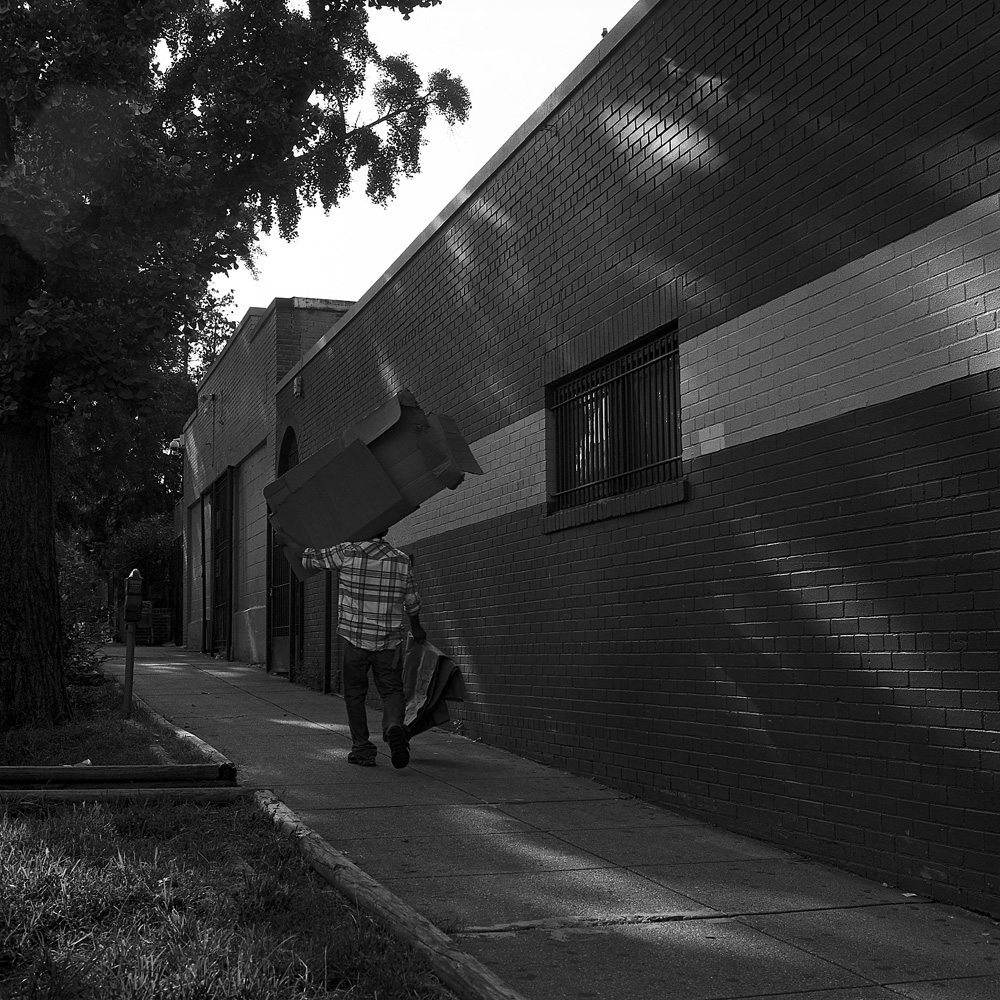
Pivoting to the left of the Pinch logo, I saw this lovely vanishing-point perspective of the building walls, dappled in evening sunlight. As I was composing the shot, this man hauling a gigantic cardboard box over his shoulder walked into the frame. Taking advantage of the serendipitous perspective-giving presence of the man, I waited until he was about 2/3 of the way in the frame before shooting.
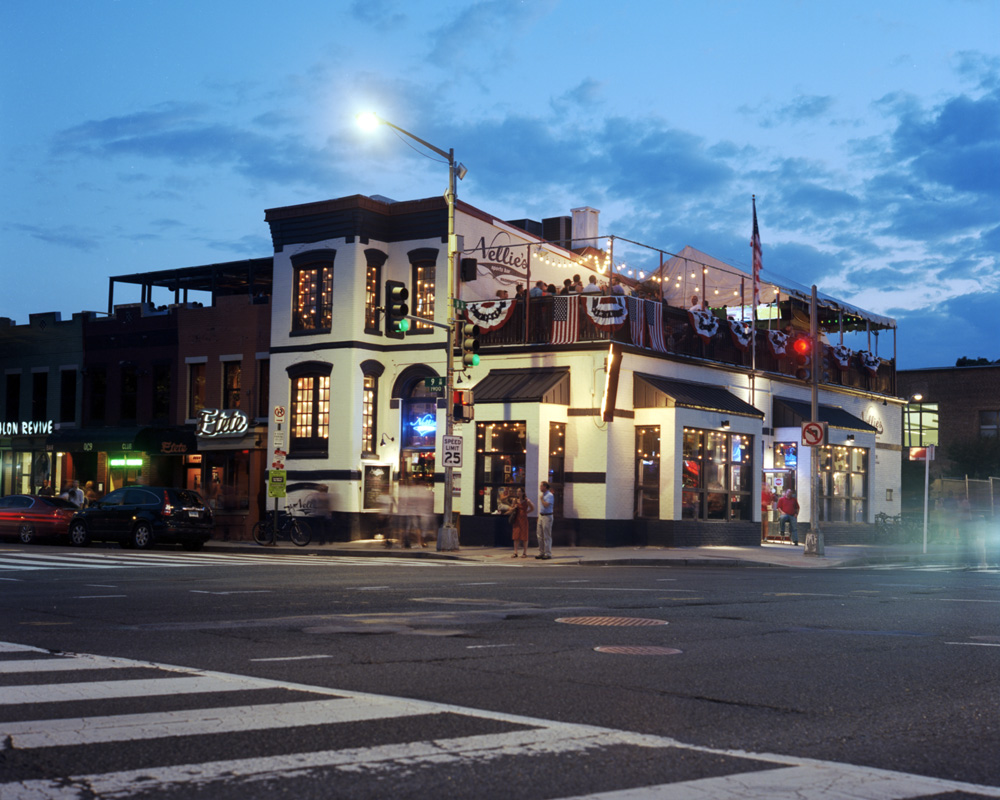
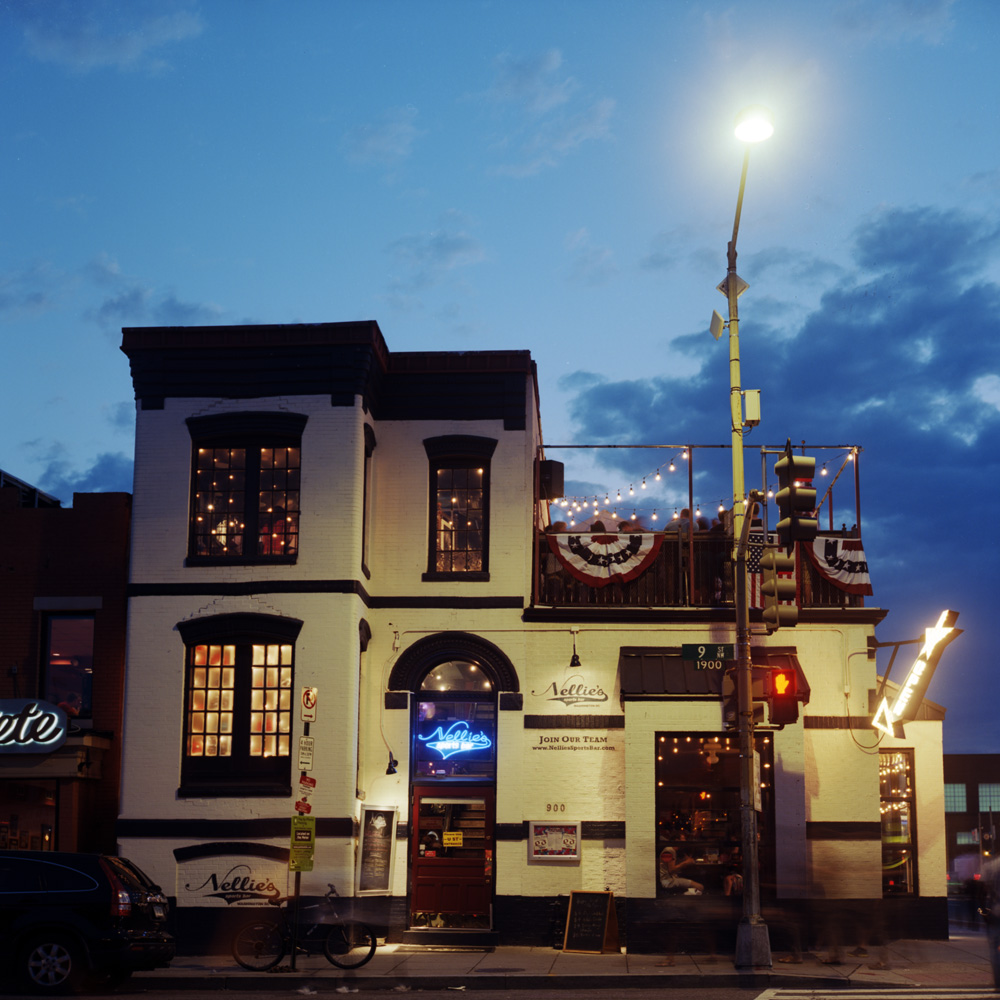
This is an exploration of twilight into dusk in and around the 14th Street and U Street corridors in Northwest Washington DC. All these shots were taken in the same evening, and are within walking distance of one another (although in the name of time efficiency I drove from one area to the other so I wouldn’t lose the last light in the sky).
Nellies is a gay sports bar (betcha never thought you’d hear THAT particular combination!) at the corner of 9th and U Street and Florida Avenue (U Street turns into Florida Avenue at 9th). I’ve driven by hundreds of times and always thought about photographing their lights, specifically the “OPEN” arrow on the corner. The night I started this project, I decided to shoot the building from two different angles, one to capture the general ambiance of the intersection, the other to specifically address the OPEN sign.
Nellies Sports Bar, From Florida AvenueNellies Sports Bar, From 9th Street
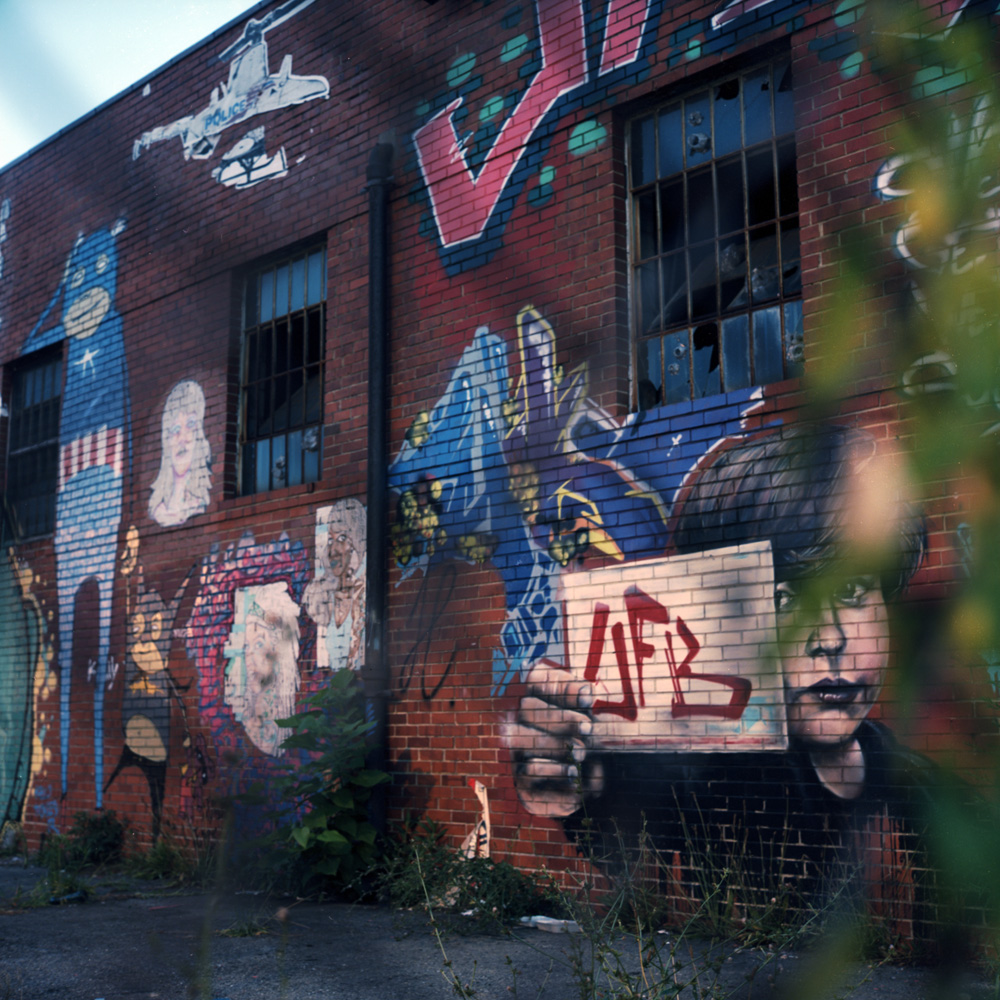
Around the corner from Nellies is this abandoned warehouse which has some really wild and cool and somewhat disturbing graffiti on it. I shot some of this graffiti through the chain link fence around the side lot. The disturbing piece I intentionally cropped out of the shot, as it is the nude lower half of a female body that appears to have been severed from its torso.
Graffiti, Chain Link Fence, Twilight
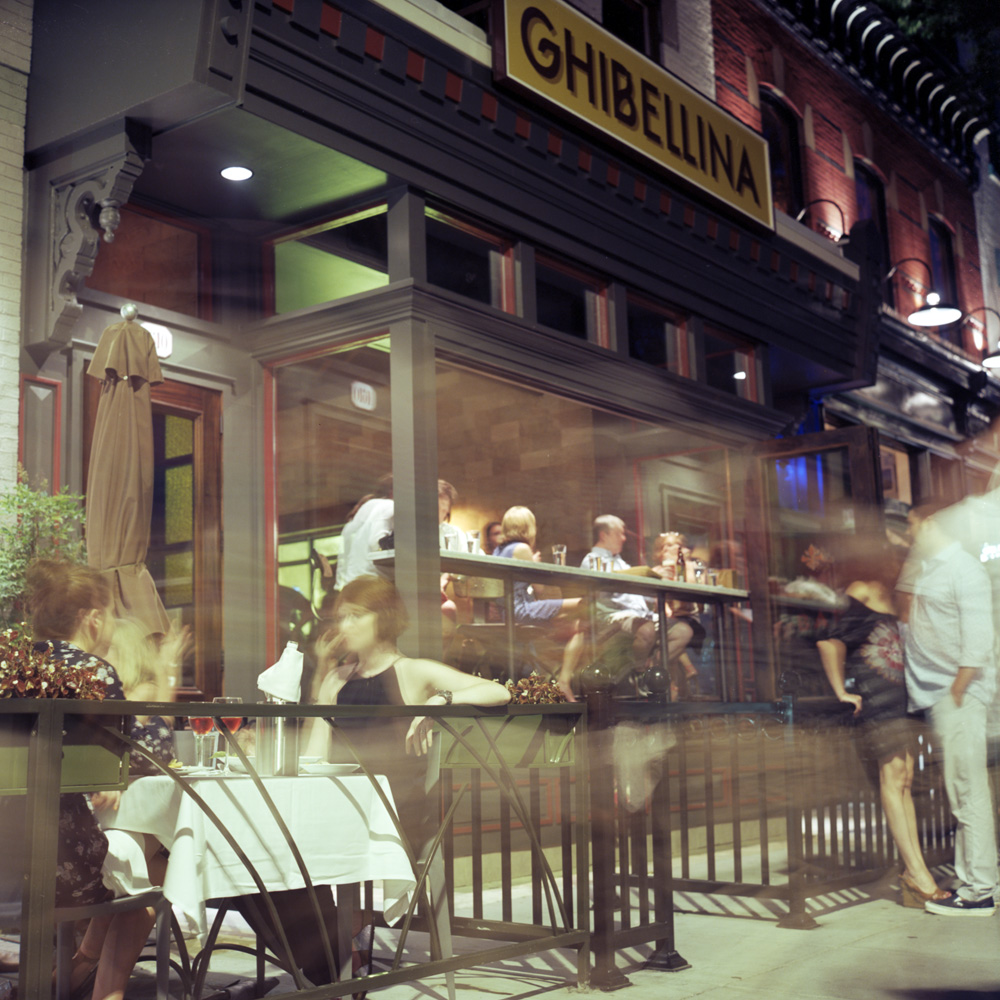
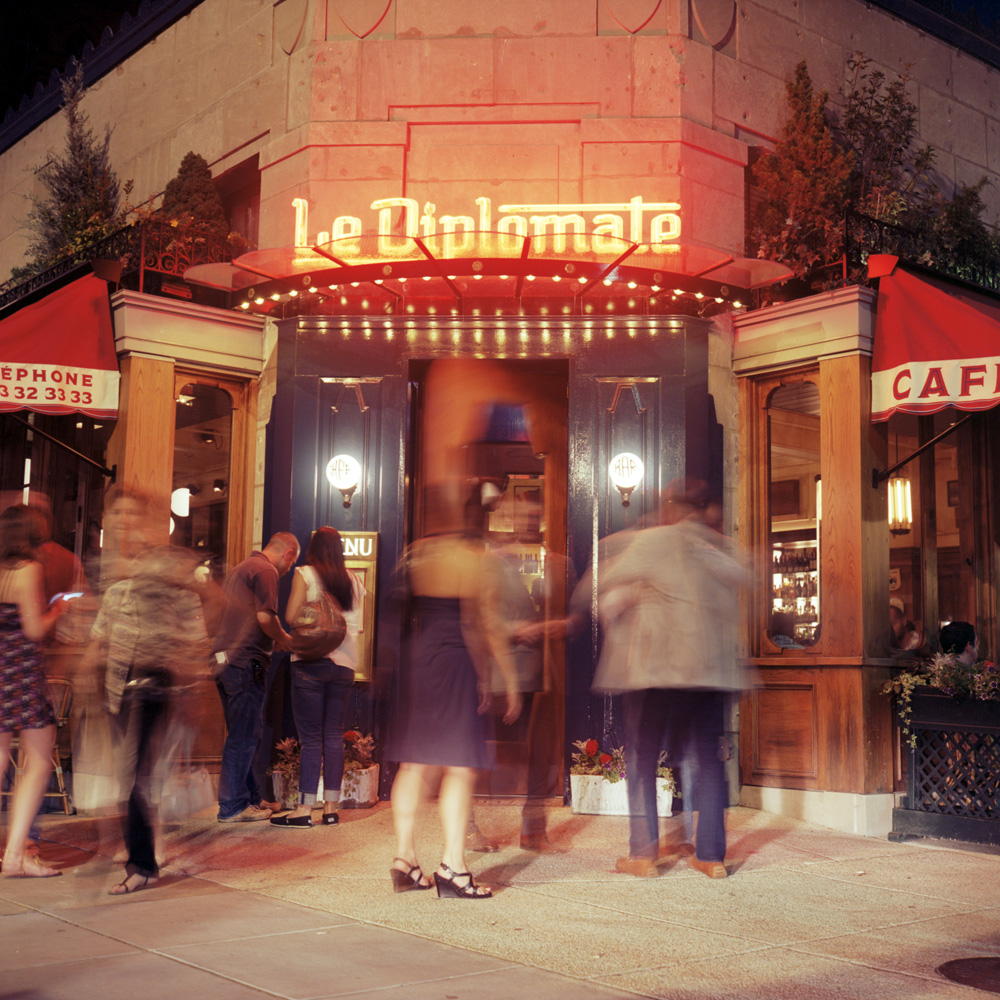
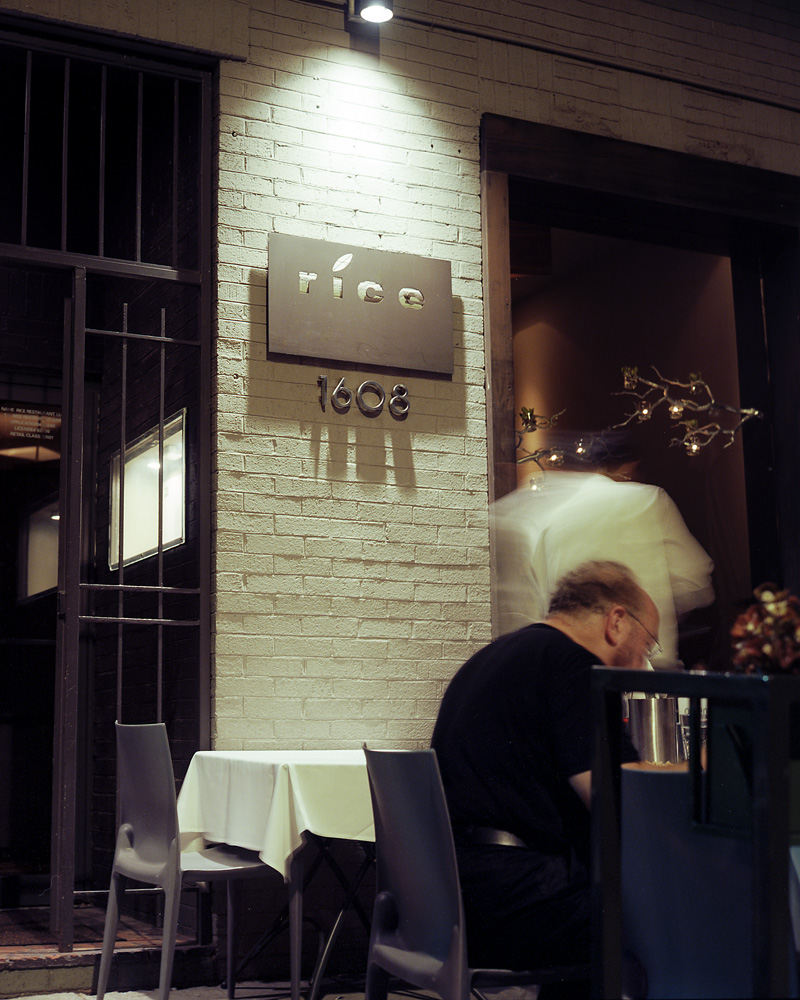
Over on 14th Street, we have had an explosion of new restaurants in the last five years, with a huge spate in the last year alone. Rice Restuarant is arguably the best Thai restaurant in DC, and certainly the most innovative. A good friend of mine opened it gosh, maybe ten years ago, virtually pioneering the restaurant boom in the neighborhood. Now next door to Rice is Ghibellina, an Italian joint that opened this year, and next door to that is Pearl Dive, an oyster bar, which opened perhaps 2 years ago. Le Diplomate is a French bistro across the street in what was originally a car dealership in the 1920s, then became a laundromat. Le Diplomate also opened earlier this year.
GhibellinaLe DiplomateRice Restaurant
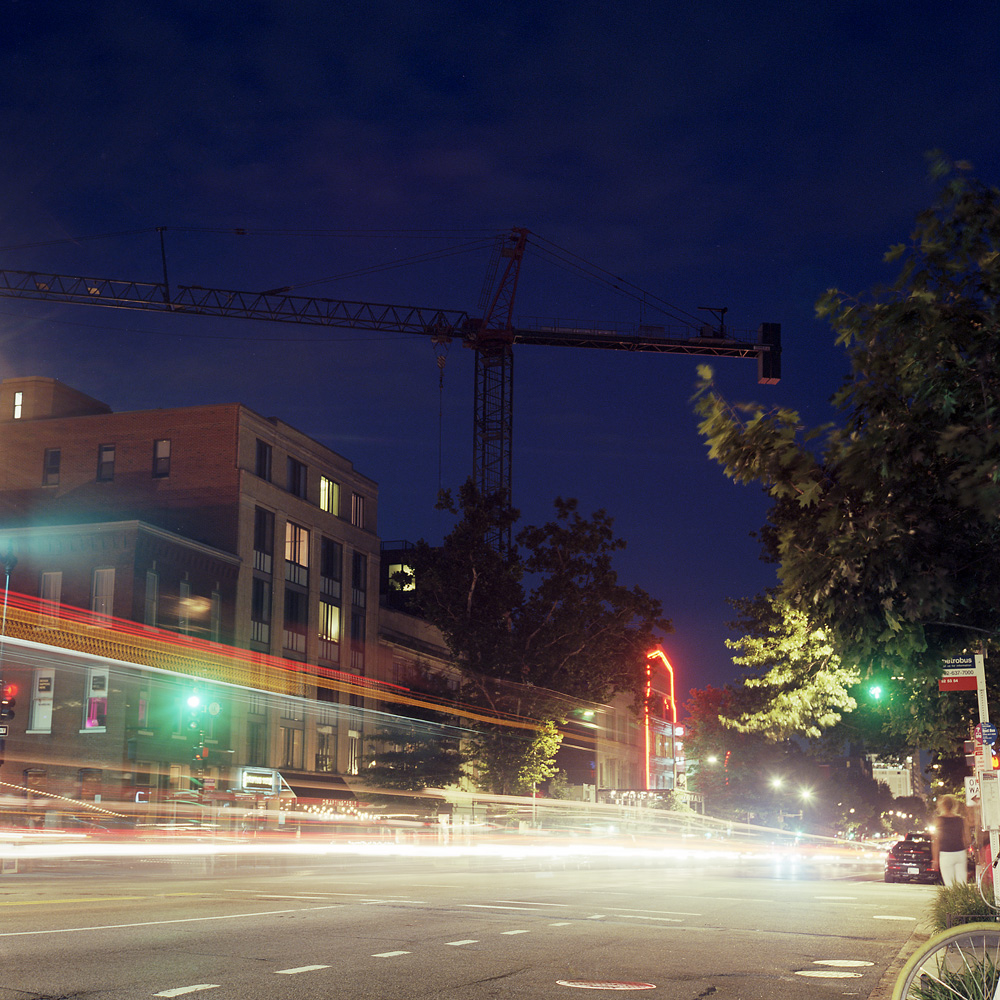
At the intersection of 14th and Q Streets, I pointed my camera south on 14th to try and capture the energy of the neighborhood, through the traffic, the lights, the construction boom represented by the crane, and the people on the sidewalks.
Crane, 14th Street, Twilight
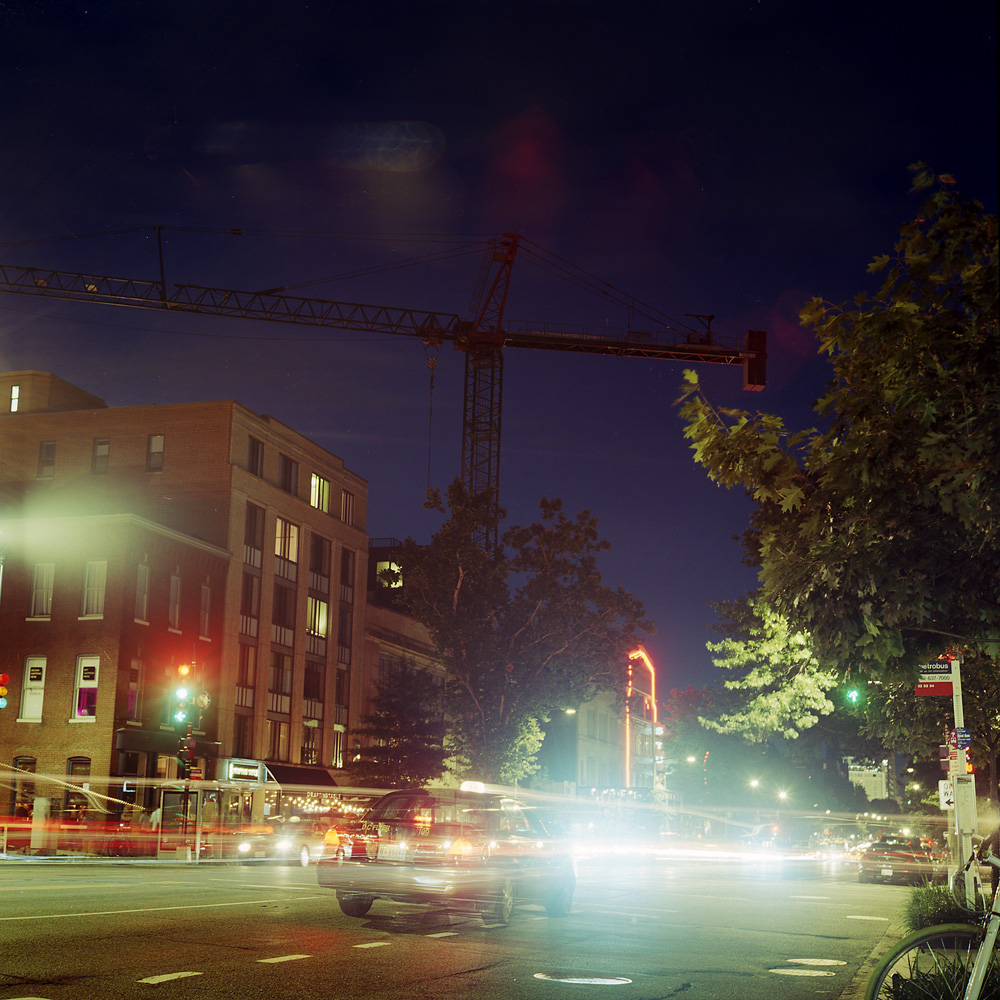
Here is a second version of the shot, a longer exposure, that captures the car sitting at the traffic light, then traffic taking off when the light changed. The funky stuff in the sky is a combination of reflections of the tail-lights and head-lights of the cars reflecting off the clouds and lens flare caused by the lights directly shining into the lens.
Crane, Traffic, 14th Street, Dusk
I’m not sure if I like this one well enough to keep it or if some other night I go back and try to re-shoot it. Feedback welcomed. All shots, as is becoming normal to say now, were taken with my Rolleiflex 2.8E, on Kodak Ektar 100 film. This was in part an experiment to see how well Ektar would fare against Portra 160 as a low-light film. I’ve loved Portra as a low-light film for its ability to handle mixed lighting conditions. I’d say this put to rest any thoughts of Ektar 100 being inferior- it does look different, to be sure, but I’d say it did a pretty darned good job. I think I might even prefer it in some cases.
Here are a few shots from my visit to the 2013 Smithsonian Folklife Festival. The Folklife Festival is held every year on the National Mall, and it is a celebration of cultures and traditions from around the world. This year’s featured country is Hungary, and the overall theme is “One World, Many Voices”. There are representatives of many indigenous cultures around the world from Hawaiian Islanders to Penobscot Indians to Quechua speakers from Bolivia and Peru to Tuvan people from Siberia. The “many voices” part has to do with showcasing efforts to preserve vanishing languages and cultures. Go to the Smithsonian Folklife Festival Official Page to learn more about the events and programs for this year’s festival.
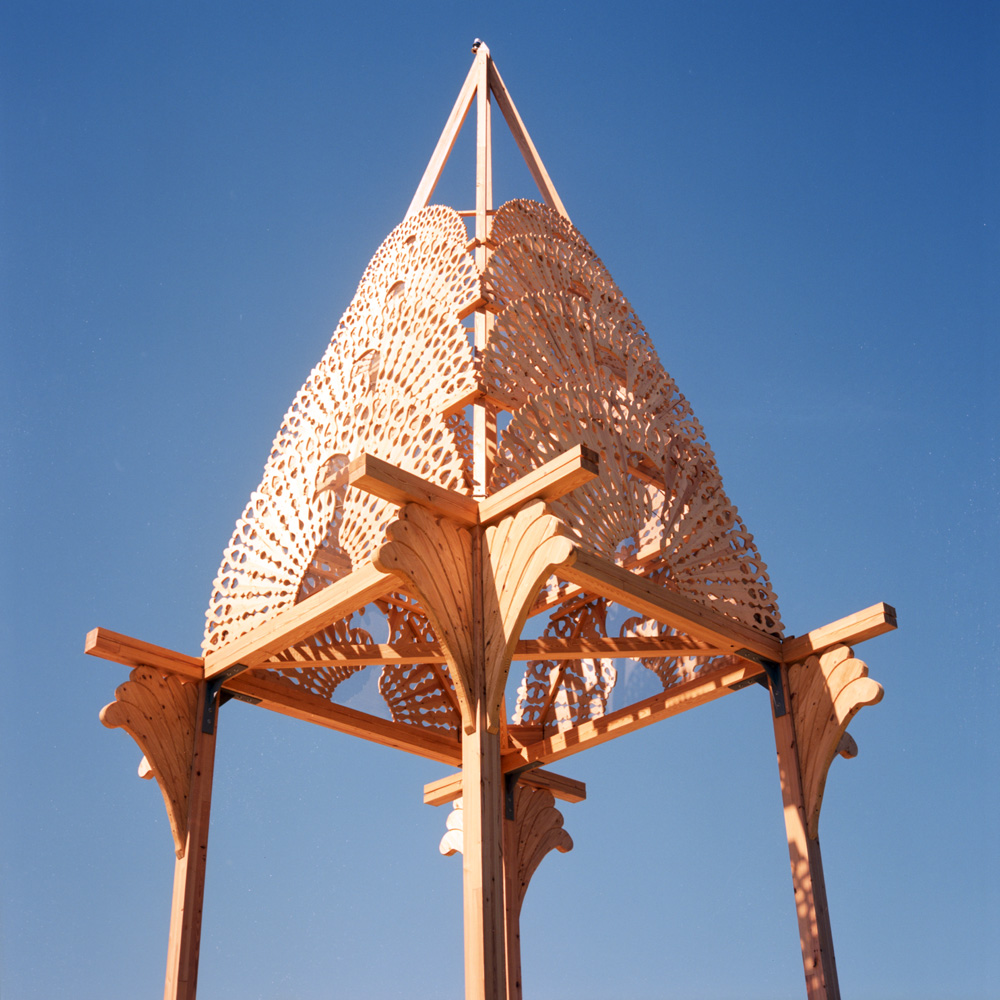
This pavilion is part of the Hungarian exhibit – playing on traditional Hungarian crafts like lace-making and using the forms and styles in a wooden structure.
Hungarian Pavilion
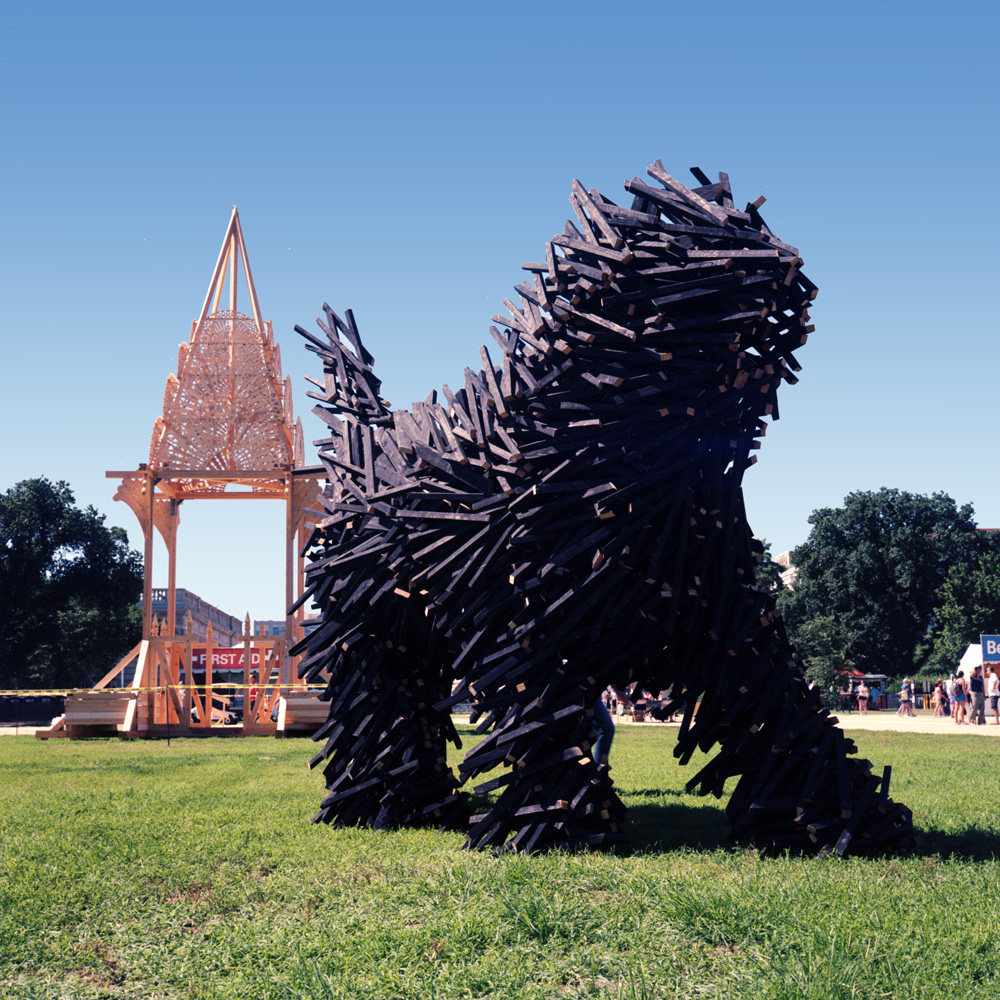
And here is a sculpture of a Puli shepherd dog, rendered in blackened wood. Pulis are similar to Komondor sheep herding dogs except they are black, not white. They used to get shorn along with the sheep they guarded, but now are left to grow their coats out as a fashion statement, to the impairment of the dog’s mobility.
Kuvacs Sculpture
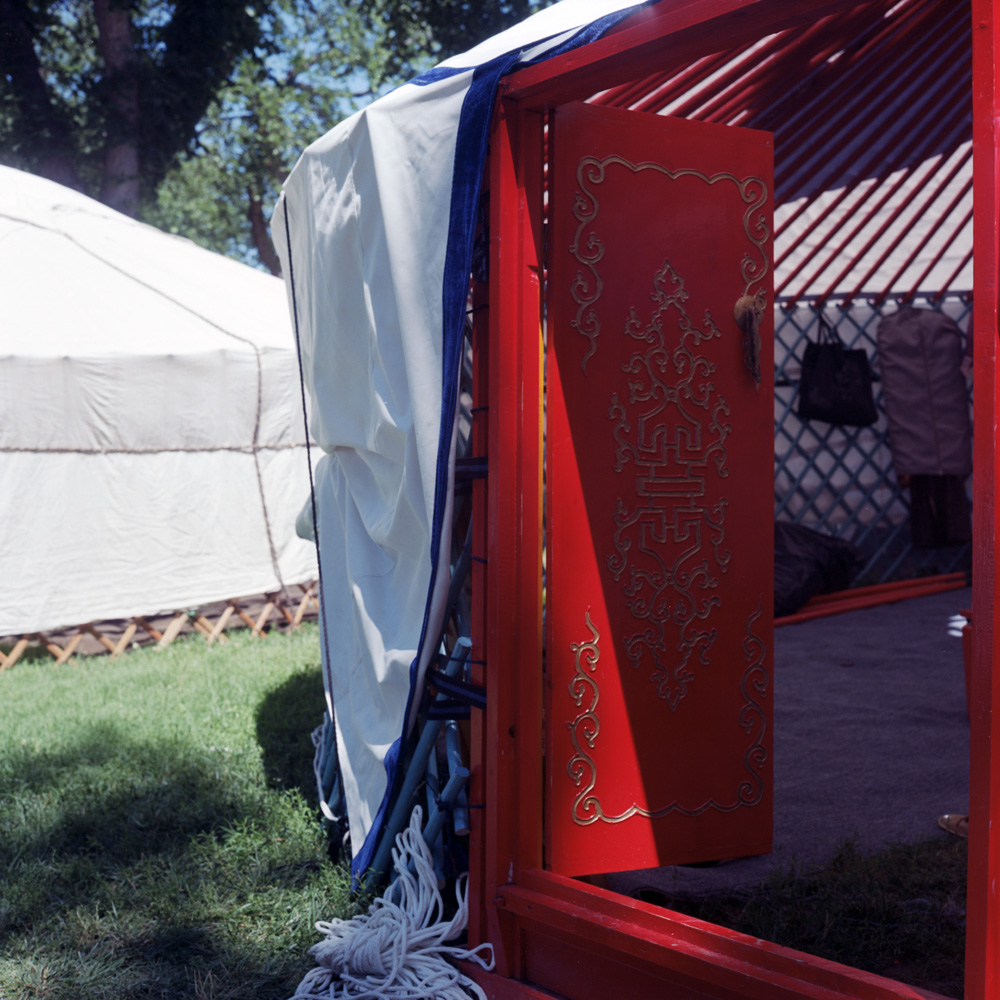
The door of a Yurt, representing the various nomadic peoples of Siberia who are sharing their culture this year at the Folklife Festival. Yurts are traditional nomadic home structures – they are portable like tents, with canvas or fabric tops and latticework side walls.
Yurt Door
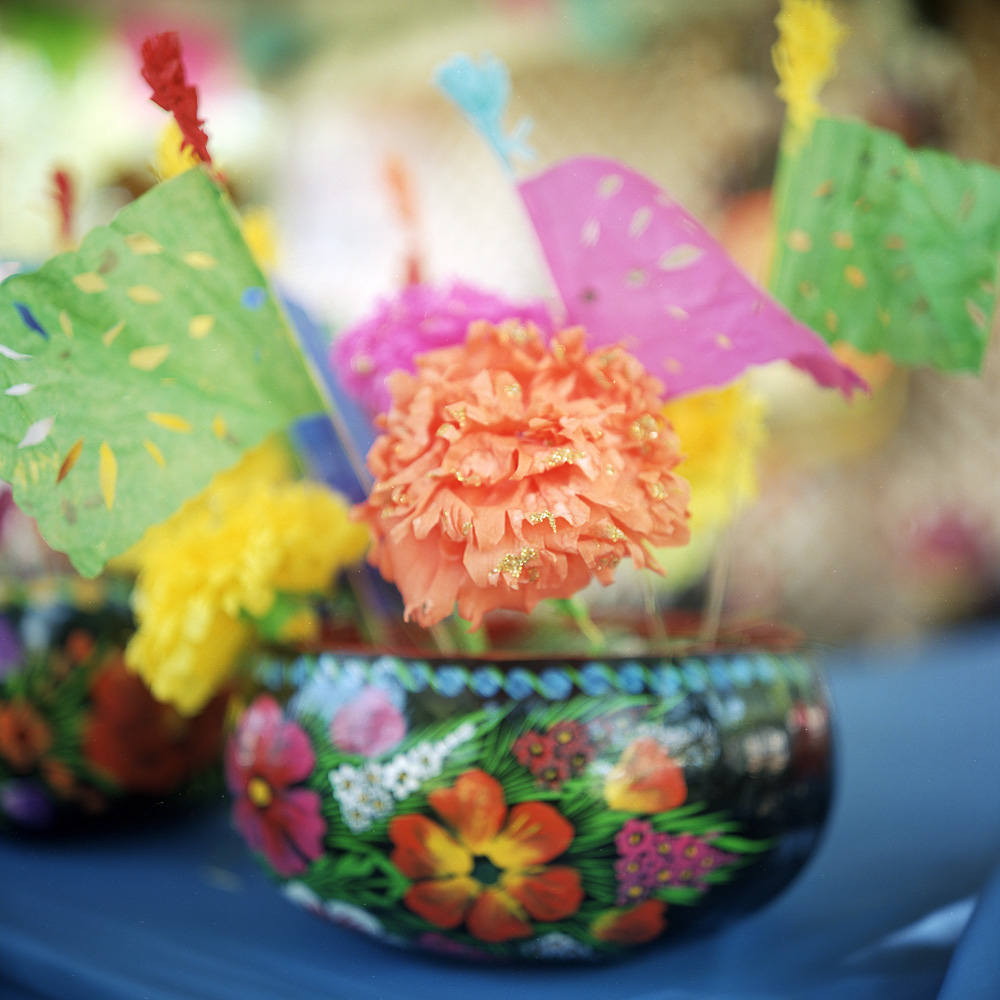
Paper flowers in the Mexican pavilion:
Paper Flowers, Mexican Pavilion
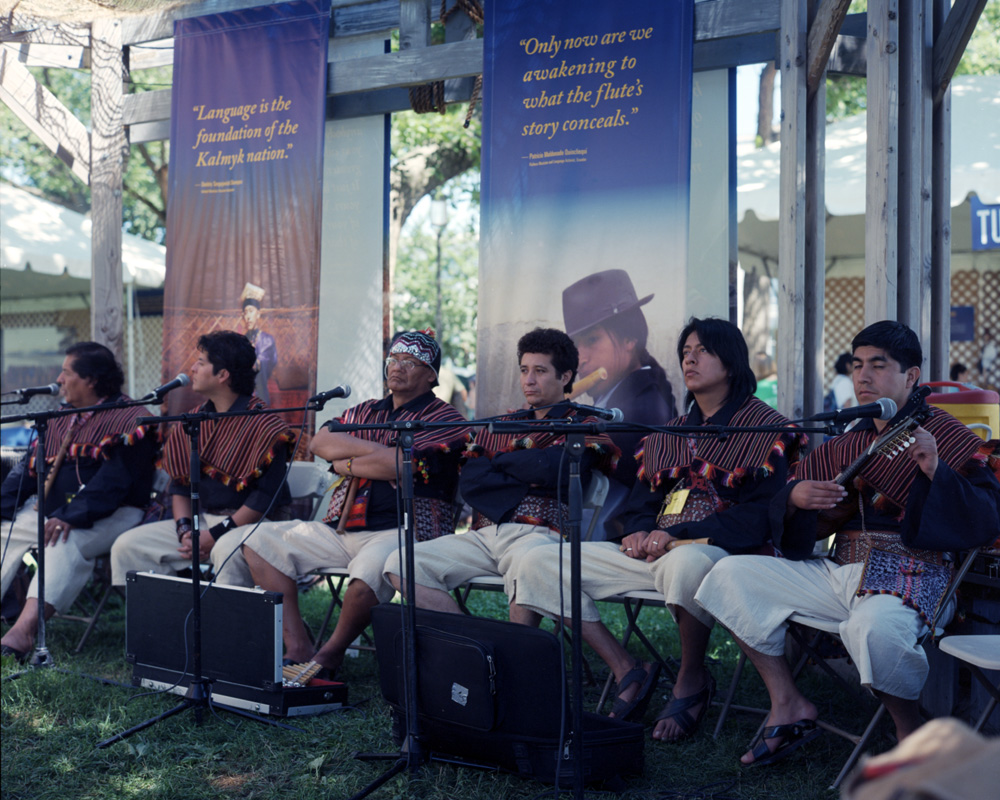
Quechua musicians, getting ready to perform a traditional Quechua song, talking about the meaning of their indigenous language and the importance of preserving the language, to pass on the connection to their cultural traditions of respect for the environment.
Qechua Musicians
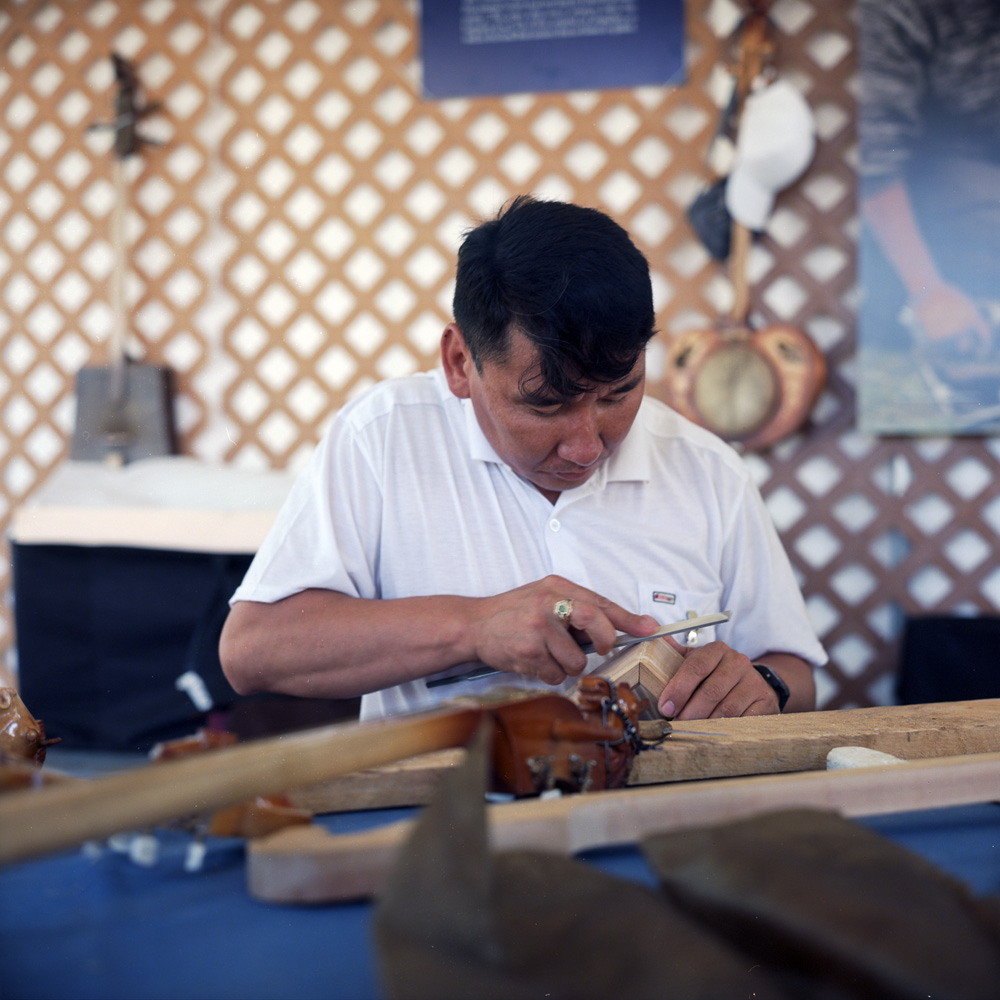
A Tuvan instrument maker, carving the body of a lute:
Tuvan Instrument Maker
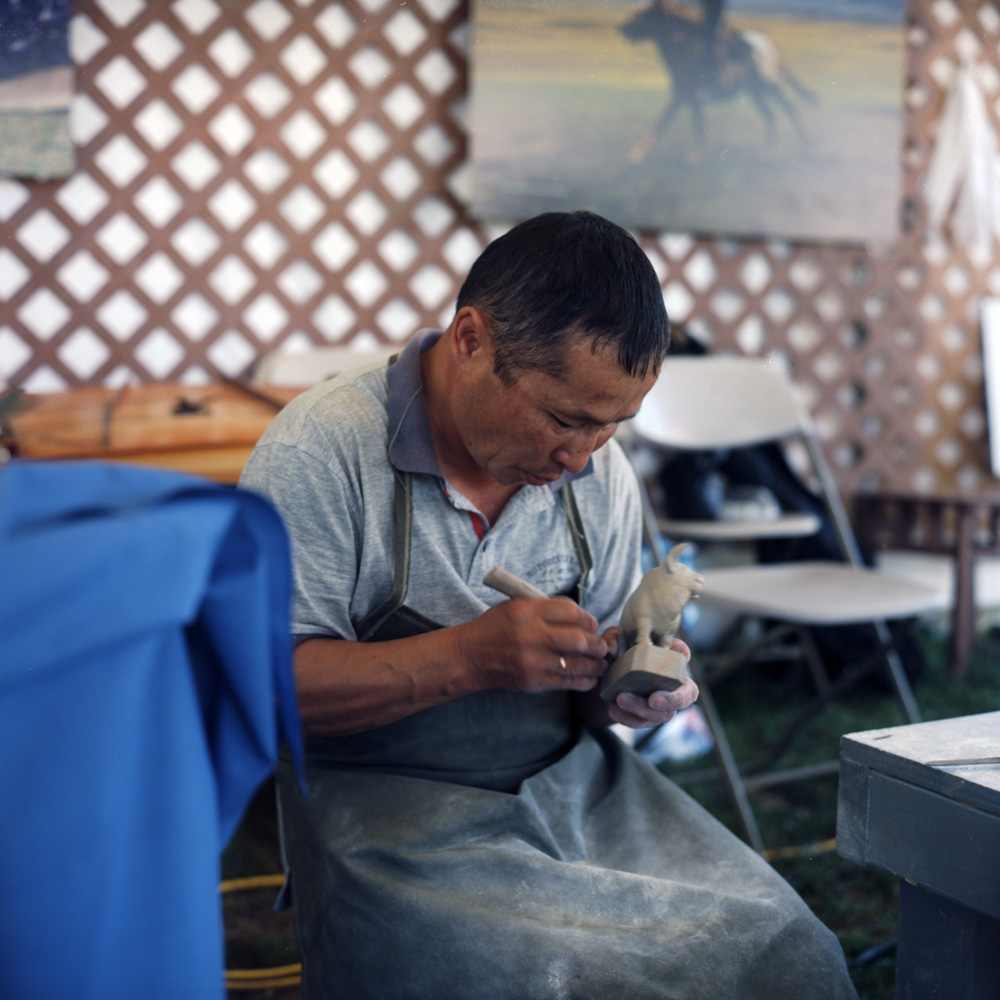
A Tuvan stone-carver, demonstrating hand-carving techniques, making a bull out of soapstone:
Tuvan Stone-carver
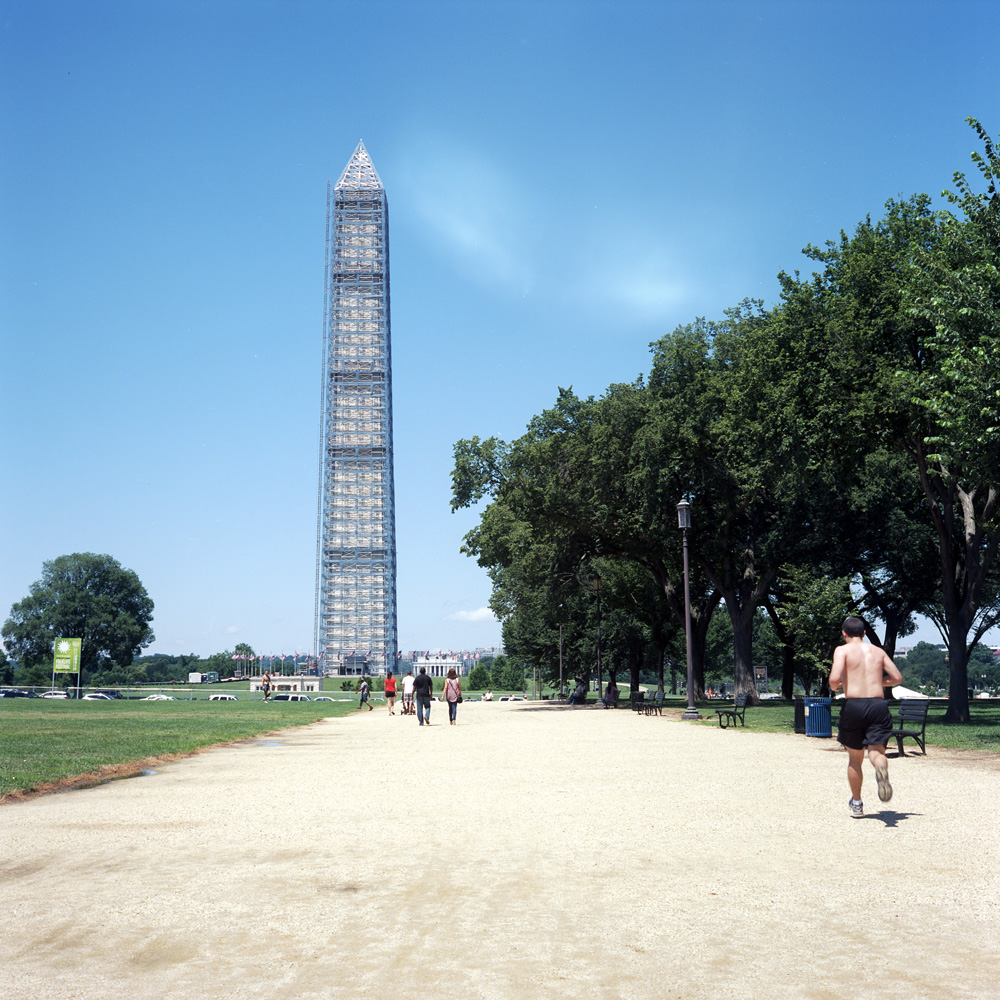
These last three shots are not specifically of the Folklife Festival, but are representative of the location and the spirit of the day. The weather was quite hot, but at least we had a relatively dry day with periodic breezes (Washington DC, particularly the area of the Mall, was built on a swamp, and big chunks of the Mall area, especially west from the Washington Monument, are actually landfill. Which is why the Washington Monument is sinking very slowly. So summertime in DC can be particularly miserable – almost New Orleans-esque in its heat and humidity).
Washington Monument
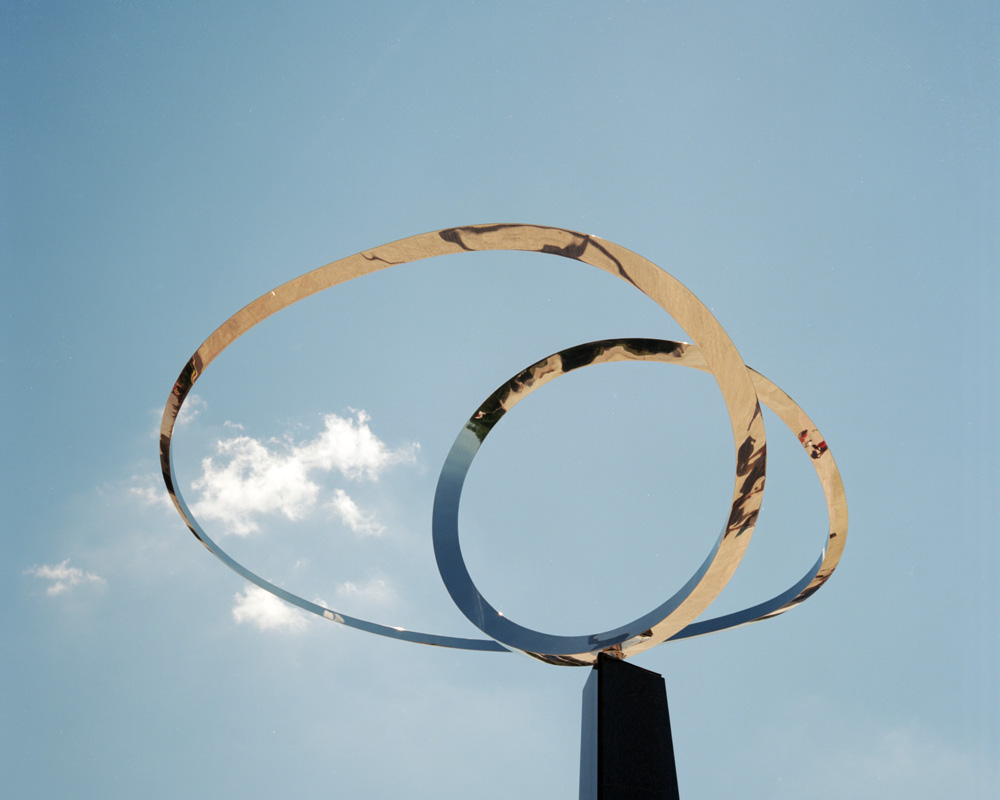
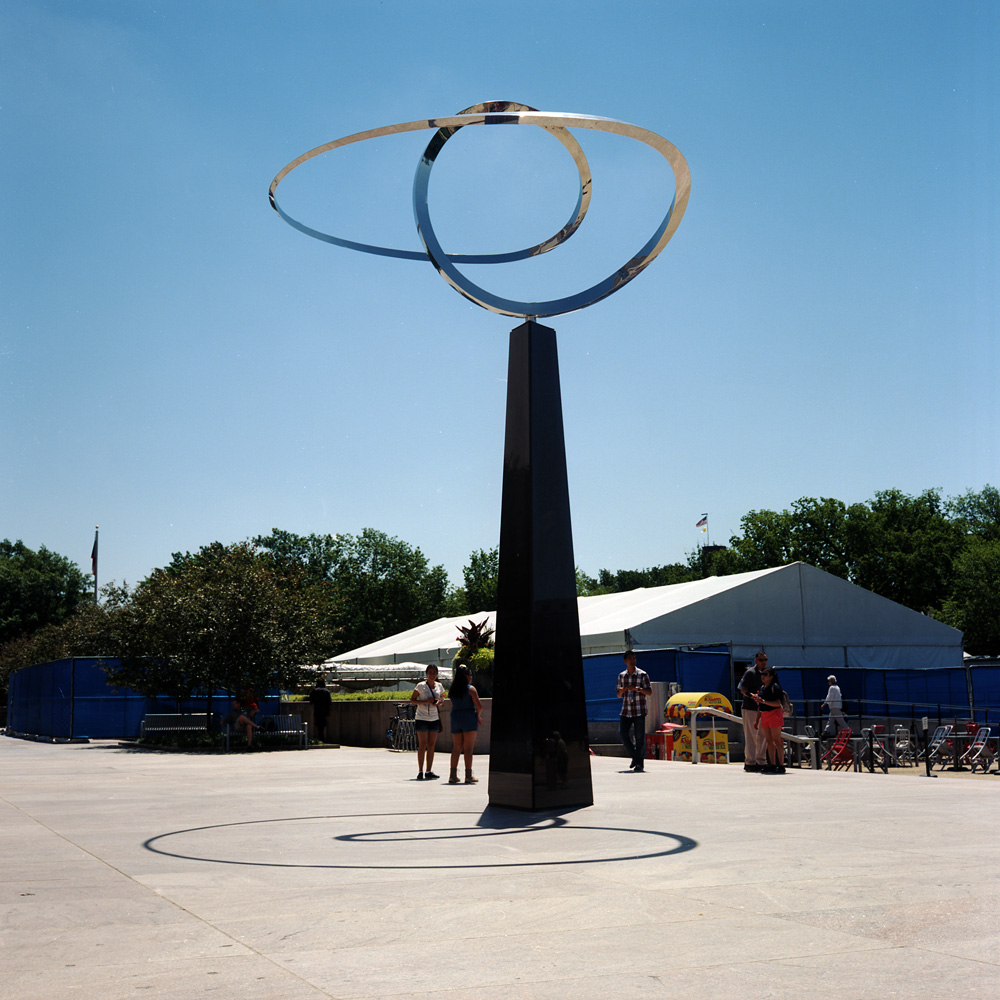
The sculpture is outside the American History Museum, which caps one end of the Folklife Festival and plays host to the temporary festival gift shop.
Sculpture, Cloud, American History Museum
It was tough waiting for people to NOT be walking through the shadow of the sculpture on the pavement. I’ll have to come back and shoot this again in the wintertime when it casts a longer shadow and there are fewer people out on the plaza so I can catch it as more of an abstract piece.
Sculpture, Shadow, American History Museum
All shots were taken with my Rolleiflex 2.8E, on Kodak Ektar 100 film.
I went out with my parents for their joint birthday celebration (mom’s was a week before dad’s, while I was at Photostock). We like going to museums together, and they had never been to the Air & Space Museum annex by Dulles Airport. So we met in Reston for lunch, then drove out to the museum. Here are a few shots I took of the aircraft.
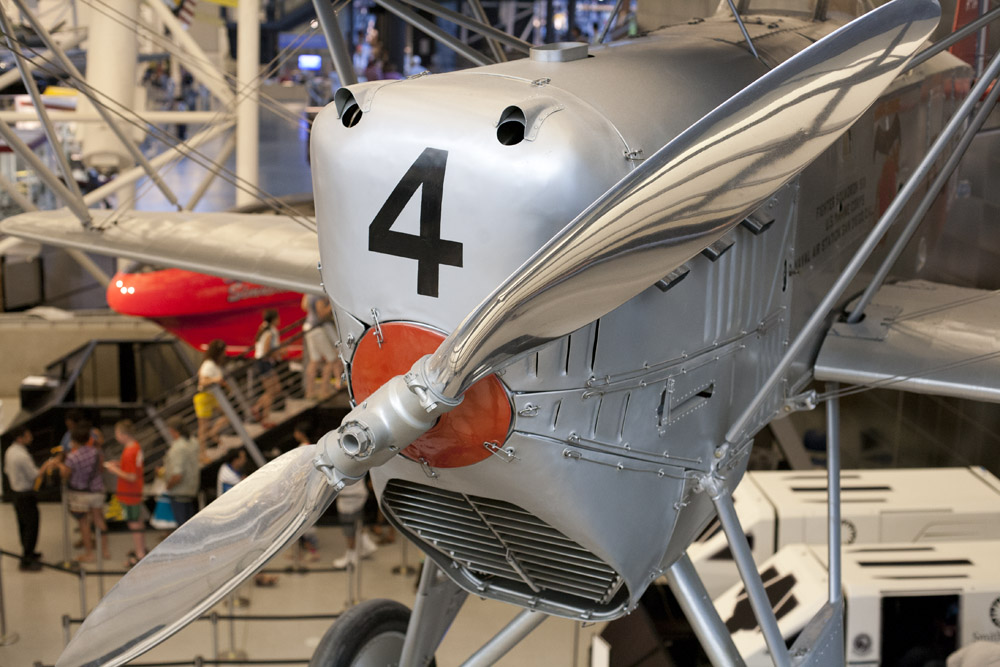
This is an early military biplane. Note the machine gun openings in the nose, just behind the propeller.
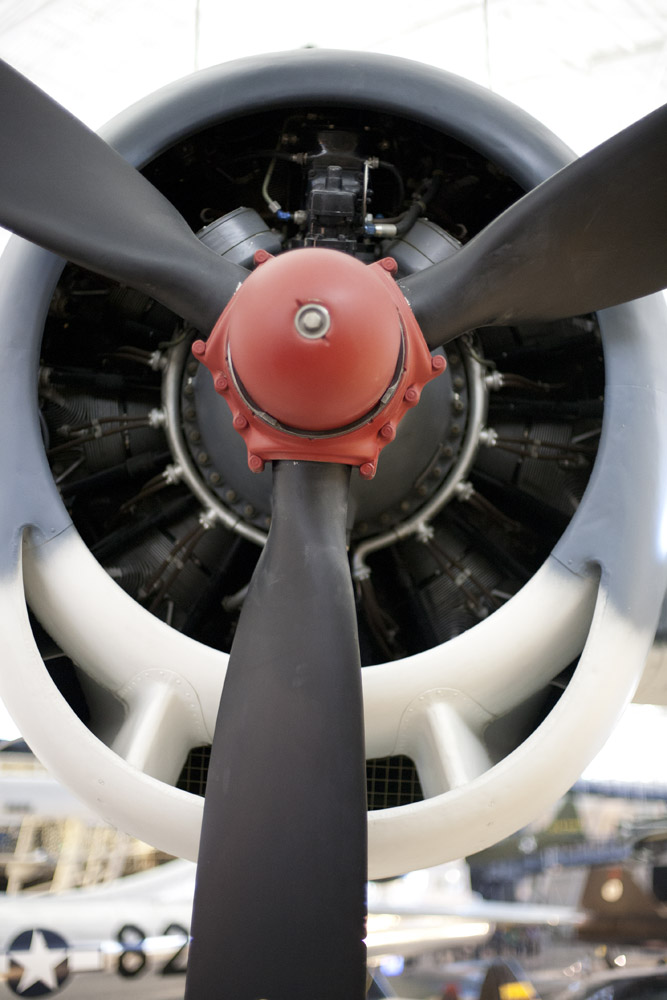
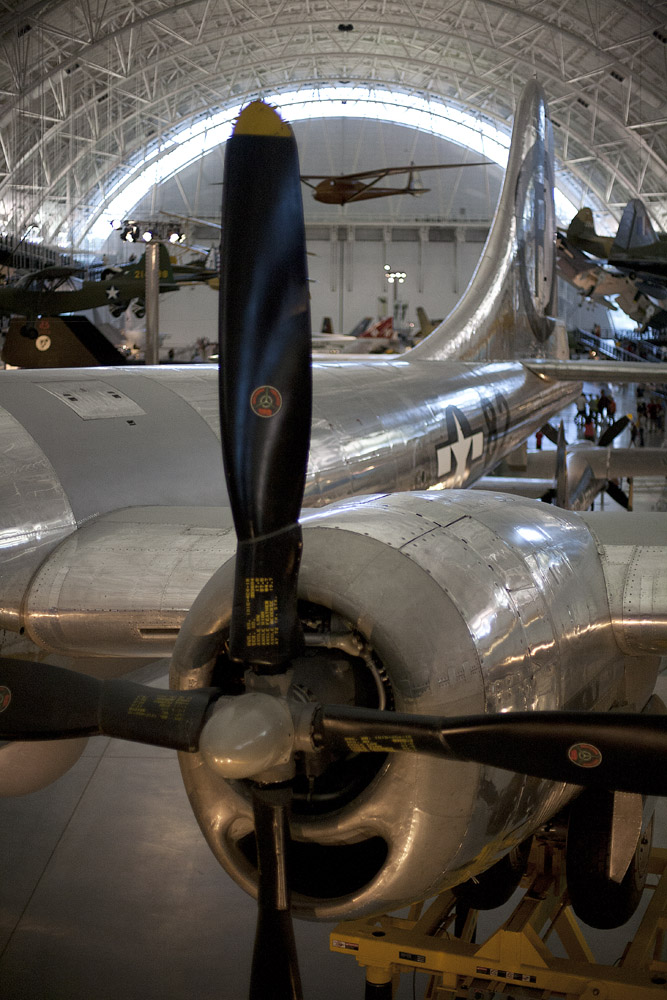
I find the propellers and radial engines on vintage aircraft fascinating – they make for very interesting compositions and lend themselves to geometric abstractions.
This is the propeller, wing and fuselage of the Enola Gay, the B29 Flying Fortress that dropped the atomic bomb over Hiroshima. There was some controversy when the plane first went on display about how the signage would read. I didn’t re-read it this time, but I know there were some WW II veterans who felt the original language was too apologetic toward the Japanese for the atomic bombing. To me, the plane is presented in an appropriately neutral setting, allowing visitors to judge for themselves what it means.
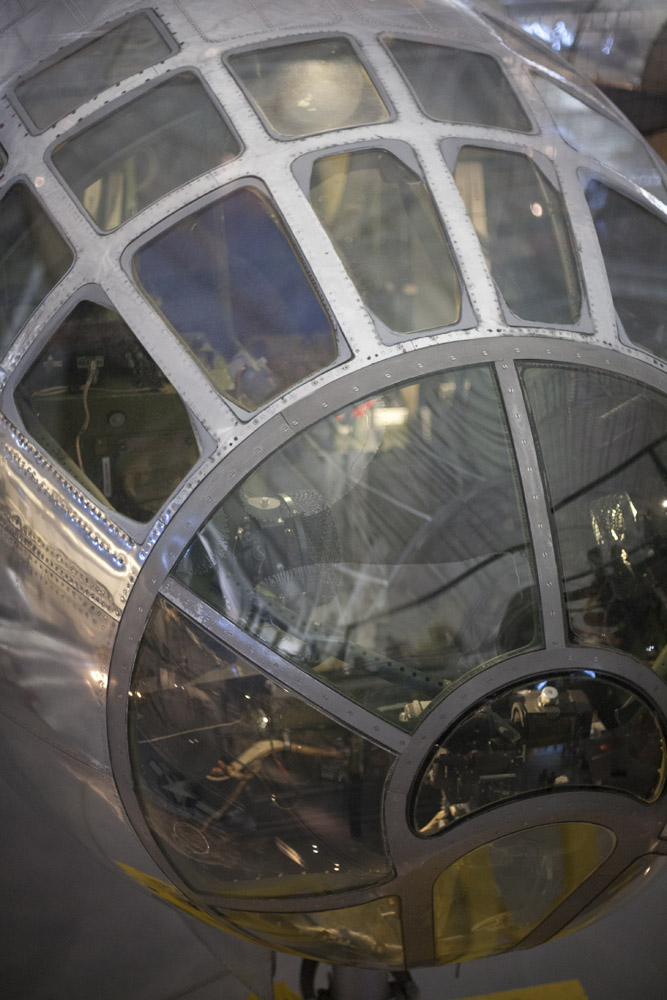
The cockpit of the Enola Gay. I don’t know if having a polarizer would have helped with the glare – the windows are plexiglass and have compound curves to them.
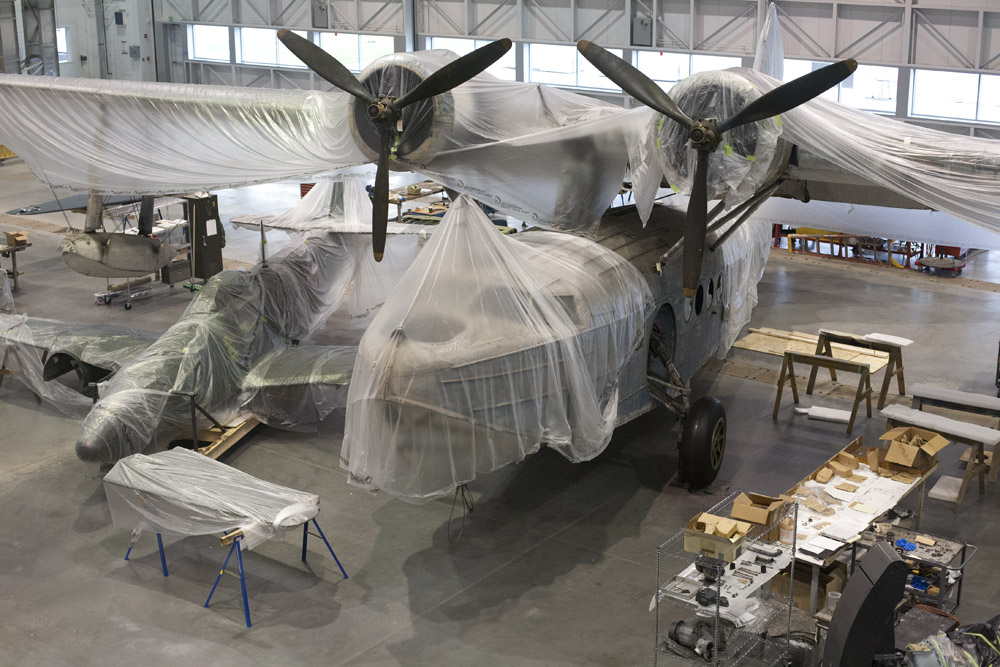
One of the neat things about the Udvar-Hazy center is that they now have the restoration facility open to view. You still can’t go down on the floor of the workshop like you could over at Silver Hill (that was a different place and a different time, where you toured by appointment, but could walk up and touch the Enola Gay, still disassembled and in need of polishing (which they would let you help out with if you wanted to volunteer – the plane has an enormous surface area)). Now they are actively working on a WW II US Navy Hellcat dive bomber (not pictured), and here is a flying boat with what appears to be a Korean War vintage jet fighter underneath its wing.
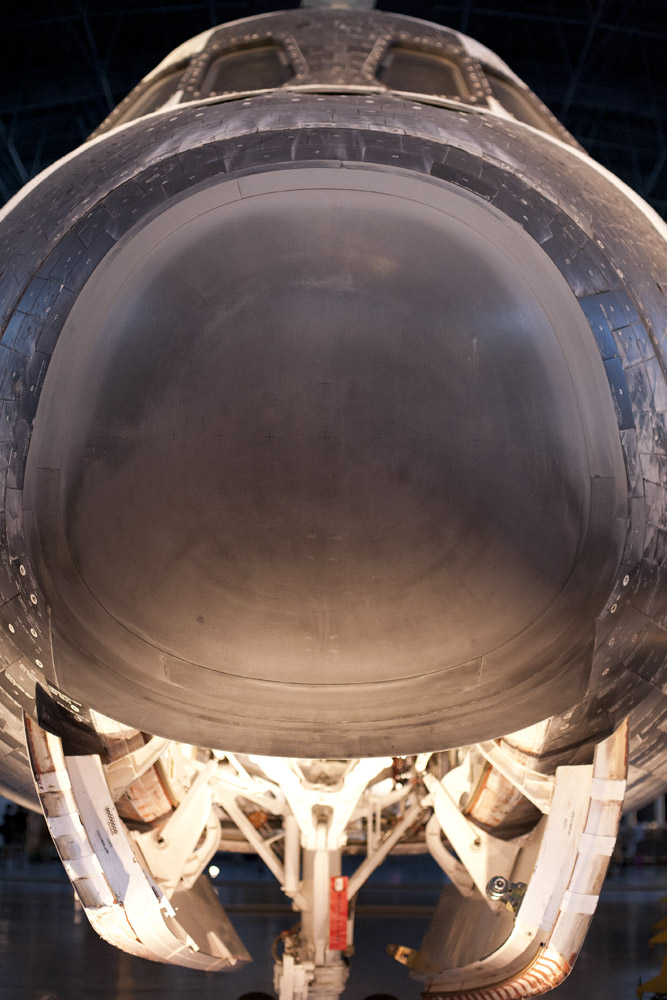
And of course, the piece de resistance, the Space Shuttle. I know almost everyone takes a version of this photo when visiting, but it’s such an impactful view of the iconic vessel.
All photos were taken with my Canon 5D mk1, and the Canon EOS 50mm f1.4.
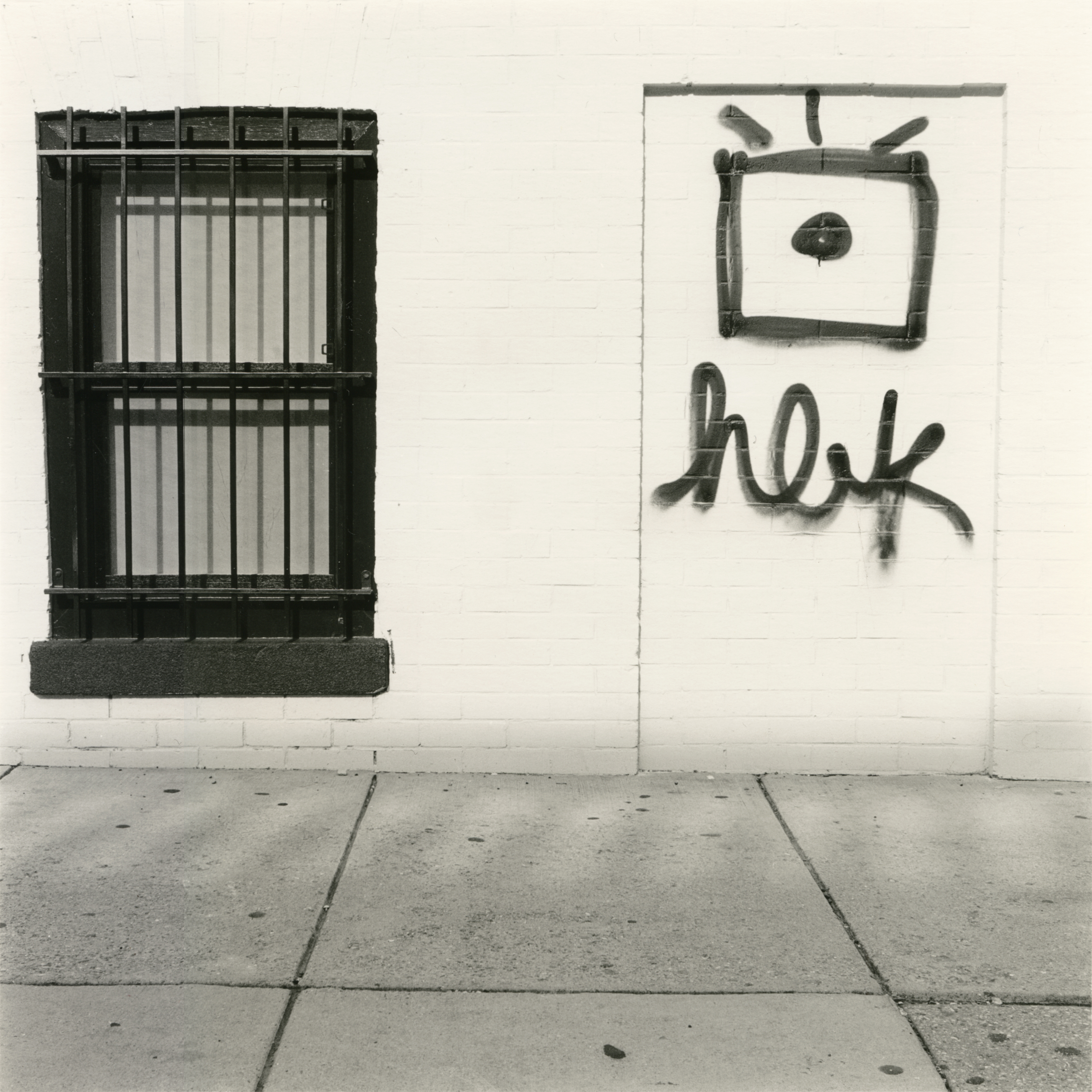
I’ve gotten back into doing a little sliver gelatin printing and enlarging since I’ve been shooting the Rolleiflex like a madman. I wanted to try something out with my printing, so I was doing split development of my prints with both warmtone and cooltone developer. The way it works is I have two developer trays, one for each kind of developer. I’m using the Ilford Warmtone and Ilford Cooltone (a now-discontinued product that I was given a case of some years ago). I want the shadows cool but the mids and highlights warm, so I start my development cycle with 30 seconds in the cooltone developer, then move to the warmtone developer for the remaining minute and a half. The below examples are printed on Ilford Warmtone paper (if you want a warmtone image, you have to use a warmtone paper – you can make a warm paper go cool with a cool developer, but you can’t warm up a coldtone paper short of sepia toning).
Window, Graffiti, 15thStreet
This is the warmest I can get in my highlights and mid tones using this process. The Ilford warmtone paper doesn’t seem to get very warm at all.
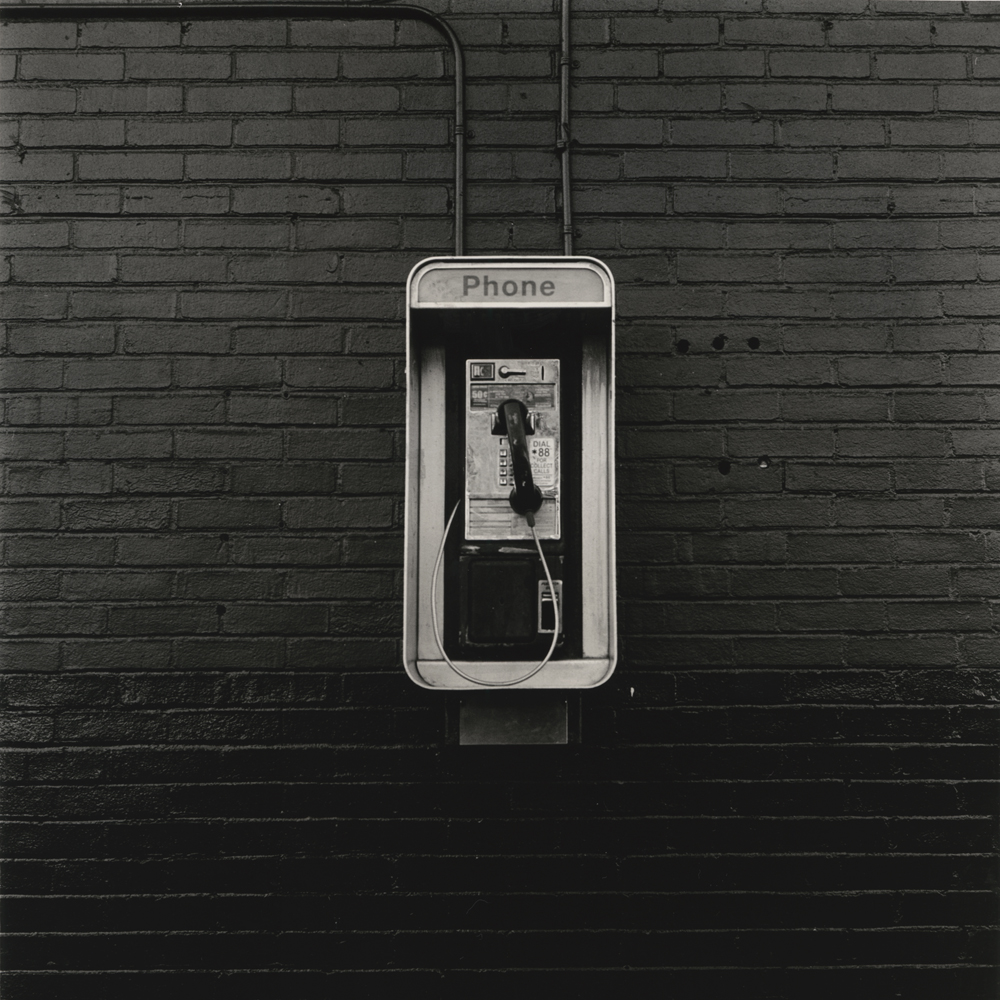
Here’s another in my series of Everyday Objects – the near-apocryphal payphone. In trying to find one, it actually took some looking! They’re not completely vanished from the landscape, but you actually have to go looking in somewhat rougher neighborhoods now to find one because anyone living above the poverty line these days has a cellphone, and nobody wants to carry around a pocketful of quarters AND dimes to make a call.
Everyday Objects – Payphone
I was getting a little nervous about making enlargements as it has been forever and a day (at least five years) since I last made an enlargement. Turns out it’s a skill like riding a bike – once you learn, you never really forget.
Both shots were taken with my Rolleiflex 2.8E, on Ilford HP5+, developed in Pyrocat HD. I think I’ve mentioned it before, but Pyrocat is my go-to developer, even for small and medium-format negatives to be enlarged (or scanned!). Pyro developers in general have great built-in contrast masking from the stain, so it is possible to retain detail in highlights in images that would require burning and dodging were they processed in another developer.
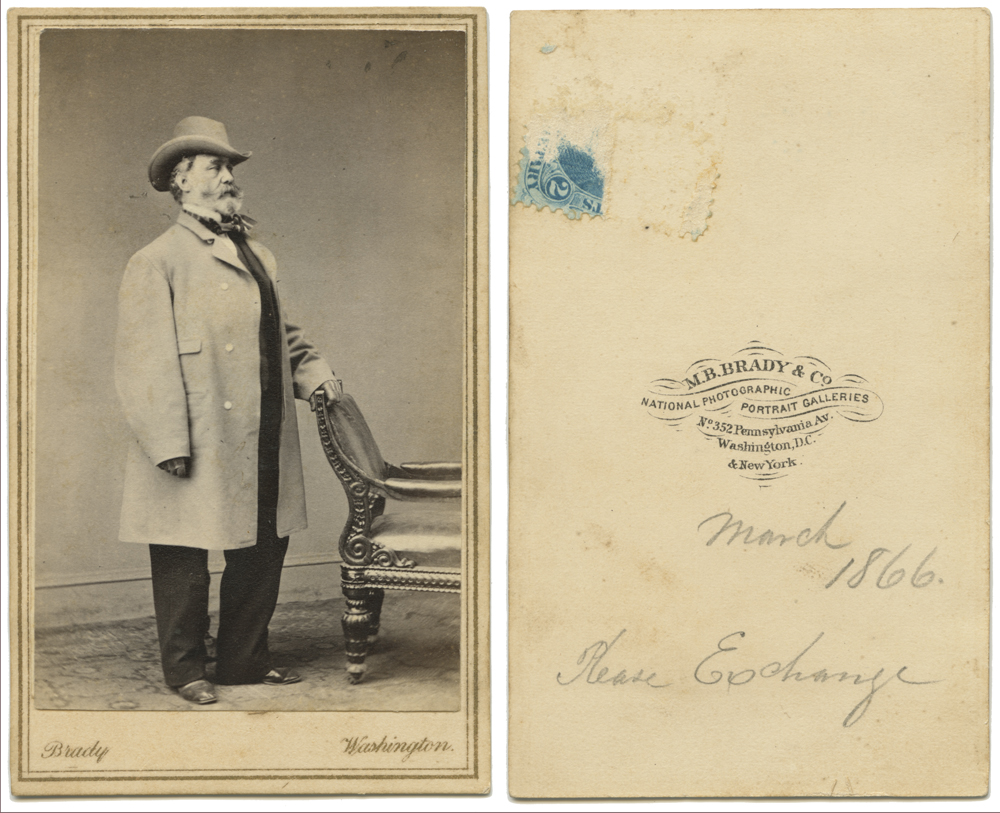
The inscription on the back is a bit cryptic – “Please Exchange”. Exchange for what? Unless they didn’t like the pose, I can’t see what’s wrong with it to want to exchange it. The CDV is actually in excellent condition, with no creases, bent corners, or overall flaws to the print. I’m certainly happy with it!
Gentleman, March 1866, Mathew Brady Studio, Washington DC
He looks “western” with that hat and coat, but that’s not saying much – although the outfit has a cowboy feel to it, he’s obviously a very rich cowboy, as that’s a very fine coat. Brooks Brothers would be proud to hang such a coat in their showroom today.
 dcphotoartist