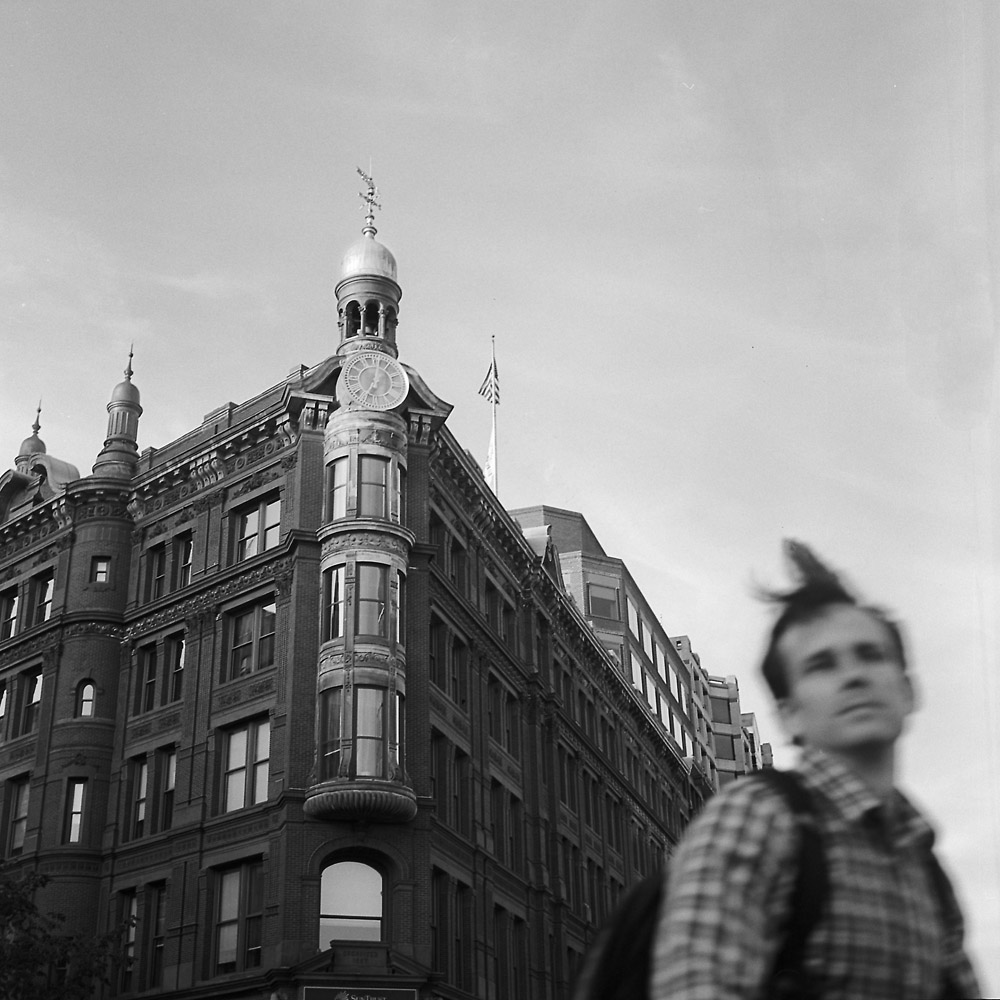
While this shot is at least as much about the SunTrust Bank building in the background, I love how the cyclist passing through the shot turned out – he’s obviously in motion, with a lock of hair blown up and back as he moves. The blurred face makes it somewhat anonymous, an everyman on his way somewhere quickly, turning his head just long enough to look back at the camera looking at him. Actually kind of a rarity these days.
Cyclist, SunTrust Building
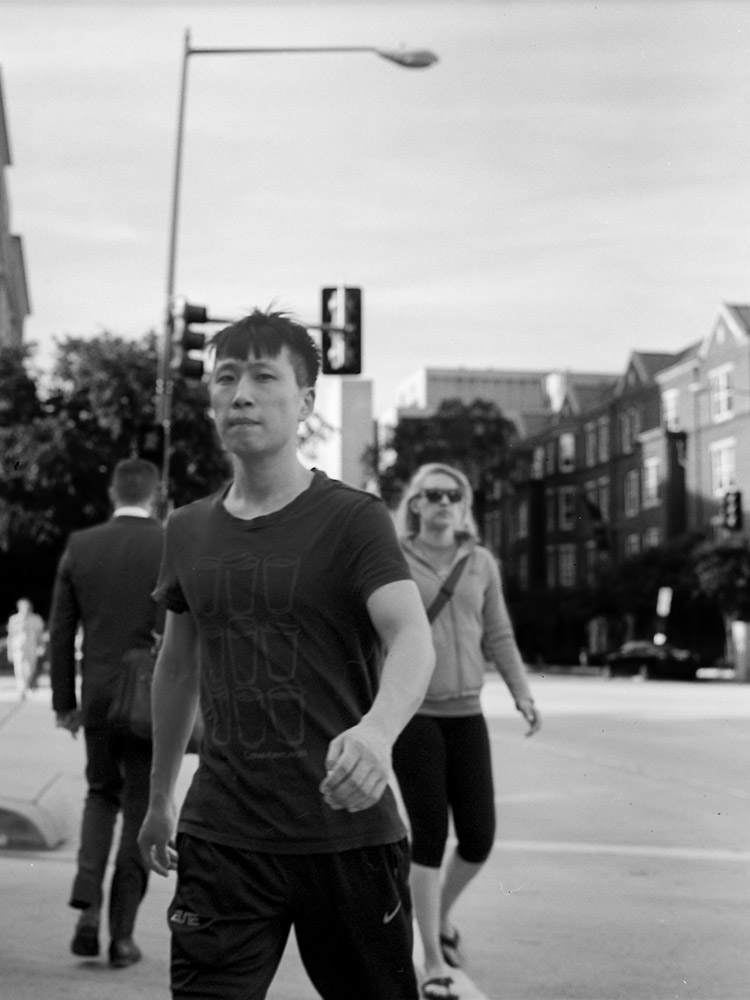
I liked the graphic design of his t-shirt so I set up my camera before he started crossing the street and waited until he was in “the zone” to snap the picture. He’s not tack-sharp because we were both moving at the time, but I think the slight softness of him and the people around him give a sense of movement as well as depth.
Nine Cups T-shirt
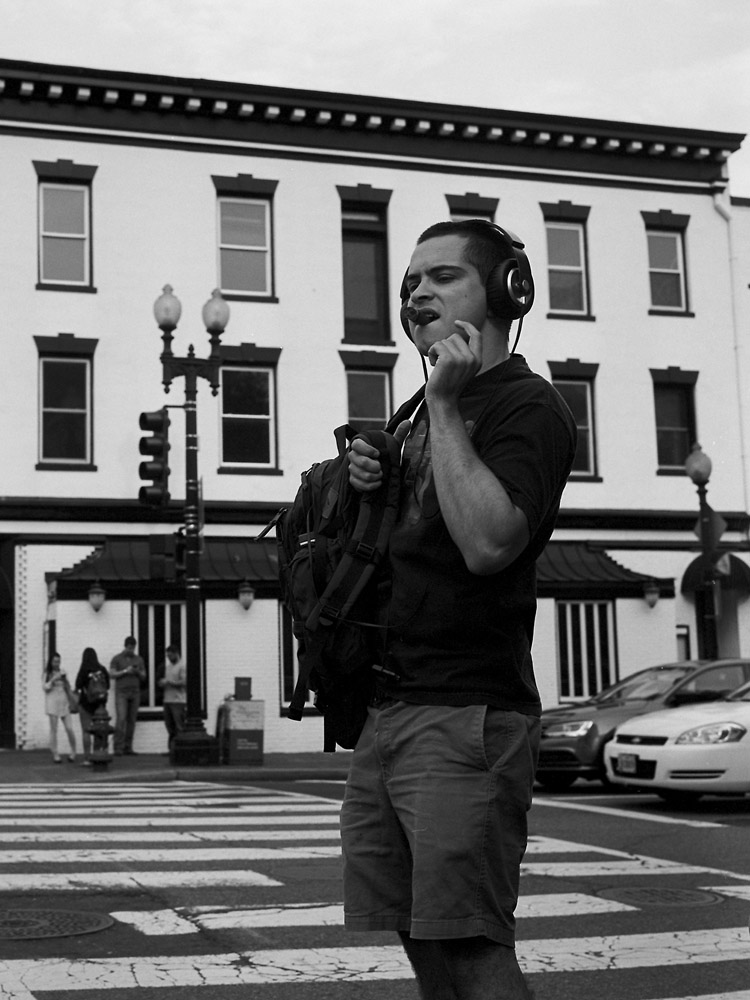
When I saw this character I had to photograph him – giant headphones combined with the fat stogie? How could you NOT?
Ok, well, two duos and a single. I couldn’t leave well enough alone and stick strictly to the article title, as there was one image left that needed to be used.
Trevor, GraysonTrevor, Grayson
At least the odd single is in the same location, same lighting, same film. So it kinda-sorta fits. All three are, as tradition, shot on my Rolleiflex 2.8E, with Kodak Ektar 100.
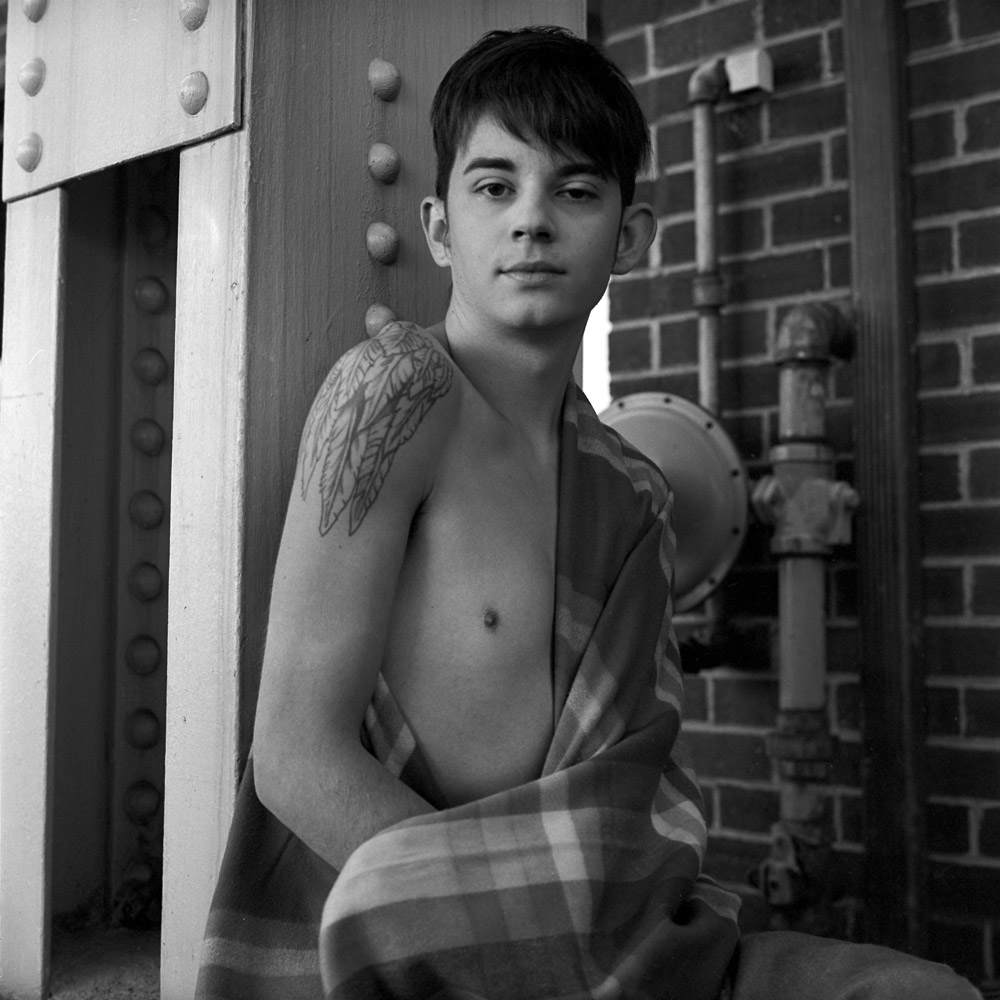
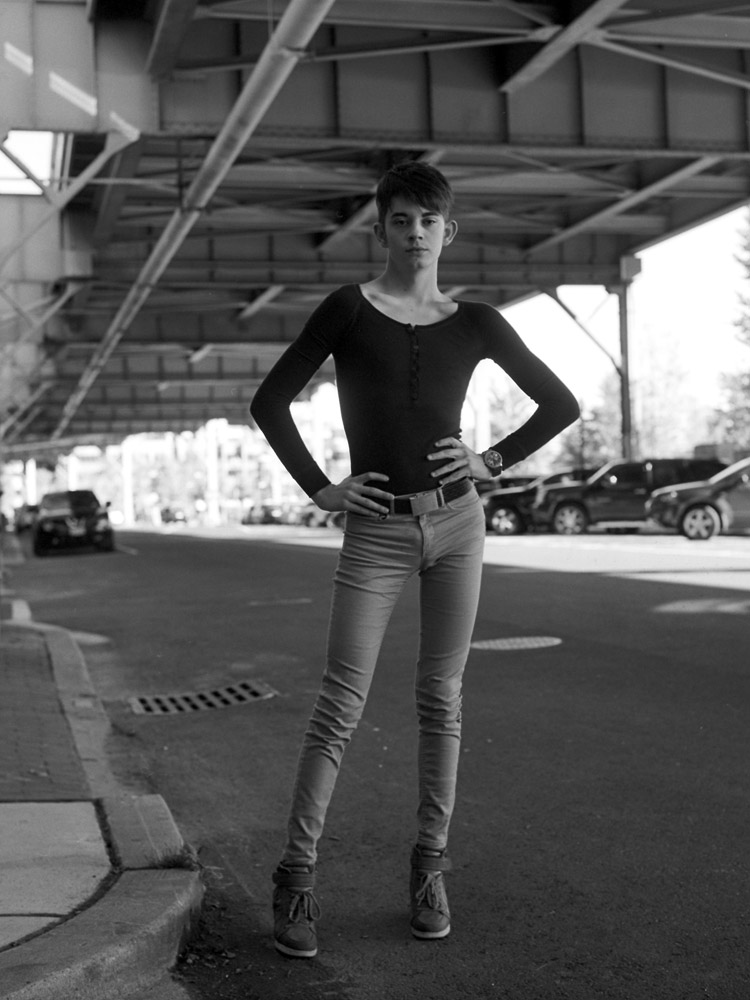
I squeezed in a roll of Tri-X in my shooting with the models. I wish I had had the chance to shoot some frames of Trevor, the other model, in black and white, but such is life. Another time.
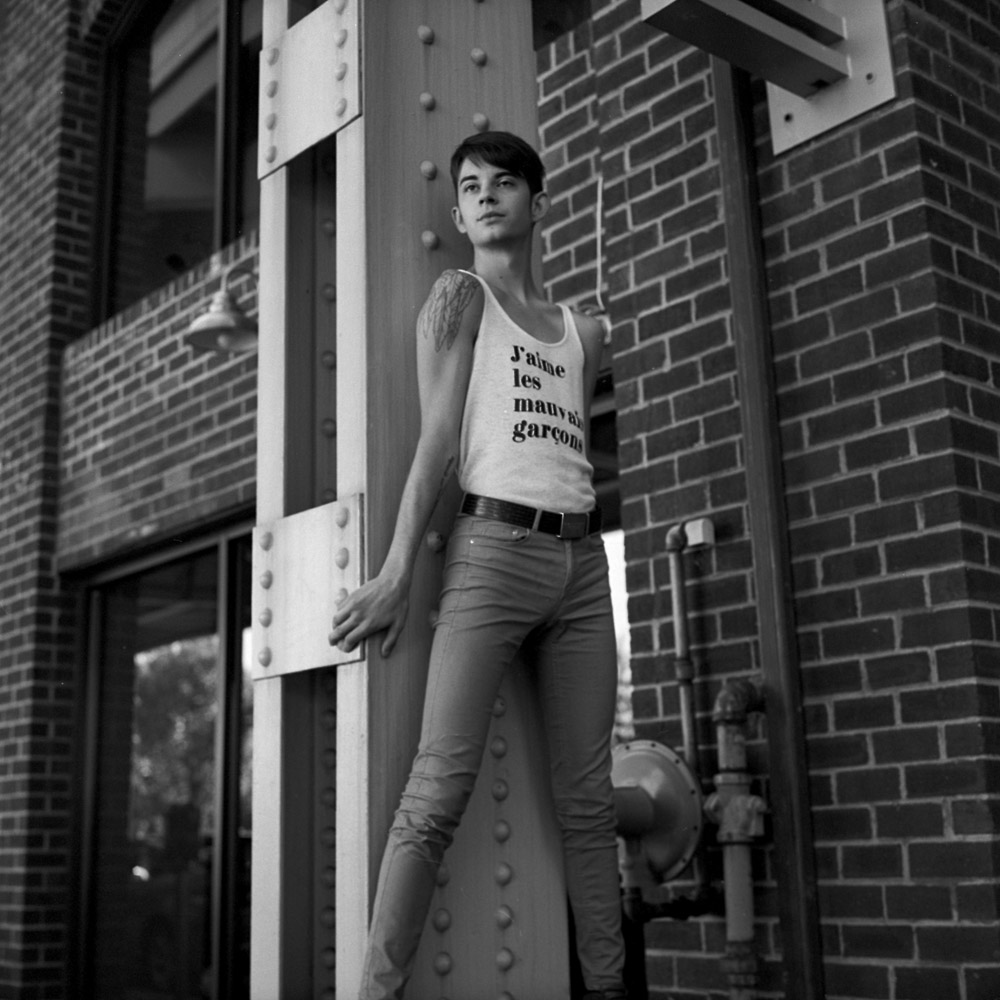
Grayson
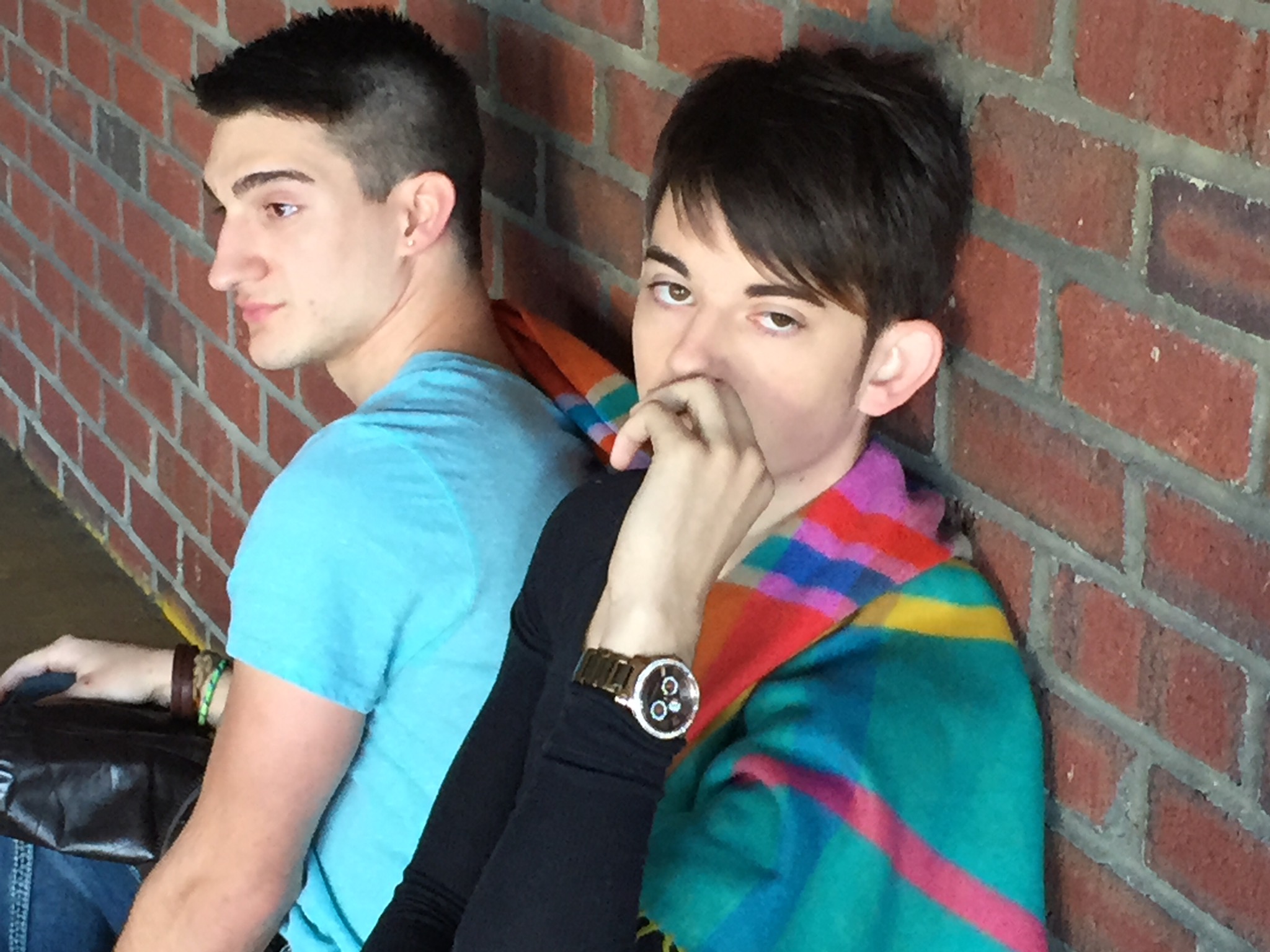
Grayson has a very commanding gaze and makes for a great portrait subject. He uses this to compensate for an otherwise willowy physique (not that there’s anything wrong with willowy).
Grayson
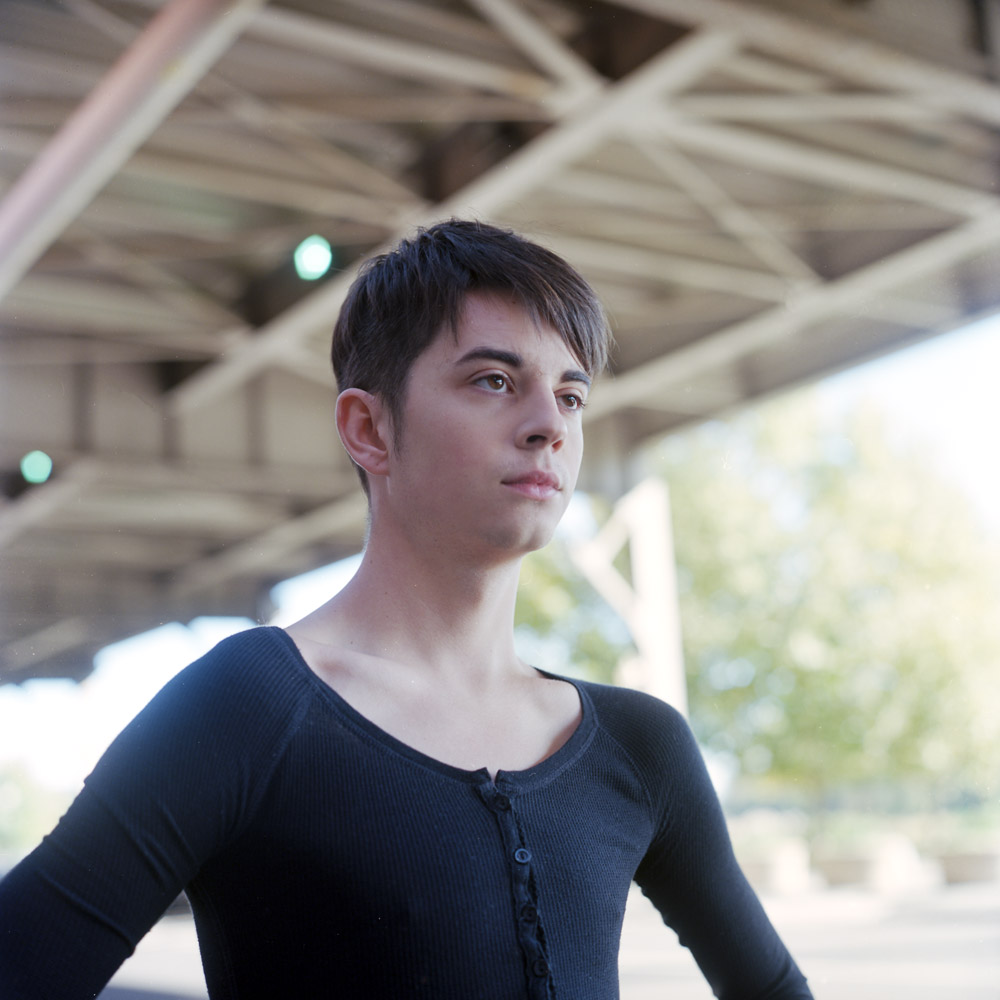
We shot all of these down under the Whitehurst Freeway where it runs parallel to the Potomac River on the edge of Georgetown. Despite the deep shade it creates, it makes for some beautiful, soft light.
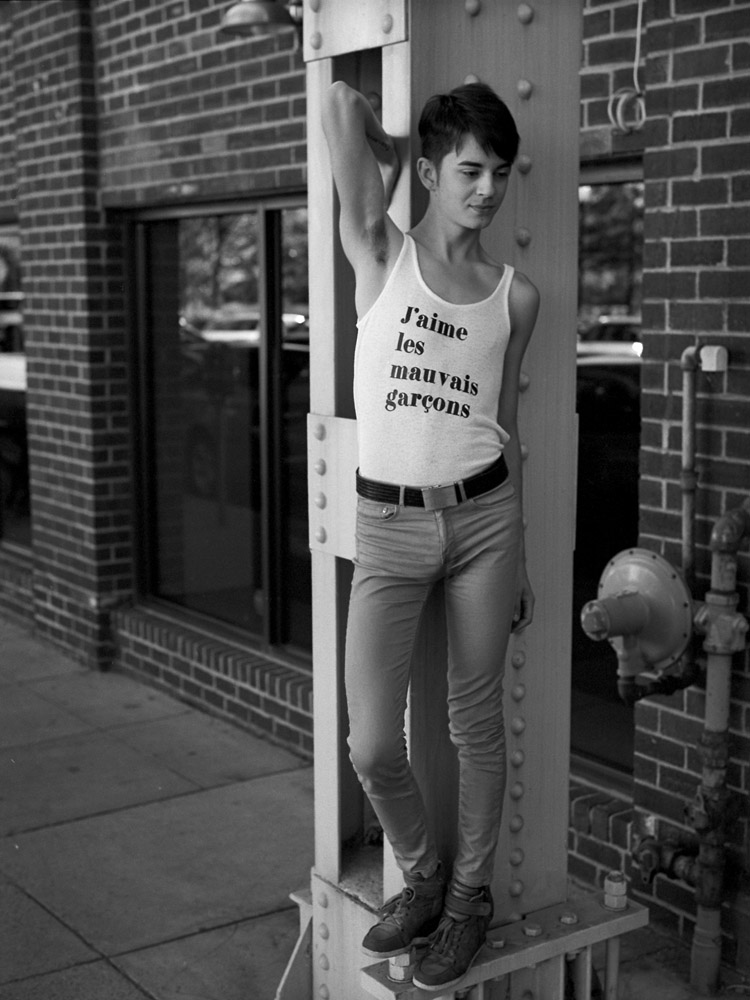
Grayson
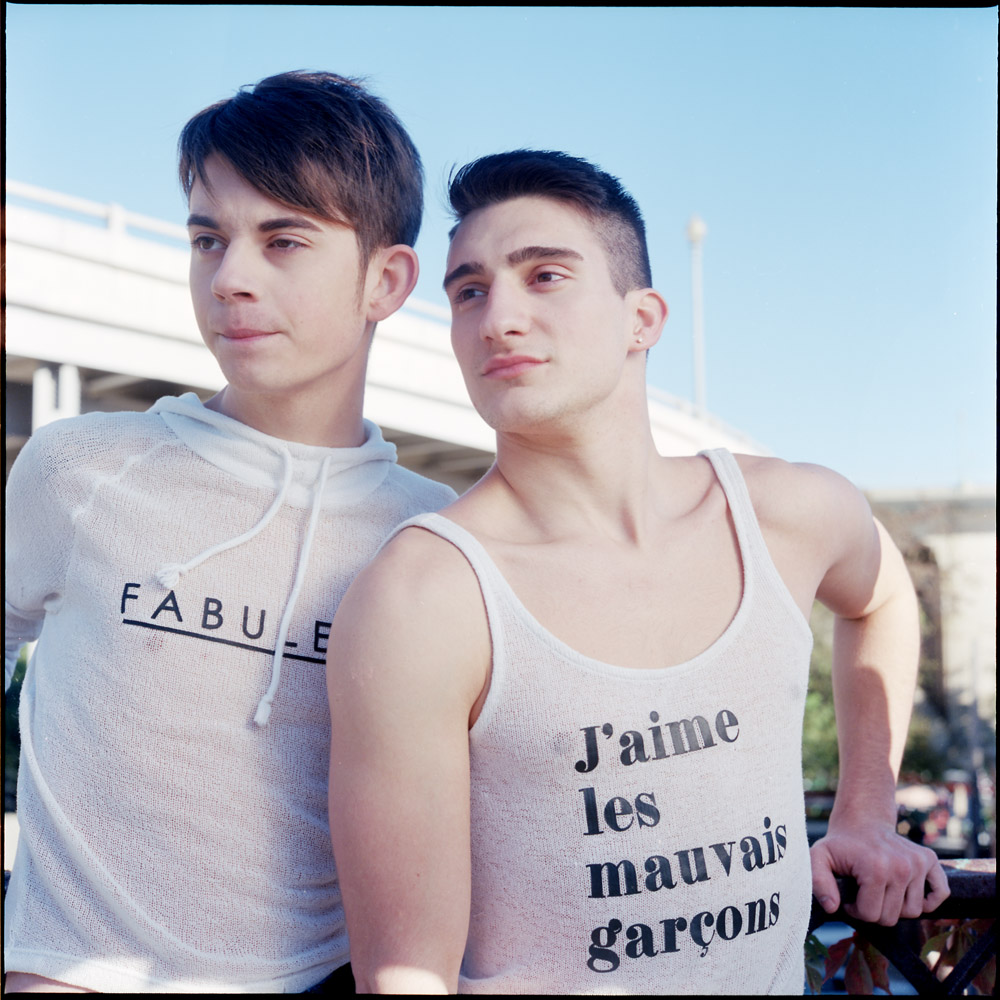
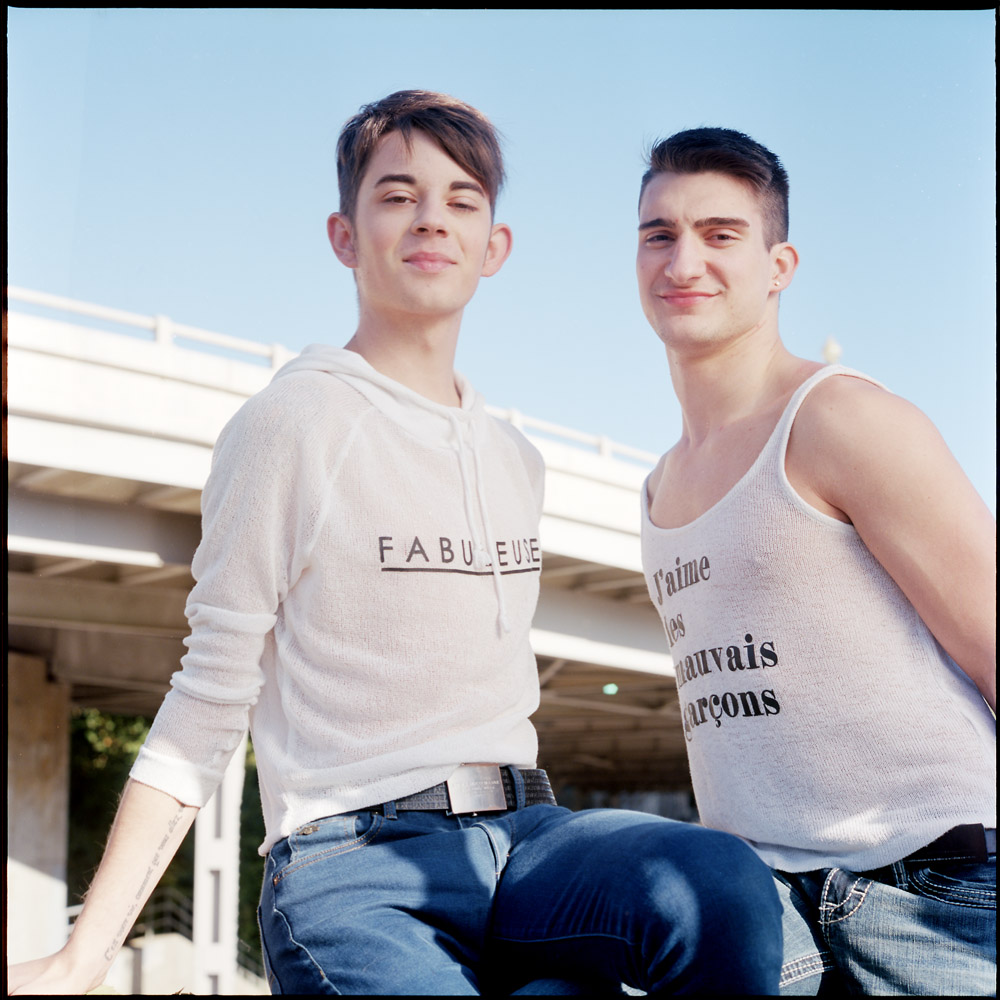
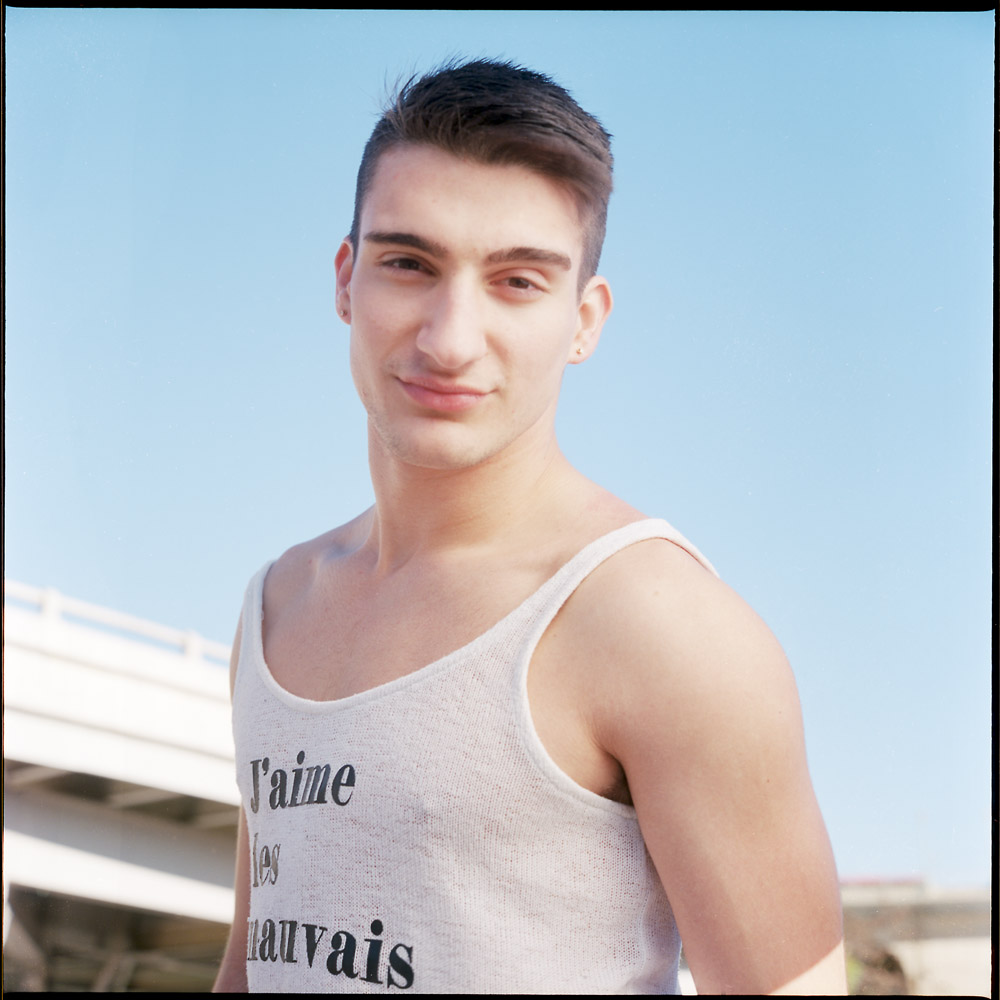
The tank top reads “I like bad boys” in French. It was Grayson’s own choice of wardrobe – very fun and cheeky.
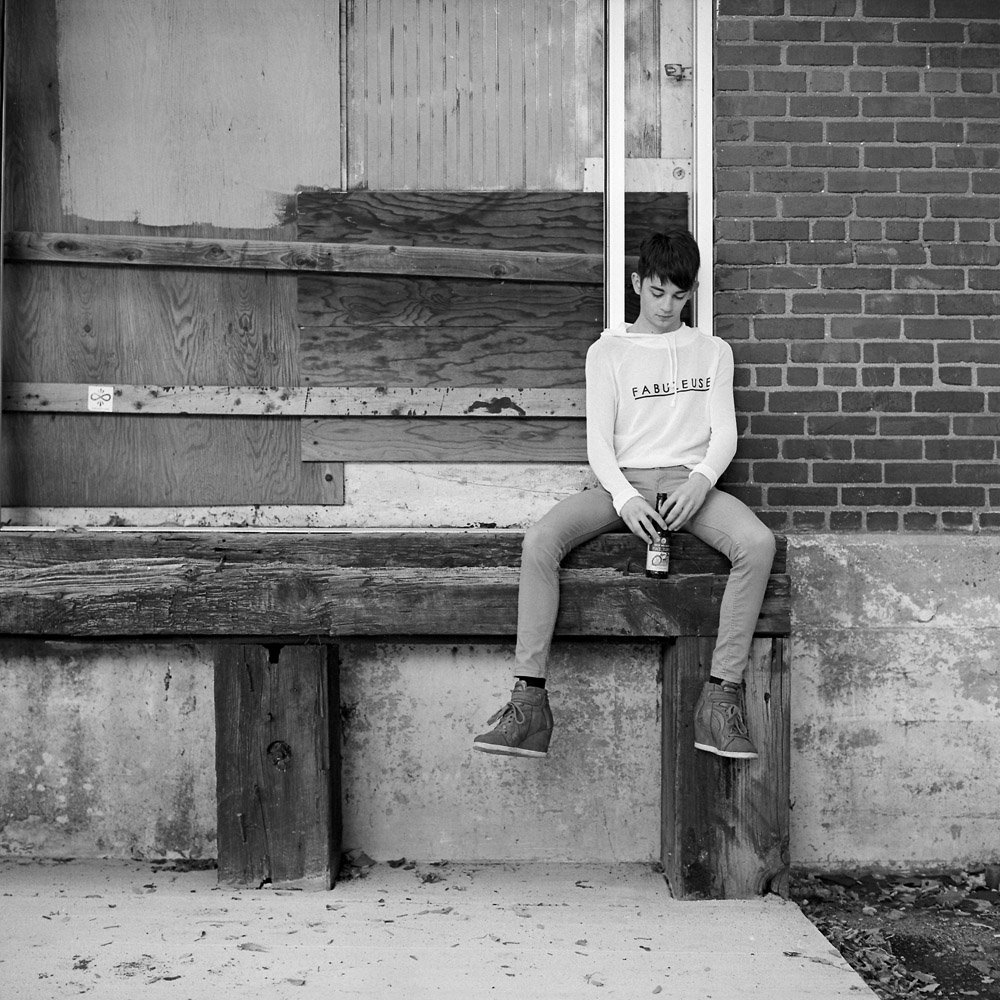
Grayson
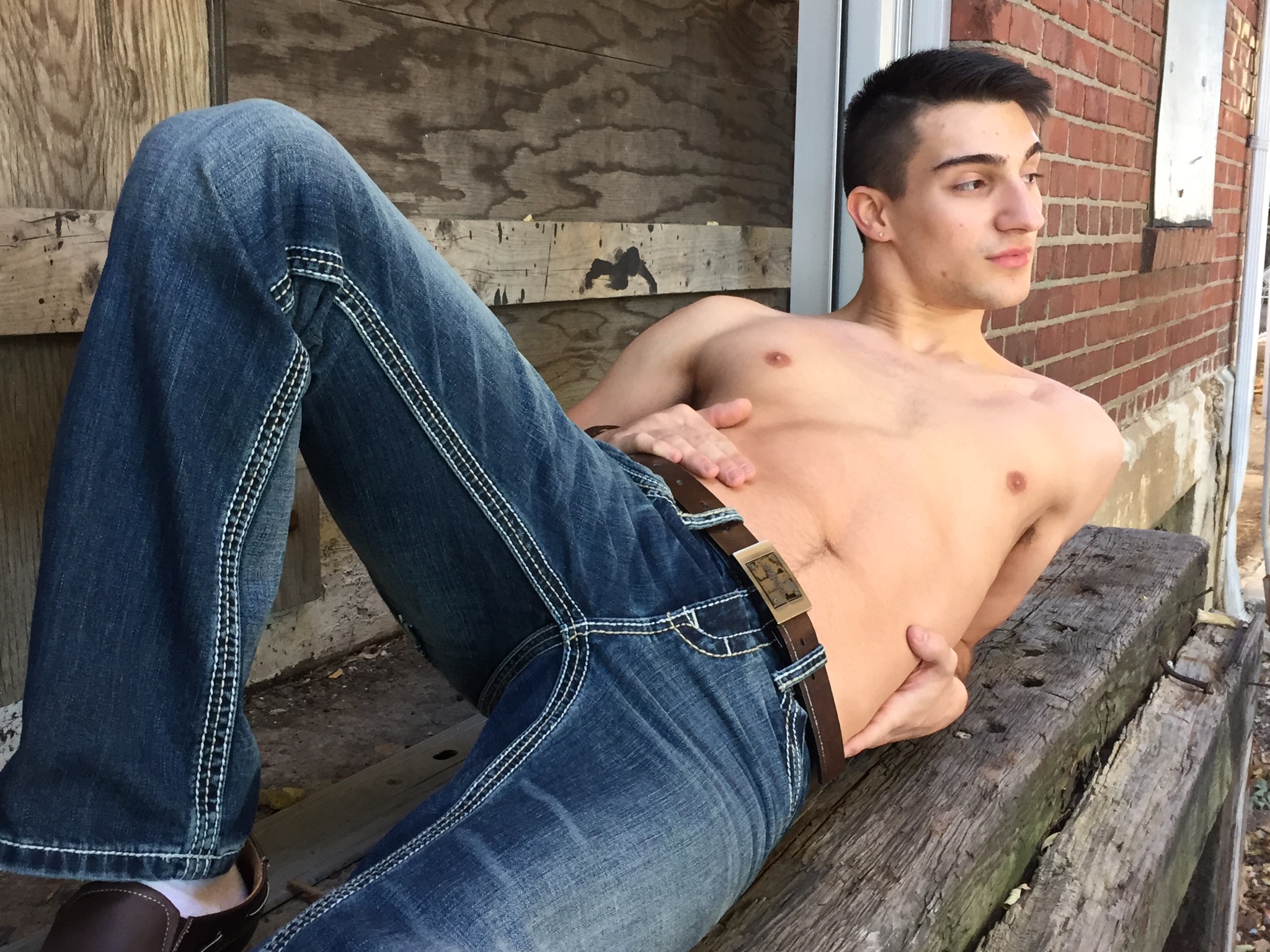
The last shot was at a boarded-up building tucked away under the freeway. I’m surprised given the value of real estate in Georgetown that such a place could exist. Whatever, it makes for a neat backdrop for models. The bottle of Fat Tire was found en-situ, and trust me, nobody drank from it.
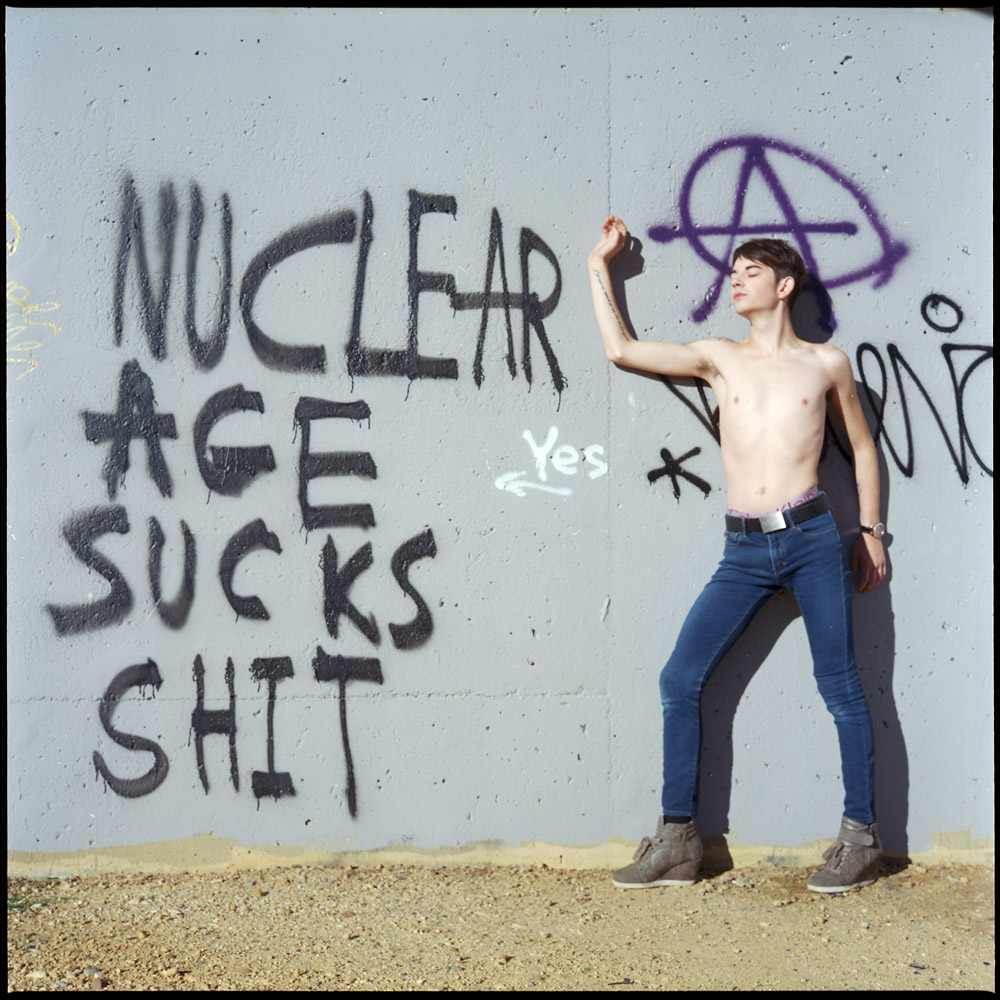
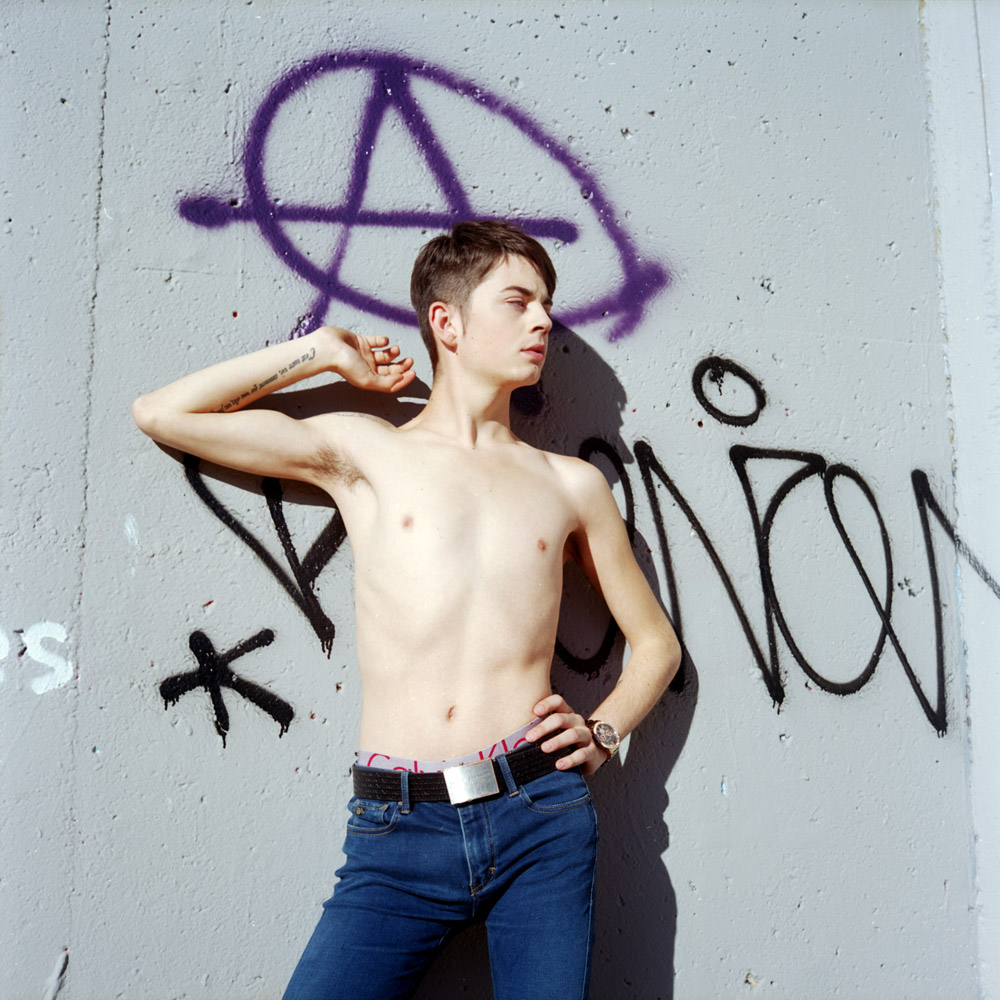
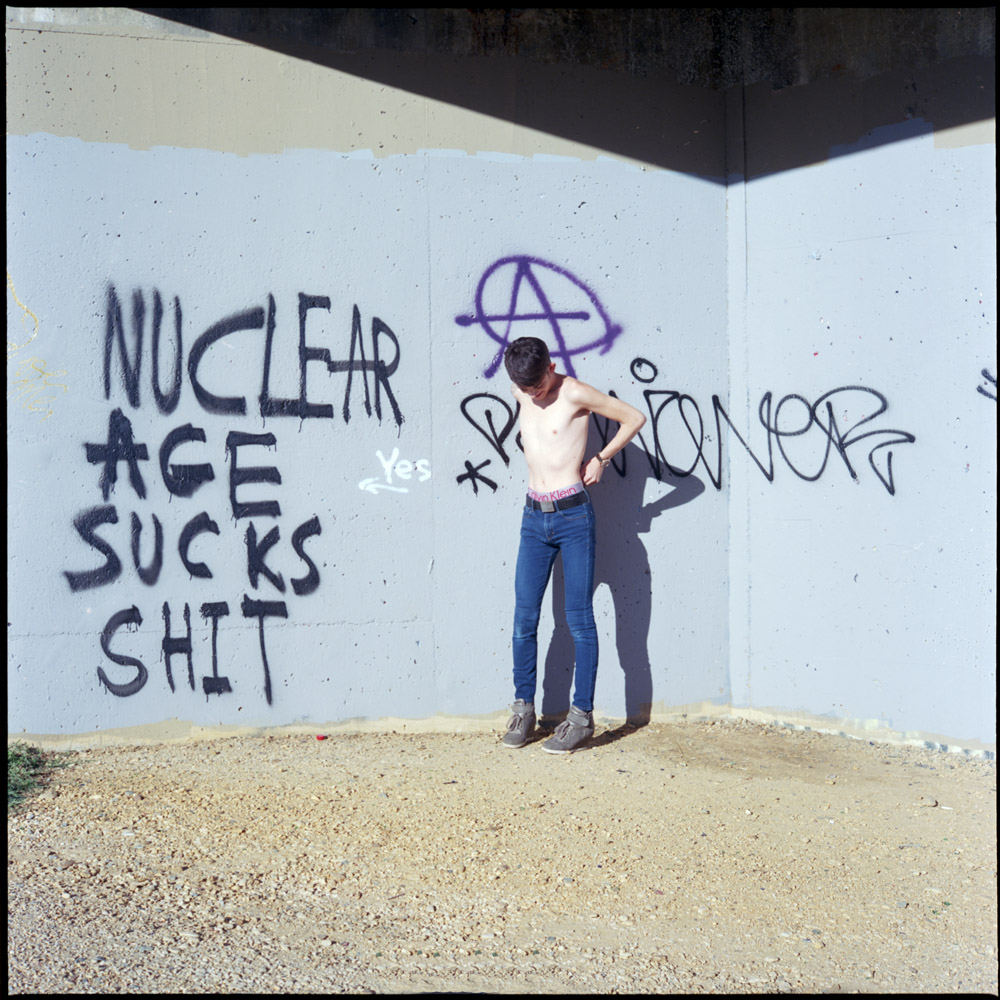
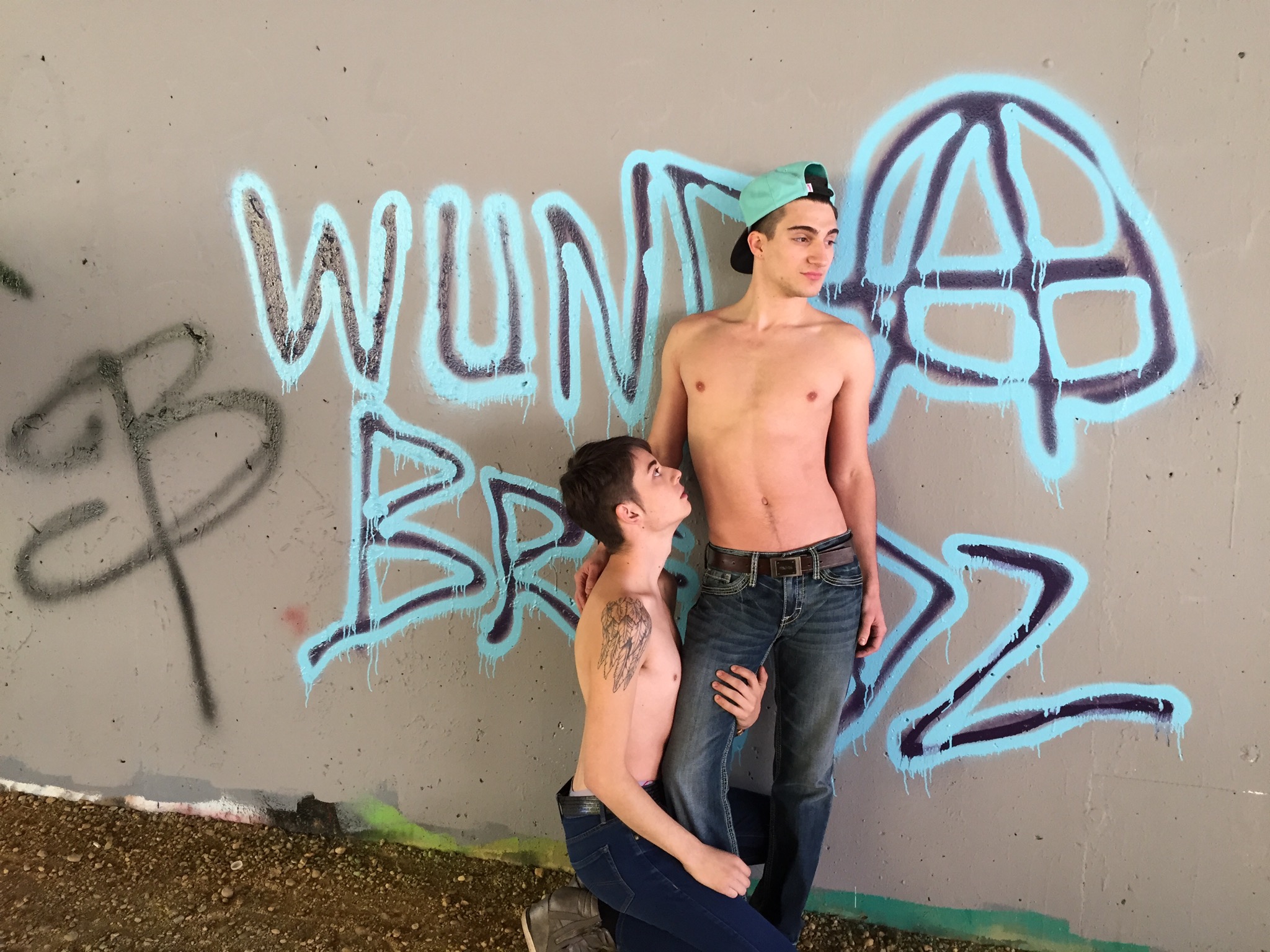
While we were out scouting a location, Grayson saw this bit of graffiti and said, “I want my picture taken next to a sign that says, ‘Nuclear Age Sucks Shit’. The colors were cool, the message edgy, and the model was inspired, so who was I to say no? I’m going to keep it on my list of places to shoot.
Grayson
The Anarchy symbol made for a kind of halo in purple for Grayson.
Grayson
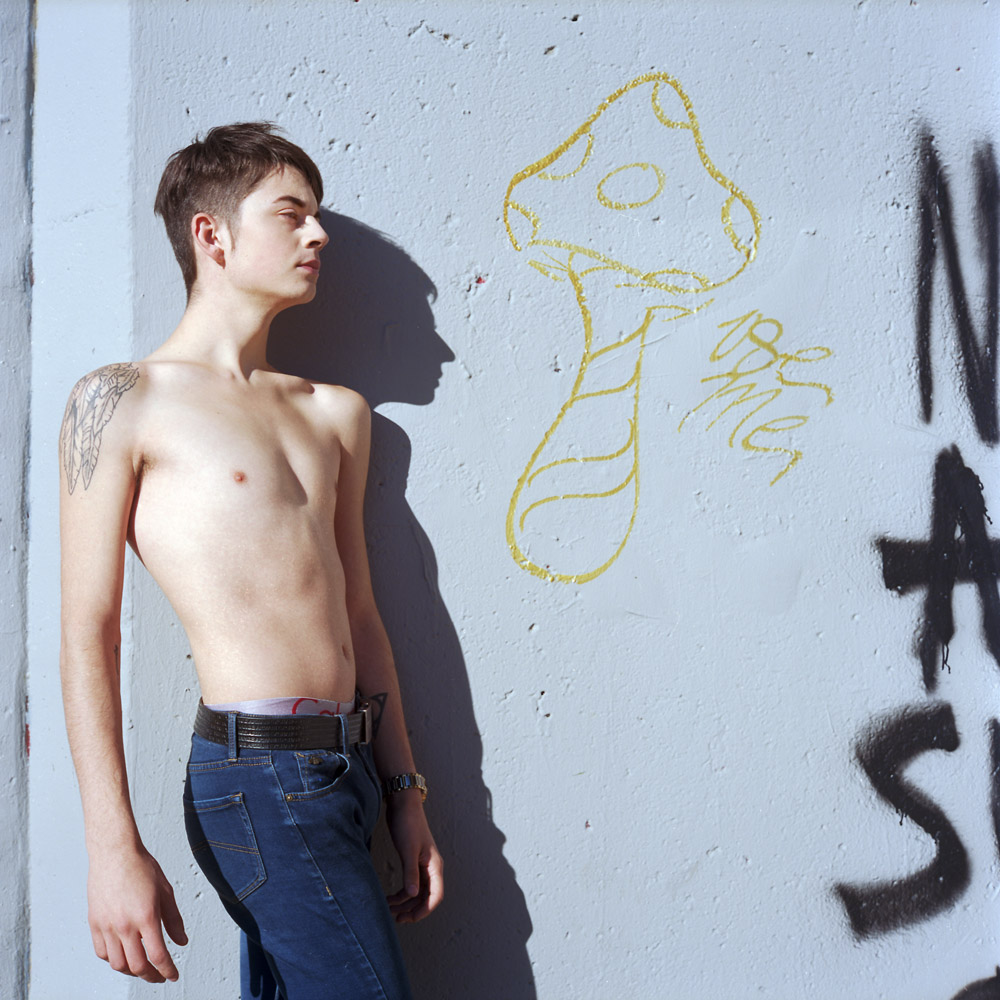
In this case, the diffuser wasn’t big enough to soften the light on the whole scene, and the hard-edged shadow on the wall made perfect sense given the message of the mural – the shadows recall the kind of shadows cast by the blast of a nuclear weapon.
Grayson
In this last shot, I moved in tight to get the golden mushroom stenciled on the wall. It just seemed a fitting counterpart to the rest of the graffiti.
Grayson
Again, all shots were taken on Kodak Ektar 100 in my Rolleiflex. It gives punchy saturation when you need it without being over-the-top.
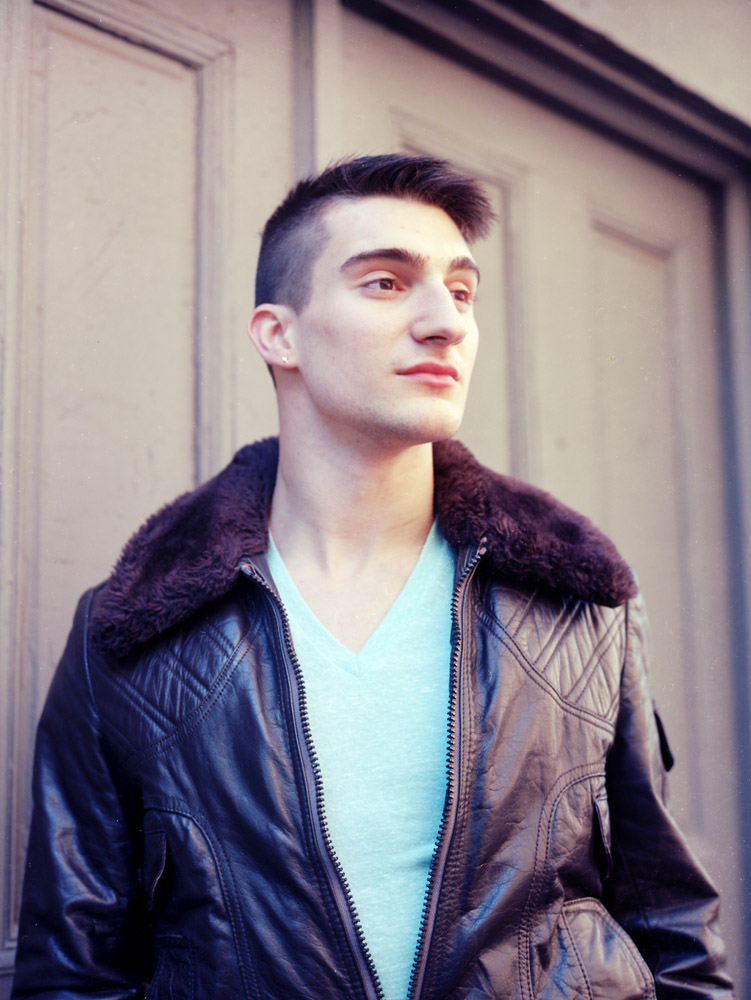
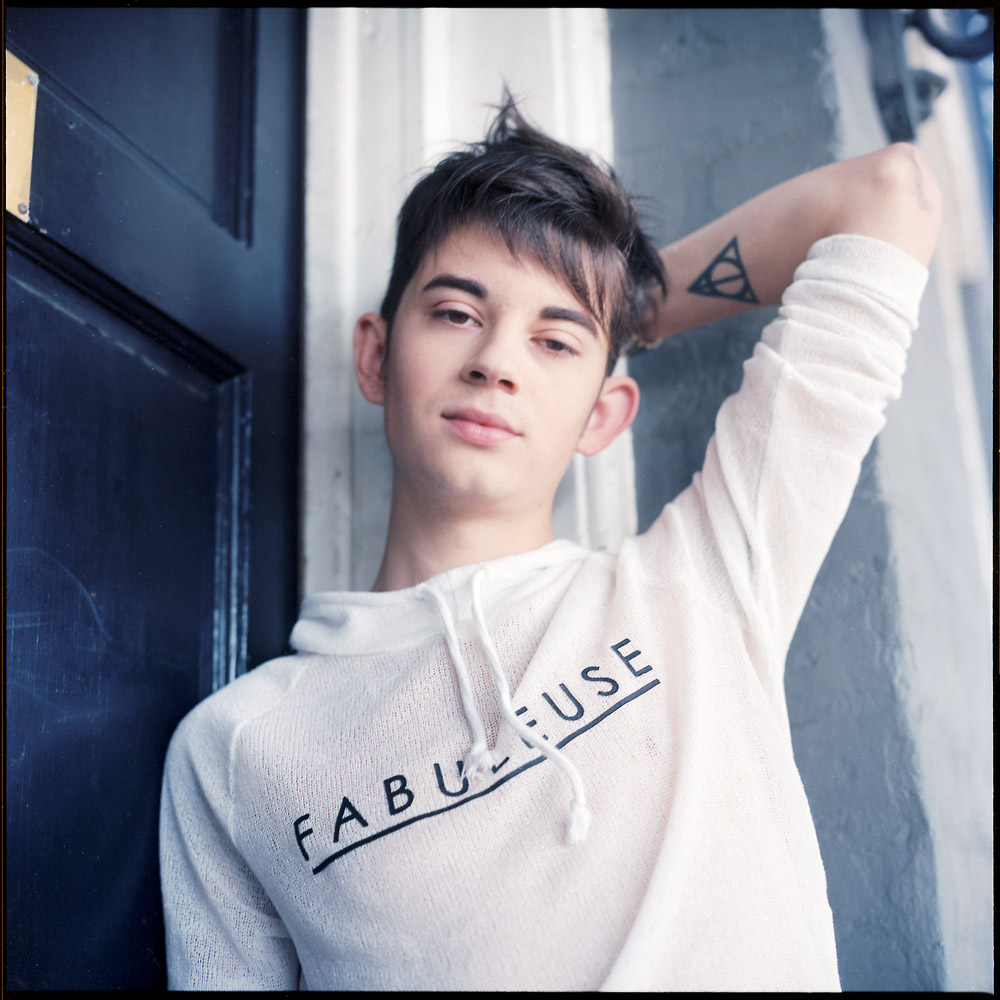
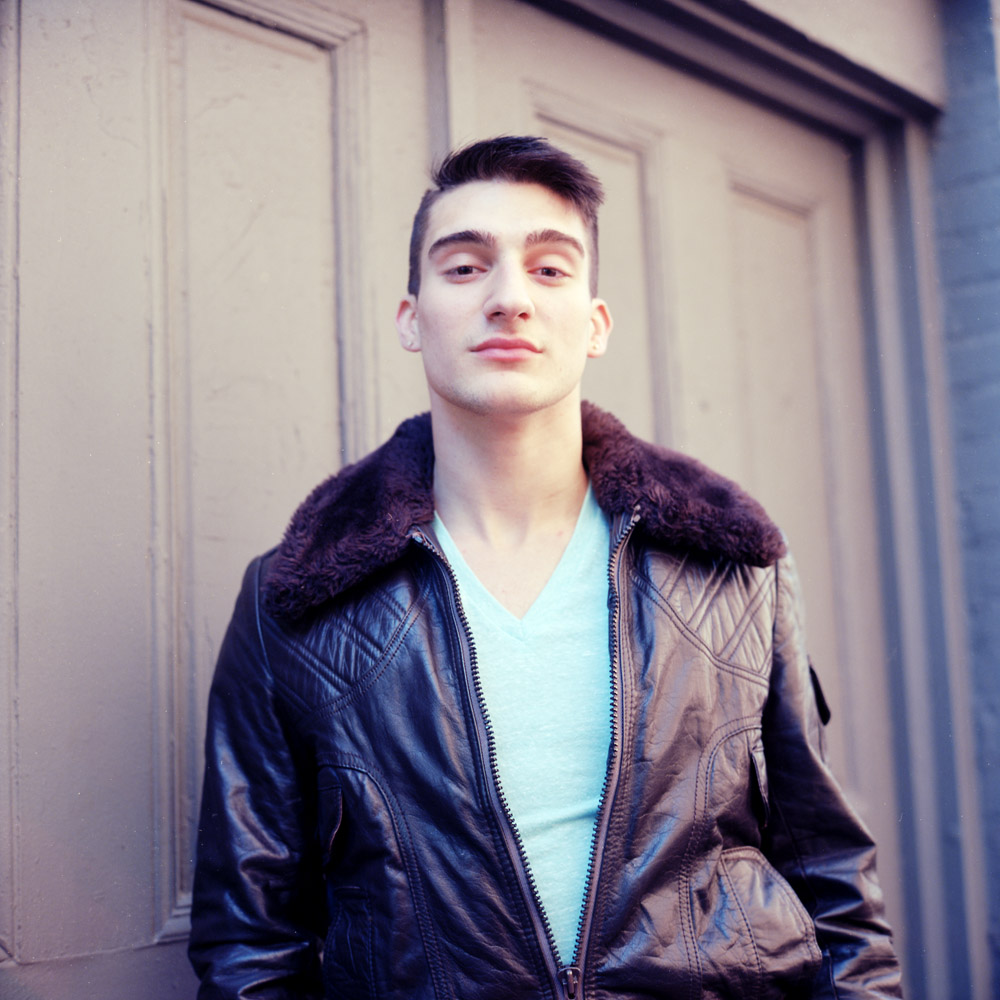
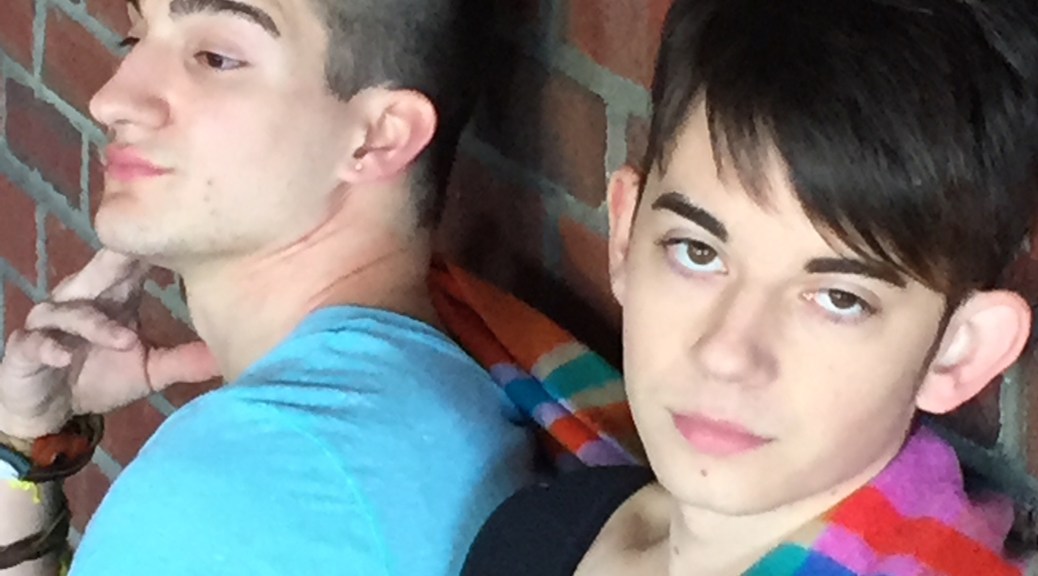
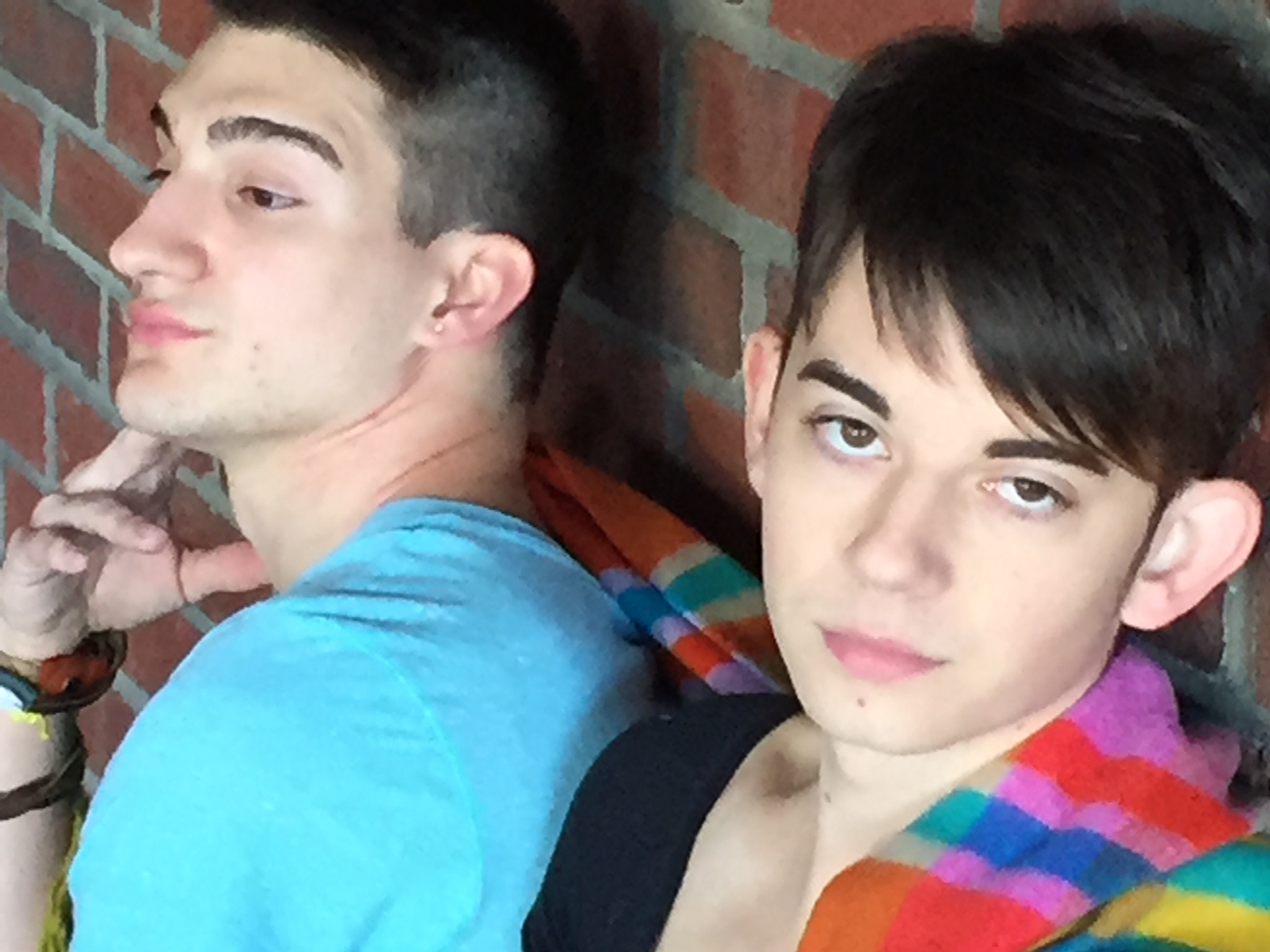
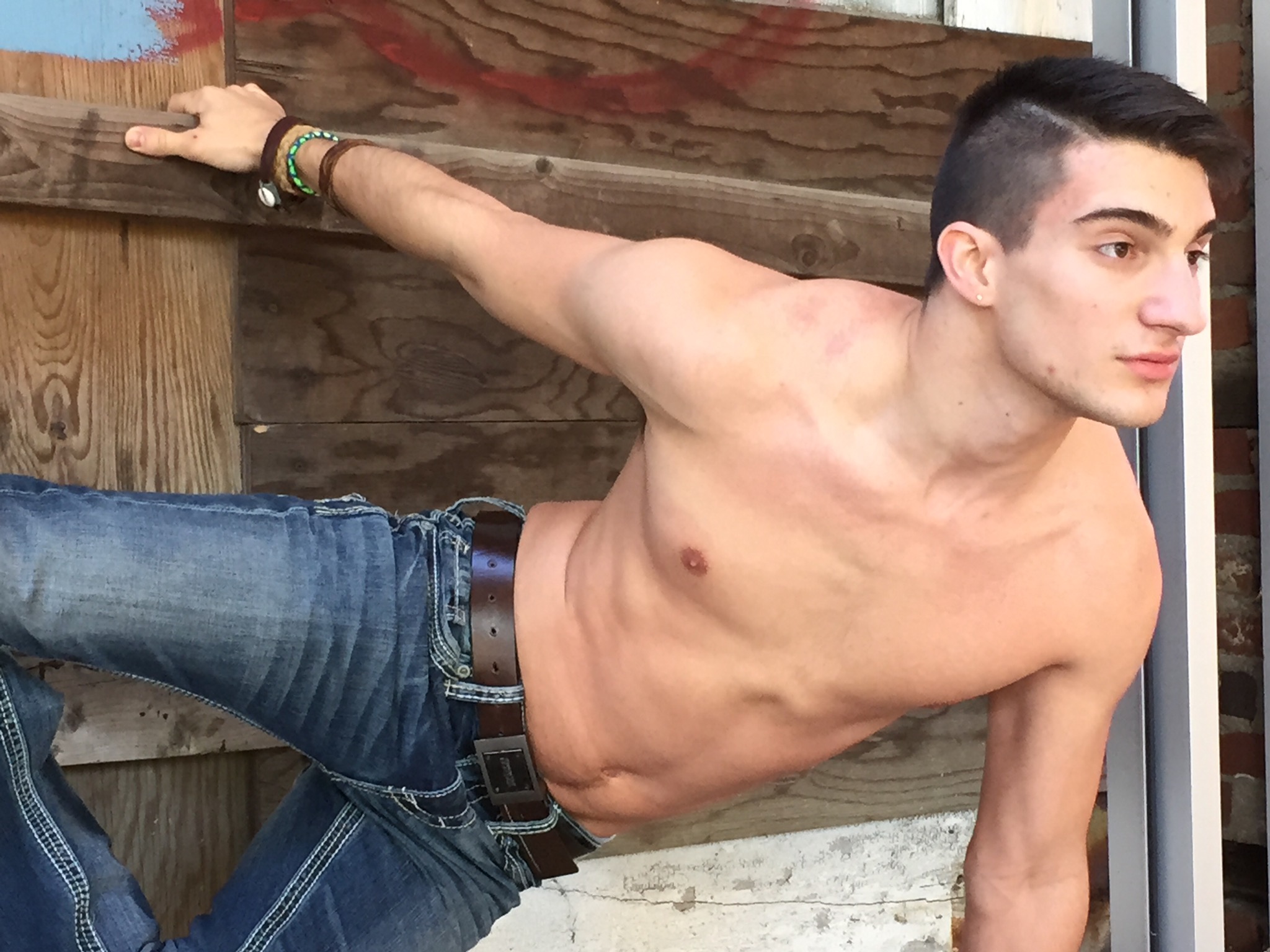
Here are five portraits I did of the models last Saturday. Trevor and Grayson were easy to work with, and I would be happy to give a reference for them to anyone who wants to work with them.
TrevorGraysonTrevorGraysonTrevor
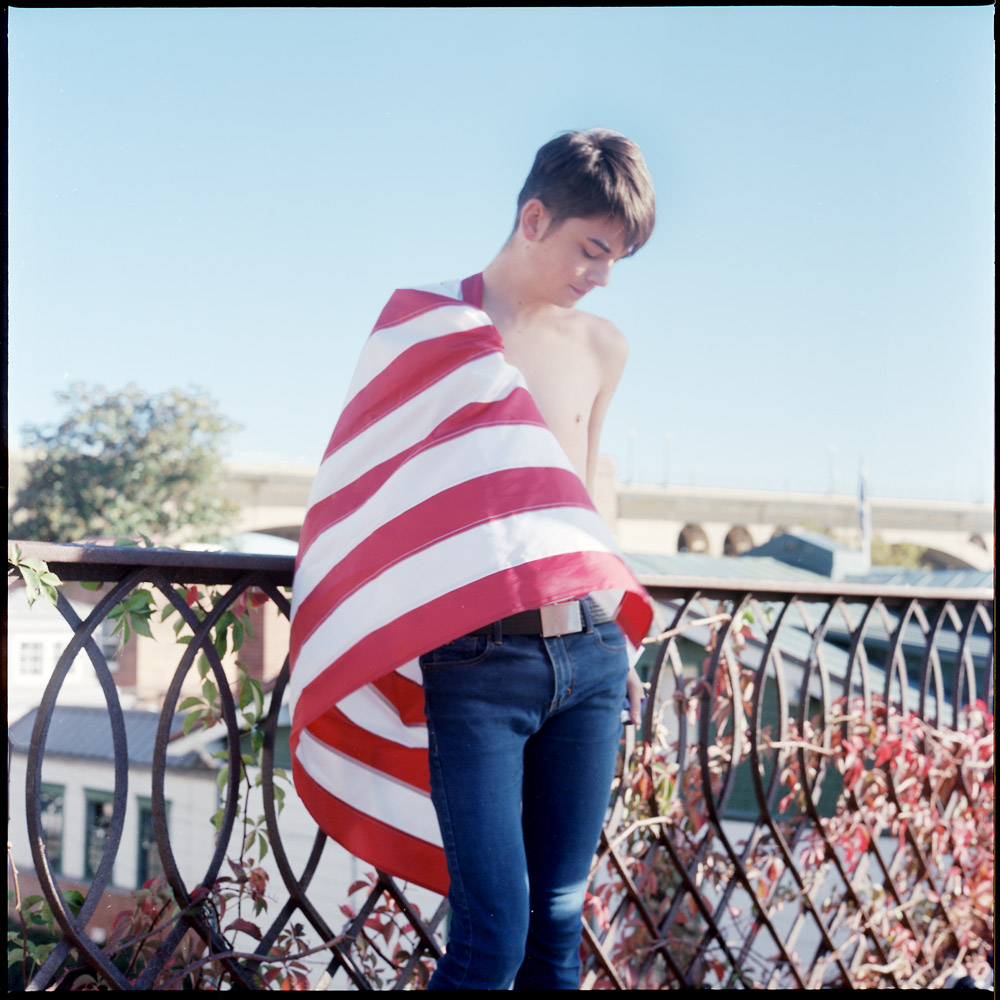
All images were shot on Kodak Ektar 100 with my Rolleiflex 2.8E. I wanted to make a point out of this because I hear lots of people saying “I can’t get good portraits with Ektar – I don’t like the skin tones”. I haven’t had to do anything special to get these, other than the obvious minor retouch to remove a pimple or two (these guys are in their early 20s after all). For the shot of Trevor in bright direct sunlight, I used a white diffuser disc to soften the light on his face. Otherwise these were just natural light. The shots of Trevor in the aviator jacket were taken in open shade in an alley, so no diffuser was needed, as was the shot of Grayson wearing the black cotton top and the one in the white mesh hoodie.
Today, I had a group shoot with two models and several other photographers. We wandered around the streets of Georgetown, one of the oldest neighborhoods in DC and once a separate town but merged with DC in the early years of the Republic. Of course, I shot the majority of my images on my Rolleiflexes (4 rolls Ektar 100 and one roll Tri-X). But I also put my new iPhone 6 to the test. It is surprisingly good- these look to me to be as good as the shots I take with my Canon 5D. Look and judge for yourself:
This past weekend I took a hike on Teddy Roosevelt Island. For those not in the know, Roosevelt Island is an island in the Potomac River across from Georgetown in Washington DC. The island is accessed from the Virginia side of the river. I have driven past TR for the past 35 years but never stopped to visit because I was always on my way to something “more pressing” and/or I was on the wrong side of the expressway passing it at the time I thought about stopping (The parking lot is only accessible from the northbound side of the expressway). Well, on Saturday, I had no place I HAD to be at any specific time, I had the Rolleiflex with a bunch of film, and no better excuse to not stop. So I pulled in and parked and took a walk around the circumference of the island.
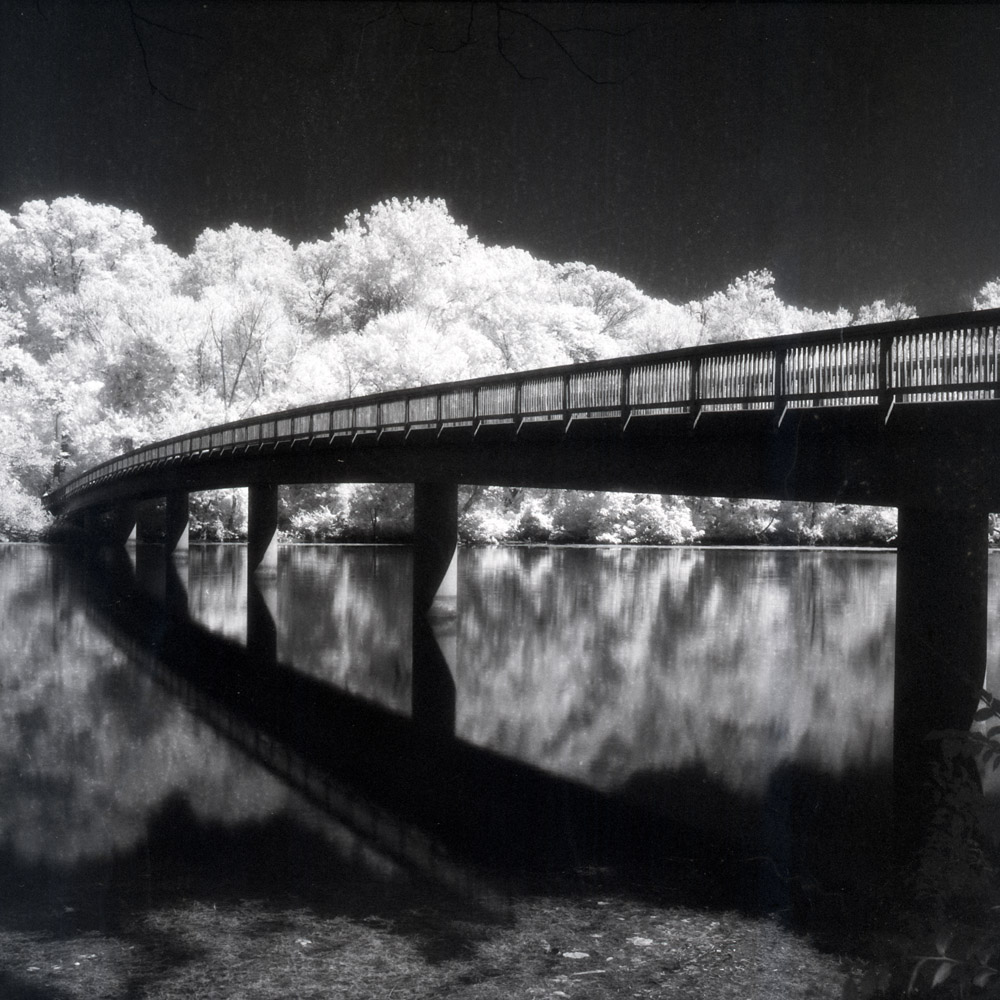
Bridge to Teddy Roosevelt Island
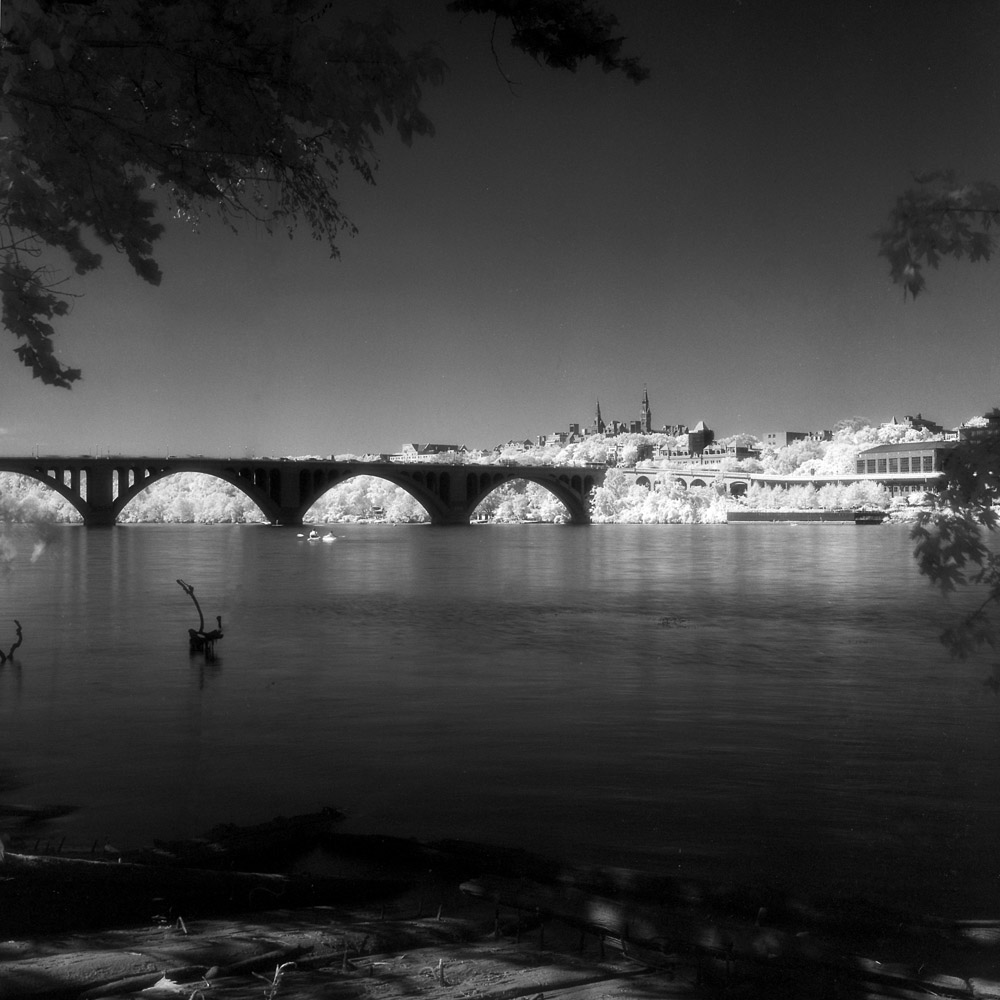
I loaded up the camera with some Maco 820c Aura infrared film. I’ve had this film sitting in my fridge for eight, nine years, (it outdated in 2007) so I wanted to try a couple rolls and see if it was still any good. I was concerned because other Infrared films I’ve used have NOT aged well. The infrared sensitizing dyes apparently are the bits that degenerate quickly and help build base fog (a bad thing). Obviously, this has not been a problem with the Maco IR.
One downside to the Maco is that it is a VERY slow emulsion. Using the Hoya R72 filter, consensus judgment is that it is best to set your meter to ISO 1 and use those readings, or if your meter won’t go that low, use the Sunny 16 rule and base your exposure on 1 second at f16 and go from there.
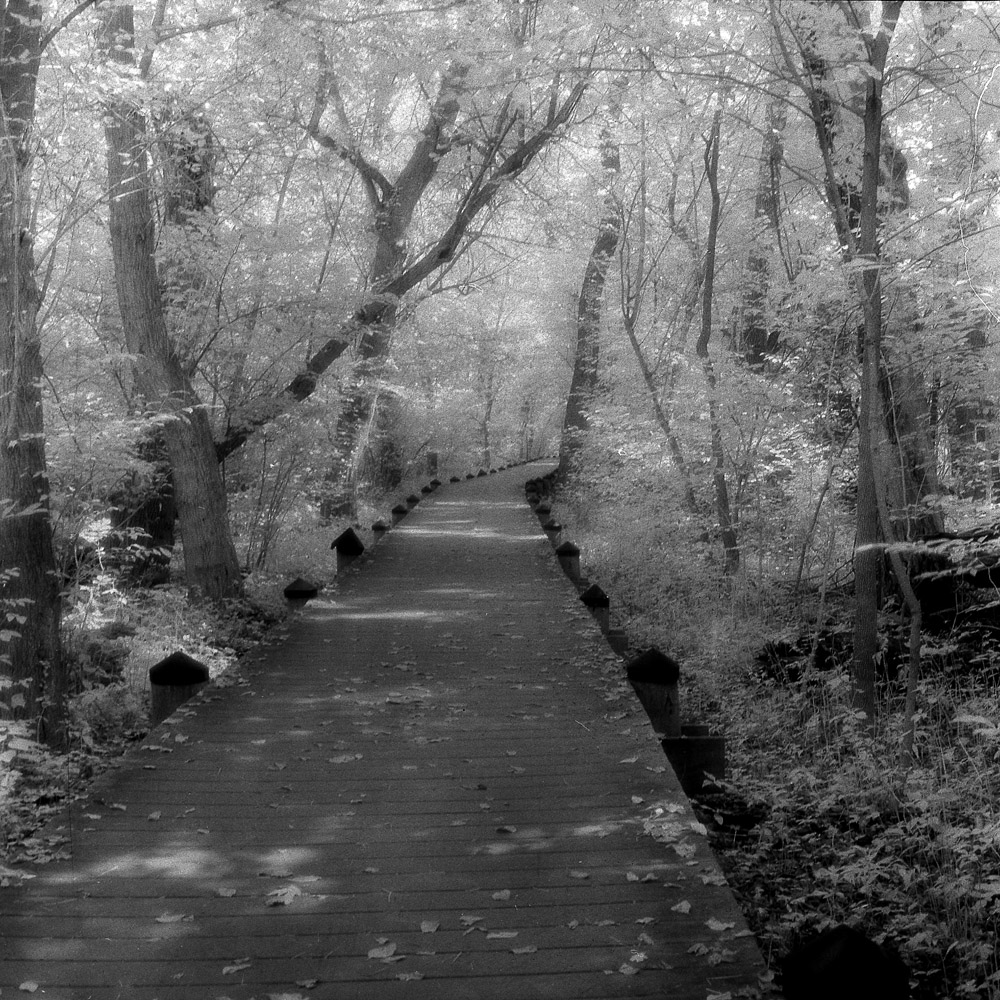
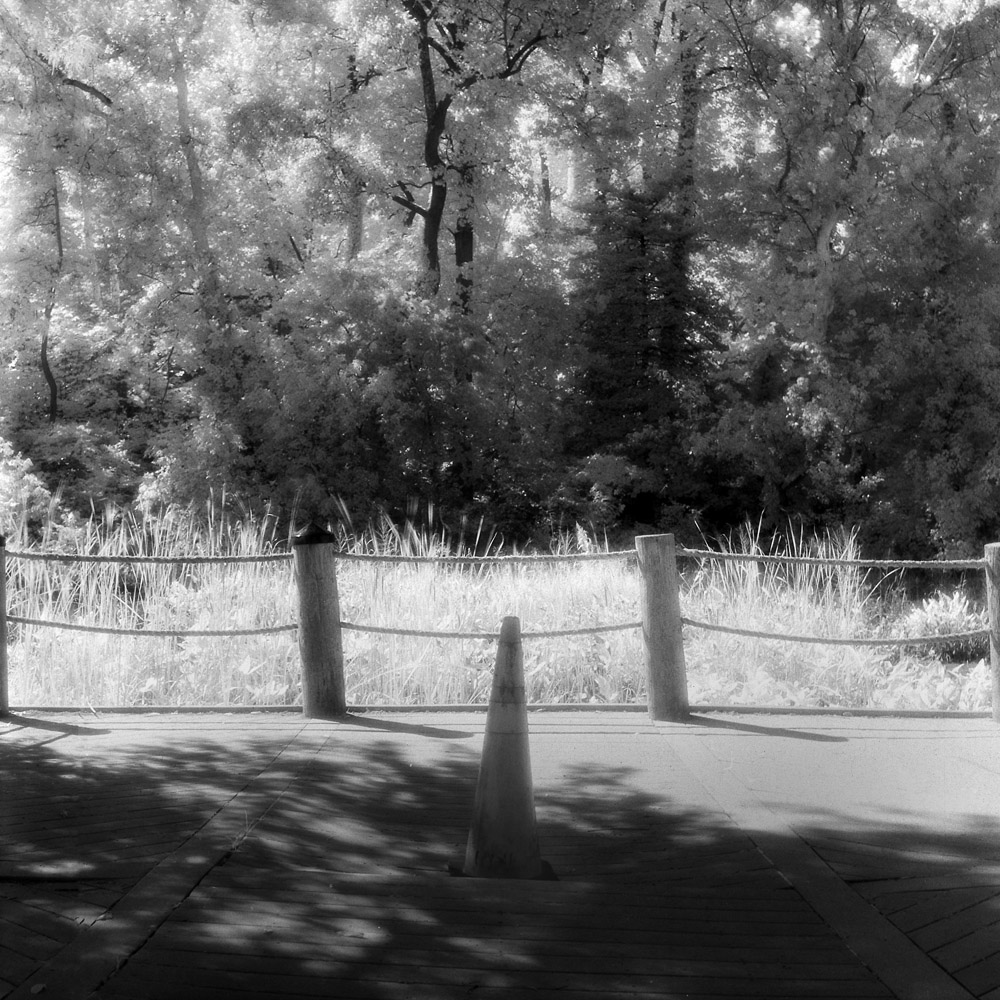
In this image, I was winging it on the exposure – my meter doesn’t have ISO 1 as an option. I was in some pretty deep shade, so I figured I would have a very long exposure, just guessing from overall lighting conditions and knowing that the film has very poor reciprocity failure – an indicated 1 second exposure needs two seconds, an indicated two needs four, a four second exposure needs eight, an eight second exposure needs 24 seconds, 15 seconds needs 60, and 30 seconds needs 180. I guesstimated this would require between 30 and 60 seconds, accounting for the reciprocity. Well, I overestimated by a good 50-75%. But as you can see that wasn’t that horrible a thing – I got a very useable image.
Boardwalk Path, Teddy Roosevelt Island
This is the view from the north end of the island, with Key Bridge and Georgetown University in the background. I took a gamble on this photo because there were two kayakers in the river and I would normally have expected them to turn into indistinct blurs with a two second exposure like I gave this scene. But I took a chance as they were in a spot in the river where they could effectively “hover” – and they did. So it worked.
Key Bridge, Georgetown, Kayakers
What is it with me and safety cones? I keep finding them everywhere and photographing them. This time, in infrared.
Safety Cone, Marsh Overlook, Teddy Roosevelt Island
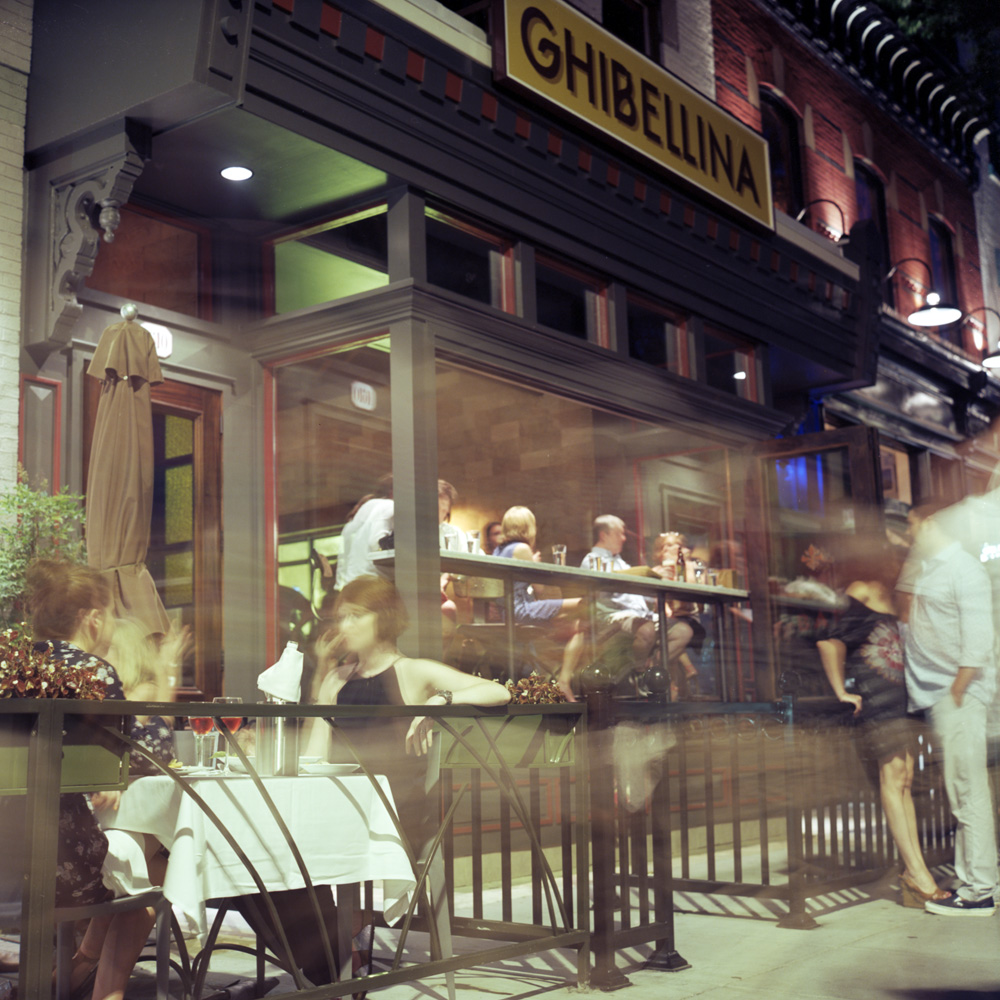
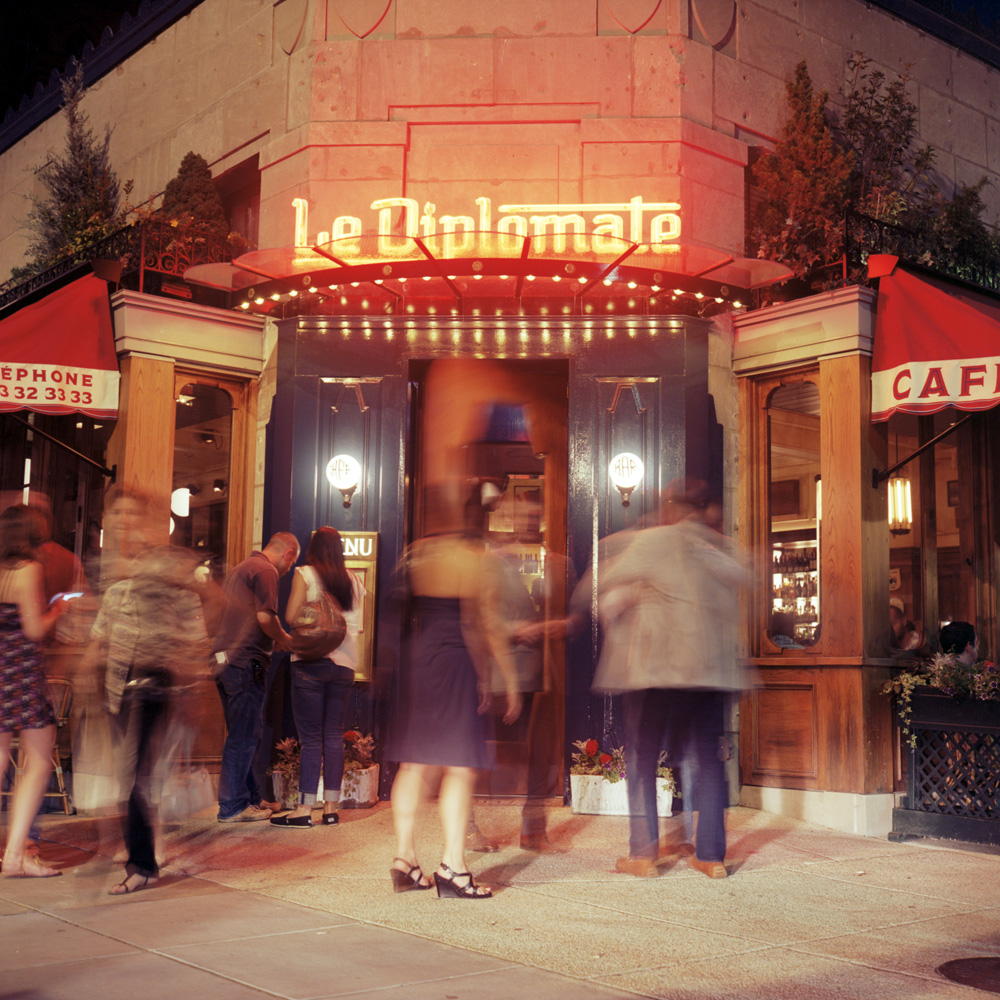
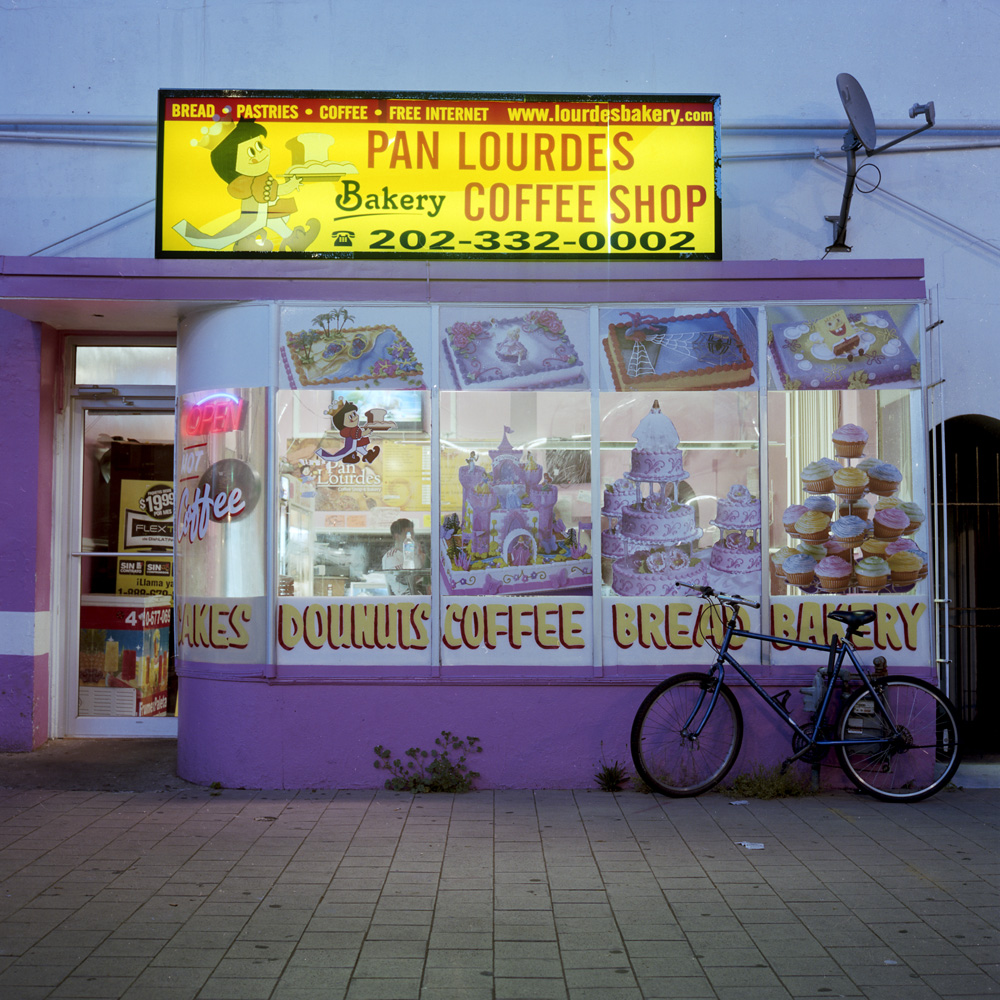
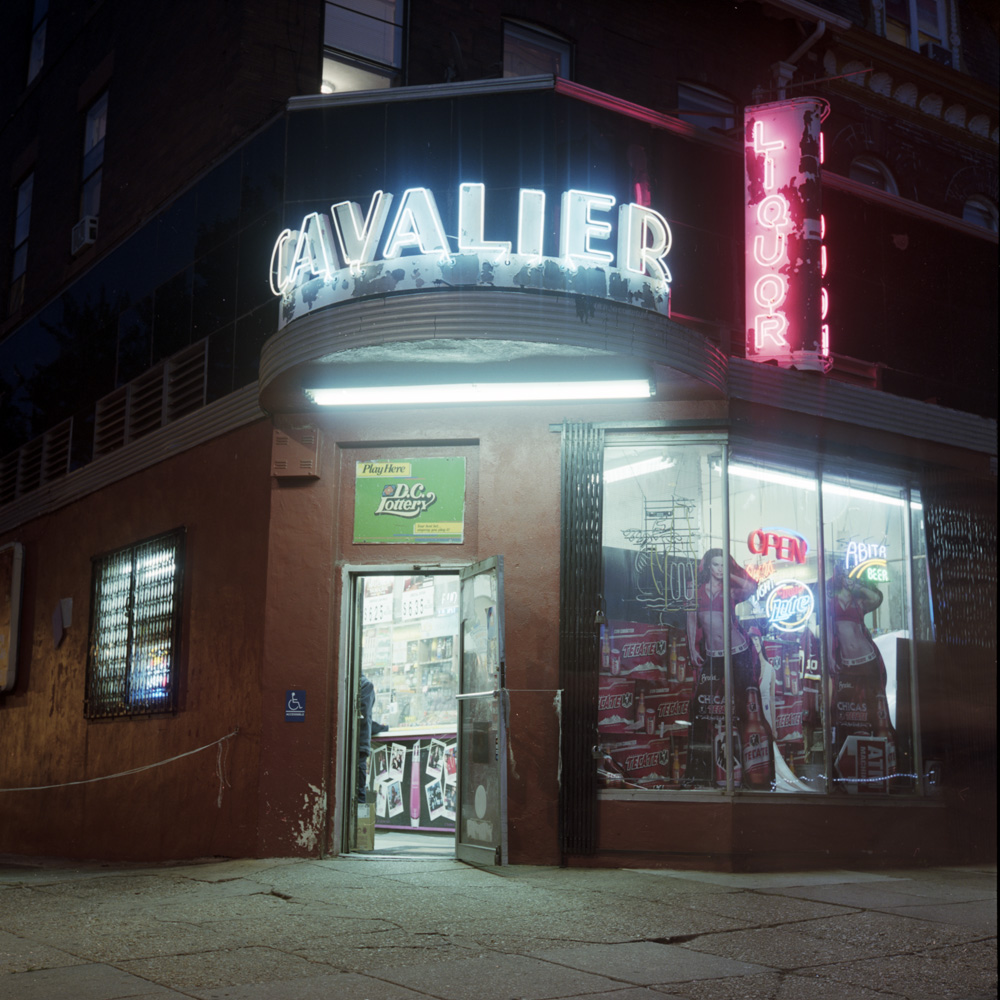
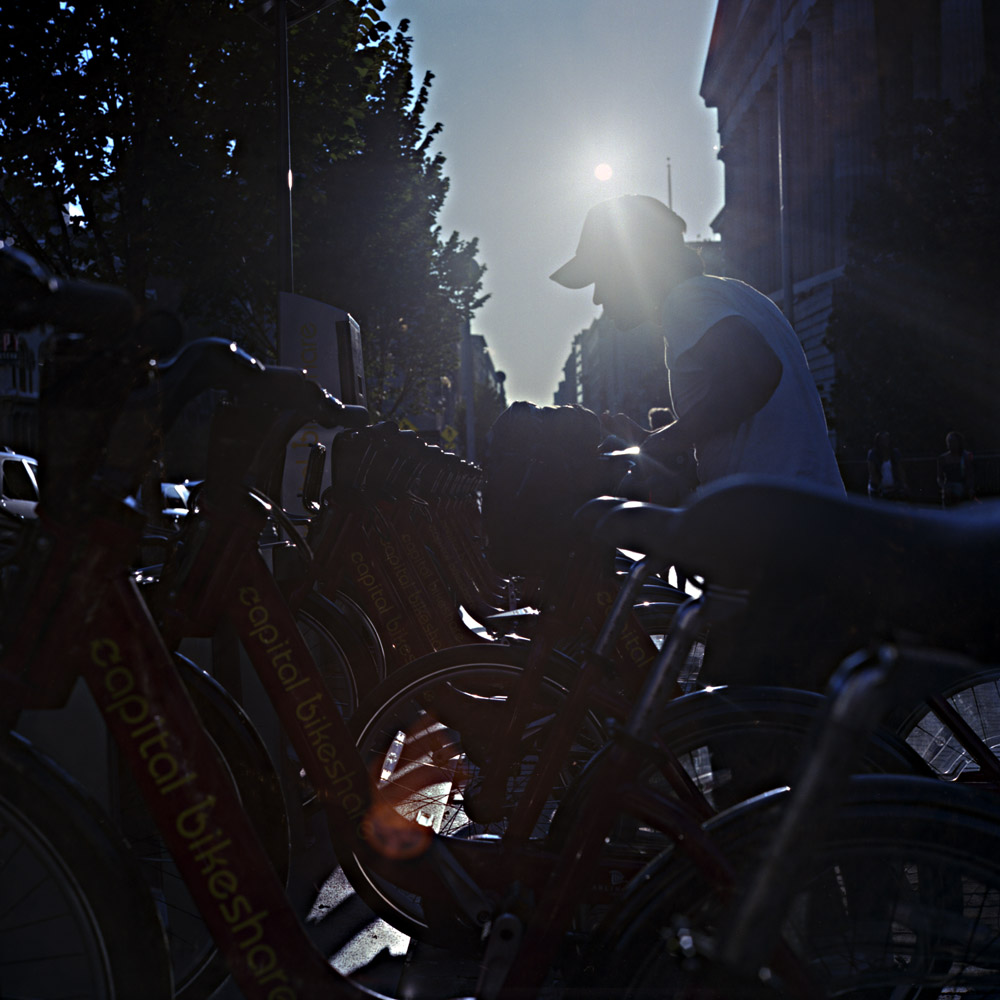
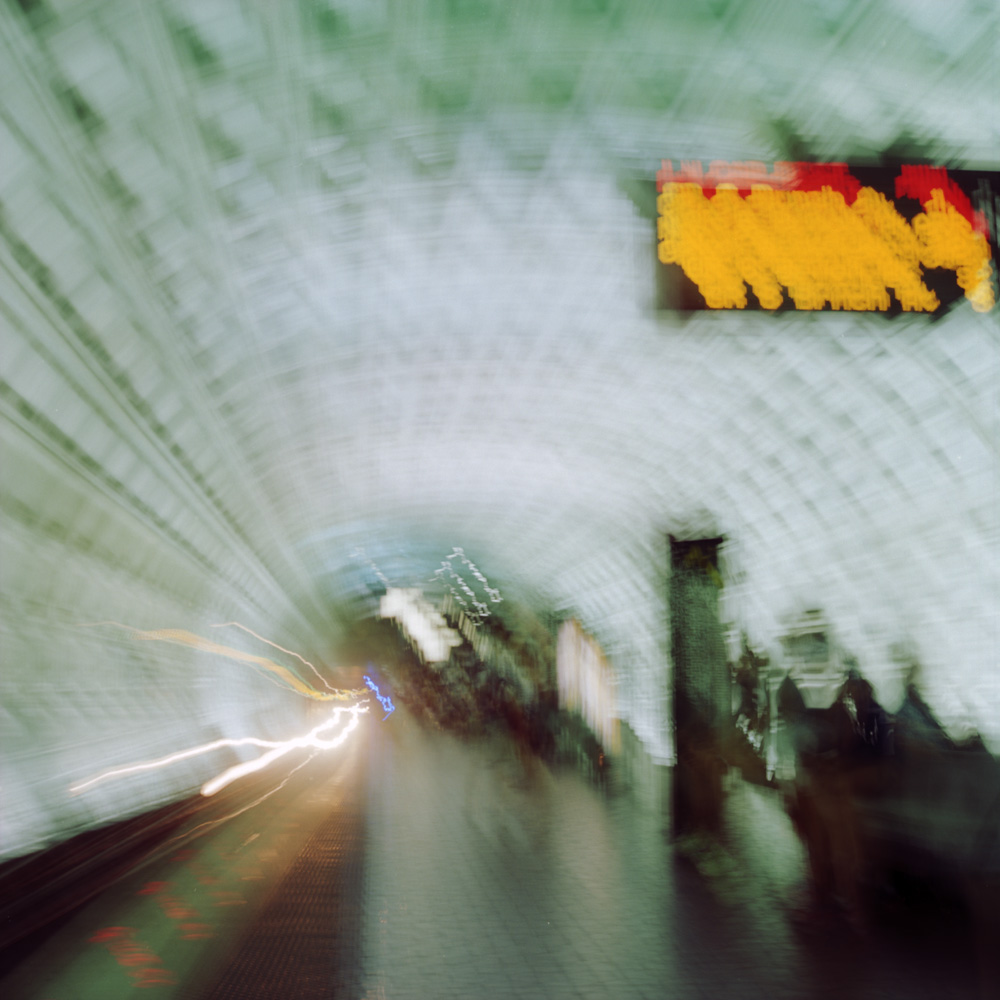
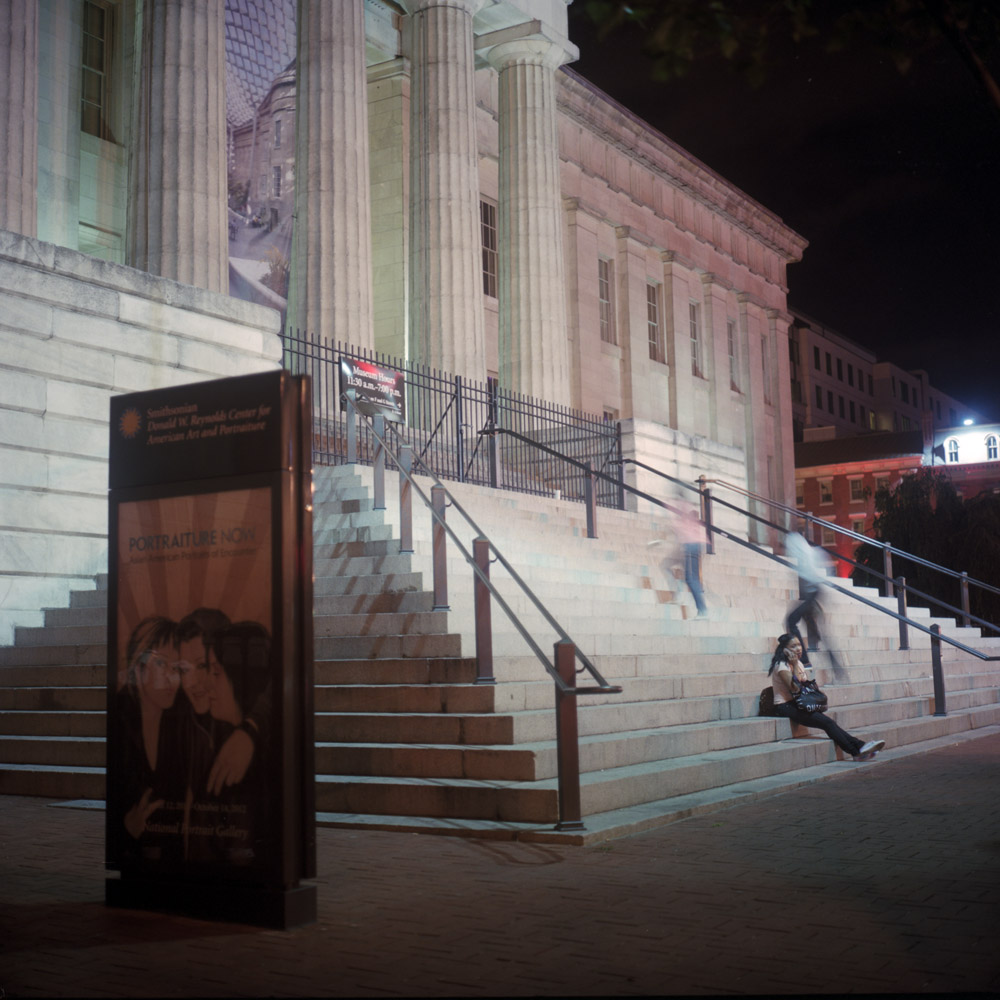
After a LOONG weekend of playing with my printer to get it to cooperate (running out of four different inks @ $60/cartridge, figuring out how to solve problems with head strikes on my prints, running out of paper at $115/box thanks to the aforementioned ink shortages and head strikes), I now have my show completely printed. Eight prints are already framed and ready to go, the remaining 12 are going to be framed tomorrow, and the show hung on Tuesday after work. I’ve done shows before, and of course it’s always hard work, but this is the biggest show I’ve done in terms of volume. Even my biggest past Artomatic was probably 12 prints. I’m very psyched about the show. Here’s a recap for those who can’t make it to the opening (REMINDER: August 2, 7-10 PM, Mad Momos Restaurant, 3605 14th Street NW, Washington DC). This exhibit pays tribute to the parts of Washington I pass through on a regular if not daily basis. I want to show what this town looks like to a resident, as well as showing it in an unfamiliar way even to those folks who do see these things all the time. As I mentioned in my blurb about the reception, I love the way color distorts and transforms at night because we no longer have a single, unidirectional light source of uniform color and quality. I’ve started these photos with late evening/sunset/twilight and progress into deep night to capture the feeling of that time of day. I hope these photos express that sense of drawn out time and transformed space, be it through blurred motion or the interplay of lights.
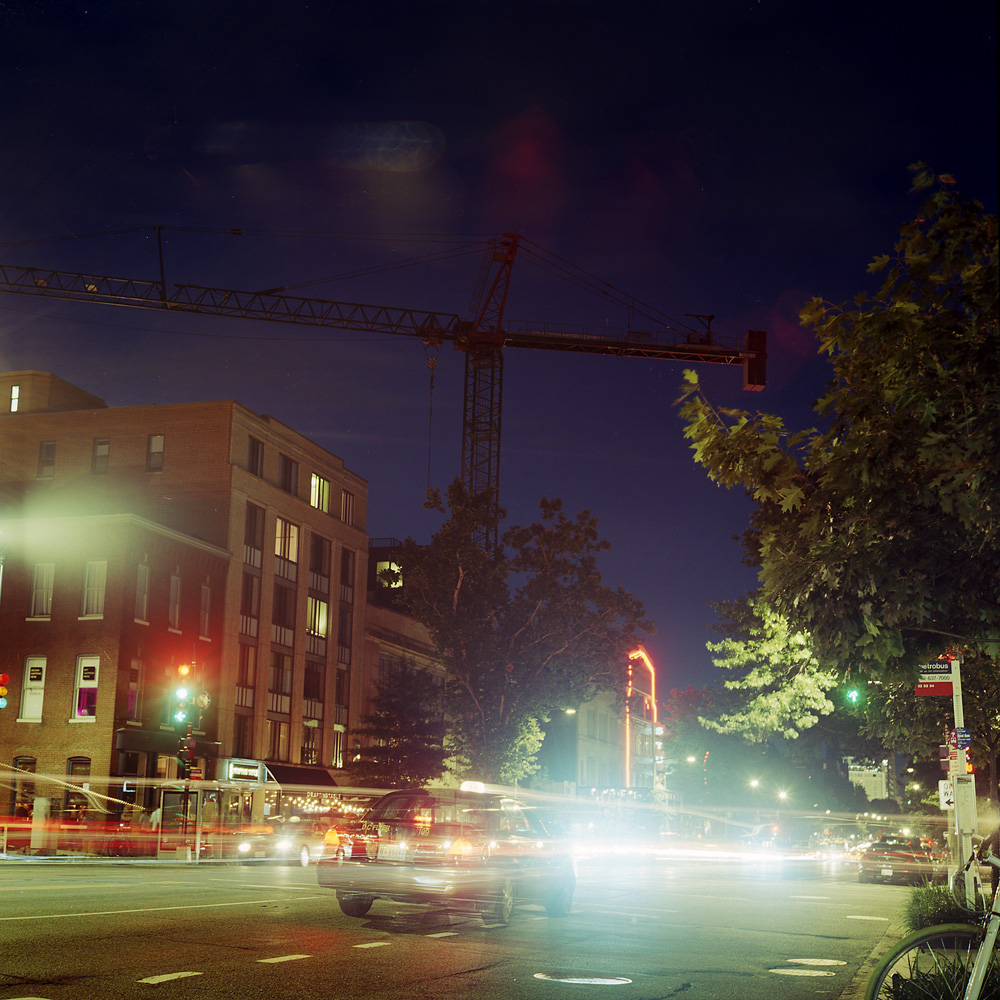
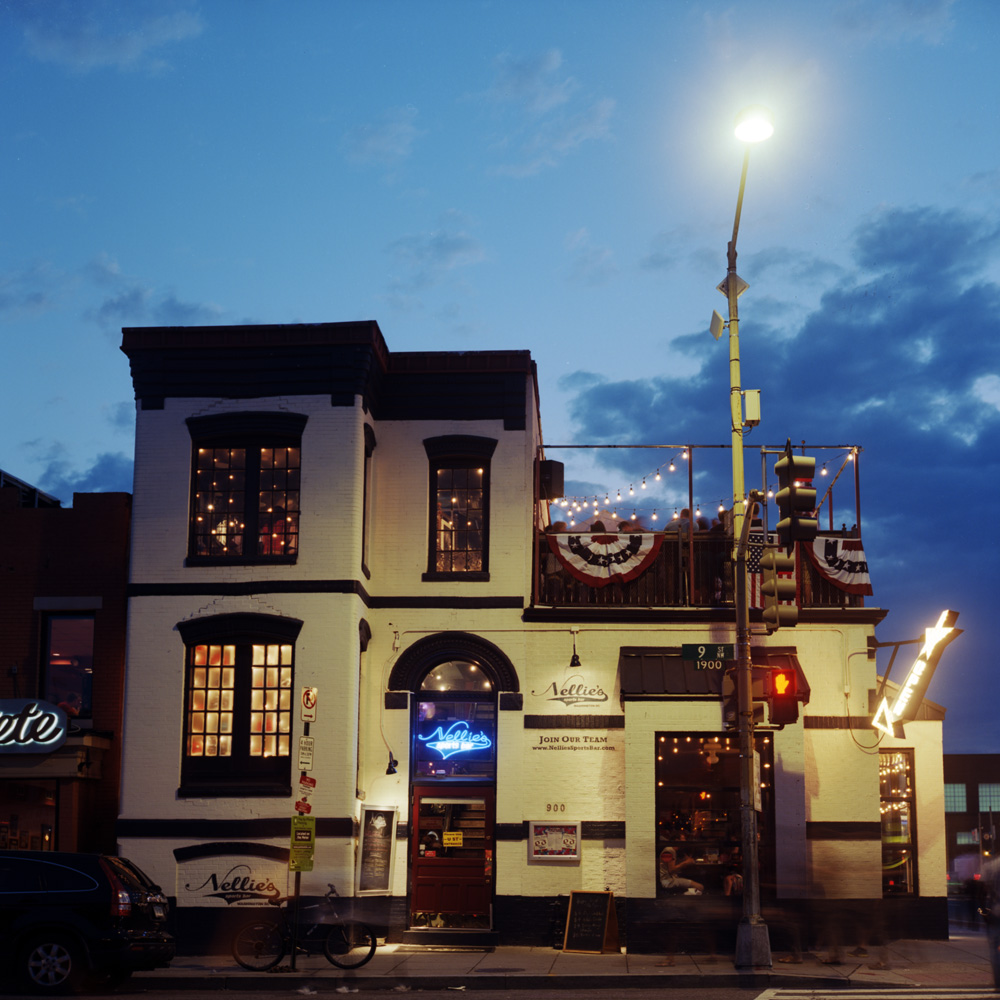
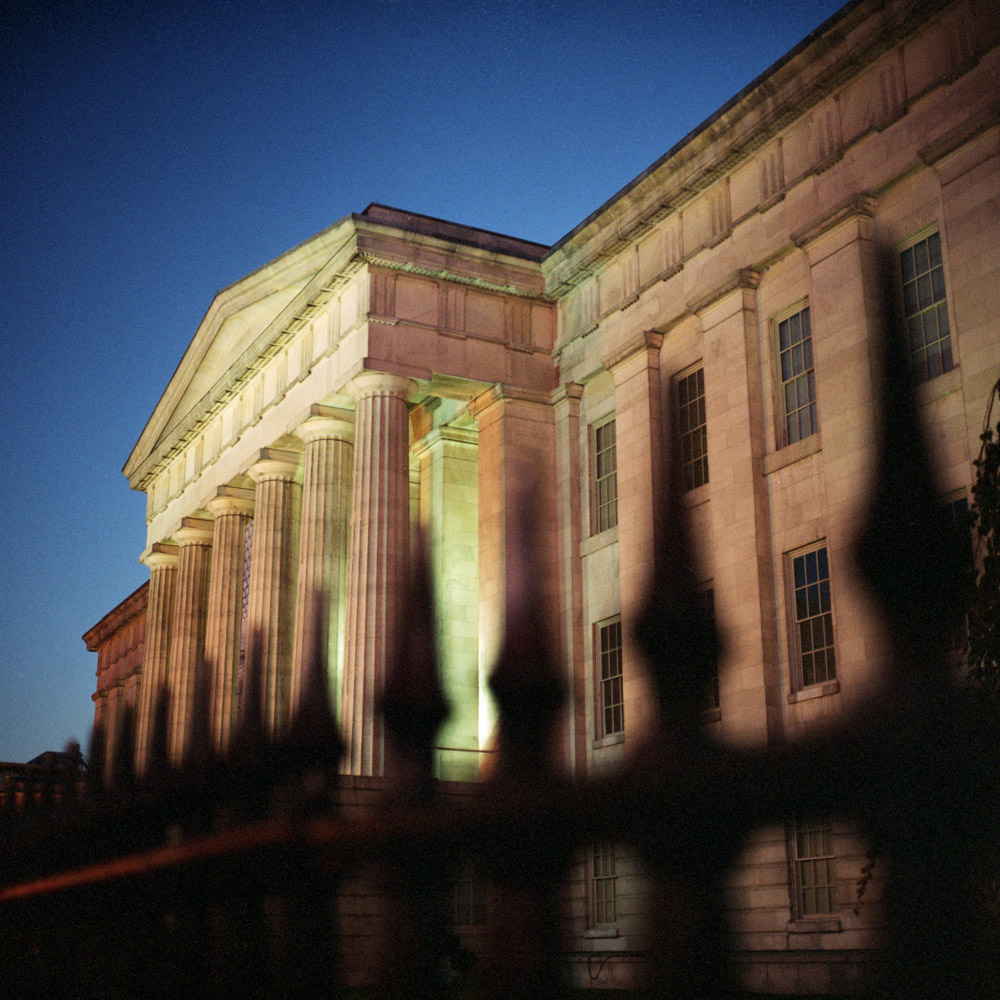
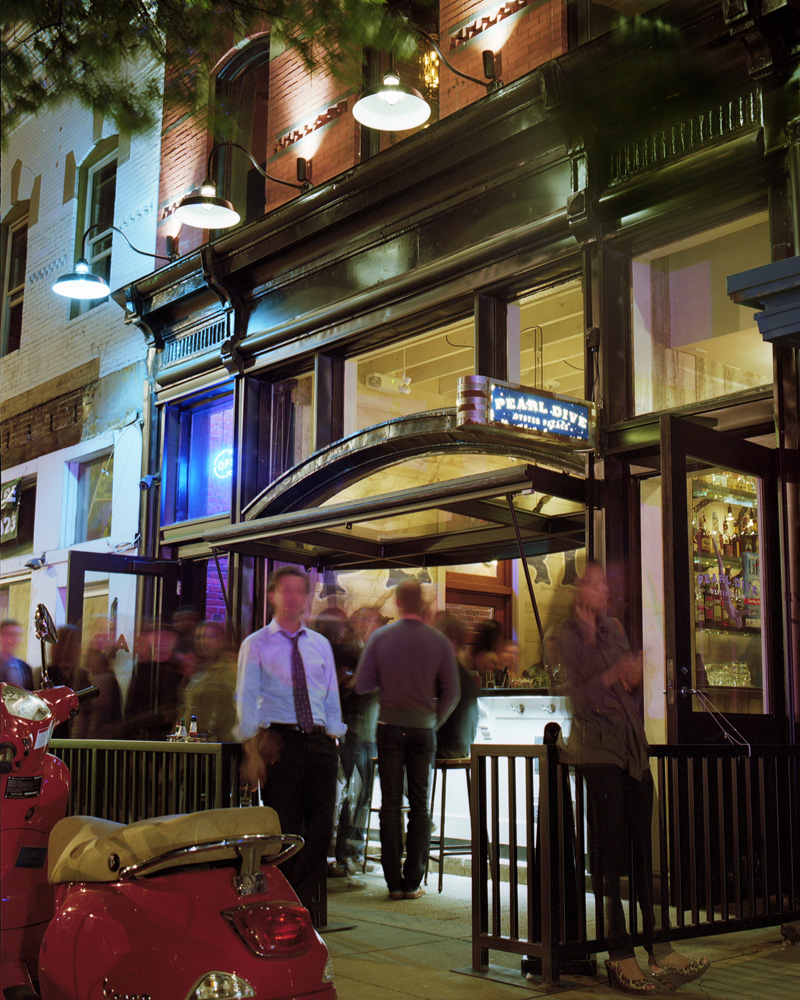
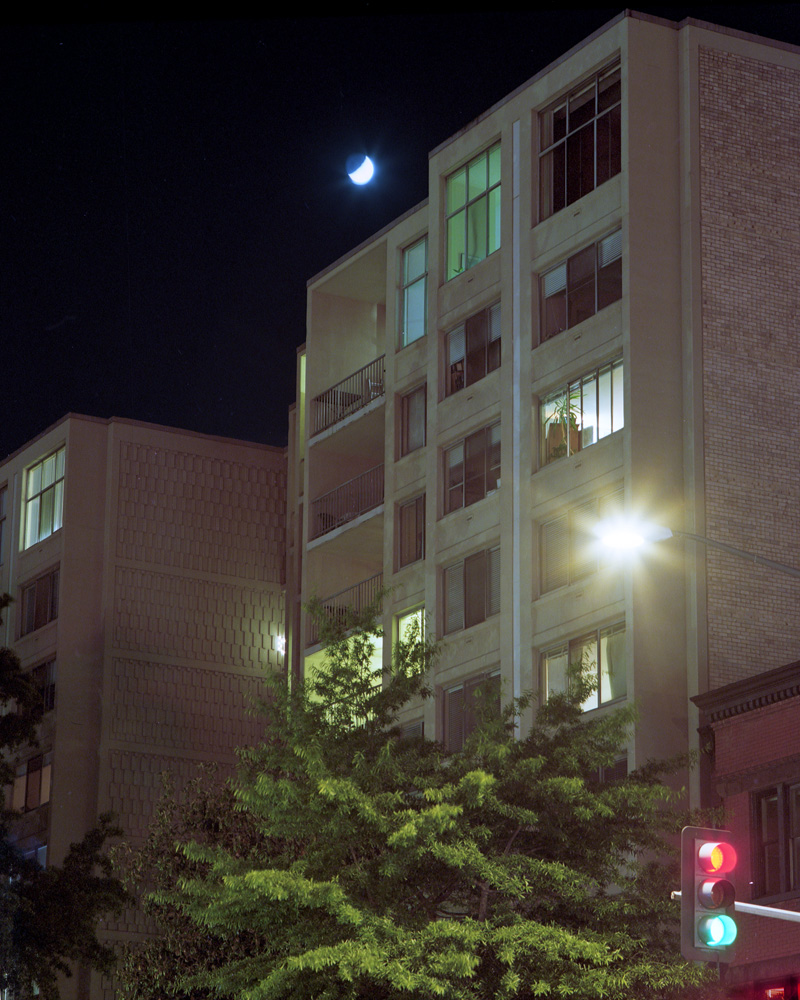
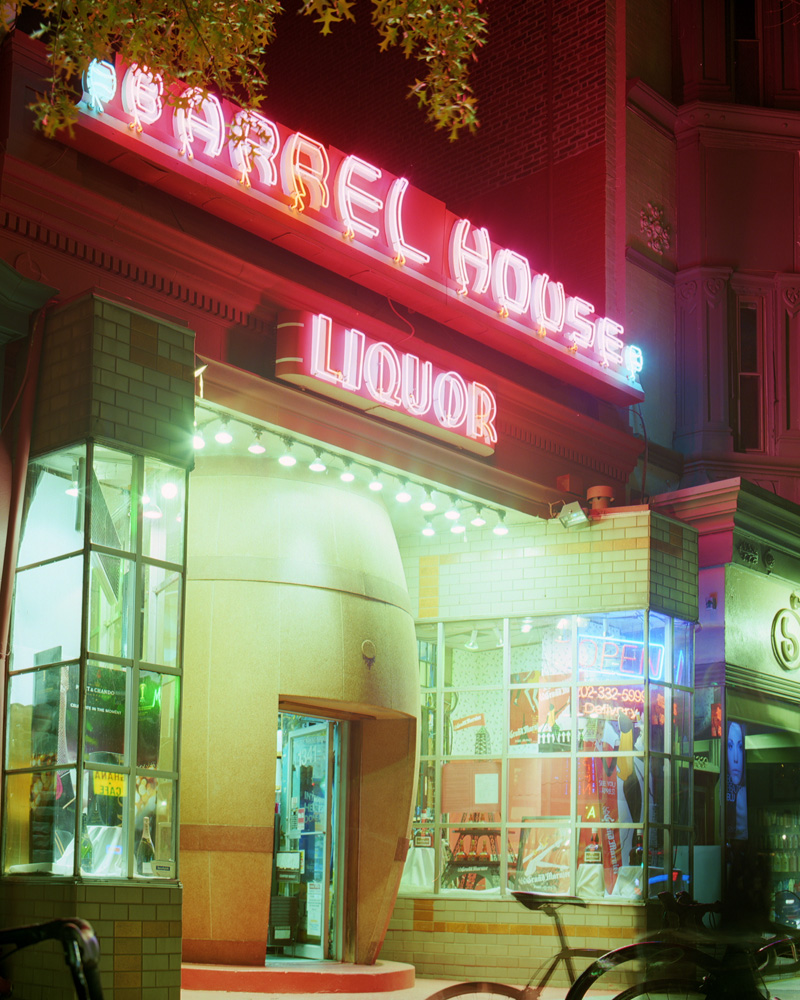
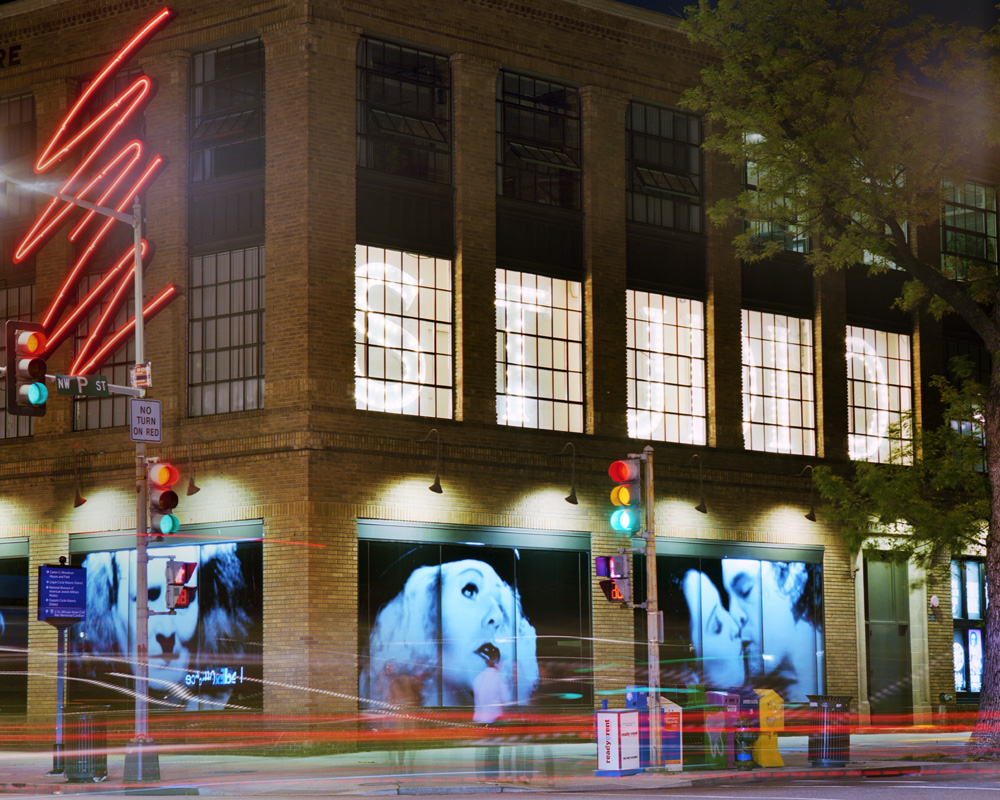
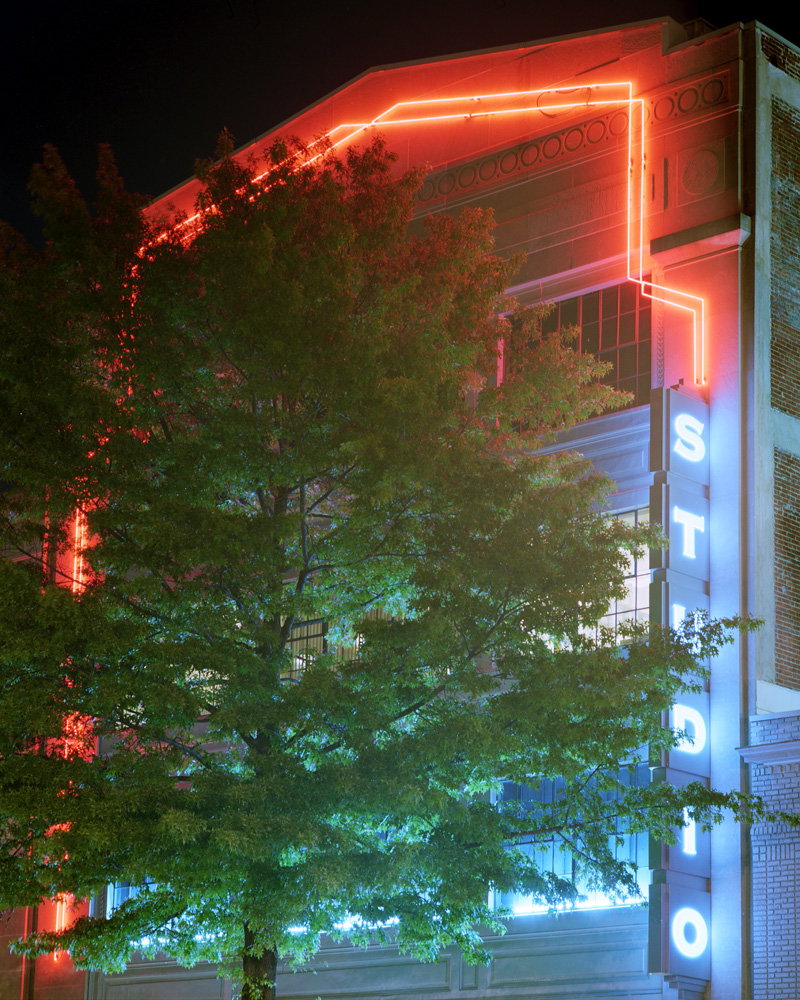
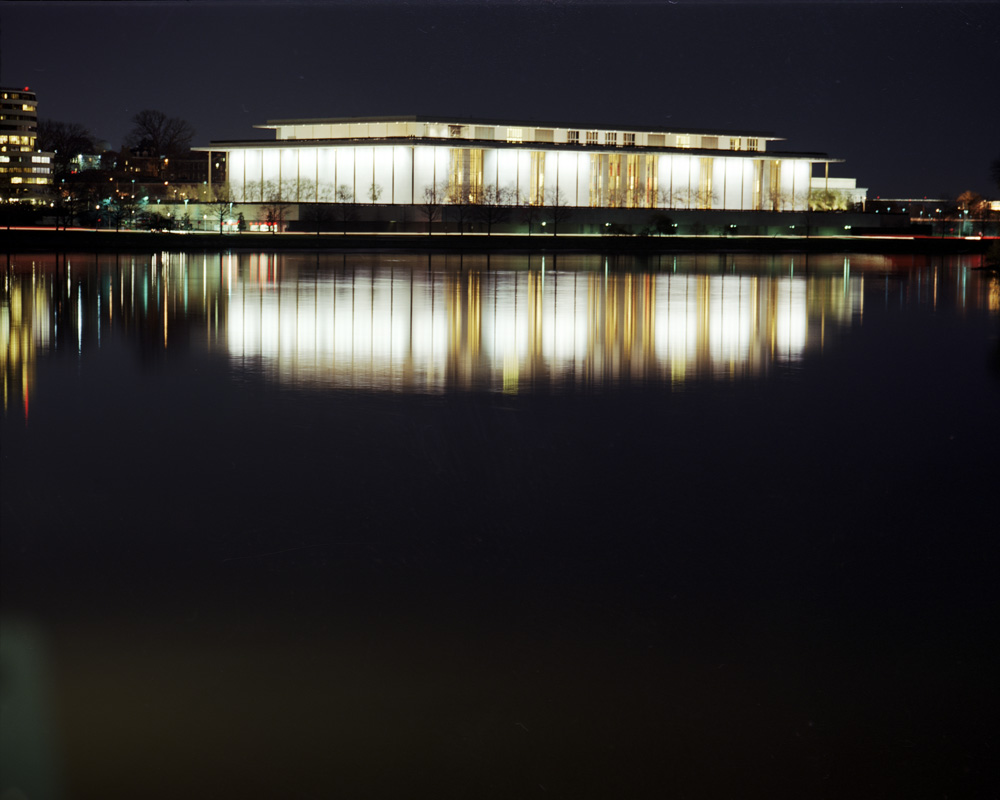
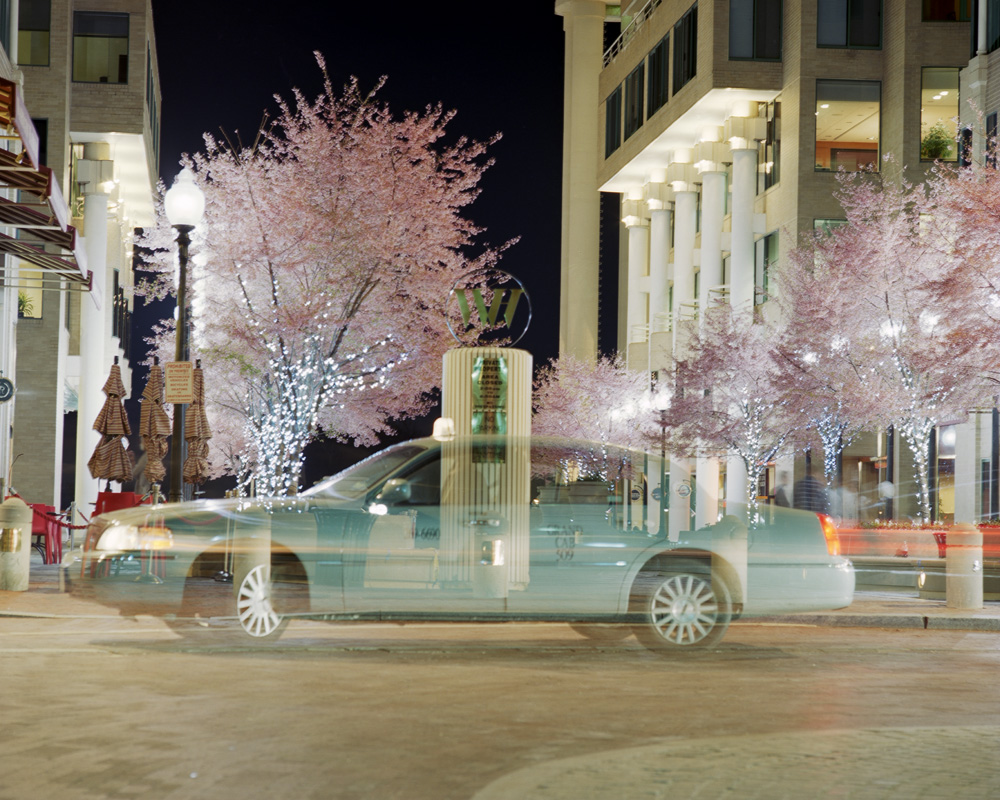
Crane, Traffic, 14th Street, DuskNellies Sports Bar, From 9th StreetGhibellinaLe DiplomatePan Lourdes, in colorCavalier LiquorU Street EveningNational Portrait Gallery, TwilightPearl Dive Oyster Palace, Vespa, 14th Street14th & Rhode Island Avenue, MoonBarrel House LiquorsStudio Theater, from P StreetStudio Theater, from 14th StreetUnder the Whitehurst FreewayKennedy Center, Potomac River, NightWater Street, GeorgetownWashington Harbor, Cherry Blossoms, TaxiCyclist returning his Bikeshare, National Portrait Gallery, SunsetU Street Platform, Oncoming TrainSteps, National Portrait Gallery
If any of you have ever produced a photography exhibit, or any other art exhibit for that matter, you’ll have an understanding of just how complicated an effort this is. I’m lucky in that I am able to do my promotional work online for the most part (this blog, email blasts, internet forums, etc), and I already have promotional postcards printed from the last time I exhibited some of this work. It would not surprise me if I did a truly serious accounting of what it cost to put this show up on the wall and the bill came in somewhere north of $2500. I know the framing bill alone is in the region of $1100-$1200. Postcards? about $200 for good quality printing from Modern Postcard. Paper and ink? $300. And that’s just the obvious, not counting the two years it took to shoot the images, the film and processing, the editing process, the dinner bribe for my friend who helped with the editing, and all the hardware and software (21.5″ iMac, Epson V750 scanner, Epson 3880 printer, Photoshop CS5, SilverFast AI 8, Gretag-Macbeth EyeOne calibration software and hockey-puck). To say nothing of 20 years of accumulated experience required to produce images like these.
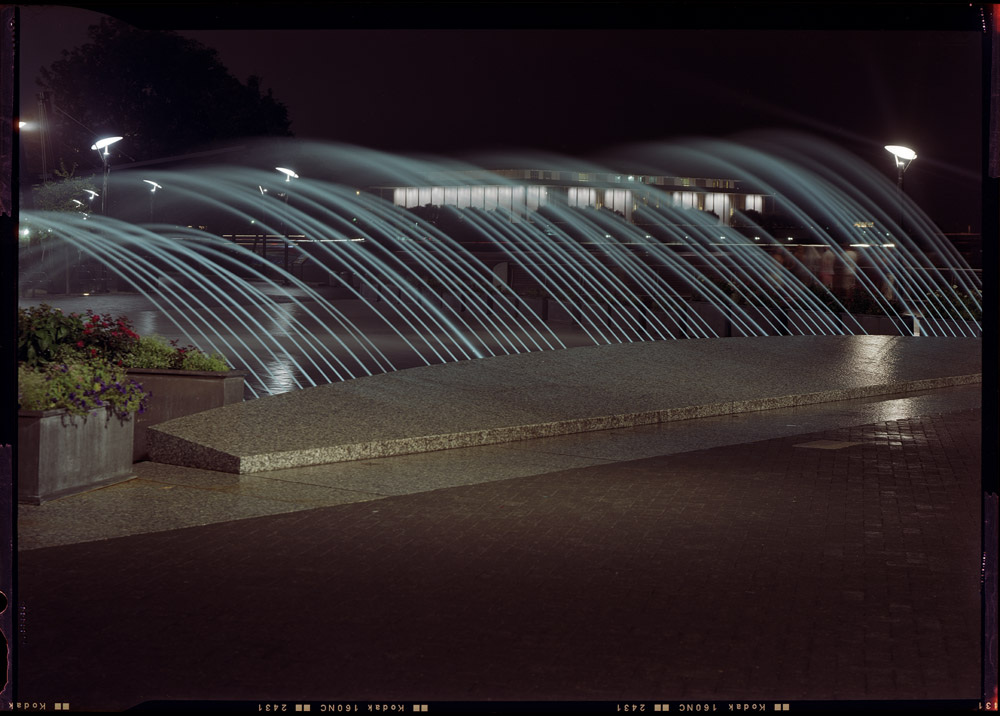
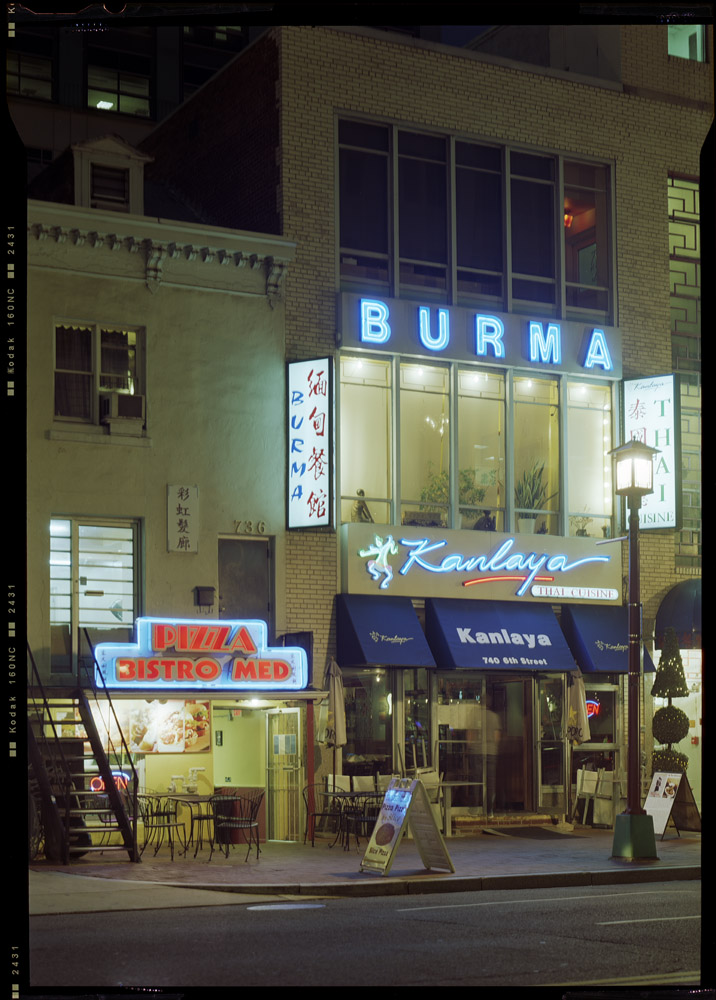
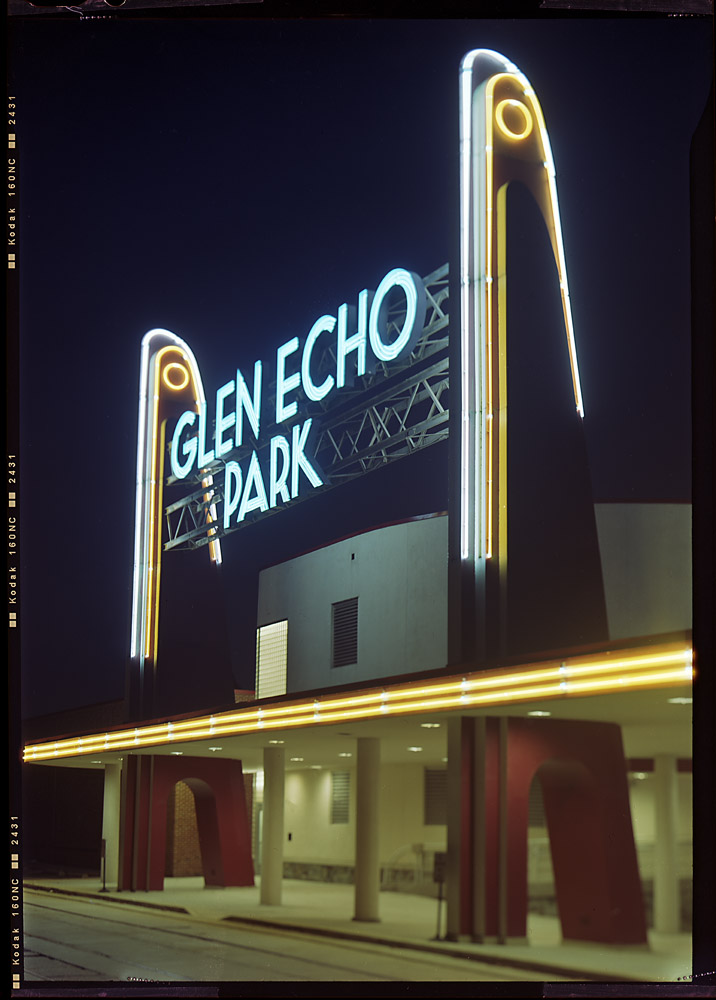
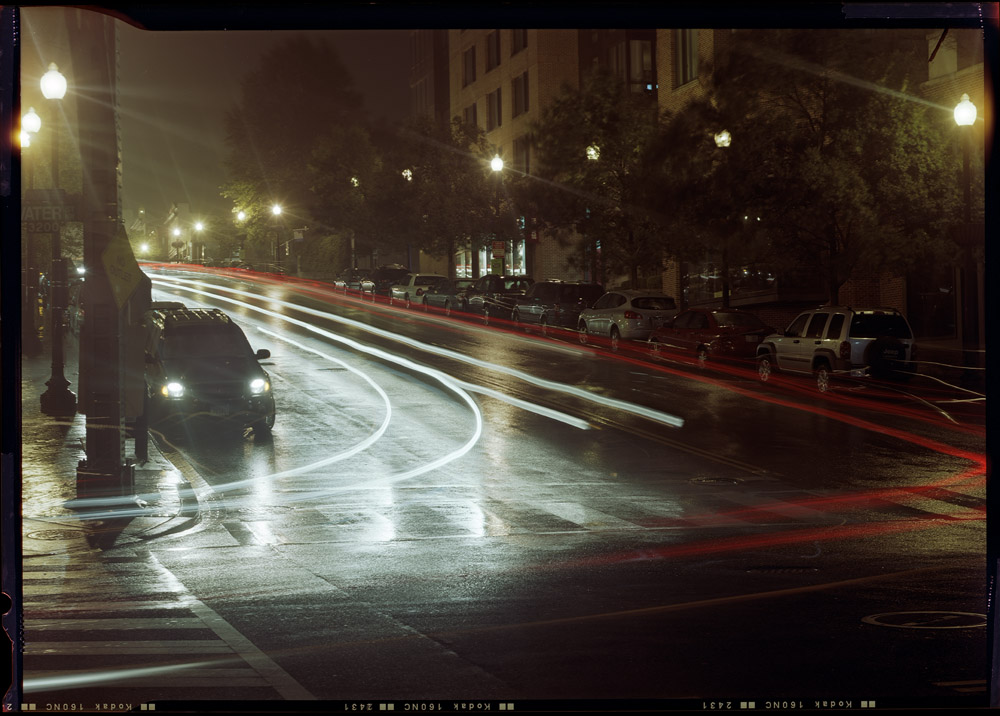
Three more in my DC at night series. These were all shot with the Canham 5×7 wood field, and if memory serves, all were taken with the Kodak 12″ Commercial Ektar lens.
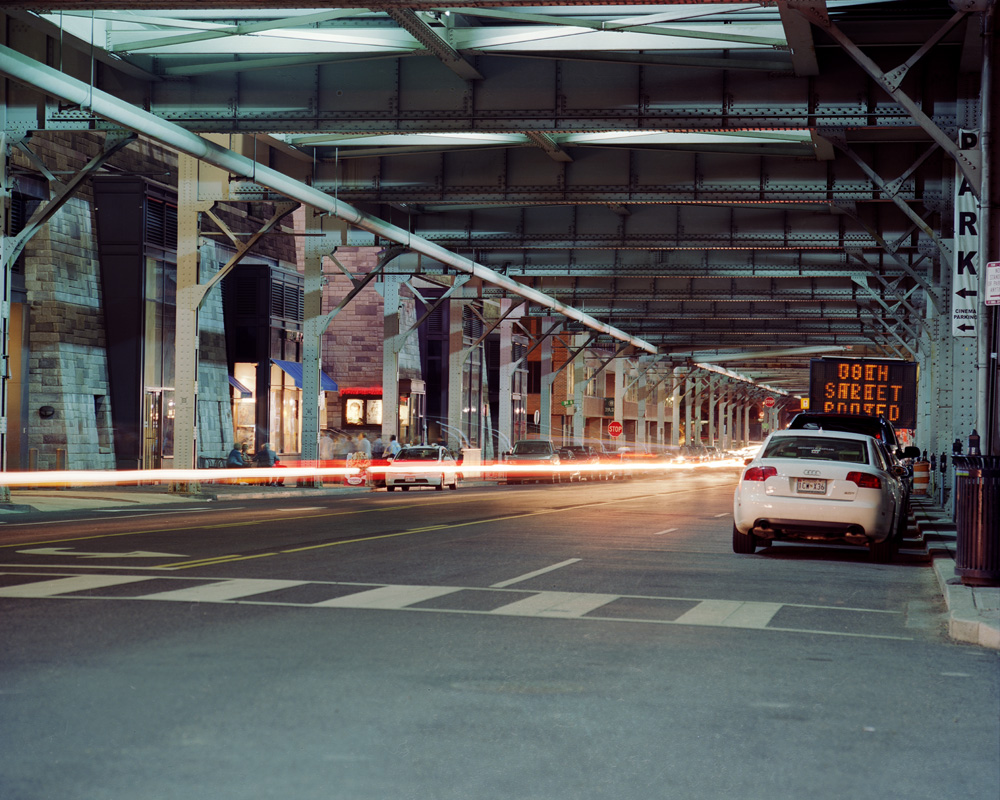
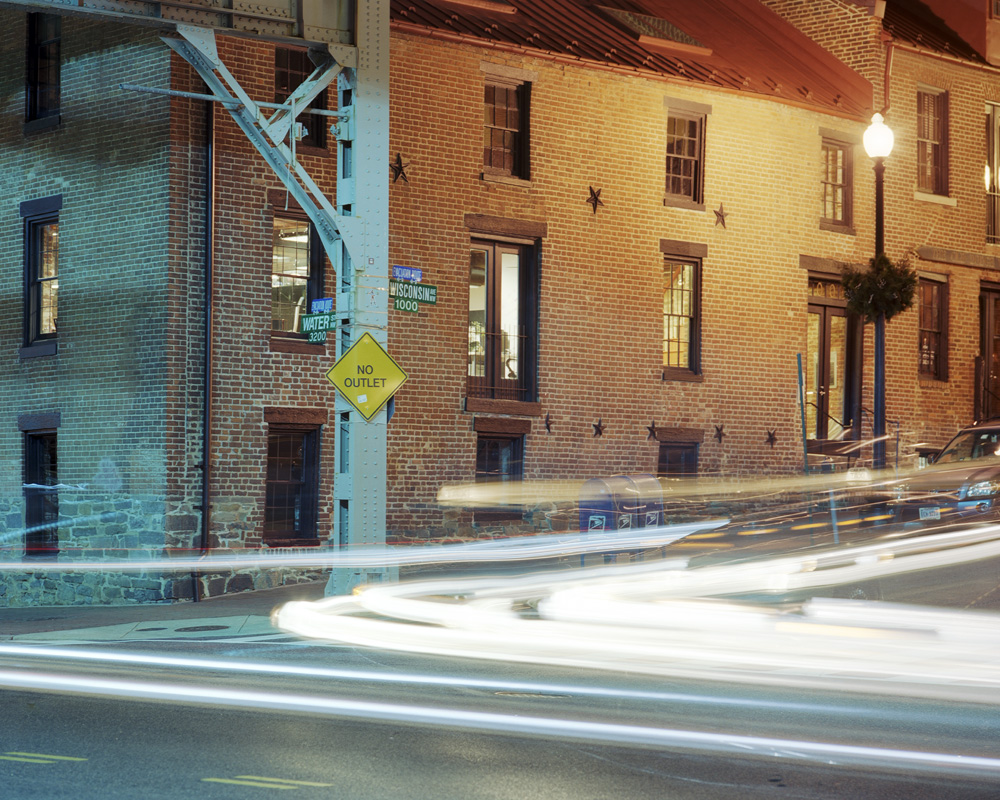
Here’s another in my DC at Night photos – the intersection of Wisconsin Avenue and Water Street, under the Whitehurst Freeway in Georgetown. I was down there shooting some other scenes, trying to finish off my 5×7 color negative film stock (I bought a 50 sheet box when it was only $150 a box…now, over $400!!!!). This was taken with my 12″ Kodak Commercial Ektar lens. A roughly 30 second exposure. I was a bit nervous during the shoot as I was out in the rain, with a carbon-fiber tripod, and sheltering under a gigantic steel overpass. I think the lightning was a few miles away though, and nothing happened. I was a little bummed that none of the lightning recorded in the sky as anything other than general fog, but hey… the headlamps and tail lights of the cars recorded very nicely, don’t you think?
 dcphotoartist