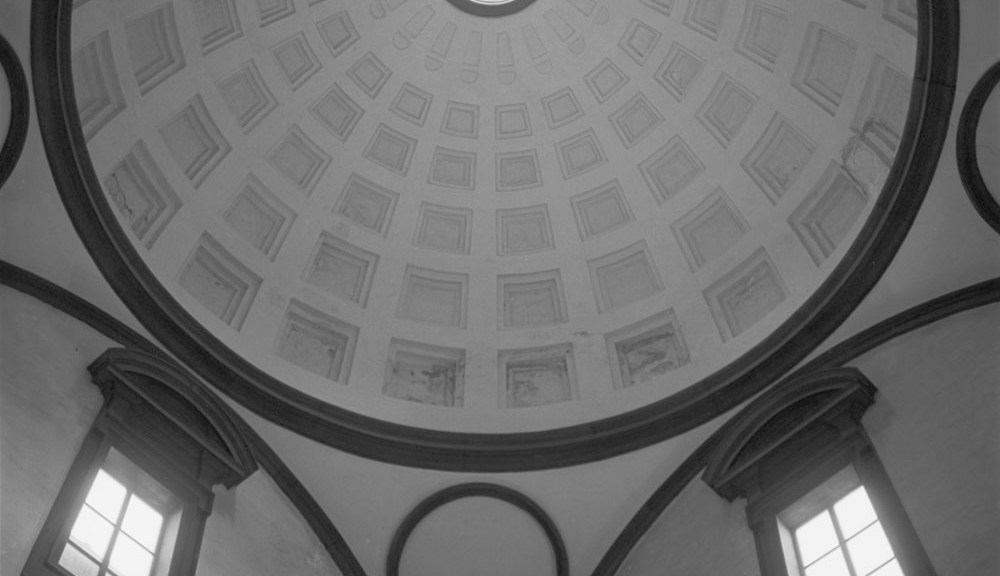
As part of my Michelangelo pilgrimage (the secondary pilgrimage, with the Caravaggio quest being the first one), I wanted to see the Medici chapel with the famous tomb sculptures by Michelangelo. Photos of those sculptures are forthcoming, but first I wanted to lead off with this architectural view of the ceiling.
Dome, Medici Chapel, San Lorenzo
I wasn’t even thinking about it when composing the shot, but in looking at it afterward, there are all these repetitions of threes in the scene – three windows in the lantern, three circles, the lantern and the windows together forming not only a trio of light sources but a visual triangle, and so on.
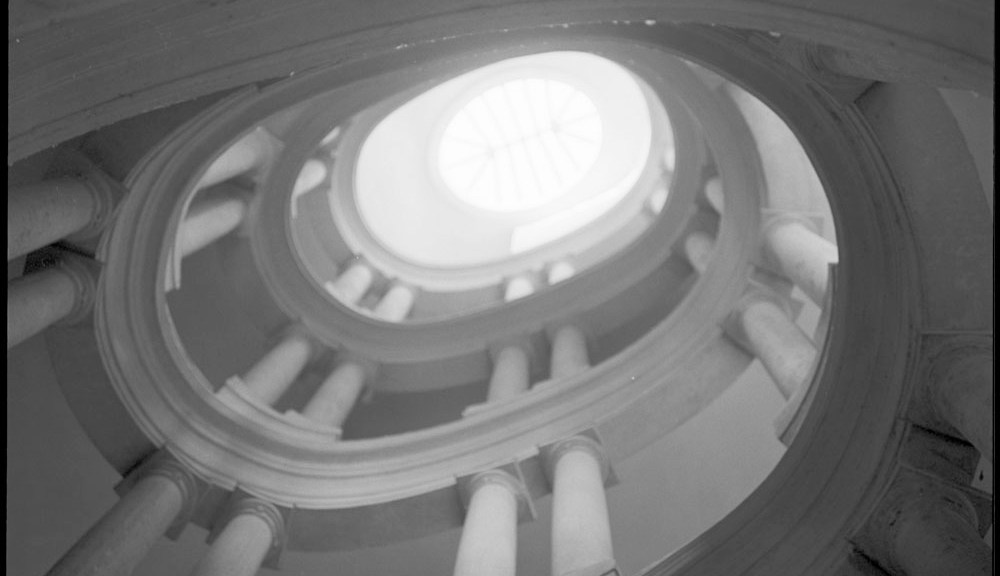
In 1625, then-Cardinal Barberini acquired a property from the Sforza family in Rome that had a vineyard and ‘palazzetto’. It was on this property he decided to build the Palazzo Barberini. He would go on to become Pope Urban VIII. He hired the famous architect Carlo Maderno to design and build his palace. Along with Maderno was his nephew, Francesco Borromini, who would go on to become one of the best known Baroque architects in Rome. He is largely responsible for the design of the facade, as well as the grand salon, and perhaps most famous of his creations at the palace, the oval staircase.
Borromini Staircase, Palazzo Barberini
Partway through construction, his uncle Carlo Maderno passed away. Completion of the project was then tasked to a new young upstart architect better known at the time as a sculptor, Gian Lorenzo Bernini. Bernini would design a second staircase for the palace, this time a square. The two, Borromini and Bernini would remain professional rivals until Borromini’s suicide in 1667.
Bernini Staircase, Palazzo Barberini
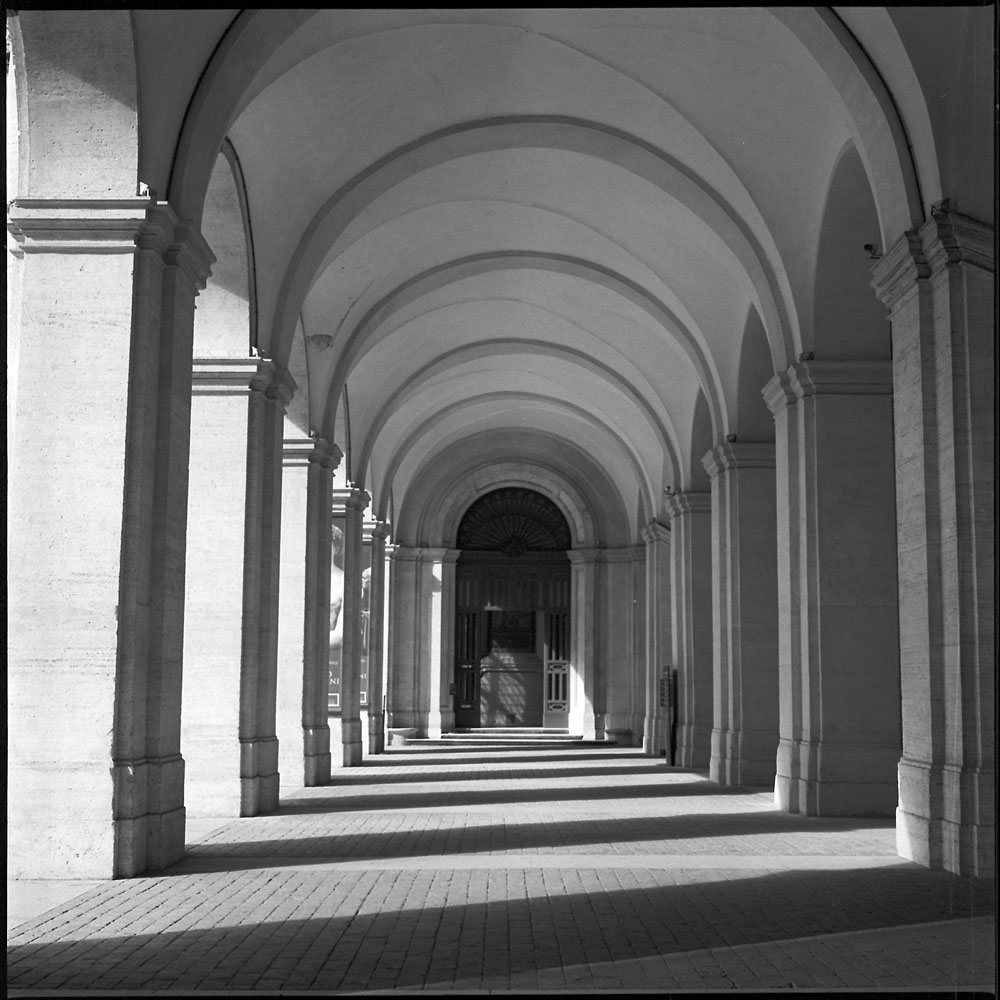
At the ground level, an arcade connects the two staircases. This shot was taken from the entrance to the Borromini staircase, looking down the arcade to the Bernini staircase entrance.
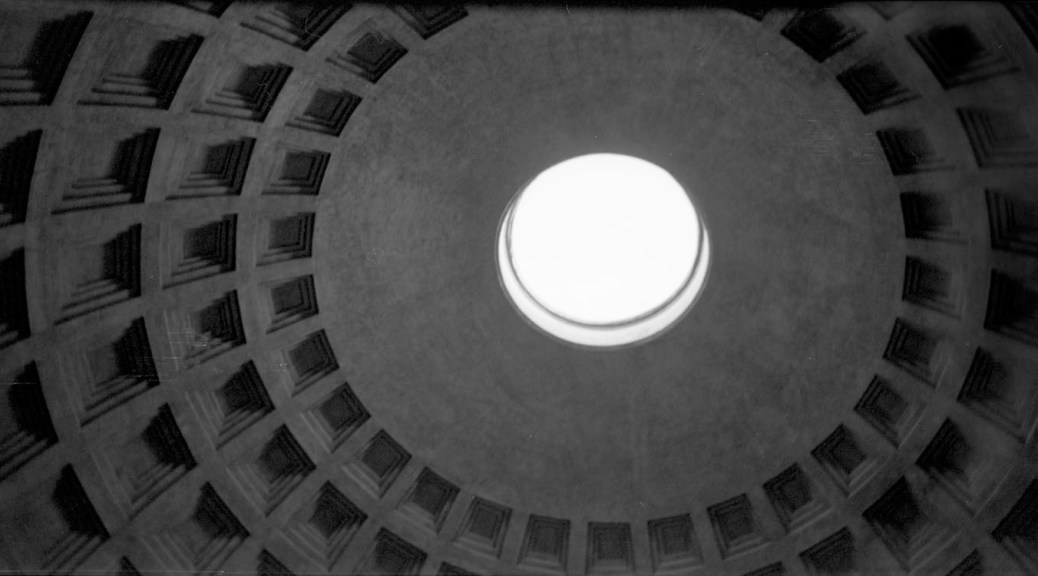
Here’s a shot I took of the oculus of the Pantheon with my Belair X6-12. The camera has its issues, one of which is the relatively low contrast from its plastic lenses. Most of the time. Here’s a circumstance where it works to my advantage- the interior of the Pantheon is so dark, and the main light source being the oculus, it’s very contrasty. The flat lens on the Belair helps bring out shadow detail where there wouldn’t be as much.
By pure fortunate happenstance, I was in Florence for the opening of the Biennale, an every-two-years art exhibition featuring contemporary artists across all media. Photographers, painters, sculptors working in ceramics, glass, wood, and bronze, video artists and installation artists were all represented. As I was there on opening day, some of the works were still being installed, and many of the artists were present. I got a chance to meet two of them- Xu Lishou and Amir Jabbari.
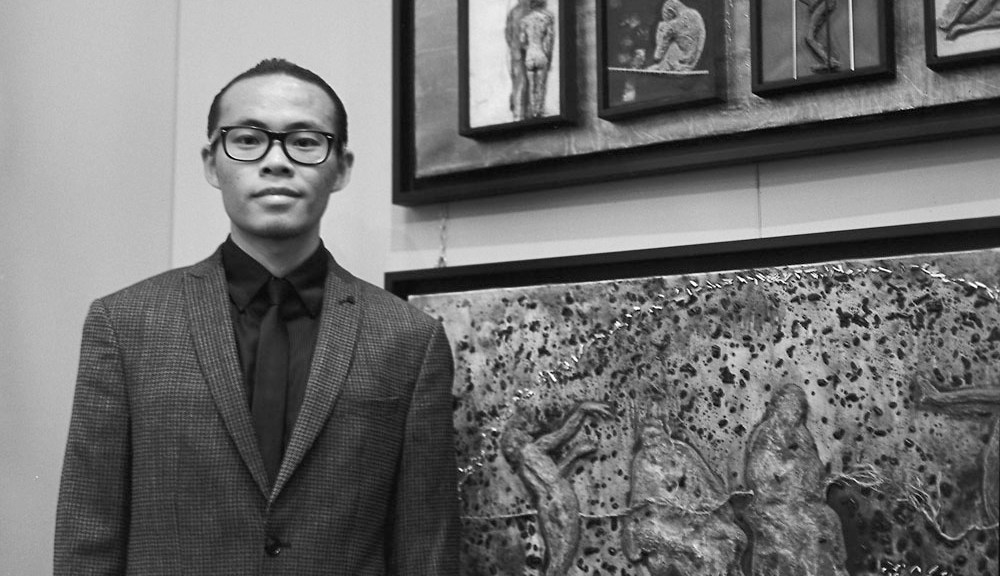
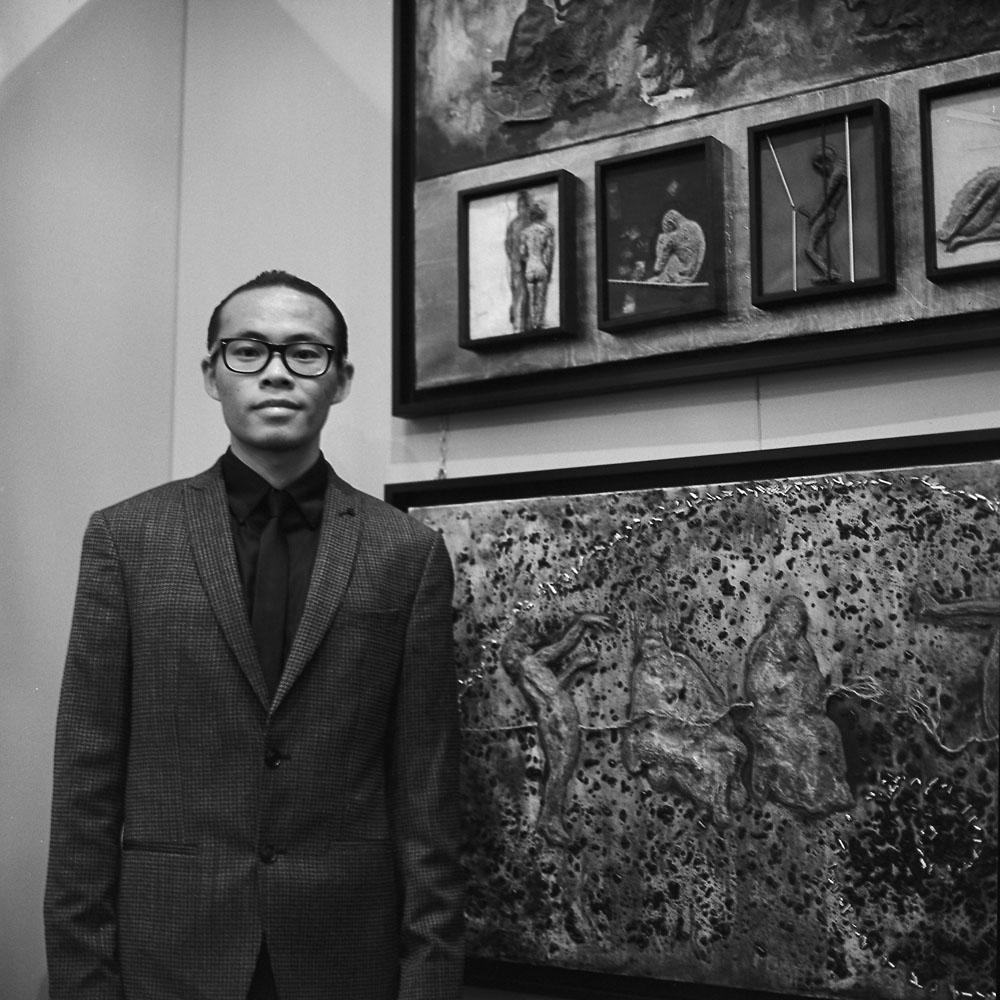
Xu Lishou
Xu Lishou is a painter from Taiyuan, currently residing in Italy. His work features traditional Chinese themes but painted in a very modern style, using mixed media such as paper pulp and rope to provide high-relief texture. We spoke a little through a friend of his who translated.
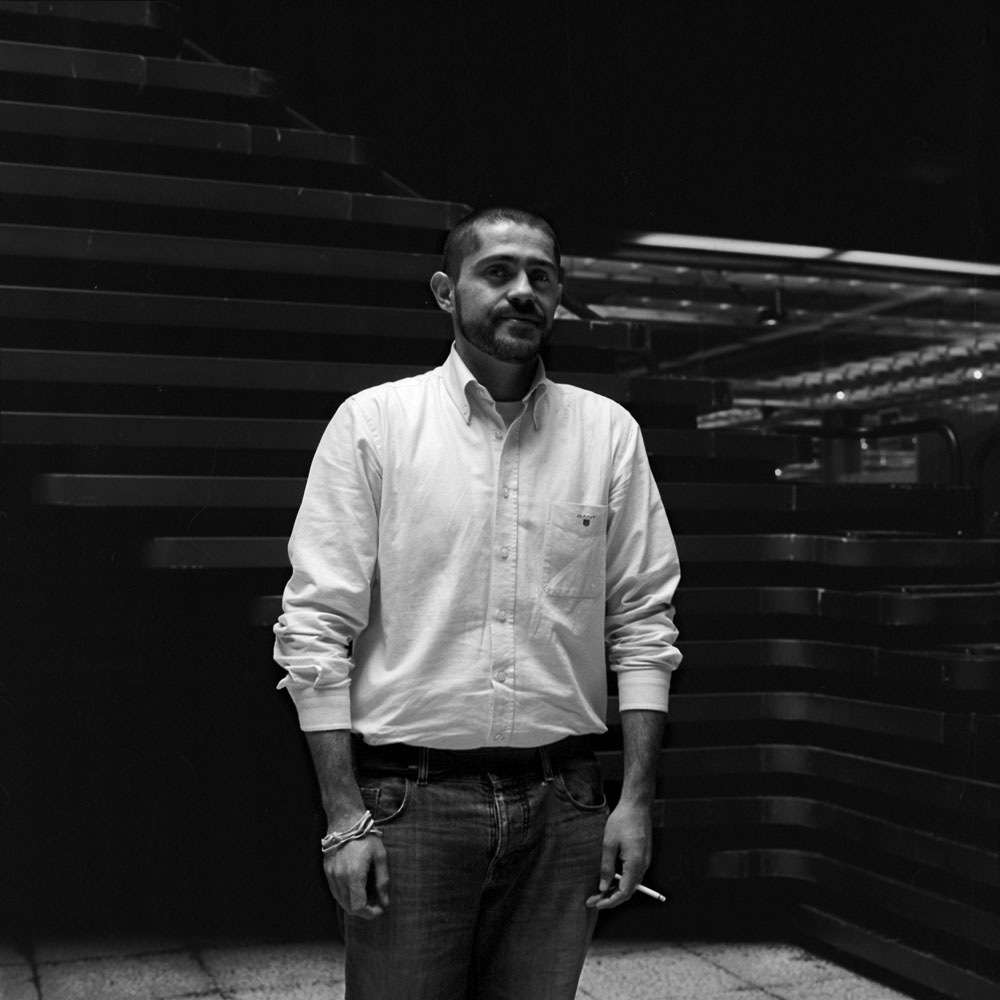
Amir Jabbari
I met Amir in the light well of the exhibition hall (the hall is mostly underground, inside the Fortezza Basso, a Medici-era military fortification which still has use today as a base). I had stepped in to photograph the stairways, and he was smoking a cigarette. He is a video artist from Tehran. I did not get to see his video, alas, as it was one of a group of videos on continuous loop in the video exhibition room, and I was feeling under the weather and couldn’t wait for it to come back up.
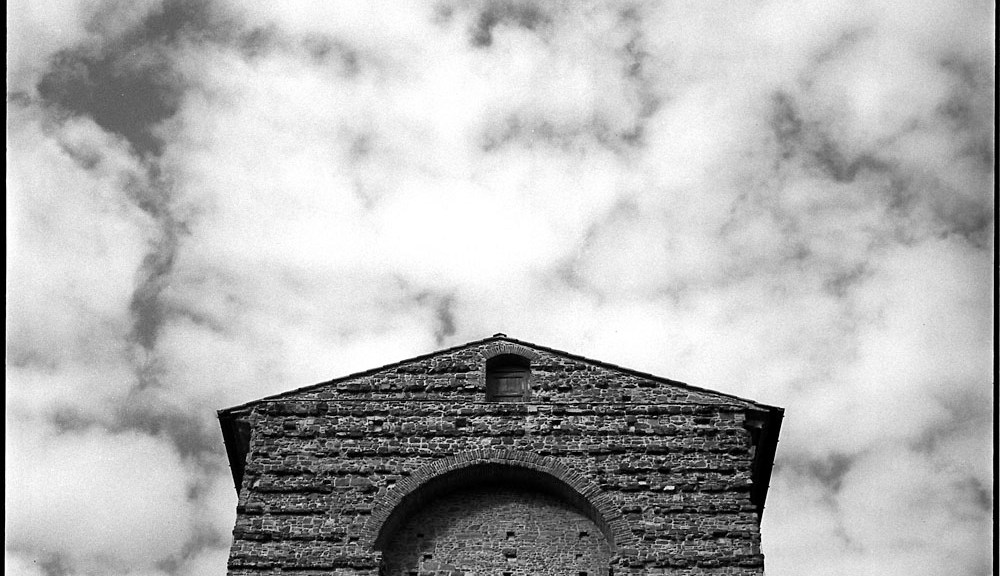
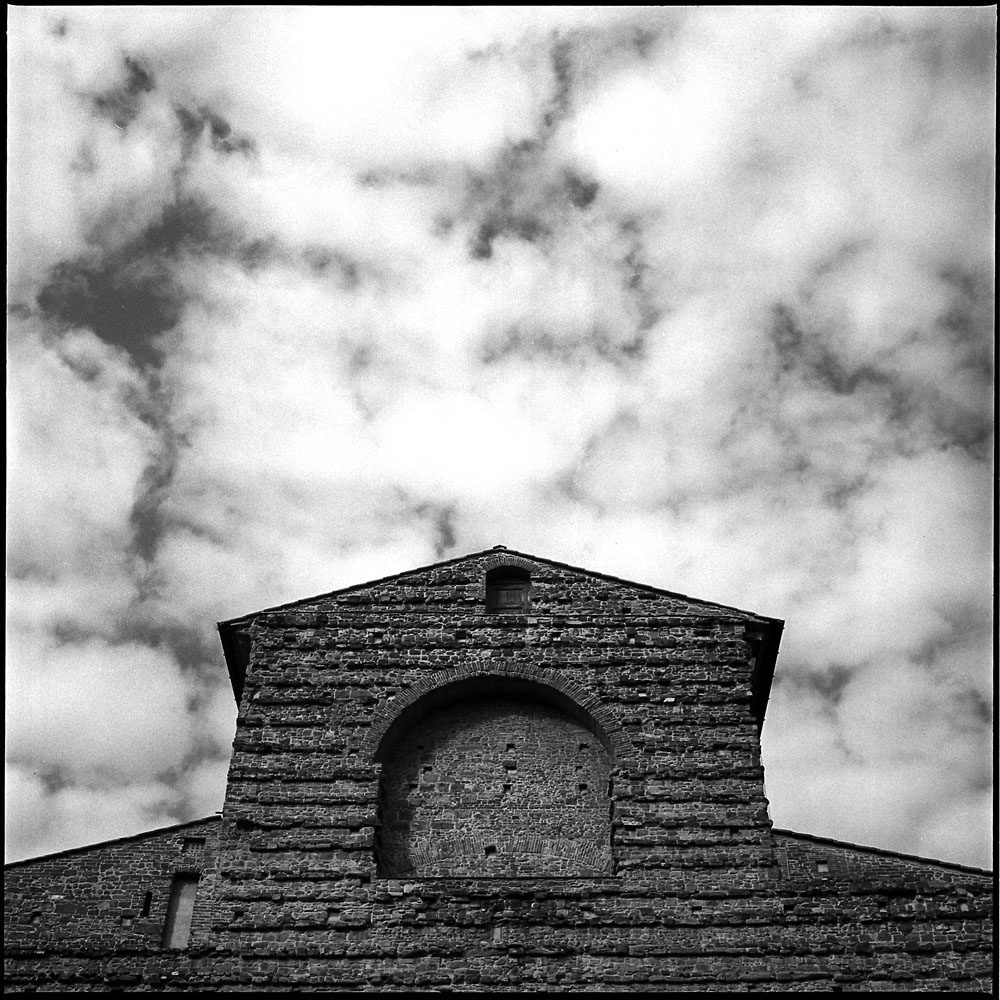
My take on the facade of San Lorenzo, the Medici family parish church and originally the primary cathedral for the city of Florence.
San Lorenzo Facade, Clouds, Florence
The facade is one of the most famous unfinished structures in Italy. The church was designed by Brunelleschi, but he died before it was completed. The Medici family, who were financing the construction of the church, commissioned Michelangelo to design a new facade. He built a scale model, but the design was never executed. In 2009, a CGI model of his design was projected on the existing facade for a period of time to gauge reaction to completing the facade, but nothing more has come of it. While the Michelangelo design is quite beautiful, the current facade has sat as-is for over 500 years, so I think it would be a sacrilege to both the existing building and the Michelangelo design to build it now.
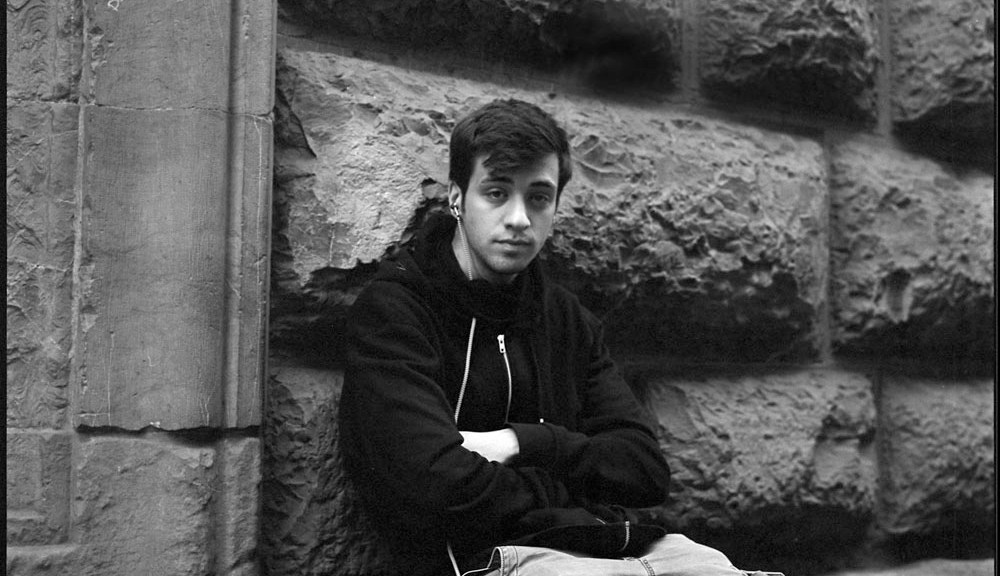
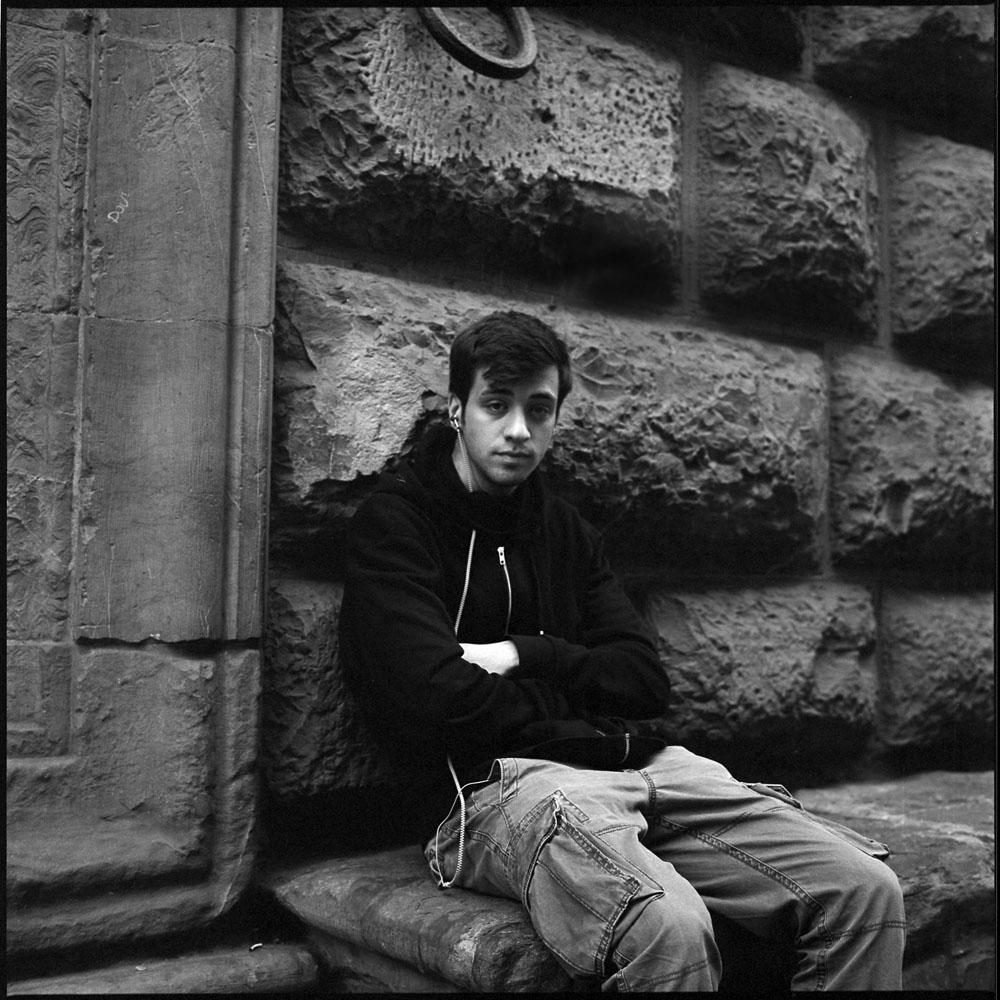
I saw this young man sitting on the bench around the Palazzo Medici-Riccardi. I don’t know what he was waiting for – might have been a bus, or a group of students visiting the Palazzo. Regardless, his pose cried out to make his portrait.
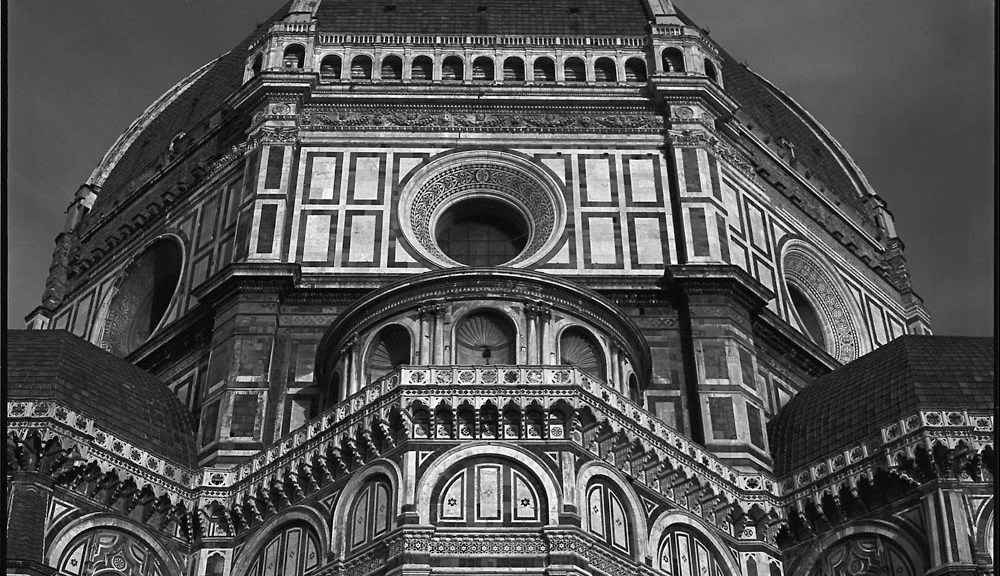
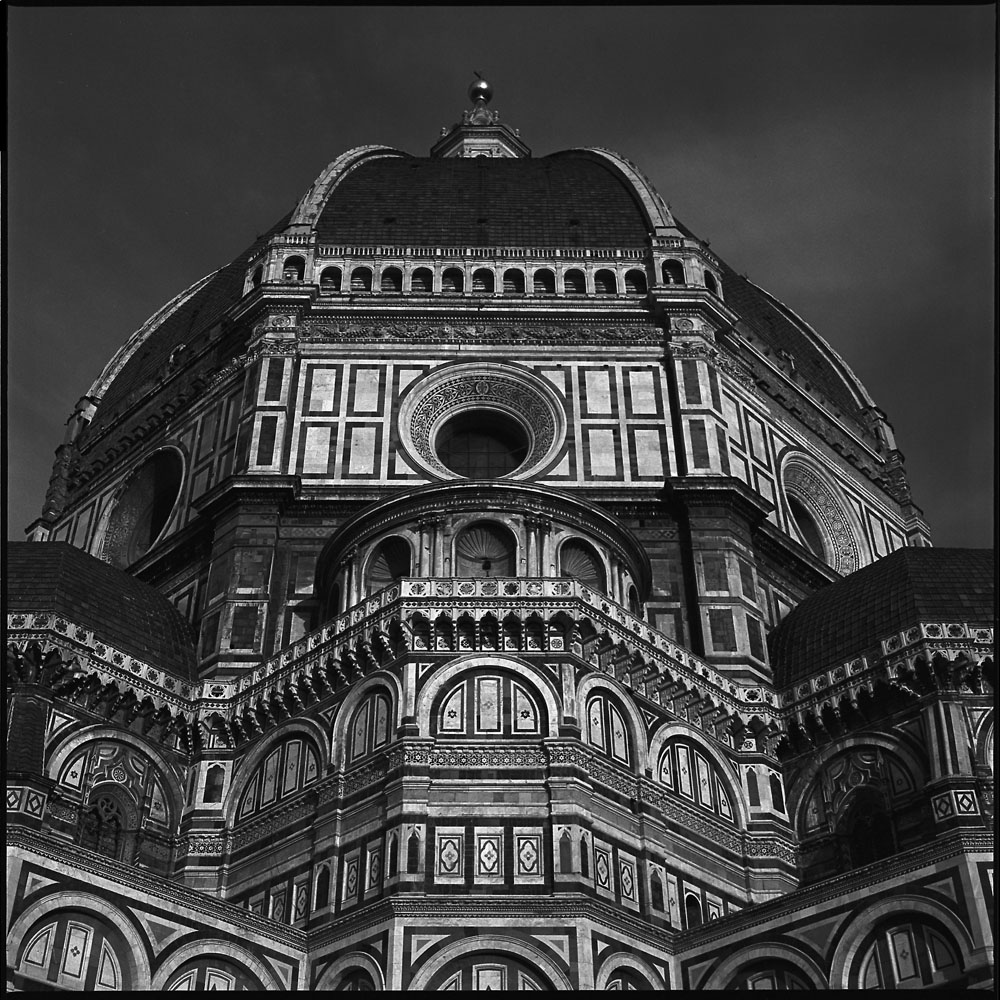
Here is the famous dome of the Duomo, Florence’s main cathedral. Designed by Brunelleschi, one of the Renaissance’s greatest architects, and built using highly innovative techniques and equipment that other than the power source being humans and/or animals, any large construction crew today would recognize. The dome has stood as one of the most recognizable symbols of Florence, if not all Italy, for nearly six centuries.
Cupola, Santa Maria Del Fiore, Florence
There’s a terrific book out there on the dome and its design and construction, Brunelleschi’s Dome: How a Renaissance Genius Reinvented Architecture, if you want to read more about it. I’m actually going to go back and re-read it myself, now that I’ve re-visited the cathedral and have been reminded of just how magnificent and amazing it is. The dome and its lantern stand at an impressive 375 feet high, making it the largest dome in Western architecture until the modern era, and it still remains the largest ever built using brick and mortar.
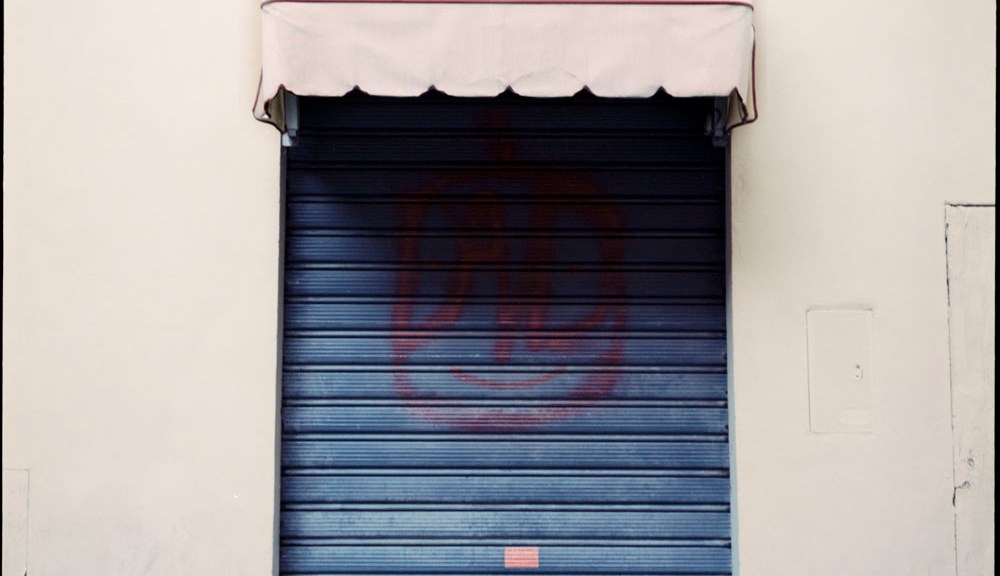
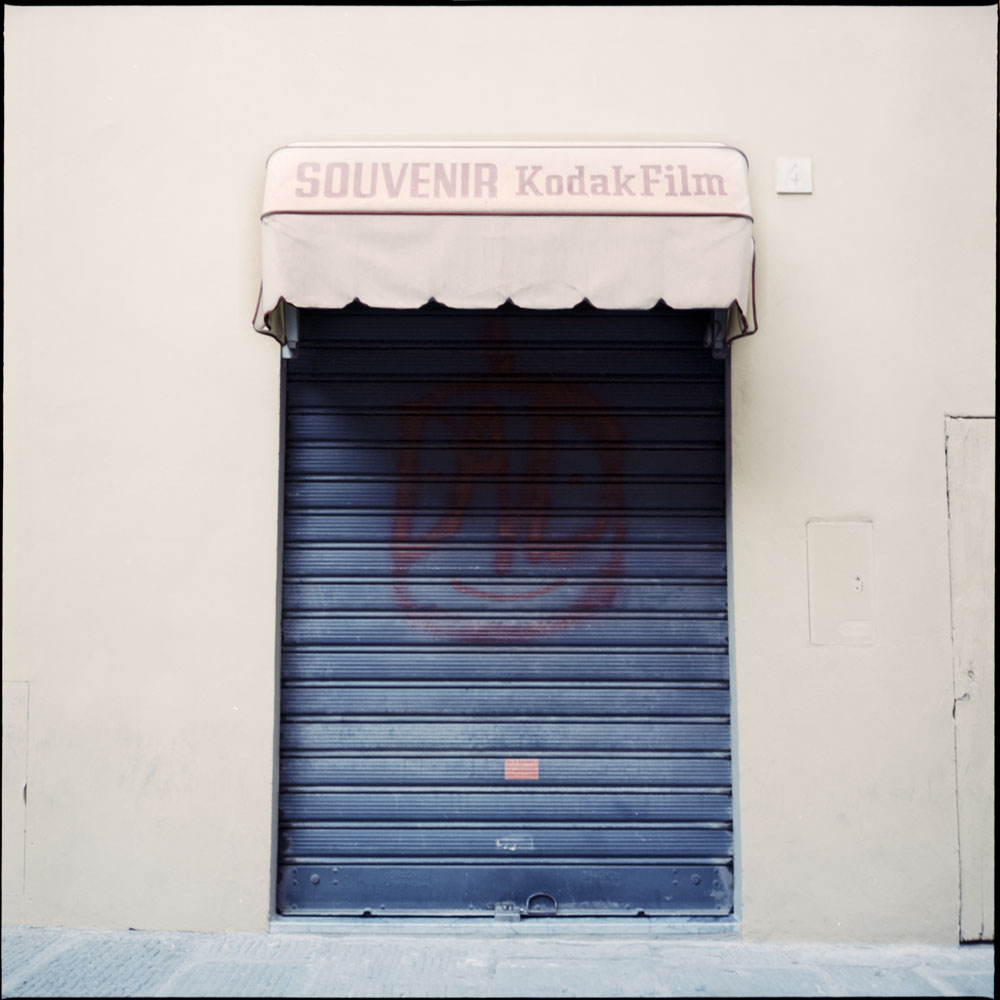
This little souvenir shop is in an alleyway just off the Piazza del Duomo in Florence. The shop is sill in business, but I caught it early in the morning before they opened. I felt it was a good metaphor for Kodak- the name is still recognizable and marketable, but it’s rather sleepy, dusty, and to many folks it’s perceived as already shuttered.
Souvenir Kodak Film, Florence
Of course, I took this with the latest generation of Kodak color film – Ektar 100 – which is perhaps the finest grained, most color-accurate film ever made.
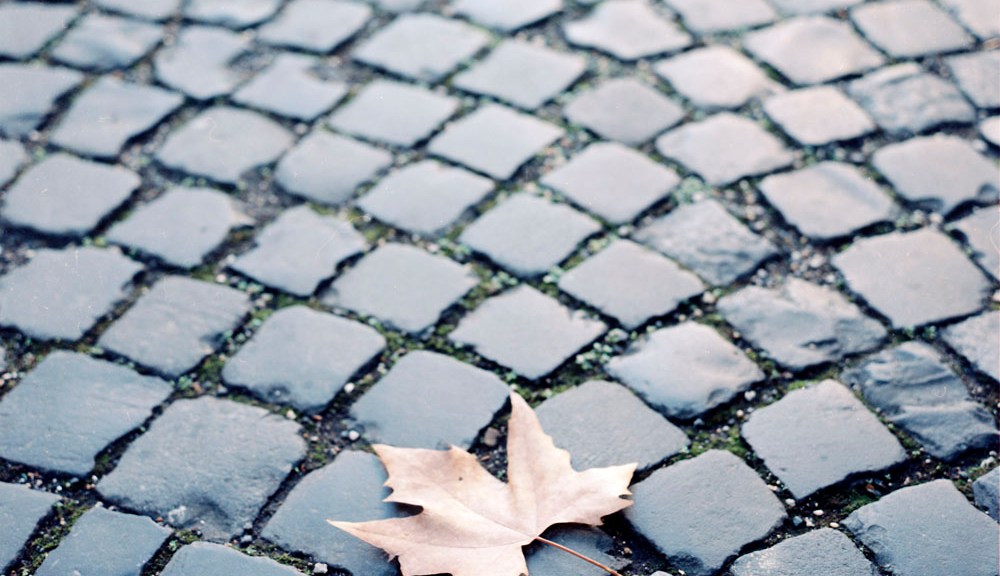
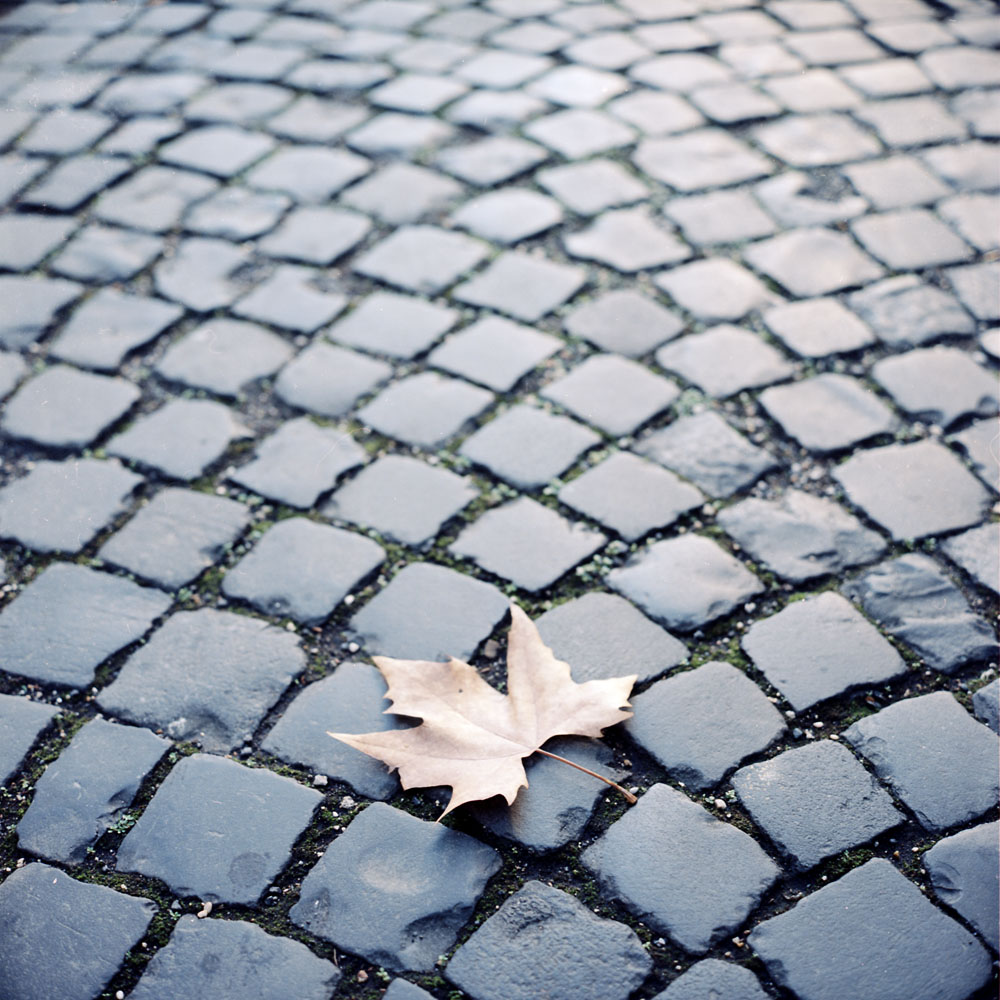
Just a one-off today – a single leaf that had turned brown and fallen on the black cobblestones outside the Centrale Montemartini museum.
Leaf, Centrale Montemartini
In travel, you make plans, and if you’re smart, you have either backup plans or you’re open to serendipity. I do a bit of both.
I had wanted to go see the Museo Centrale Montemartini, which is a collection of overflow ancient sculptures from the collections of the Capitoline Museums in downtown Rome, housed in a former power generation plant along the Tiber river. I had figured I’d go there on Monday, since most museums are closed on Monday, but the Capitoline Museums are open on Mondays. Well… long story short, Centrale Montemartini may be part of the Capitoline Museum group, but since it’s three subway stops out of downtown, it’s not like the ones on the hill overlooking the Forum, and it DOES close on Mondays. So I found myself in semi-suburban Rome looking at a closed museum, camera in hand. What’s a girl to do when faced with a loaded camera and a closed museum? Photograph the first fallen leaf of fall on some artfully laid cobblestone blocks in the museum driveway (and get honked at by a scooter driver for blocking the two and a half lane wide driveway). It also gave me time to shoot the bridge you saw in a previous post.




 dcphotoartist