Tag Archives: Kodak Tri-X

Reading Terminal Market

Back at New Years I went up to Philadelphia for a short weekend getaway. I stayed at the Marriott in center city, which was across the street from the Reading Terminal Market. The market is a food hall located under the tracks and platforms of the Reading Terminal, a train station that today serves mostly commuter trains. There is some amazing food there – I had lunch one day at a traditional Jewish deli that just absolutely hit the spot with a corned beef sandwich and a cup of chicken soup. Termini Brothers bakery has an outlet there and I brought home four of their raisin scones that were to DIE for (and if you ate them often, possibly to die of – they’re quite rich!). In addition to the prepared foods stalls, there are butchers, fishmongers, and greengrocers stalls as well, providing an oasis of fresh food in the center of a heavily urbanized business district that has seen better days.

“Eat Oysters, Love Longer” – the bar counter at Pearl’s Seafood.

Sushi Umi across the hallway from a handicrafts stall.

Fish on ice at the fishmonger’s.
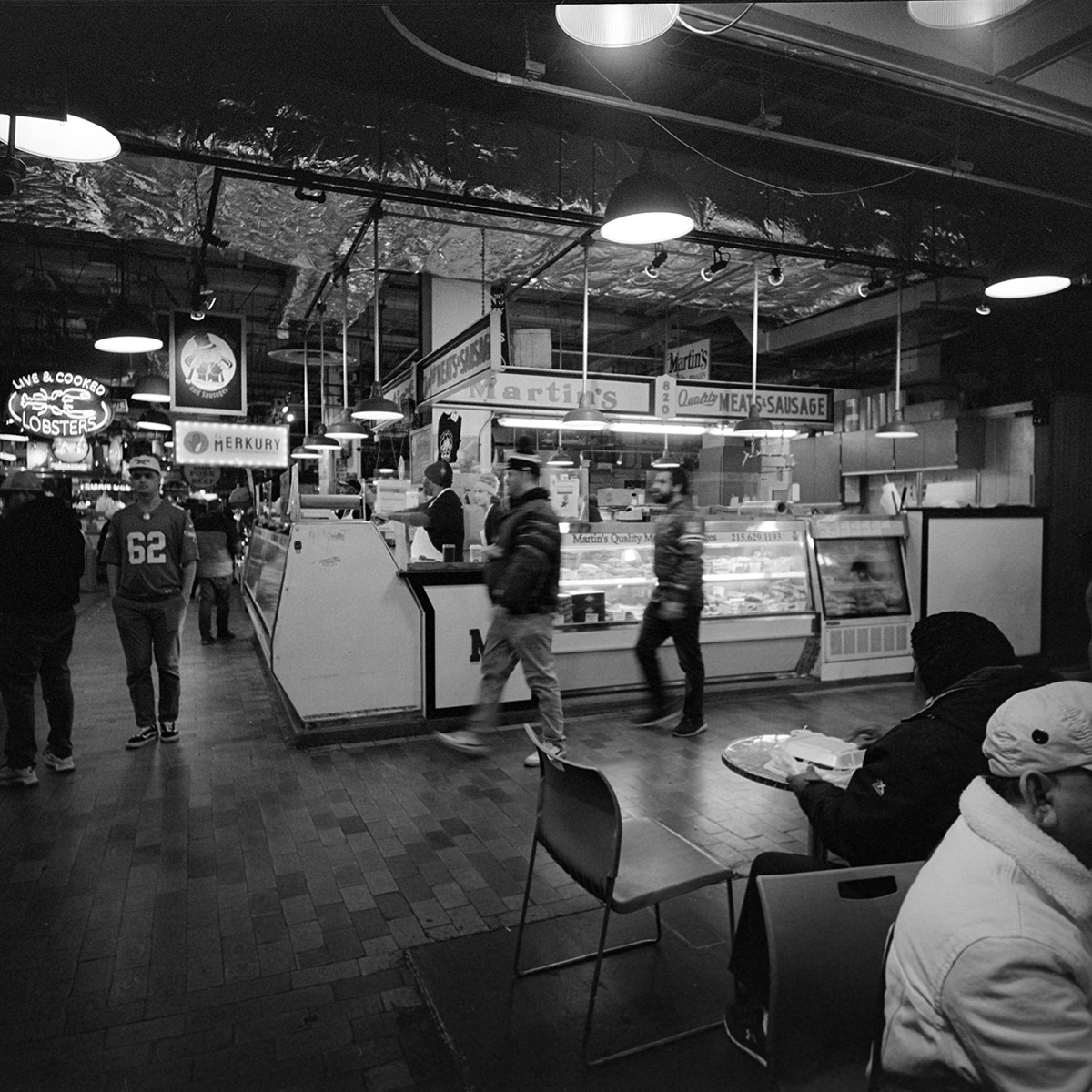
Martin’s butcher shop – Quality Meats and Sausage. A sign in the background is for live and cooked lobsters. Interesting trivia – lobster was, until the second half of the 19th century, considered poor people’s food. Lobsters used to be so common in the coastal waters of New England that you could just wade into the surf to catch them , and they had little to no market value – so much so that prisoners in New England rioted to demand their ration of lobster be held to no more than three days a week. With the advent of refrigerated rail service, it began to be served in the dining cars of long-distance trains, being able to be transported away from the coasts. It was transformed into a delicacy as they concurrently became more and more scarce as demand rose.

Pastries in the display case at Termini Bros.
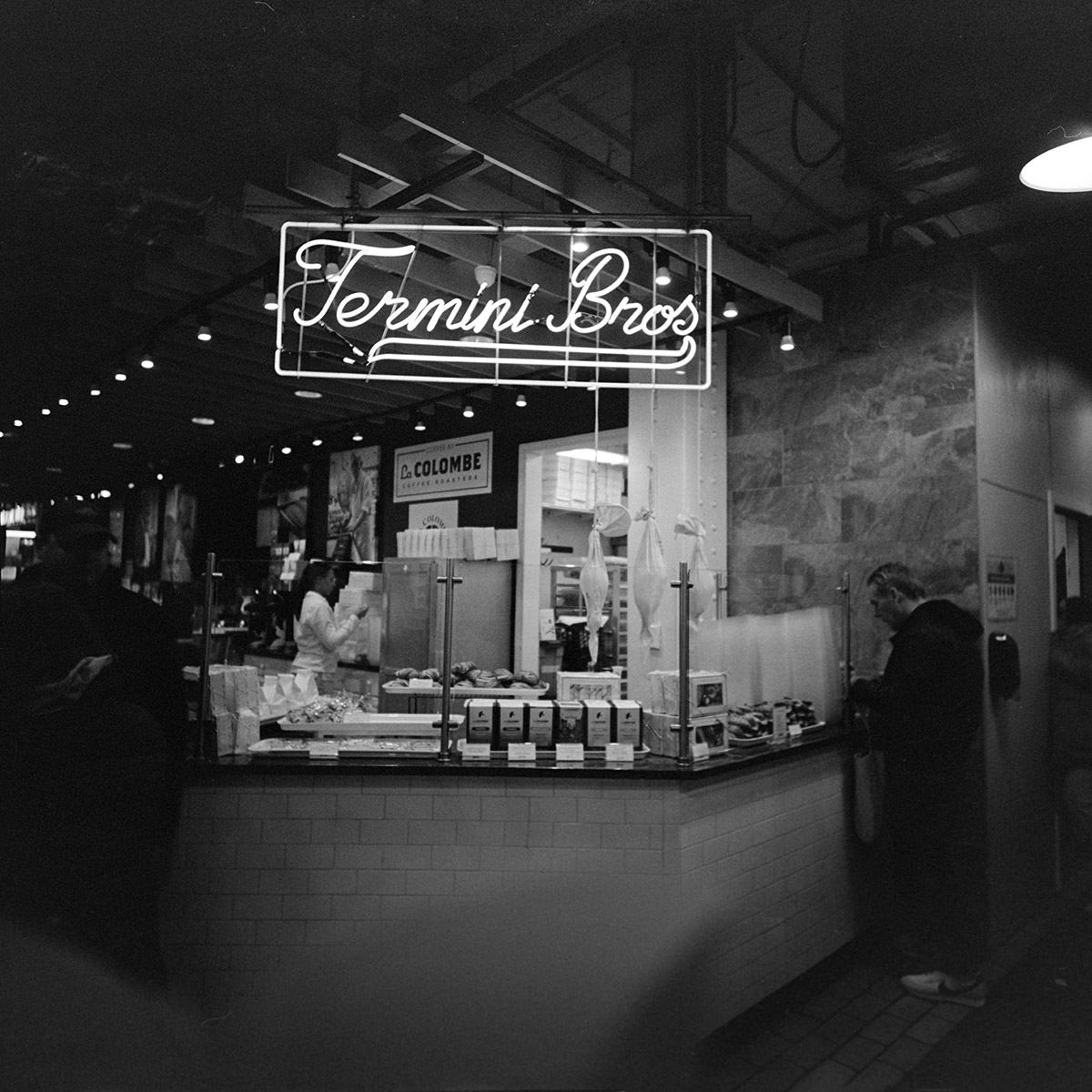
The neon sign for Termini Bros counter. They have been in business since 1921, and if their scones are anything to judge by, as long as they keep that standard up, they’ll be around for at least another century!

In case you’re wondering, all these were taken with one of the best, in my opinion, travel cameras available: the Lomo LCA-120. It’s a super-wide (38mm on 120 film, or the equivalent of a 21mm on 35mm/Full Frame). The super-wide angle means you can use it in places you would have a hard time photographing with most other cameras. It is fully automatic exposure – the only control you have over the exposure settings is by changing the ISO on the meter dial. It is, in contrast, manual focus but only via focus zones – you have a selection of four distance ranges you can select via a lever on the side of the lens panel. Because it is a leaf shutter and has no mirror to move, it is quiet when taking photos, so you can work unobtrusively in a busy environment. It does require you to have a somewhat loose shooting style because of that wide angle lens and the fact that you’re composing via an uncoupled viewfinder, not through the lens. While I normally like having the precision of an SLR or a TLR with aperture and shutter controls, working with the LCA 120 is very liberating in a way because you stop worrying about all those fiddly things and just concentrate on composing the image in the viewfinder.

I combine it with Kodak Tri-X film frequently because that gives me enough wiggle room to pull off hand-held exposures with even long-ish exposure times – I’d venture to guess that the shots in Reading Terminal Market were somewhere between 1/15th of a second and 1 second. Yes, you read that right – hand held at up to 1 second.
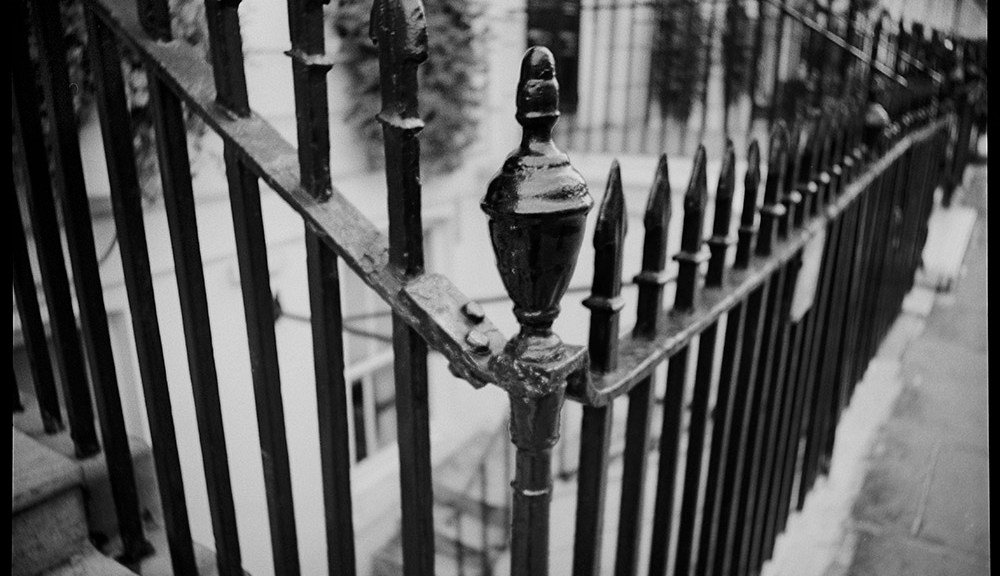
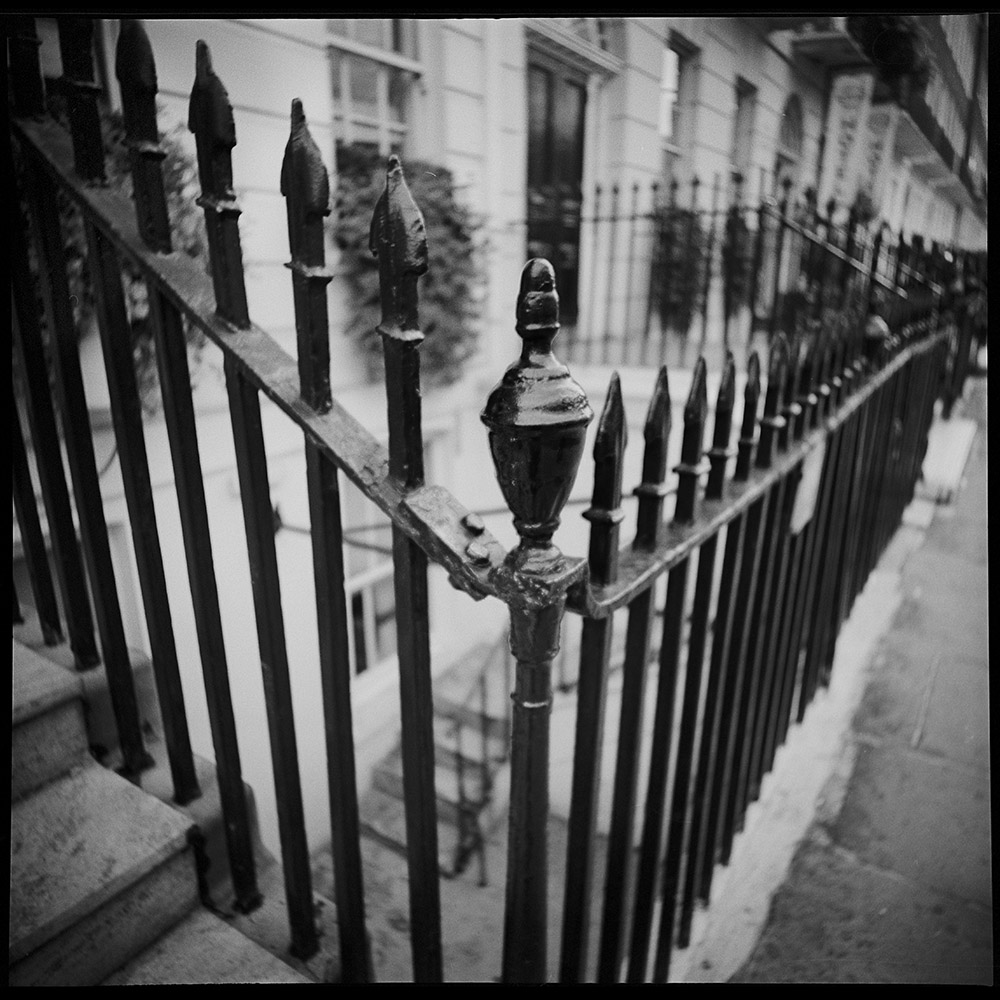
Iron Railing, Russell Square, London

IronRailRussellSquareLondon
Iron Railing, Russell Square

This is all about using selective focus to emphasize a subject, and use of exaggerated perspective to draw the eye into and through the image. This is one of the things I like extreme wide-angles for – the exaggerated foreground-background relationships that happen when you put them very close to something give you a new non-eye-like point of view on your subject that really forces you to consider it formally, abstractly and within its context.

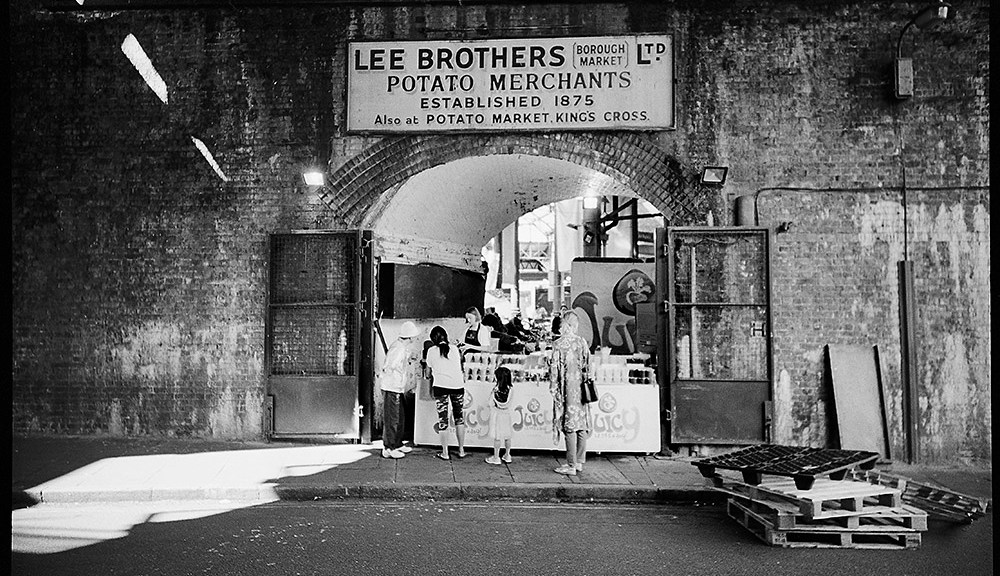
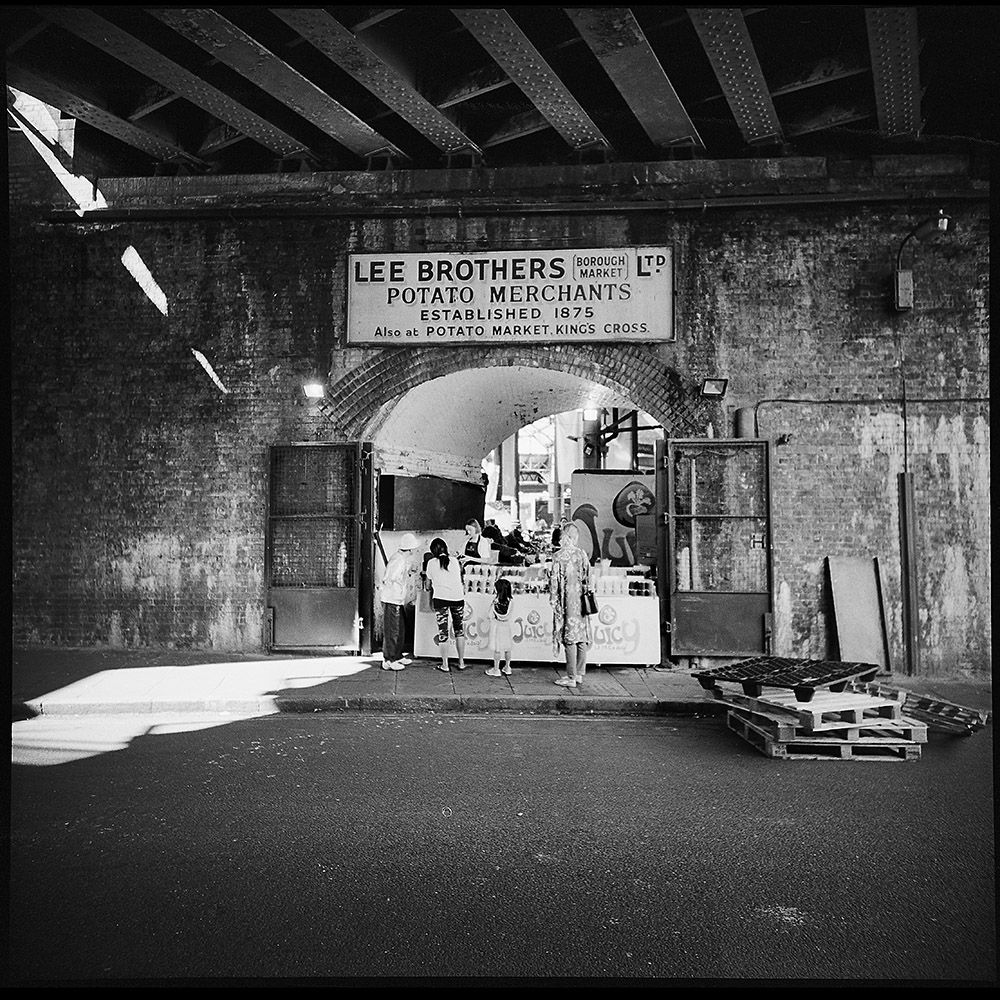
Lee Brothers Potato Merchants – London South Bank

A street find while walking around with the LC-A 120. This is under the railroad tracks that cross the South Bank pier of London Bridge, just across the street from Southwark Cathedral.

LeeBrosPotatoMerchants
Lee Brothers, Potato Merchants, Behind Borough Market

London Images – British Museum – Greece

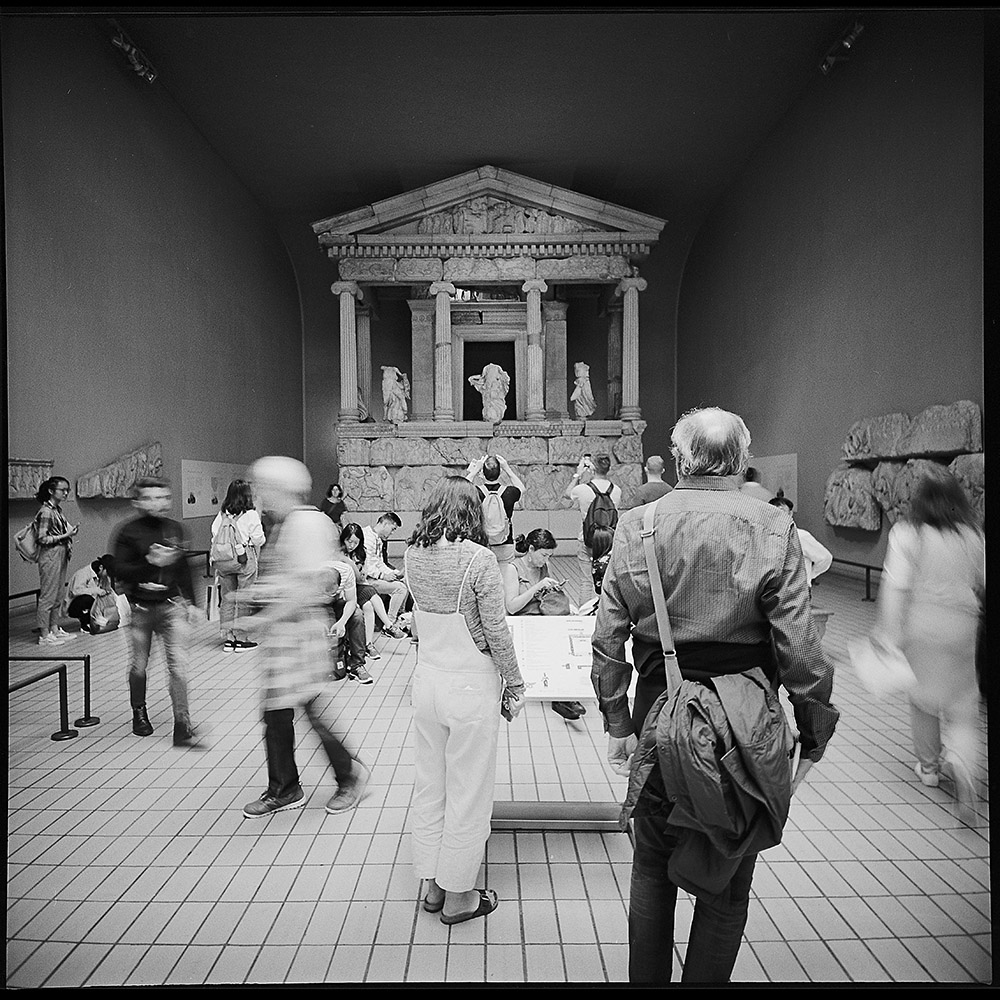
GreekTempleBritishMuseum
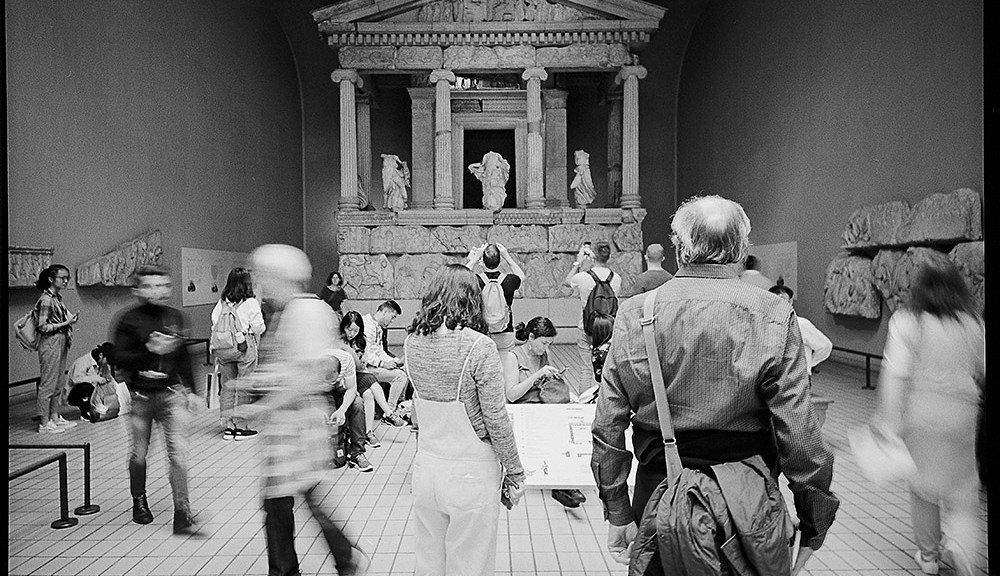
Greek Temple, British Museum

I’m entranced by the range of things happening in this photo. The geometry of the space (especially the grid on the floor) leading your eye back toward a vanishing point, the contrast between the stark modernity of the room structure and the gnarled, organic forms of the ancient Greek temple, the static, permanent nature of the architecture (all the moreso thanks to the twenty-five hundred year old temple in the room) providing backdrop for the hustle-bustle of people circulating the room, and the movement around the people stopped stock still to contemplate the temple. This was probably another 1/2 second exposure, maybe 1/4, hand-held with the Lomo LC-A.

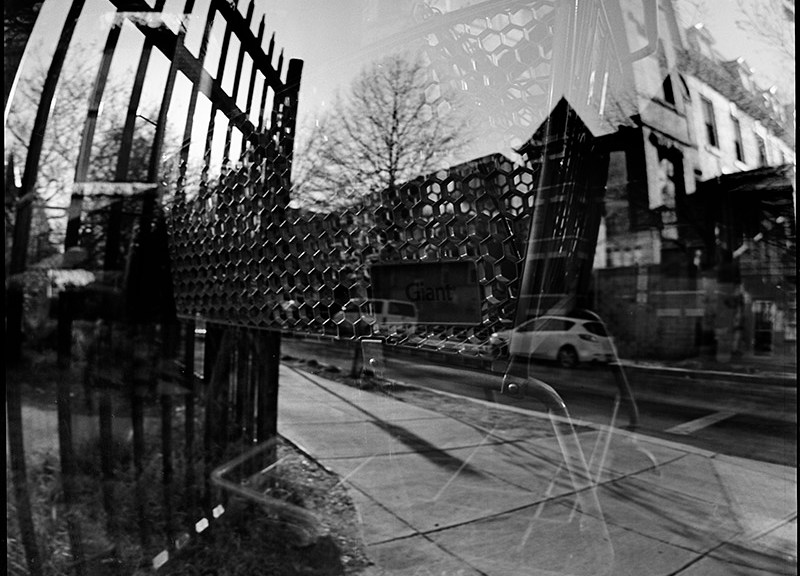
Happy Accident – double-exposure

DoubleExposureHappyAccidentFisheyeRZ

Double-exposures, especially accidental ones, can be so much fun! You never know what you’re going to get, and how it will work out. Here I have two very different images layered one atop the other, both with my Mamiya RZ Fisheye lens. Had they been done with different lenses I don’t think this would have worked out so well.

Playing with a Fisheye

I decided to treat myself to a lens toy – I got a Mamiya RZ Fisheye lens for my RZ67. It arrived this weekend and I took it on a walkabout in my neighborhood to put it through its paces. I especially wanted to try and do some shots that did not scream “shot with a fisheye” to see if it could be versatile enough to keep in my camera kit, or was it really a one-trick pony.

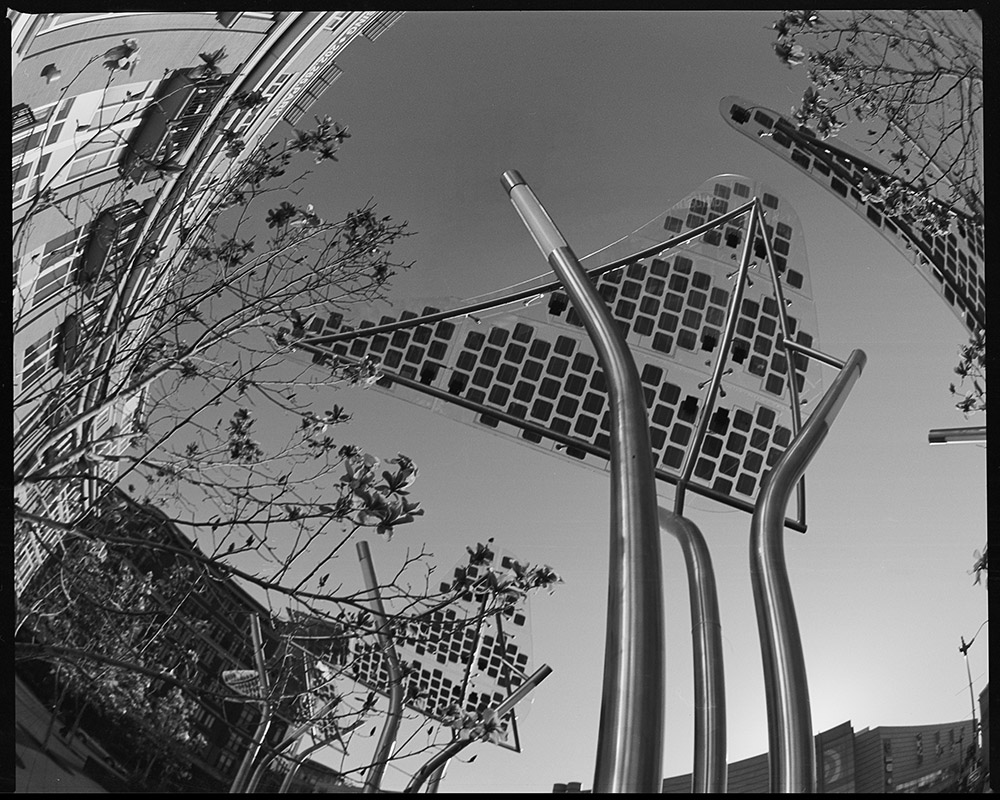
SolarLightsFisheye

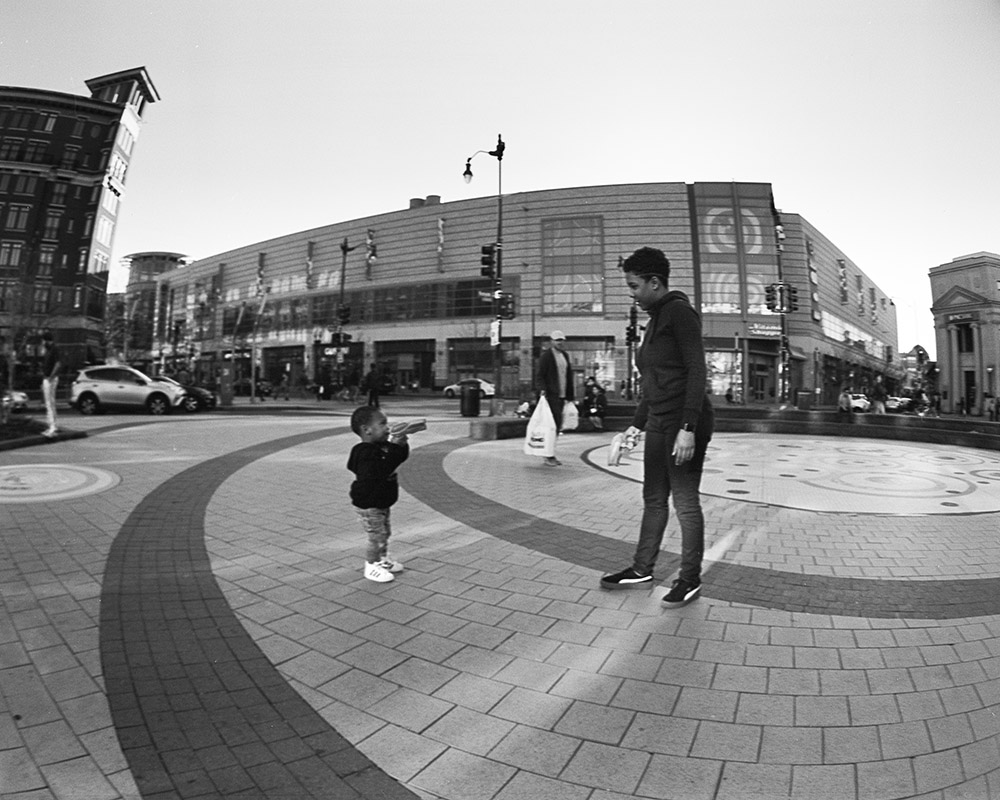
In this shot, it shows that you CAN use it for street documentary if you want. It’s still a challenge, though, with the distortion it brings to background subjects. And it forces you to get right up on top of your subjects – They were maybe five feet away from me.

SquirtgunFightFisheye

Applied sensibly to architecture, it works. You do have to be extra careful that your horizons are level and square, or you will get wild distortion.

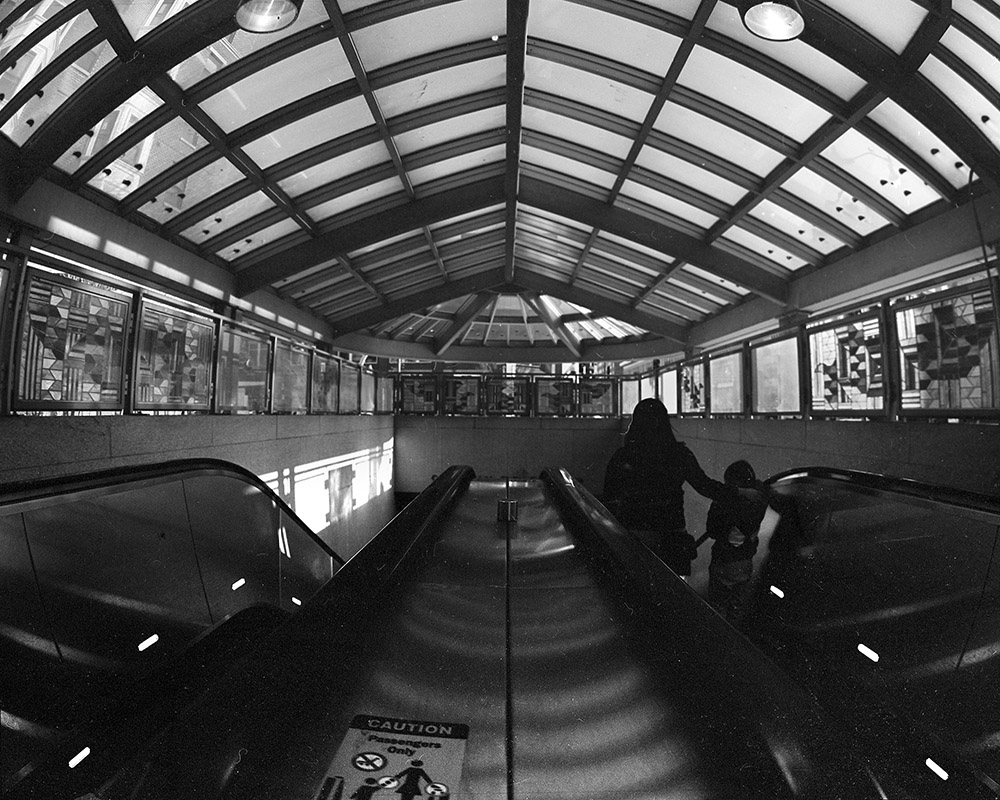
CoHiMetroEscalatorFisheye

This is perhaps my favorite image of the shoot. Leading lines abound and the backlit subject with the sun in the frame create drama.

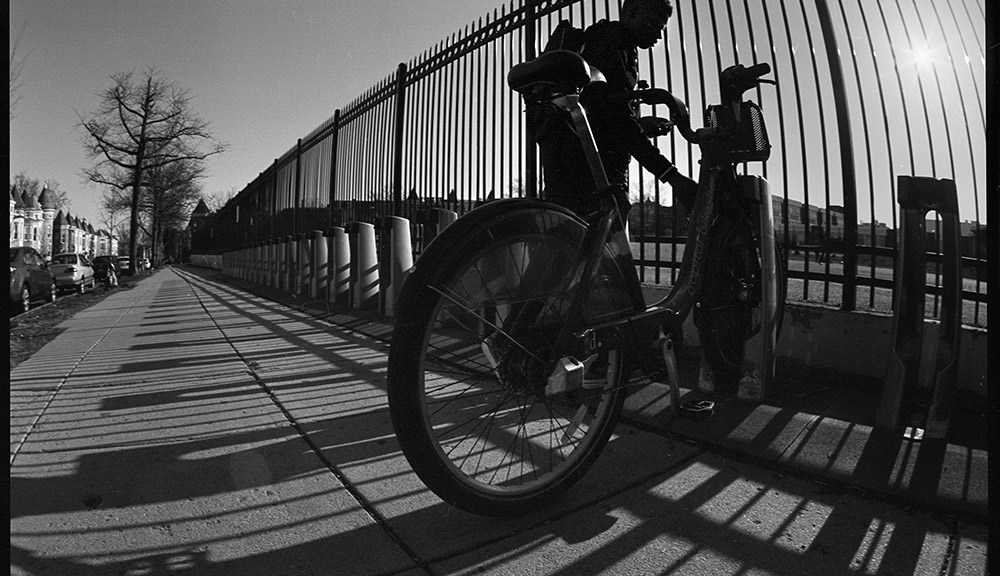
CyclistRentalFisheye

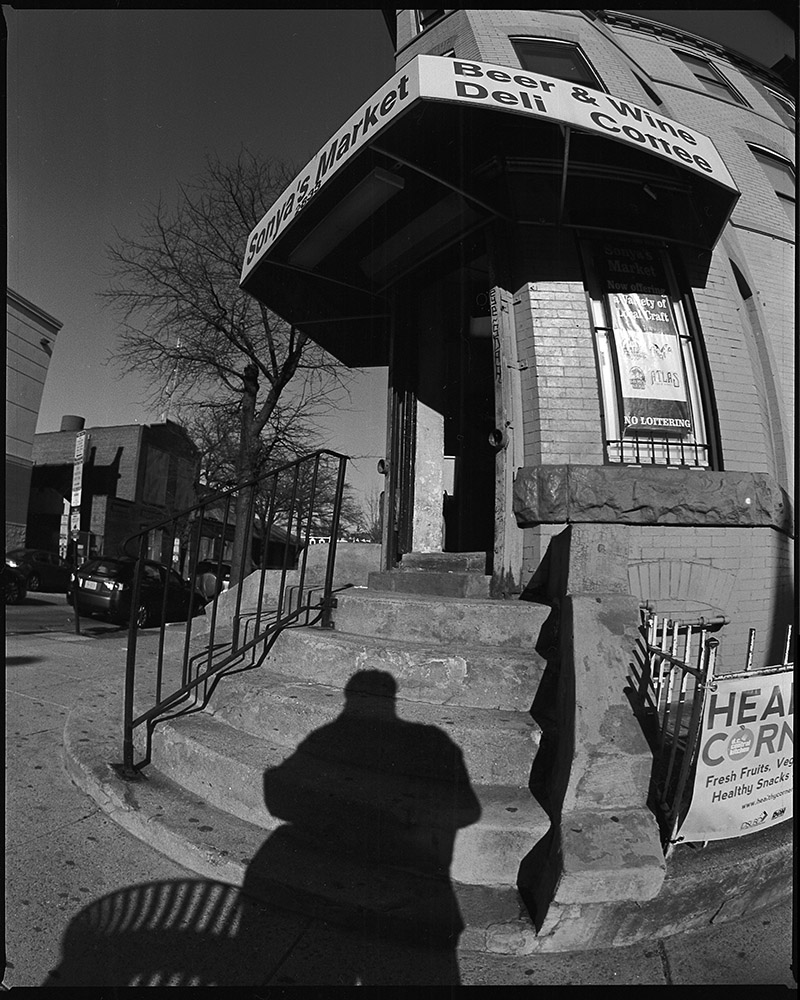
Selfie with the fisheye – with the sun behind me, it’s impossible to keep yourself out of the photo (or at least your shadow).

SonyasMarketFisheye

Victor – Portraits

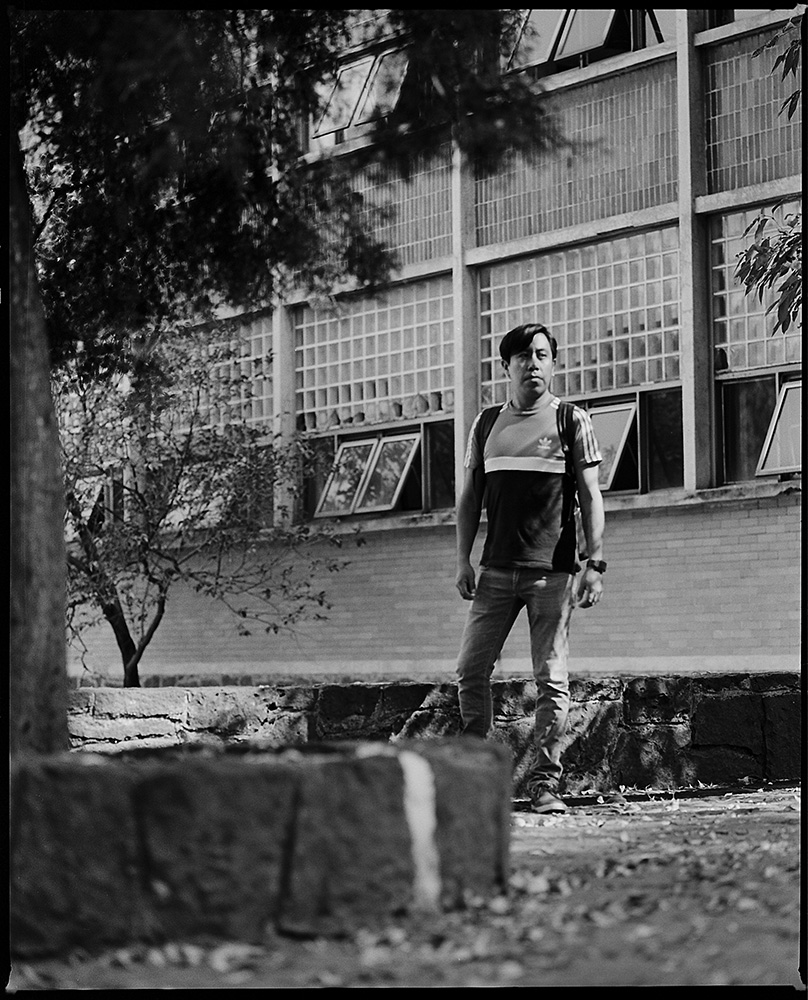
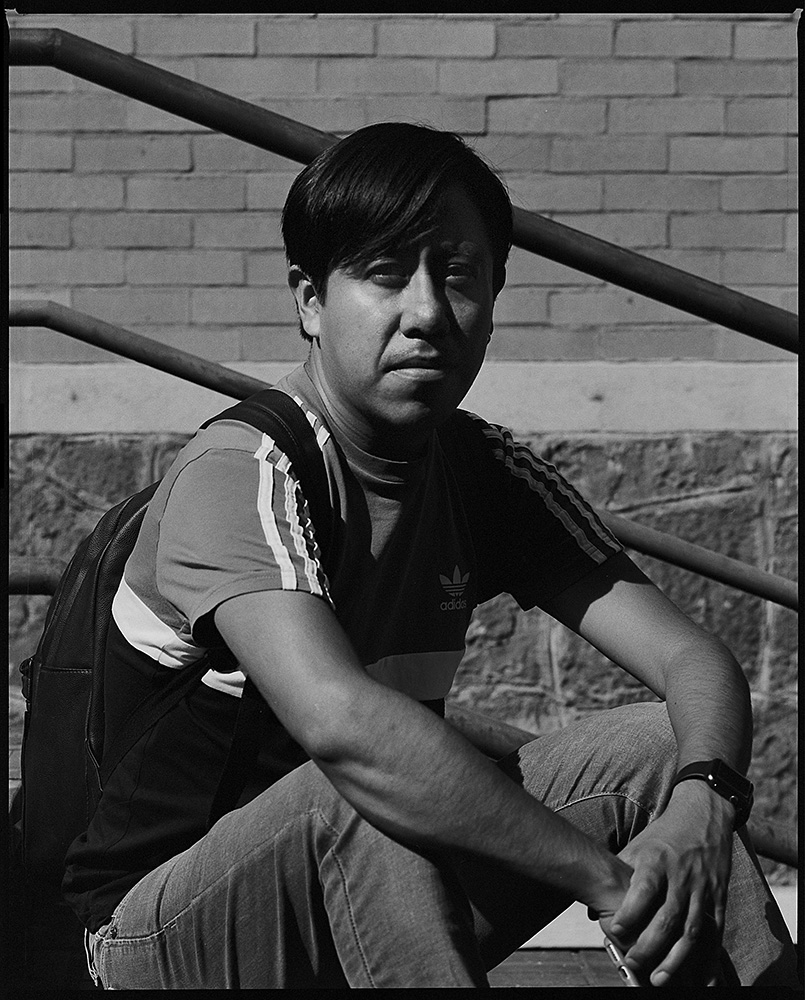
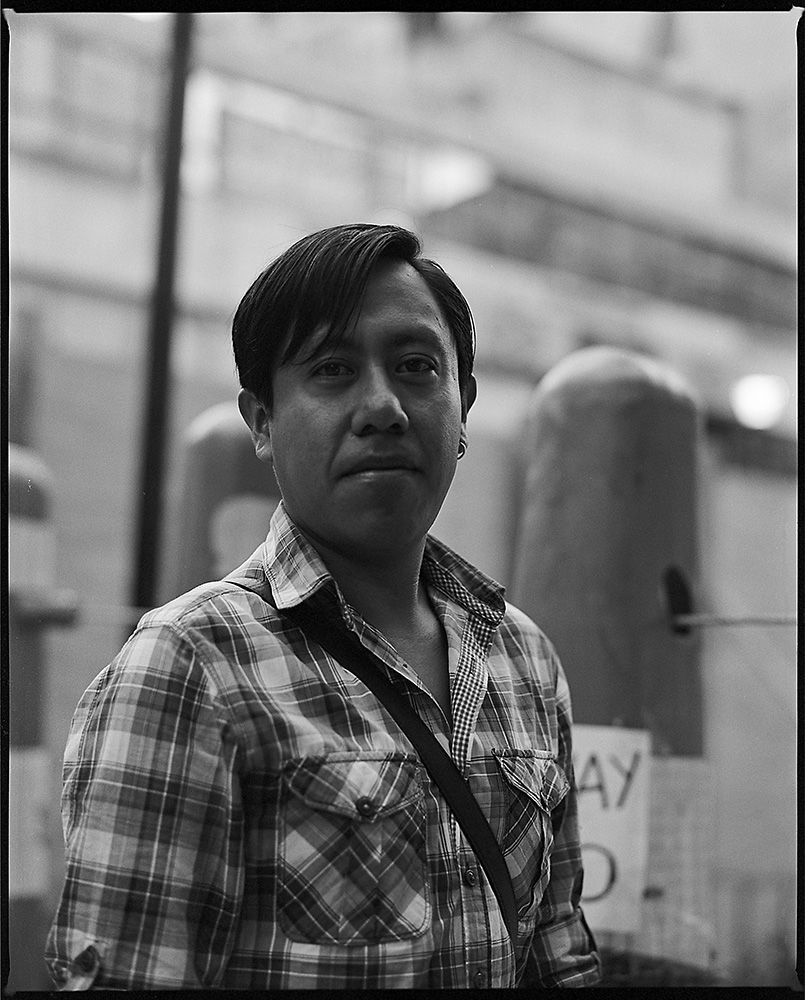
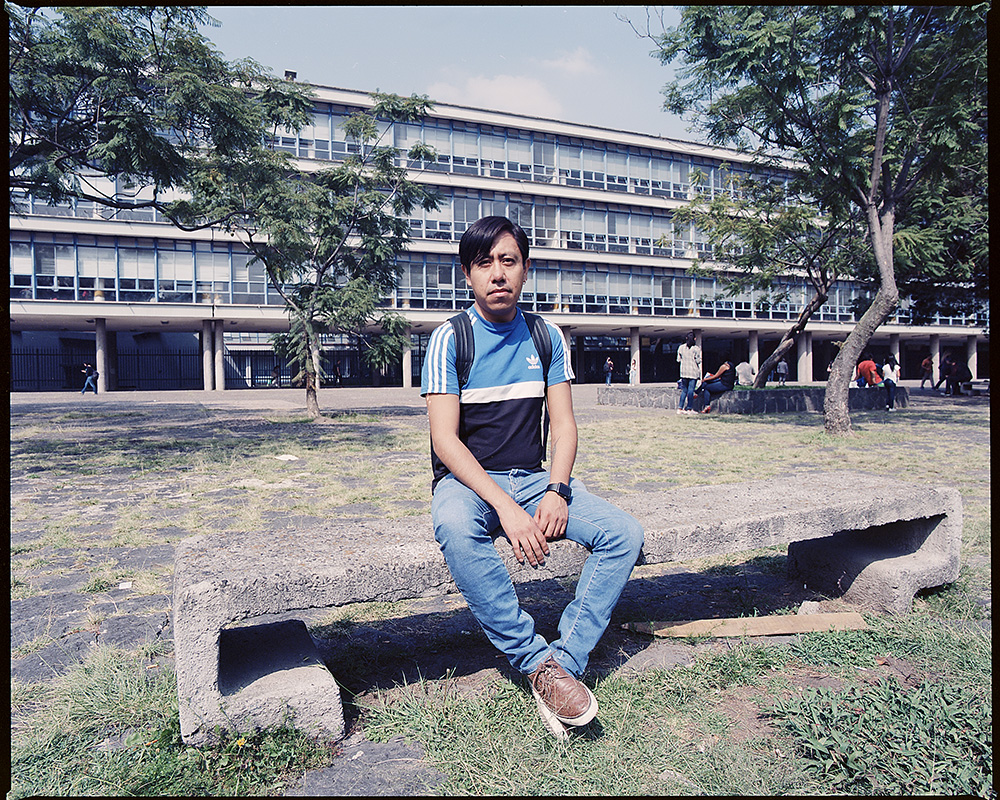
Part of the reason for my trip to Mexico City was to see Victor. It’s a developing thing – we haven’t placed a label on it but whatever it is, it’s good. And he’s a willing subject for the camera, which is a nice change of pace from my ex.

VictorAtUNAM1

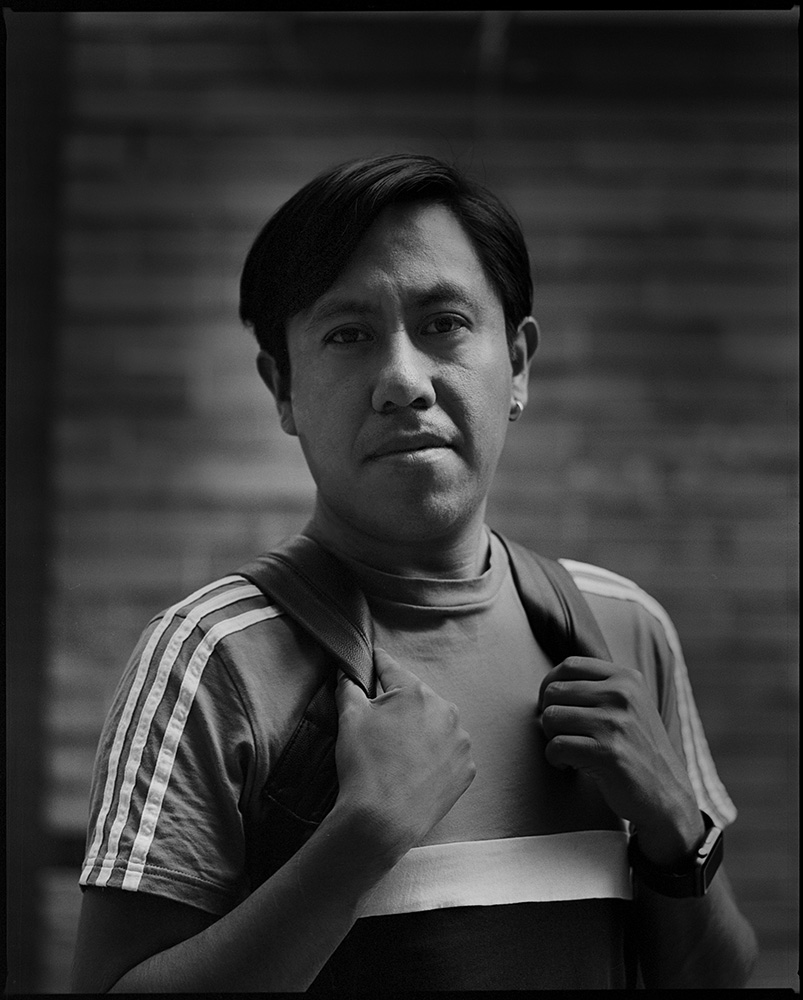
It was also an opportunity to test out the portrait lens on my Mamiya RZ67 (the camera is new to me, but the lens’ quality is known far and wide – I just needed to see for myself what it would do and if I liked it. I do).

We spent an afternoon wandering around the UNAM (National Autonomous University of Mexico) campus when I shot these.

VictorUNAM2

VictorUNAM3

This last one was taken with the 110mm f2.8 lens. It’s an equally good lens for portraits when you need something that gives a bit more background and/or a closer working distance, like this shot.

VictorZonaRosa

All images made on Kodak Tri-X 400. I really like Tri-X for the tonality it has, and the just-a-little-bit of tooth.

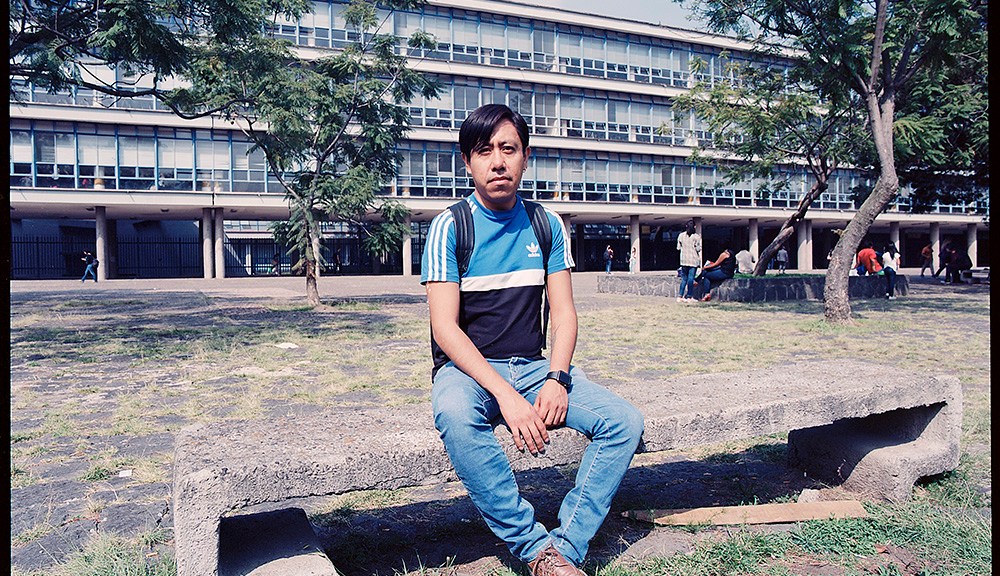
VictorUNAMDerechos

This very last image was made with the 50mm lens as an example of environmental portraiture. The film was Kodak Ektar 100, which I love for the color saturation and sharpness.

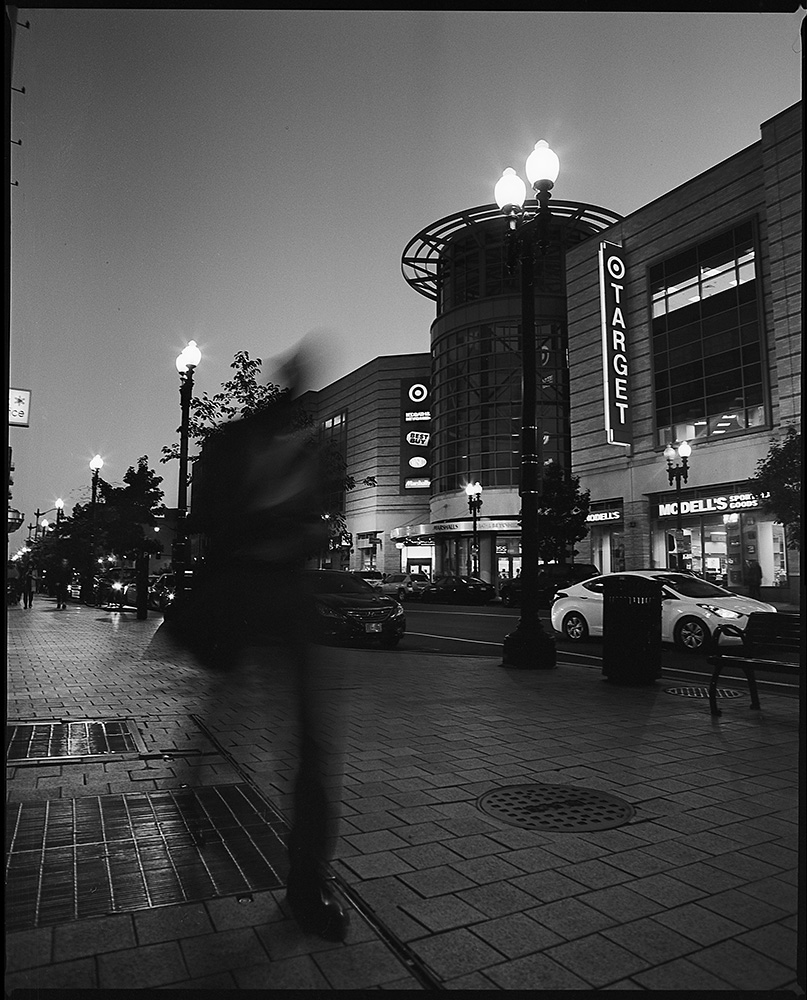
Ghost Man, Columbia Heights

GhostManCoHi

This is a case of where the mechanics of photographing lead to something emotionally resonant in a powerful way – the blurred moving man under other circumstances could be considered a flaw, but here becomes a metaphor.

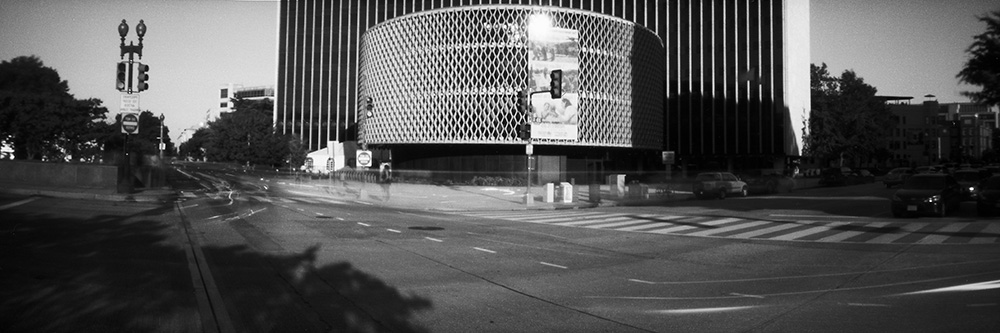
WHO/PAHO HQ, Washington DC

I keep shooting this building and the surrounding intersection because the architecture provides all kinds of graphical possibilities. Here, today, the drum in front of the tower looks almost like polished metal, whereas in reality, it’s coarse concrete. And a 25-second daylight exposure eliminates all but traces of traffic and the most immobile of pedestrians.

WorldHealthPano

The 6×18 pinhole, when kept plumb, level and square, is virtually distortionless. I’m going to try shooting this scene again but from a low angle, pointing up, to see how curved it gets.

Now, with working with the pinhole, Kodak Tri-X has really turned into my go-to film because I really need the extra speed even in daylight. And the grain of Tri-X, in 120, and in contact prints/scans, really is a non-issue.

Gentrification on H Street Northeast

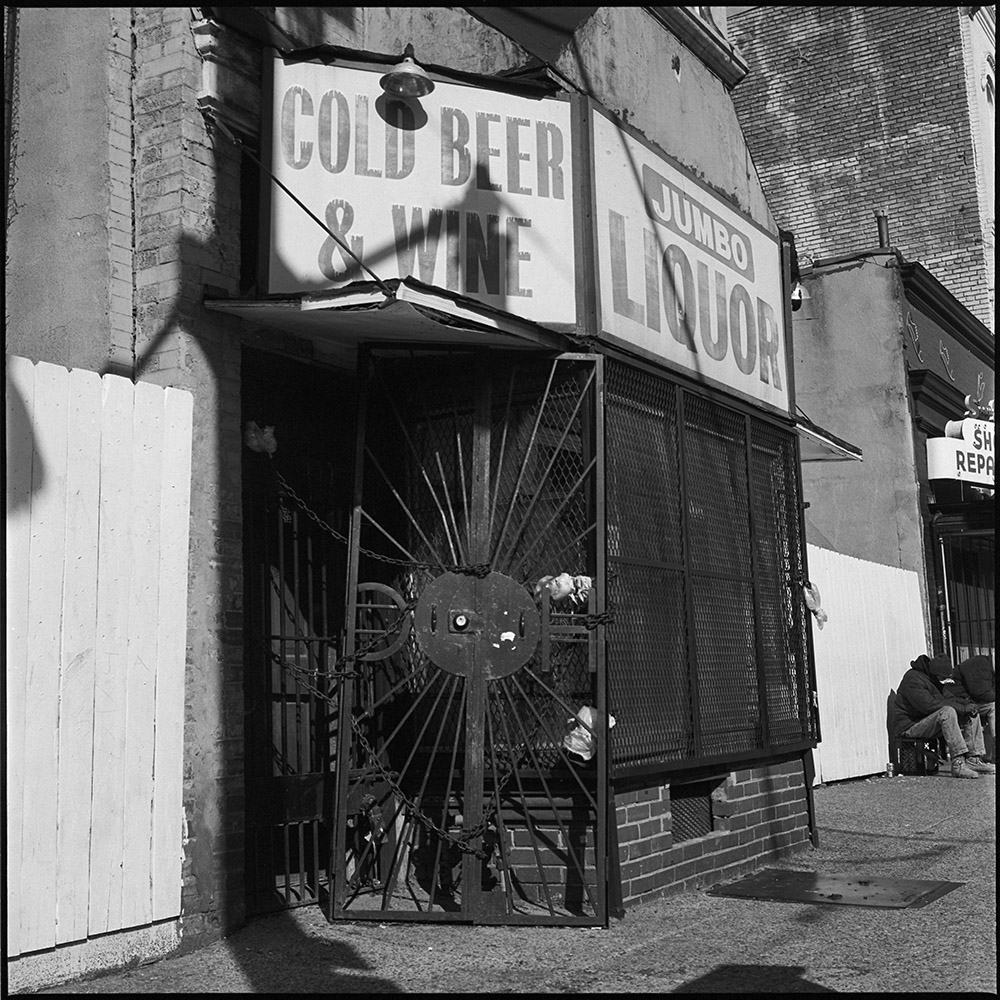
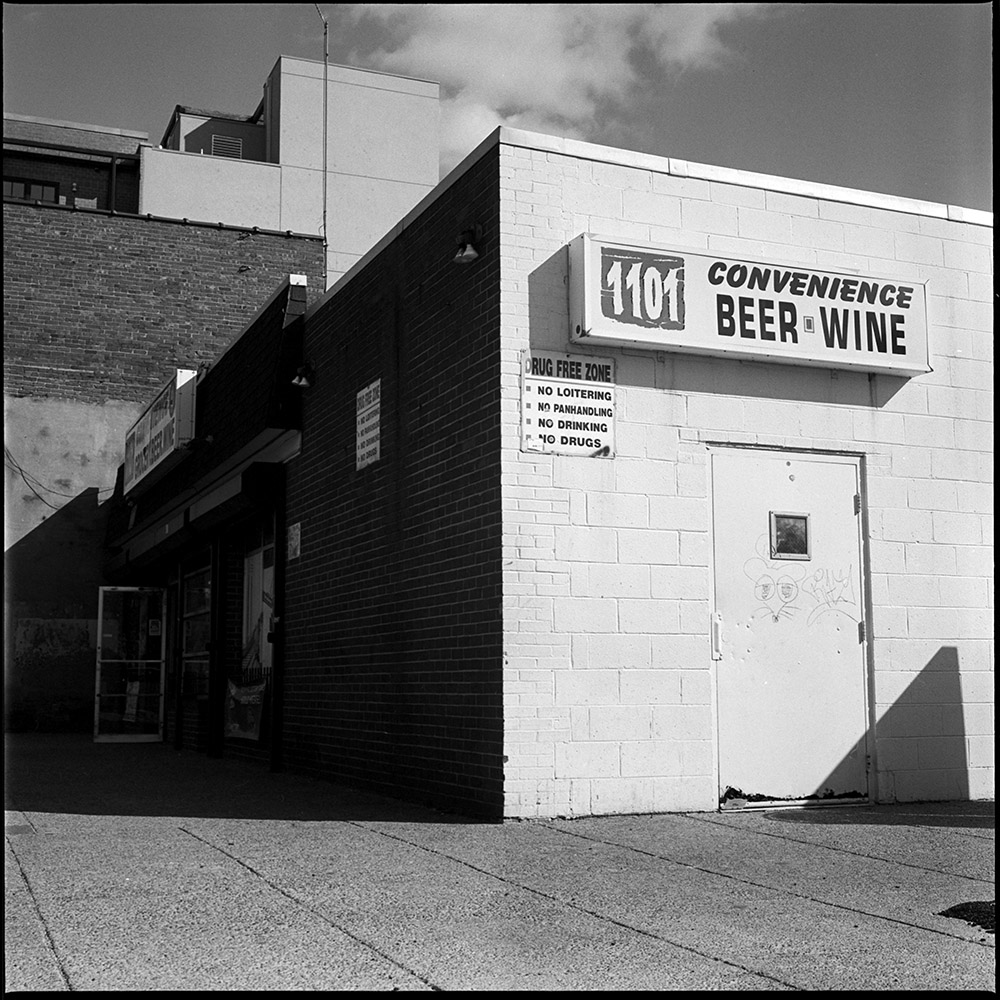
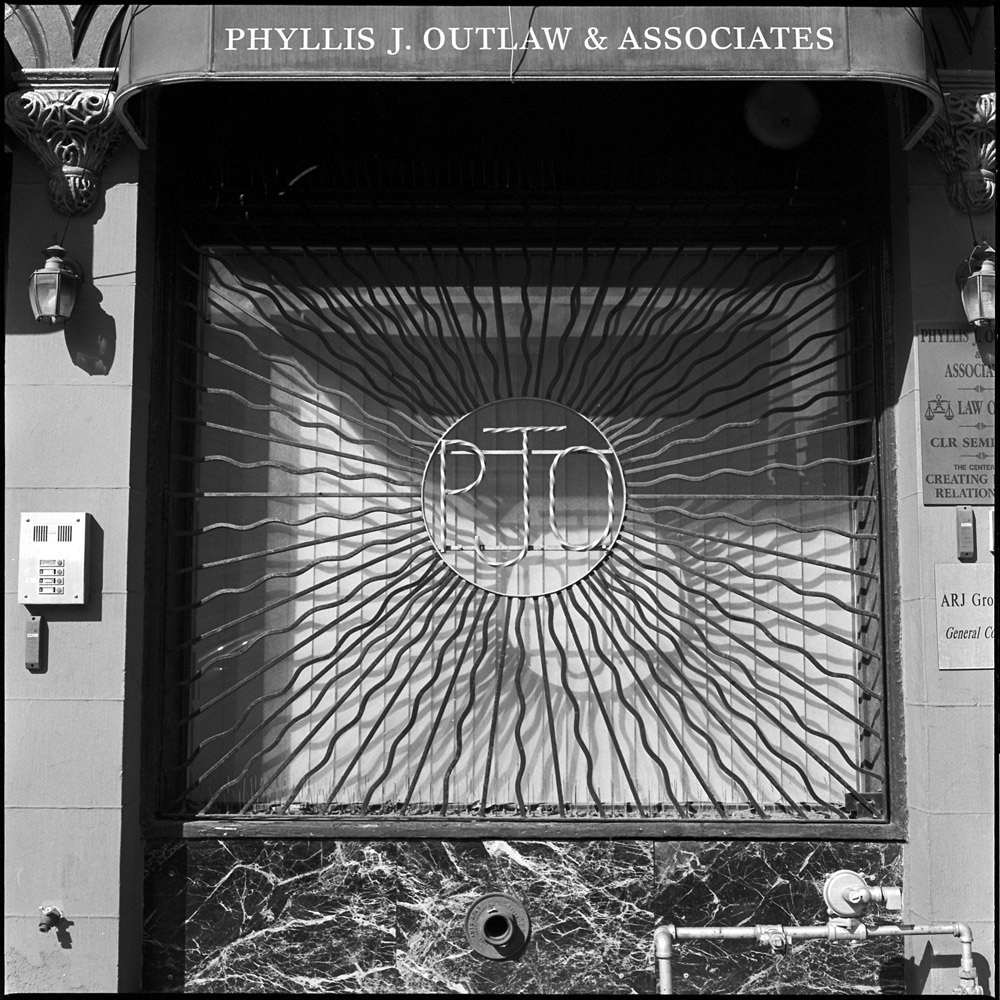
H Street Northeast is a neighborhood in major transition. It was in the 1950s and 60s an important retail and entertainment corridor for the African-American community in DC, along with the U Street corridor in Northwest. Along came the 1968 Martin Luther King riots, and then in the 1970s and 80s the rise of the drug epidemics, and H Street turned into pawn shops, liquor stores, and abandoned buildings. In the early 2000s, property developers turned their eyes toward the area for the relative abundance of cheap real estate as the next new place they could revitalize and get rich in the process.

These first four shots here represent the old side of the neighborhood – liquor stores, barred windows and businesses that clung to life through the lean years.

Cold Beer & Wine
Cold Beer & Wine

1101 Convenience
1101 Convenience

Phyllis J Outlaw
Phyllis J Outlaw

S and S Shoe Repair
S and S Shoe Repair

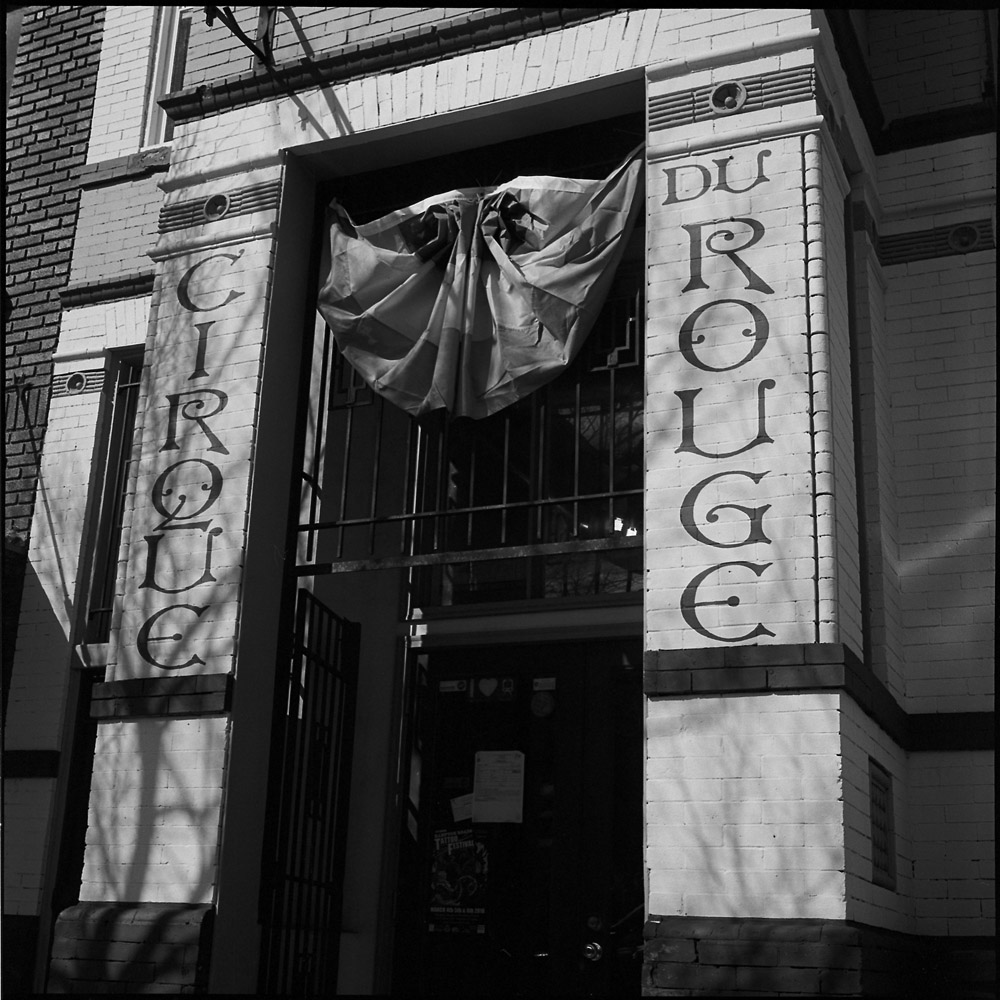
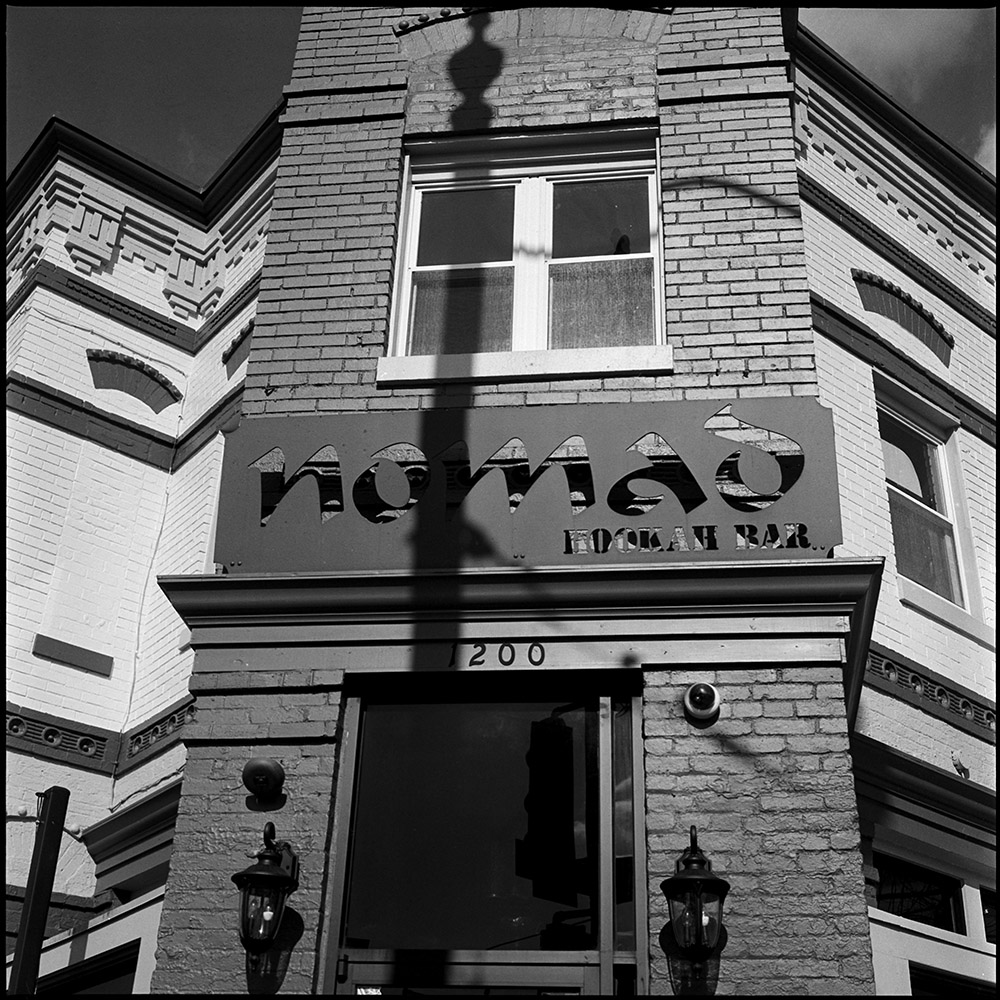
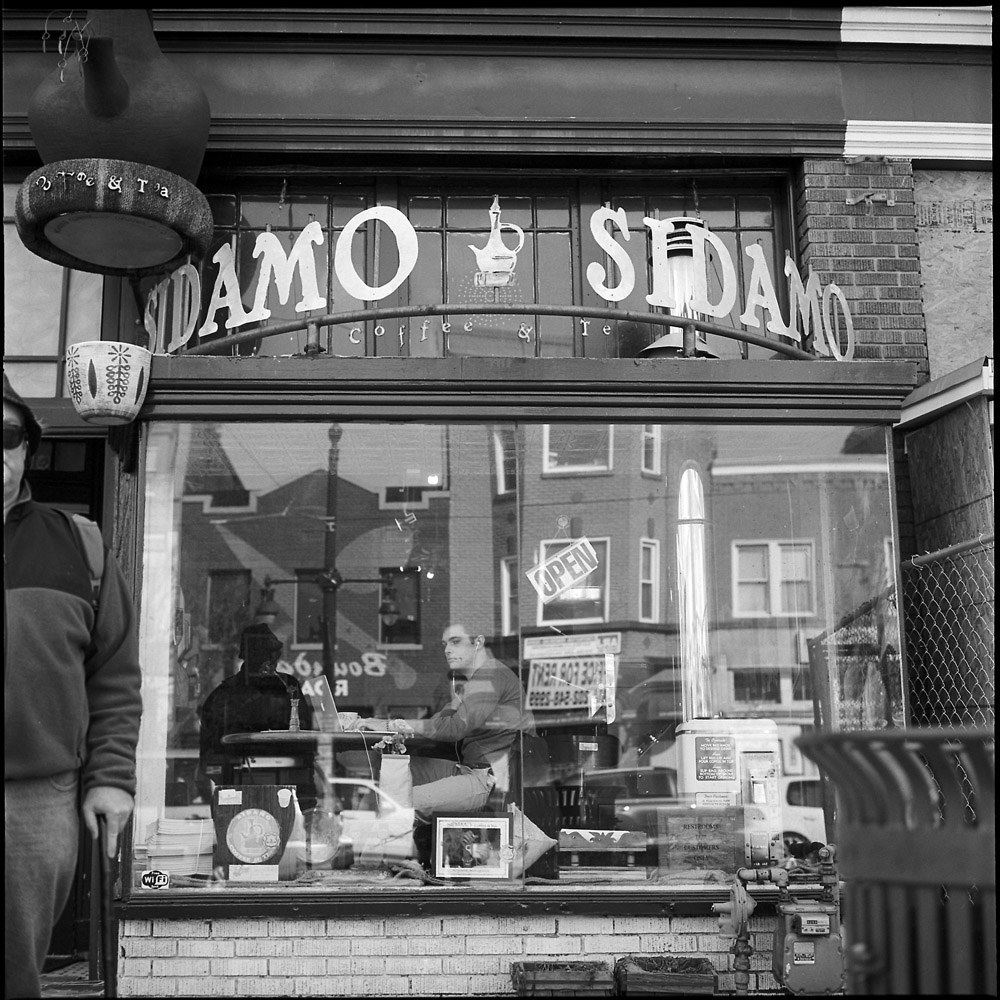
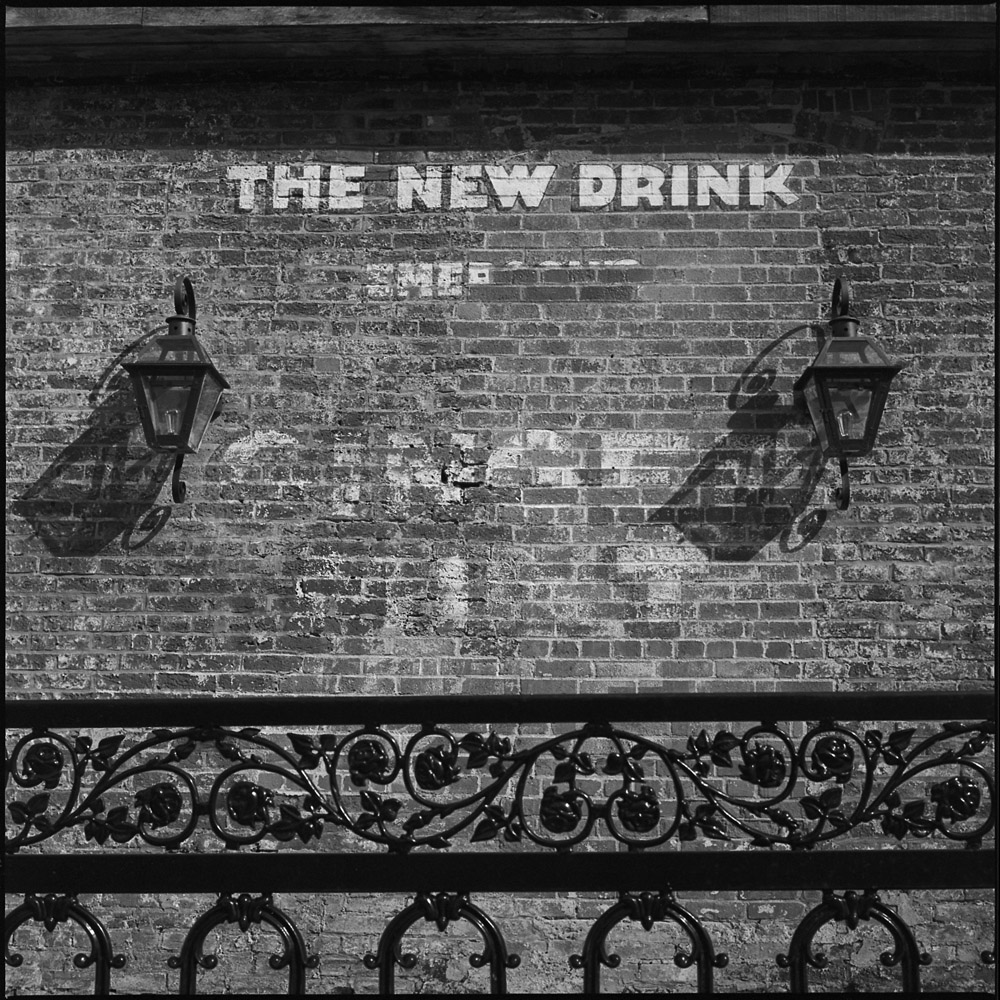
This set are the changing face of H Street – fresh paint, new entertainment venues, coffee shops and chic pubs.

Cirque Du Rouge
Cirque Du Rouge

Nomad Hookah Bar
Nomad Hookah Bar

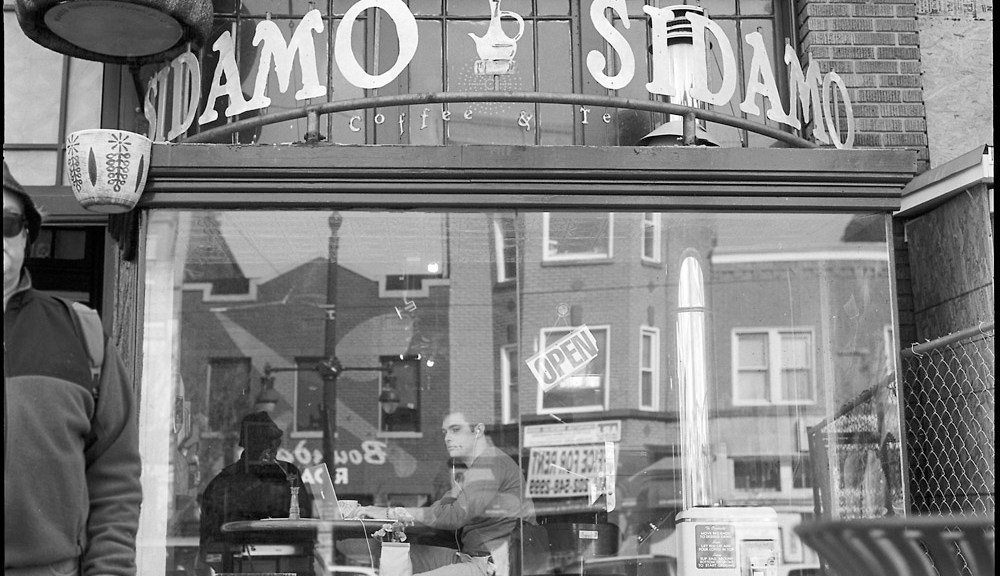
Sidamo Coffee & Tea
Sidamo Coffee & Tea

The New Drink
The New Drink

The not-so-visible dark underside to this is that the past residents (lower and middle income African-Americans) and the businesses they used to operate are being pushed out not only by the housing redevelopment that is driving real estate prices up by several hundred percent over the span of a decade or less, but by the changing retail landscape – when enough businesses on your street have gone from selling fifty-cent cups of coffee and five dollar lunch deals to six dollar cappuccinos and thirty dollar tasting menus, your old clientele aren’t coming around anymore. If you were already operating on a shoestring, it can be cost-prohibitive to reinvent yourself.