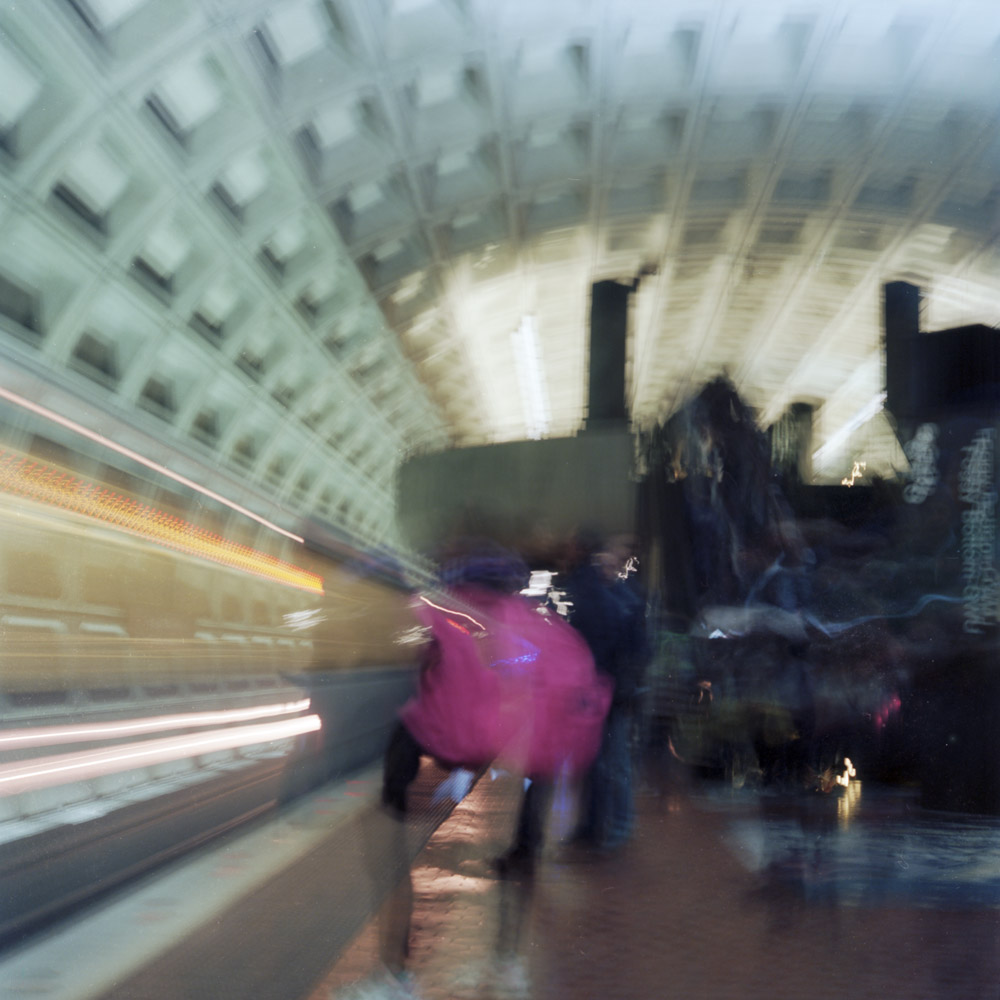
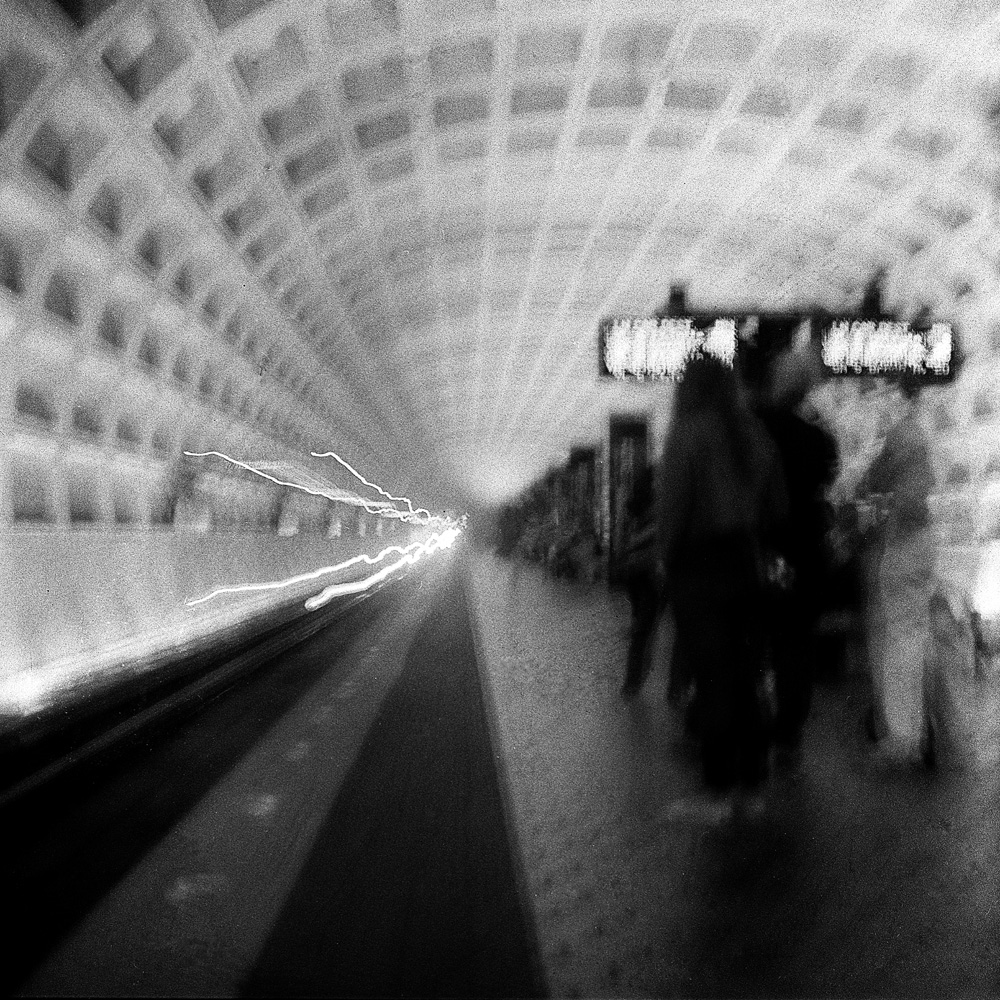
Look at these which are very similar to some I’ve done in black and white and note how different they feel for one being in color the other monochrome.
Pulling In, GWUMetro Train Arriving, Archives Station
Don’t you relate to them differently?
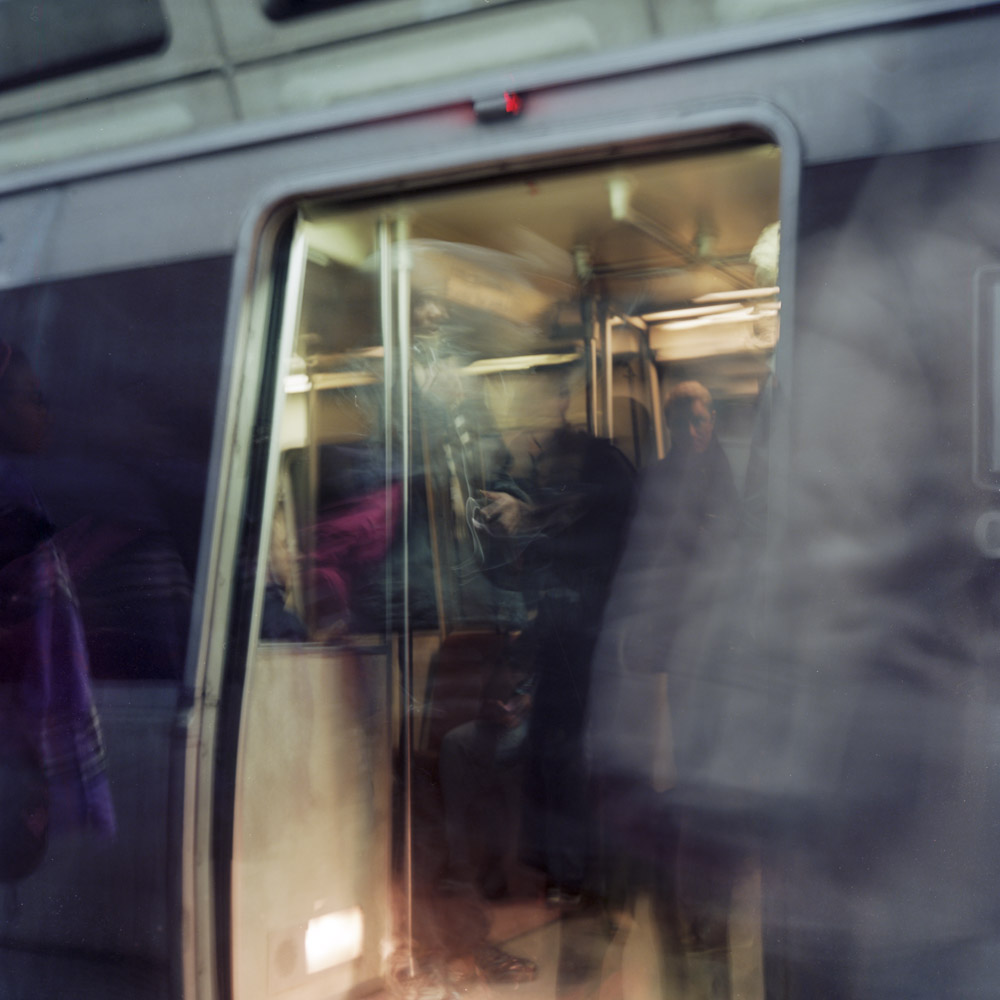
Another example of the emotional effect of color- outside the train is dark, cold, and muted color, whereas inside is warm, glowing, alive and inviting. Wouldn’t you rather be inside the train than outside?
More of my Commuter Diary, this time in color. I like to go back and forth with the same subject in color and in black-and-white to see how they change both stylistically and emotively. As Edward Weston once said, “you can say things in color that you can’t say in black-and-white”. Truer words were never spoken – color photography has a totally different feel than black-and-white. I think black-and-white is more intellectual whereas color is more intuitive and emotional. Black-and-white, because it is an abstraction from reality, makes us look at a scene with a kind of detachment, whereas color draws us in and makes us experience the scene in a more visceral, less vicarious way.
This shot is, quite frankly, a bit of a mystery to me as to how I took it – I THINK it was one I panned with the train as it pulled into the platform, then held the camera still while the doors opened, but certain aspects of it feel like a multiple exposure (which I know I didn’t do, certainly not intentionally).
Train, Arriving
Using color implies or alleges reality (although as photographers and photo-savvy people we know that photographs can and do lie about the subjects they represent, especially as regards to the accuracy of color), so we identify more closely with color images and accept them as “more real”, to the point that we experience cognitive dissonance when we see color represented/manipulated as “different” from what we “know”. Some of this comes from a clash of expectation vs reality, and some of it comes from the way our brains work – we sit down in a room lit by fluorescent light and after the briefest of adjustments, we see “normal” colors despite the fact that we can objectively prove that the fluorescent light source is missing certain portions of the visible spectrum.
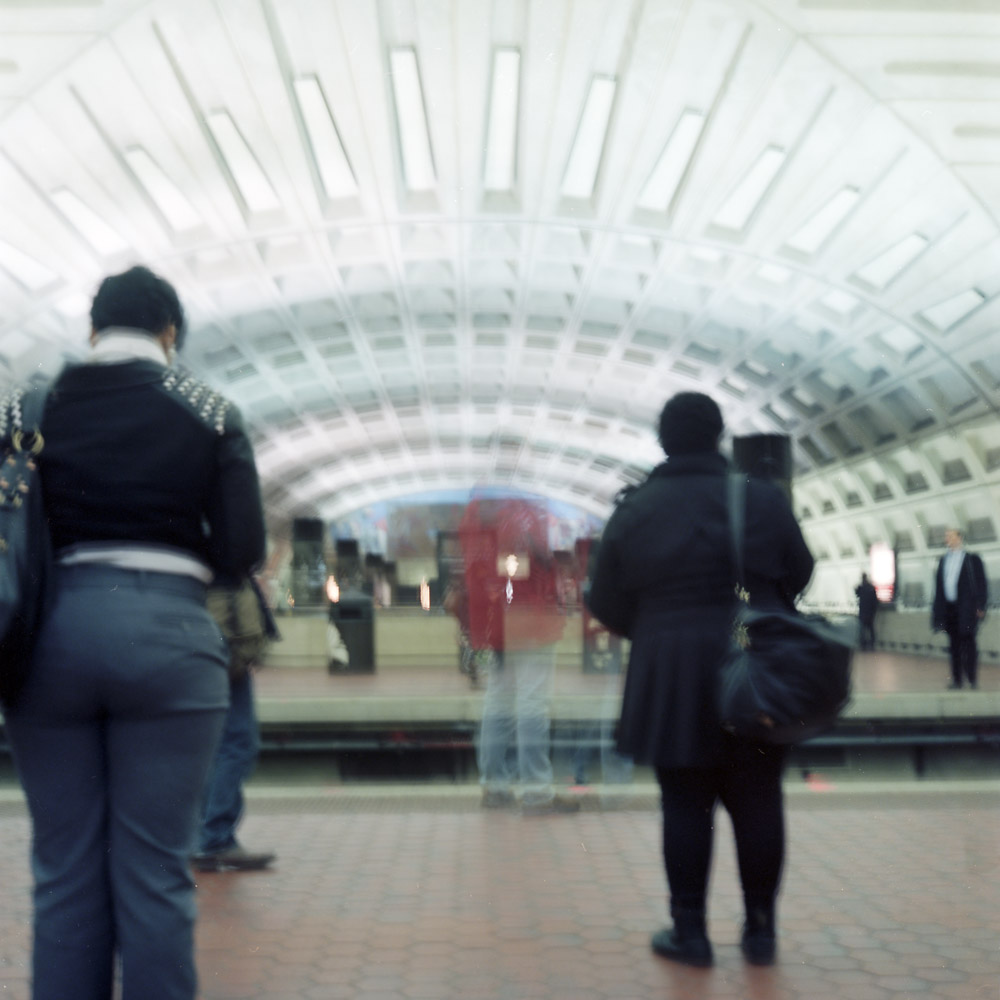
The commuting experience, especially on public transit, is as much about waiting as it is about traveling. Here is a view of Metro Center, one of the major transit hubs on the subway system in Washington DC. Four different rail lines pass through this station, so there is always activity. The two people standing mostly still in dark clothing frame the blurry person in the red jacket. The touch of color draws your eye to the center of the frame as much as the leading visual lines do, and it gives the scene an energy and intensity that would be missing in black-and-white.
Awaiting Train, Metro Center
Riding the bus is a very different experience from riding the subway. For the most part, one is indoors and the other is outdoors. Even if they do run with comparable frequency, waiting for the bus feels like it takes longer than waiting for the subway, perhaps because in certain parts of the city, many bus routes visit the same stops, so there may be a bus coming every five minutes but it might be twenty-five before your bus arrives.
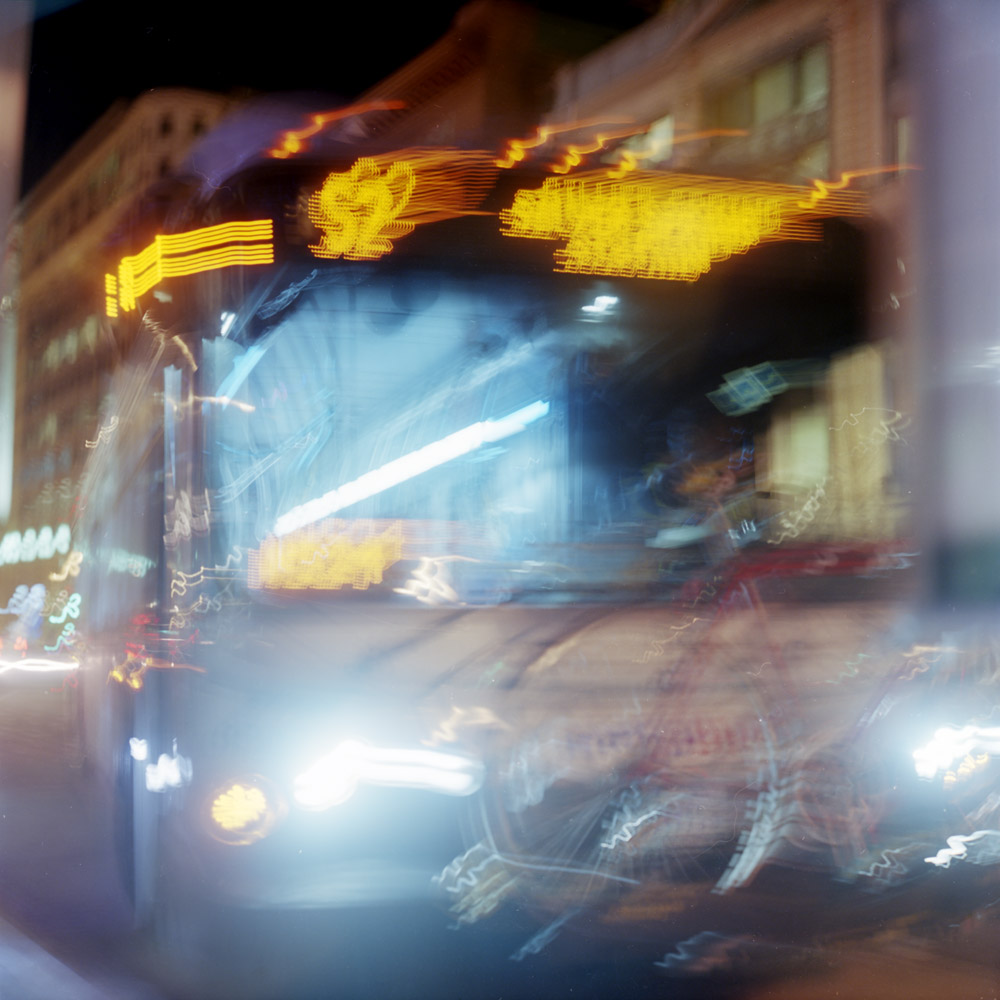
The S2, to SilverSpring
One of the things I’ve always liked about night photography is the effect of multiple color-temperature light sources in the same scene. The impact is thrown into high relief in a scene like the bus, where the background is lit with yellow incandescent lights, the streets are orange/pink from sodium vapor, and the bus interior is bluish-white from most likely LED lamps. The colors and their cognitive dissonance bring out emotional dissonance as we read back and forth between elements of the scene – the emptiness of the darkness, the warmth of the background, the alien color of the near-ground, the inviting orange of the bus signage, and the ghostly hospital white of the interior of the bus.
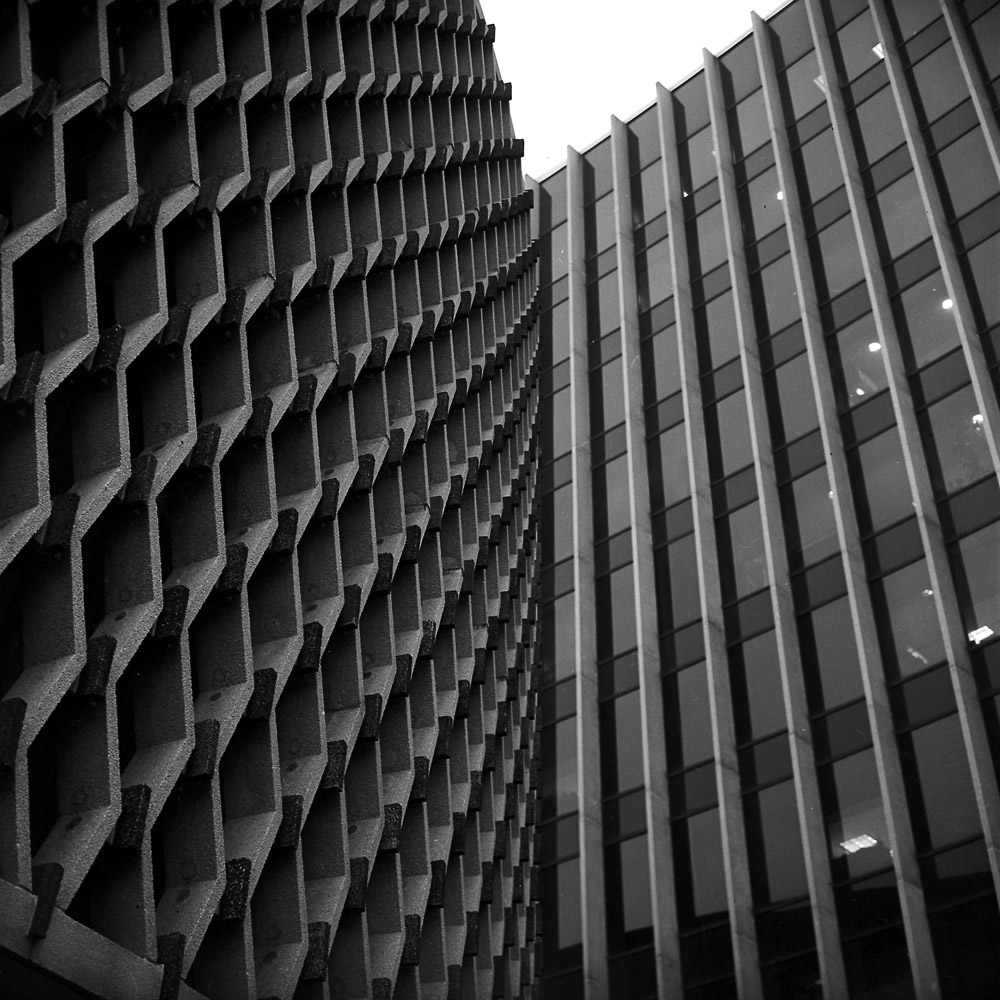
Tangentially related to my commuter diary in that it’s something I pass frequently, here are some shots of the World Health Organization’s offices in DC. The mid-century design lends itself extremely well to composing abstracts.
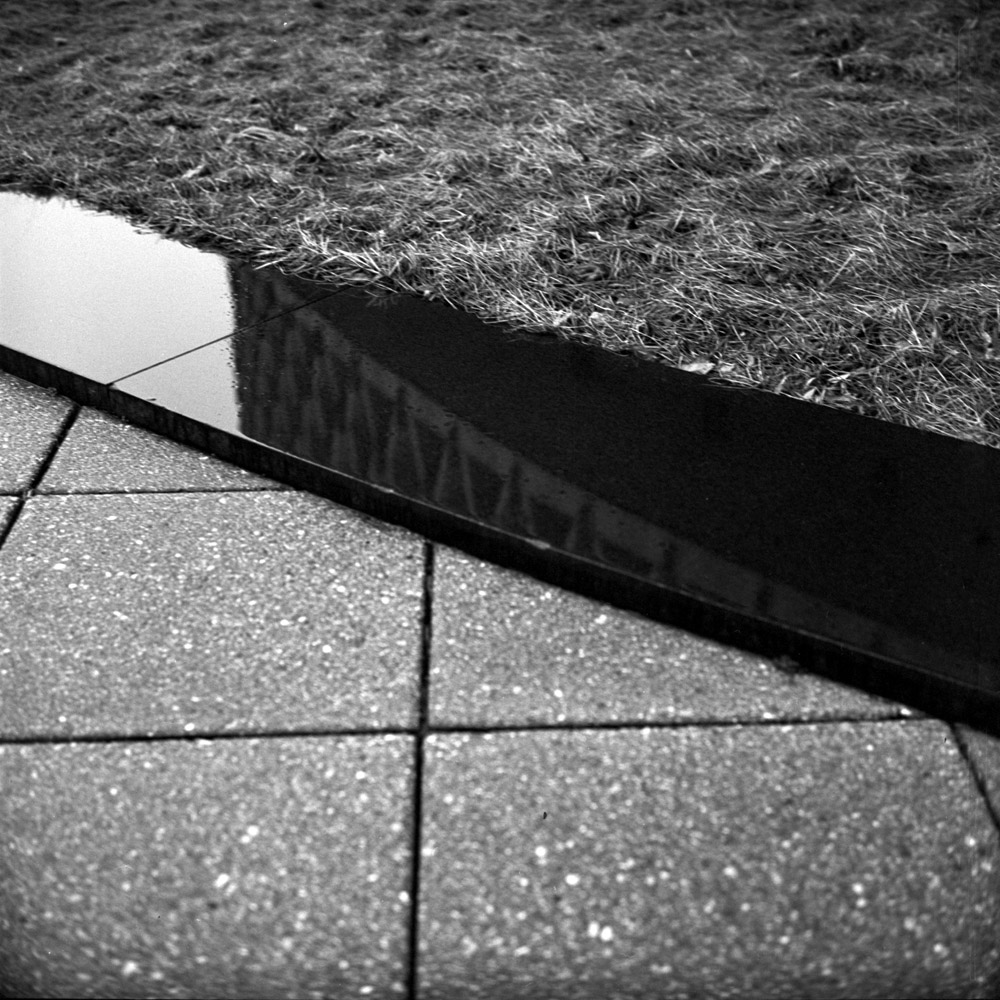
At the edge of the lawn, there is a ring of black polished marble creating a border with the concrete pavers of the plaza. It was raining that day, and the marble was particularly reflective, so I composed a frame that shows the cylindrical drum structure reflected at a tangential curve running through the marble band bisecting the frame. It’s a presentation of contrasts in textures, organic vs man-made, structure and chaos.
Pavers, Reflection, Grass
Many people feel that you can only take photos in certain weather/lighting conditions. Except for the getting wet/cold bit, I like photographing in the weather – it’s a different kind of light, creating different textures and volumes from the same subjects. I plan on heading back with my camera on a nice sunny day and shooting the building again with deep, long shadows making the structure much more abstract and contrasty. I like being versatile in my photographic style, and I like recording light on subjects as I see it when I see it – if that means photographing at noon on a bright sunny day, so be it. Now, I may be out somewhere at noon on a cloudless sunny day and see something and say, wow- that’s an interesting subject, but I can’t get the shot I want because the contrast is too harsh. If that’s the case I won’t waste the film and I’ll come back another day. But by the same token, I’m not going to play refusenik and leave my camera at home between the hours of 9 am and 5 pm because the light is ‘too harsh’. Ditto cloudy days, rainy days, snowy days… there’s something to be seen and photographed 24 hours a day, 7 days a week, and you can’t do it if you don’t have your camera.
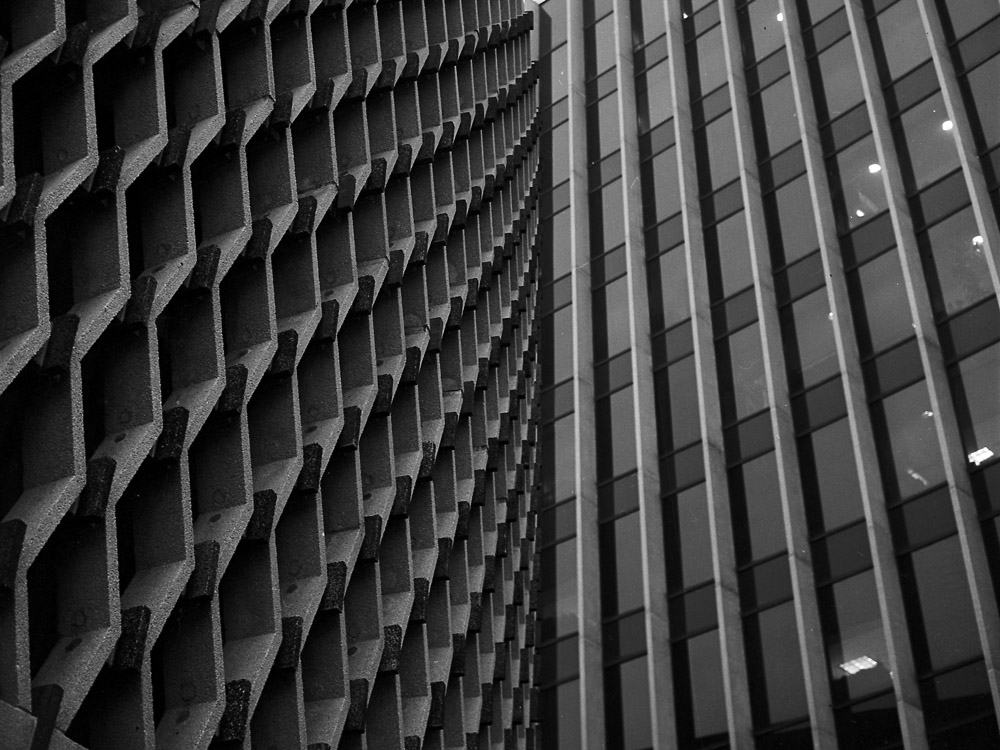
Here are two different crops of the drum and tower structures of the WHO building.
WHO building
On the one hand, the tighter crop is more abstract, being only about contrasts of pattern and texture, sharp focus and soft-focus, but the square uncropped image has more breathing room and gives you more of a sense of what you’re looking at. I don’t know that you need to be able to read the buildings as buildings in order to get the most out of the image – it could even be distracting/attenuating because you stop thinking about what you’re seeing once you KNOW what you’re looking at.
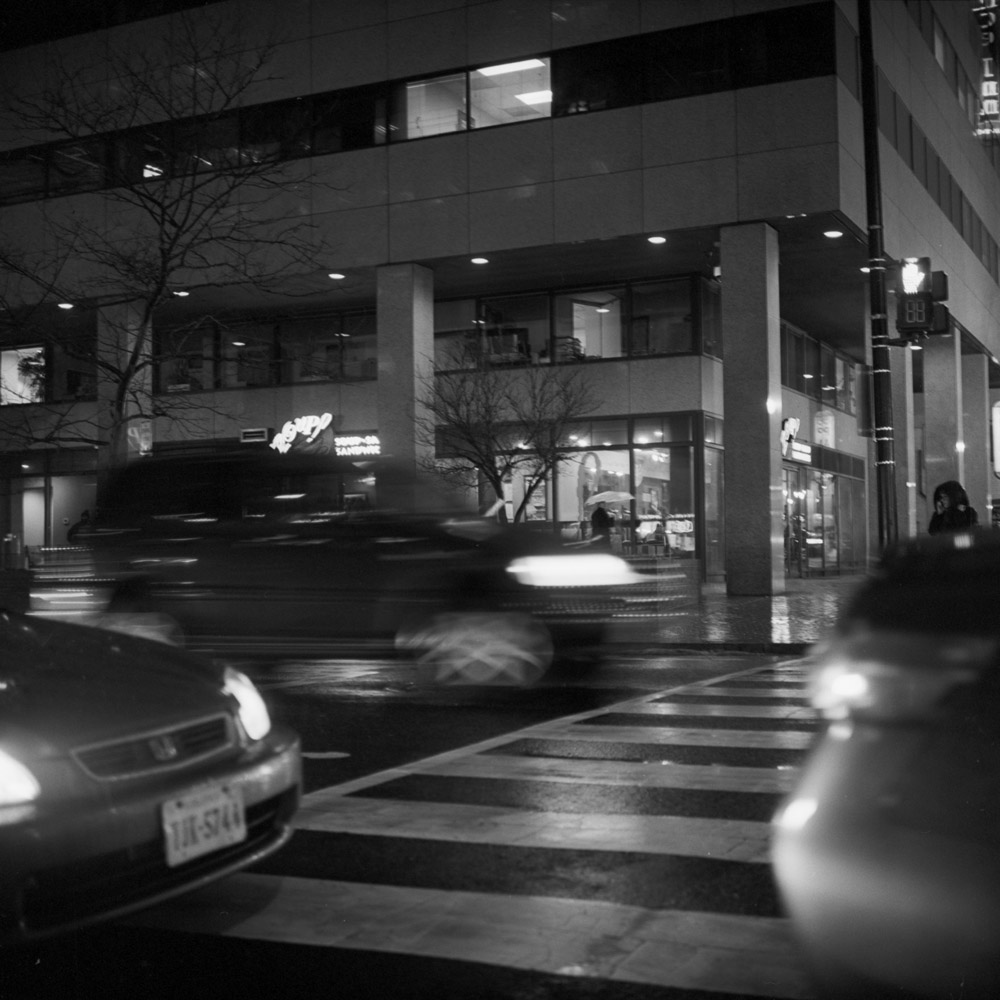
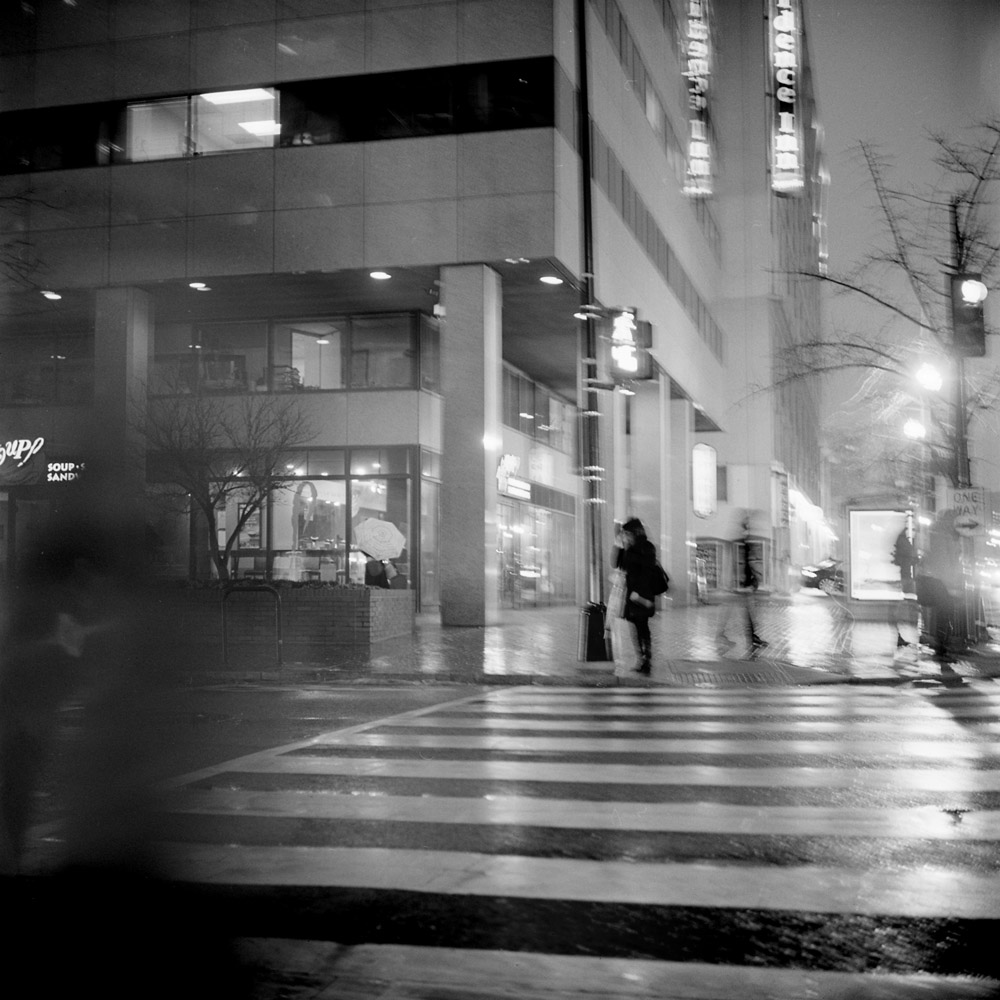
Another installment in the commuter diary. I’m debating if they really belong in the series because there are some things (the buildings and other static structures) that are relatively sharp, and it’s just the moving objects (people and cars) that are less distinct. They are also not so much from a public transit perspective as they are a pedestrian perspective. For now, while I build the project, they’re in, but they may come out later.
Street Crossing, Rain
These two definitely belong together, and they definitely feel like walking home at night in the rain. Waiting for the light to change, traffic zipping by.
Lone Pedestrian
Here a lone pedestrian waits for the light on the other side of the street, while the ghostly blurs of other pedestrians pass by on their way to other places and times. But even she is not clear, because she waits resonant with expectation for the changing of the signal.
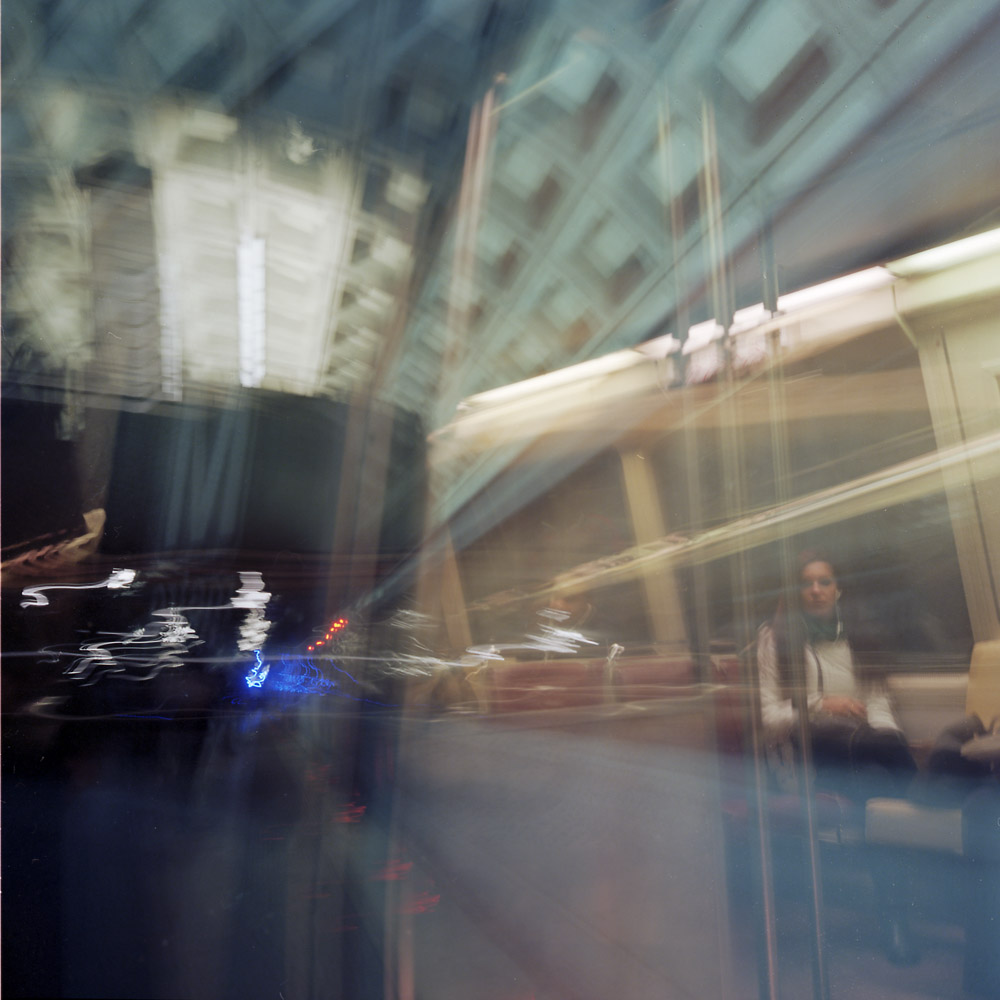
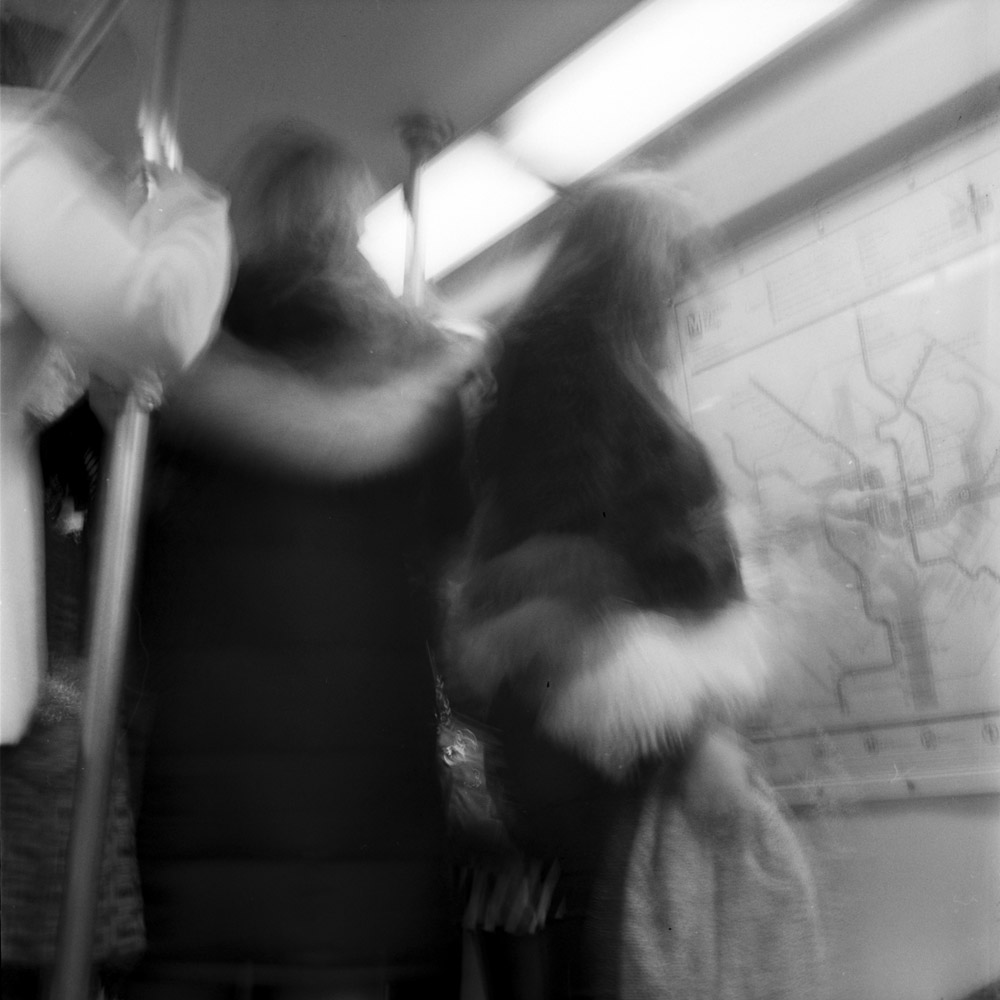
I’ve been playing around with this idea for a while. I don’t know that there’s anything particularly new about what I’m doing, either subject-wise or with technique. But I’m doing it as an exercise in freeing myself up creatively, forcing myself to be open to happy accident, and not getting hidebound with notions of what photography “should” look like. Photography is capable of recording and compressing time into a single frame, and I’m interested in exploring how we react and respond to seeing that. It’s not what we expect when we look at a photograph- we expect very short “frozen” moments, 1/250th of a second, blur-free, movement-free, sharp, literal. These photos are NOT that. They’re shot in B – long exposures made by my pushing the shutter button and letting go when I’ve decided I’ve captured “enough”, anywhere from a couple of seconds to closing in on a minute. So much can happen in just one minute.
Ignoring the Map
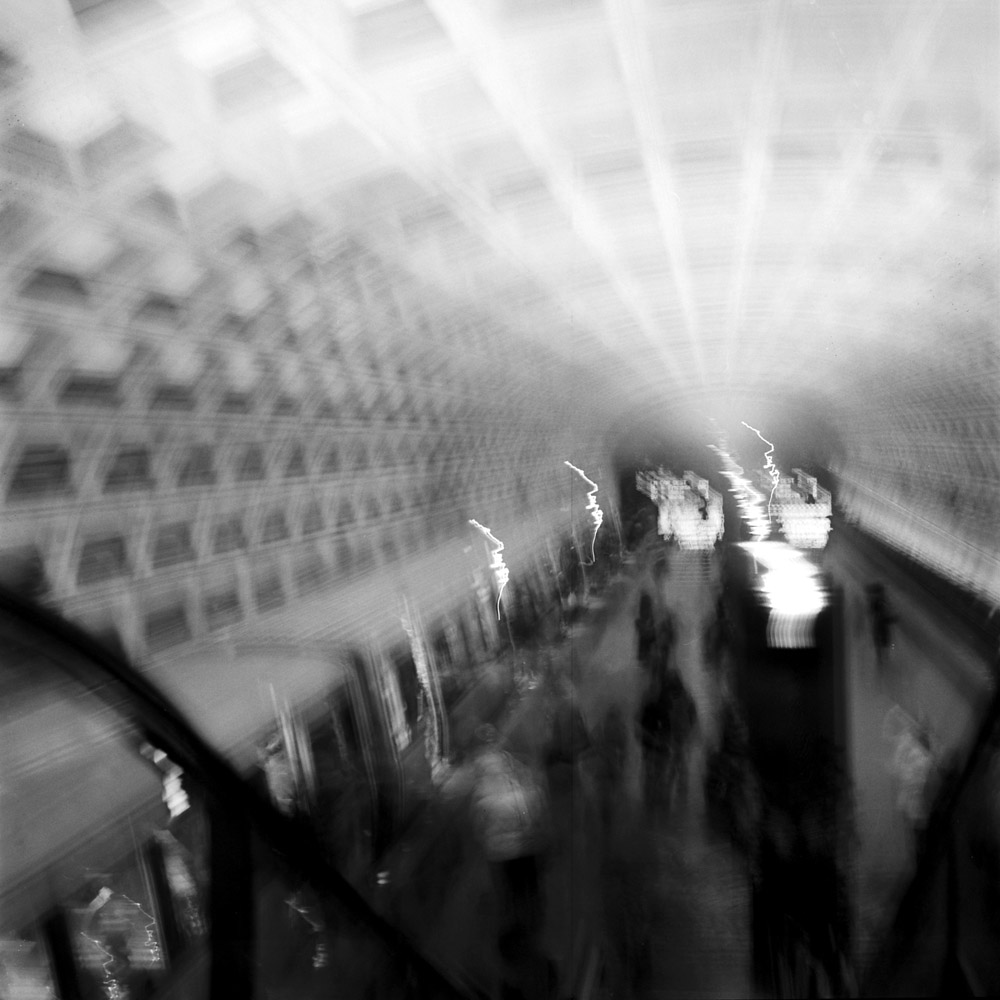
I’m trying to capture the experience of being a regular commuter on public transportation. It’s an impressionistic approach to the concept, recording the passage of time and the movement through space of the vehicles and people in a public transit system. Rail system maps are in every car on every train in every city in the world that has a public rail system. It’s easy to separate the tourists from the commuters as the tourists are pouring over every detail of the map, and the commuters are doing their best to ignore it and everything and everyone else around them.
Foggy Bottom Metro
This is the view of the platform with a train at the station at Foggy Bottom, looking down the Up escalator. With the train relatively stationary, the zig-zaggy lightning-bolt forms of the station lamps captures the movement of my breathing as the camera hangs against my body. Even when standing still, movement is all around you, but that’s the nature of public transit, isn’t it? It’s all about constant movement, circulating people from one end of town to the other.
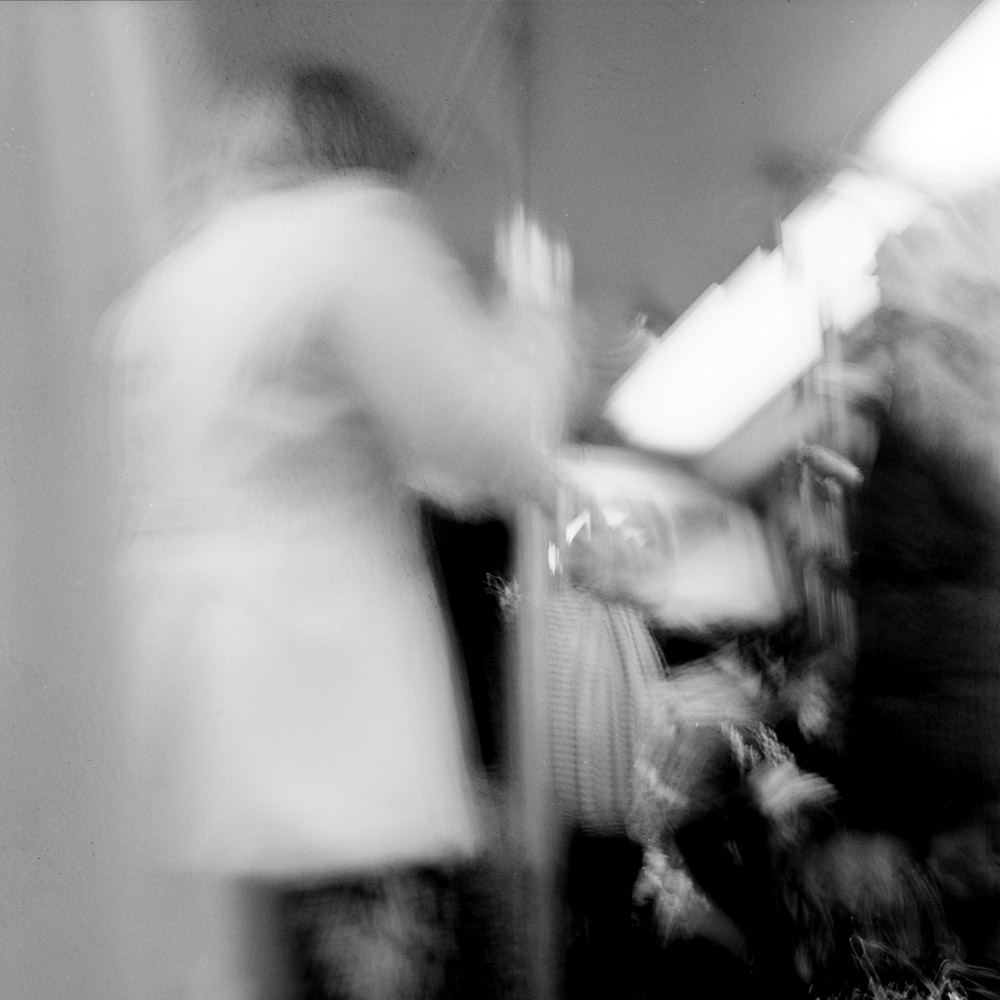
Pole Hanger
Every rail system (and bus system for that matter) has a means to support people who are standing while riding. The poles are a terrific convenience while riding, and a terrific obstacle when trying to exit. They grow near doors like chromed branchless brambles that collect passengers who are ready and waiting by the door for THEIR stop, transforming to boulders in the current throwing eddies and whirlpools in the tidal flow of commuters on and off the carriage.
I like this shot because it has different layers of eroticism to it without being in any way explicit. From the leather chair to the fuzzy velvet drape on the chair to the naked skin, this projects sexuality without the “it goes to 11” factor of Helmut Newton or Robert Mapplethorpe. Also, narrowing the focus to the hands and feet pushes the connection between this image and a specific individual farther apart, so it becomes more idealized and abstract, allowing the viewer’s imagination more leeway.
Kevin, Leather Chair
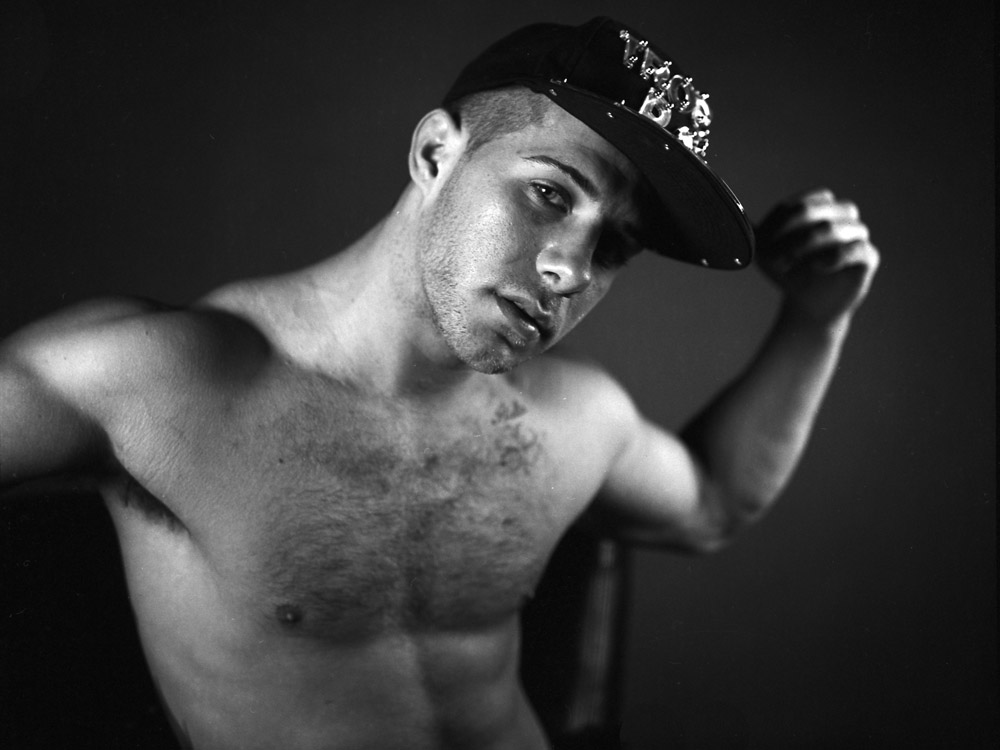
Kevin wanted to do some sexy, gay-affirmative images, and he had this hat that says “Trophy Boy”. While I don’t know quite how I feel about the “Trophy Boy” message, the image is certainly attention-getting.
Trophy Boy
I think the shallow depth-of-field works well in this image by not only blurring his tattoo but also re-directing your attention to his eye, forcing the exchange of gaze between the subject and the audience. Some people make that the distinction between a “fine-art” nude and erotica, where a “fine-art” nude there is no visual contact between subject and viewer, but in erotica (and by extension porn), the viewer is confronted by the subject, making the reaction personal in contrast to the abstract, intellectual reaction to the “fine-art” nude.
I know it’s been a terribly long time since I’ve written anything new here. My apologies. I’ve been dealing with a lot of stuff in my personal life (new day job, burst pipe in my kitchen that flooded my basement, etc), so my productivity has been off the last couple months. I’m part of a group that shares studio time here, and we occasionally organize group shoots and hire a model. The group shoot thing has its frustrations (having to get consensus on lighting, for one thing, means you often get lighting setups that aren’t what you want) but when you’ve been out of your groove for a while, it’s nice to have a little spur to your creativity. I had been feeling a bit frustrated and in need of a spur, so I joined the shoot yesterday we had.
Kevin, Rolleiflex 2.8E, Rolleinar 1
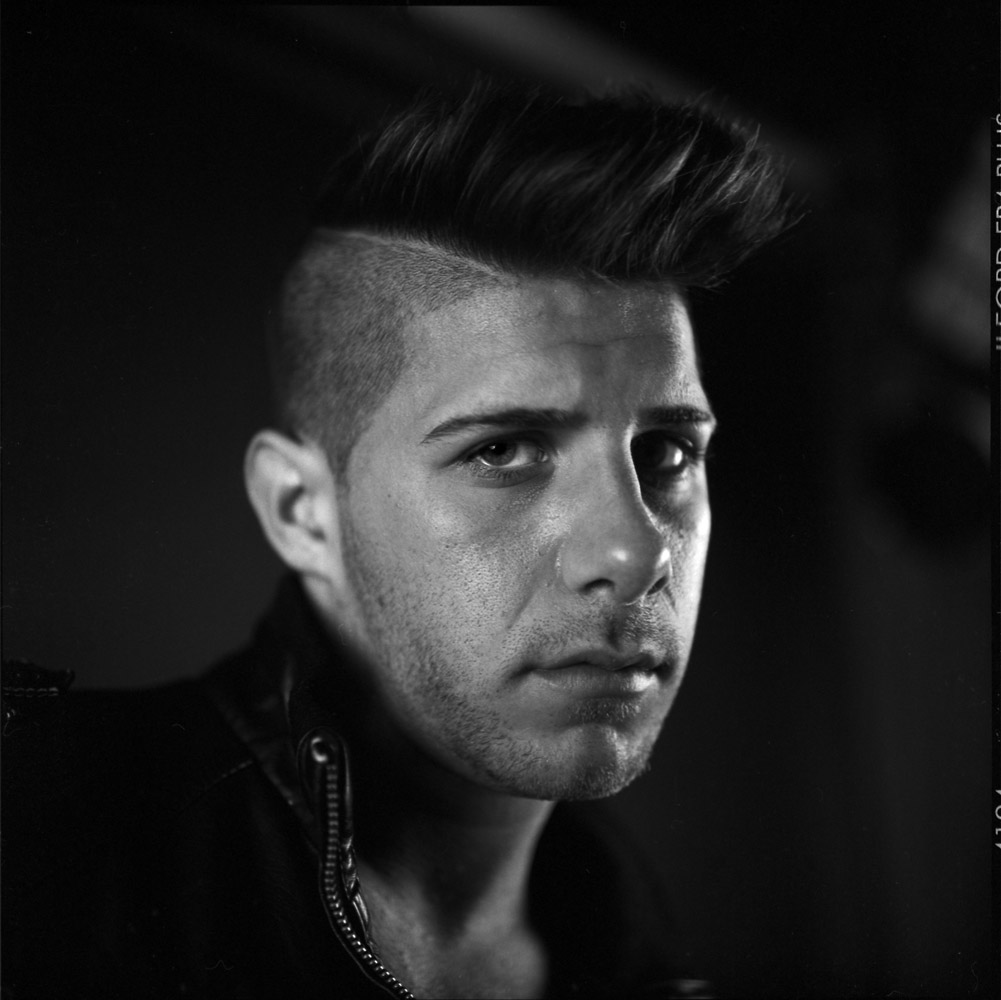
Another challenge that is uniquely mine in the group is the fact that I’m the only one shooting film, specifically medium format film. I work slower than the rest, and because I don’t have some huge-ass zoom lens, I have to get in close to take my shots, so people sometimes get a little cranky about me blocking them. When you get results like these, though, I think it’s worth it.
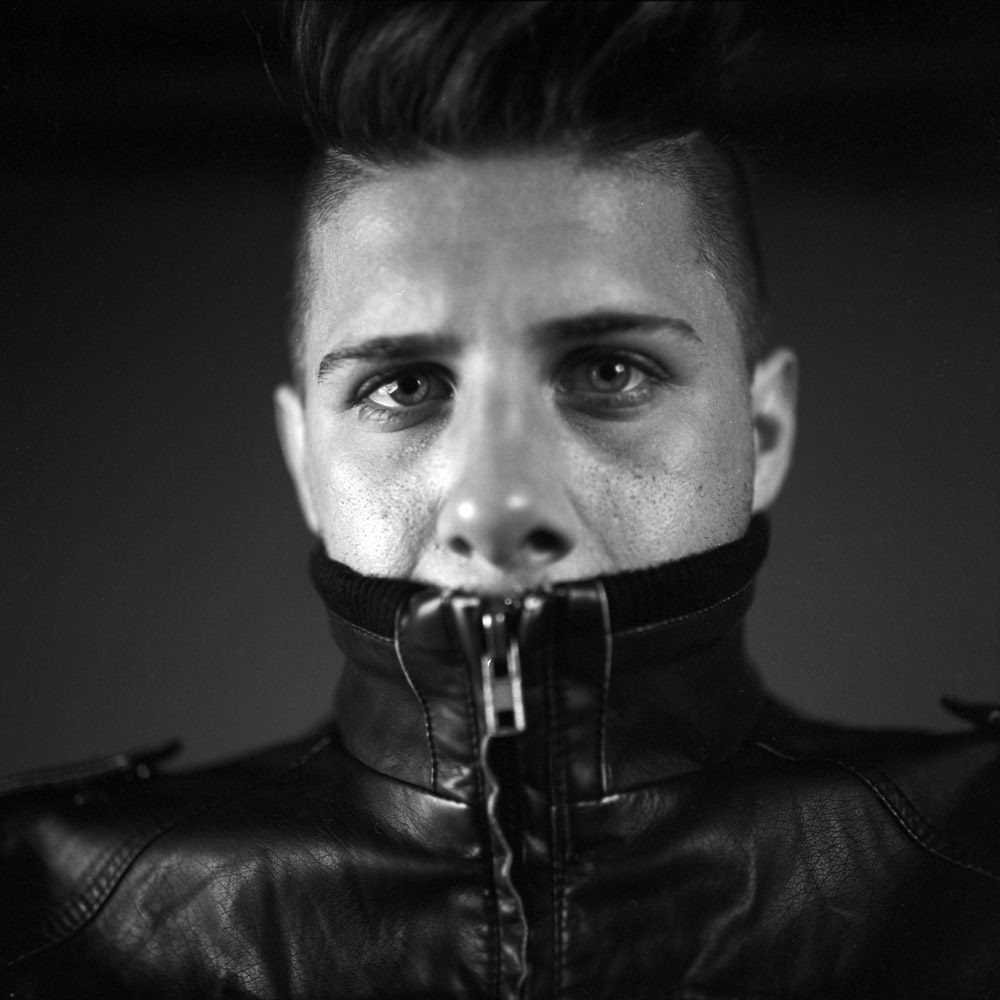
Kevin
I’m sure you’ve seen a shot like this if you pay attention to fashion photography, but I wanted to give it a try. We were doing some more fashion-y shots with Kevin, and he was wearing this black leather jacket. He has these very striking eyes and I wanted to emphasize them. I think the jacket texture and the big zipper give a nice edgy feel to the image but the fact that they’re mostly out-of-focus drives your attention back to Kevin.
Because we were shooting with constant lights (fluorescents in softboxes, which I didn’t know we were going to do until I was already on-site), I was limited to shooting wide-open or nearly so in order to keep my shutter speeds hand-holdable. Had I known I would have brought Tri-X instead of FP4+. But I think all in all it worked out well – its fun and challenging to play with shallow depth-of-field on portraits. Using the Rolleinar makes it even more challenging because it brings you in closer, narrowing your DoF even further.
I have more from this to come, but in color – I’ll be developing the color film today and hopefully will have those posted tonight or tomorrow.
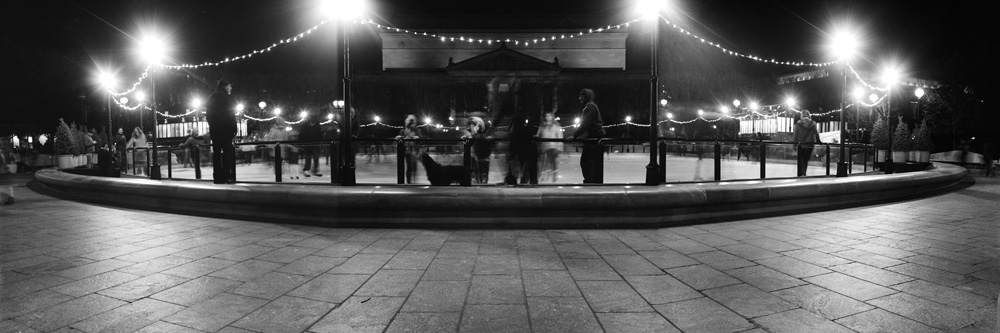
Well, ok, I actually shot these on the 30th of December, but they got processed today. This is perhaps the best three-frame panorama I’ve shot with the Rollei panorama adapter so far. It’s ALMOST seamless.
Ice Rink Panorama
This is the ice rink they set up every winter in the fountain of the National Gallery of Art’s Sculpture Garden. The imposing building in the background is the National Archives.
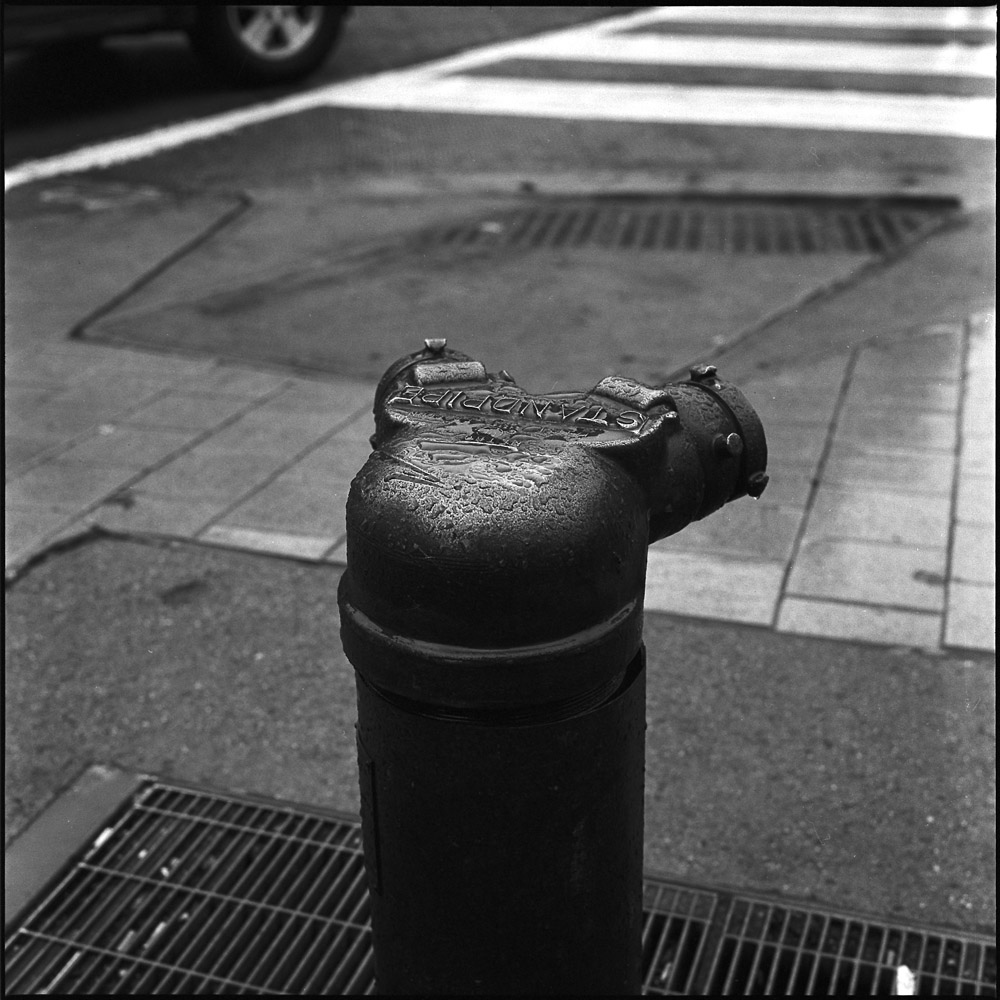
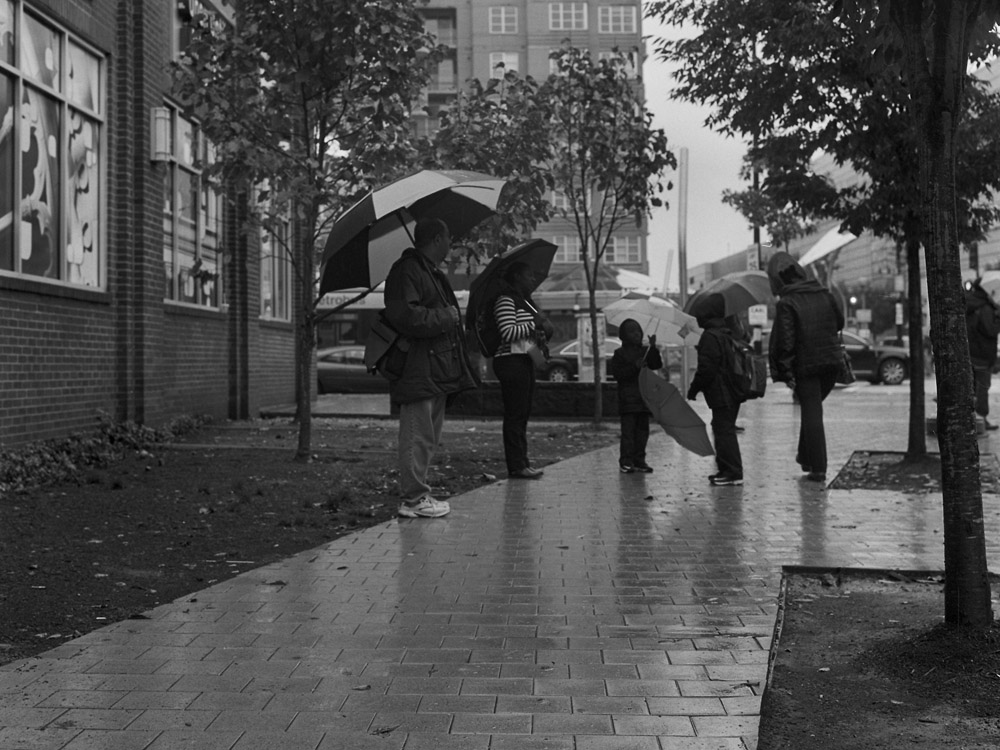
This was the result of a rainy-day walkabout in my neighborhood.
Yet another style of Siamese stand-pipe – this time beaded with rain water. It will go into my collection of ordinary objects.
Siamese Standpipe, Rain
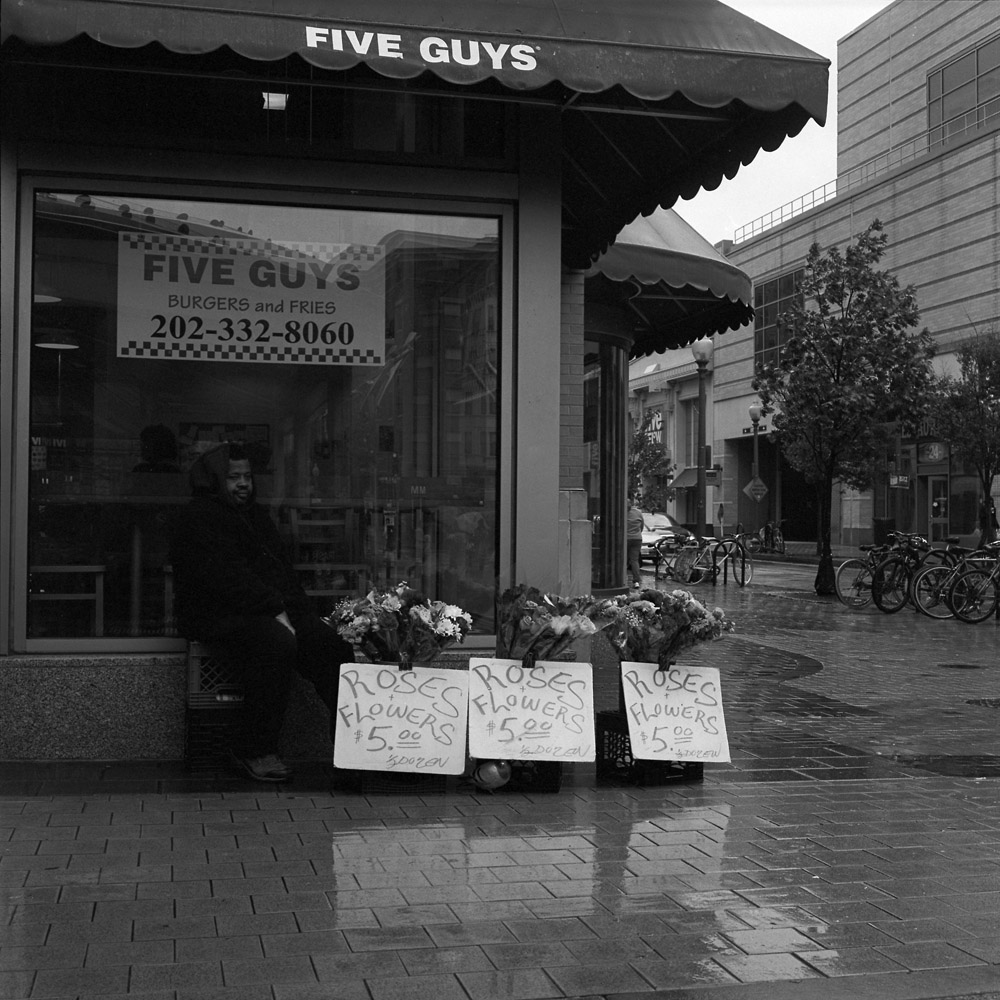
The flower vendor was sheltering from the rain under the awning of a Five Guys burger joint.
Roses, 5 Dollars
A whole family, waiting for something (there’s not a bus stop where they were standing – maybe they were waiting for someone else to come along in a car). The little boy was playing with his umbrella and the mom kept telling him to put it up or put it down, but stop swinging it around or he might poke someone with it.
Umbrella Family
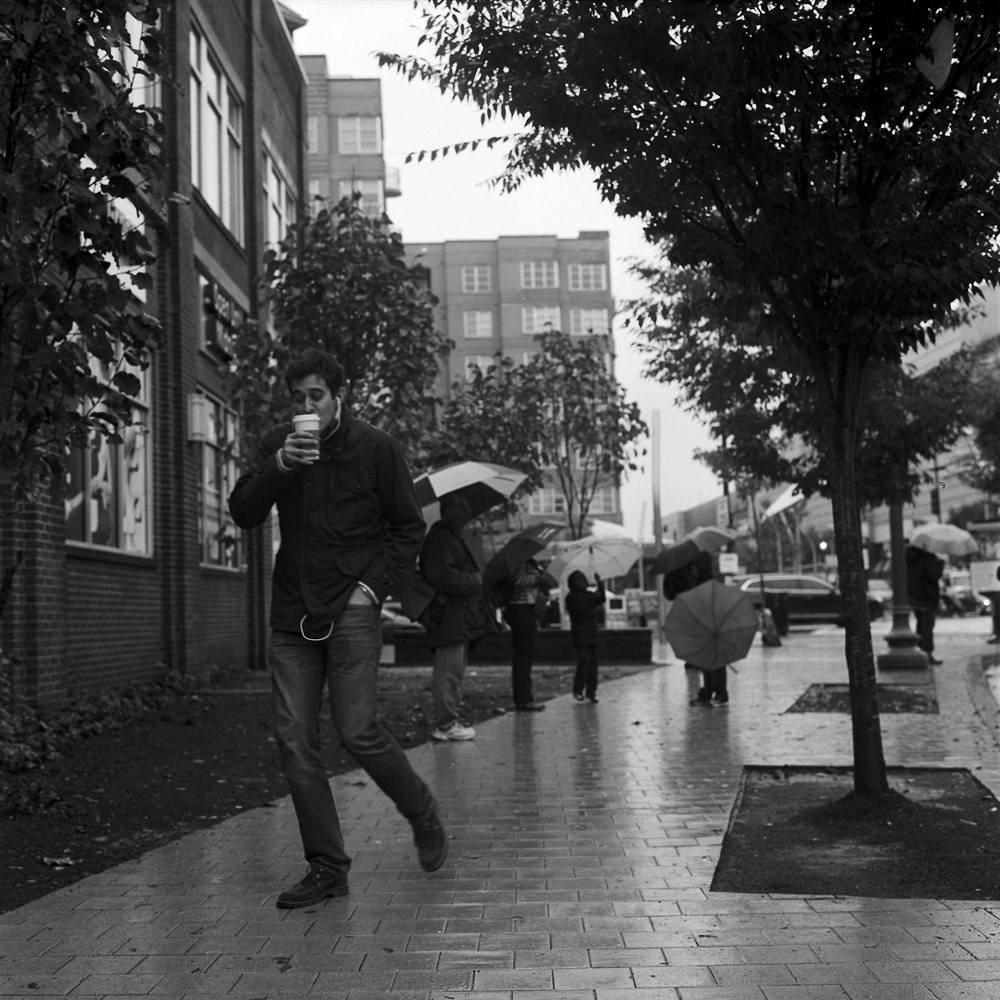
While the kid didn’t hit the guy with the Starbucks cup, that’s exactly what the mom was talking about with the little boy.
Starbucks Man, in the Rain
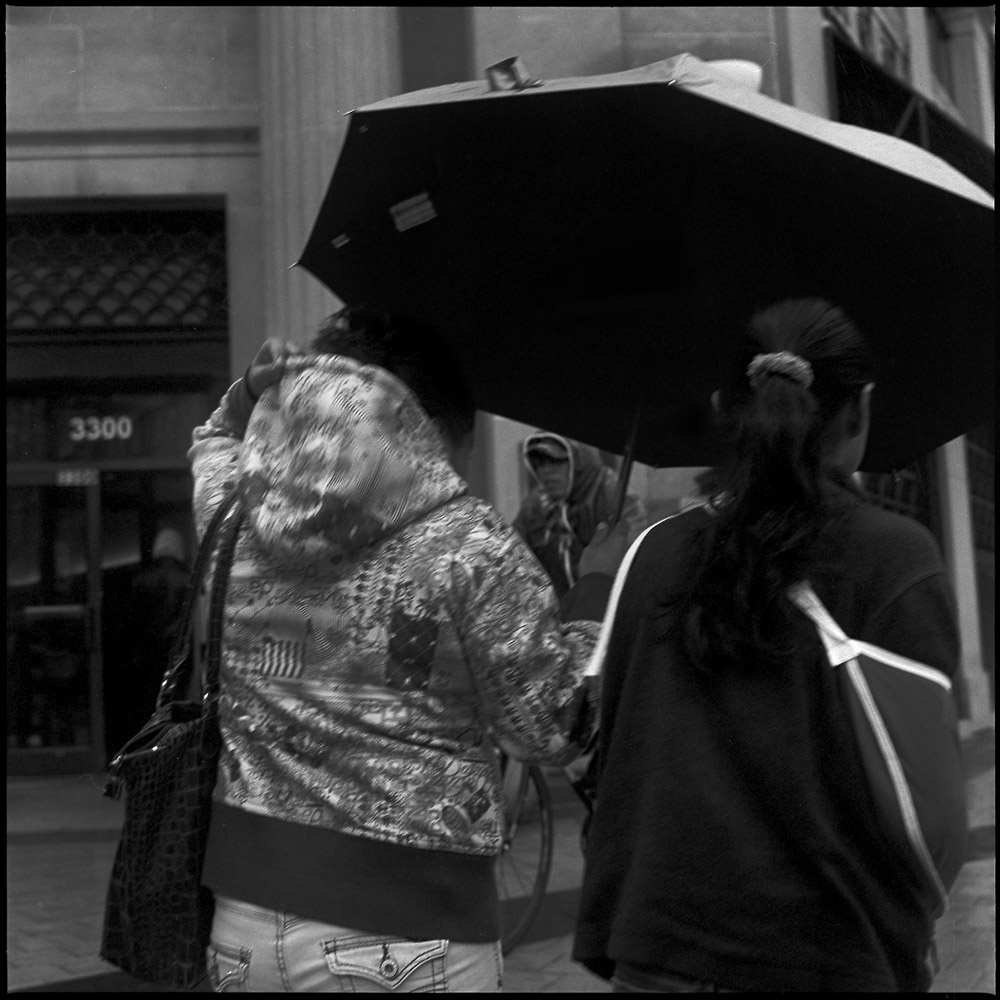
A mom and her daughter out running an errand in the rain.
Mother, Daughter, Cyclist
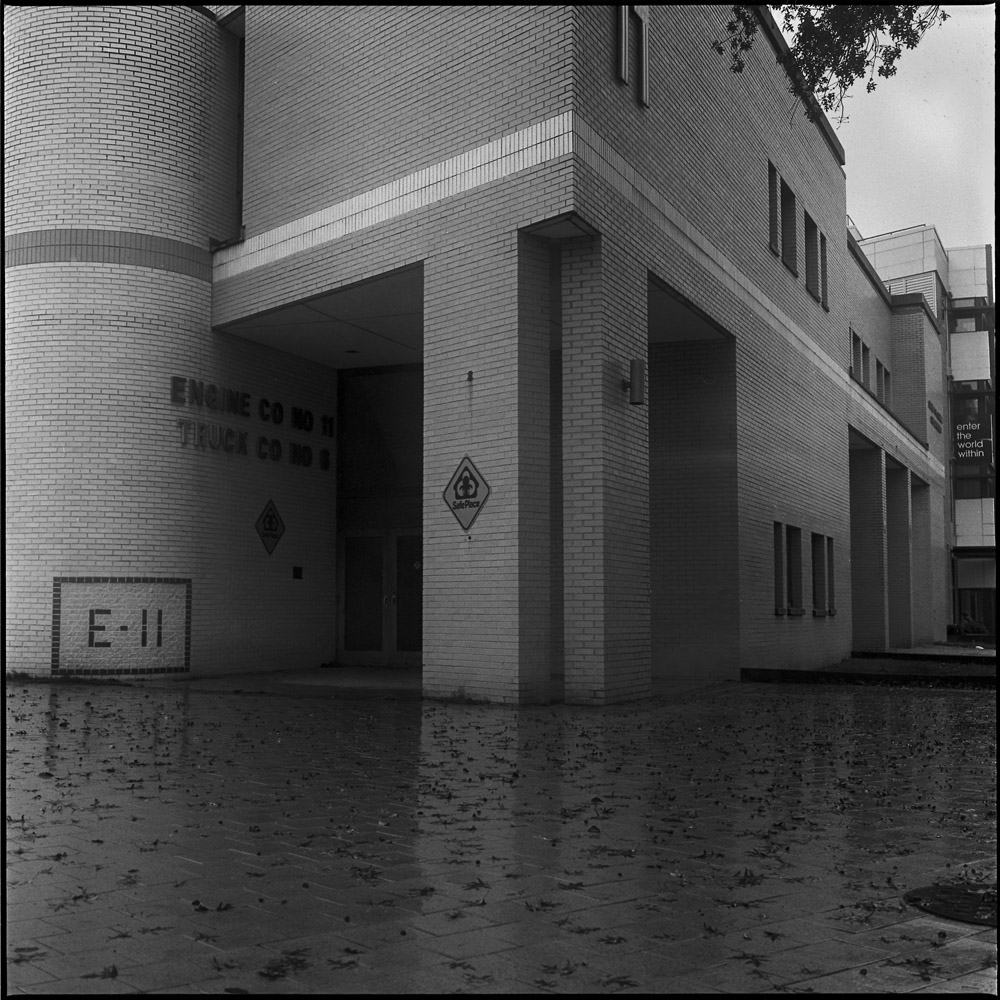
I liked how the columns of the fire station were reflected faintly in the rain-slick sidewalk.
Engine Company Number 11
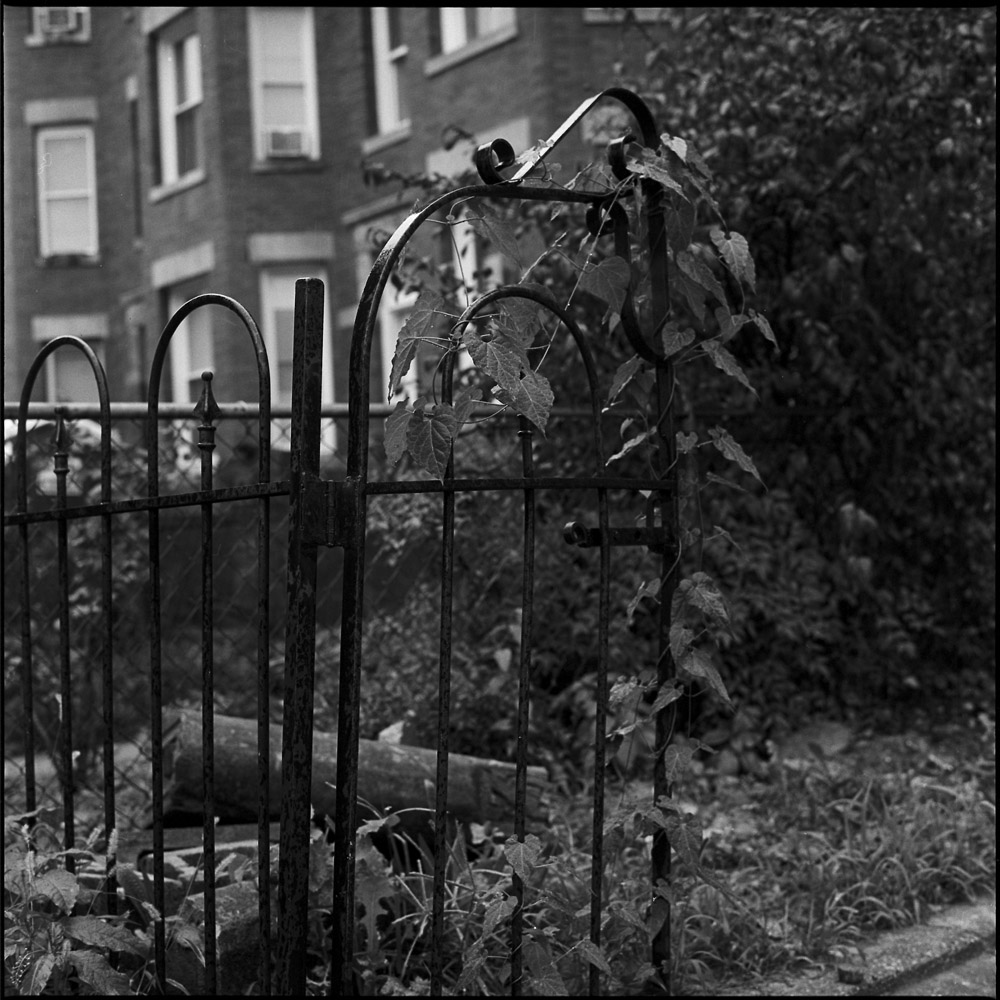
This half-gate stands in front of a house under renovation. I think one of the construction workers thought I was strange for wanting to take a picture of this.
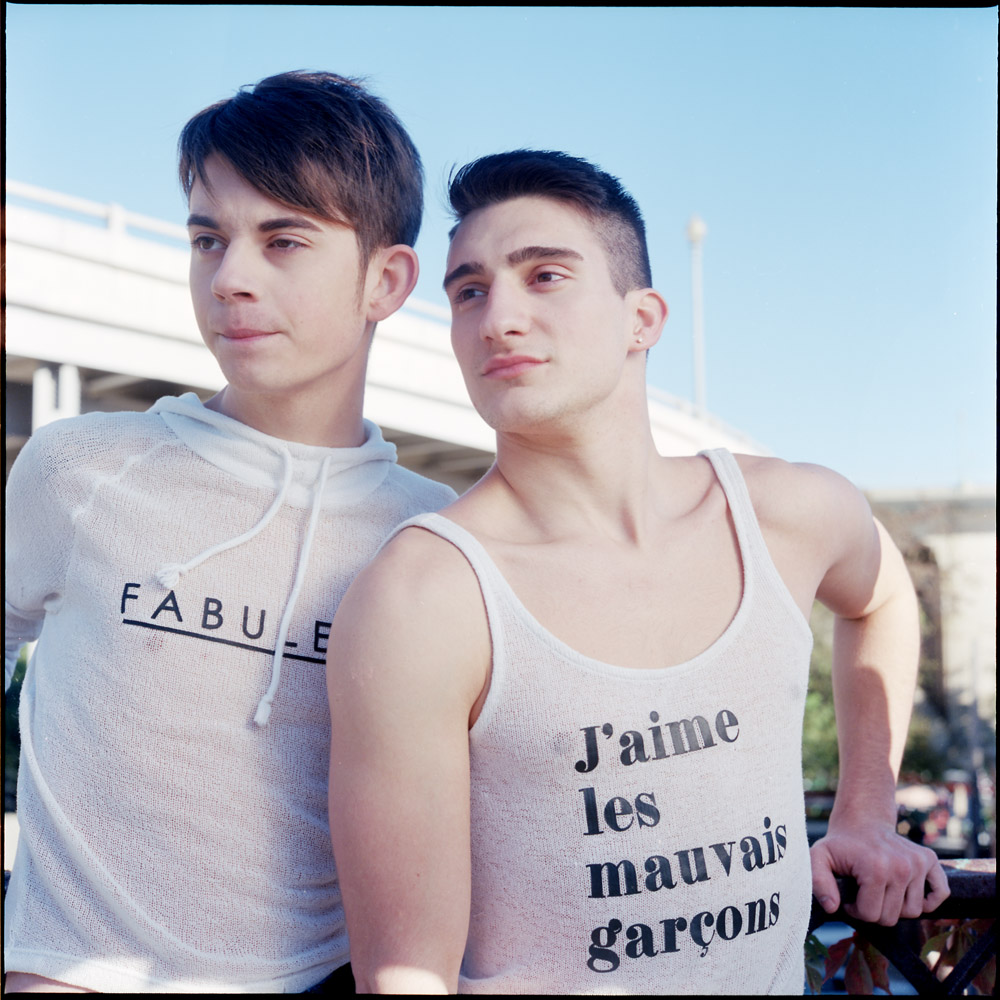
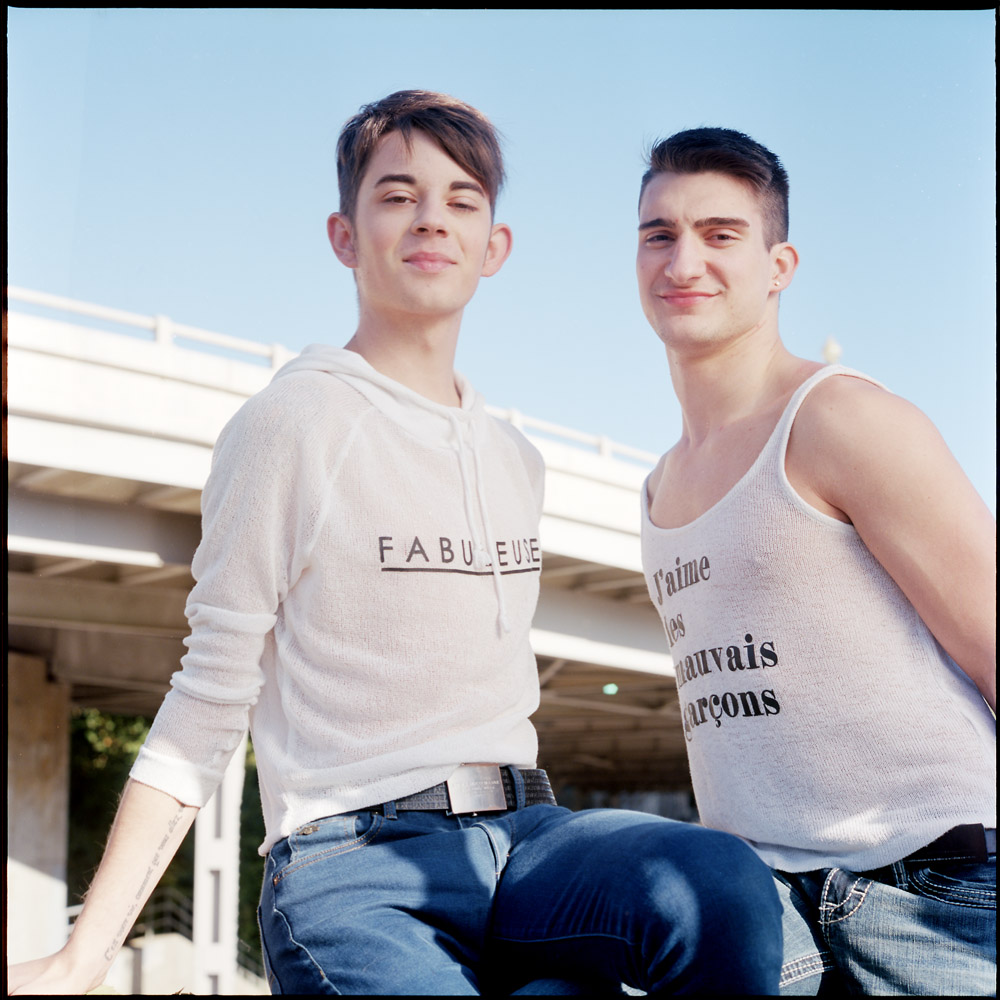
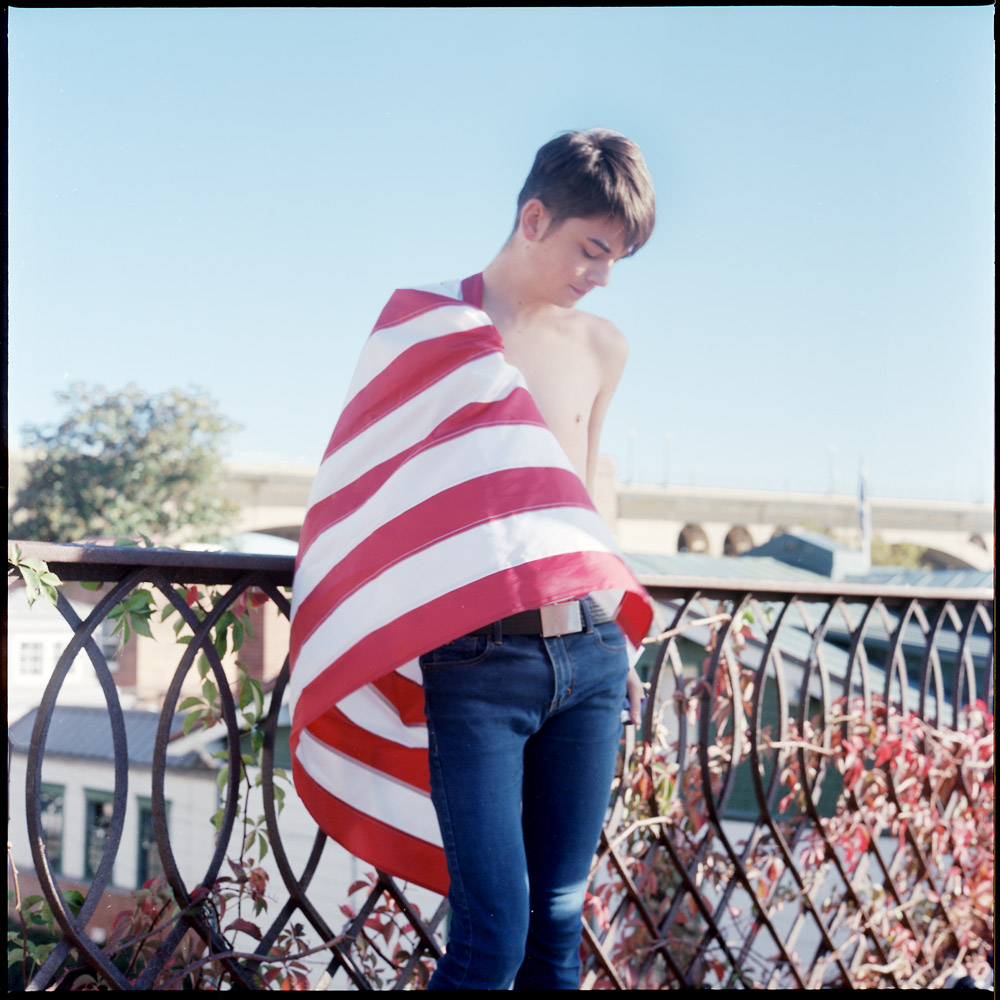
Ok, well, two duos and a single. I couldn’t leave well enough alone and stick strictly to the article title, as there was one image left that needed to be used.
Trevor, GraysonTrevor, Grayson
At least the odd single is in the same location, same lighting, same film. So it kinda-sorta fits. All three are, as tradition, shot on my Rolleiflex 2.8E, with Kodak Ektar 100.

 dcphotoartist