Category Archives: Antique Processes

From a Series on Identity and Commodification

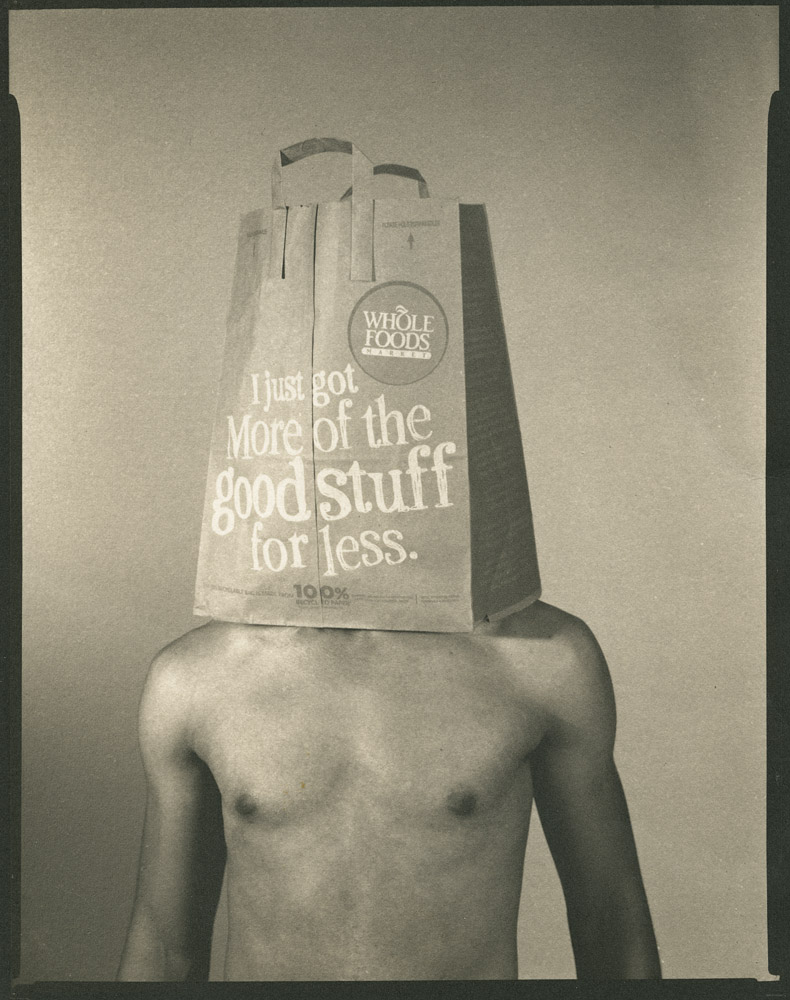
More of the Good Stuff

A long time ago I started working on a series about how we commodify people and their identities. I was playing around with advertising slogans on grocery bags and how those slogans can be used to replace food with people (not in a cannibalistic sense but as something to be looked at as a consumable or a flavor-du-jour). I’ll pick it up again when I get the chance and see if I can do more with it. Let me know what you think of the idea and the execution in this image.

The original is a whole-plate (6.5 by 8.5 inch) hand-coated palladium print on Bergger COT320 100% cotton rag heavy-weight paper.

Platinum/Palladium Prints from the vaults

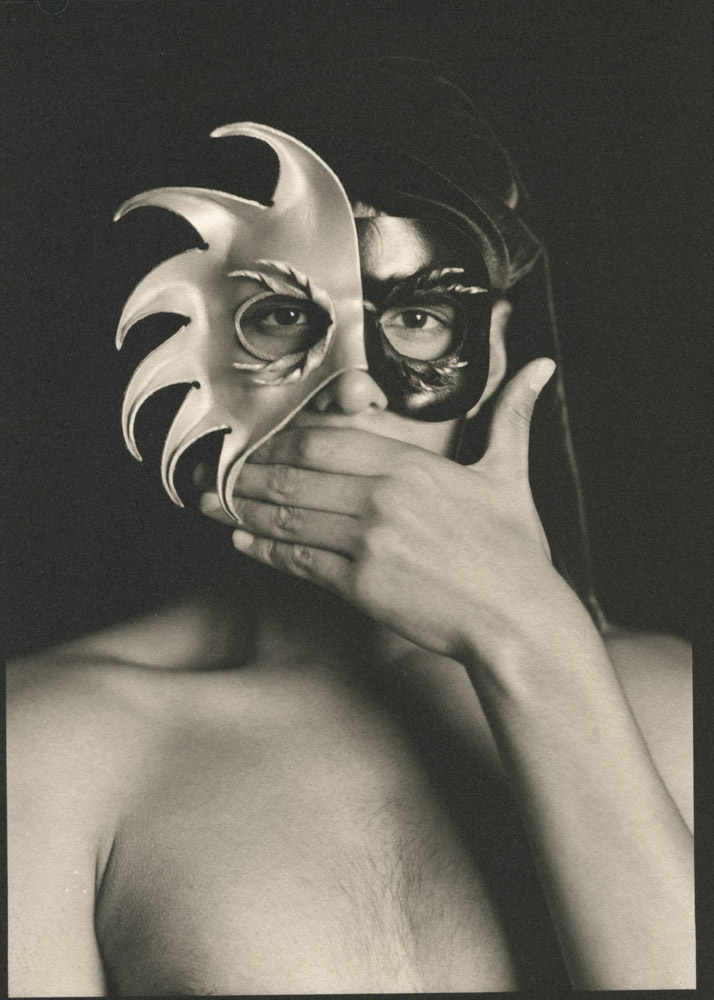
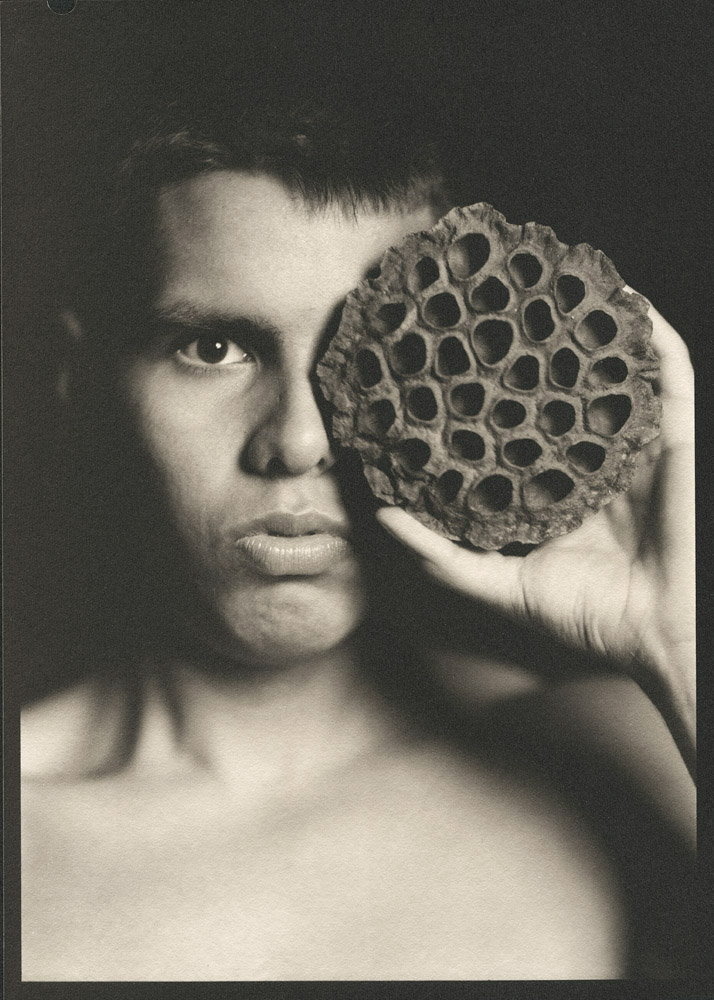
I dug up a few older platinum/palladium prints I did a couple years ago and realized they were worth sharing, so I thought I’d post them here today.

They were studies for a series I was working on – they didn’t make the editorial cut for the series, but as standalones they’re good.

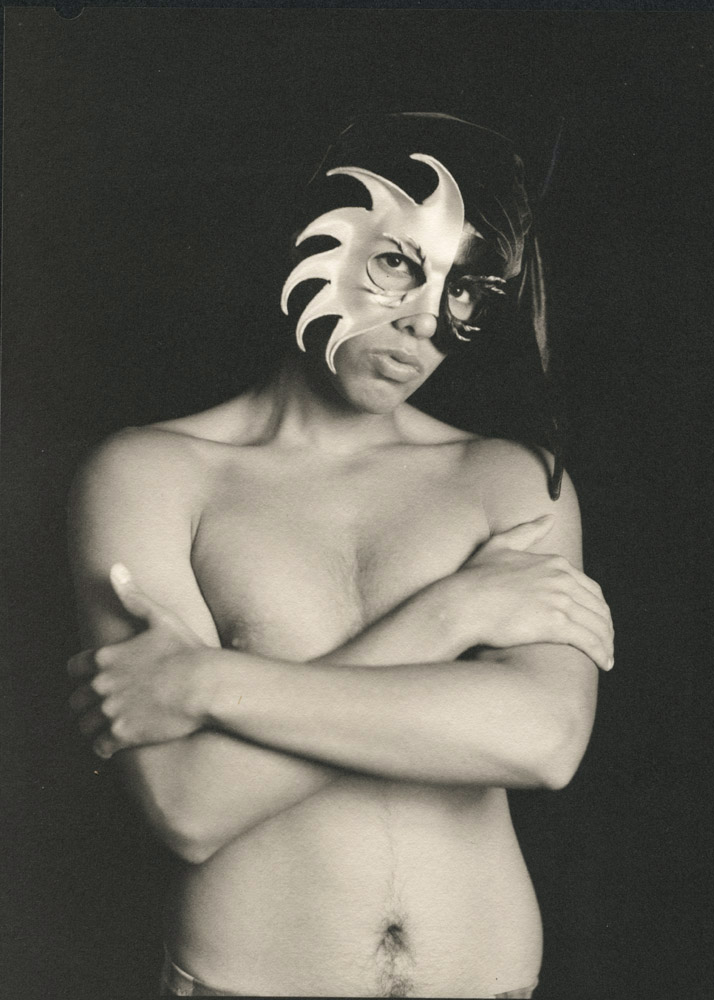
Jester
Jester

Jester
Jester
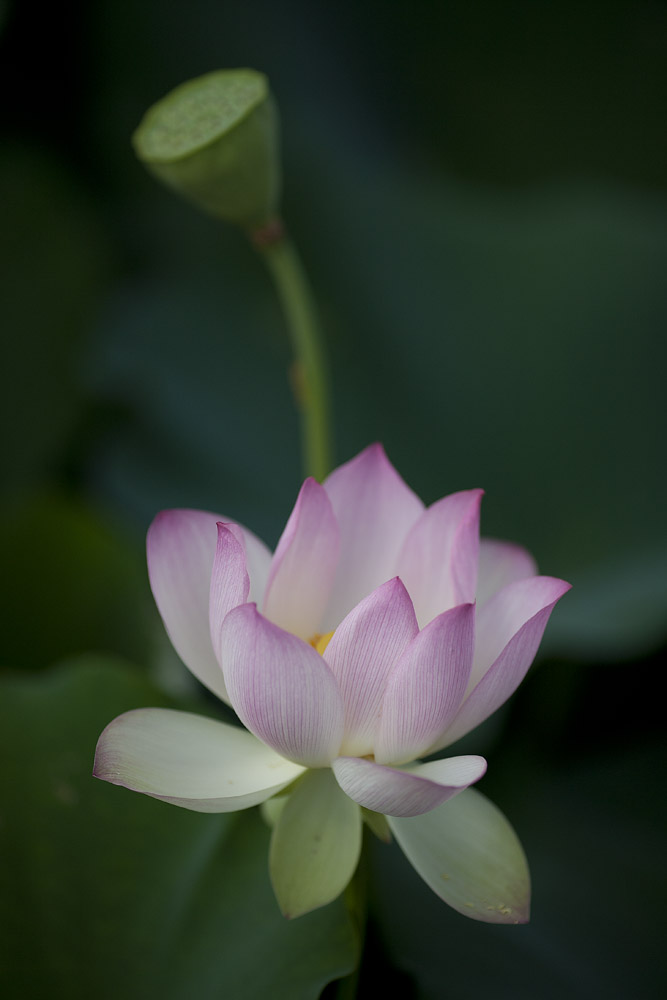
Portrait with Lotus Seed Pod

These were shot in my home studio (aka the dining room) with a single light and a black velvet backdrop. The camera was my ancient studio portrait camera with a 5×7 back installed and a Seneca portrait lens (aka Wollensak Vesta, rebranded). I mention all this to show that you can produce great work with the simplest of set-ups and equipment, and you don’t have to have the latest and greatest or fancy facilities.

Portrait Photography – Now Open For Business

I wanted to announce the launch of my portrait photography business. My studio is located in Rockville, Maryland at the Washington School of Photography, where I am a Resident Photographer. My philosophy of photography:

Photography is Magic – I fell in love with the magic of photography when I made my first darkroom print. When I saw the image emerge in the developer under the red glow of the safelight, I knew right then the camera would be my constant companion for the rest of my life.

My goal is to go beyond producing portraiture that is functional documentation. I want to use my creativity and vision to produce iconic representations of your spirit and character. I use vintage tools and antique techniques and processes in a contemporary style to create not mere photographs but tangible art objects you will be proud to display in your home and pass on to future generations.

To make an appointment, go to my web gallery at http://www.theflyingcamera.com and click on “contact”. Change the Subject line to “appointment”. As a benefit for my blog readers, include the promo code “BLOG” in the subject for a 10% discount on the sitting fee. This promo code will be good through April 1, so book now!

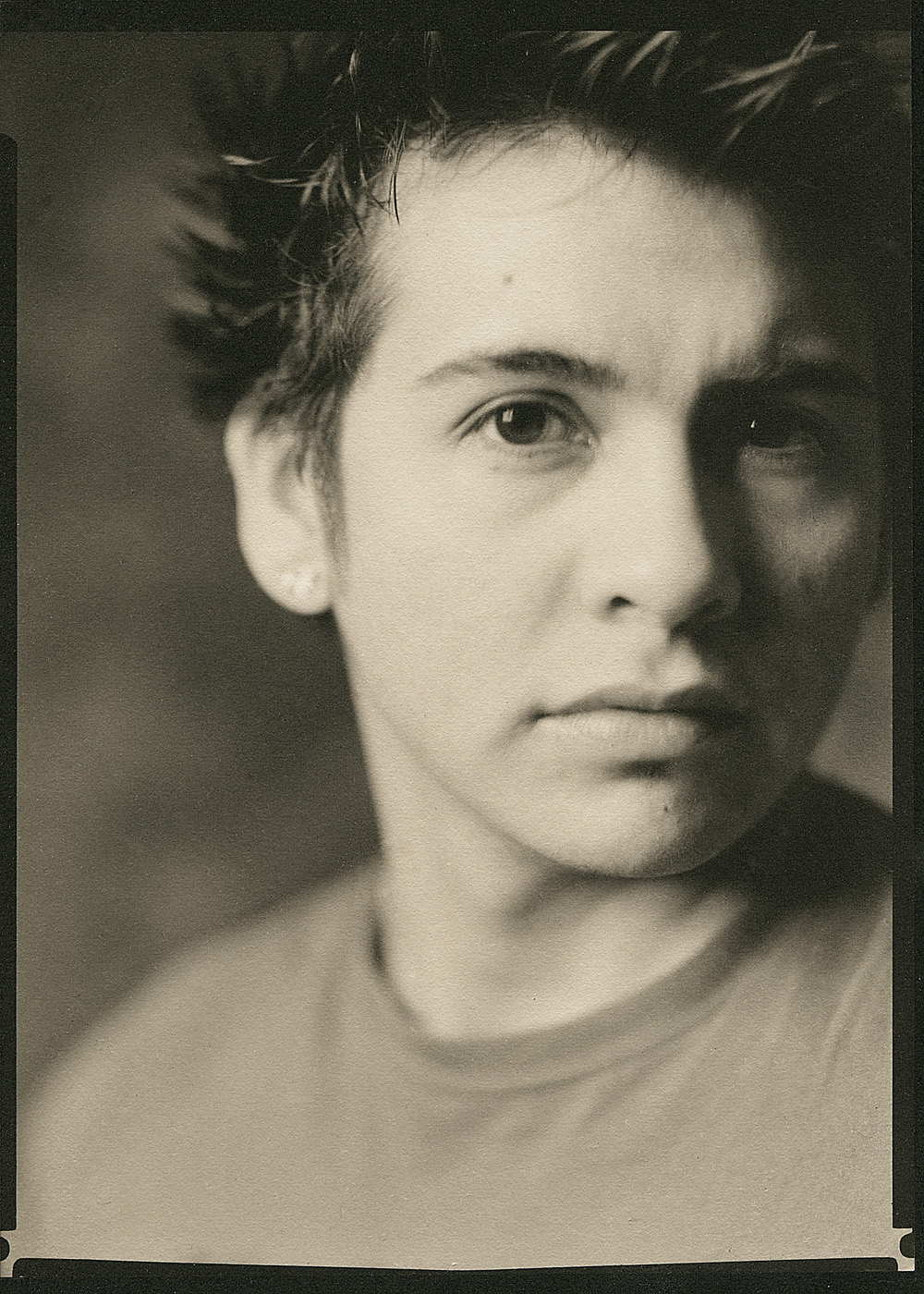
Alexander

Alexander. 5×7 inch Palladium print on Bergger heavyweight fine art paper.

Museum Exhibition Catalogs

While I was in Paris, I went to see a major exhibition at the Musee D’Orsay, Masculin/Masculin, a retrospective of the male nude in art from 1800 to the present. It was beautifully presented, almost overwhelming in size and scope, and extremely memorable. At the time, I thought about buying the catalog because it had outstanding reproductions of the work in the exhibit, including many works and artists I was unfamiliar with. I decided not to because of the size and weight of the catalog, especially considering that it was only available hardcover and my bags were already close to the weight limit. After I got home, I was kicking myself for not buying it after all. I got a second chance, however, when a friend who lives in New York told me he would be going in early December, and he offered to bring me back a copy. It arrived today, just in time to be a Christmas present to myself.

This got me thinking about museum exhibition catalogs. I generally try to buy them for exhibits I’ve enjoyed when I have the chance, because it serves as a reminder of the work exhibited, and it goes a long way to helping support the museum mounting the exhibit, especially when the museum (like all the galleries of the Smithsonian and the National Gallery of Art) does not charge admission. As a result, I thought I’d list the exhibitions I’ve collected catalogs from.

In rough chronological order, descending, they are:

  • Charles Marville, National Gallery of Art, Washington DC, 2013
  • Masculin/Masculin, Musee D’Orsay, Paris, France 2013
  • Photography and the American Civil War, Metropolitan Museum of Art, New York 2013
  • Faking it: Manipulated Photography Before Photoshop, National Gallery of Art, Washington DC, 2013
  • 40 under 40: Craft Futures, Renwick Gallery, Washington DC, 2012
  • Stieglitz, Steichen, Strand, Metropolitan Museum of Art, New York, 2010
  • Hide/Seek: Difference and Desire in American Portraiture, Smithsonian National Portrait Gallery, Washington DC, 2010
  • Framing the West: The Survey Photographs of Timothy H. O’Sullivan, Smithsonian American Art Museum, Washington DC, 2010
  • Truth/Beauty: Pictorialism and the Photograph as Art – 1845-1945, Phillips Gallery, Washington DC, 2009
  • Faces of the Frontier: Photographic Portraits from the American West, National Portrait Gallery, Washington DC, 2009
  • Titian, Tintoretto, Veronese: Rivals in Renaissance Venice, Boston Museum of Fine Art, Boston, 2009
  • Impressed by Light: British Photographs from Paper Negatives, 1840-1860, National Gallery of Art, Washington DC 2008
  • All the Mighty World: Photographs of Roger Fenton, Metropolitan Museum of Art, New York, 2004
  • Segnali di Fumo: L’avventura del West nella Fotograffia, Castello Sforzesco, Milan, Italy 1994
  • Circa 1492: Art in the Age of Columbus, National Gallery of Art, Washington DC, 1992
  • Treasure Houses of Britain, National Gallery of Art, Washington DC 1985
  • Tutankhamen, National Gallery of Art, Washington DC 1977
  • The Family of Man, Museum of Modern Art, New York, 1955*

*obviously I did NOT attend the Family of Man exhibit, as I wasn’t even a fantasy in my grandparents’ minds in 1955. But I do have the exhibition book.

Also note that I’ve listed where I saw the exhibit, not necessarily who published the catalog.

Perhaps the oddest is the Segnali di Fumo catalog, purely on account of the incongruity of going all the way to Milan, Italy to see photographs of the American West (well, I didn’t GO to Milan to see the exhibit, but happened upon it as I was leaving the Castello Sforzesco), with a significant body from the Amon Carter museum in Texas. Which I haven’t been to yet, but really ought to. It would also help close the loop on my France trip, for it is there that the first known photograph ever is held – Niepce’s first known heliograph of the view out his studio window at his estate near Chalon-sur-Saone (that I couldn’t visit because it was closed for the season). I’m sure I’m missing one or two from my collection, and my collection of catalogs is a pale shadow of the total number of exhibits I’ve been to either because no catalog was produced (producing an exhibition catalog is a major undertaking and not done casually or cheaply) or because I couldn’t afford it at the time.

Another day I’ll put together a catalog of my photography monographs, as I know this is of interest to some. It’s not a huge collection, especially in light of my overall library size, but it is a work in progress.
Paris in October – part 25 – Hans Z, Street Photographer

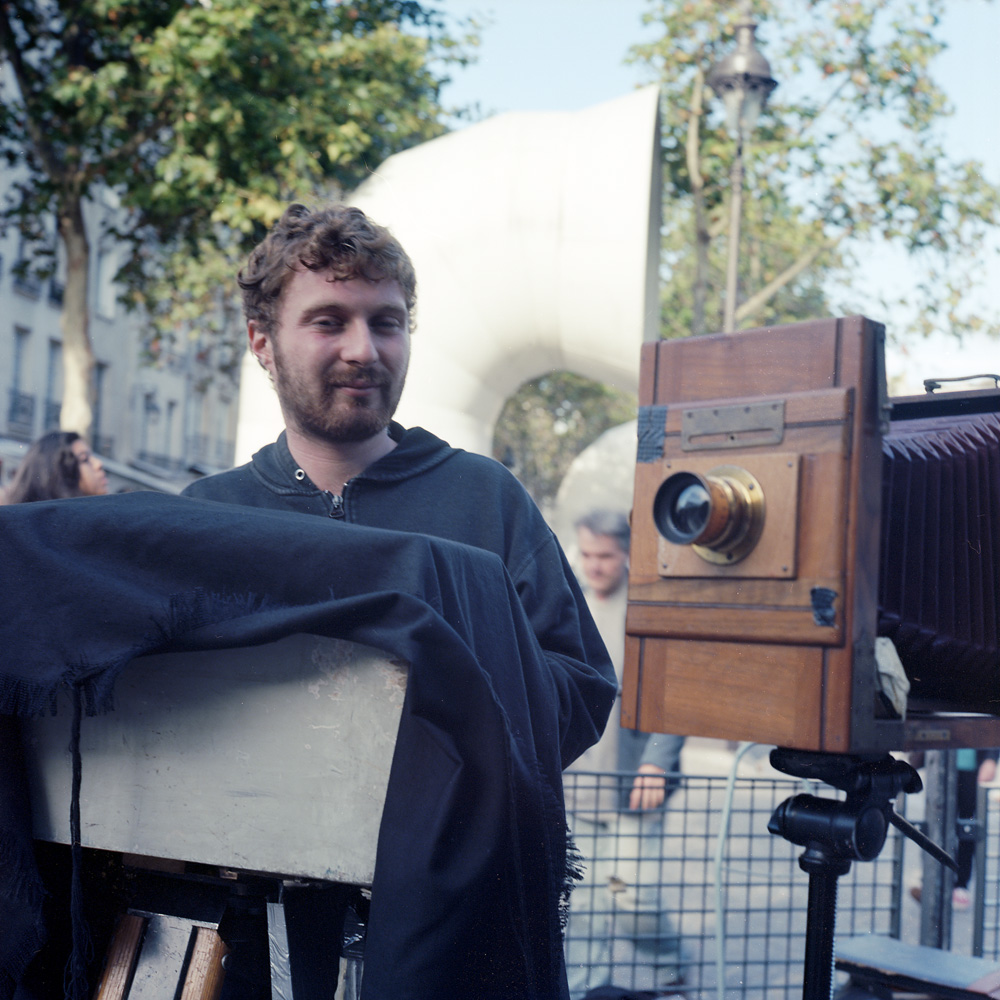
Meet Hans Zeeldieb, the street photographer working outside the Pompidou Centre. He was set up with his vintage 5×7, paper negatives, and portable darkbox doing portraits for 15 Euros a pop. He shot and developed them on the spot in 15 minutes. We struck up a friendly conversation when I saw his camera and he saw mine and talked a lot about photography. He sent me down the street a few blocks to the Centre Iris to go see an exhibit of wet plate collodion images by Jacques Cousin and several of his students, as well as some work by my friend Quinn Jacobson. Several years ago, I was involved in a gallery space in Hyattsville, Maryland called Art Reactor, where I curated a show of photographs made using the whole plate format*, and Quinn was one of the artists I selected. I think I made Hans a little nervous, as he overexposed the image of me. He did capture a good expression of me though, so I was happy to support a fellow working photographer.

In the first photo, I caught Hans with his hands in the darkbox, processing a print. The way it works, he exposes a paper negative in the camera, then develops it in the box. After the negative is developed, he sandwiches it with another piece of paper, opens a window in the dark box to expose it again, and processes the second paper, which now has a positive image. There are several advantages to this process – by working with paper, the development and fixing is much faster than with film, and you can use the same chemistry for both your negative and your finished print. I’ve seen or read about other itinerant photographers using much the same technique around the world, from Madrid to Kabul.

Hans with his camera, processing a photo

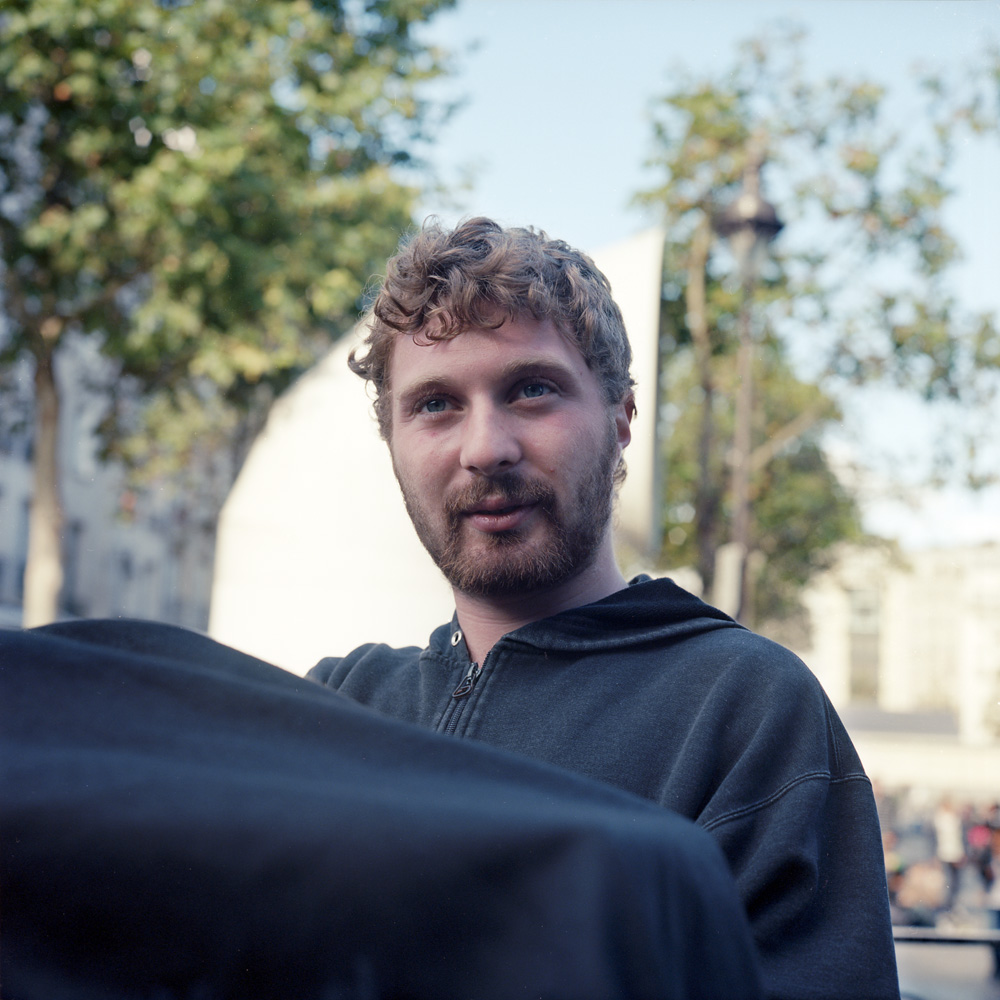
Here is a portrait of Hans outside the Pompidou Centre, just a close-up this time without the camera in the frame. He seems a little lost in thought – I think he was counting time for the print he was developing.

Hans, at the Pompidou Centre

* Whole Plate format is the original photographic format, defined today as 6 1/2 x 8 1/2 inches. It is not entirely certain how this size was chosen by Daguerre as the plate size he wanted to use, but reasonable speculation ties it to book printer’s printing plates. It has varied in its specification over time, but it settled on the 6 1/2 by 8 1/2 size by the late 19th century.

Kenilworth Aquatic Gardens in color

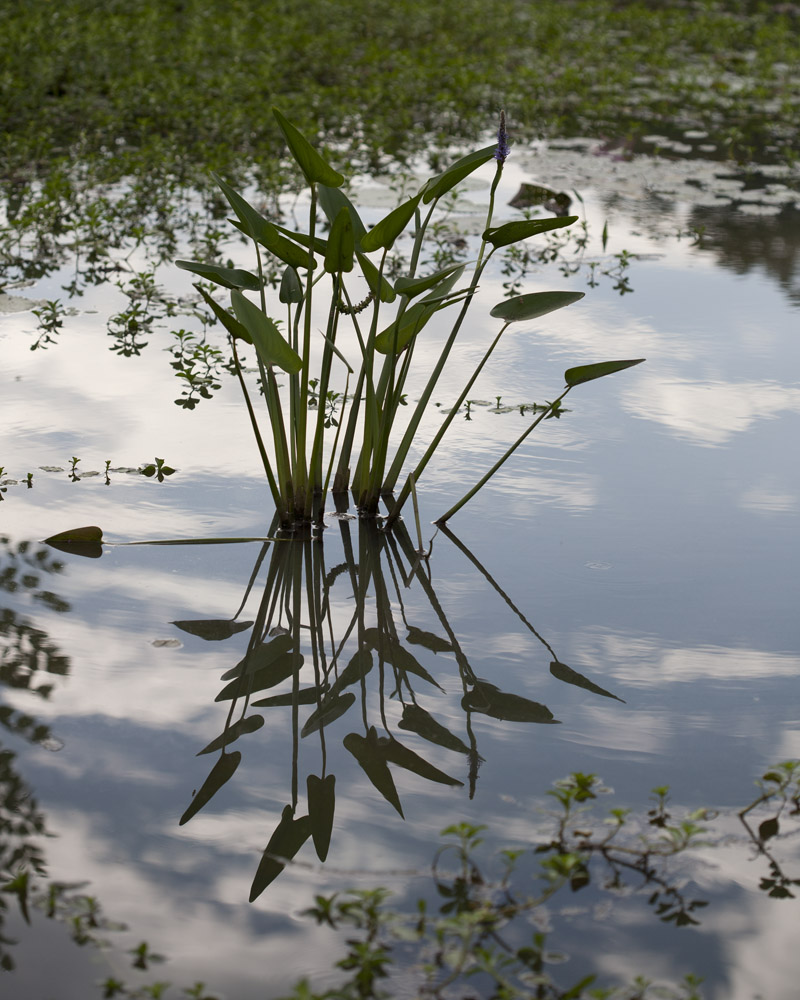
I’m feeling incredibly lazy this morning so I’m just going to let these photos speak for themselves. These are various scenes from around Kenilworth Aquatic Gardens, which as I mentioned in an earlier post, are a 30-ish acre park on the eastern bank of the Anacostia River in Washington DC. Part of the National Park system, Kenilworth is a generally un-heralded and underutilized public park, a true hidden gem of Washington. Part of what I like about visiting is the psychological tension of knowing that just outside the gates of the park is a truly rough urban environment in one direction, and major hustle and bustle in the other, but while you are in the park you have zero awareness of this – a veritable oasis of calm and quiet.

IMG_9023

IMG_9031

IMG_9036

IMG_9040

IMG_9041

IMG_9052

IMG_9053

IMG_9054

IMG_9078

IMG_9081

IMG_9091

IMG_9093

IMG_9095

From my Platinum/Palladium Master Class

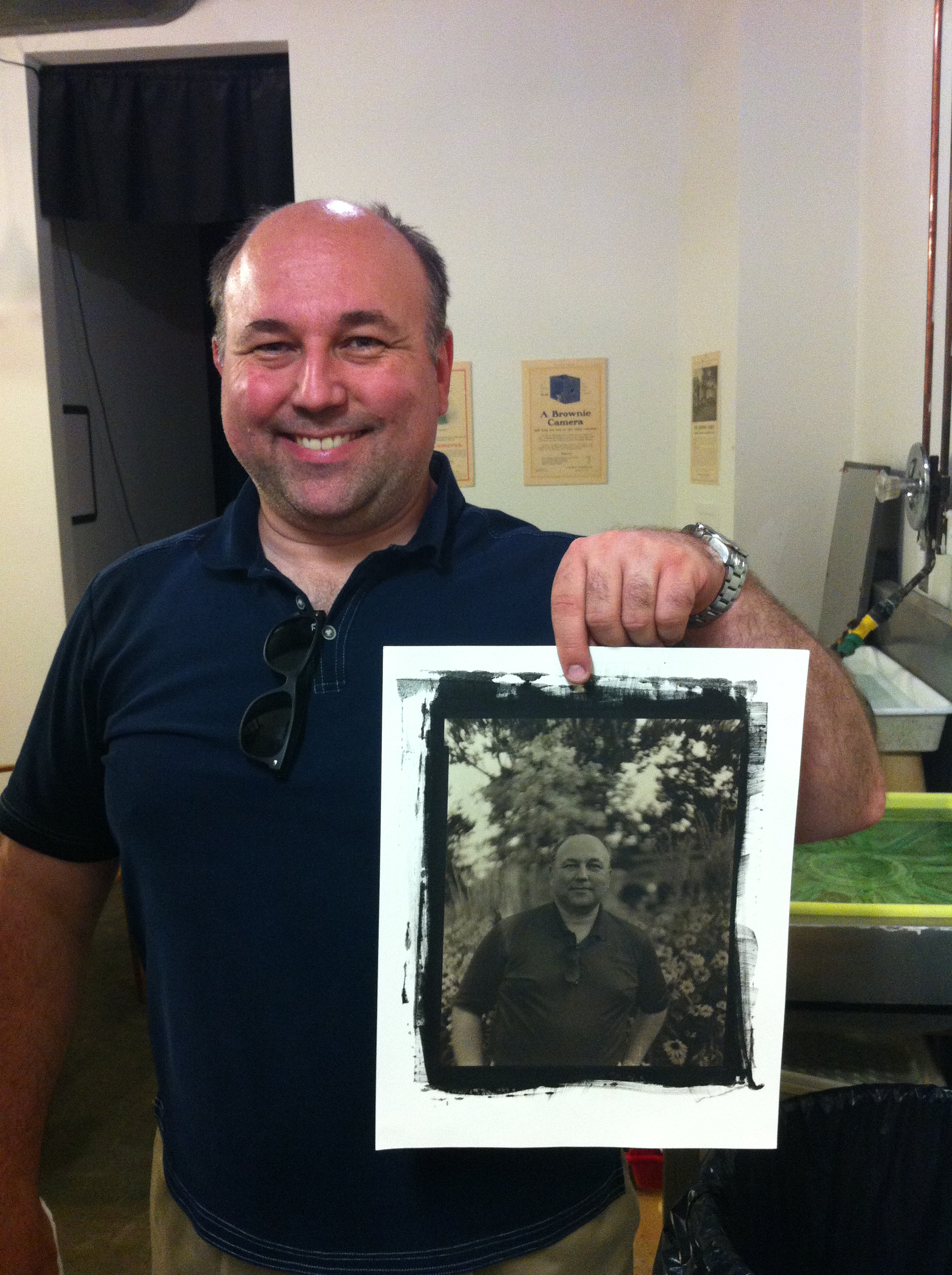
If you’ve been following my blog long enough, you know I teach antique and historic processes at Glen Echo Photoworks. I have been teaching a one-on-one master class for the last several weeks. Last session we shot some negatives and processed them in Pyrocat HD, a staining developer. This week, we printed some of the negatives we shot, as well as an old negative Anh, my student, had in his portfolio.

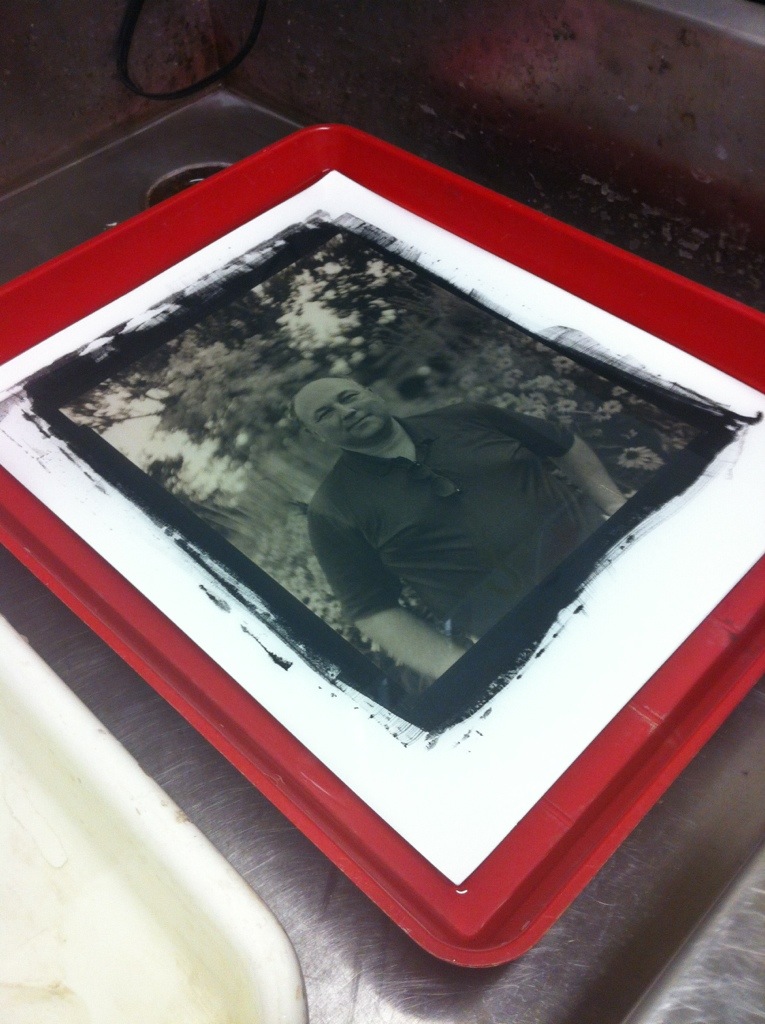
My Portrait by Anh Tran
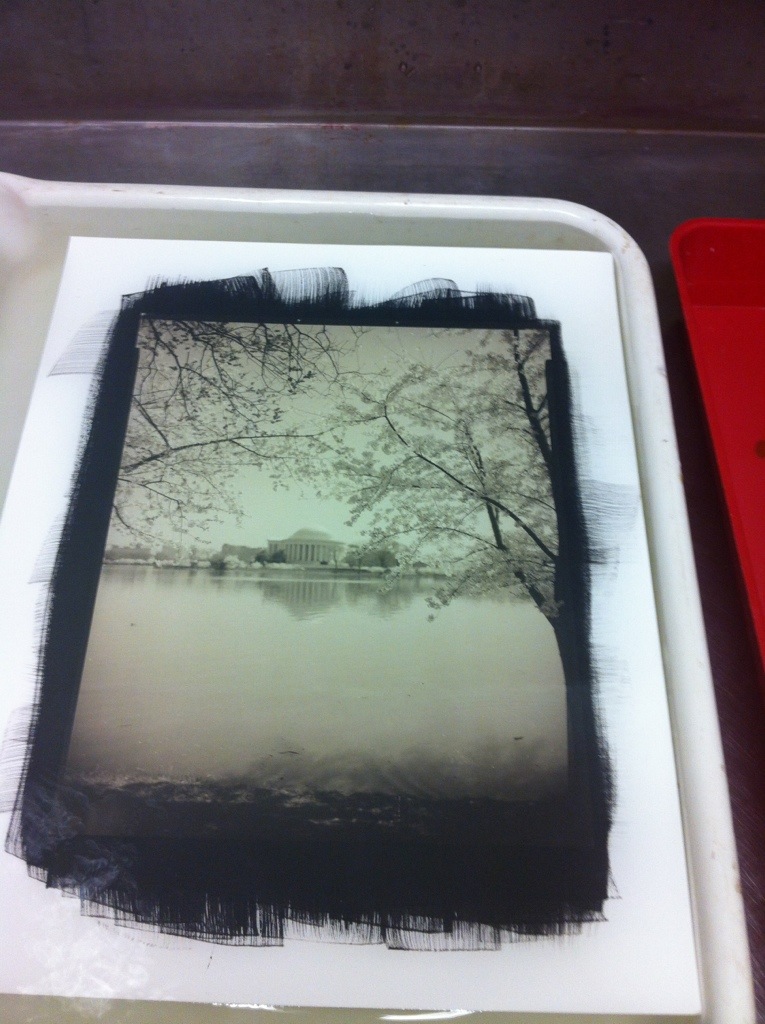
Jefferson Memorial, Cherry Blossoms

The Jefferson Memorial shot was his existing negative – in the silver gelatin print, the dome of the Jefferson was blended in to the sky at the brightest highlight. You can see even from this phone-cam snapshot that there is tonal separation between the dome and the sky, where the dome is actually the brighter highlight, but still retains detail. THAT is what printing in palladium is all about – that rich, delicate level of detail it is capable of recording in highlights and midtones. And the cherry blossoms have an extra delicacy about them too.

Me With Portrait
Me With Portrait

Here’s a shot he took of me holding the portrait he did last week. This could probably use just a little more contrast, but not bad for his say 5th ever palladium print 🙂

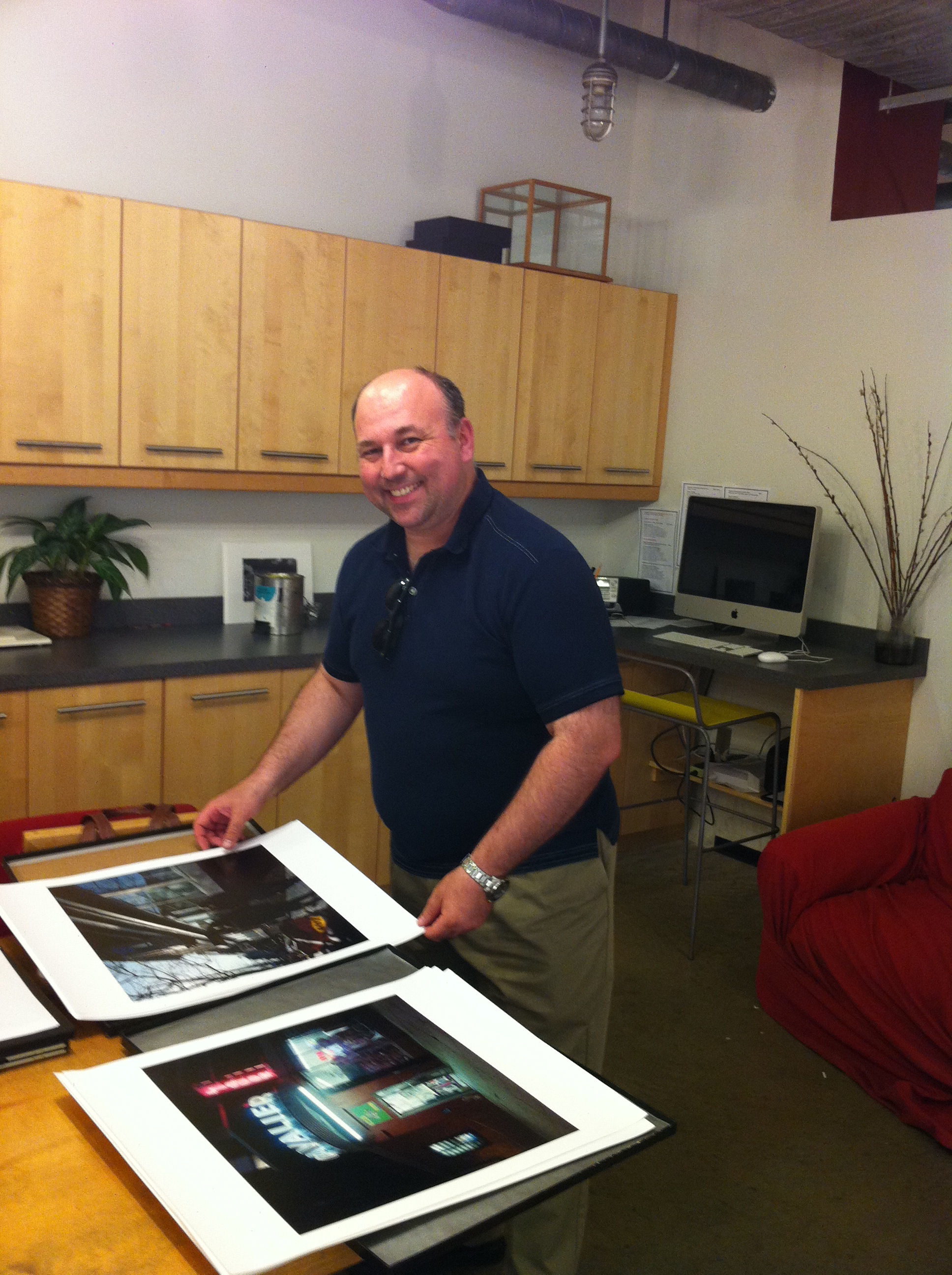
Me Showing my Portfolio for Colors of Night

I brought along my portfolio of the actual prints I’m putting in the Colors of Night show for him to take a peek at. Here I am showing the prints.

Silver Gelatin Printing- a Personal Refresher, With Experimentation

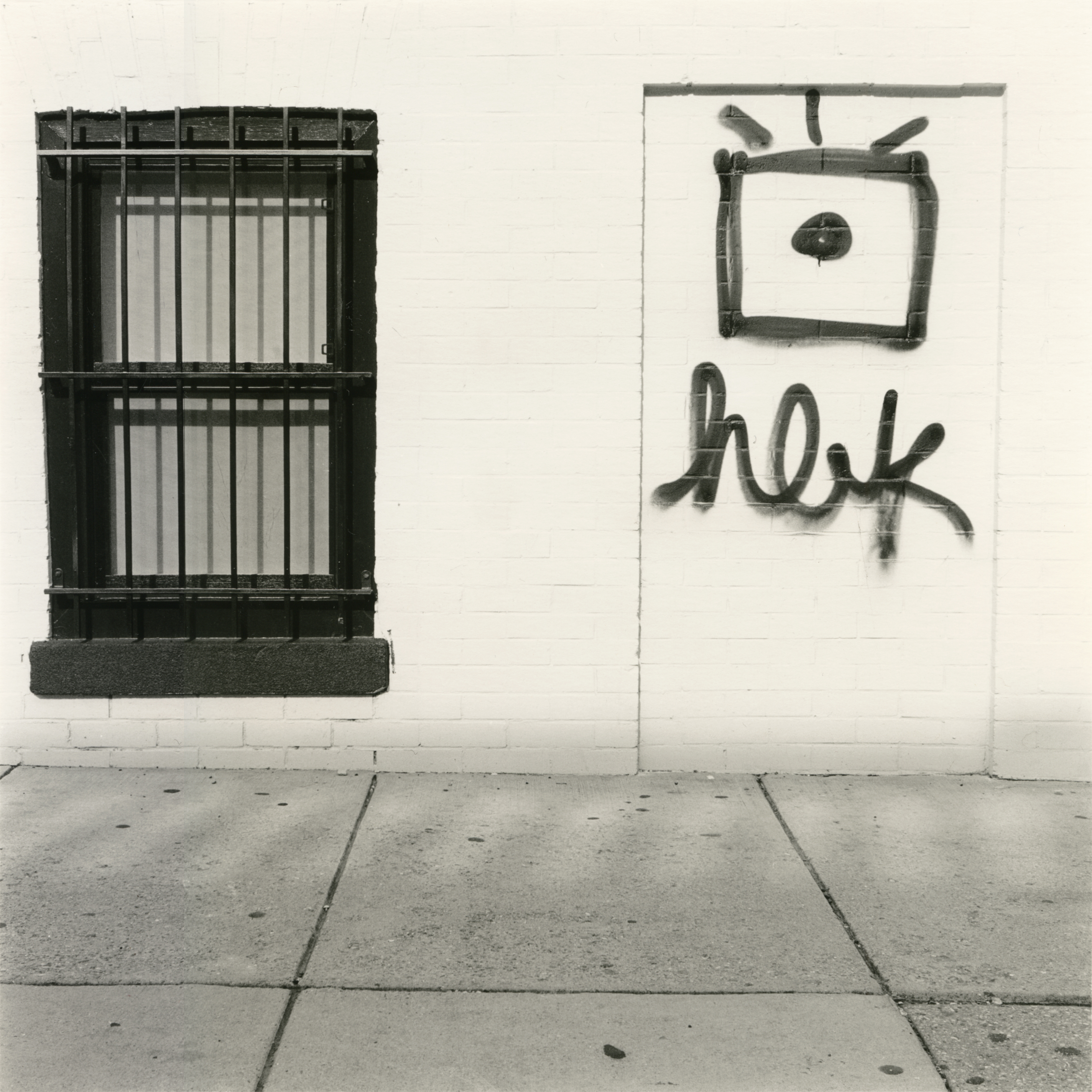
I’ve gotten back into doing a little sliver gelatin printing and enlarging since I’ve been shooting the Rolleiflex like a madman. I wanted to try something out with my printing, so I was doing split development of my prints with both warmtone and cooltone developer. The way it works is I have two developer trays, one for each kind of developer. I’m using the Ilford Warmtone and Ilford Cooltone (a now-discontinued product that I was given a case of some years ago). I want the shadows cool but the mids and highlights warm, so I start my development cycle with 30 seconds in the cooltone developer, then move to the warmtone developer for the remaining minute and a half. The below examples are printed on Ilford Warmtone paper (if you want a warmtone image, you have to use a warmtone paper – you can make a warm paper go cool with a cool developer, but you can’t warm up a coldtone paper short of sepia toning).

Window, Graffiti, 15thStreet

This is the warmest I can get in my highlights and mid tones using this process. The Ilford warmtone paper doesn’t seem to get very warm at all.

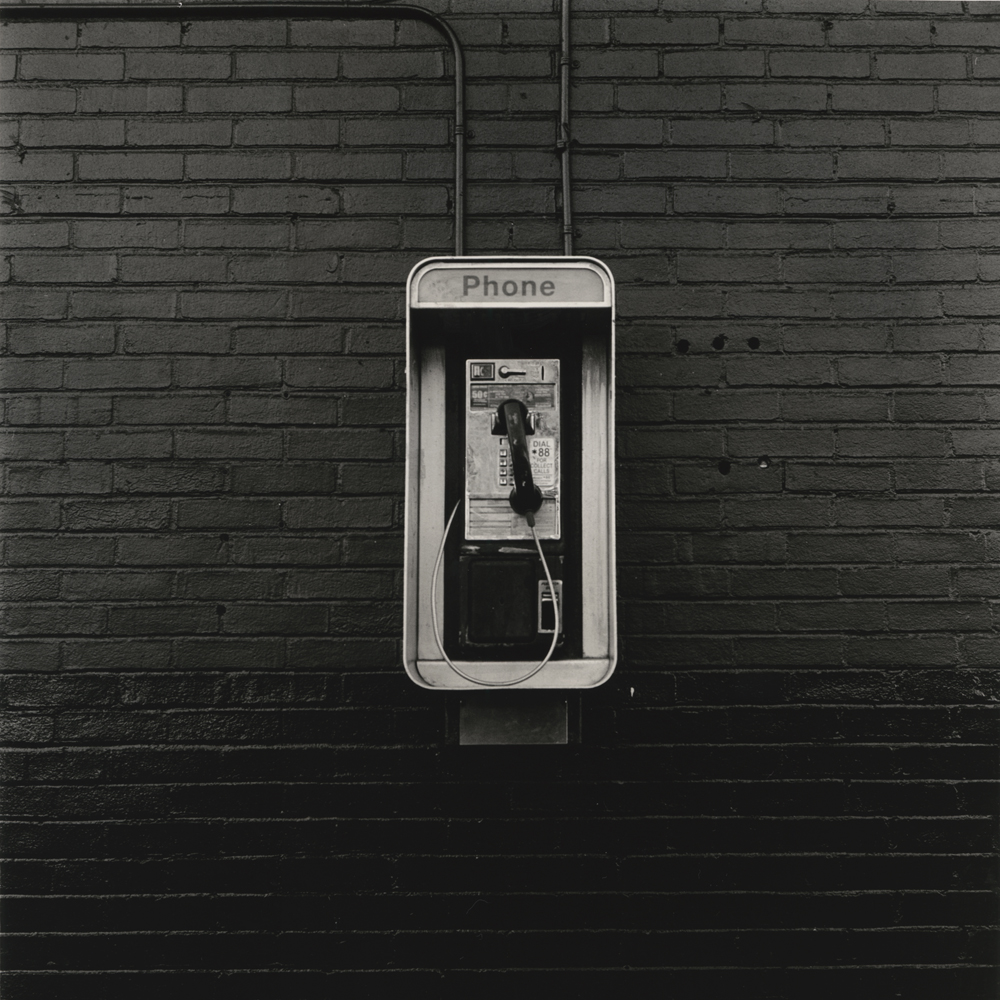
Here’s another in my series of Everyday Objects – the near-apocryphal payphone. In trying to find one, it actually took some looking! They’re not completely vanished from the landscape, but you actually have to go looking in somewhat rougher neighborhoods now to find one because anyone living above the poverty line these days has a cellphone, and nobody wants to carry around a pocketful of quarters AND dimes to make a call.

Everyday Objects - Payphone
Everyday Objects – Payphone

I was getting a little nervous about making enlargements as it has been forever and a day (at least five years) since I last made an enlargement. Turns out it’s a skill like riding a bike – once you learn, you never really forget.

Both shots were taken with my Rolleiflex 2.8E, on Ilford HP5+, developed in Pyrocat HD. I think I’ve mentioned it before, but Pyrocat is my go-to developer, even for small and medium-format negatives to be enlarged (or scanned!). Pyro developers in general have great built-in contrast masking from the stain, so it is possible to retain detail in highlights in images that would require burning and dodging were they processed in another developer.

2nd Prize, Rangefinder Magazine B&W/ Alternative Process contest!

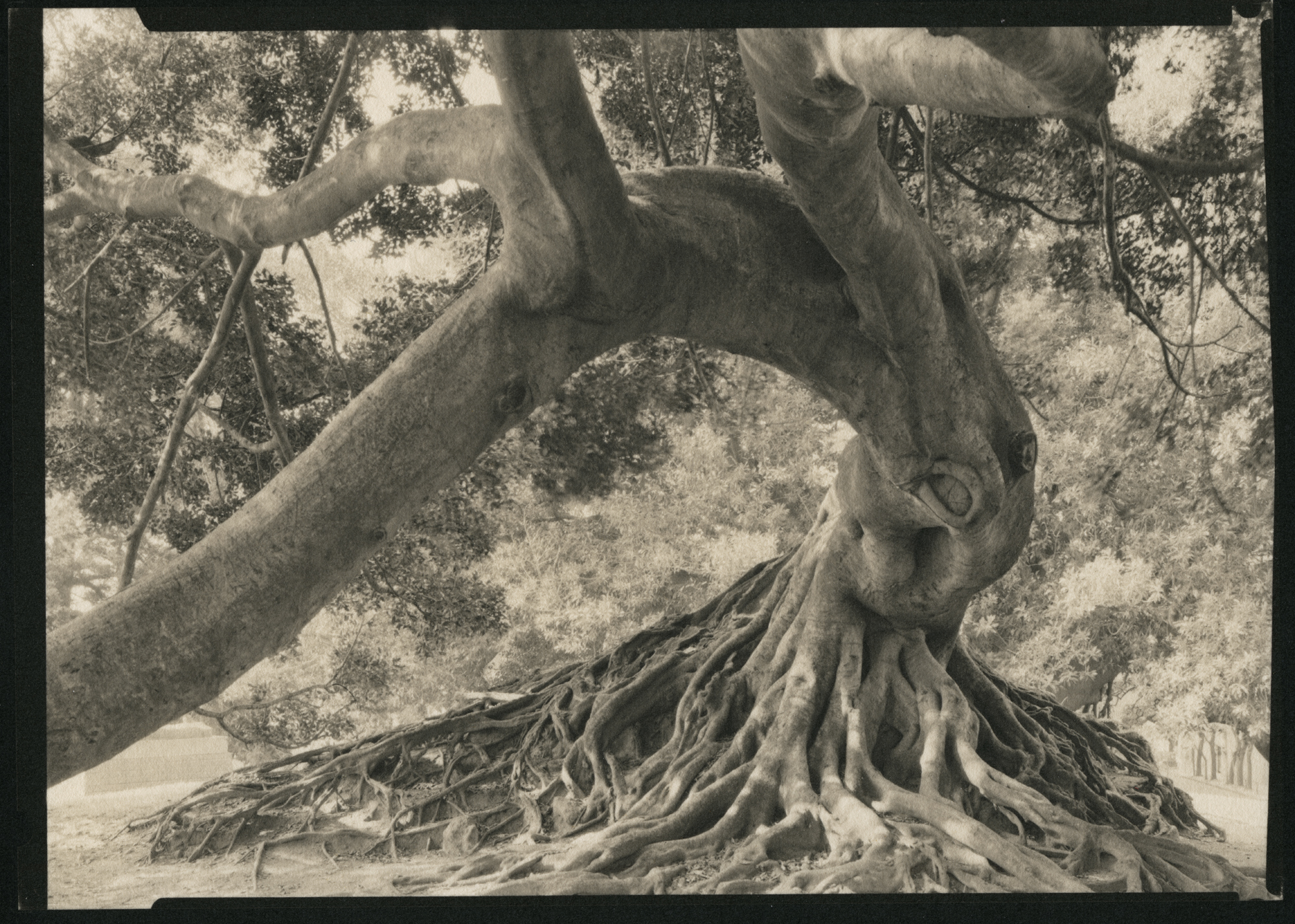
Well, the results were announced today, and my Ficus, Recoleta was awarded 2nd Prize in the contest overall. You can see the results here – April 2013 Issue, Rangefinder Magazine.

FicusRecoletaPD57