Category Archives: Platinum/Palladium

Quick takes from today’s Intro to Platinum/Palladium class

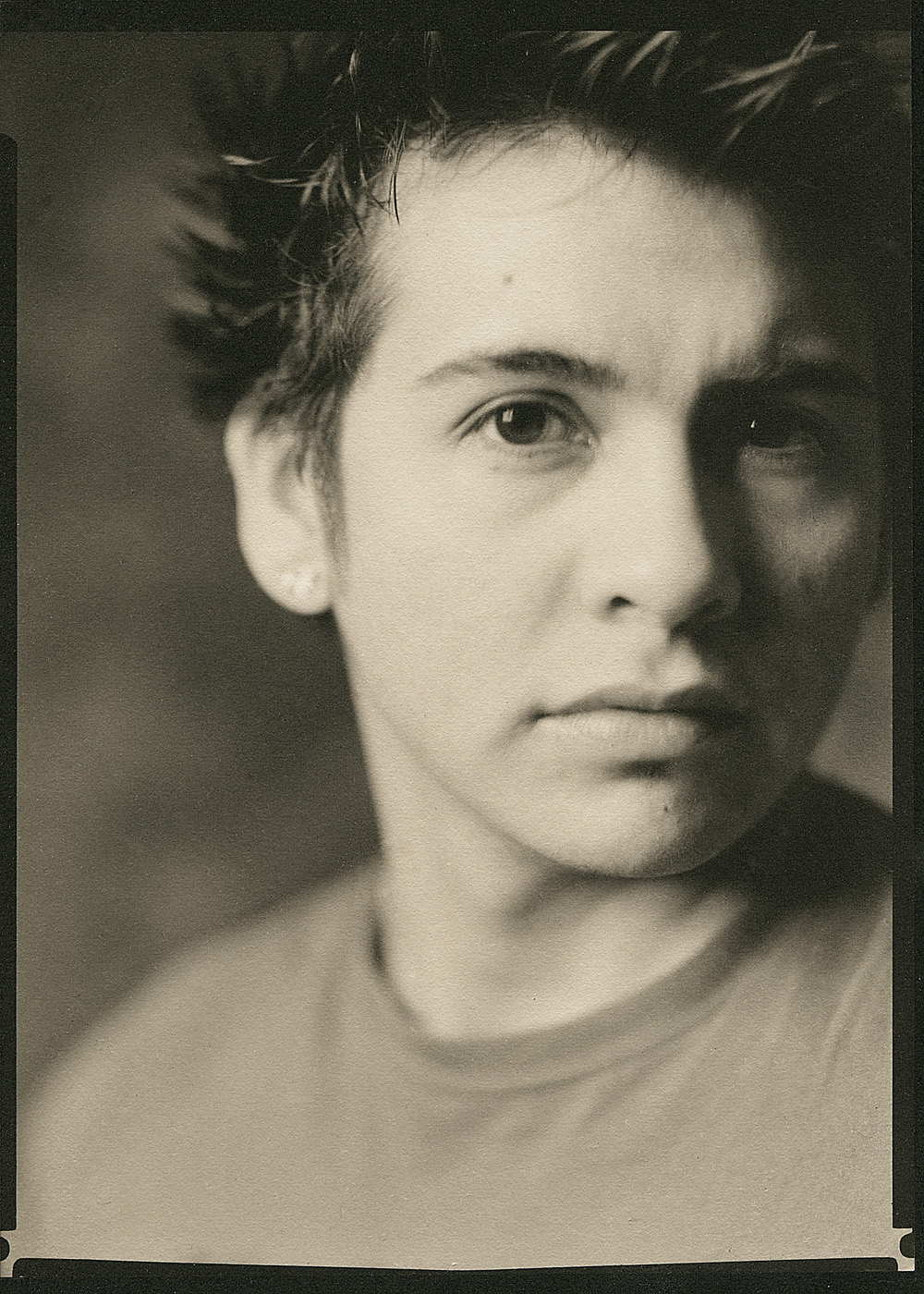
I’m running a quick impromptu by-the-seat-of-the-pants version of my Intro to Platinum/Palladium printing class this weekend. It’s a bit of a hash because we had scheduling conflicts of varying types to deal with, but we did manage to meet today. My normal plan with students is to take them out into Glen Echo park and have them shoot a bunch of negatives with my 5×7, then come back and process them. WELL… today, the daytime high was still below freezing, so we scratched that idea. Instead, we shot some self-portraits indoors using my Hermagis Eidoscope soft-focus portrait lens, a 1000-watt hot light (a VERY welcome hot light given the weather today!) and an improvised guillotine shutter composed of a pair of dark slides, held in a V-formation. The “shutter” starts with the lower dark slide completely covering the lens, and to allow exposure to happen, the pair are swung past the lens so that the gap between them briefly allows light to strike the film. Exposures can be a little variable, but these are forgiving media.

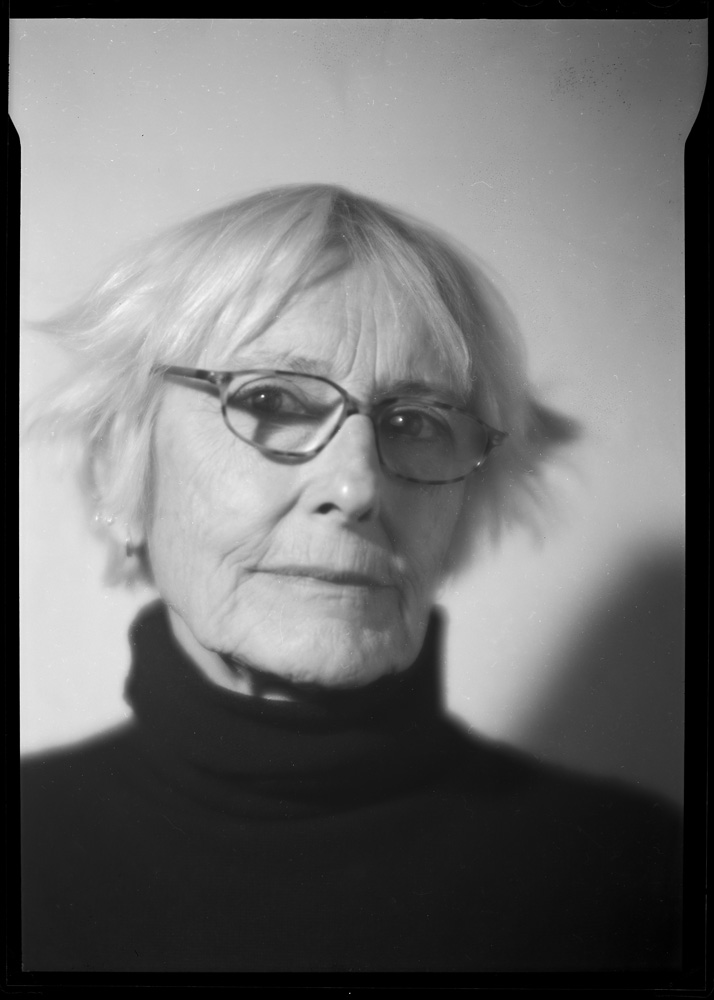
Here is one shot of one of my students:

Barbara, Hermagis #1

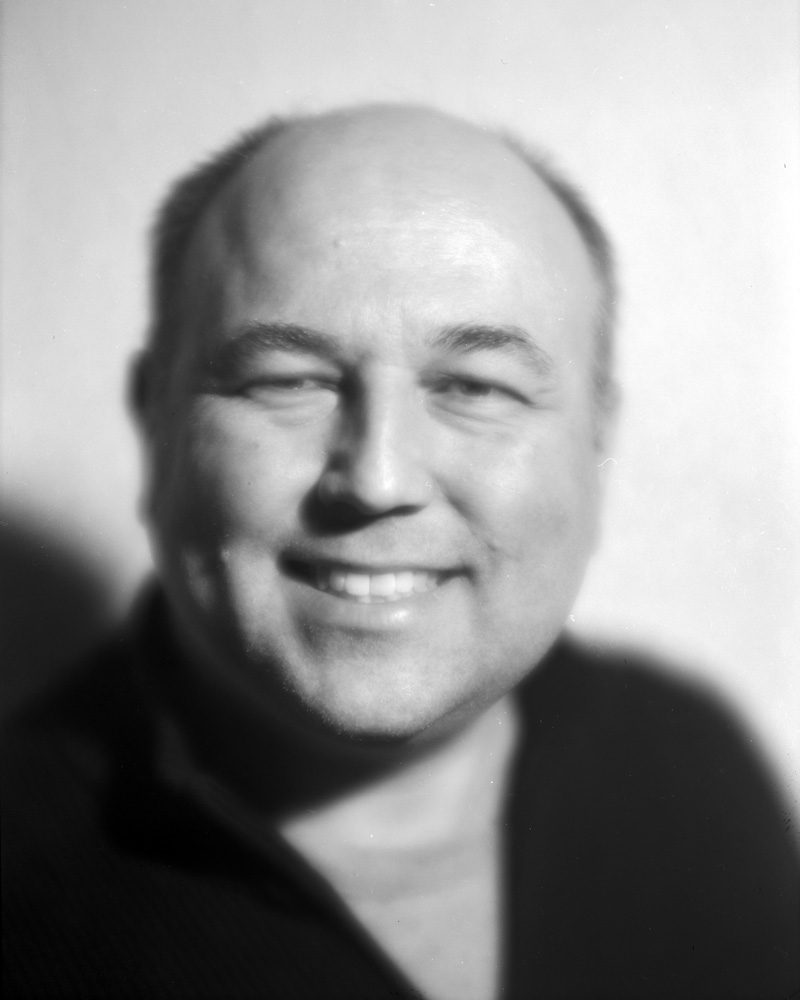
and here are two of me:

Scott, Hermagis #2
Scott, Hermagis #2
Scott, Hermagis #1
Scott, Hermagis #1

I brought the Hermagis to class to give the students a little something special to play around with, since they both had past experience in working with large format, and I think the soft-focus lens fits very well with the alternative process print look.

Of the two of me, which do you all prefer? I know which one I like better, but I’ll wait to get some feedback before I offer my opinion. All three of these are scans from the negatives, not from prints. We will be meeting again tomorrow to do the actual printing.

Upcoming classes at Glen Echo Photoworks, Glen Echo, Maryland

I’m offering three classes coming up this fall/winter at Glen Echo Photoworks, a center for creative photography and photographic education at Glen Echo Park in Glen Echo, Maryland, just outside Washington DC.

The Male Figure in Narrative Photography 9/19 – 11/7/2014 Fridays, 7-10pm

Go beyond standard figure studies. Research historical context and learn to use the male nude form to tell a story in a series or just a single frame through posing, lighting, using props and capturing emotions. What is “narrative photography”? Narrative tells a story either in a series, or a single image. From the earliest days, photographers have been using the male figure to tell a story in their work, be it as a stand-in for himself (Hippolyte Bayard) to express his response to criticism, to confronting eroticism and gender confusion in the world of Latin American bullfighting (Reuven Afanador) or a tool to process inner personal anxieties (Connie Imboden). This course will examine the use of the male nude in narrative photography. We will use examples from historical and contemporary photographers as a background to inform and inspire our own work. Students will be encouraged to create both single image and serial narratives to take their work beyond mere figure studies. We will also discuss issues relating to gender and sexuality with regards to the use of the male nude. We will cover understanding of the male form, posing, basic lighting, the use of props, and basic nude model etiquette. Students will be expected to know how to use their cameras, light meters, and how to process and present their own images. Weekly research topics will be assigned. There will be three shoots with one or more models, plus classroom instruction and discussion sessions. $350, plus $150 model fee.

Introduction to Platinum/Palladium Printing – 11/8 – 11/9/2014 (Saturday/Sunday, 10am-4pm, two day intensive weekend workshop)

Platinum/Palladium is one of the most beautiful alternative processes. This course demystifies the process and teaches how to make good negatives, select papers, coat emulsions, and process prints for archival stability. $350, plus $100 materials fee, payable to the instructor.

One Camera, One Lens – Learning to See 1/15 – 3/7/2015 (Thursday 7-10pm)

Too often our gear keeps us from making better pictures. Photographers often fall into the trap of thinking that more gear is the solution to every problem, when in fact it can be a crutch or a burden. This course teaches how to simplify and focus our creative vision so the camera gets out of the way and becomes a tool not an obstacle. Students will use a camera of their choosing, and a single lens. They will select a project in the first class and follow through on that project, presenting images for critique each week. Students choosing to work with wet darkroom techniques will be expected to know how to process and print their own film; students working digitally are expected to have a working knowledge of their camera and digital image processing tools of their choosing. No changing lenses allowed! $350

The courses will be posted soon to the website, but in the meantime if you want to find out more about Photoworks, please check out their website and their Facebook page-

http://glenechophotoworks.org

https://www.facebook.com/glenechophotoworks

Photoworks is one of the few facilities with regularly scheduled open darkroom times, and at $8/hr for wet darkroom (bring your paper, we provide the rest!), it’s hard to beat!
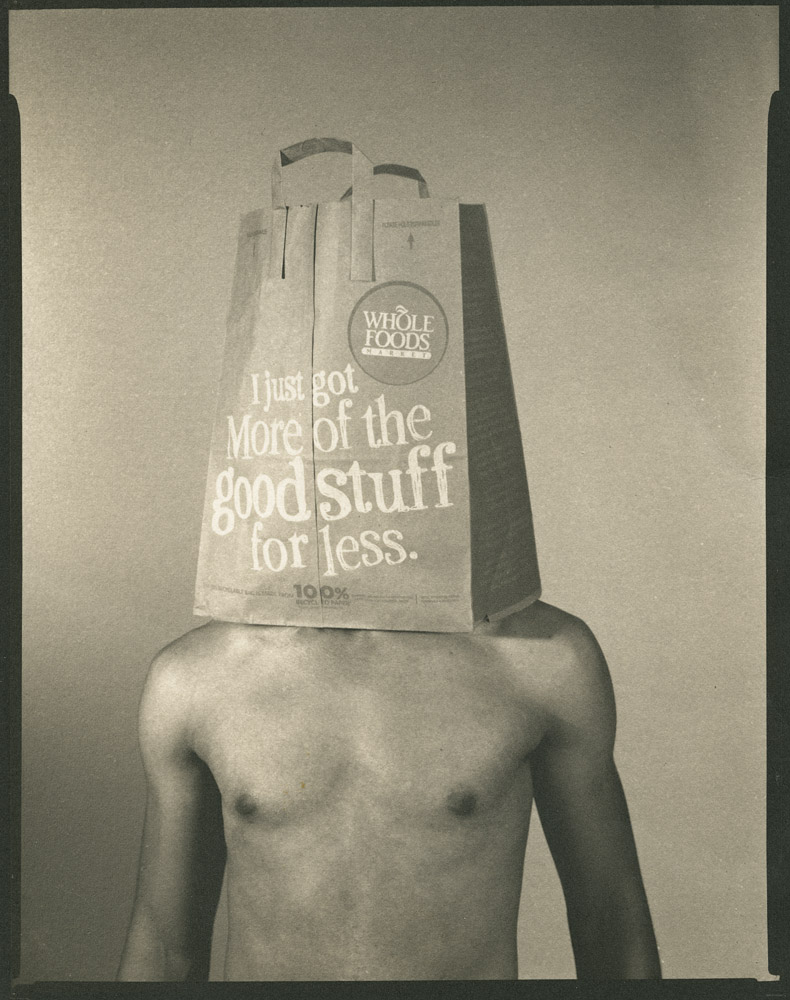
From a Series on Identity and Commodification

More of the Good Stuff

A long time ago I started working on a series about how we commodify people and their identities. I was playing around with advertising slogans on grocery bags and how those slogans can be used to replace food with people (not in a cannibalistic sense but as something to be looked at as a consumable or a flavor-du-jour). I’ll pick it up again when I get the chance and see if I can do more with it. Let me know what you think of the idea and the execution in this image.

The original is a whole-plate (6.5 by 8.5 inch) hand-coated palladium print on Bergger COT320 100% cotton rag heavy-weight paper.

Platinum/Palladium Prints from the vaults

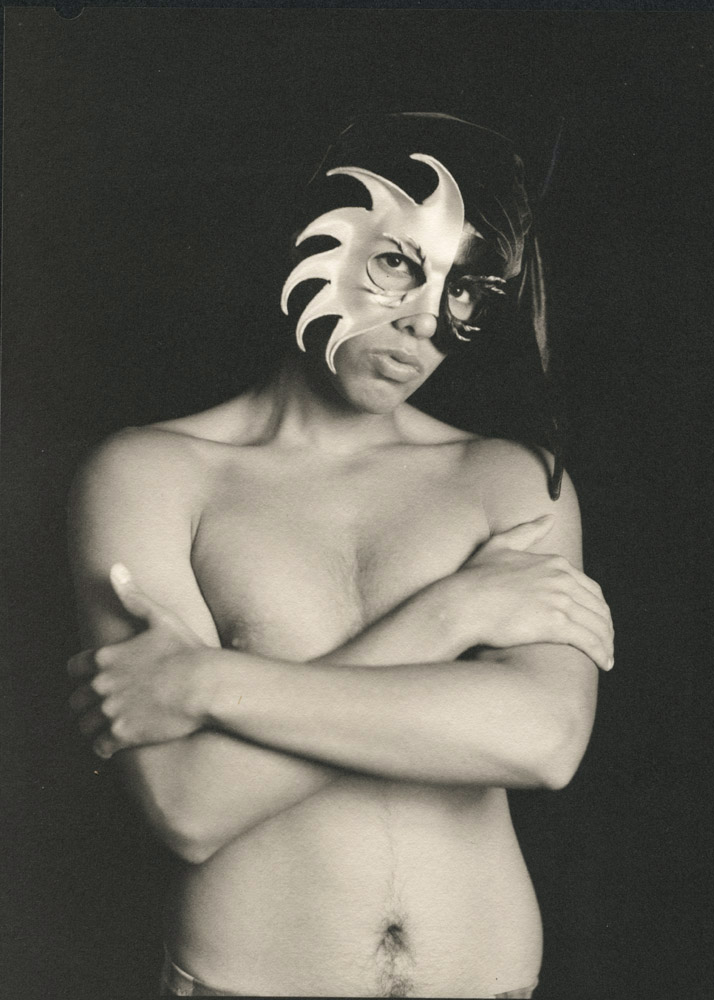
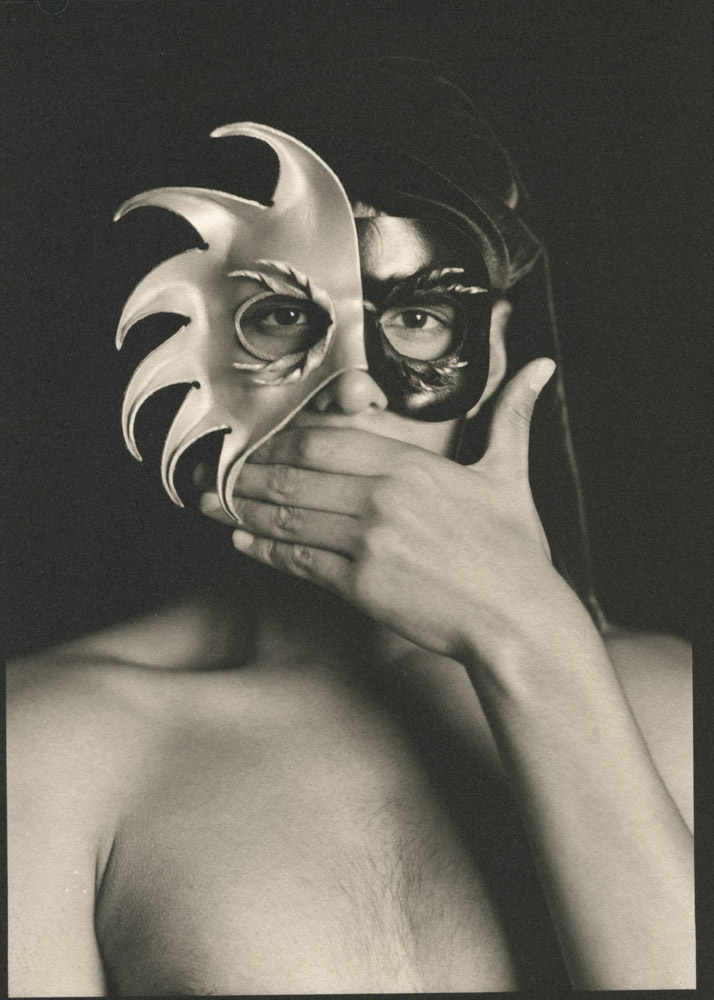
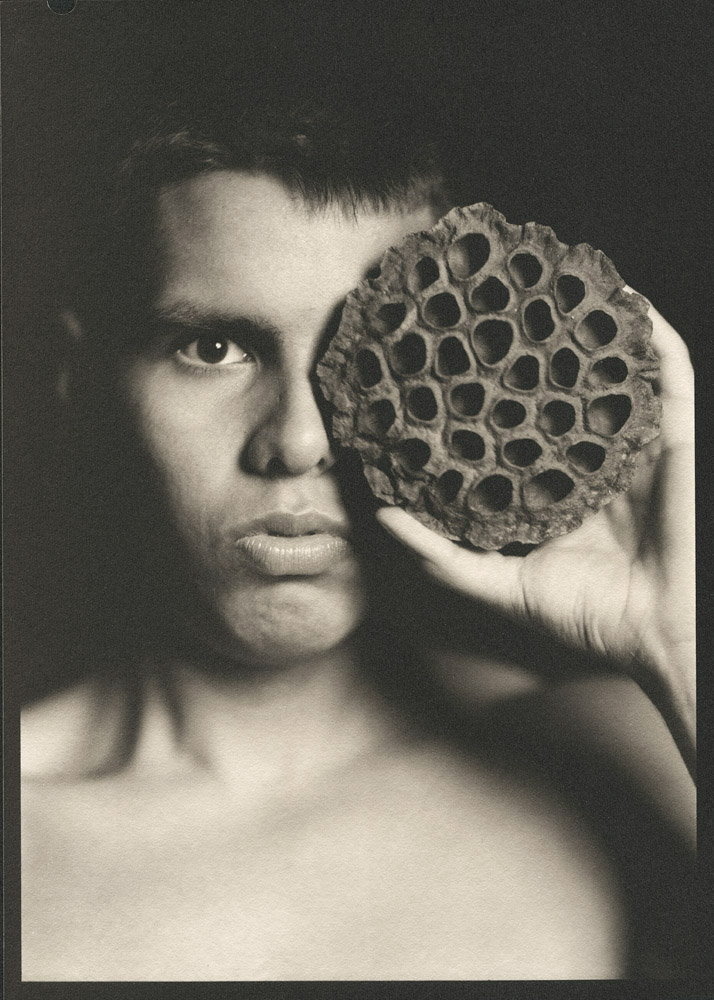
I dug up a few older platinum/palladium prints I did a couple years ago and realized they were worth sharing, so I thought I’d post them here today.

They were studies for a series I was working on – they didn’t make the editorial cut for the series, but as standalones they’re good.

Jester
Jester

Jester
Jester
Portrait with Lotus Seed Pod

These were shot in my home studio (aka the dining room) with a single light and a black velvet backdrop. The camera was my ancient studio portrait camera with a 5×7 back installed and a Seneca portrait lens (aka Wollensak Vesta, rebranded). I mention all this to show that you can produce great work with the simplest of set-ups and equipment, and you don’t have to have the latest and greatest or fancy facilities.

Portrait Photography – Now Open For Business

I wanted to announce the launch of my portrait photography business. My studio is located in Rockville, Maryland at the Washington School of Photography, where I am a Resident Photographer. My philosophy of photography:

Photography is Magic – I fell in love with the magic of photography when I made my first darkroom print. When I saw the image emerge in the developer under the red glow of the safelight, I knew right then the camera would be my constant companion for the rest of my life.

My goal is to go beyond producing portraiture that is functional documentation. I want to use my creativity and vision to produce iconic representations of your spirit and character. I use vintage tools and antique techniques and processes in a contemporary style to create not mere photographs but tangible art objects you will be proud to display in your home and pass on to future generations.

To make an appointment, go to my web gallery at http://www.theflyingcamera.com and click on “contact”. Change the Subject line to “appointment”. As a benefit for my blog readers, include the promo code “BLOG” in the subject for a 10% discount on the sitting fee. This promo code will be good through April 1, so book now!

Alexander

Alexander. 5×7 inch Palladium print on Bergger heavyweight fine art paper.

From my Platinum/Palladium Master Class

If you’ve been following my blog long enough, you know I teach antique and historic processes at Glen Echo Photoworks. I have been teaching a one-on-one master class for the last several weeks. Last session we shot some negatives and processed them in Pyrocat HD, a staining developer. This week, we printed some of the negatives we shot, as well as an old negative Anh, my student, had in his portfolio.

My Portrait by Anh Tran
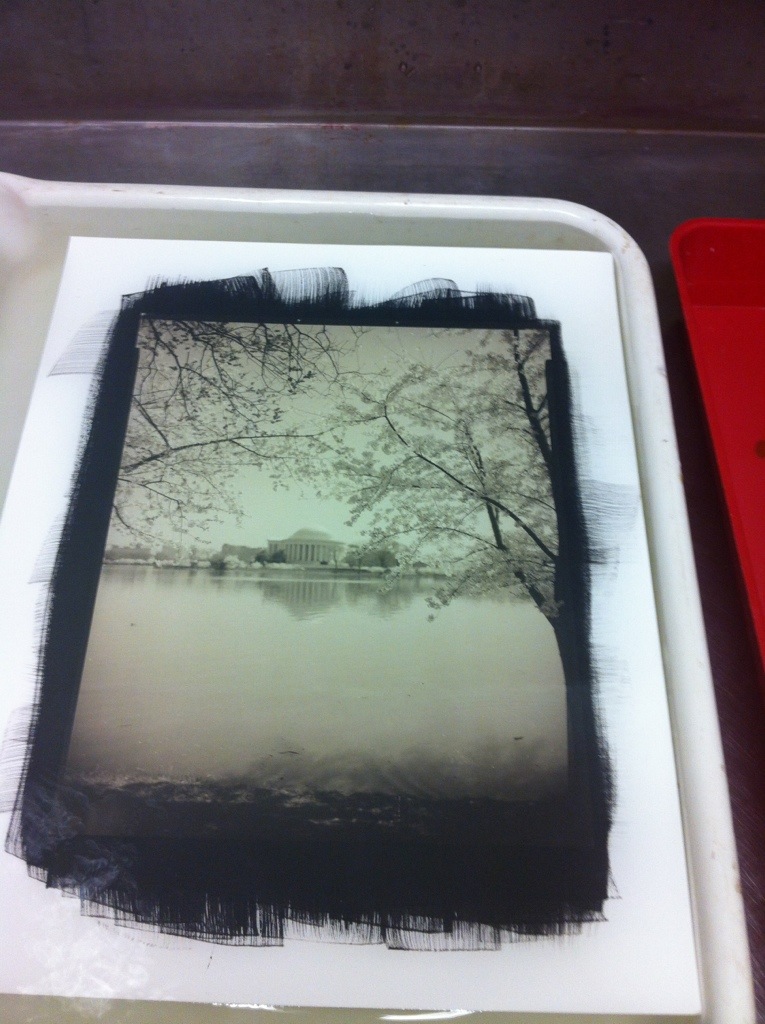
Jefferson Memorial, Cherry Blossoms

The Jefferson Memorial shot was his existing negative – in the silver gelatin print, the dome of the Jefferson was blended in to the sky at the brightest highlight. You can see even from this phone-cam snapshot that there is tonal separation between the dome and the sky, where the dome is actually the brighter highlight, but still retains detail. THAT is what printing in palladium is all about – that rich, delicate level of detail it is capable of recording in highlights and midtones. And the cherry blossoms have an extra delicacy about them too.

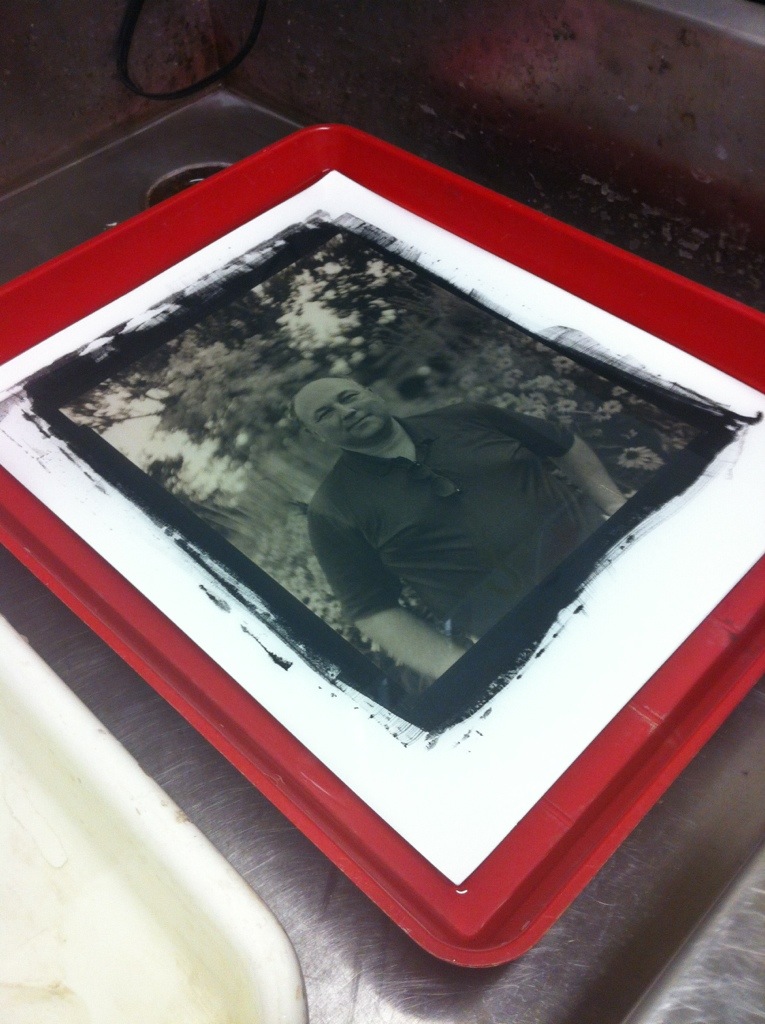
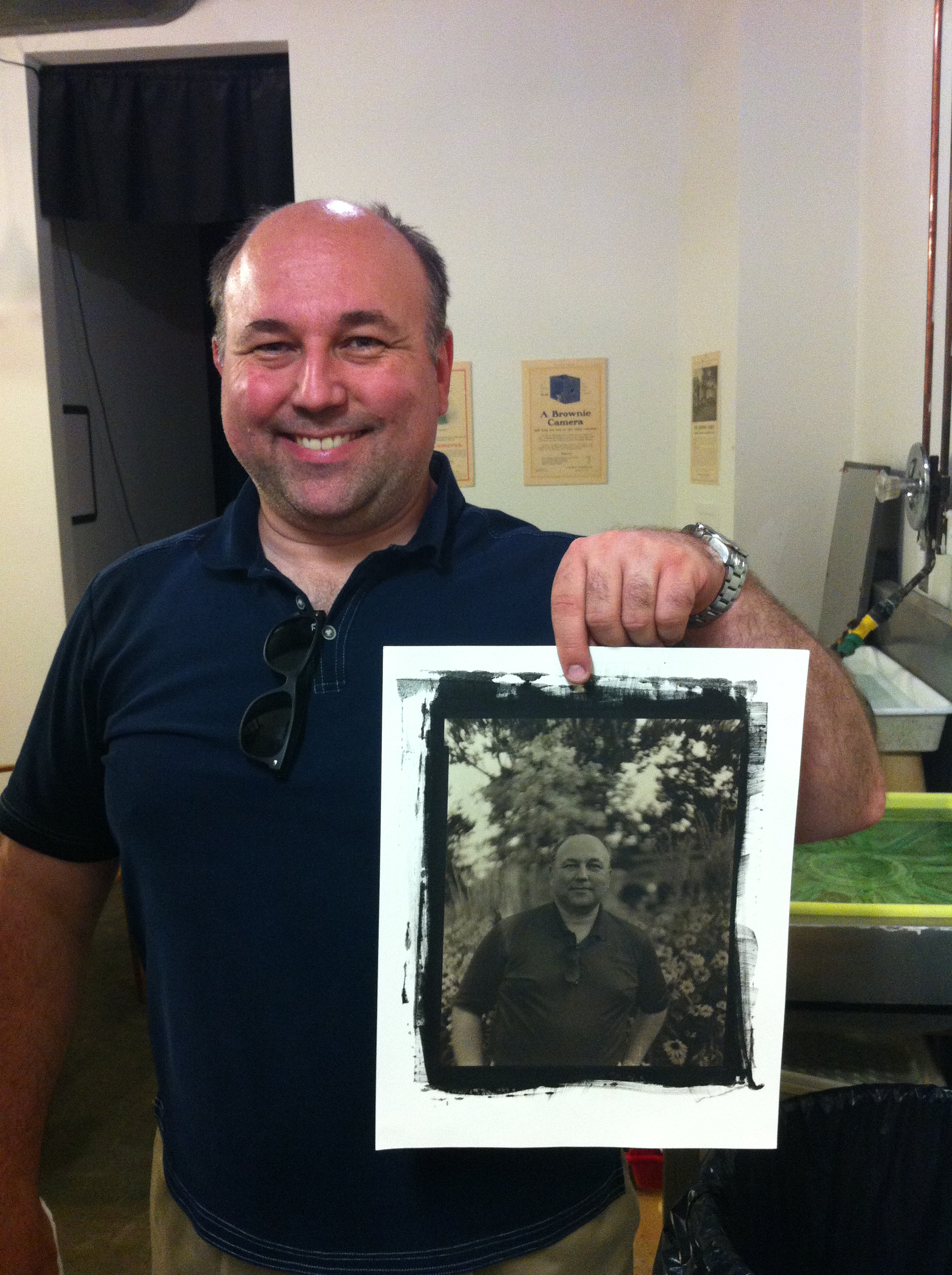
Me With Portrait
Me With Portrait

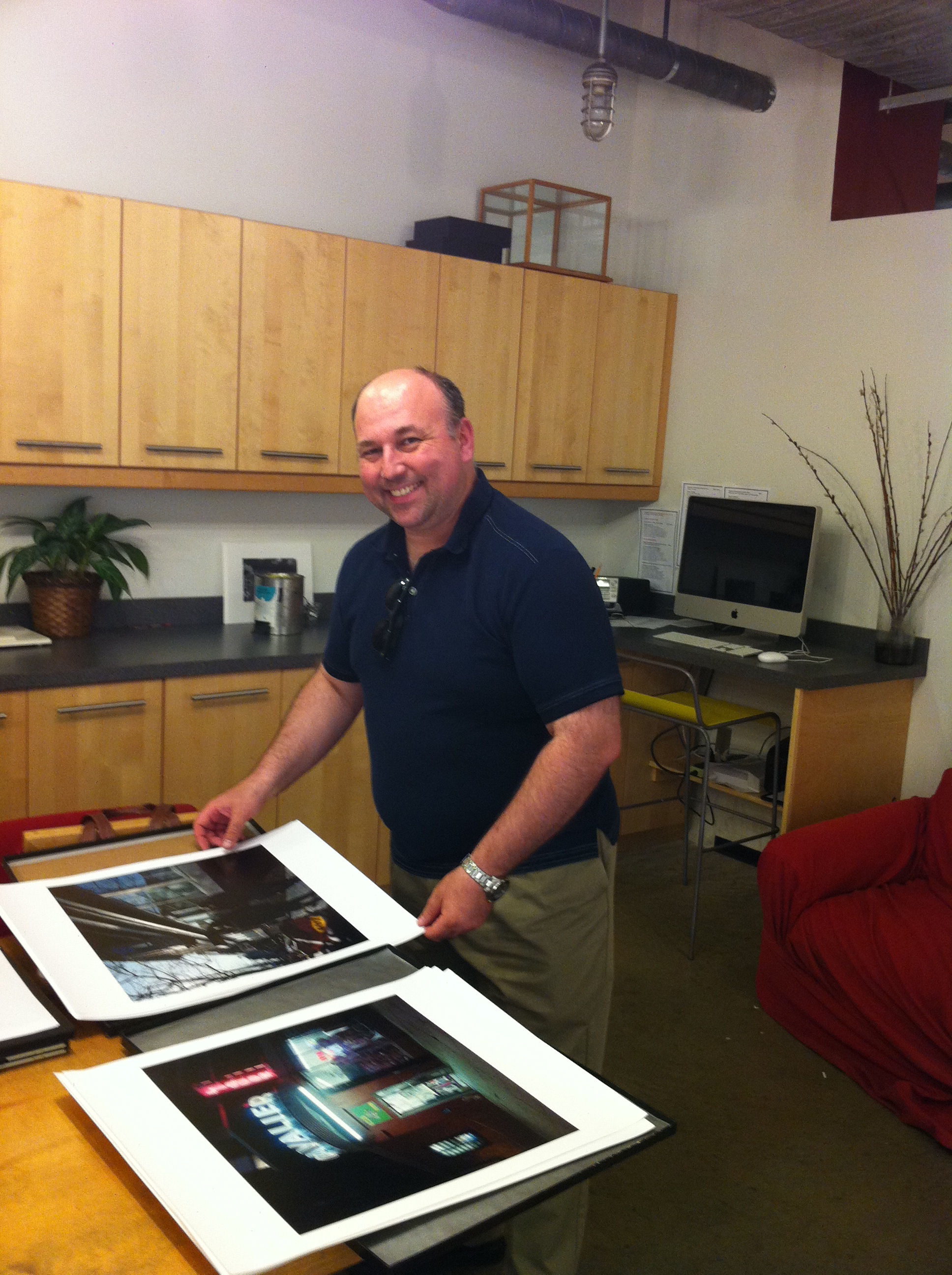
Here’s a shot he took of me holding the portrait he did last week. This could probably use just a little more contrast, but not bad for his say 5th ever palladium print 🙂

Me Showing my Portfolio for Colors of Night

I brought along my portfolio of the actual prints I’m putting in the Colors of Night show for him to take a peek at. Here I am showing the prints.

2nd Prize, Rangefinder Magazine B&W/ Alternative Process contest!

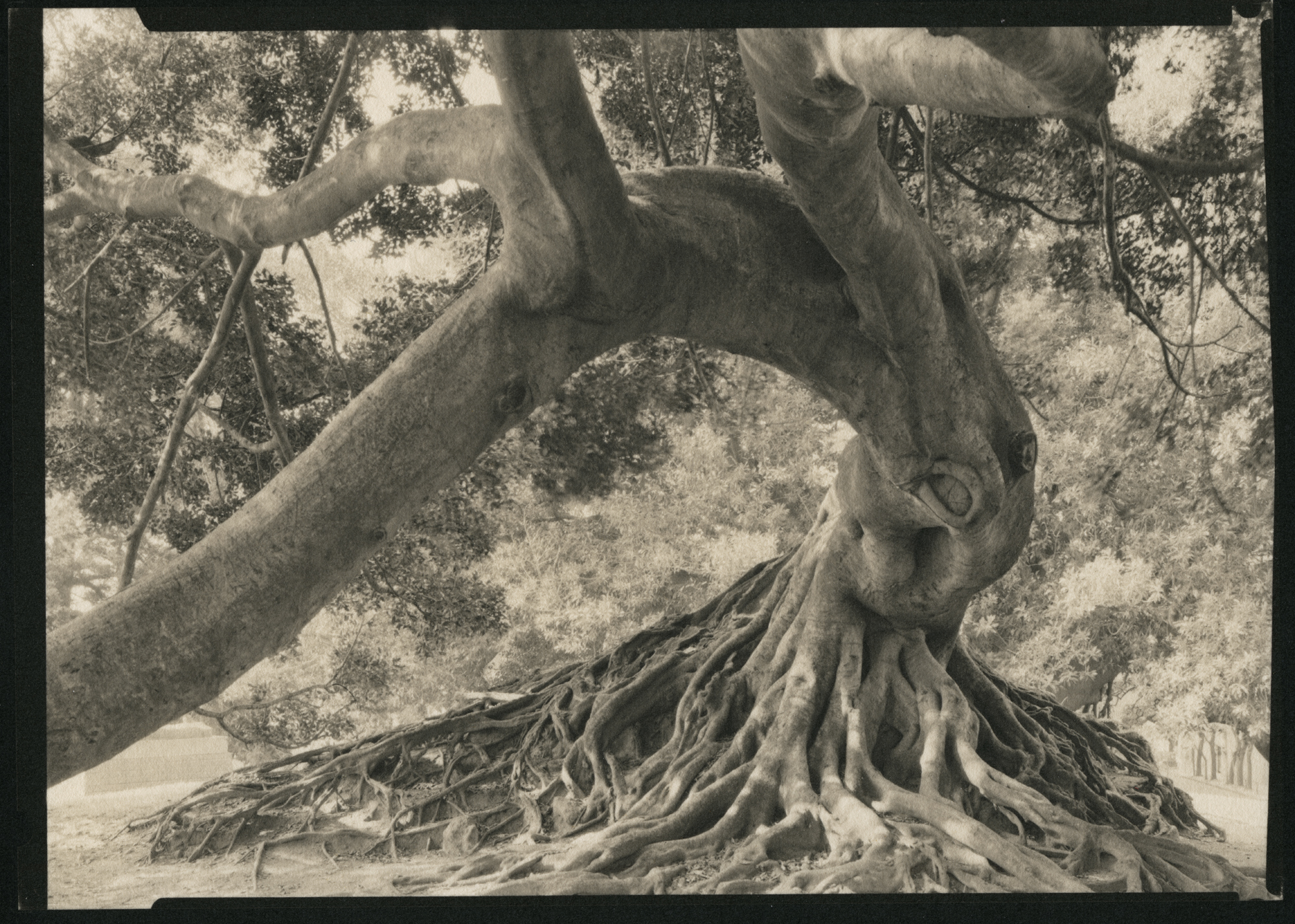
Well, the results were announced today, and my Ficus, Recoleta was awarded 2nd Prize in the contest overall. You can see the results here – April 2013 Issue, Rangefinder Magazine.

FicusRecoletaPD57

Selected Finalist in the Rangefinder Alternative/B&W Competition – Ficus, Recoleta

FicusRecoletaPD57

The judging is done, and my Ficus, Recoleta has been selected as one of the finalists in the Rangefinder Alernative Process competition. I’ll find out how well it does when the April issue of Rangefinder is published. The print is still available if anyone is interested.

My entry in the Rangefinder Alternative/B&W Competition – Ficus, Recoleta

FicusRecoletaPD57

Please vote for my entry in the Rangefinder Alternative/B&W Competition People’s Choice awards! This is my (in)famous Ficus, Recoleta shot that I took in Buenos Aires. The tree is outside Recoleta cemetery in a little park, and the tree roots themselves that you can see are over 6′ (2m) tall, to give you a sense of scale for the tree. The print is a 5×7 palladium print on heavy weight paper. And it is for sale should anyone be interested! The prints are available in an edition of 10, starting at $250. Please click on the image to go to the competition web page to vote! And while you’re there, browse around and see all the other incredible work submitted.

More student work from Advanced Topics in Platinum/Palladium

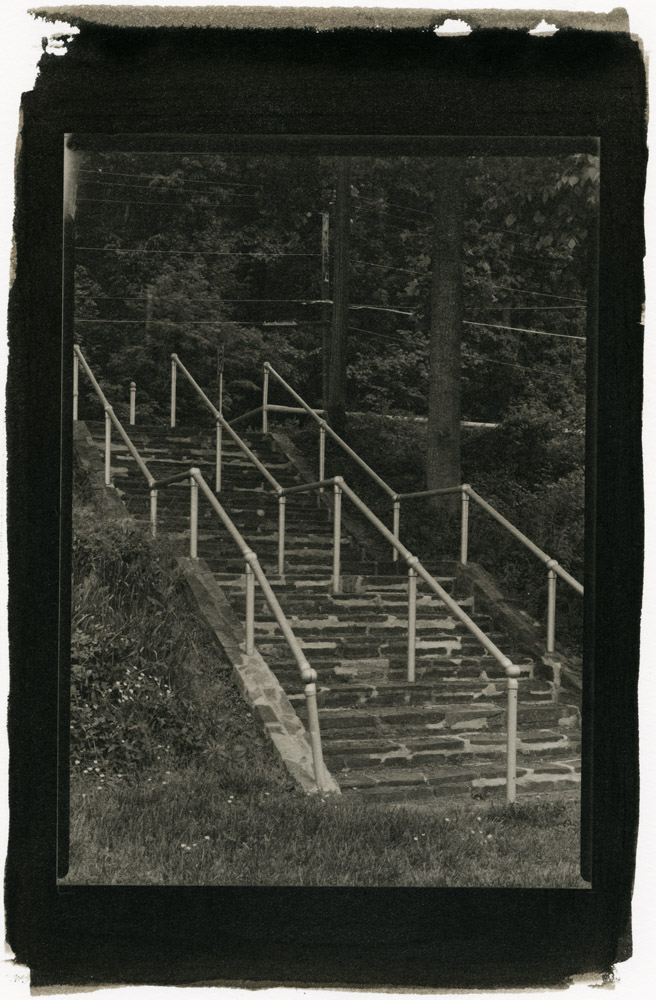
Trolley Stairs, Glen Echo Park

This is a blended platinum/palladium print (60% platinum, 40% palladium) print, on Bergger COT320 paper. This was by a student from my Intro class, but I reprinted it for this session (the student left the negative behind after the Intro class, and I happened to really like the shot anyway). This one was coated using a glass rod as opposed to a brush, to demonstrate the difference in the coating technique, and the final appearance of the print.

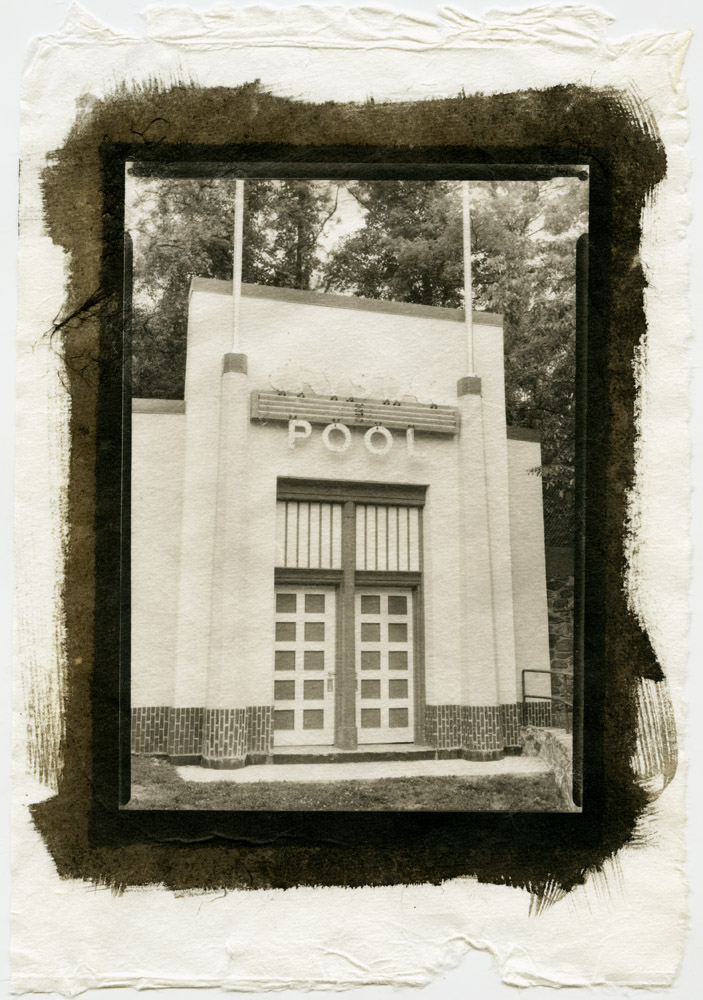
Crystal Pool, by Patrick Brown

This is a palladium print on light Kozo paper, by Patrick Brown, one of my students in Advanced Topics. He was also in my Intro class. It’s so nice to get follow-on students so you can see their progress!

Kozo paper is a Japanese paper made from tree bark, and it is surprisingly strong for as delicate as it is – this is perhaps a 90 lb paper. It does have a tendency to dissolve in aqueous solutions, but if properly masked when developing, the image area can be preserved, even if the edges do get fringed a bit. This is a perfect example. I included the paper margins to show more clearly what the paper texture looks like.

We had some challenges this class session – the original idea was to try out some different paper types, and I had obtained a sampler of several kinds. We started the morning with Stonehenge, which was supposed to be a good paper, but something was dramatically wrong with the batch we got, as we were making 30 minute exposures and still coming up weak and flat. After this is over, I’ll get a little more for myself and try pre-acidifying it to see if that helps, but no mention of acidification was made in the sample kit and I couldn’t find any reference to acidifying it online. Fortunately we didn’t waste too much time before figuring out it was the paper at fault and not the chemistry, and life moved on.