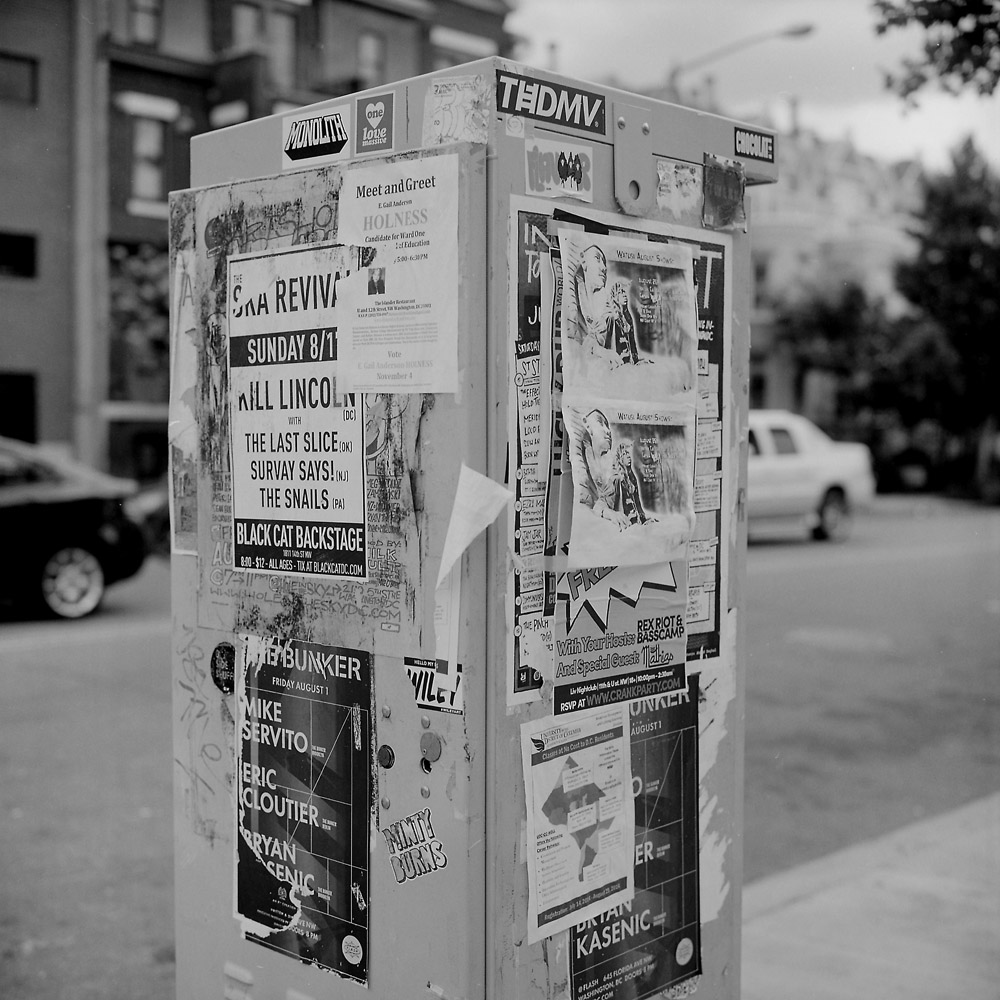
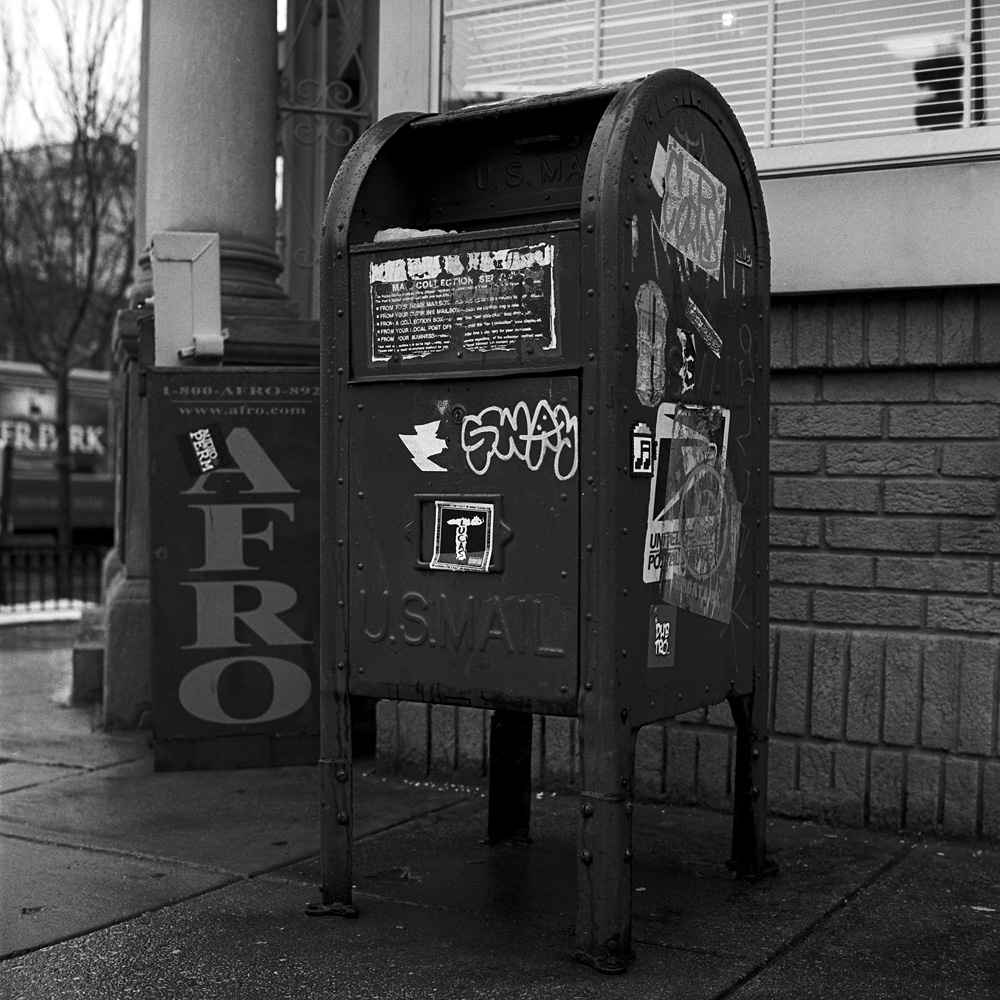
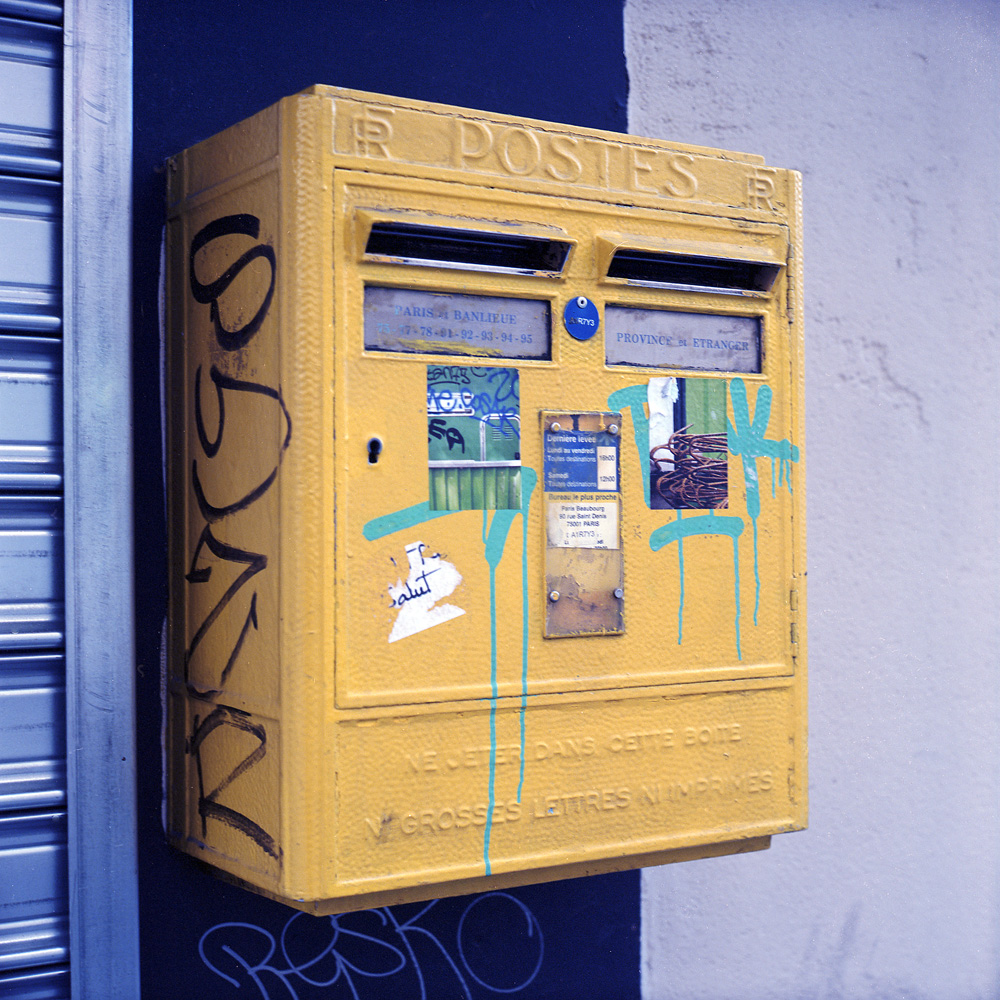
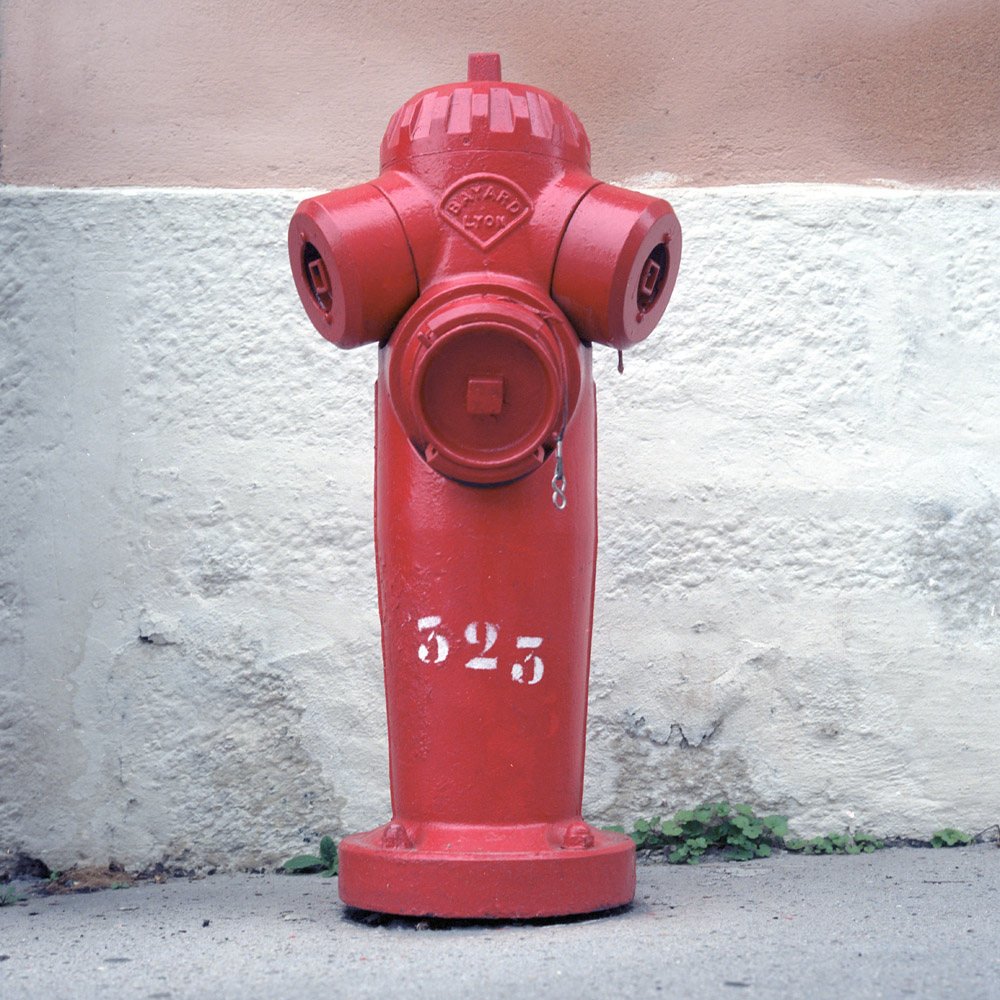
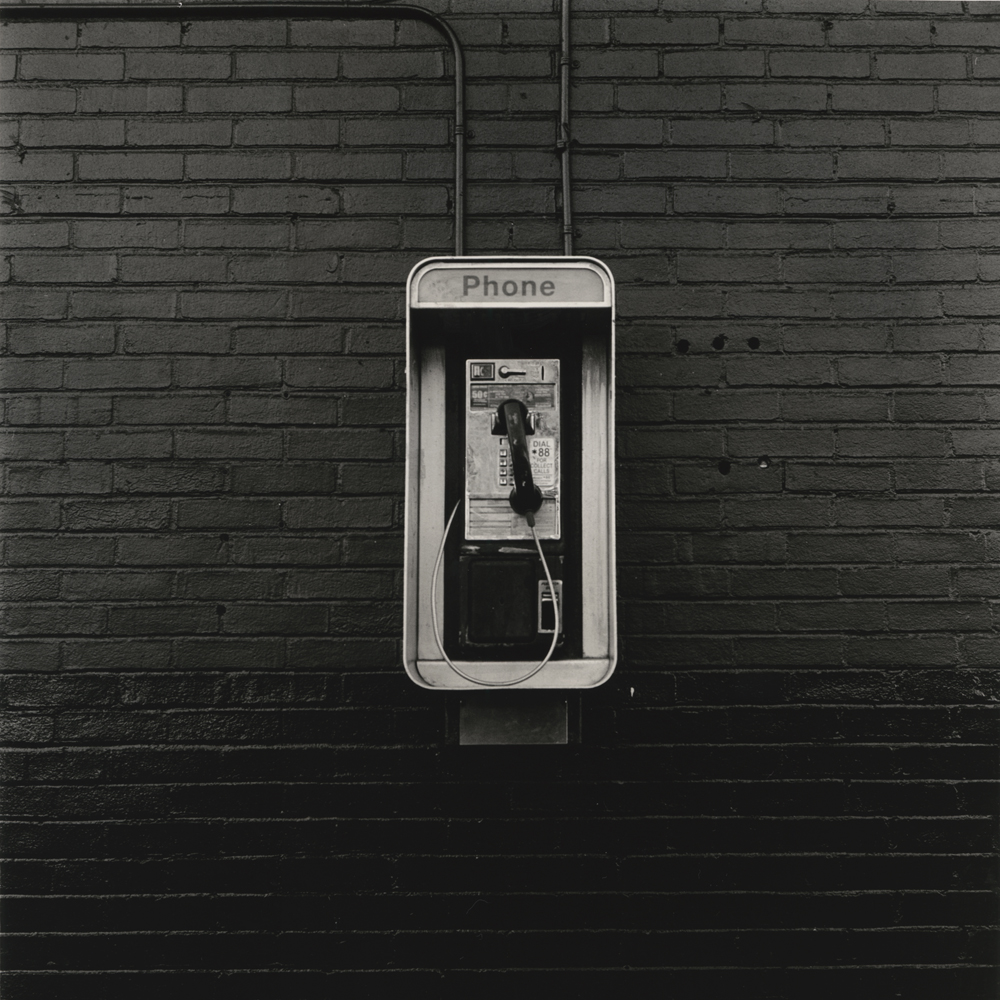
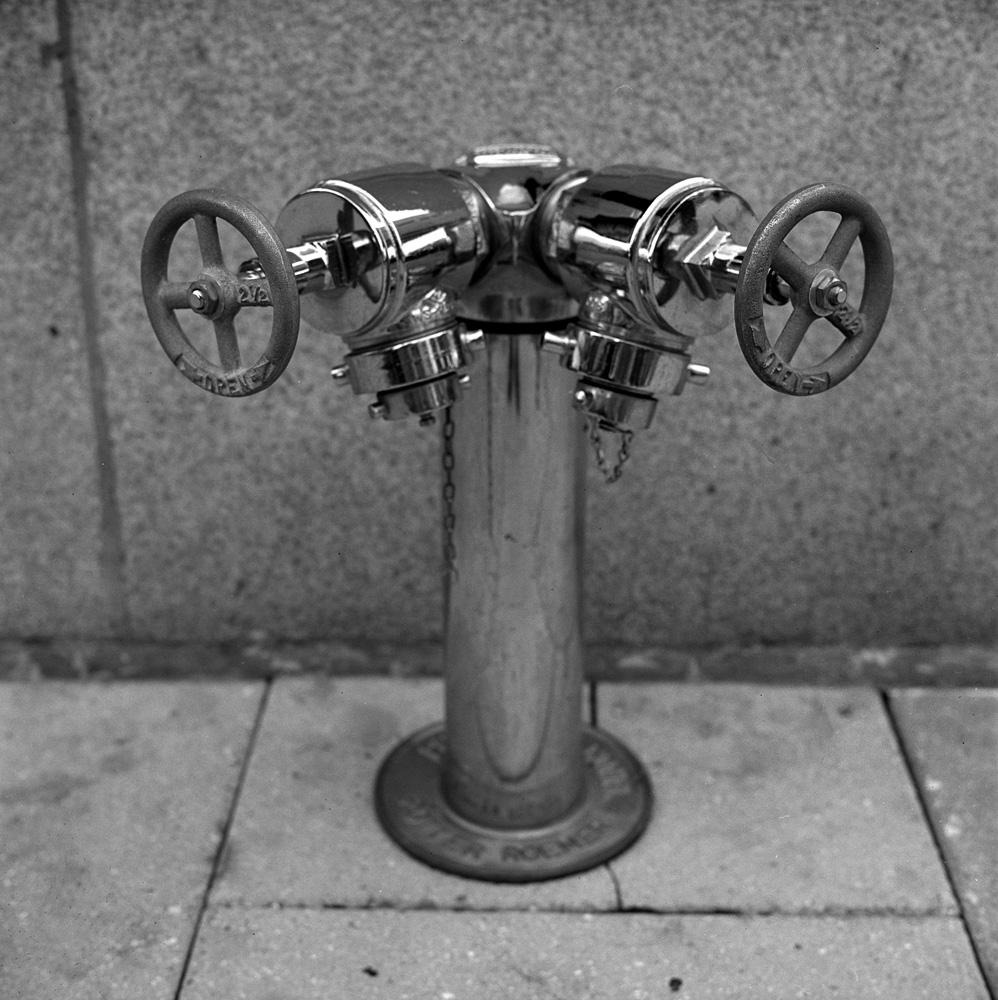
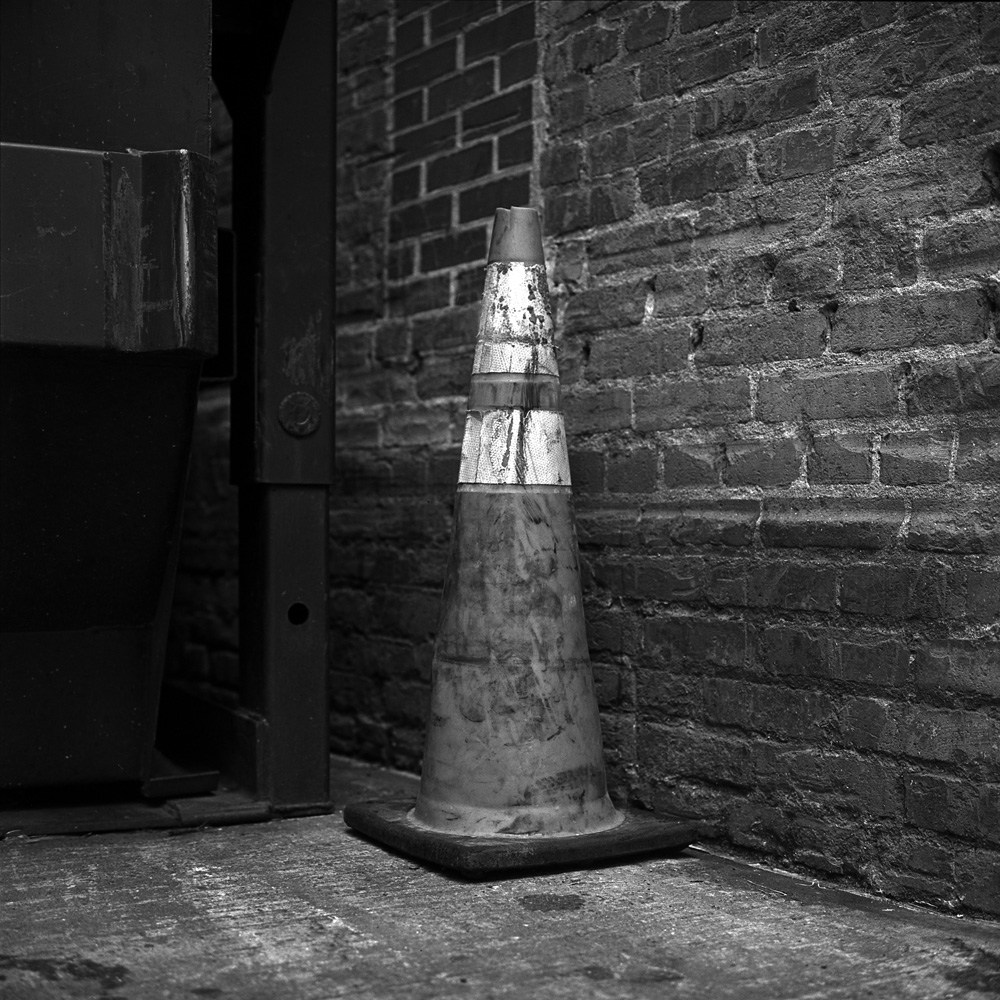
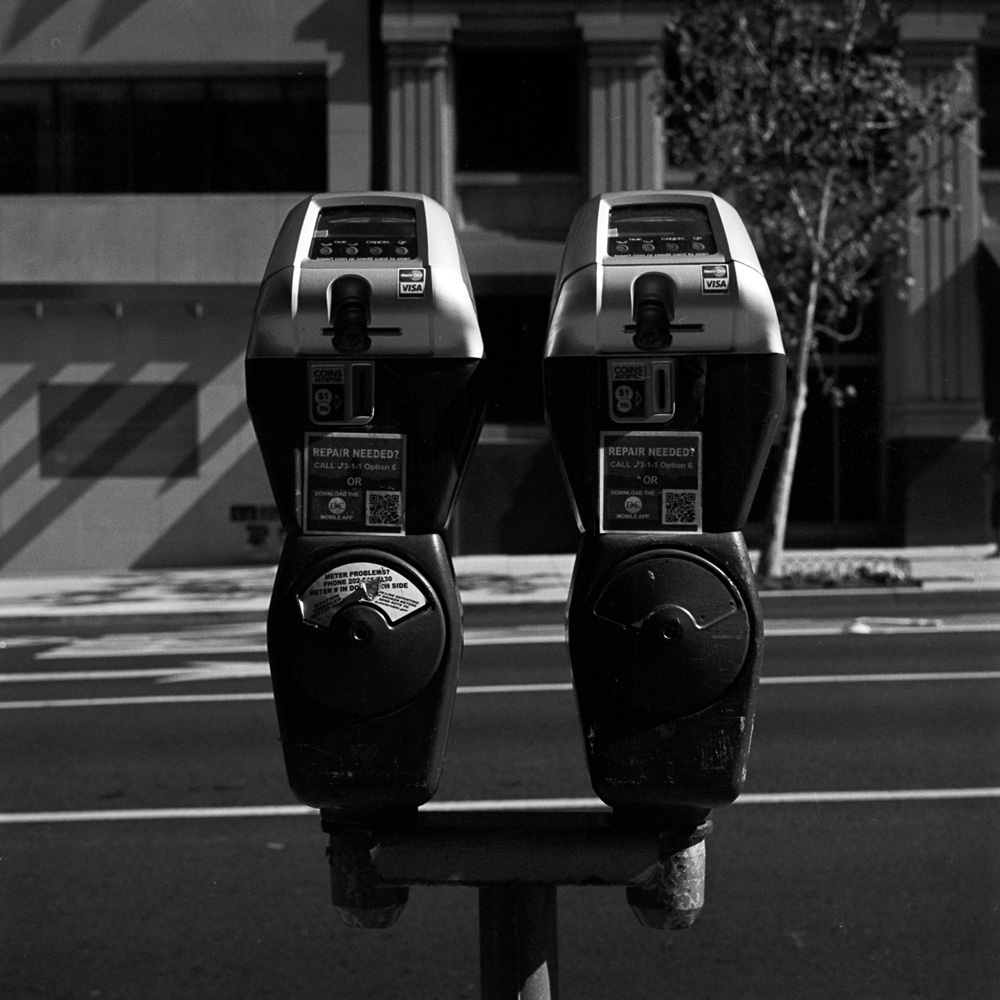
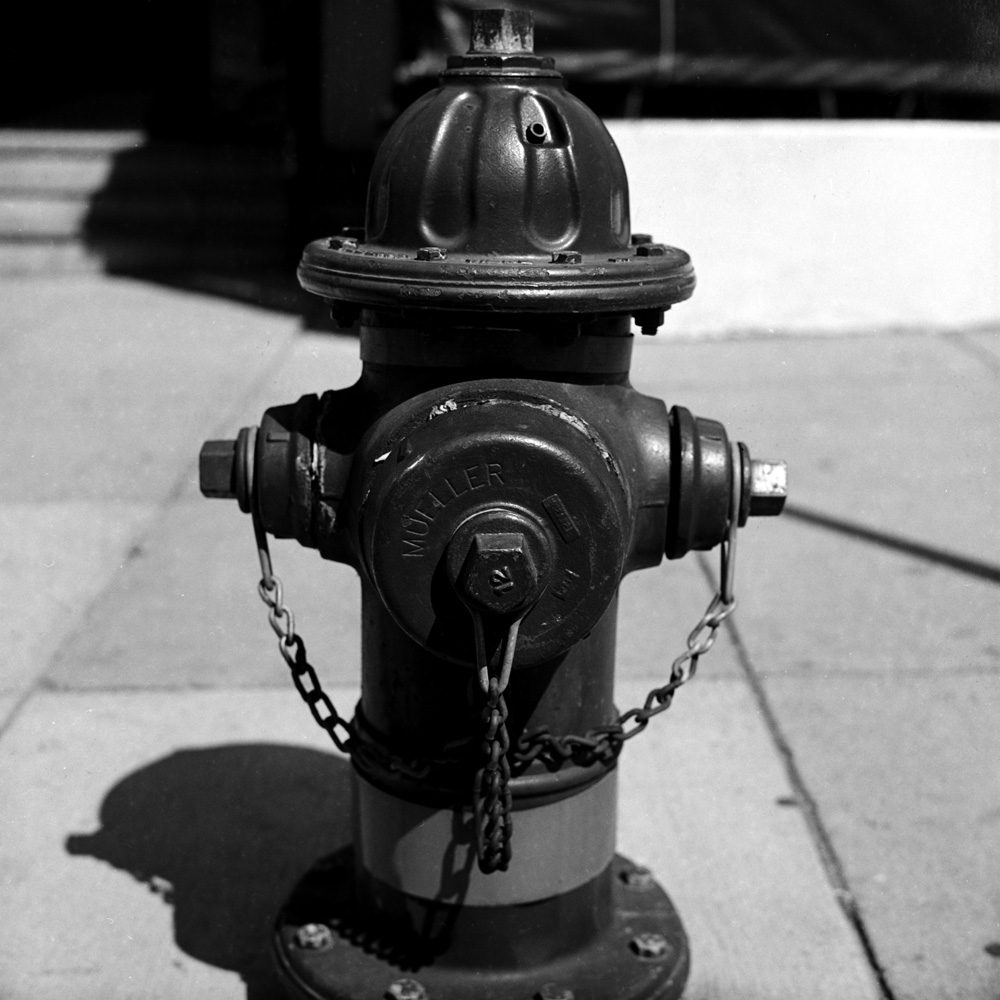
I was out doing some more street shooting in my neighborhood and found a couple more “ordinary objects” that cried out for portraits. I’ve included some of my past ones here to provide some context for the project idea.
Triple Meter, 14th StreetElectrical Box, 13th & U StreetsMailboxYellow Postbox, ParisHydrant, ChalonEveryday Objects – PayphoneSiamese SpigotTraffic ConeTwin Parking MetersMueller Hydrant, K Street, DC
These were shot on a mix of films – the black and white are either Kodak Tri-X or Ilford FP4+, and the color shots were taken with Kodak Ektar 100, all using my Rolleiflex 2.8E.
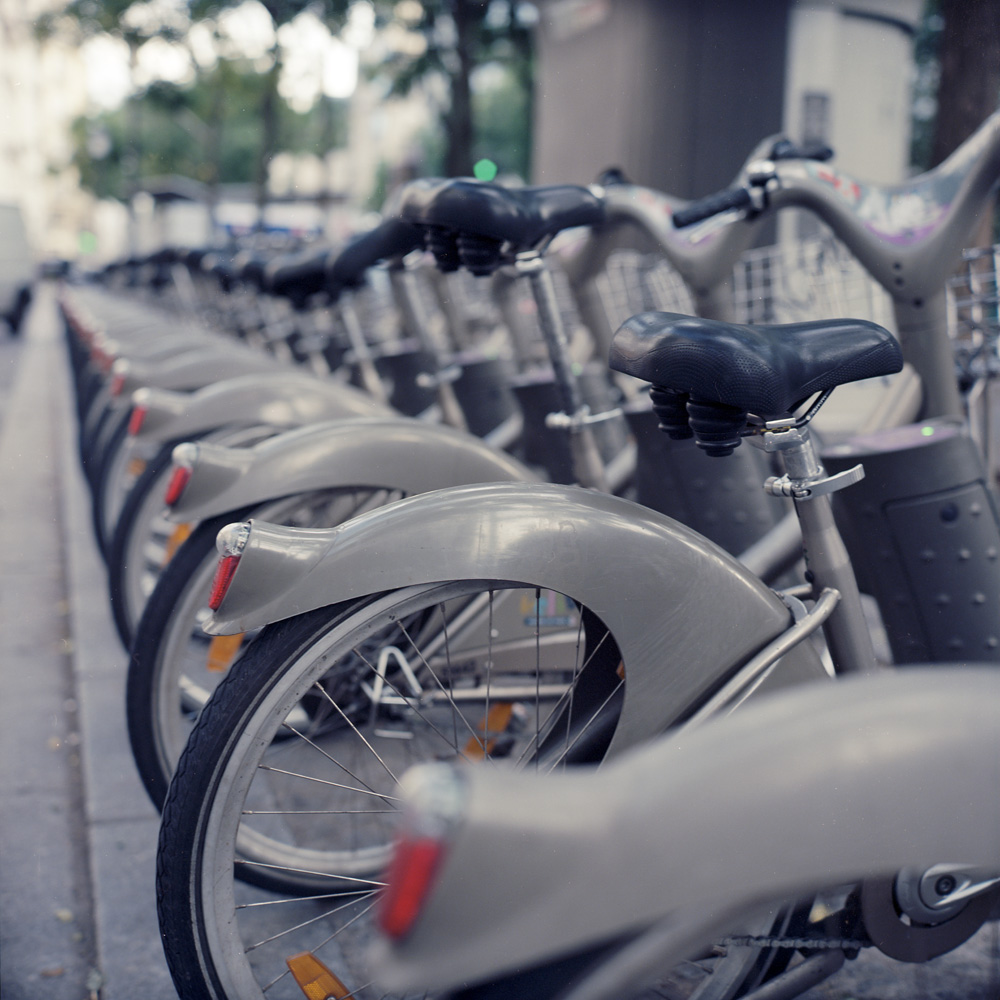
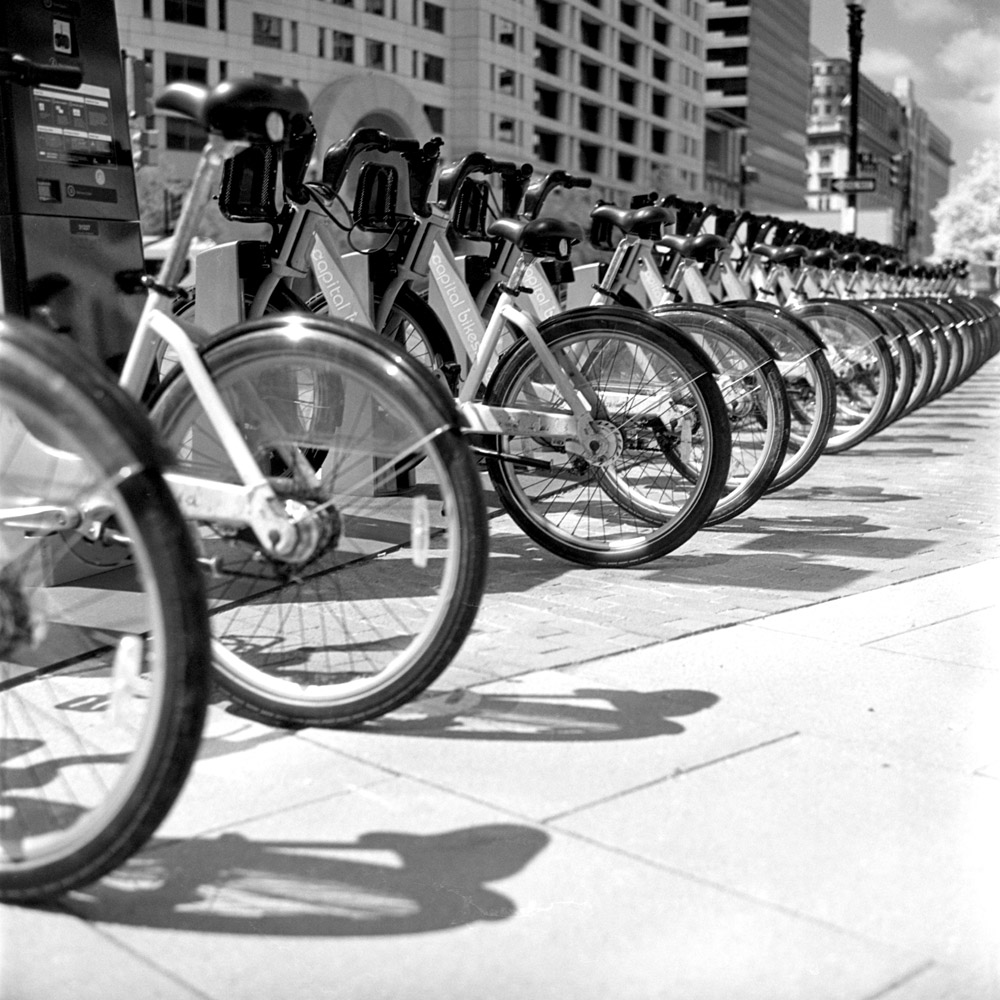
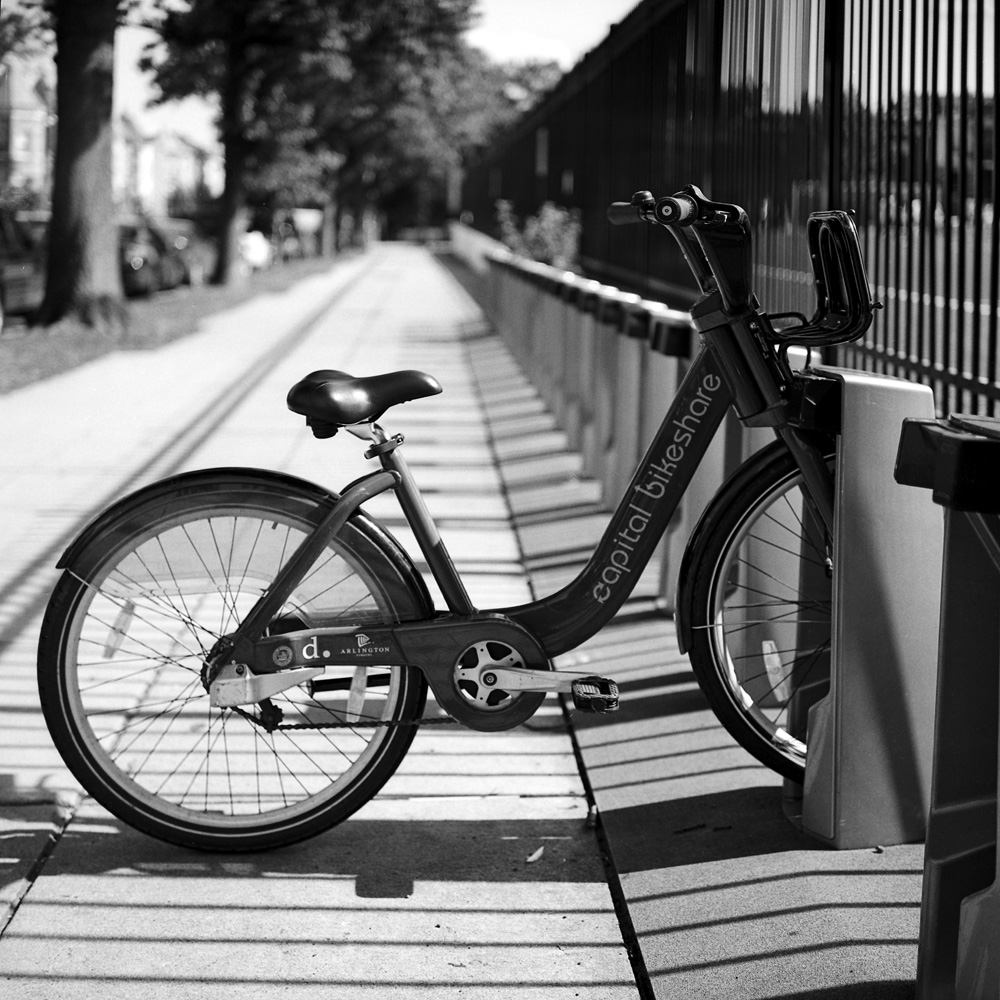
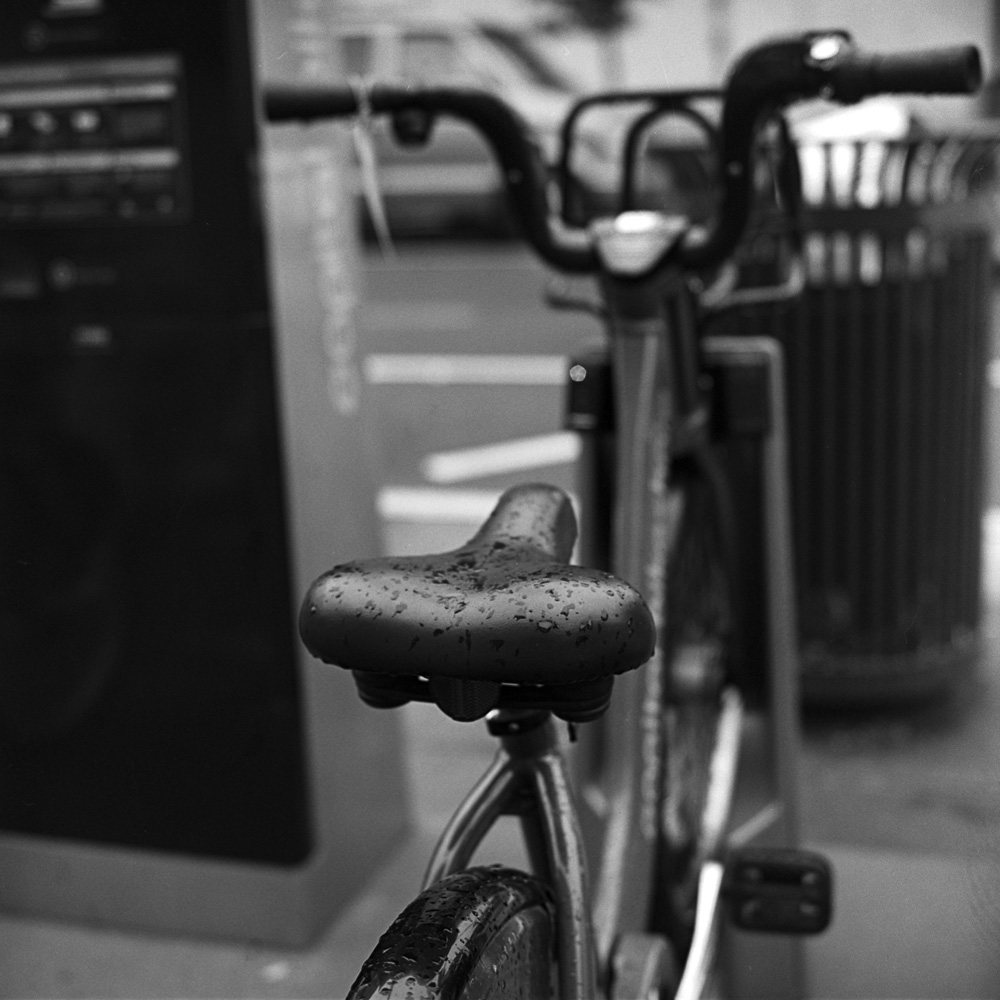
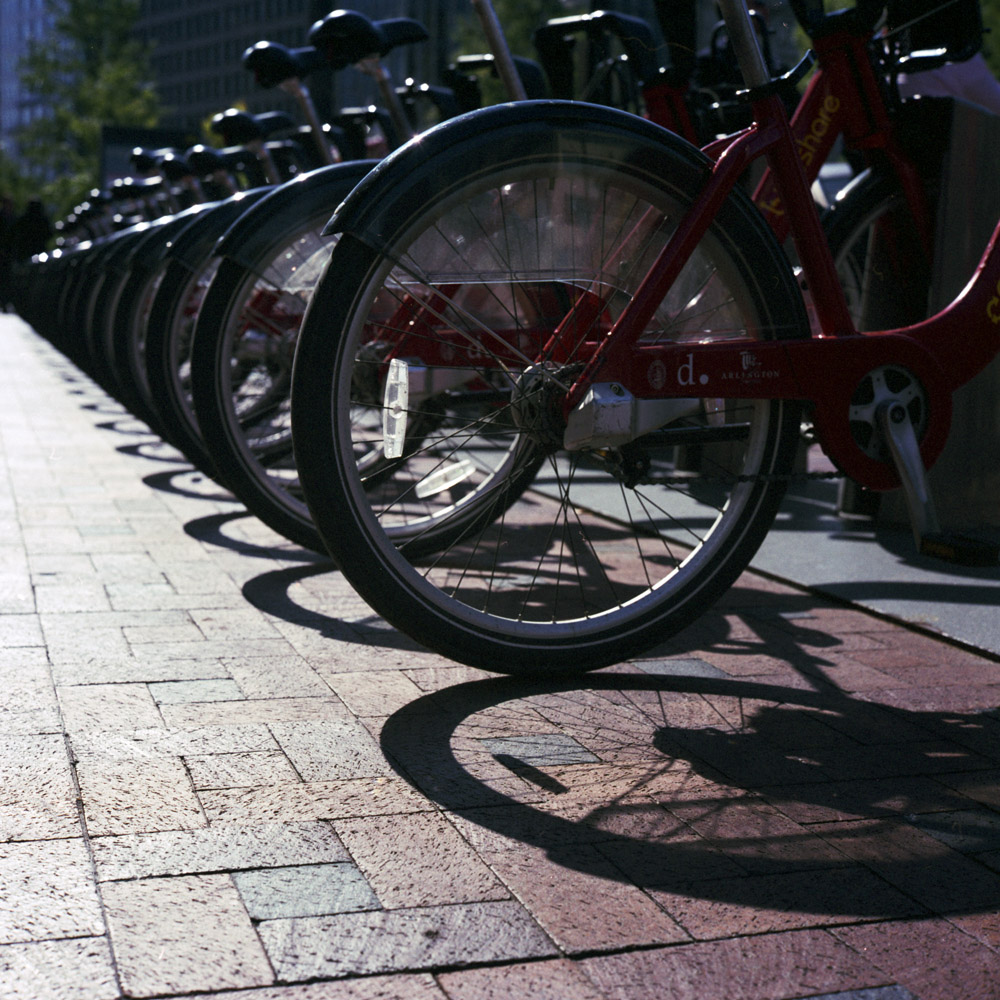
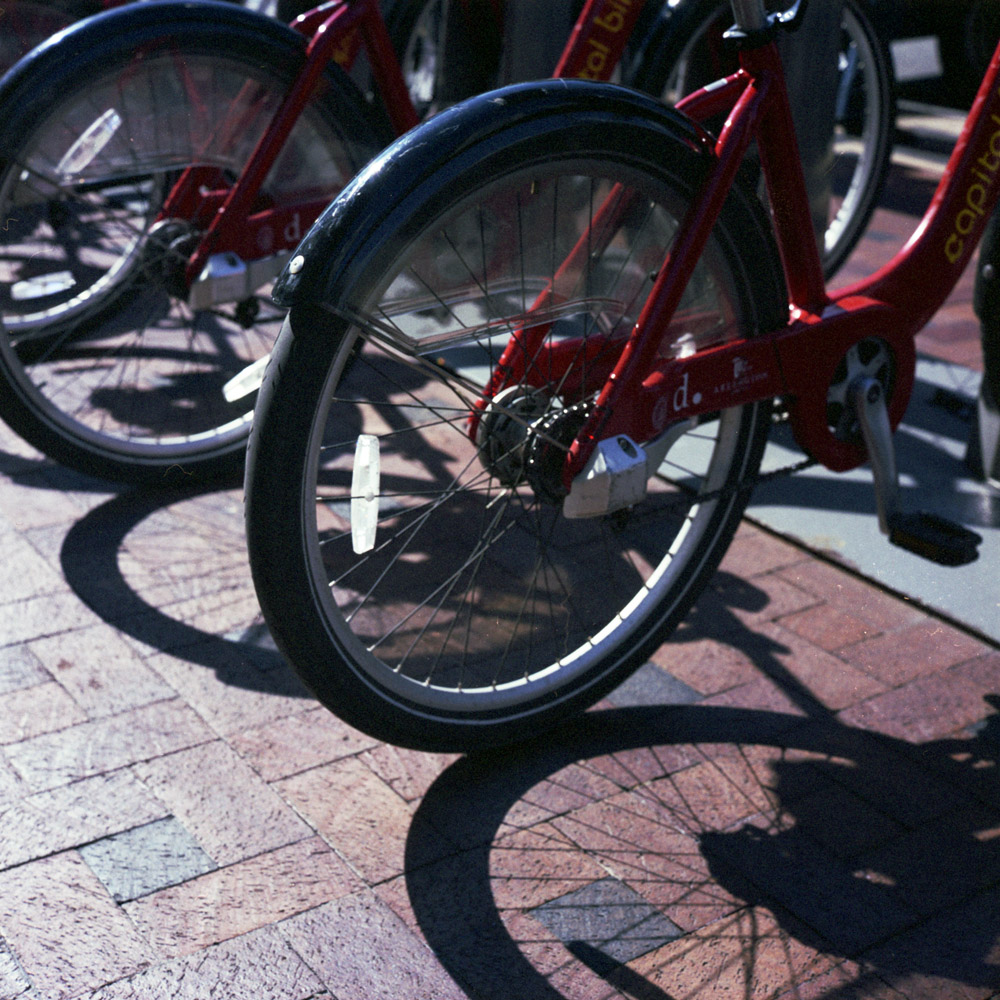
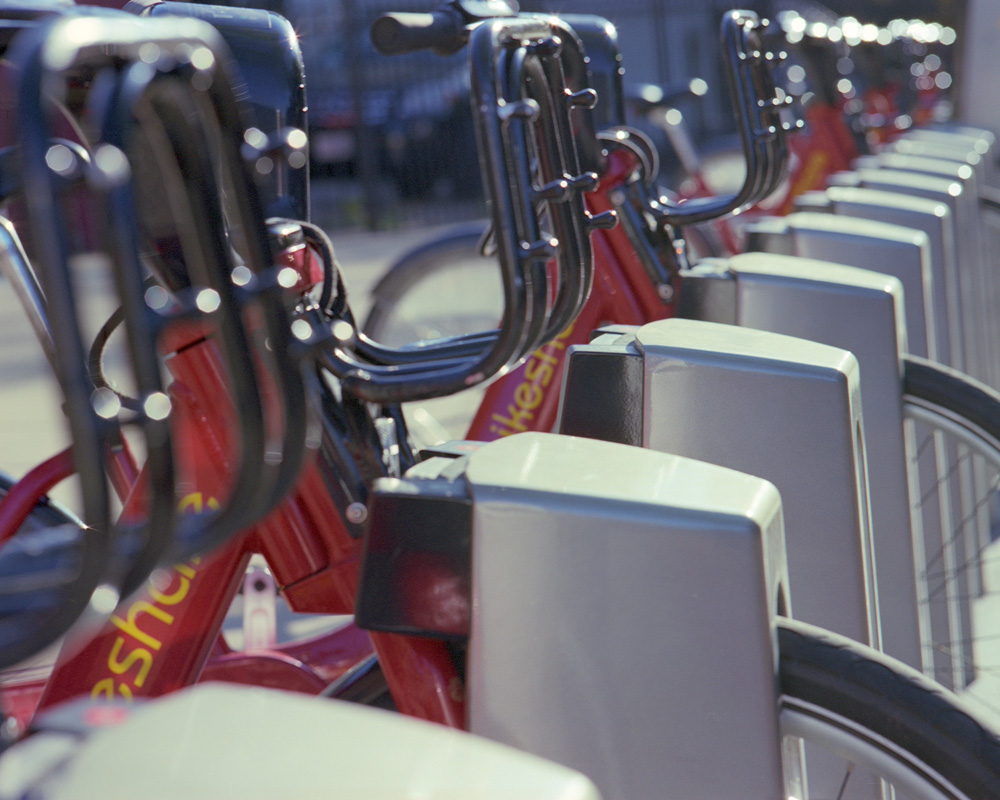
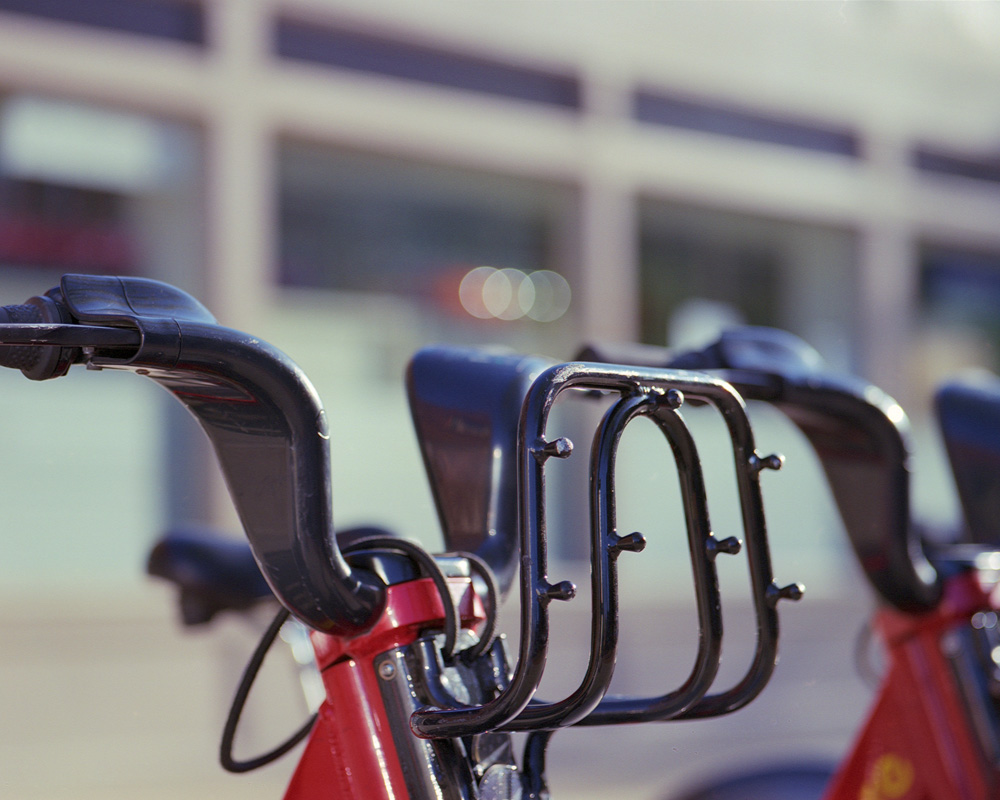
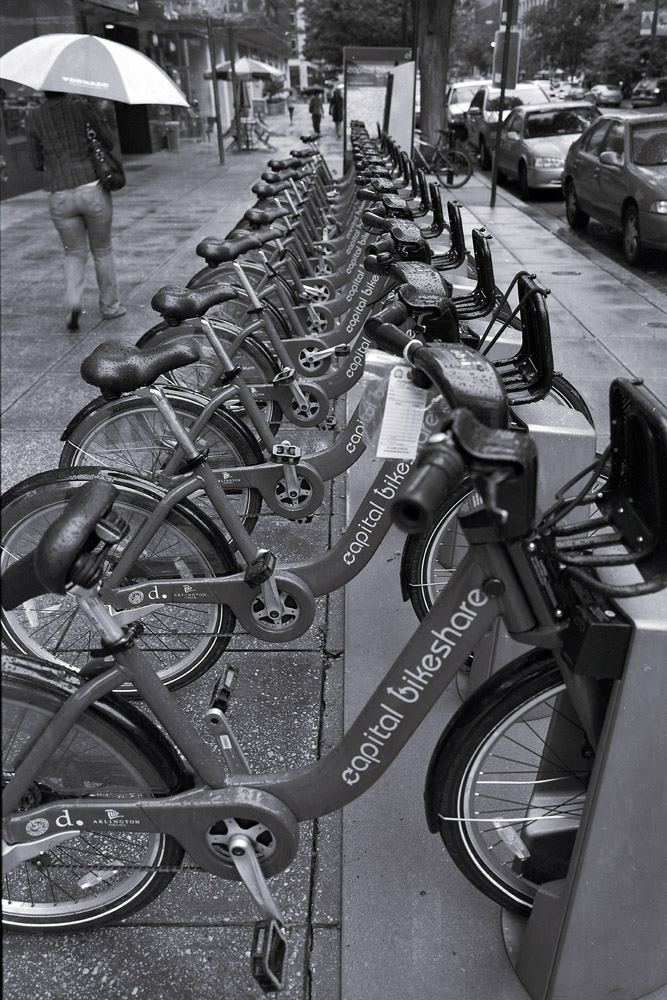
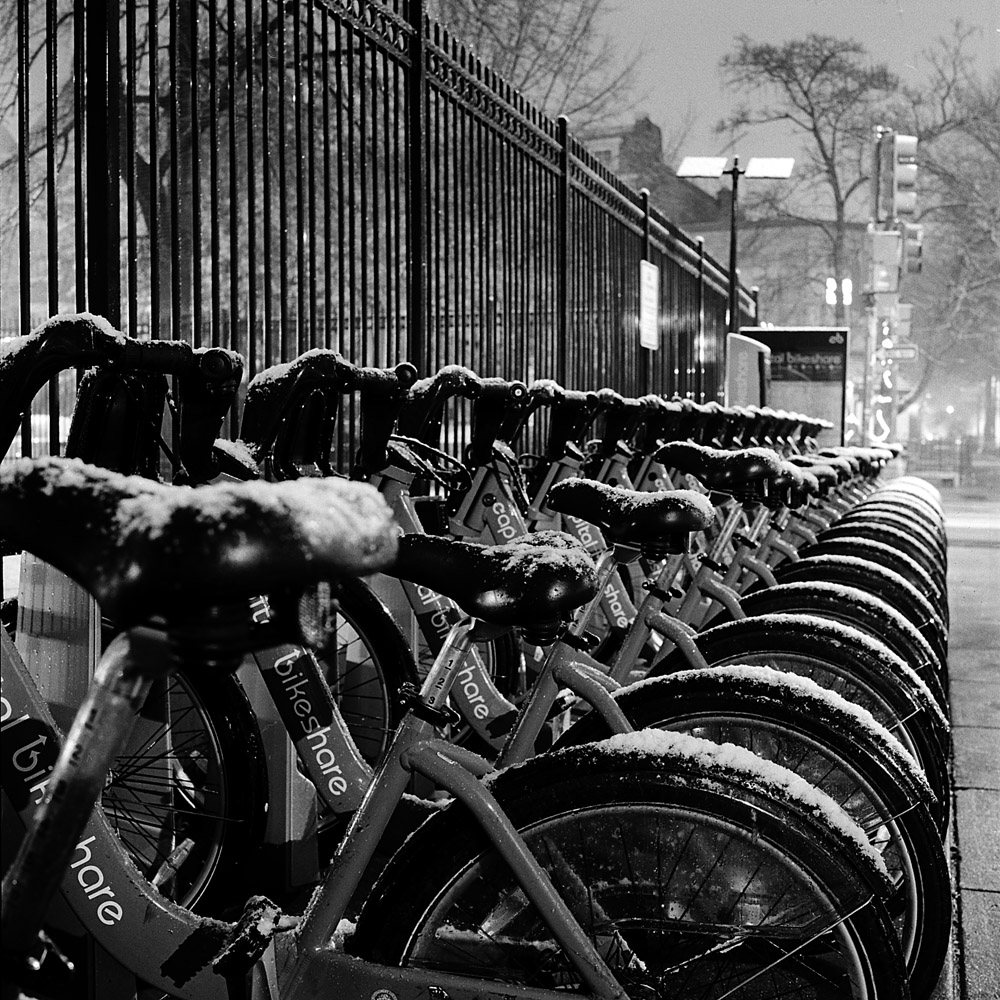
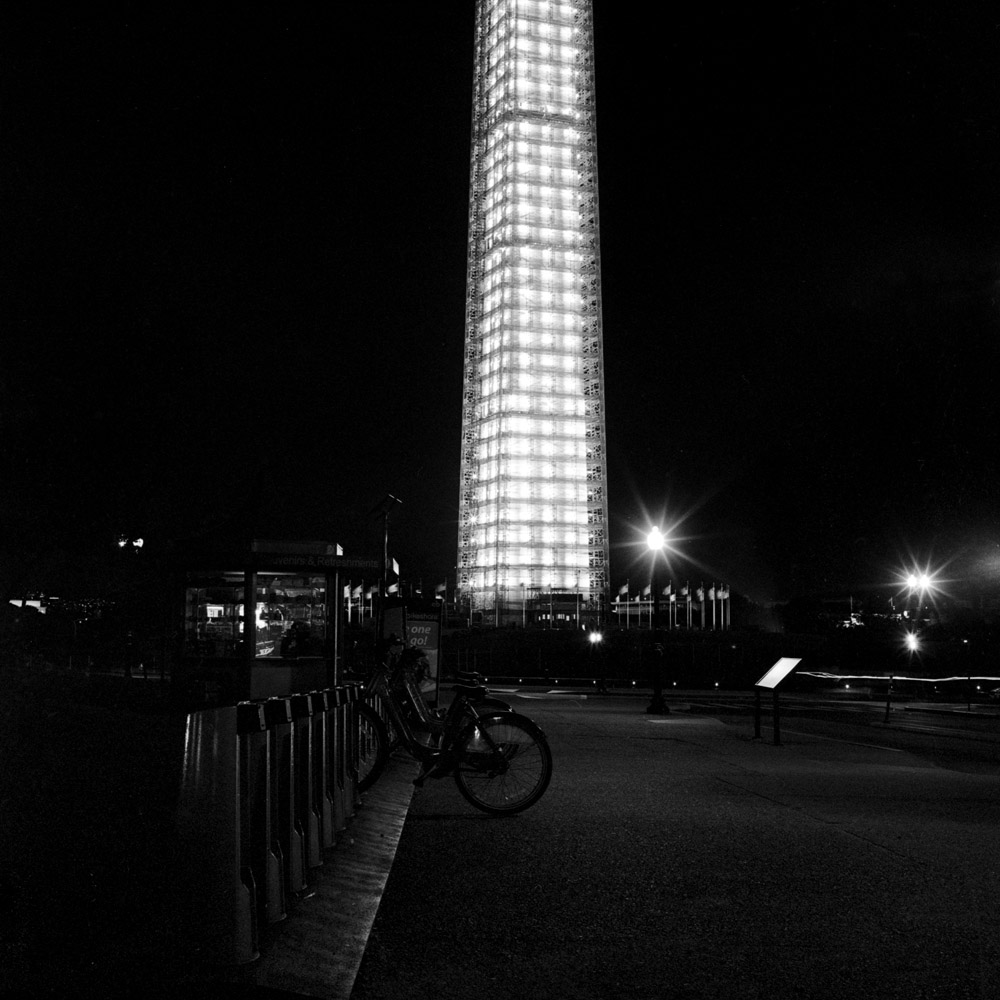
For rather obvious reasons, most of these are of the bikeshare here in Washington DC. I will be shooting more in other cities where I find them – I’m going to try New York the next time I’m up there, as the CitiBikes are everywhere in Manhattan. I do have token representation from Paris, though. I shot these with a range of cameras, from my Rollei to a loaner Fuji GSW 690 II, to my RB-67. Each has their merits and the different formats I think actually work together to convey the varied moods and perspectives of the bikeshare experience.
Ve’Lib BikeshareCapital Bikeshare – Konica InfraredBike Share Rack, 11th StreetWet Bike SeatBikeShare #2BikeShare #1Capitol Bikeshare, Rhode Island AvenueCapitol Bikeshare, 7-Eleven WindowsBikeshare Downtown, in the RainCapital Bikeshare, SnowstormBikeshare Kiosk, Washington Monument, NIght
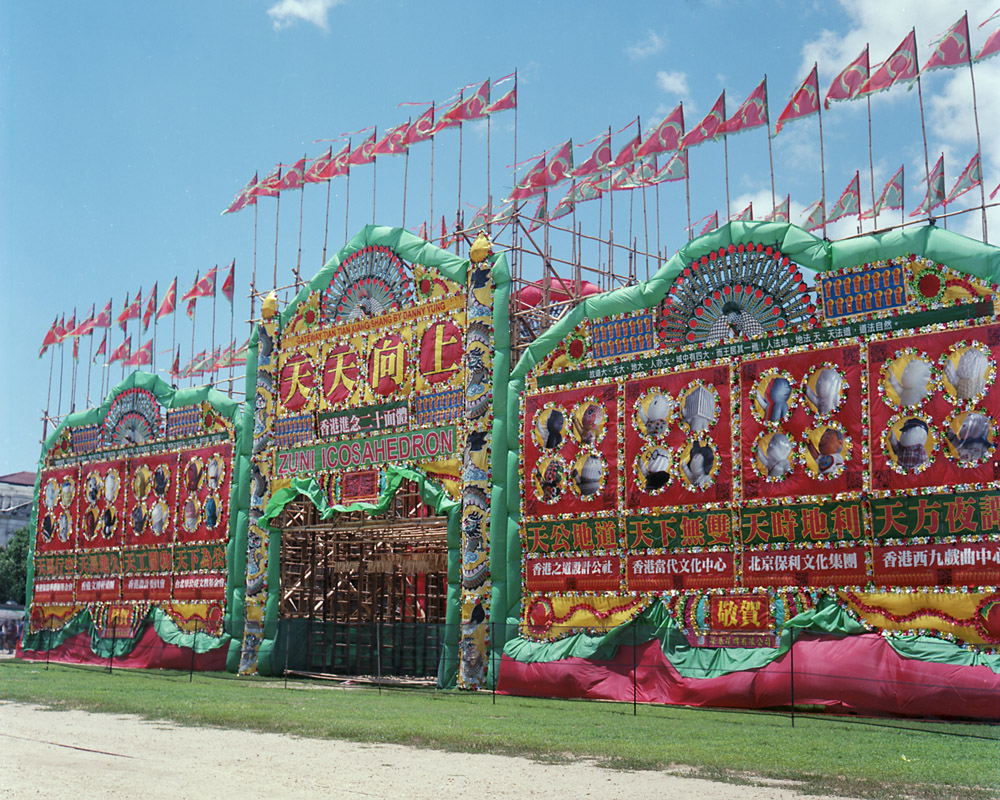
Every year at the end of June/beginning of July the Smithsonian Institute puts on the Folklife Festival down on the National Mall. They bring in craftspeople from various cultures around the globe to demonstrate ways of life in those cultures, from farming and fishing to music and dance. This year China and Kenya were the countries represented. I went down on the 4th of July this year to take a look and see what was on display.
You could see this pavilion on the mall from 14th Street every day driving by. I wondered what it was all about and had to stop and see it close up. The building is built like a traditional Chinese city gate, but made of a bamboo frame and covered in paper. I never did see what the Zuni Icosahedron thing on the front of the gate meant.
Zuni Icosahedron Chinese Pavilion
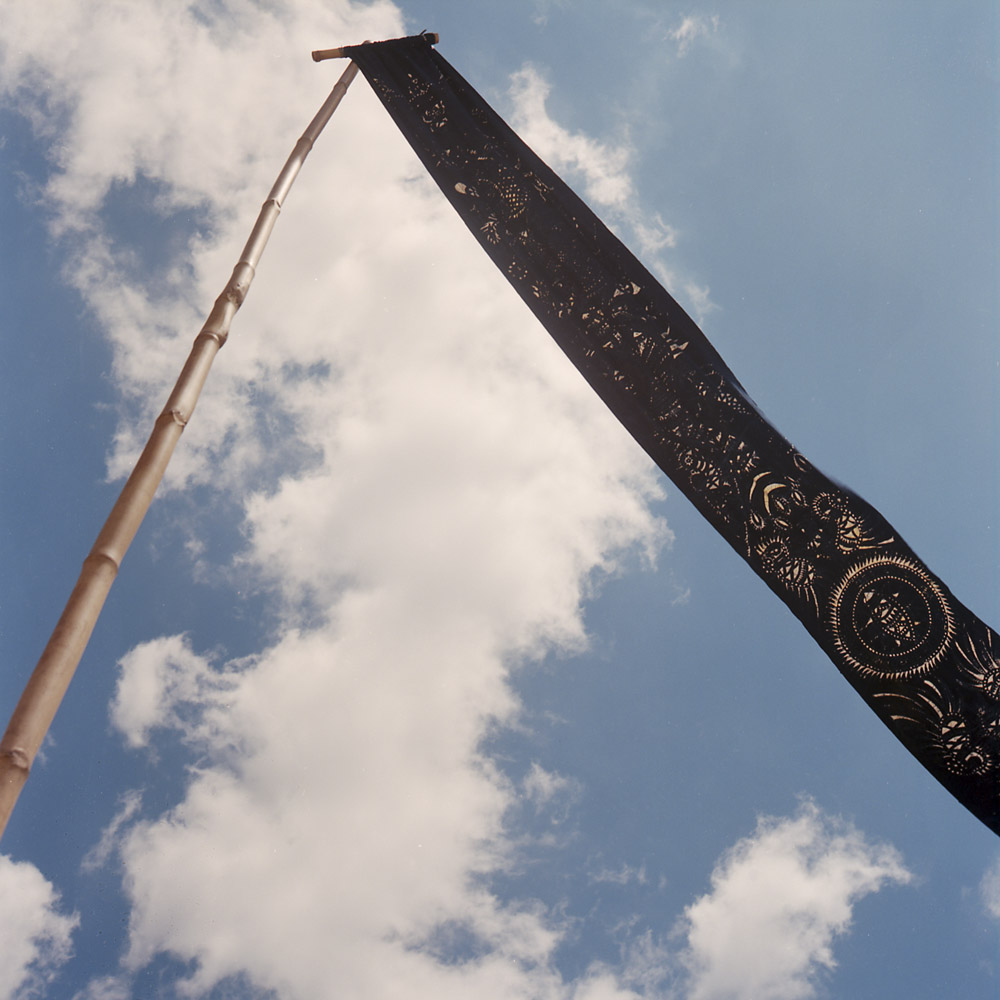
Sometimes it’s just the simple things that attract your attention. This banner flapping in the wind made such a bold graphic statement with its geometry contrasting with the organic cloud forms.
Chinese Banner, Folklife Festival
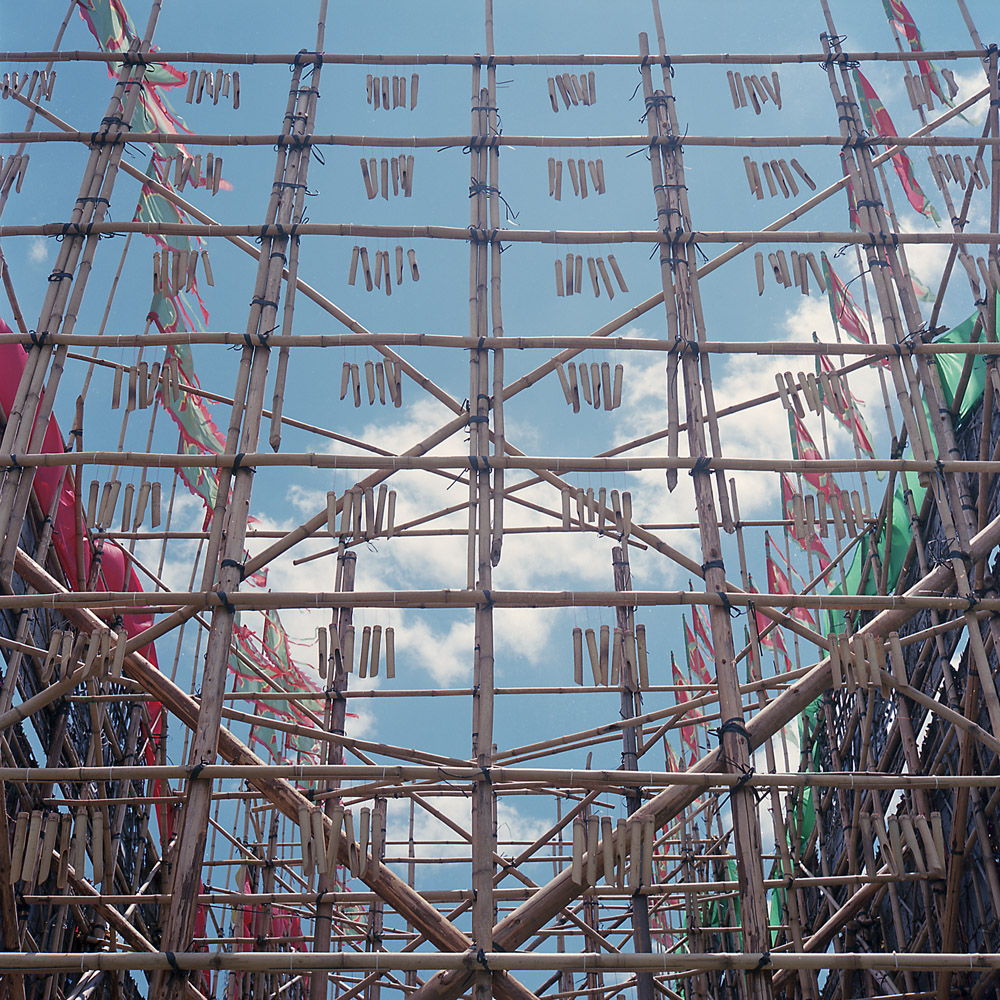
Here are the bamboo wind chimes that filled the structure of the paper gate. One thing that amazed me was how fast they were able to disassemble the gate structure – it was literally up one day, gone the next. You can take that as a commentary on the ephemeral nature of existence if you like.
Bamboo Wind Chimes, China Pavilion
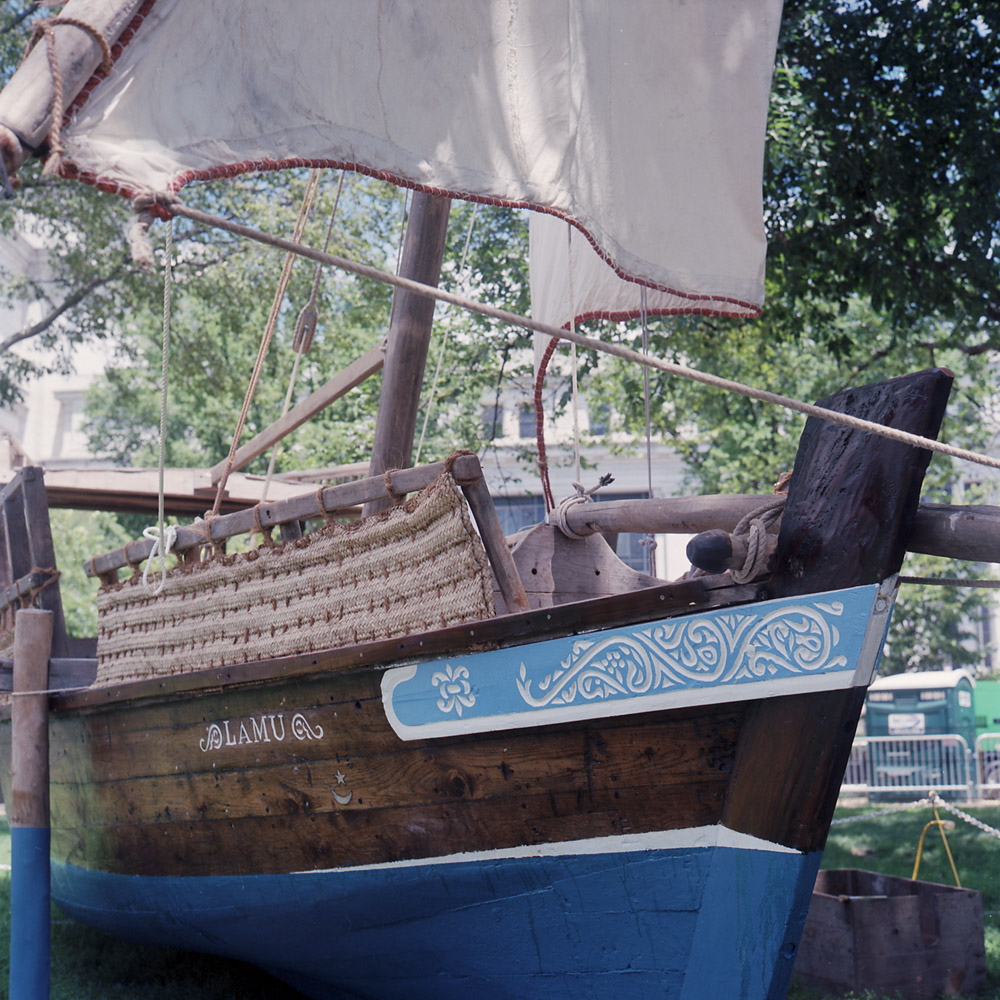
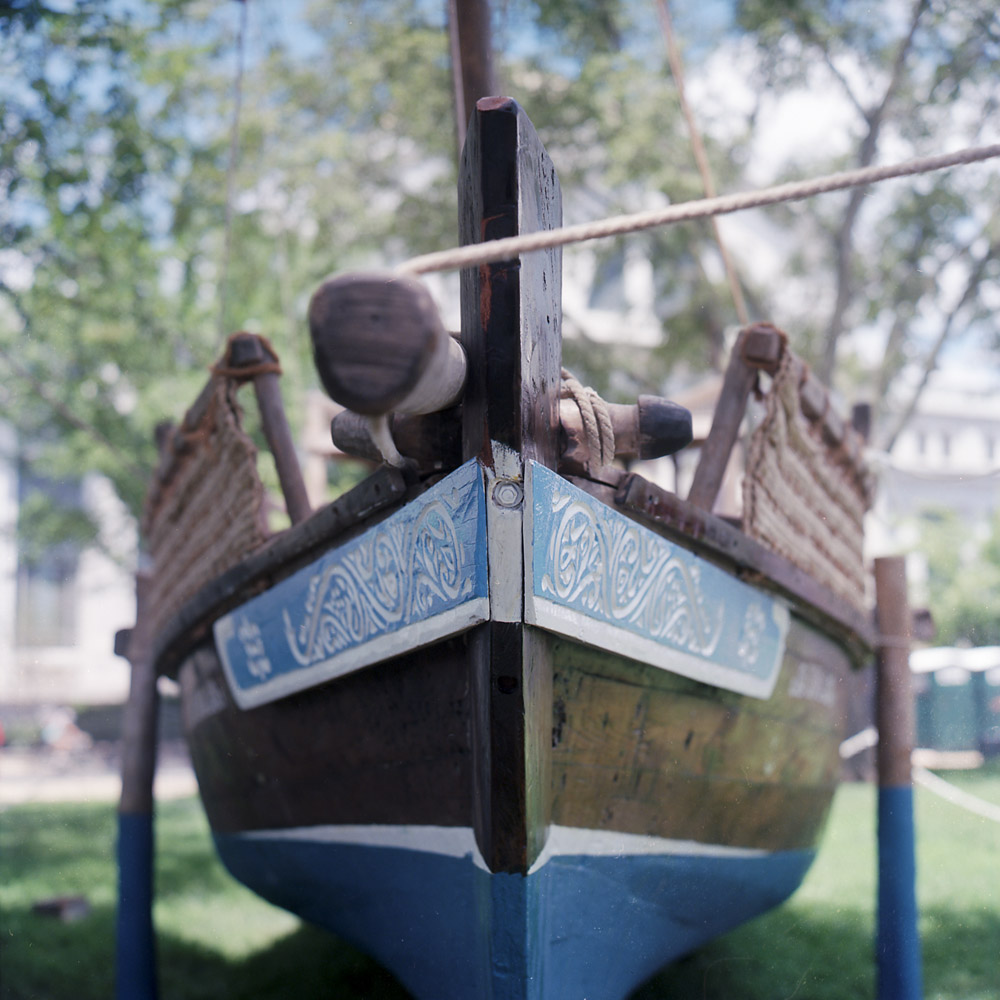
In the Kenyan area of the festival, they had this traditional fishing boat on display, and Kenyan craftsmen were working on rebuilding it. Not visible here but in the stern were areas that had obviously seen significant wear and tear.
Kenyan Boat, Folklife Festival, Side ViewKenyan Boat, Folklife Festival
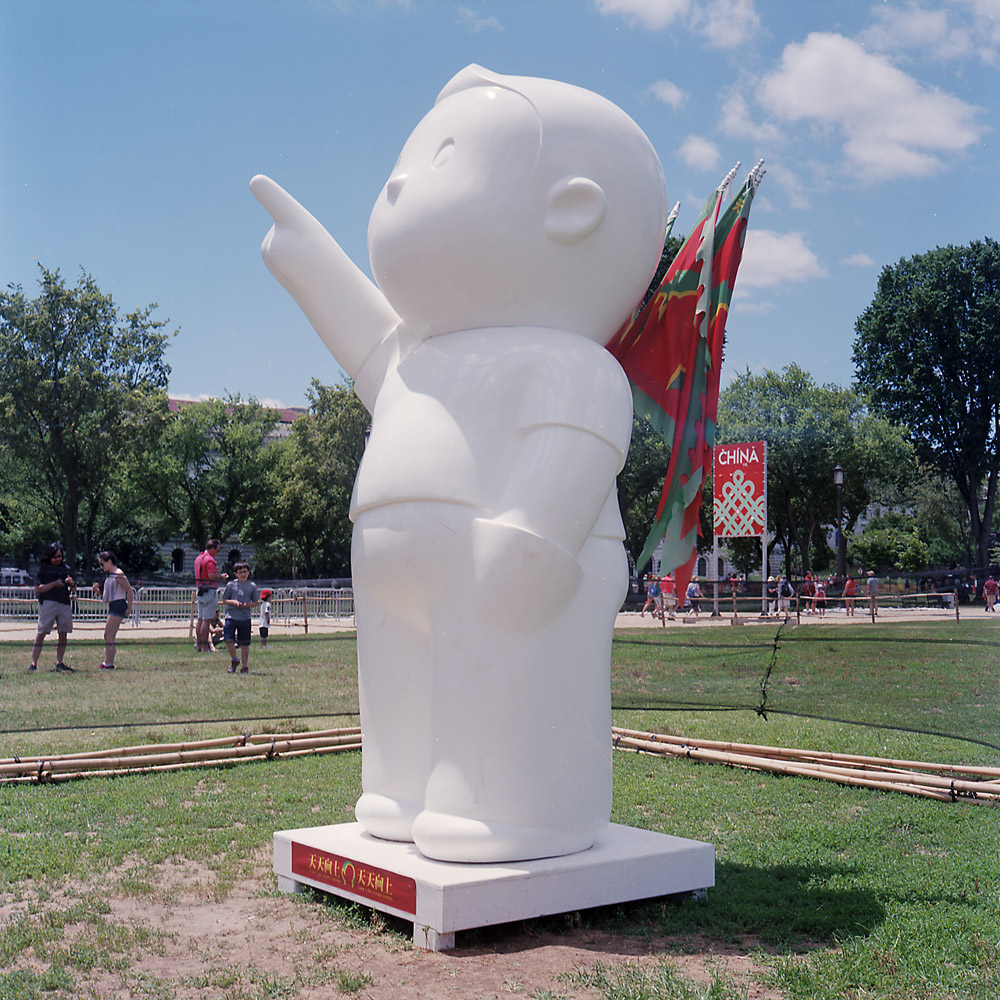
And finally, as part of the Chinese installation, was this figure. I’m calling him Bao’s Big Boy as he looks like a Chinese Bob’s, or perhaps the love child of Bob’s Big Boy and Astroboy if they were to have a relationship. Toss in a dose of Young Pioneer and you’ve nailed it.
A long time ago, I saw this interesting little gadget sitting in the used equipment case at my local camera store. It was a panorama adapter for Rolleiflex cameras that enabled you to shoot up to a 360-degree panorama on a single roll. It has a built-in bubble level (which is absolutely critical). You put the camera on top, then focus and compose as normal. Once you have the focus and exposure set, you don’t change them (this is also critical). Take the first exposure, then push in the little locking lever, rotate the camera to the next increment on the dial, and take the next picture, and so on until you have shot as many frames as you want to shoot. It is critical to maintain focus and exposure as set on the original frame because changing focus will mean that things in one frame will not be in exactly the same proportion as they were in the previous frame,therefore they will not blend seamlessly. Ditto for exposure – if you change the exposure from frame to frame, ESPECIALLY if you are shooting color film, you’ll never be able to match the frames.
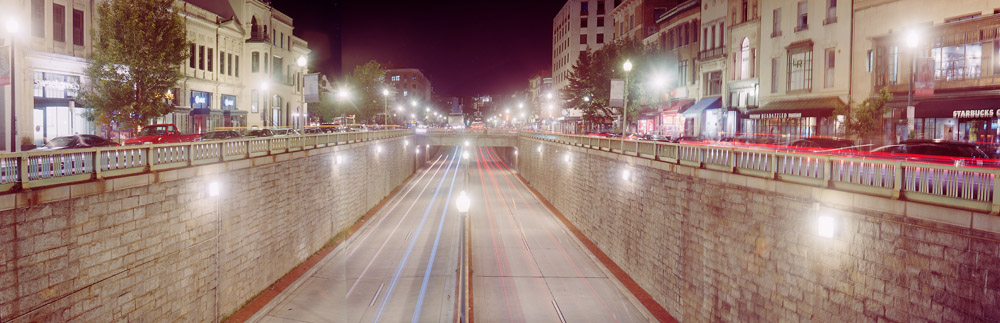
Done right, you get this:
Dupont Circle Underpass
It isn’t perfect because with the long exposures (45-90 seconds each – I forget which I used, but as you can see they’re all exactly the same) traffic patterns don’t flow through the underpass during all three exposures, and the lens flare from the street light in the middle picture doesn’t carry over to the same degree in the left picture, thanks to the lens hood. But you have to look at it to see the three frames separately.
If things aren’t perfect, then you end up with:
Starbucks, Dupont Circle Triptych
While the alignment is pretty close, the color is off a bit on each frame. This took quite a bit of Photoshoppery to get it to match as well as it does. I kind of expected this outcome when trying this shot because I knew the traffic patterns wouldn’t line up from frame to frame, and wanted to see how it would turn out. I think it worked well enough as an effect, but I’m on the fence as to whether I’d try it again.
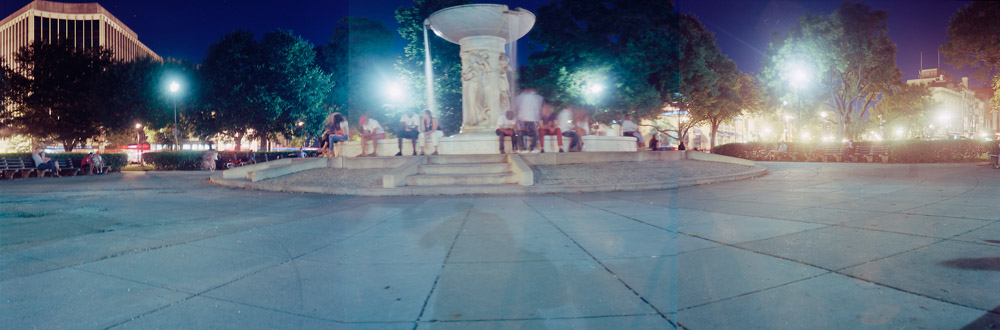
If you don’t have everything perfectly level, you get:
Dupont Circle Fountain
Also lots of Photoshoppery went into getting the colors and density to match from frame to frame. This one has been rotated and cropped to get it MORE level, but you can see between the oval of the fountain and the overall tilt, it wasn’t level and square enough.
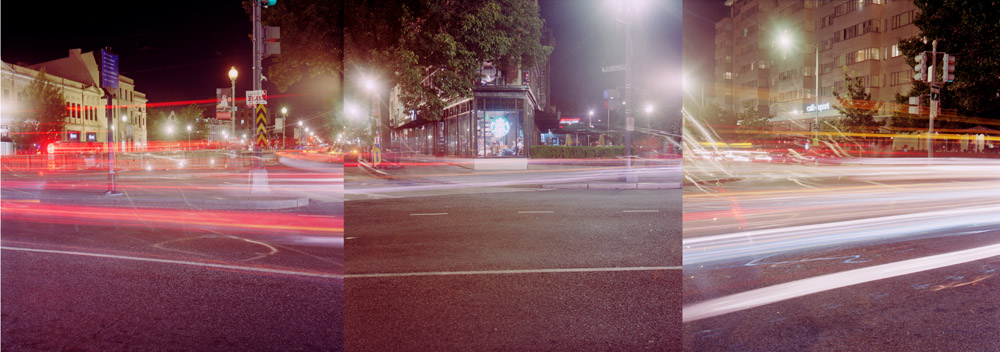
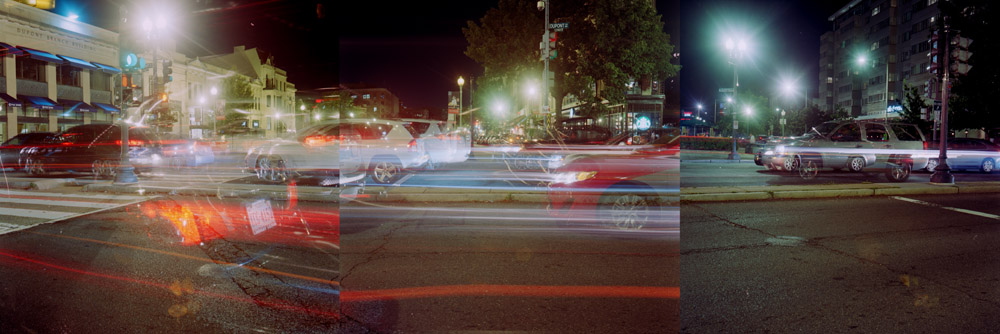
And last but not least, another experiment with disjointed traffic flow around Dupont Circle.
Traffic, Dupont Circle
Another part of this experiment was to see how Kodak Ektar 100 does with long night exposures. My previous (and still) favorite for night photos is Portra 160. While Ektar hasn’t dethroned Portra for this purpose, it proves it can stand on its own and I don’t need to carry multiple emulsions with me when I travel to cover every scenario. I can bring a few rolls of Portra 800 for when I need to shoot hand-held in low light, and the Ektar 100 for everything else.
I have eight of my color night photos up on the wall as part of a group show of large format photographs at the River Road Unitarian Church. The show will be hanging through Sunday May 4, when we (the four of us artists in the show) will have a take-down party from 3-5pm. If you can’t make it to the take-down party, feel free to drop by the church and ask to see the show any time during their operating hours:
In addition to the usual Sunday fellowship hours, the exhibit can be viewed Monday-Friday 10 am-4 pm in the Fellowship Hall, River Road Unitarian Universalist Congregation, 6301 River Road, Bethesda, MD. Please call the RRUUC office (301-229-0400) before going there to check that no conflicting activity is scheduled when you want to view the exhibit.
Amazingly enough, the RRUUC’s exhibition schedule is so popular we (the large format camera club I belong to) had to book this show almost a year in advance.
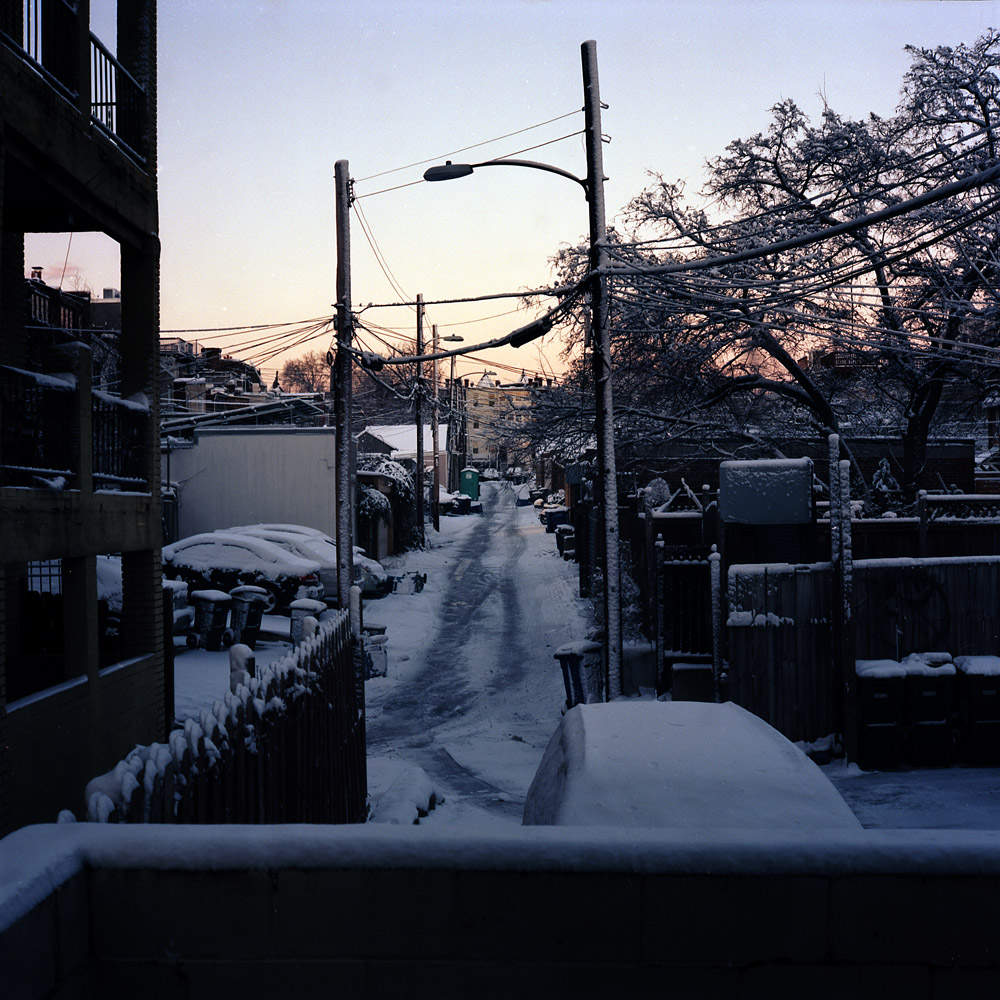
… but this time in color. I caught the sunrise reflecting on the windows of the houses at the top of my alley, and tinting the sky.
Sunrise, Snow, My Alley
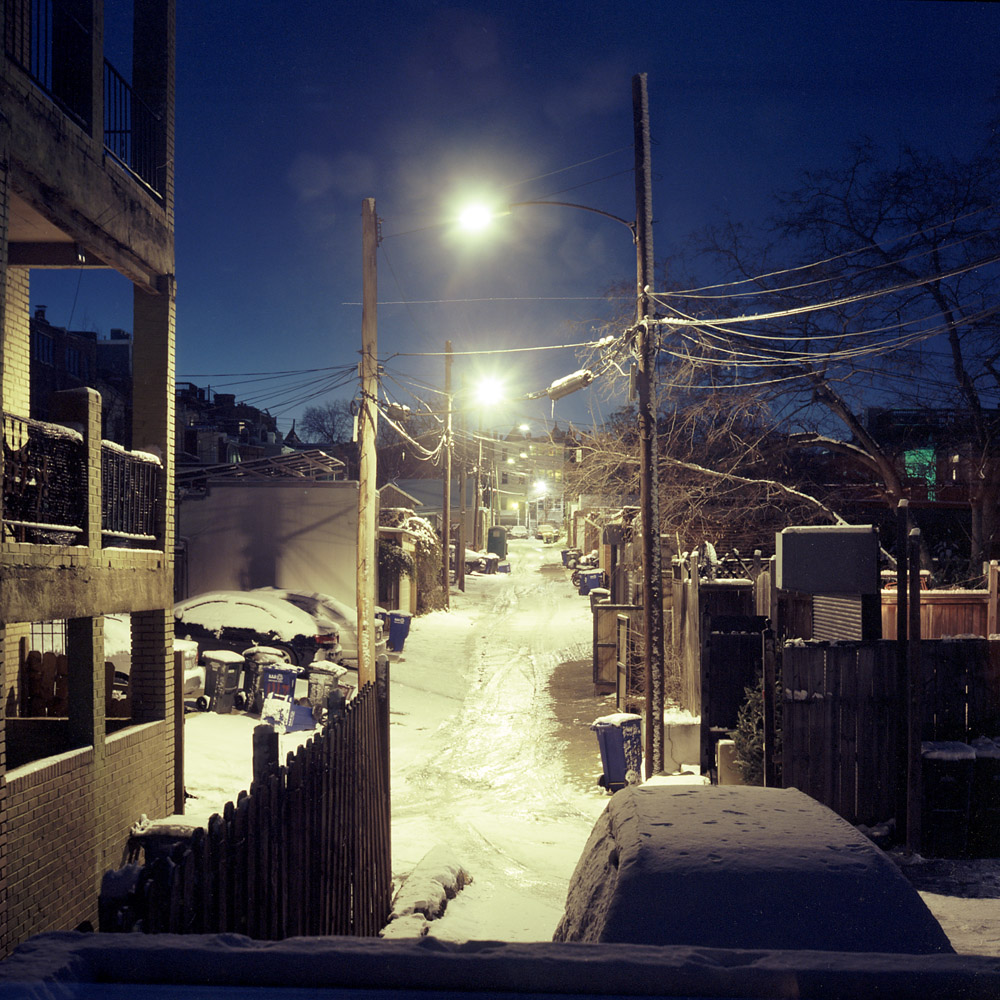
That inspired me to set back up at twilight and take this version, with the sky gone deep blue but not yet black.
Night, Snow, My Alley
Just so you know, to take these photos I had to set up my tripod in the bathtub and then stand on the rim of the bathtub to be able to compose these shots. The things I do for my readers 😀
It “snowed” here in DC on Tuesday, and we got the day off for what amounted to a little more than a dusting that rapidly turned into slush and never really interfered with traffic or public transportation or anything. But, since I had the day off, I took a walkabout in my neighborhood to burn some film.
I’m always looking for images of things to add to my “Portraits of Everyday Objects” series. This mailbox, outside the Industrial Bank building on U Street fits the bill, looking somewhat forlorn with all its graffiti.
Mailbox
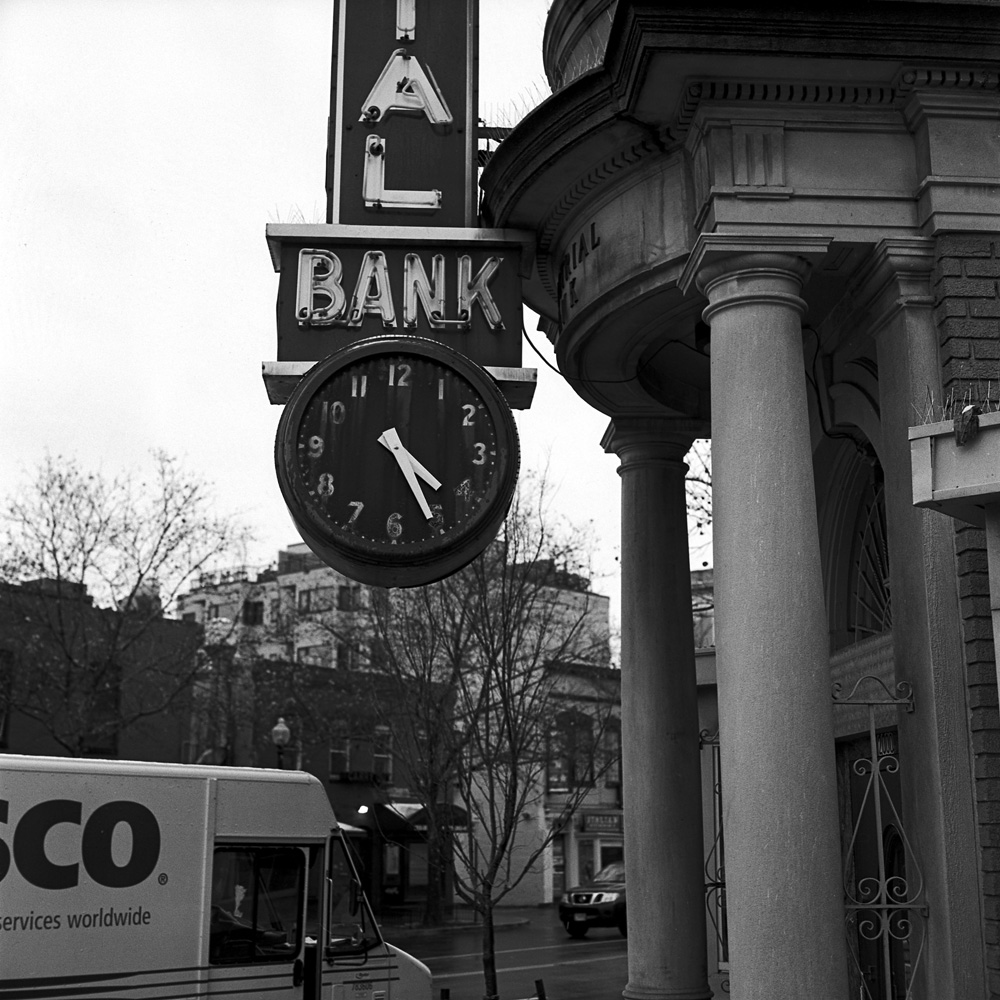
Industrial Bank was started at the beginning of the 20th century by African-Americans to cater to the African-American community. Their main branch is at the corner of 11th and U Streets, and has this really cool metal and neon clock sign out front. Alas they have allowed the sign to lapse into disrepair – I THINK the clock functions but it is not accurate, and either they just never turn on the neon or it no longer works. I really wish they’d fix it up so it would work, as it would make a very nice neighborhood landmark and a visual counterpoint to the yellow saxophone sign across the street outside the Bohemian Cavern nightclub.
Clock, Industrial Bank
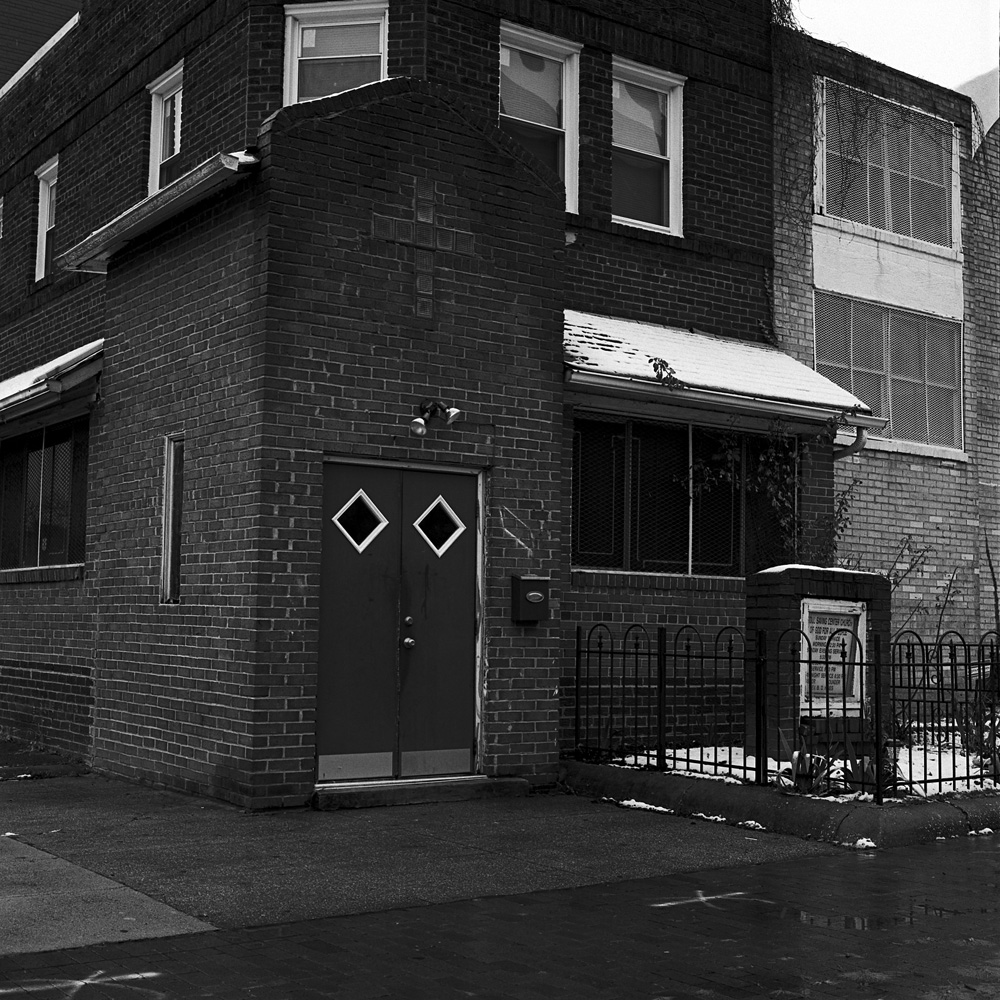
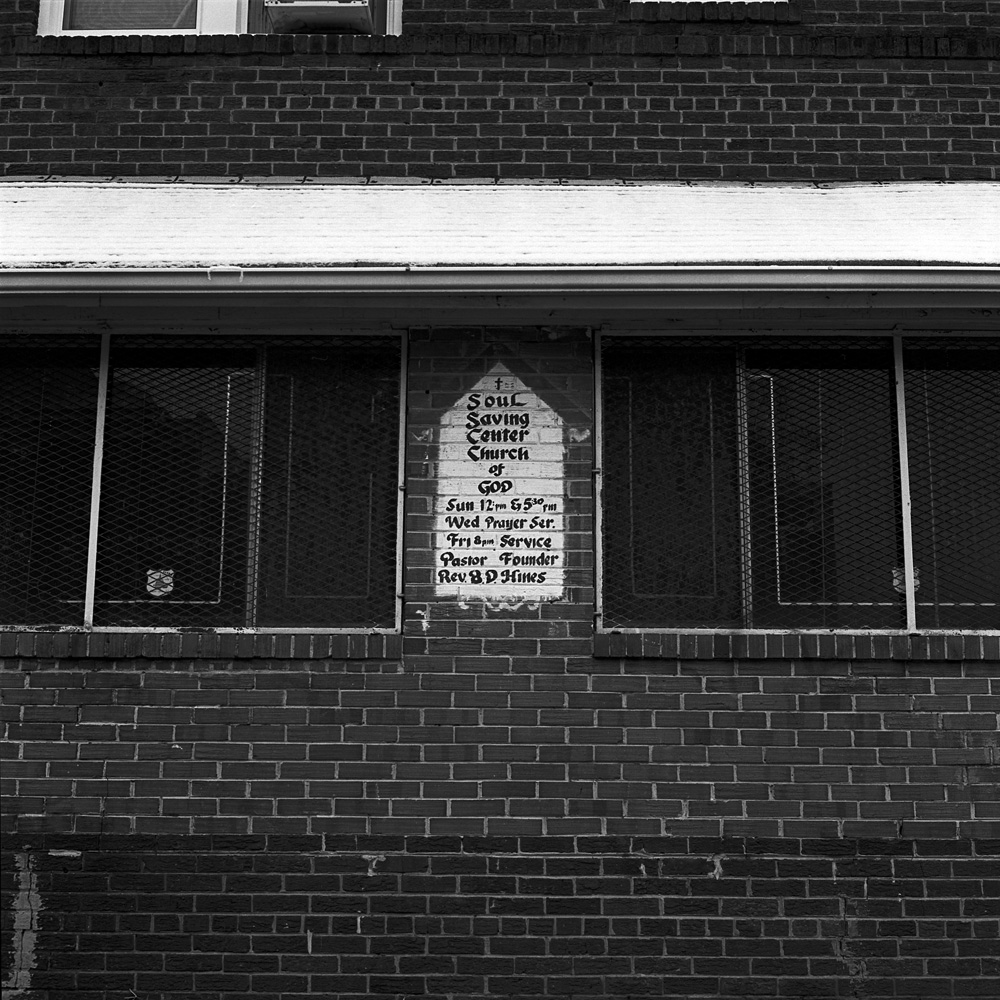
Up the street there is the Soul-Saving Center Church of God – a storefront community church with a primarily if not exclusively African-American congregation. It’s a sign of the gentrification and transformation of the neighborhood – across the street from them is a brand-new condo building with units selling for up to $1.2 Million.
Soul Saving Center Church DoorSoul Saving Center Church
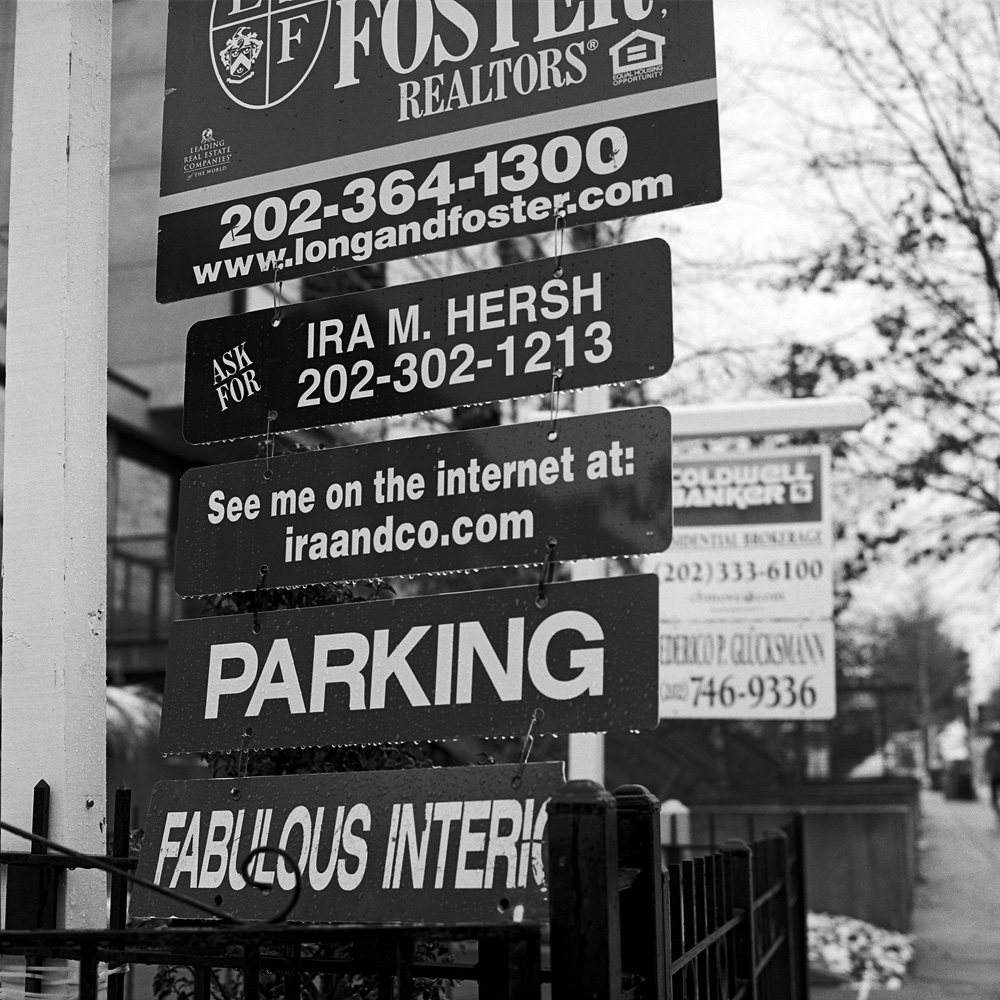
You can see the real estate bonanza still happening in the neighborhood – small row houses are being converted and expanded into multi-story multi-unit condominium buildings. Here is one with a “Fabulous Interio”- the agent broke off the “r” to get the sign to fit inside the fence. I wonder how long it will be before the Soul-Saving Center Church decides to sell their buildings plus the adjacent lot they have – they’ve got perhaps $10 Million in land alone now.
Fabulous Interio
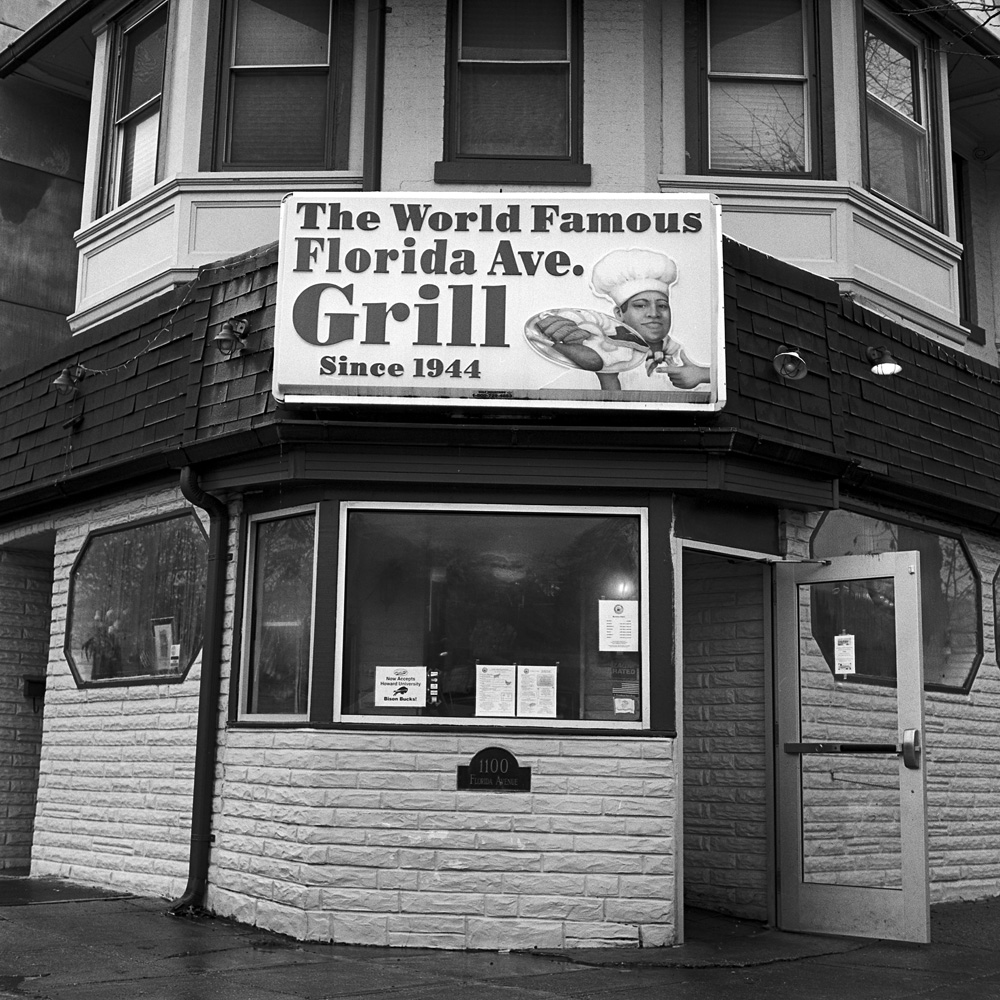
Up the street is another landmark of the neighborhood, almost as famous as Ben’s Chili Bowl. The Florida Avenue Grill has been around since 1944, serving up good old-fashioned soul food to locals and celebrities alike. The Florida Avenue Grill once owned a large empty lot next door, which served as their parking lot. About five years ago the family that owns the grill sold the empty lot and now a five story condo building has filled it. The average unit in that building sold for north of $500,000 each.
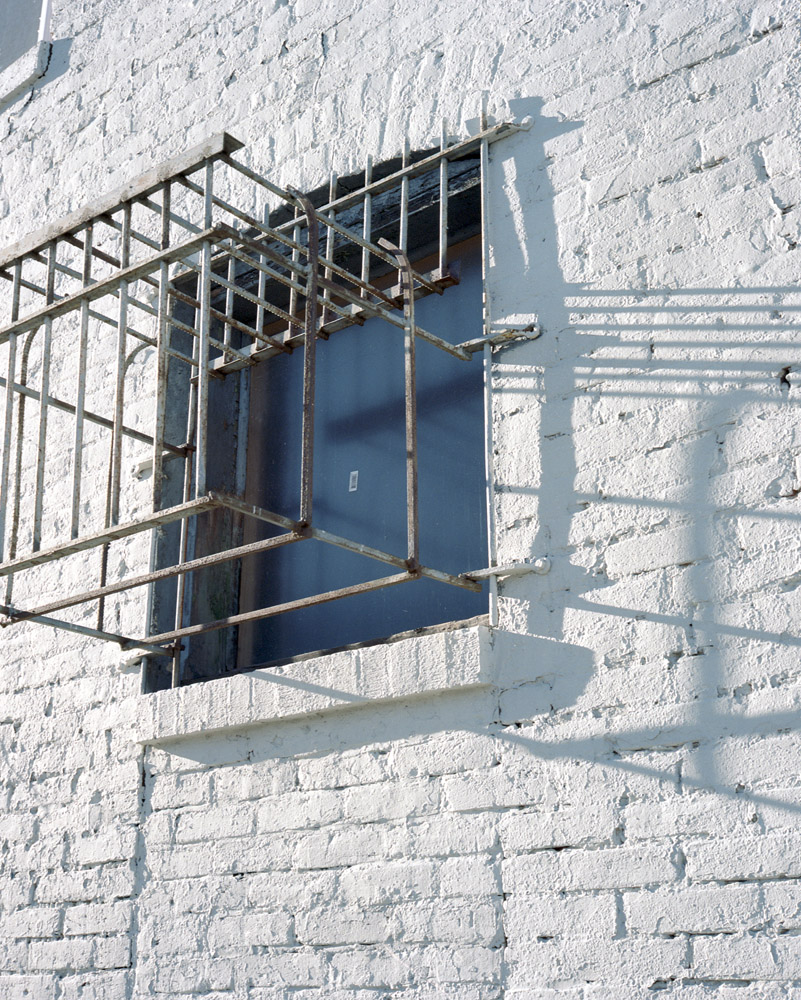
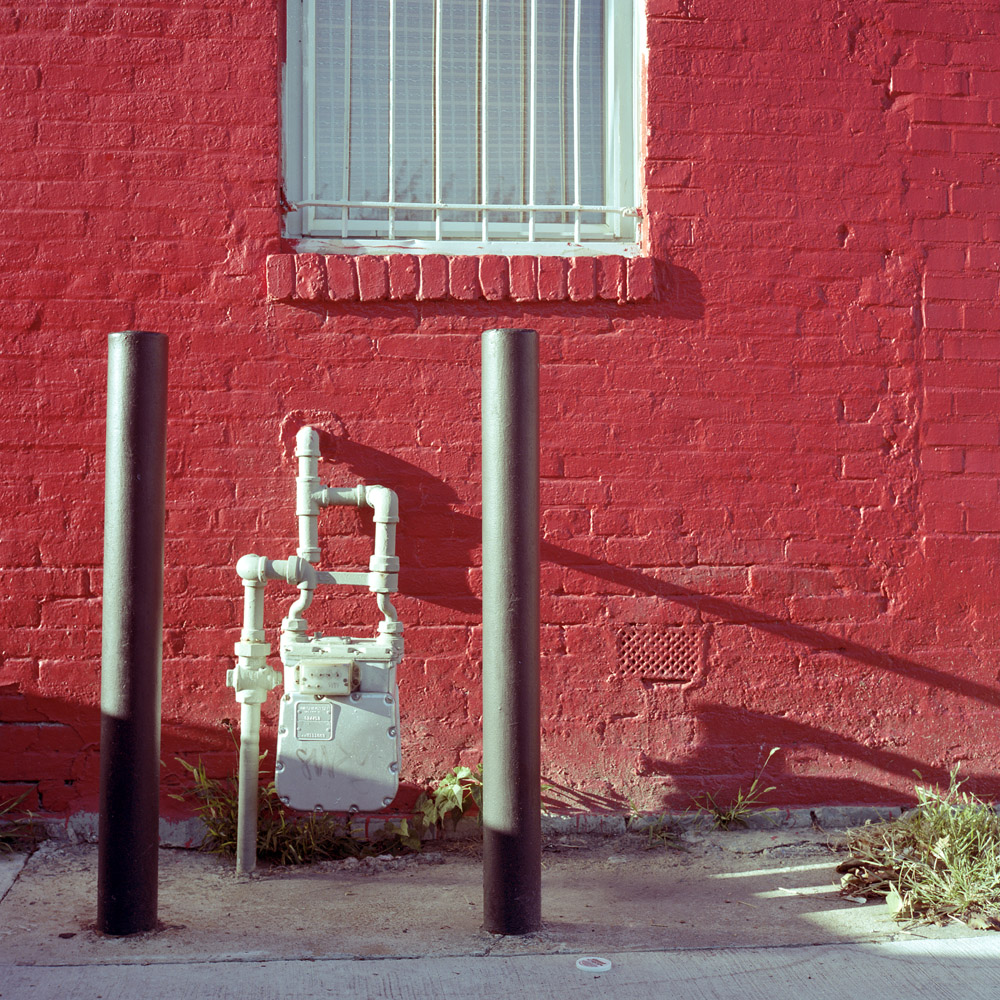
I was out walking around in the late afternoon and found these. I like the simple graphic compositions they inspired, combined with the long shadows being cast. They’re remnants of the old industrial component of the neighborhood that is quickly being usurped by gentrification.
Air Conditioner Cage, V StreetGas Meter, Red Wall, V Street
Here are some color shots I took on my neighborhood walk around, last weekend. I noticed a theme of small businesses in the shots I was taking, so I decided to make a grouping out of them for this post. The areas I was photographing are actually very bustling and vibrant, but A: this was on a Sunday afternoon, and B: it was about 93 degrees Farenheit outside, so it looks far more desolate than it actually is, but that allowed me to focus on the appearances of the businesses themselves. My interest in photographing them without people is not to portray an economic state that may or may not be true, but rather the overall feel of small businesses that are in a neighborhood in transition – these are businesses, mostly minority-owned, that have not yet been gentrified in an area experiencing rapid gentrification.
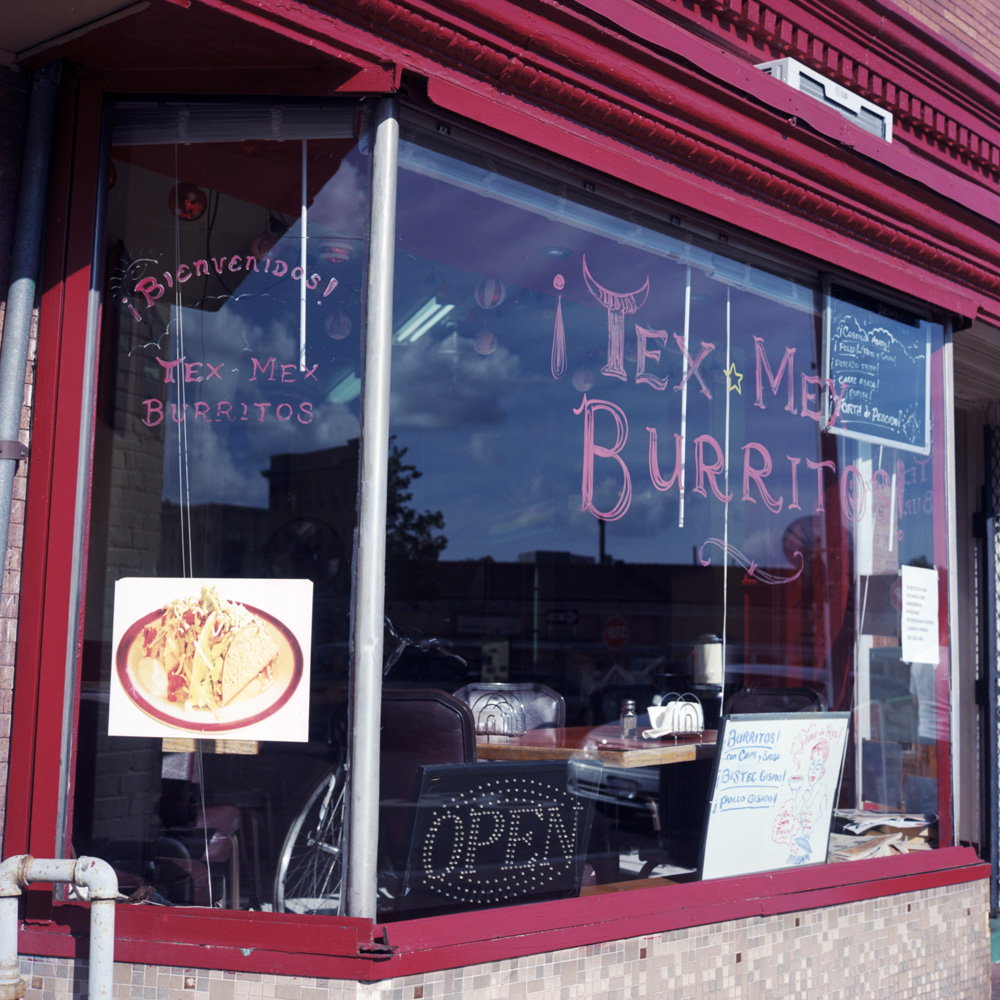
To me, the loss of these businesses to gentrification is the biggest downside to the process. They are what makes up the character of the neighborhood, and why all those gentrifiers moved there in the first place. I will be very sad when Tex-Mex Burritos is displaced for yet another Chipotle.
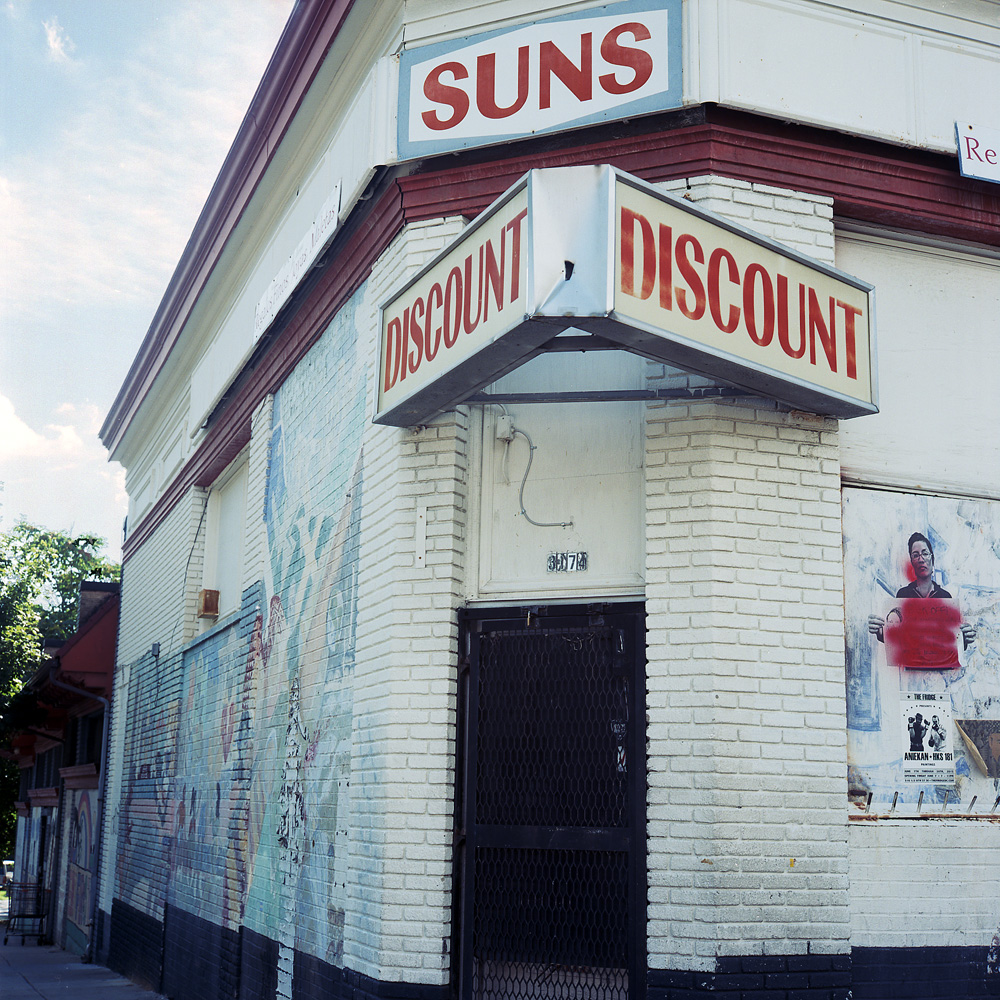
Suns Discount
Sun’s Discount is obviously shuttered. I don’t know how big a space it is on the inside, or what kind of (probably insane) rent the landlord is asking for, but I love the murals on the wall and the protest/message posters plastered on the whitewashed windows. It reflects the character of the neighborhood, and particularly its past – the small ethnic “discount” store that would have carried a hodge-podge of inexpensive products, primarily catering to the Latino community, which has adopted the small business strip along Mount Pleasant Street. Historically a mixed race, upper-middle class neighborhood, after the 1968 Martin Luther King riots, the neighborhood experienced a significant turnover and transformed into a poor Latino barrio in the 1970s. It is in the process of changing back into a largely white, upper-middle class neighborhood, as the housing stock off the business district consists of large, elegant rowhomes and single familys that are being snatched up, fixed up and turned into two and three unit condos.
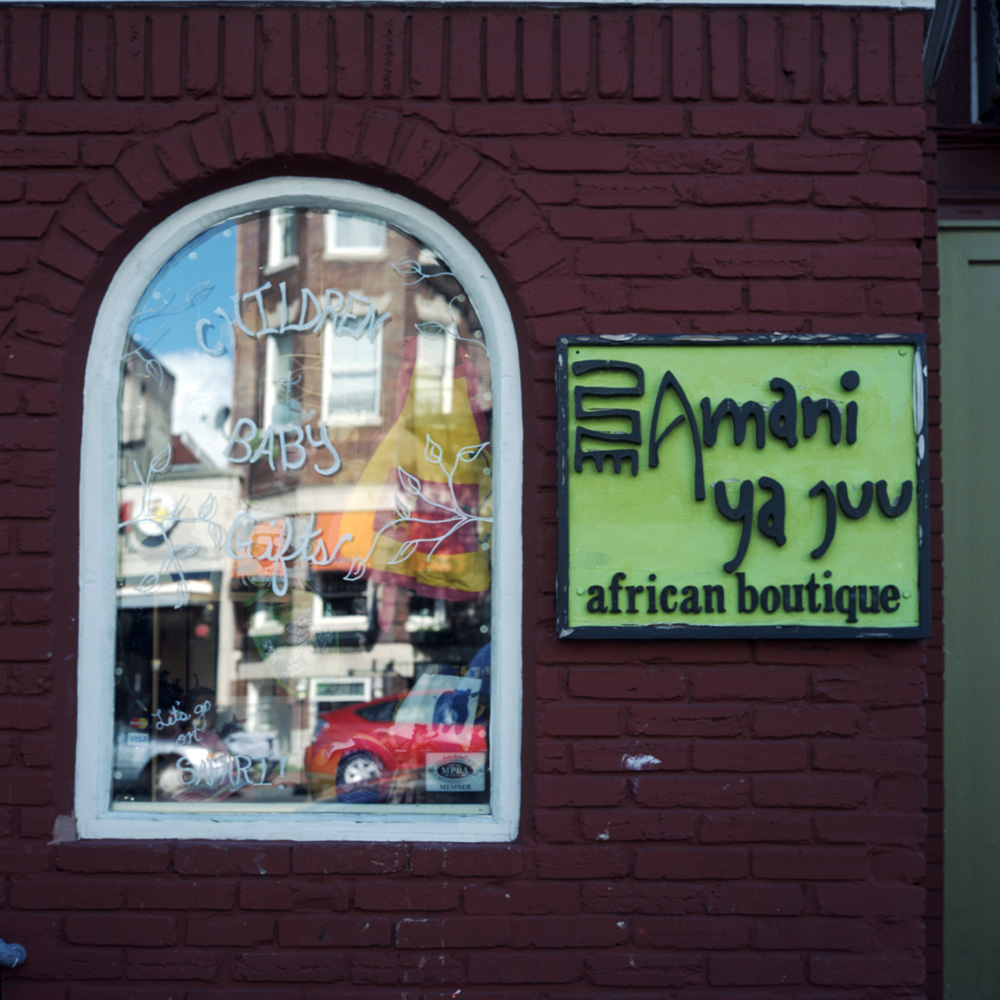
Amani African Boutique
There is still an African-American presence in the neighborhood – a touch of soul remains amidst the sazón. The neighborhood was always multi-ethnic, but the blend has changed over the years.
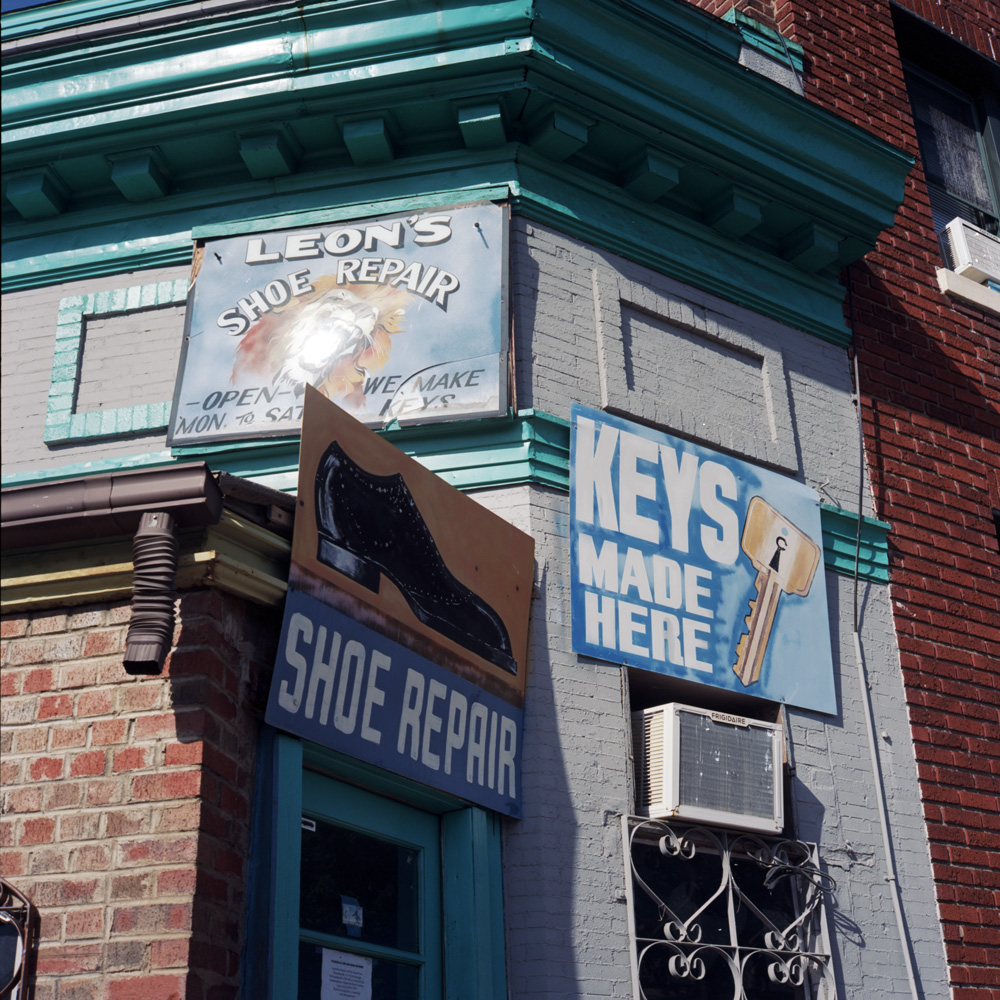
Leons Shoe Repair
Another one of those small businesses that when a real estate developer sets their sights on the block will be one of the first to go. Leon’s operates out of a space not much bigger than a coat closet. In the land of big-box stores and franchises, there’s no room for a 200-sq ft retail operation. And signage like that would never fly in a homogenized shopping mall.
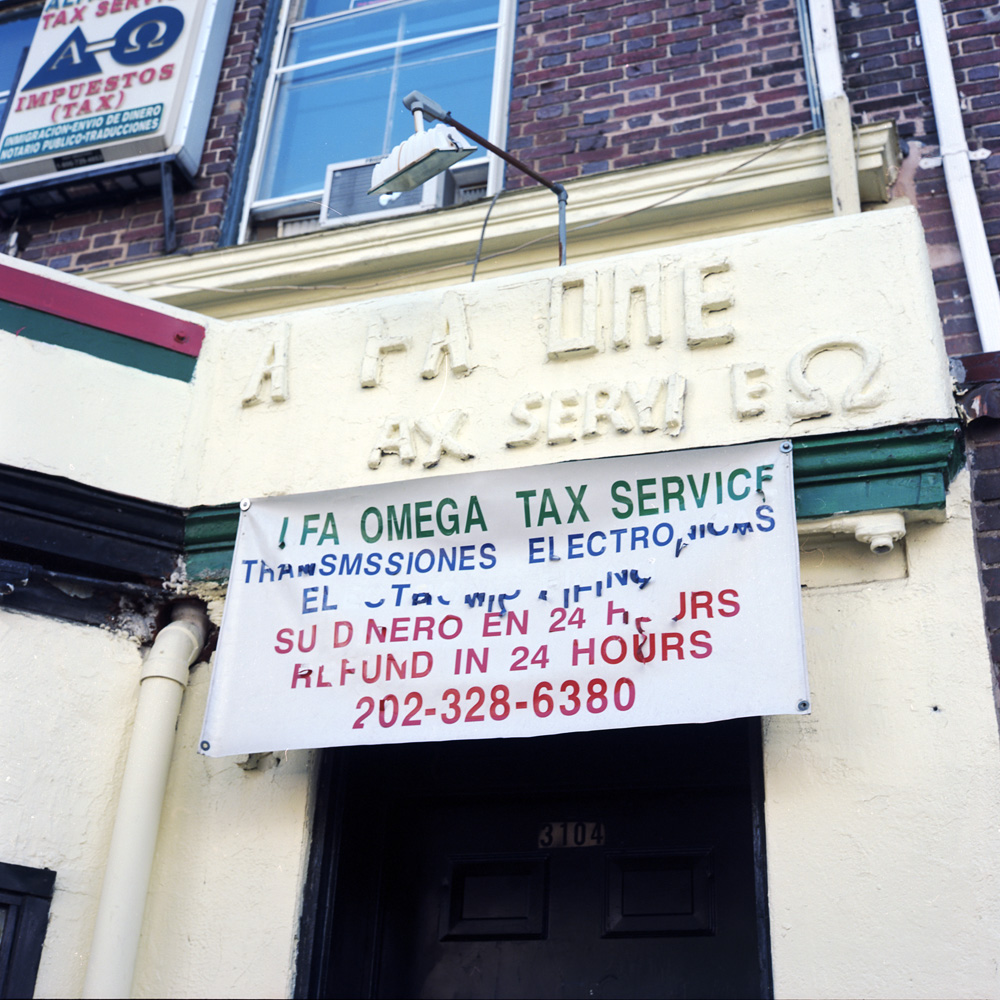
Alfa Omega Tax Services
Here’s one that has been around for decades – witness the missing letters and the layers of paint applied to the original Alfa Omega Tax Service on the wall. Having them there in the 1970s and 80s when this was one of the police patrol beats officers dreaded to be assigned would have been a huge deal to the residents, as there would have been few legitimate businesses willing to provide quality services of any kind in the area.
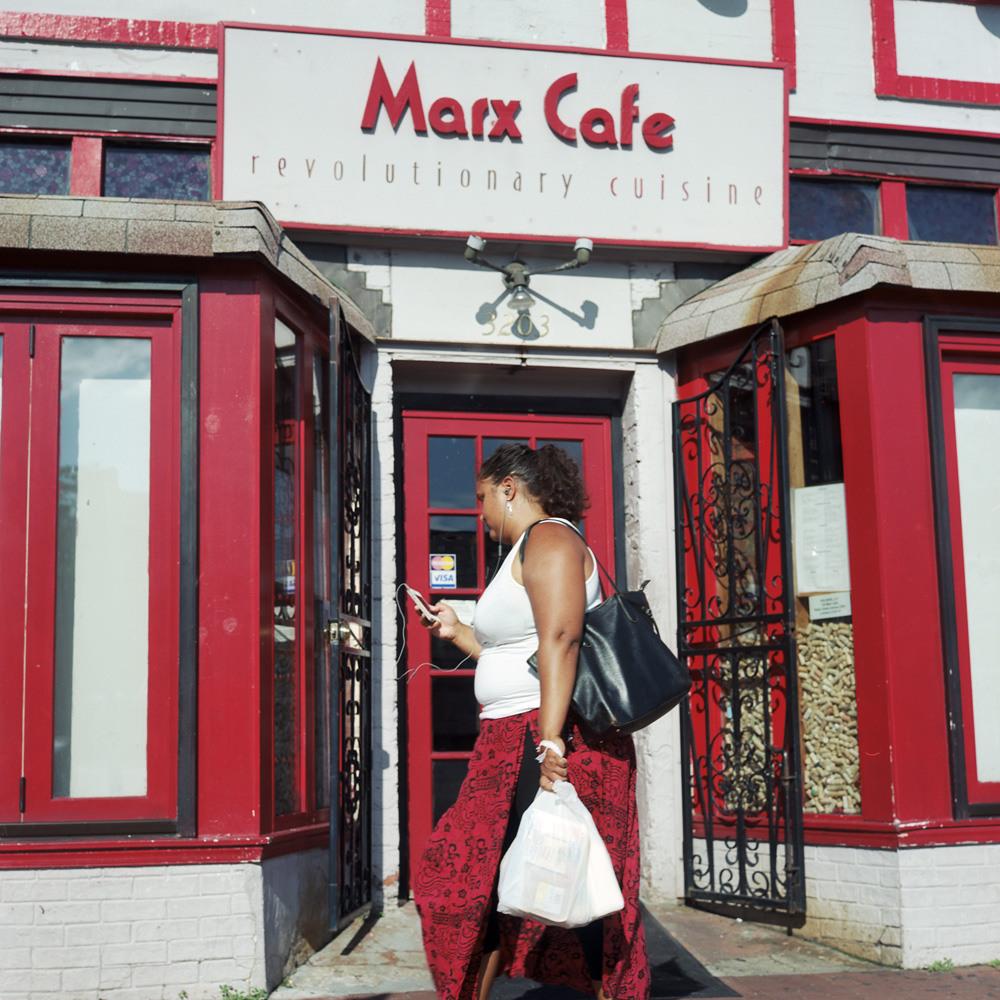
Marx Cafe
The bohemian precursor to gentrification – Marx Cafe (“Revolutionary Cuisine”) brought a little touch of culture and chic.
Tex-Mex Burritos
A typical neighborhood mom-and-pop eatery. This one is newer, keeping within the theme of the neighborhood but brightened up and appealing to the incoming Anglos as well as the long-time residents.
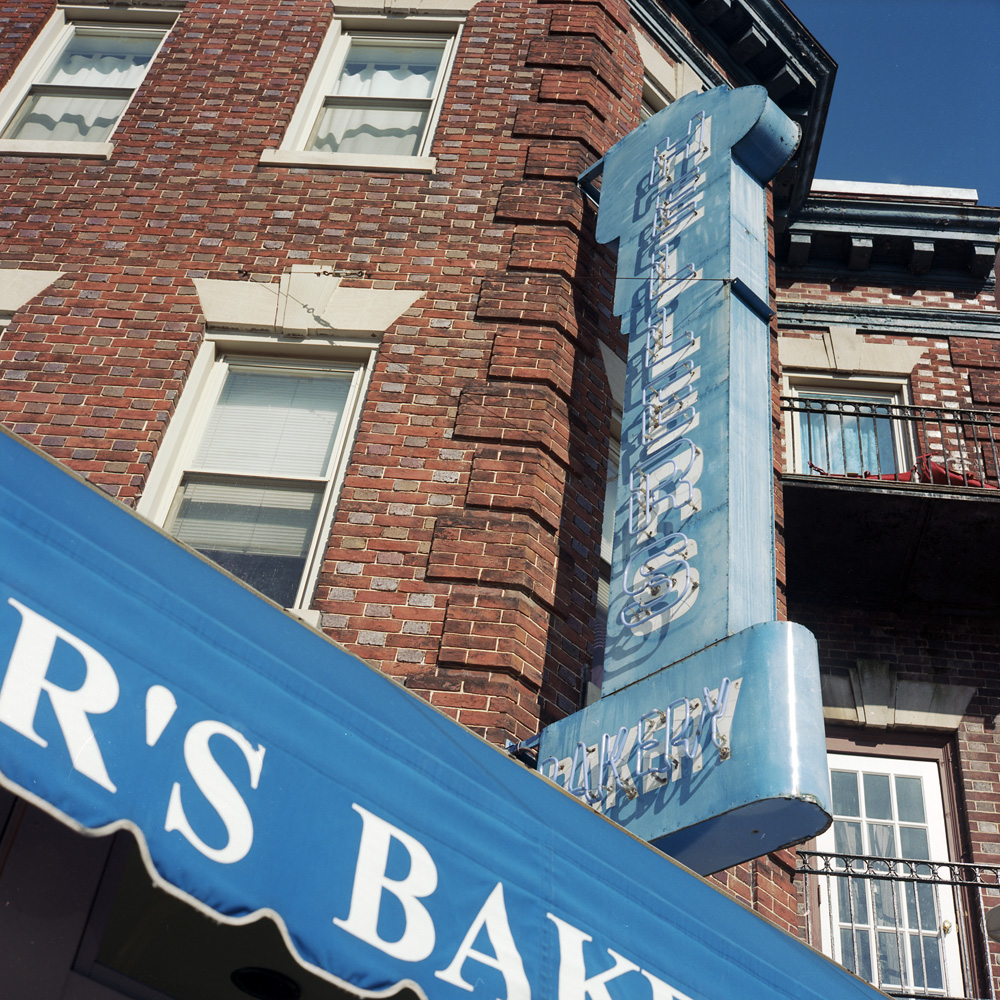
Hellers Bakery
Heller’s Bakery has been here forever, witness the neon sign, from back when the neighborhood was originally an upper-middle-class, white/jewish/African-American neighborhood. It stuck around through the hard times. If you saw the movie, State of Play, starring Russell Crowe, you’ll recognize this as being from outside his apartment.
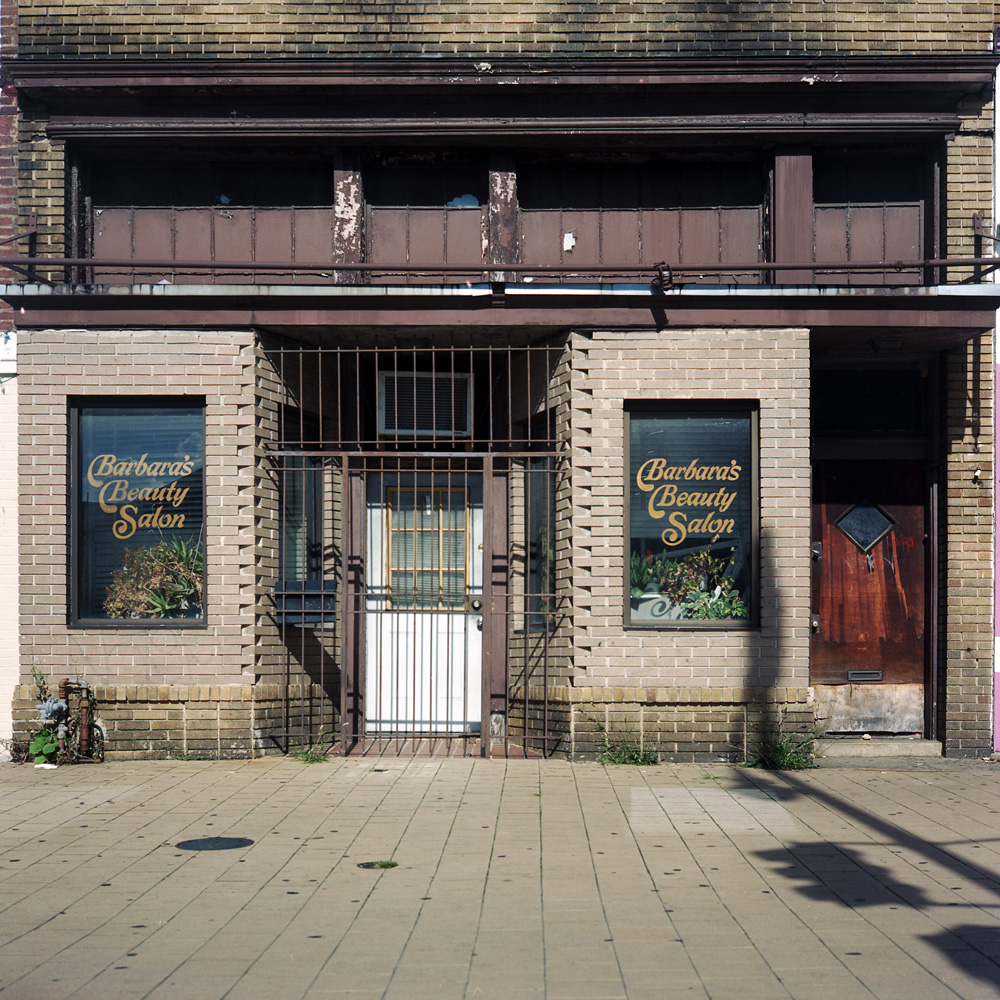
Barbaras Beauty Salon
I’m not sure Barbara’s is still in business – granted I usually never walk by it during the work day mid-week, so it might in fact operate then, but whenever I see it, it’s shuttered, blinds pulled, and half-dead plants in the window. I don’t know if they were a victim of shifting demographics, or just sloppy management – I don’t know that I’d want to trust what little hair I have left to someone whose plants look like that!
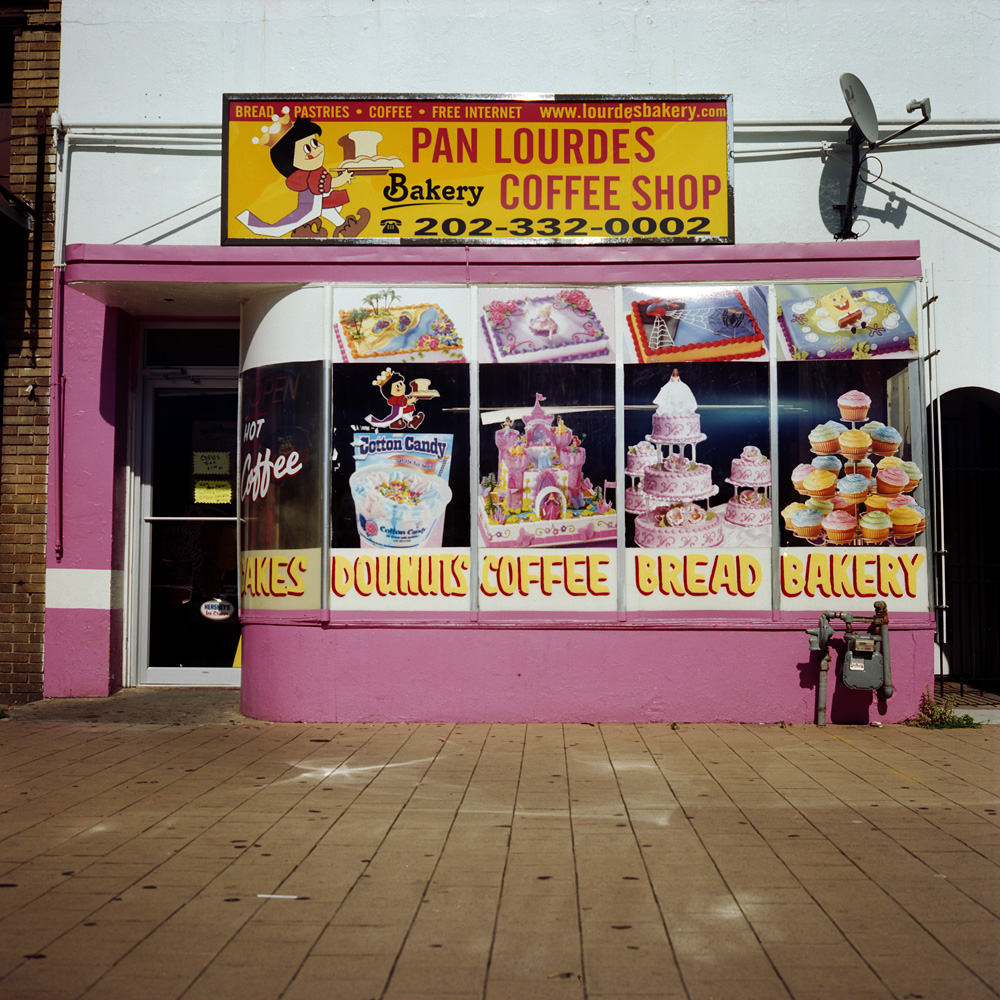
Pan Lourdes, Afternoon
Another small business that will probably be driven out by gentrification in the next ten years. Massive re-development of the neighborhood has happened a few short blocks down the street, with upscale restaurants and pubs, a shopping center with Target, Best Buy, Marshalls, Staples, Radio Shack, GNC, a Washington Sports Club gym, and across the street is Chipotle, a wine store (not a liquor store, but a WINE store), and a FedEx outlet. Like I said earlier, no room in that for a riot of pink selling Central American baked goods. And the neighborhood will be poorer for it.
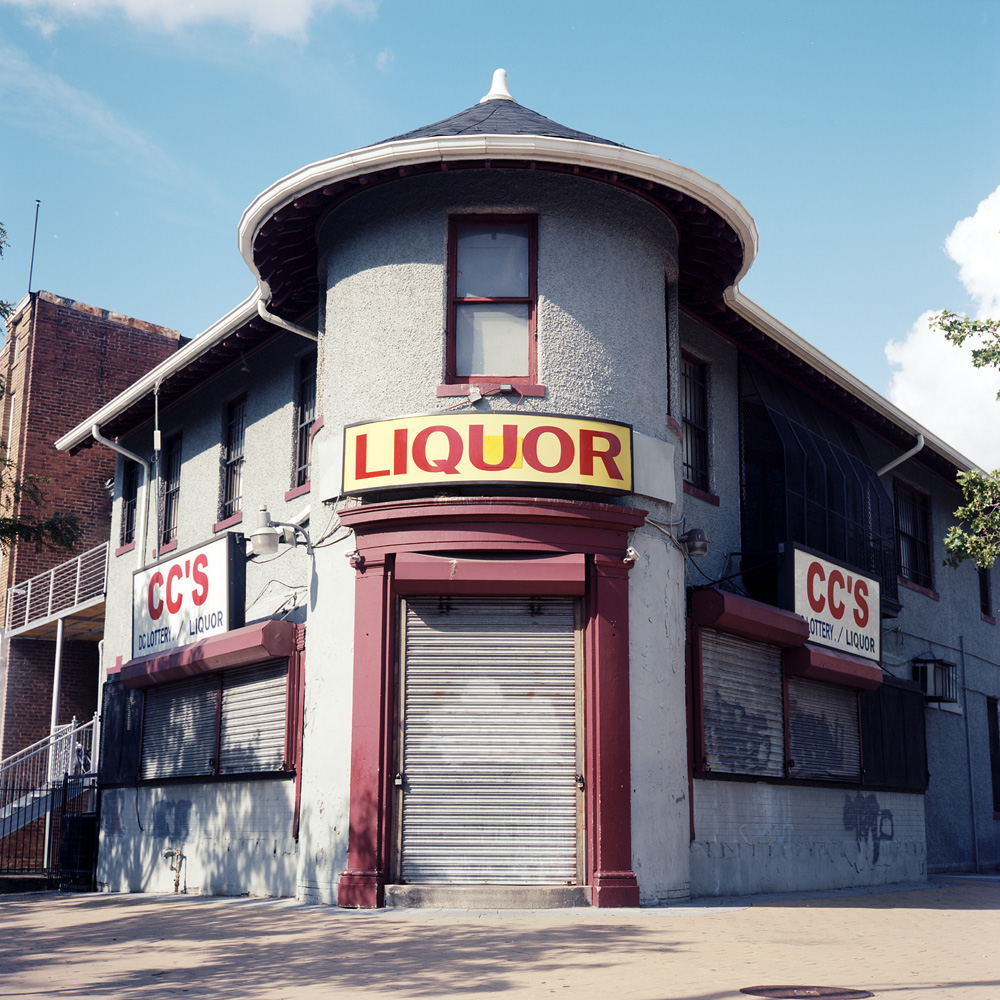
CCs Liquor
In contrast to the wine store down the street, this is a good old-fashioned ghetto liquor store. This one, I could let go, but the Colony Liquor up the street I’d like to see stay around if for no other reason than the fantastic Deco facade and neon sign (see previous posts of mine for pictures).
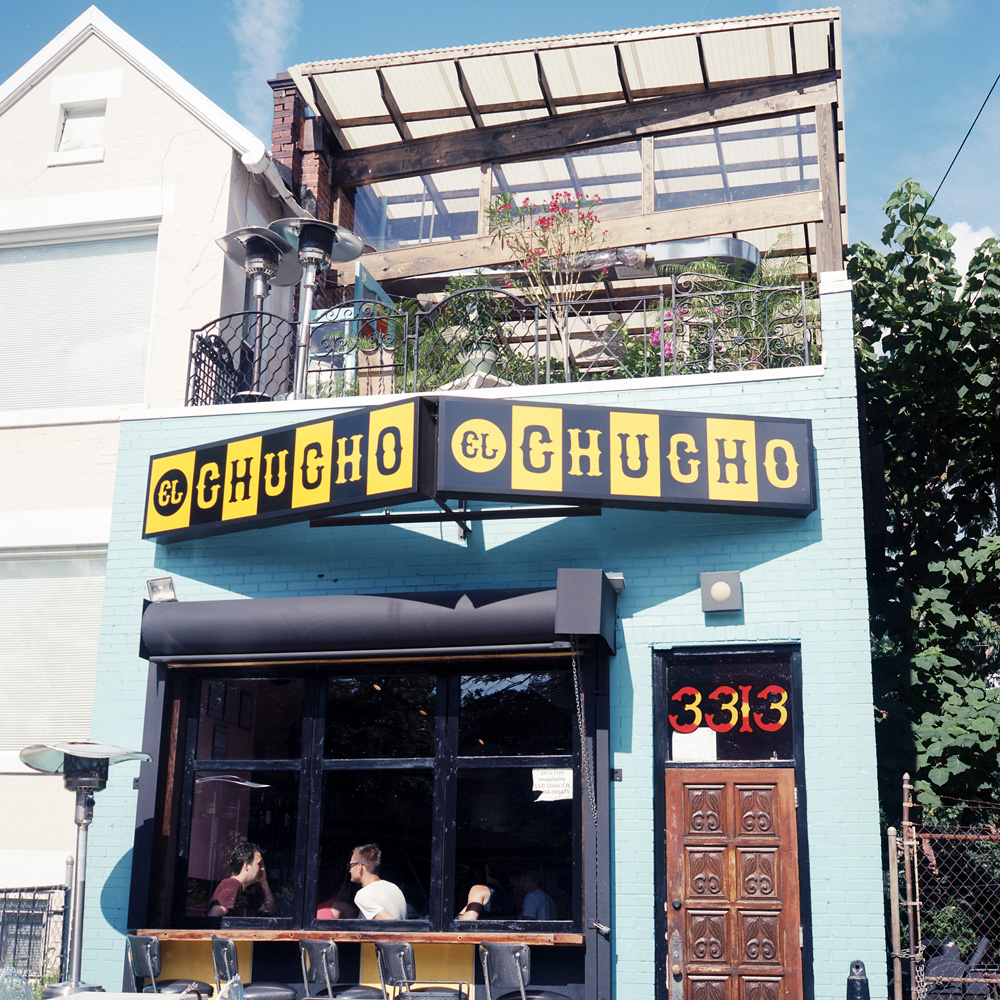
El Chucho Roof Deck
Part of the gentrification wave in my own segment of the neighborhood- its ethnic cuisine by hipsters. Don’t get me wrong, they have very delicious and authentic tacos (and insanely cheap happy hour prices – you can get three tacos and a beer for $10-11!!!), but the truly authentic taquerias don’t have roof decks, bar seating reclaimed from former diners, and waiters wearing plaid flannel, sporting a well-maintained three-days stubble.
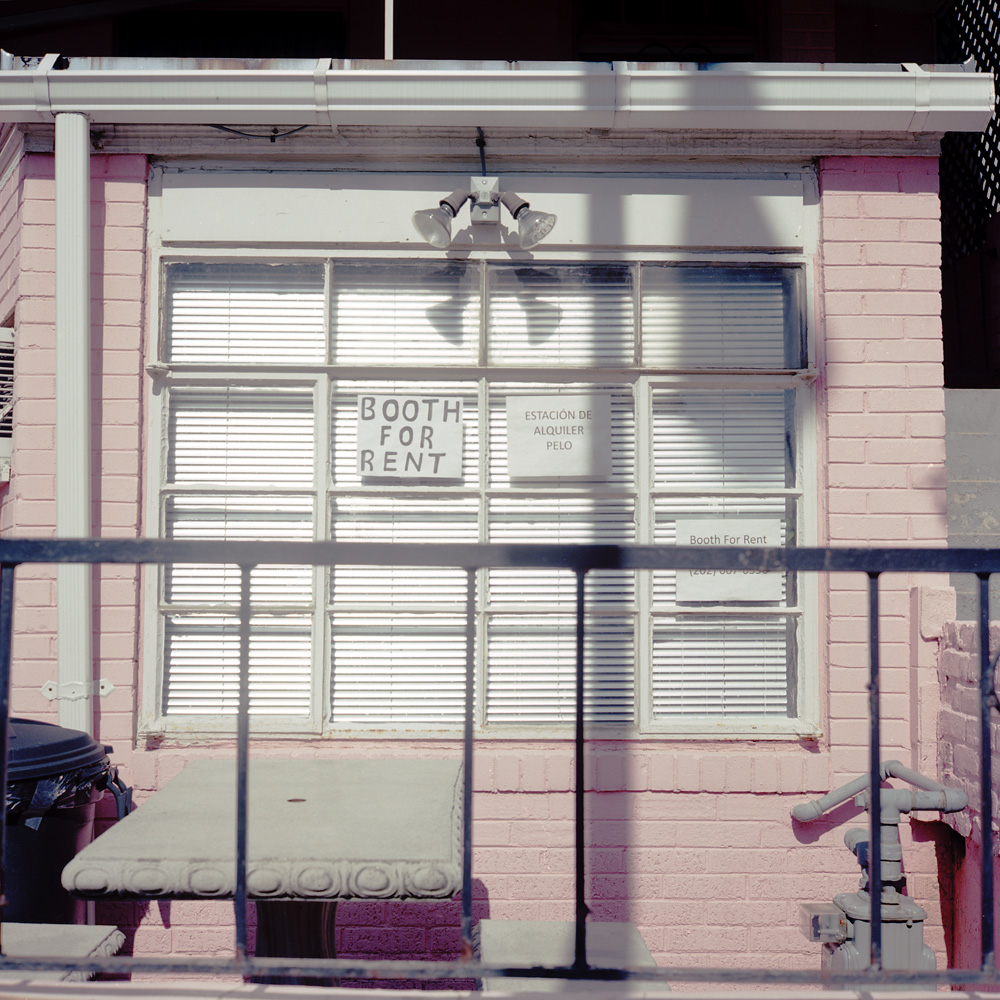
Booth For Rent
Alongside the hipster taqueria you have the basement beauty parlor, which you’d never know was a beauty parlor if not for the booth for rent sign in the window.
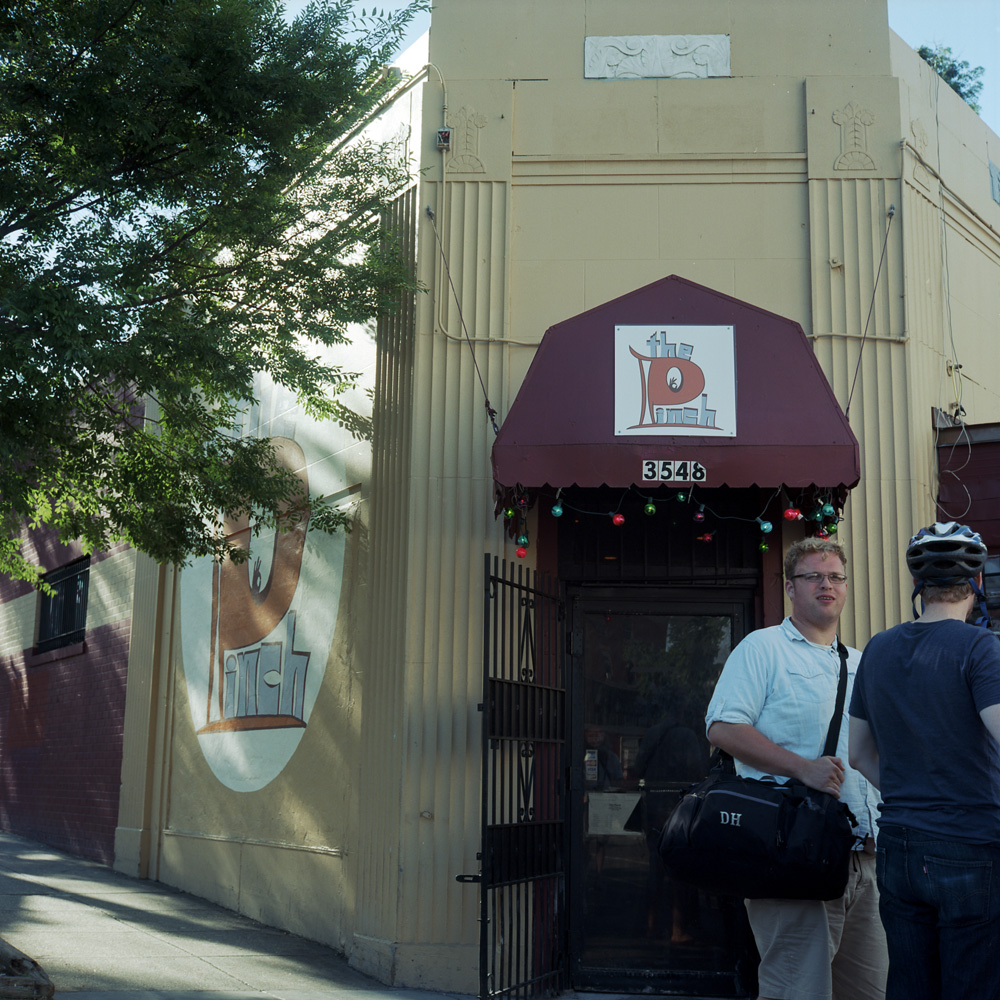
The Pinch Front Door
The Pinch is a neighborhood dive bar featuring live music on the lower level. The graphics outside scream 1970s blaxploitation movie, the patrons now scream suburban white kids who moved to the city to have an “authentic” experience. But it’s good to have a venue that provides space for local live music, where up-and-coming bands needing a break can perform, as there are definitely not enough performance spaces in this town to adequately support the creative talent here.
For wont of anything better to do on Sunday afternoon, I went out for a stroll in the 90+ degree heat (what was I thinking!!!) with the Rolleis for company. I wanted to do a little film and development test to see how well my results would come out. I’d say I nailed it based on these shots. The film I was testing is Ilford PanF, a very slow, fine-grained emulsion. The film speed Ilford recommends for this film is ISO 50. Quite a few folks I know recommend giving it a more generous exposure and rating it at EI 12. I shot some before at EI 25 and got good but not knock-your-socks-off results, so I thought I’d try the 12 and see what difference it makes. I took a risk and changed two variables at once – film speed and development technique. Normally I use Rodinal at a 1:50 dilution and develop for 14 minutes, agitating the chemistry for five seconds out of every 30 seconds. This time, I used Pyrocat HD for my developer, gave it twice the normal dilution (I usually use it diluted 1:1:100, but this time I used 1:1:200) for 45 minutes, with 5 seconds of agitation every 15 minutes.
This development technique is known as semi-stand development. Semi-stand uses highly dilute developers for greatly extended periods of time, with minimal agitation. What this does is it allows micro-contrast areas to form on the film where byproducts of the development process accumulate on the edges of light and shadow. These byproducts serve as a mask and lead to a boost in contrast at that edge, increasing the appearance of sharpness. If you look at the emulsion side of a negative that was developed using semi-stand, stand, or extreme minimal agitation technique (variations on a theme), the emulsion will actually appear in relief as if it had been etched.
This technique is also useful for managing high contrast situations because it allows for greater adjustment of the length of development to manage highlights. When you develop a roll of film, the shadow areas develop first, and once they have reached their maximum recorded density, they stop. Highlights will continue to develop long after the shadows have finished. This is one of the primary means for controlling contrast in an image- if the highlights are known to be too bright before developing the film, you can simply reduce total development time to keep the highlights from becoming unprintable.
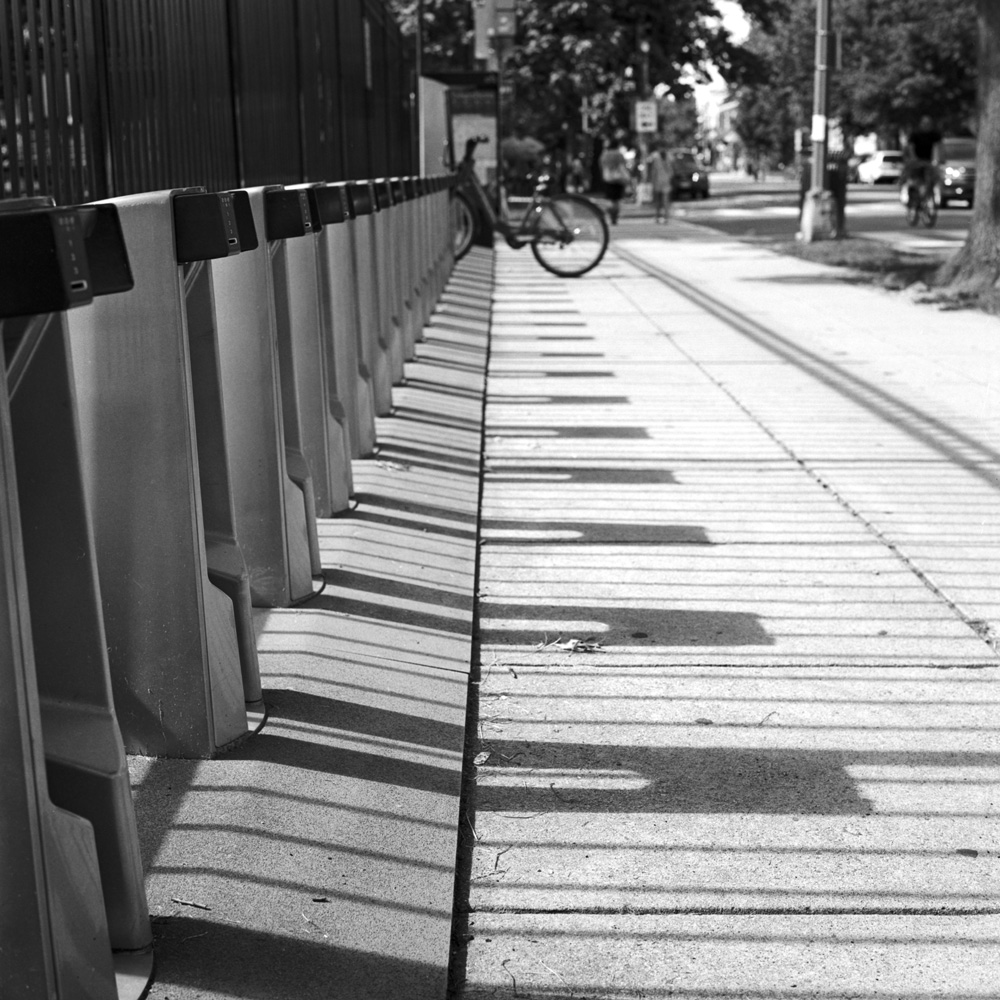
Bike Rack, 11th St. NorthboundBike Share Rack, 11th Street
These first two images are of the Capitol Bikeshare rental rack near my house. I’ve photographed the Bikeshare racks before, with full racks of bikes, to capture the receding perspective of the bike wheels. This time, I shot the bike rack with only one bike in it, to work with the late afternoon shadows created by the rack itself, and also to demonstrate the popularity of the Bikeshare, at least in my neighborhood. As you can see, on a Sunday afternoon, with the heat rising to over 90 degrees F, all but one of the bikes from this rack are in use.
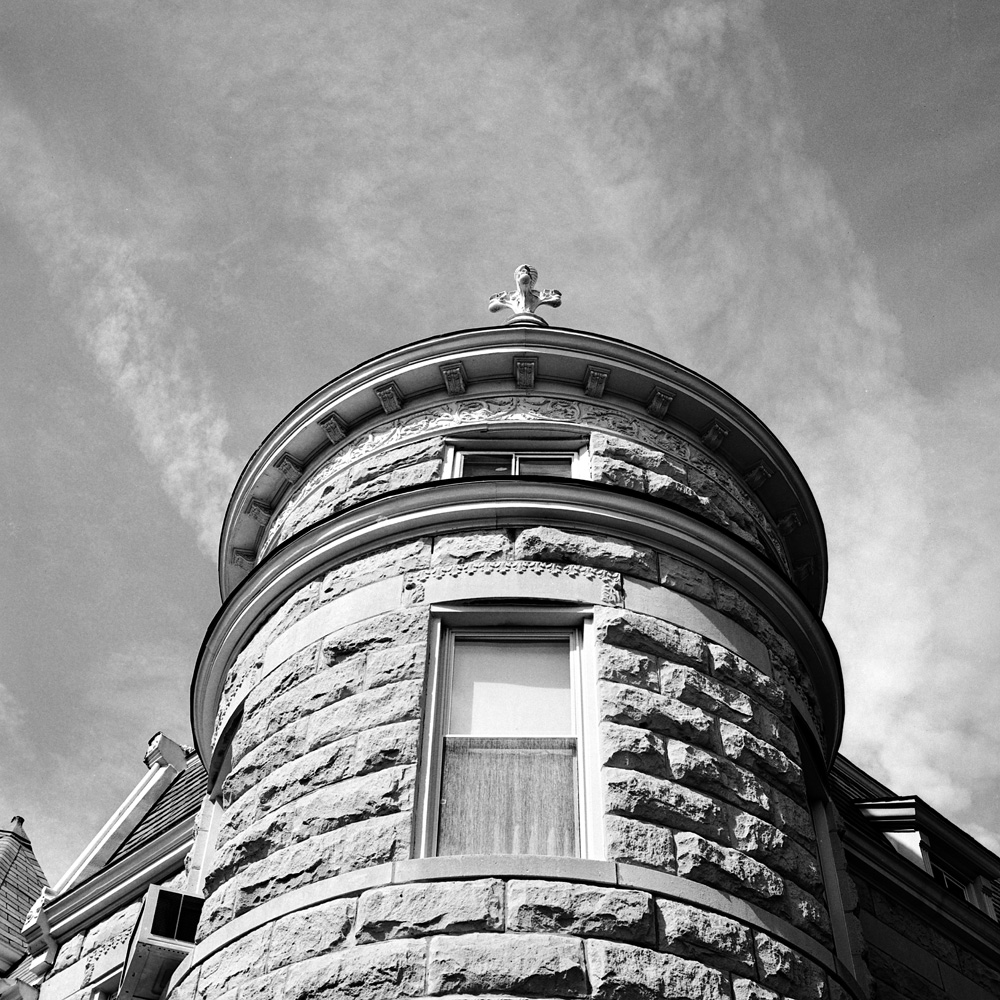
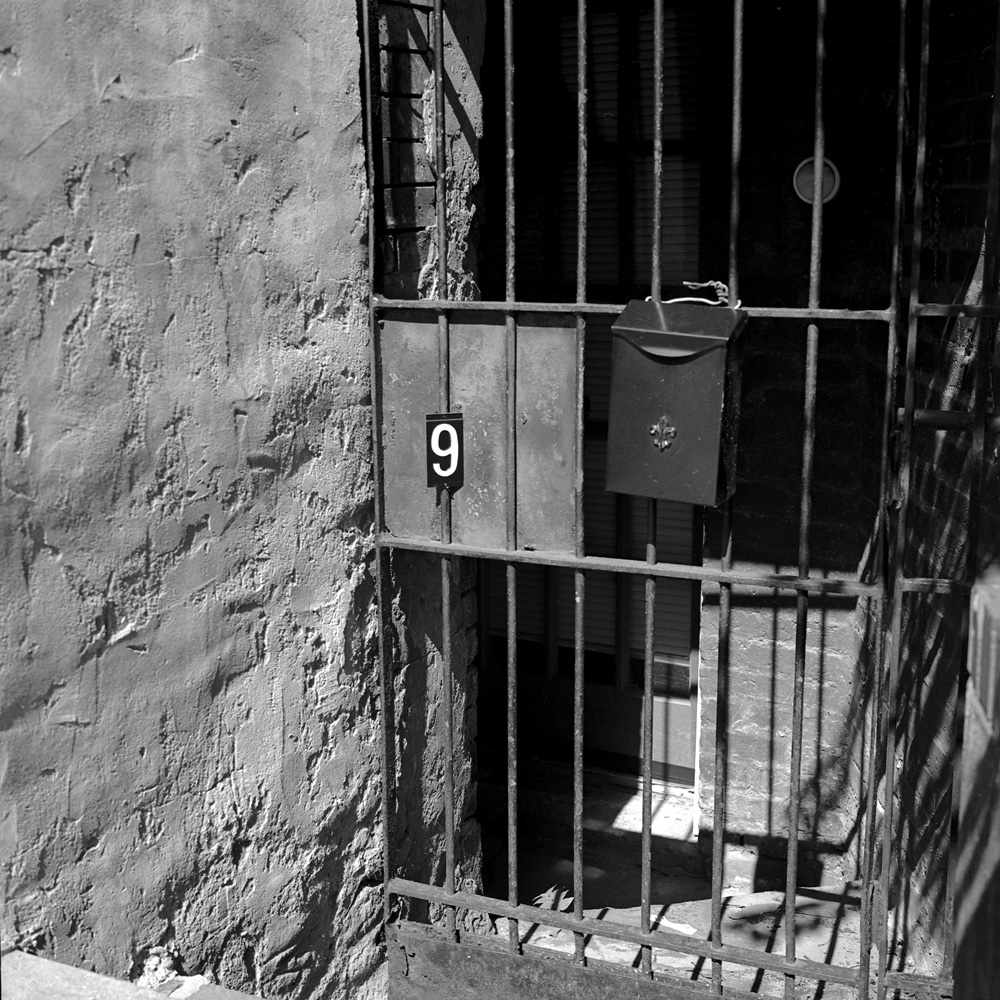
Stone Turret, 11th StreetNumber 9, Basement Door
Very much in the same stretch of 11th Street as the bike rack is where these two scenes can be found. The stone house is a bit of a neighborhood landmark – there are maybe half a dozen or less in the neighborhood with similar facades, and the rest (hundreds of houses) are varying types of brick or stucco over brick. The basement door photo was taken as part of this exercise, not only because I like wrought iron, but because the scene had extremes of contrast that I wanted to see if I could tame with the semi-stand development.
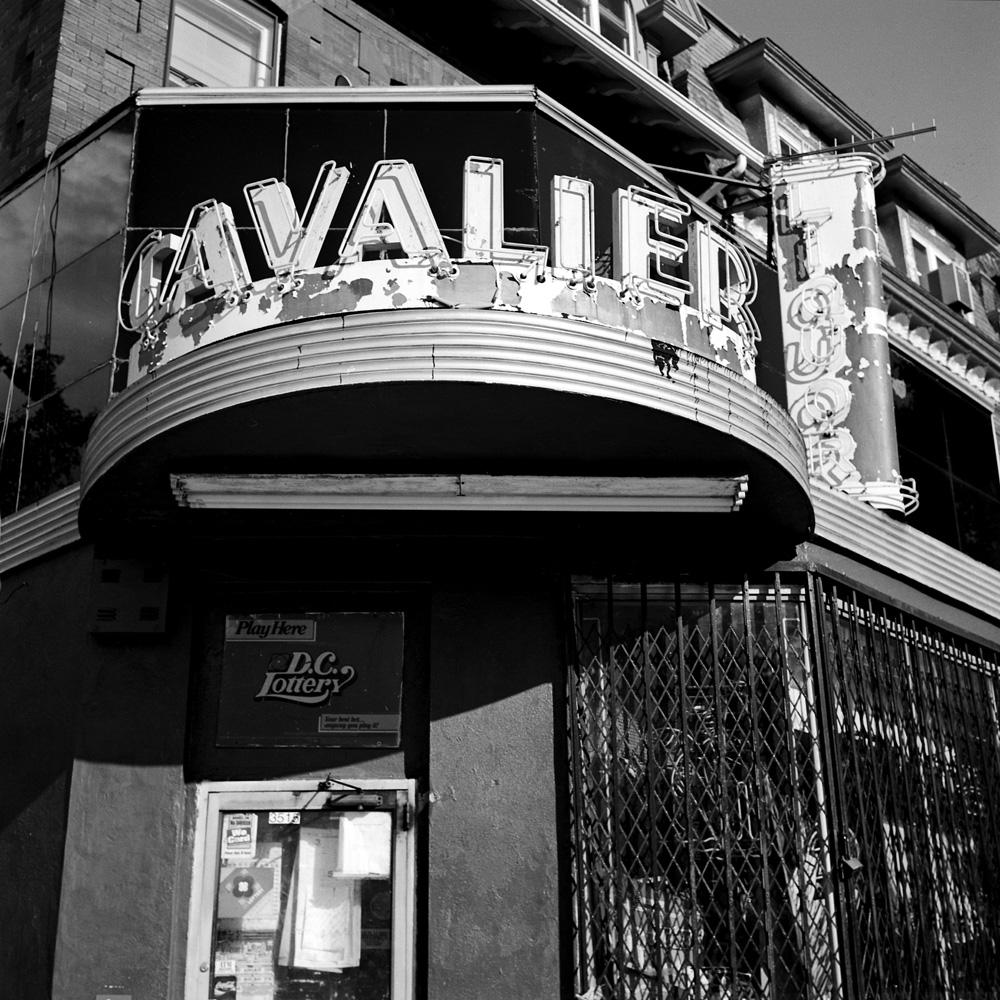
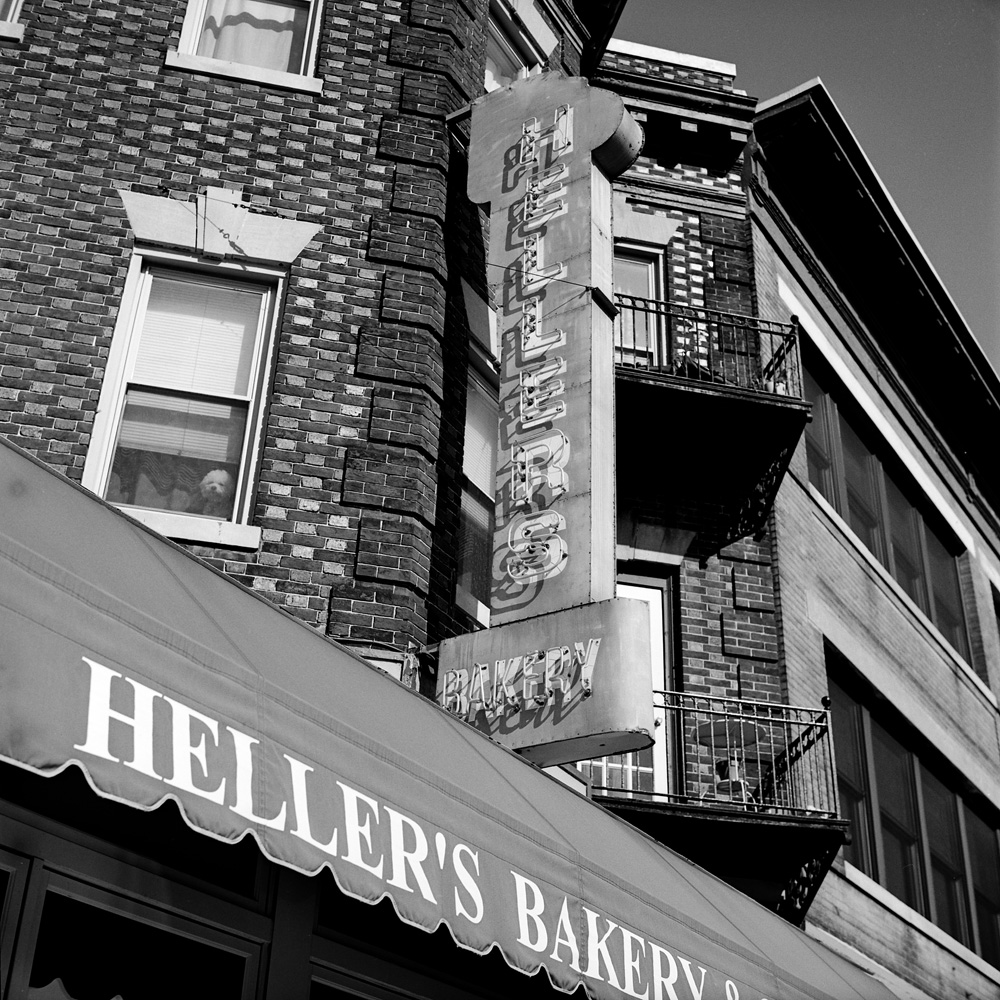
Cavalier Liquor Sunday AfternoonHellers Bakery
These two photos are of neighborhood icons – you’ve seen my color photo of Cavalier Liquor at night before. It has been the subject of many a photograph by fans of urban texture, neon, and Deco architecture. Hellers Bakery has been in their current location for many many years, and if you saw the movie “State of Play” starring Russell Crowe as Cal McAffery, a hard-luck, hard-boiled reporter who uncovers a Washington conspiracy, you’ll recognize their neon sign from below his apartment window. I’m very annoyed with Hellers that they don’t illuminate their sign very often, so it makes it very hard to get a good photo of it after dark!
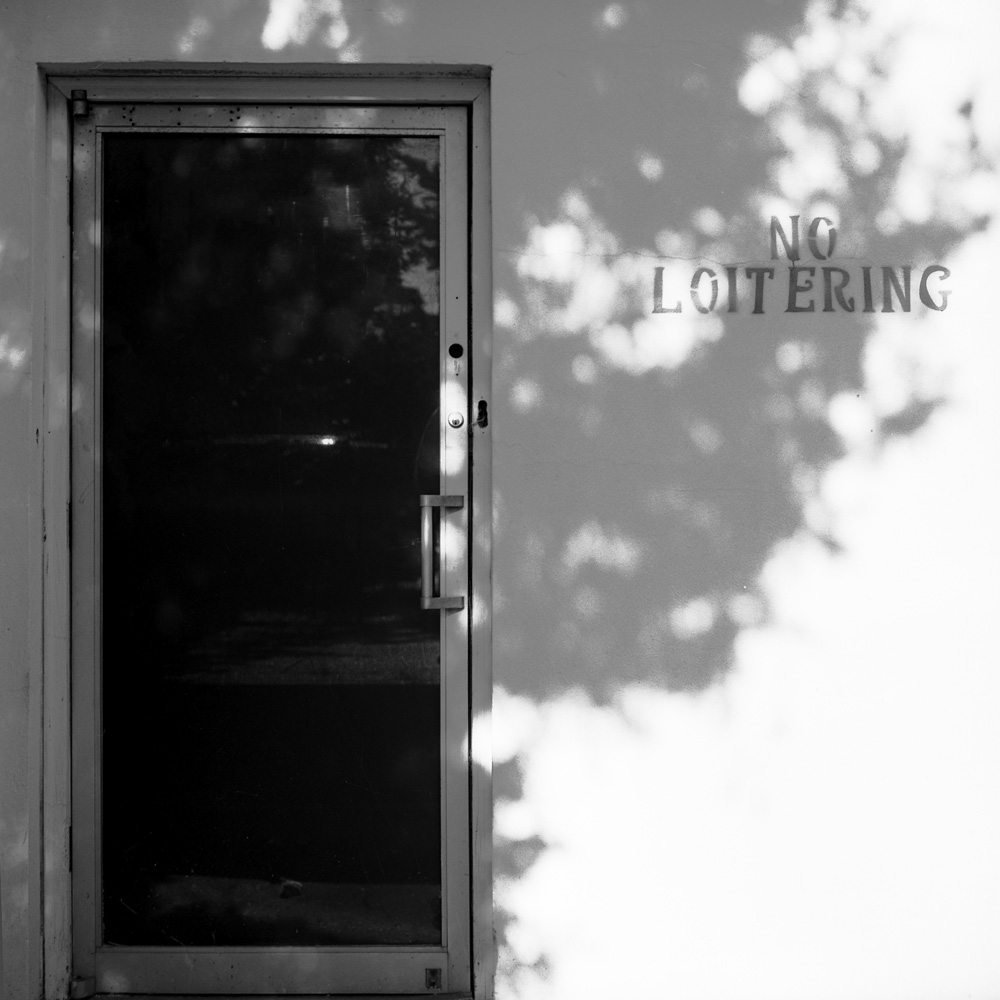
And last but not least, an appropriate sign to end the post with:

 dcphotoartist