Category Archives: Exhibitions

Upcoming Exhibition and Class

I’ve got two news items to announce. I’ll be in an invitational show at Glen Echo Photoworks from April 12-May 7, and I’m teaching my Introduction to Platinum/Palladium Printing class May 5-6 also at Glen Echo Photoworks.

Please come to the opening reception for the show, April 22 – I’ll be speaking briefly about my work. I’ll be showing some selections of my work from Argentina.

April 13-May 7
Alternative Visions – An Alternative Process Photography Exhibition
Scott Barnes, Andrew Currie, Scott Davis, Sheila Galagan, Barbara Maloney, Janet Matthews, Richard Pippin, George Smyth, Grace Taylor
Opening reception and Gallery Talk 6-6:30pm. Sunday April 22 5-7:30

If you are interested in registering for the Intro to Platinum/Palladium, you can find the link on the Photoworks website

The class is a hands-on two day course on the basics of platinum/palladium printing. Topics covered include history, technical basics (chemistry, equipment, paper), major process controls (negatives, exposure, processing), and fine controls (contrast, process variations). This is a film and wet darkroom focused course – I will be providing a 5×7 camera and film, and we will shoot film negatives and make prints from the same. Digital negative making will NOT be covered due to the number of potential variables involved in working from student supplied images.

Please note: As of the date of this announcement, there are only two spaces remaining in the class – don’t hesitate if you are interested. If this class sells out, I will discuss running it again in the fall with the Photoworks staff.

19th Century Travelogue in CDVs

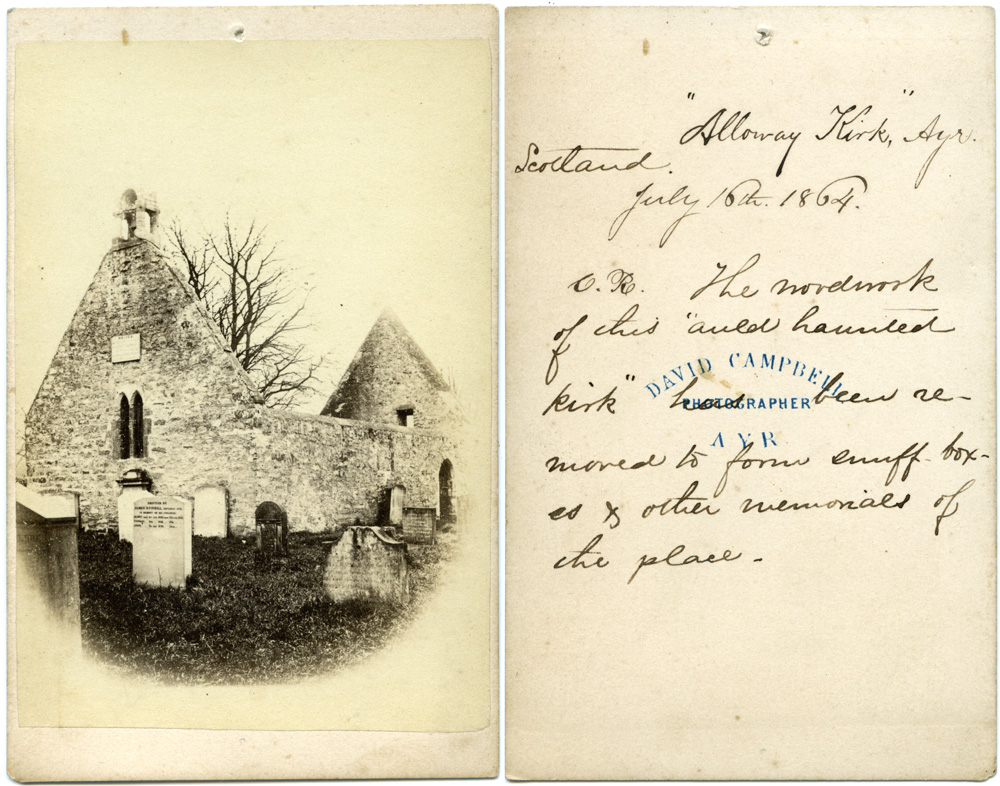
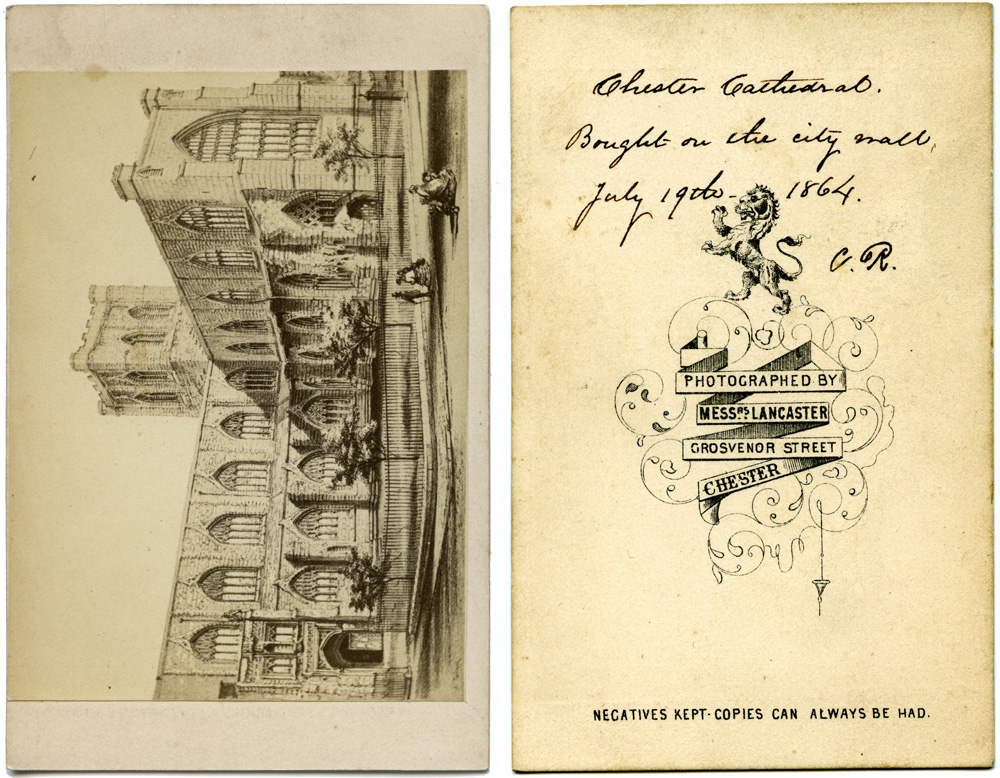
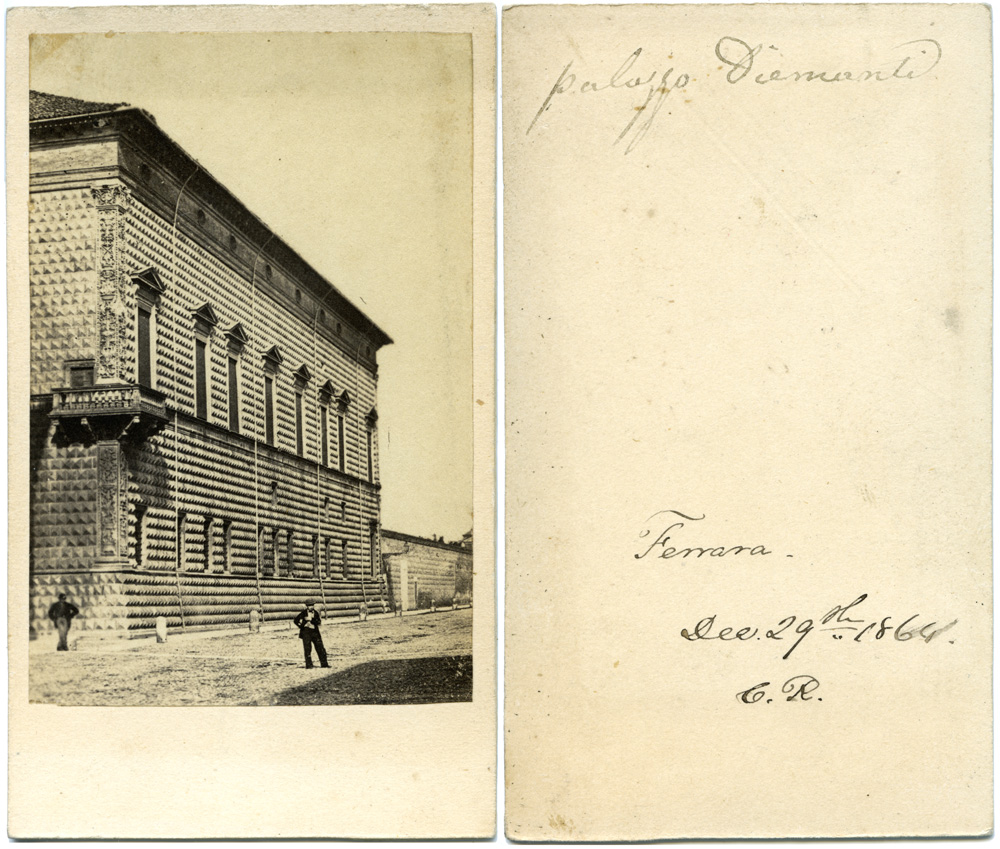
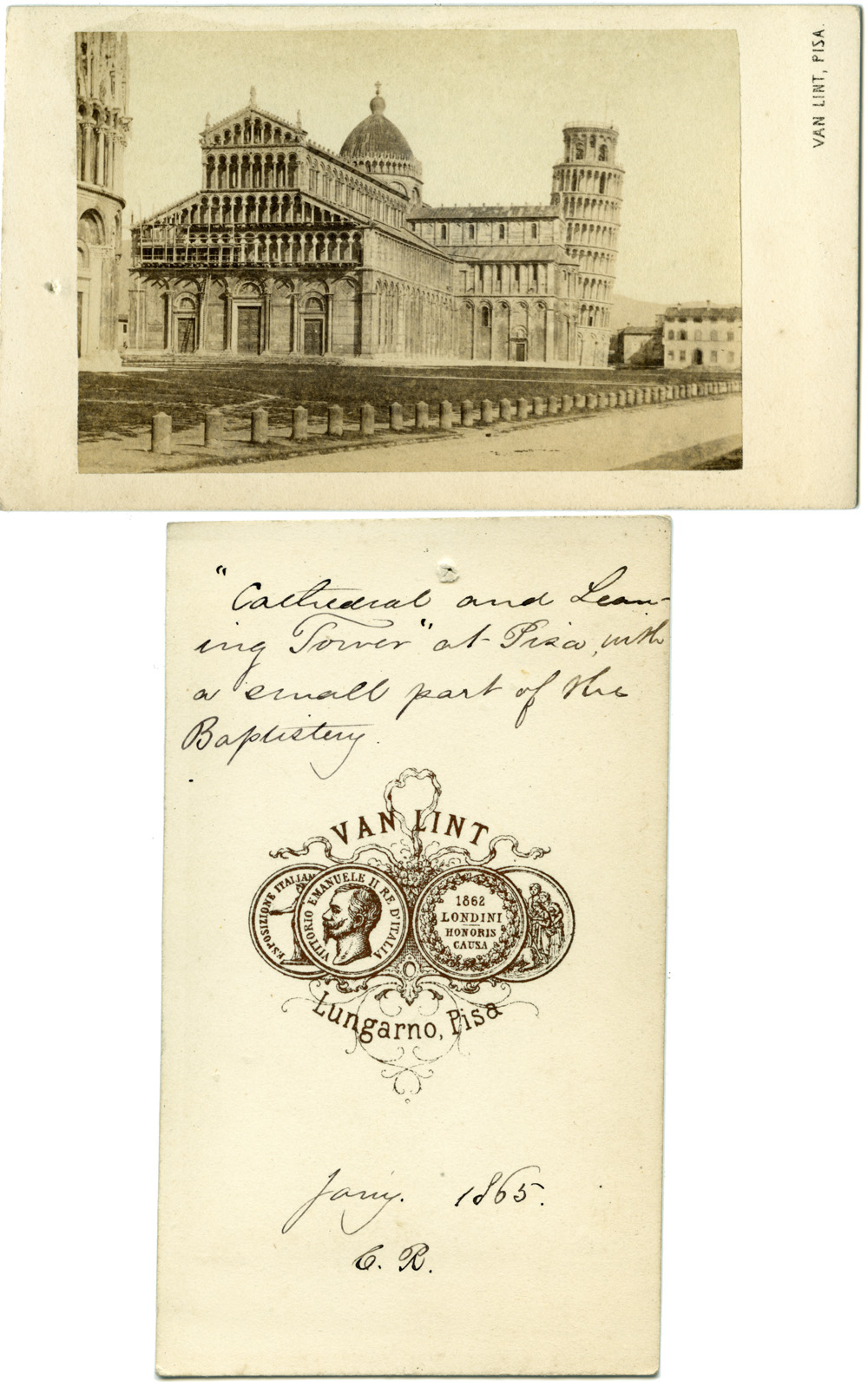
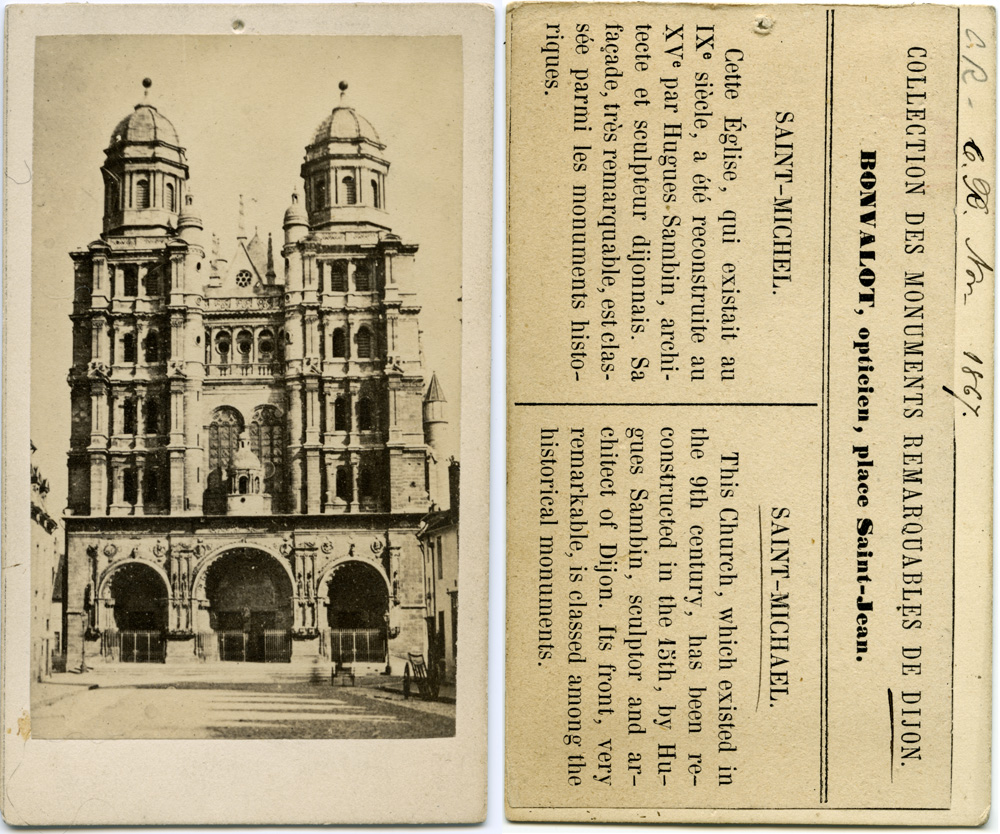
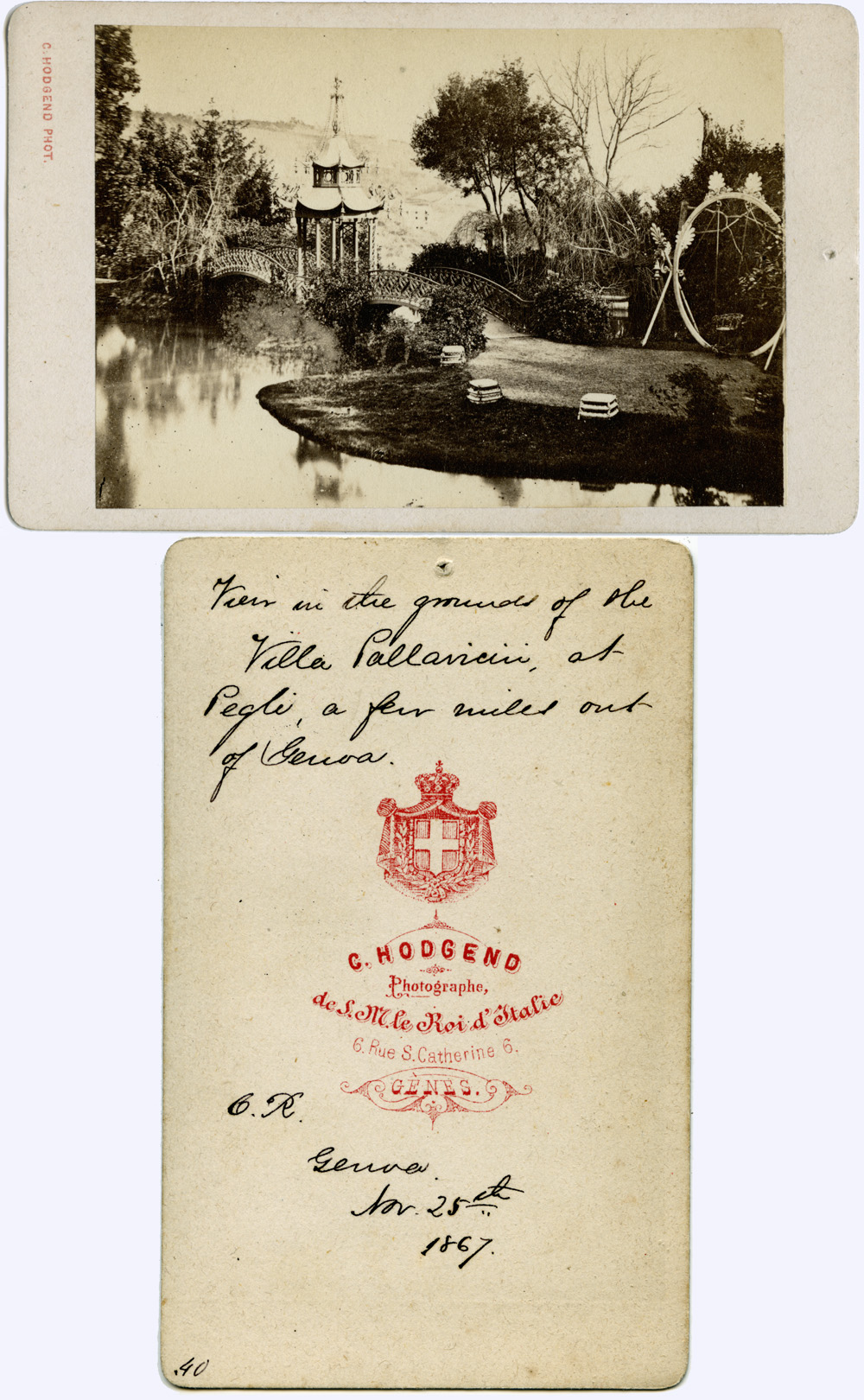
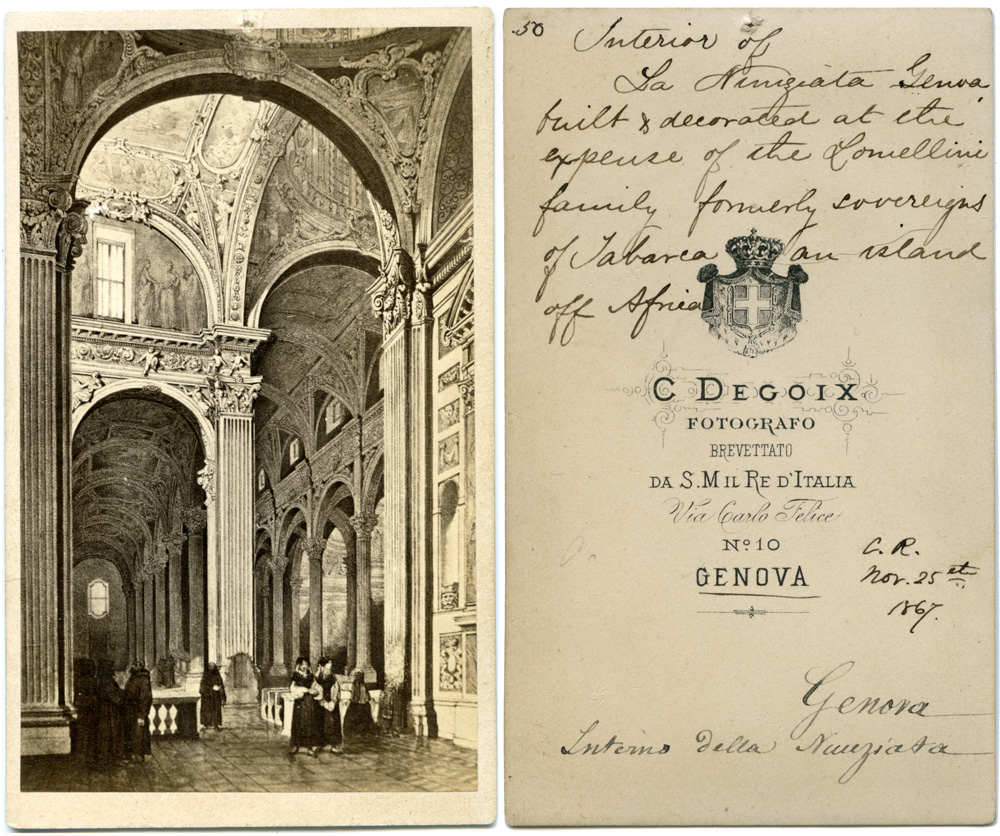
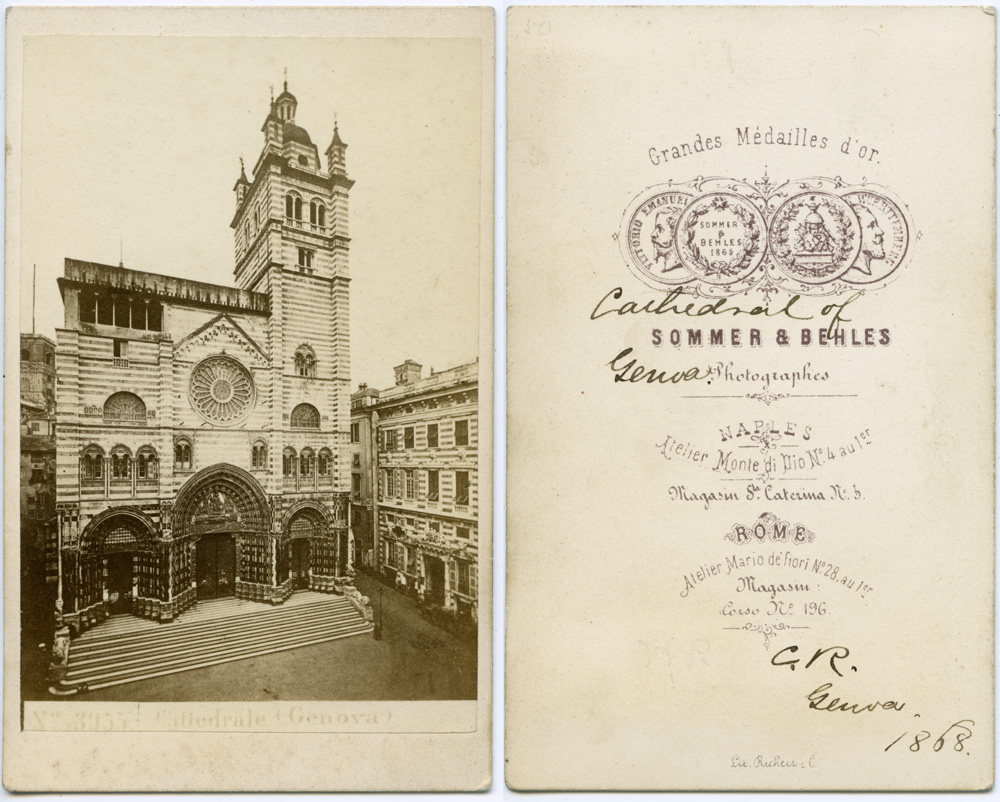
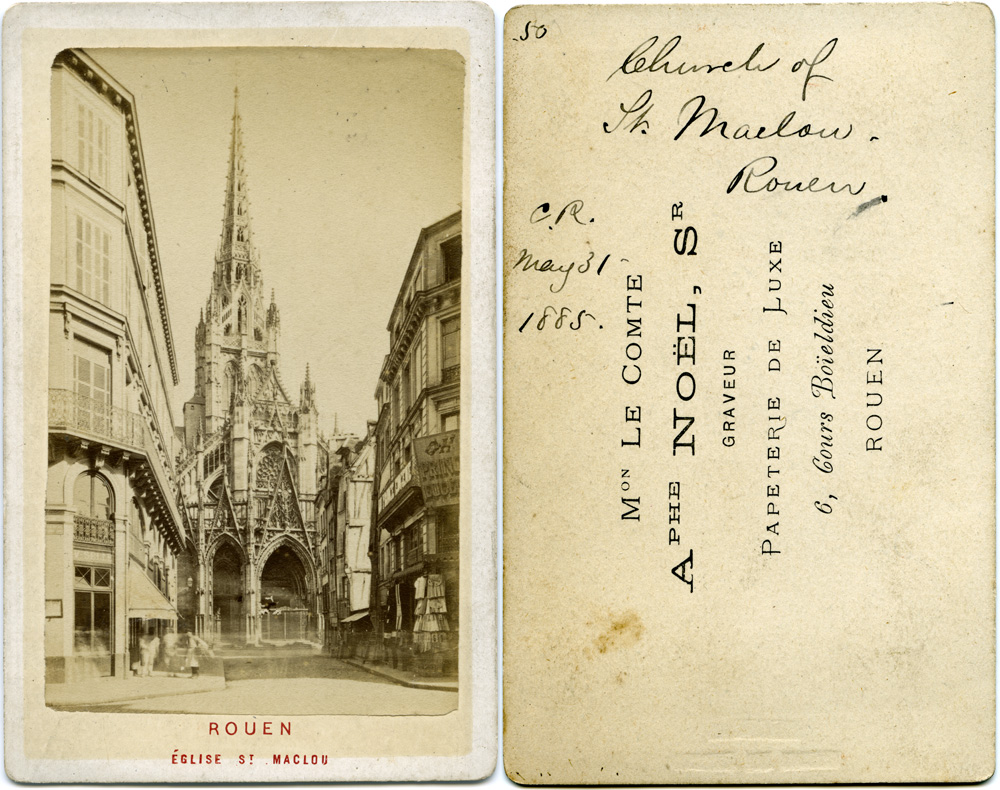
Ok- I managed to succumb to indiscretion and bought the rest of the “C.R.” cartes-de-visite. If you’re new to my blog, I posted earlier about this set of cartes-de-visite a “C.R.” purchased and collected during what I assume was his (not hers) journeys across Europe during and after the US Civil War. It’s a fascinating travelogue spanning three countries and twenty-one years. Two of the images in this second set are in fact photo reproductions of sketches. Given the dates and locations of the earliest ones in the set, one can’t help but wonder if “C.R.” was a Union or Confederate supporter, perhaps even a Confederate agent sent to the U.K. to try and purchase arms and ships for the Confederacy. Or was “C.R.” just a Northern businessperson whose work frequently took him to England, Scotland, France, Italy and Germany (there were one or two more in the set that I was unable to acquire that showed German churches) and had a soft spot for ecclesiastical architecture?

The oldest one in the complete set of nine CDVs dates from July 1864, and the last one is May 1885. Here’s the complete set, in chronological order.

AllowayKirk, Ayr, Scotland, July 16, 1864
Chester Cathedral, July 19, 1864
Palazzo Diamantini, Ferrara, December 29, 1864
The Cathedral of Pisa, January 1865
Church of St. Michael, Dijon, France, November 1867
Villa Pallavicini, Genoa, November 25, 1867
Interior of La Nunziata, Genova, November 25, 1867
Genova Cathedral, 1868
The Cathedral of Rouen, France, May 31, 1885

Exhibition Review – Frida Kahlo: Her Photos

Yesterday I went to see an exhibit at the Arlington Artisphere of the photographic collection of Frida Kahlo, the famed Mexican painter, wife and lover of Diego Rivera. Frida Kahlo: Her Photos is open through March 25. This is the only stop in the United States for this show, so I wanted to make sure I got to see it before it leaves. One of the very interesting things about this exhibit is that Frida was working as a painter at the same time a major movement in photography was occurring, and the collection shows, albeit tangentially, the intersection of her life with Modernist photography. She grew up in an artistic household – her father was a photographer, and she painted him as such in a portrait. There is even a fine-art nude figure study her father took of himself in the exhibit. Most of the works on display are snapshots, showing the effects of an artistic life as captured by some of the great early and mid-century photographers: Edward Weston, Tina Modotti, Lola Alvarez Bravo, and Martin Munkacsi. These are almost all snapshots; in many cases, they are very small prints, and as such, Artisphere has arranged a system whereby visitors can borrow magnifying glasses to examine the photos up close. The downside to this is that the photos are often closely spaced on the wall due to their small size and the space limitations of the room, so sometimes it is hard to see other images because people are blocking them while examining another small image with the magnifying glass.

The entire exhibition is reproductions, not original images. The quality of the reproductions is in most cases first-rate; had I not read this in the introduction to the exhibit, with few exceptions I would not have known. This is a bit of a pet peeve of mine – I have seen several exhibits lately where substitutes for the original images were displayed. In this case there is a legitimate reason for the substitution – in Diego Rivera’s will, he specified that none of his or Frida’s photos were to leave Mexico. Without substitutes, this exhibit would not be possible. The only other legitimate reason I can see for using substitute images is in the case that the originals really are too fragile to display, or displaying them would mandate viewing conditions that would undermine the viewability of the rest of the exhibit. I like being able to see the frailties of objects, the fingerprints of age, time and care that have been deposited as signs of a rich and well-lived life. In this case, given that many of the original images were machine-printed snapshots made on dubious-quality paper, and some of the later color images were Polaroids, not known for their long-term color stability, setting the lighting at a safe level for the prints would indeed have compromised the exhibit.

As a general principle though, I would still argue against the propagation of substituting digital prints for original images; viewing a facsimile, even an extremely high quality facsimile, is really only one step removed from viewing the images online. This renders museums as physical entities obsolete. It also undermines the museum’s role and responsibility as a vehicle for education and connoisseurship, and preservation. Why worry about conserving art objects if we can just make simulacra and replace them time and time again as they wear out? Why worry about the authenticity of the object on display if the object itself is irrelevant, and the means to determine authenticity are lost because people can’t tell the difference between a silver-gelatin print, a platinum print and an inkjet? Lots of people can’t afford to own even a single example of the work of a named artist, let alone enough examples to derive a working knowledge of the artist’s methods and materials. Museums can, however, and by exhibiting the work, they can enable thousands to develop that critical eye.

RIP David Prifti, 1961-2011

On November 23, 2011, David Prifti, a brilliant wet-plate photographer living, working and teaching in the Boston area, passed away after an extended battle with cancer. I am deeply saddened that such a bright light and creative force for positivity has gone out. I knew his work from APUG, Large Format Info, and the Collodion Forum, but never had the chance to meet him in person. I have seen his plates live though, hanging on gallery walls, and no web reproduction can do them justice. You can see his work online at the three previously mentioned websites (all linked from here). His work was part of the Masterplaters show that just closed November 22 at the Community College of Baltimore County Catonsville campus. Plans are in the works to bring the exhibit to the Washington DC area in the not-too-distant future – keep an eye on this blog for future information. There will be a memorial service on November 30th 4pm at the First Parish Unitarian Church in Concord, MA.

Upate 11/29/2011: Here is a link to a short writeup on the Huffington Post about David:
David Prifti, 1961-2011

There will be a scholarship fund established and named after him at the school where he taught. Information on donations is available in the linked article above.

Glen Echo PhotoWorks press release for FotoWeekDC 2011 events

Here is the press release about the Glen Echo Photoworks events coming up for FotoWeek DC. I will be participating in the “Celebration of Alternative Processes Symposium” on Sunday, November 6 and running a demo of Platinum/Palladium printing on Wednesday, November 9. I know a lot of the other presenters and they’re really great people and great artists. This will be a terrific event and I’m really looking forward to it.

PHOTOWORKS FOTOWEEK 2011

___________________________________________________________________________________

Like us on Facebook

Celebrate The Alternatives!

Alternative Process
Photo Symposium & Workshops

FotoWeek


Image by Barbara Maloney

    1
    Cyanotype Workshop with Barbara Maloney
       Date:  Saturday, November 5, 2011 
       Time:  10 AM – 4 PM 
Place:  Photoworks

      Arcade Building

             Glen Echo Park, MD 20812 

       Cost:  $125 
       Register: www.glenechopark.org or call 301-634-2226
       Info:  www.glenechophotoworks.org

       Whether you are new to non-silver processes or not,
       this one-day workshop promises to be a lot of fun.
       We will make cyanotype photographs, photograms and collages.
       The class includes toning, hand-color and overprinting gum bichromate.
 

    2
    Celebration of Alternative Process Symposium

       Date:  Sunday, November 6, 2011 

       Time:  11 AM – 4 PM  

Place:  Photoworks

      Arcade Building

             Glen Echo Park, MD 20812 

       Cost:  FREE — Lunch Break — Drinks & Desserts Provided
       RSVP:  Event is FREE.  Please RSVP at photoworks.gallery@gmail.com

       Info:  www.glenechophotoworks.org
       A group of artists whose work embraces the use of historic
       photography
processes and hand-applied emulsions
       will show and discuss their work and processes every 30 minutes.
       Guest Artists are listed below, in order of their presentations… 
    
       Barbara Maloney, “Temperaprint, Photo Etching, Cyanotype”
       Scott Davis, “Platinum and Palladium”
       Sheila Galagan, “Lith Printing”
       Andrew Currie, “Tintype”
       Grace Taylor, “VanDyke Brown”
       George Smyth, “Bromoil”
       Keith Williams, “Monobath, IR, UV”
       Richard Pippin, “Lith Printing”  


    3

    Platinum & Palladium Printing & Variations
    Workshop with Scott Davis

       Date:  Wednesday, November 9, 2011 
       Time:  7 PM – 9 PM  
Place:  Photoworks Studio

      Arcade Building

             Glen Echo Park, MD 20812 

       Cost:  $40  
       Register: www.glenechopark.org
       Info:  www.glenechophotoworks.org

       Scott Davis will demonstrate the beautiful and noble platinum,
       palladium and ziatype printing processes.  Discussion includes
       tools, chemistry, paper choices, coating techniques, processing,
       contrast control, and techniques for affecting image color.
       Tips and tricks for great prints will be shared

    4

    Bromoil Workshop with George Smyth

Date:  Sunday, November 13, 2011
Time:  10 AM – 4 PM
Place:  Photoworks

      Arcade Building

             Glen Echo Park, MD 20812 

       Cost:  $120 plus $30 supply cost 
       Register: www.glenechopark.org
       Info:  www.glenechophotoworks.org

       Bromoil is an early photographic process popular with the Pictorialists
       and is presently being revived by fine art photographers with endless
       possibilities for expression.  Topics covered are:  digital negatives,
       silver gelatin papers, mixing chemistry, and bleaching prints.
       Students will have the opportunity to ink a few prints (provided).
       Smyth will conclude with the “finishing” and presentation of prints.

Photoworks Photography School will offer
Alternative Process Workshops
in Spring 2012 as part of the course curriculum.
An Alternative Process Exhibit will be held
in the Photoworks Gallery in April 2012.


_______________________________________  

   Like us on Facebook 
     PHOTOWORKS
     7300 MacArthur Blvd
     Glen Echo, MD 20812
     301-634-2274


Pier 24 museum in San Francisco – a photographic education

Over the weekend I went to see the Pier 24 exhibit space in San Francisco. It has only been open for a year or so (the current exhibit is their third ever, I believe). It represents a novel approach to the museum experience in general and photography exhibits in particular. The facility itself is located in one of the old waterfront warehouses along the Embarcadero (thus the name), directly beneath the Oakland Bay Bridge. The interior is divided up into roughly 20 rooms. Admission is FREE, but by appointment only. They allow twenty people at a time for a two hour block, so your distractions during  your visit are minimized. Another way they minimize distractions is by having NO wall text – the floor plan flyer you get upon entering has the only labels for the exhibits, consisting of the photographers names who are hung in a given room. Absolutely maddening if you’re not familiar with everyone in a given room, but at the same time, quite liberating because it frees you from having to accept the curator’s “authoritative” context. The current exhibition, up through December 16, is entitled simply “HERE”. The theme is work that in some way connects to San Francisco – either taken in or near the Bay area or by photographers who called it home. Work exhibited spans the range from 19th century mammoth plate collodion images printed on albumen paper by Eadward Muybridge and Carleton Watkins to 20th century Modernist masters like Edward Weston and Ruth Bernhard to color mural prints by Richard Misrach and Larry Sultan, and even a five-minute video clip of the car chase scene in Bullitt with Steve McQueen.

Much of the work on display was not to my taste – I don’t like what has been derisively labeled “hedge fund wallpaper” by some New York gallerists referring to recent deadpan posed-snapshot color mural prints. However, there was enough early imagery to satisfy my inner antiquarian, and now that I’ve seen enough of that kind of work, I’m starting to appreciate it for what it is. I still wouldn’t accept money to hang in my house, but one example finally struck home as to what was going on in the photograph. There was a room with a series of VERY large color prints by Anthony Hernandez of vacant interiors. On the literal surface, they’re incredibly ugly, showing abandoned and/or ruined interior spaces with industrial carpets, missing drop ceilings, and junky furniture. One thing that did catch my eye though was the use of color itself. If you stepped back and looked through a defocused eye, the images became all about abstract color fields, geometric forms, and intersecting planes.  The graphic abstract geometry creates a contrast with and tension against the literal detail of the photographic image, making your brain switch back and forth between the two characteristics of the image – the texture of the purple carpet, the gray popcorn ceiling and the white-washed faux-wood paneling in the hallway against the receding, intersecting planes of colors converging on a vanishing point in the far rear of the image. I think it’s this kind of tension in a photograph that has too often repelled me from post-modernist photography – it’s too easy to be fixated on and distracted by the details and not see the whole picture. I still don’t like the “posed deadpan snapshot”, whether it’s printed 4″x6″ or 40″ x 60″. But at least I can start to “get” another genre.

For more information about Pier 24, visit their website: http://www.pier24.org


FotoWeek DC events at Photoworks in Glen Echo

Photoworks in Glen Echo, Maryland (just outside Washington DC) will be putting on a slate of events as part of FotoWeek DC from November 5-12, 2011. I will be participating in the alternative process show-and-tell on Sunday, November 6, from 11AM to 4PM. I will be showing selections from my recent body of work of DC at night, all shot on large format film.

I will also be giving a platinum/palladium printing demo later that week (date/time to be determined) – admission is $40 plus a $10 materials fee. Here is the slate of presenters and schedule for November 6. I encourage everyone to come out and see the show, and if you’ve never been out to Photoworks before, please come check it out, it’s a lovely facility in the terrific (and photographically ripe) setting of Glen Echo Park, which is part of the National Park Service!

For more information about the park and its cultural, social and educational activities for people of all ages, here is a link to the park’s website:
Glen Echo Park

11:00 11:30 Barbara Maloney Intro/Temperaprint/Photoetching/Cyanotype
11:30 12:00 Scott McMahon Gum bichromate
12:00 12:30 Scott Davis Platinum/palladium
12:30 13:00 Sheila Galagan Lith Printing
13:00 13:30 Andrew Currie Tintype
13:30 14:00 break
14:00 14:30 Grace Taylor Vandyke brown
14:30 15:00 George Smyth Bromoil
15:00 15:30 Keith Williams Monobath/IR/UV
15:30 16:00 Richard Pippin Lith Printing

Upcoming shows/classes

I’ve gotten some further confirmation, so I can post more information about this now:

I’ll be showing work at PhotoWorks in Glen Echo, Maryland as part of PhotoWeek DC 2011. I’ll be displaying my platinum/palladium prints and talking about the process as part of a show-and-tell event on Sunday, November 6. I’ll update with links when they have a schedule of events published. I’ll also probably be doing a process demo some evening that week or the following weekend, November 12-13, and a full-fledged workshop in the spring of 2012.

Upcoming classes/exhibits/jurying

I’ve gotten some further confirmation, so I can post more information about this now:

I’ll be showing work at PhotoWorks in Glen Echo, Maryland as part of PhotoWeek DC 2011. I’ll be displaying my platinum/palladium prints and talking about the process as part of a show-and-tell event on Sunday, November 6. I’ll update with links when they have a schedule of events published. I’ll also probably be doing a process demo some evening that week or the following weekend, November 12-13, and a full-fledged workshop in the spring of 2012.

On a separate note, I’ve been asked to be a judge next weekend at the Howard County Fair’s Home Arts department photography contest. If you’re going to be in the neighborhood, stop by and say hello and see the entries in the contest.

From Anonymous Vernacular by Jeremy Moore

I read this post by my friend Jeremy Moore the other day and wanted to pass it along. I wholeheartedly agree. I still push myself to go to see contemporary shows because I want to see what people are doing, and while it’s not a universal constant, I am disappointed more often than I am delighted by what I’m seeing on the walls. Too often the idea that the concept should take primacy over the craftsmanship has evolved so far that the idea of craftsmanship seems to be not just second-fiddle, but non-existent. Prints that aren’t spotted, contrast corrected, burned/dodged, or color corrected are far too common. I think it’s a symptom of the age that thoughts no matter how unfinished are all given equal value, and he (or she) who can shout their idea the loudest gets credit. Sometimes it feels as if you’re back in high school at the Model UN debate club and the teachers have stepped out of the room – everyone’s still on-focus enough to stick to debating the topic at hand, but all sense of moderation and argument has been thrown out the window – “I think the solution to the Arab-Israeli problem is to give Jerusalem to Tibet and let the Buddhists run it!” “And why do you think that would work?” “Because!” “Nuke em’ all and let God and Allah figure out between themselves which bodies belong to whose faith” and so on…