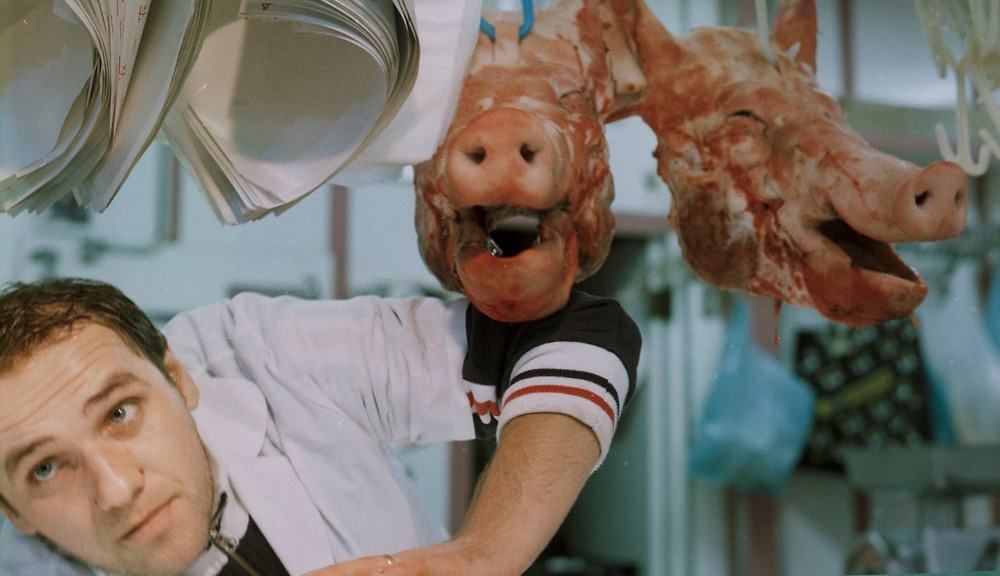
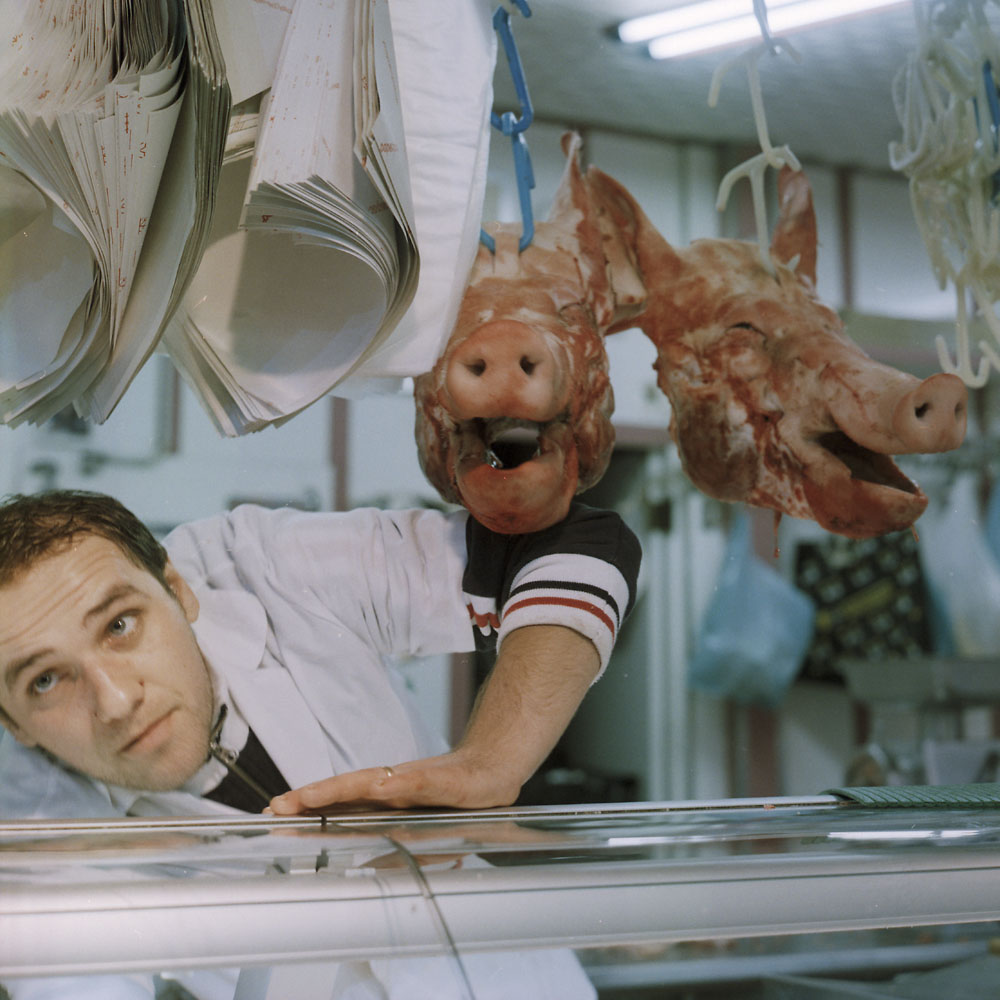
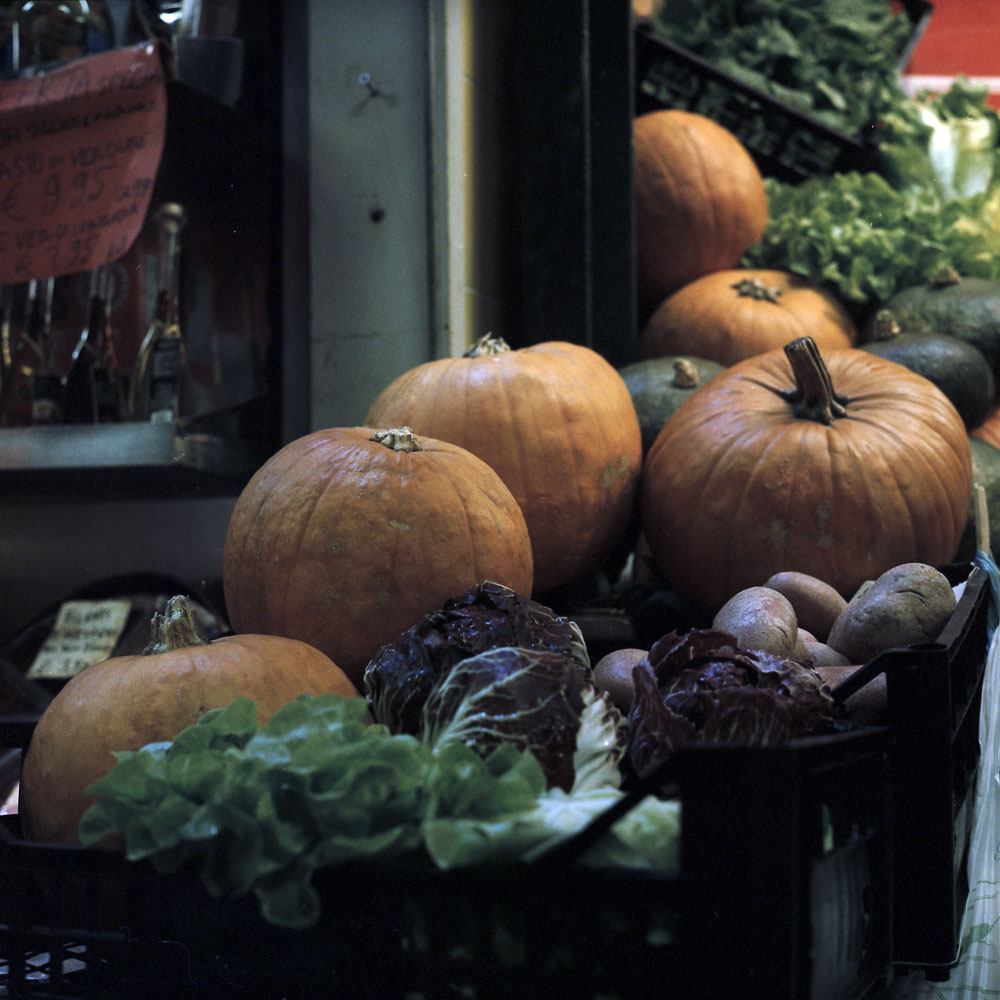
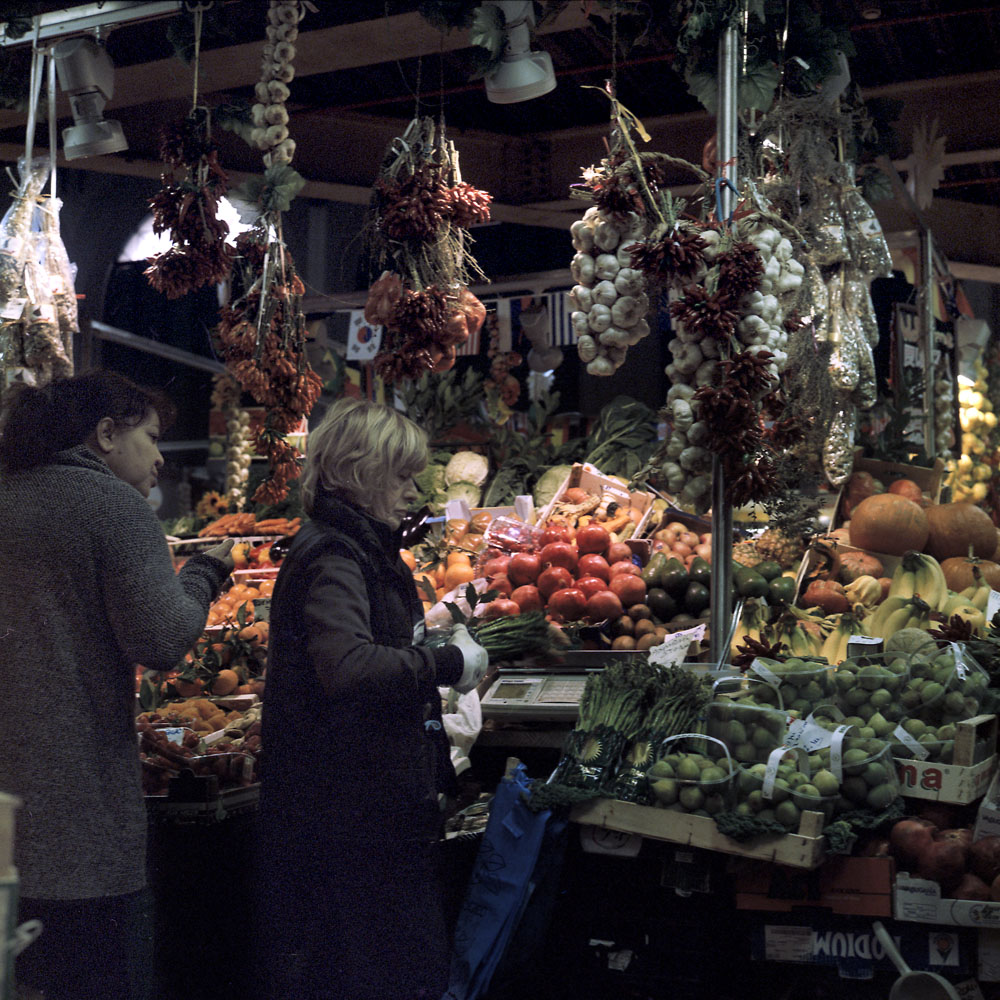
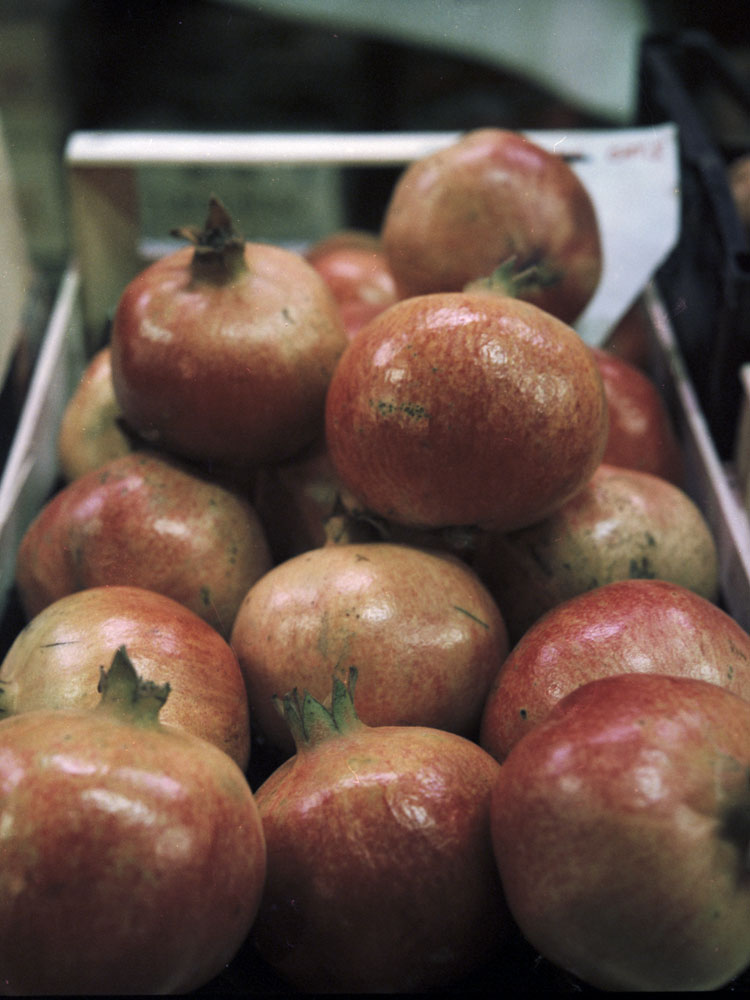
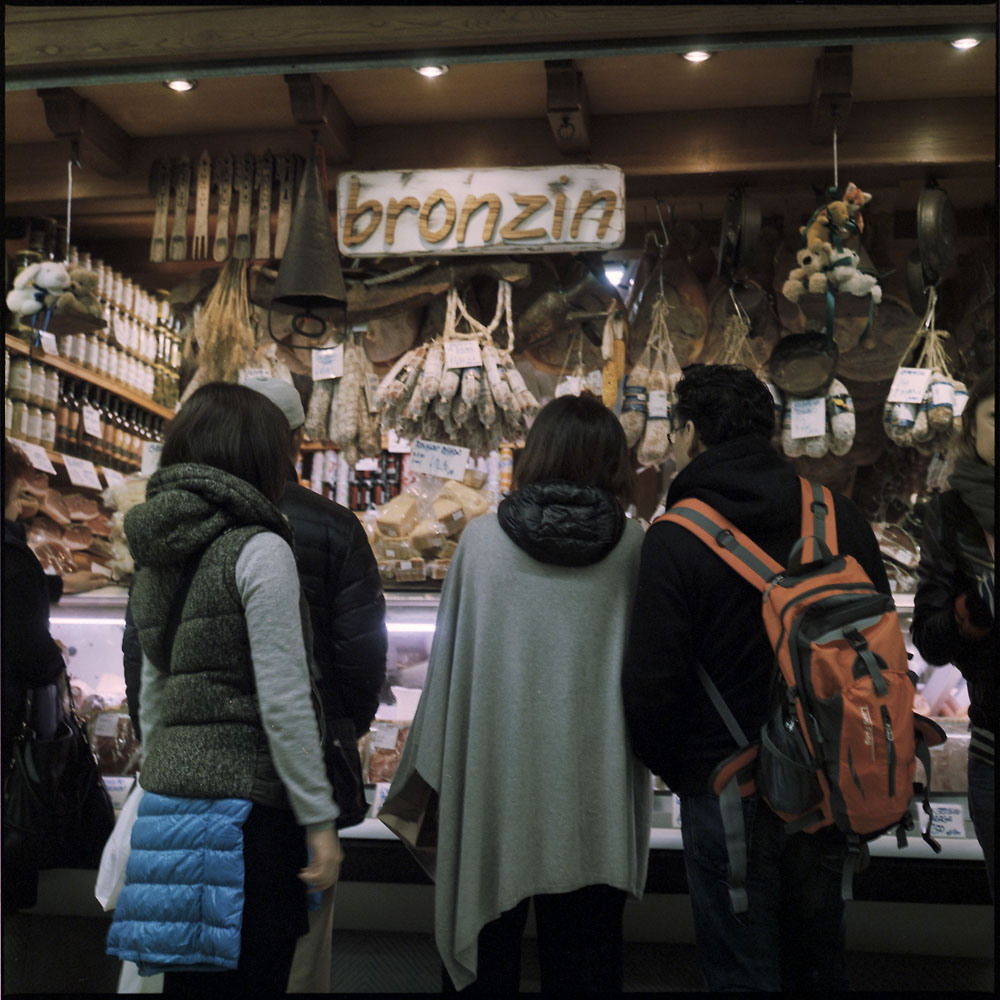
From my trip to the Mercato Centrale in Florence. It’s challenging shooting in someplace like the Mercato Centrale because it’s very crowded, and the lighting is generally miserable- overhead fluorescents mixed with neon mixed with halogen and now mixed with LED spots. One of the things that helps pull it together is a great film – Kodak Portra 800 to be specific. It’s very fine-grained for a film that fast, and it, like the other films in the Portra family, does an incredible job of handling mixed lighting sources. No special filtration was used to color-correct these images.
Here begins my Italian saga. I got back less than a week ago from my Italian excursion, having spent 12 days in Florence and Rome. I posted an odd and end from my phone while on the road, but now that I’m home I’m working my way through the 79 (yes, 79!) rolls of film I shot. I’ve got 16 processed so far, and will try to develop some more after work during the week so I don’t have to totally binge on the weekends.
If you’ve been following the blog, shortly before I went away I got a Lomo Belair X/6-12 panoramic camera. I posted a few shots I took with the 58mm super-wide lens, and that lens is, well, marginal at best. Very soft, very low-contrast, and horrendous barrel distortion. Not the kind of lens I would want to shoot a lot of architecture with, and that’s what I’d be shooting a lot of in Italy. I brought it with me just in case, but kept the 90mm lens on the camera and ended up shooting exclusively with that.
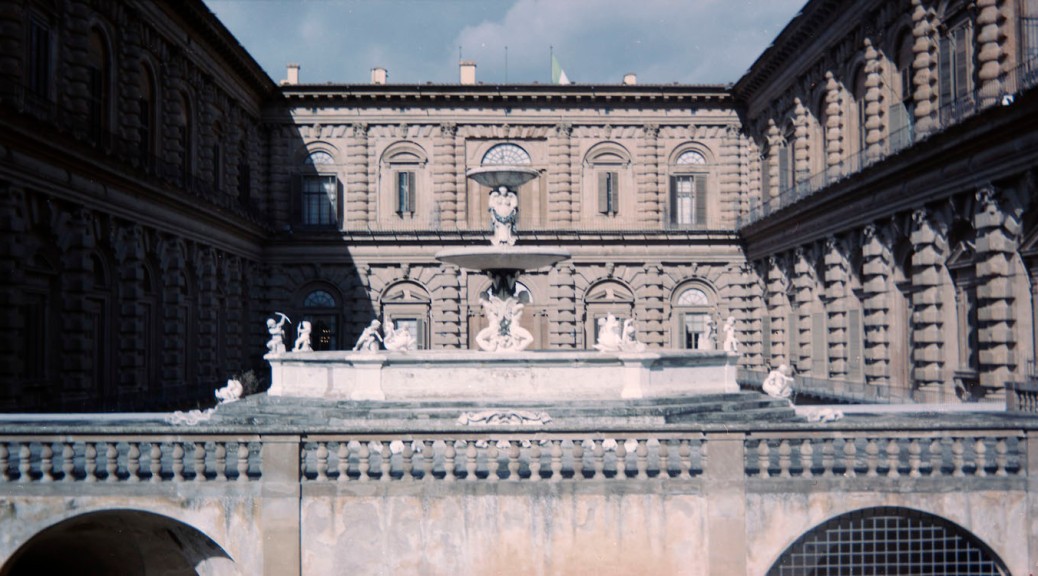
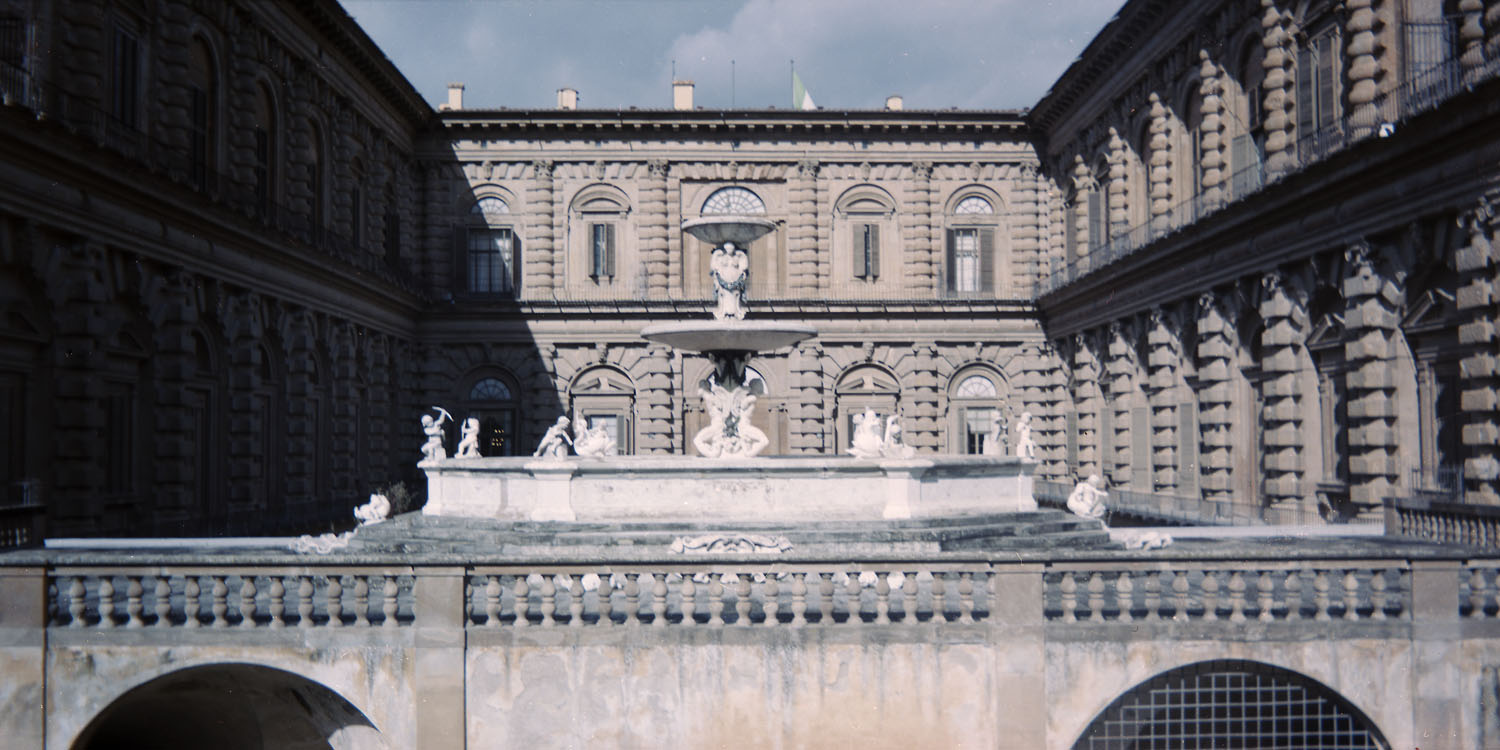
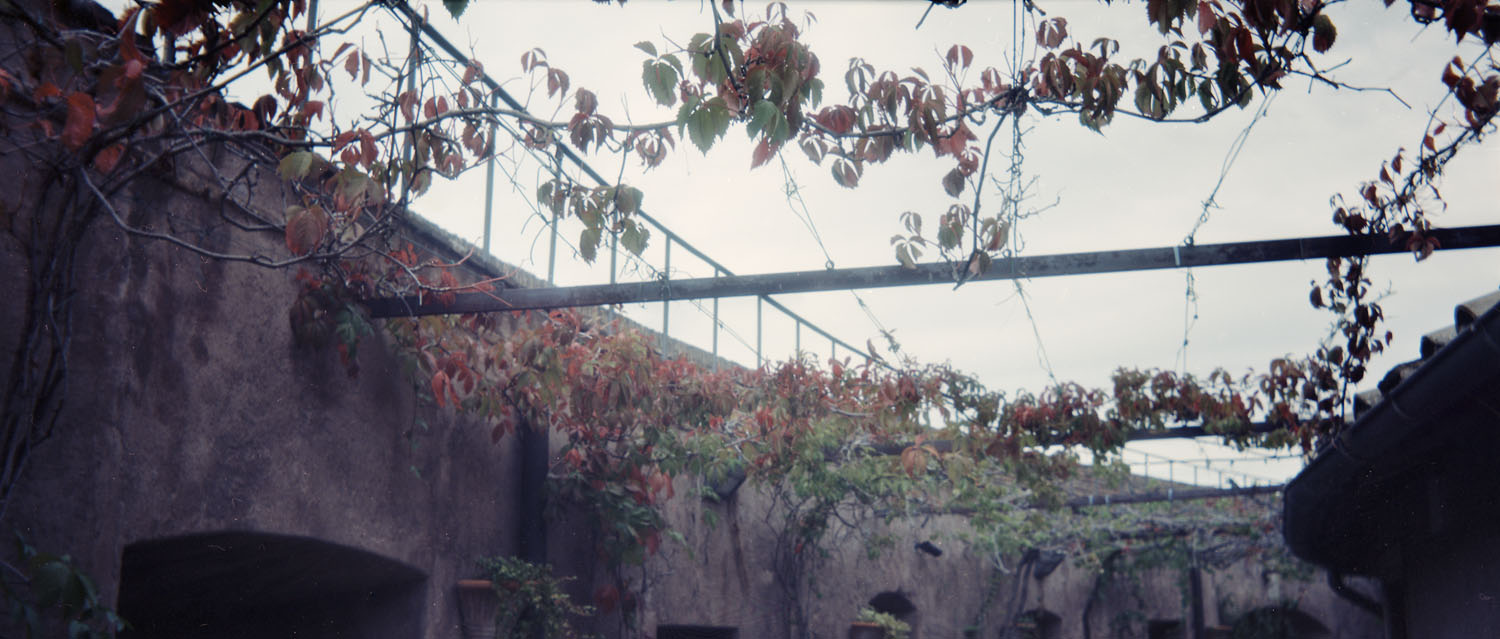
This is the courtyard of the Palazzo Pitti, as seen from the Boboli gardens behind it. As you can see from this shot, the 90 is sharper than the 58, but still not up to the standards of a glass lens (the 58 and the 90 are both plastic).
Pitti Palace
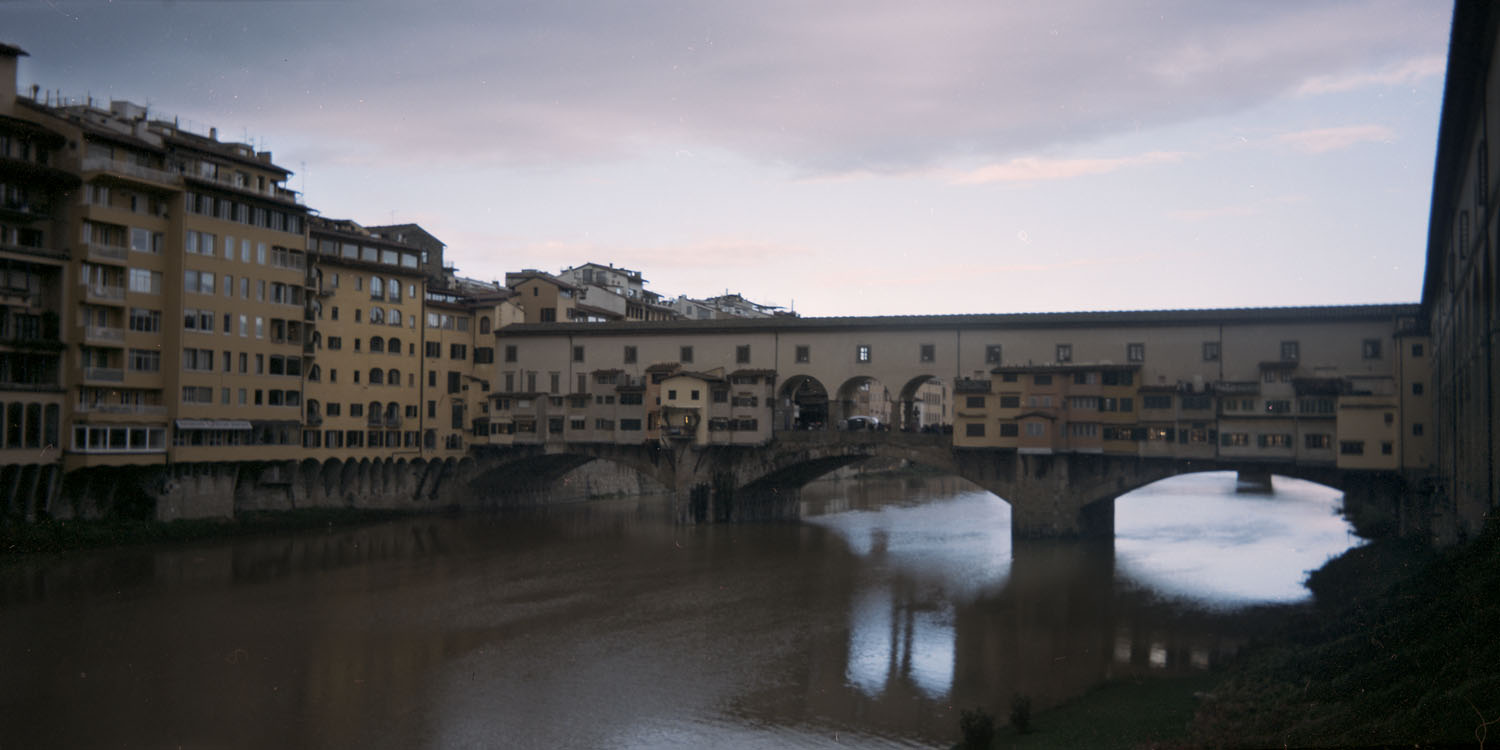
The 90 is better, but better is a relative term. Certainly, I wouldn’t have been able to take these shots without the camera, and I genuinely like them, but they’re not what I normally think of when I think of my style of photograph. If I’m going to stick with the camera, it’ll be a mental adjustment to apply the tool to tasks appropriate to it. It’s very good at transforming the time of day of a shot- while this is titled “Ponte Vecchio Evening”, it was actually shot around 10AM.
Ponte Vecchio Evening
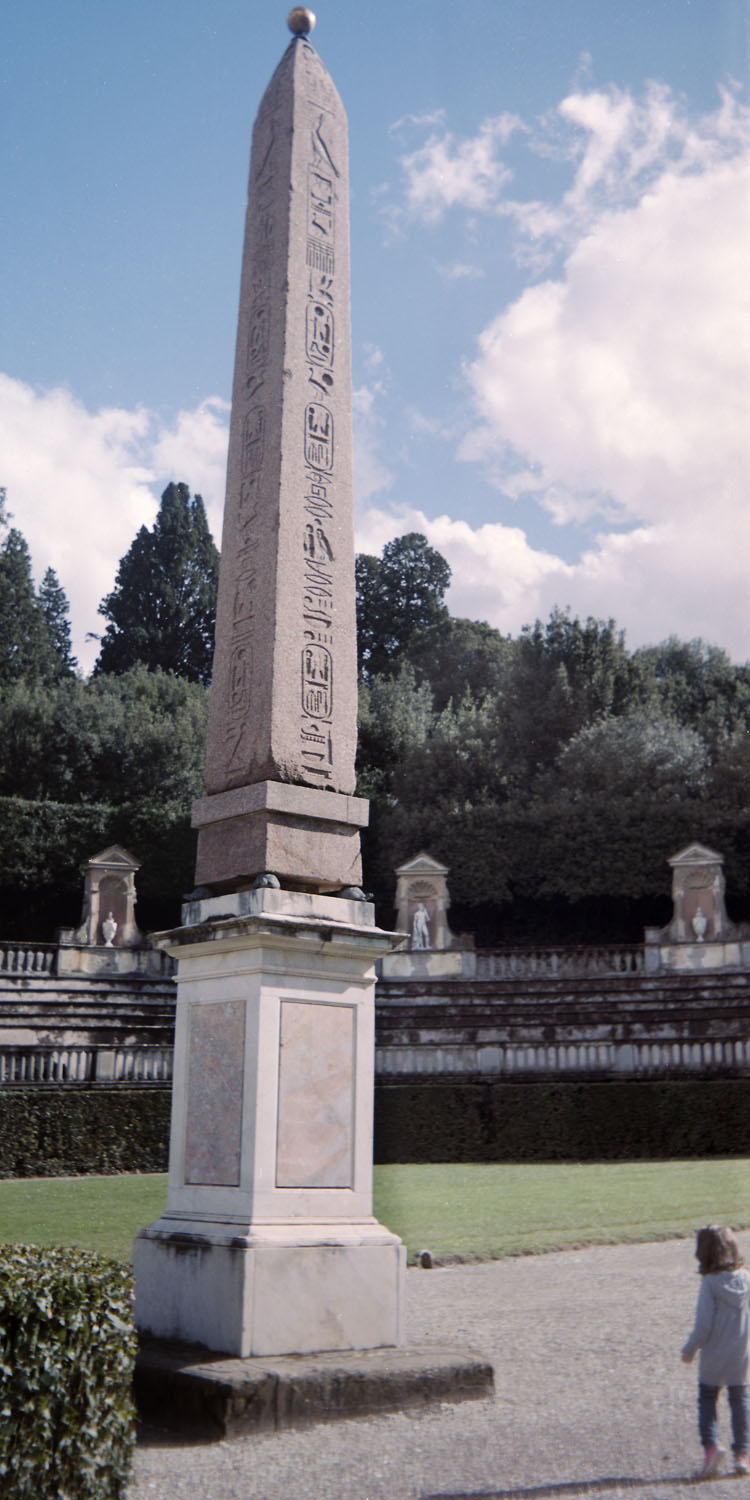
This has also been a lesson for me in making peace with cropping. I’ve been for the most part a full-frame kind of guy – I try to compose to the edges of my frame so everything shows the way I want it to and I don’t need to crop. But sometimes, the best of intentions when composing in the heat of the action don’t always work, and you learn to crop after the fact. This shot, for example. In the original full frame, the obelisk was dead center in the frame. I think at the time I pushed the shutter button I thought the little girl was out of the picture, but there she was. On the left, the edge of the fountain in front of the obelisk was intruding into the scene. Looking at the image actually captured, all the action in the scene included the little girl playing off against the obelisk, and the edge of the fountain was a real distraction. Cropping to get rid of the fountain completely changed the dynamic and makes the image go from being a record shot to something actually interesting.
Obelisk Boboli Gardens
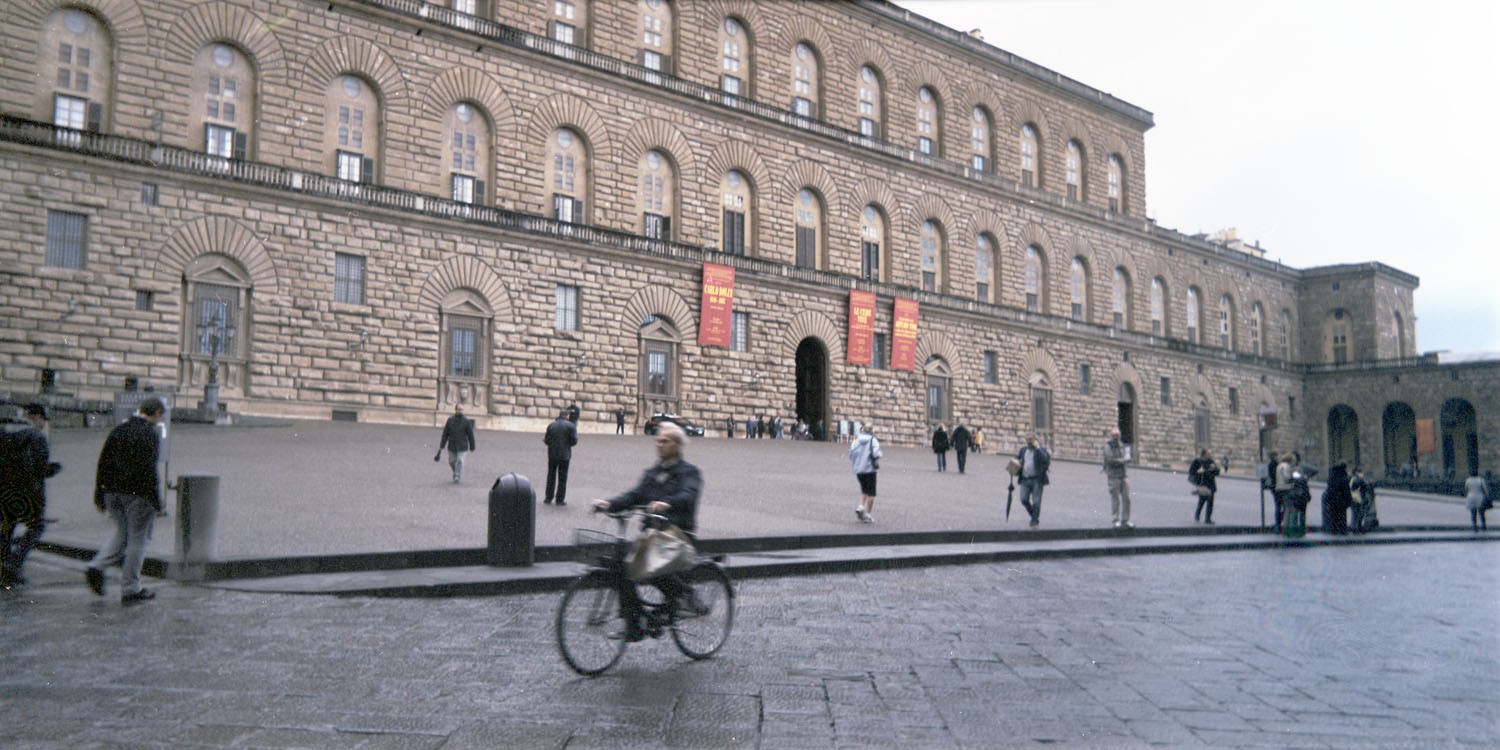
This is the facade of the Palazzo Pitti, originally home to the Medici family, later a residence for Napoleon Bonaparte, then the administrative center of the Italian government for the first few years after unification, and now an art museum. The shutter has a maximum speed of 1/125th of a second, which is fairly slow all things considered. I don’t know how fast an exposure this was – the camera doesn’t tell you what speed it is using – so I’m guessing somewhere in the 1/60th range given the amount of movement in the cyclist. That’s another thing you have to make peace with with this camera – unpredictability. I don’t know that I’m there yet. I’ve got about 12 more rolls of film from this camera to process in my black-and-white film, so we’ll see how I feel after getting through those.
Cyclist, Pitti Palace
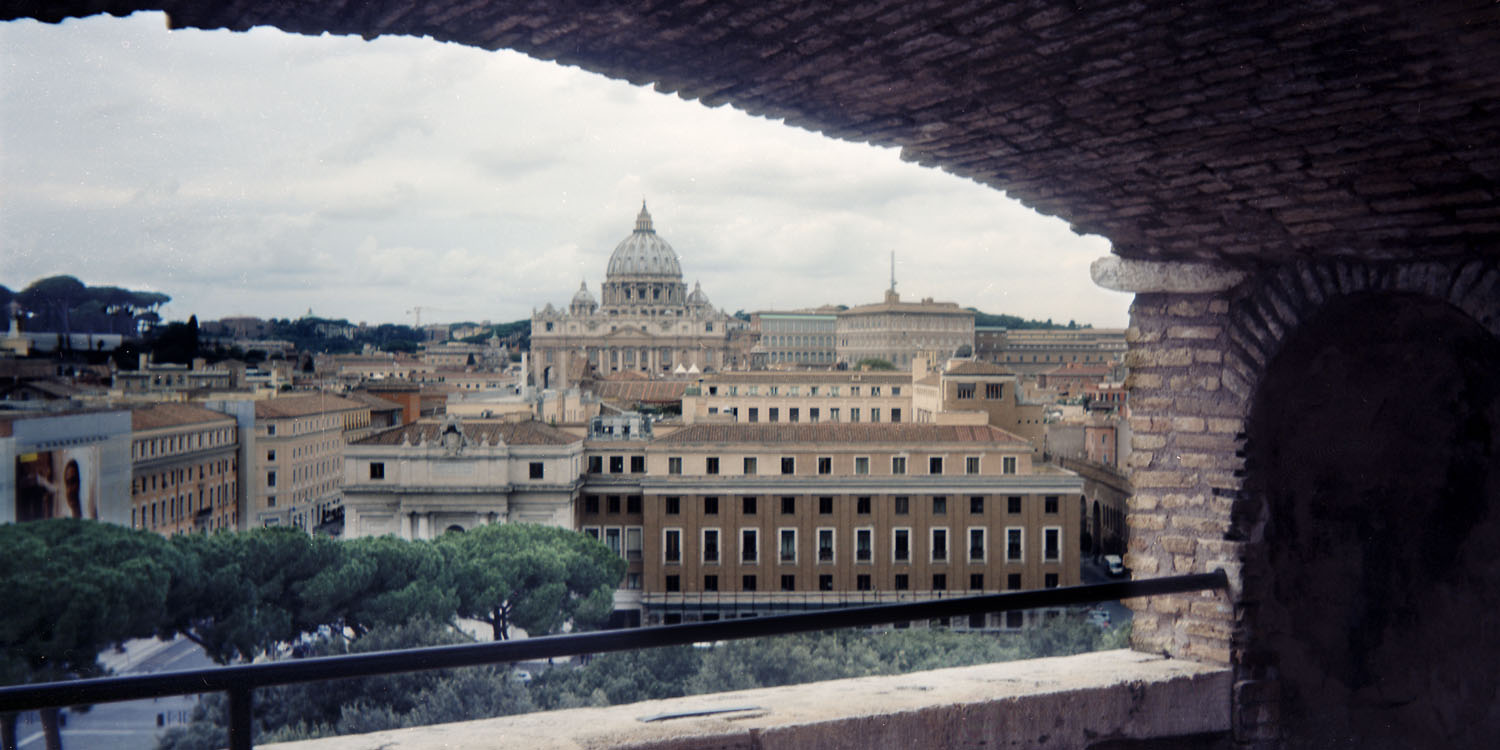
Sometimes the panoramic composition works phenomenally, like this one of St. Peter’s Basilica as seen from inside an arch on the Castel Sant’Angelo.
St. Peters From Castel SantAngelo
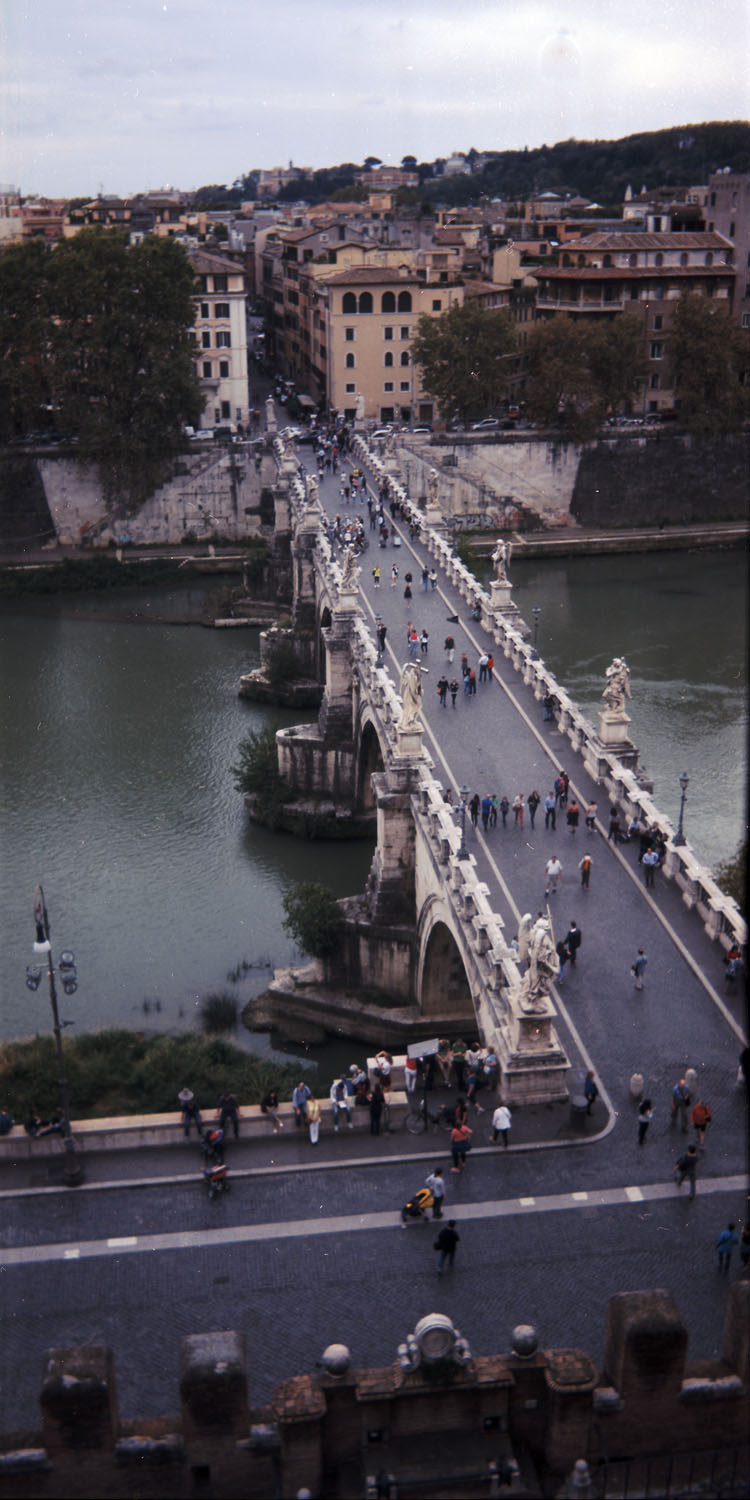
Other times, the panorama gives you compositional challenges that provide serendipitous solutions to themselves, like shooting the bridge in front of the Castel Sant’Angelo. The landscape around the bridge provides an S shape through the composition that leads your eye around and through the entire scene, not just pulling you from lower right to upper left and shooing you out of the frame at the end.
Bridge From Castel SantAngelo
Another argument in favor of cropping – the original of this included the heads of the patrons of the Castel Sant’Angelo cafe (yes, they have a cafe in the battlements of the Castel Sant’Angelo, which began life almost 2000 years ago as the burial monument to the Roman Emperor Hadrian).
Today I was out at the Colosseum (which I did not enter because the line, even with a ticket in hand, was 2 hours long!). There was this amazingly talented juggler who I shot some video of, which I’ll share here. One clip is him juggling and talking (not in the clip is his explanation that all Italian schoolchildren start English in first or second grade, which is why he sounds so good). The other clip is him in slo-mo. I’m not sure what order WordPress will put them in and since I’m on my phone with an abysmal wi-fi connection I’ll leave them alone.
I recently acquired a Lomo Belair X 6-12 City Slicker model. It comes with a 58mm and a 90mm lens and the matching viewfinders. The camera is a weird beast, sort of a neither-fish-nor-fowl thing, in that it has multiple film formats (it has masks for 6×6, 6×9 and 6×12 frames), interchangeable lenses (58 and 90mm plastic lenses, and an optional accessory 112mm all glass lens), auto-exposure in aperture-preferred mode, and a hot-shoe flash. However, it is manual film advance completely separate from shutter cocking, there are only two apertures on each lens (f8 and f16), the only sort-of control you have over the shutter is to set the film speed and/or set it to B for long-time exposures), the shutter has a maximum speed of 1/125th of a second, and focusing is zone focusing with indicator marks on the lens for infinity, 3 meters, 1.5 meters, and 1 meter. Oh, and there’s no cable release provision so you have to be extra careful when using B that you don’t shake the camera. The 58mm lens, especially at the 6×12 configuration, is very lo-fi and has gobs of obvious barrel distortion. However, where else are you going to find a 6×12 panoramic camera with a 58mm lens on it with auto-exposure for $250? Your next cheapest option is to put a 6×12 back on a press camera, which is going to run you at least a cool grand to put together. Even a 6×12 back on the new-but-still-effectively-vaporware Travelwide, plus a 65mm lens will run you a good $700-800.
I put a couple rolls through it to test it out last week and weekend. It is wicked wide with the 58, and sharp enough in the center. My example tends to run a bit to the overexposure side, which I think accentuates some of the weaker characteristics of the lens (like the low contrast from the plastic optics), although I’d rather have it overexpose than underexpose. One thing I haven’t figured out yet is if any of the lenses including the glass lens will accept filters. I’d love to try out the camera with a roll of Infrared and see what it does. It could be a great combination, or it could suck dirty dog toes. This spring, I’ll give it a try and find out.
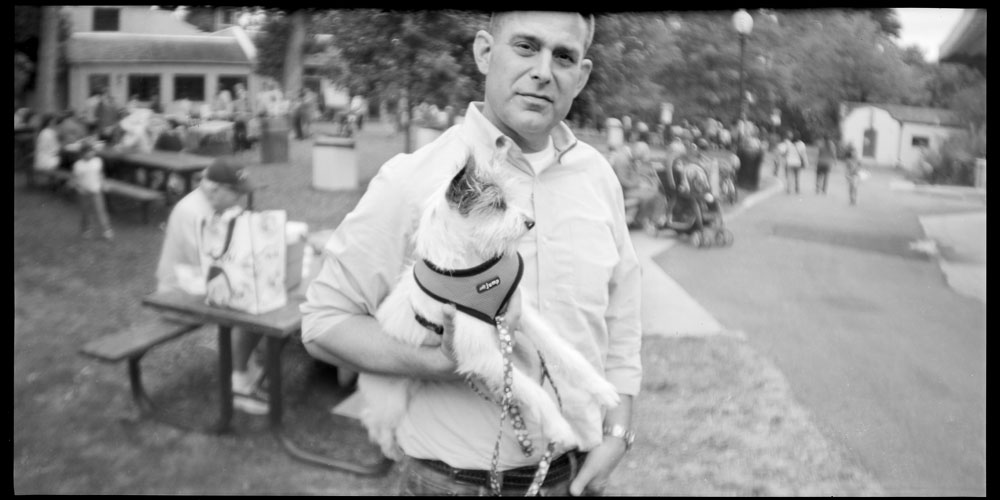
This shot is of my student Todd Walderman from my Intro to Platinum/Palladium Printing class, and his new puppy, Cookie.
Todd with Cookie
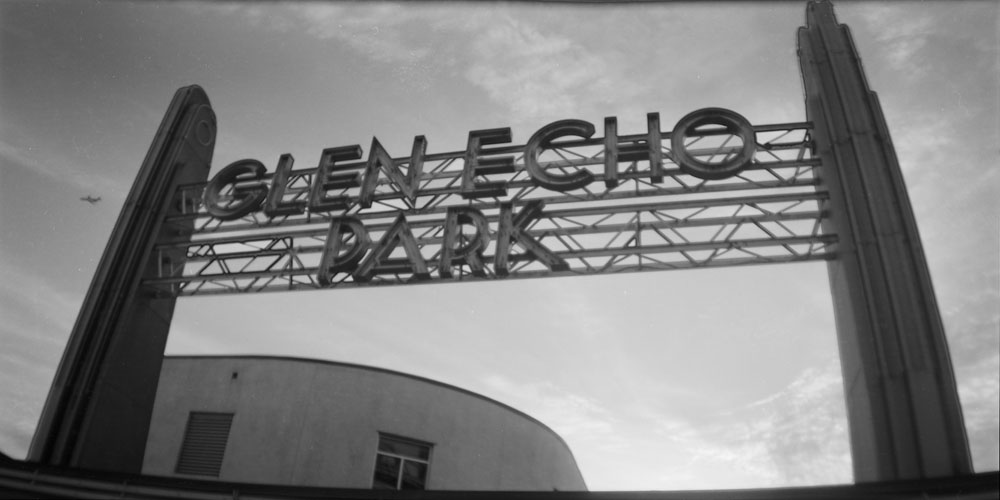
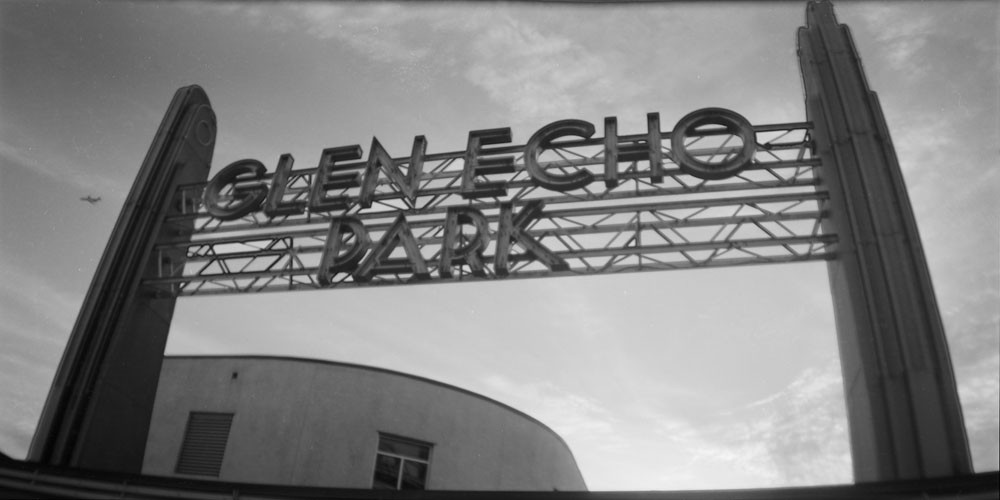
The Glen Echo Park sign, backlit at evening time. This shot as much as anything shows the amount of barrel distortion the 50mm lens has. Used appropriately it can really add to an image. But don’t use it to take pictures of things that need to be plumb and square, because they’ll look terrible. Knowing when to use it and when not is an art form in itself.
Glen Echo Park Sign
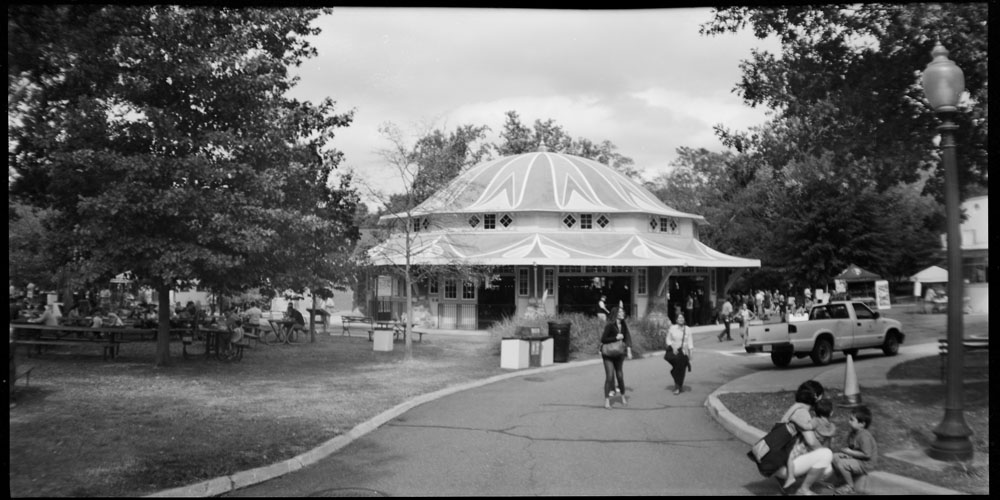
The Glen Echo carousel.
Glen Echo Carousel
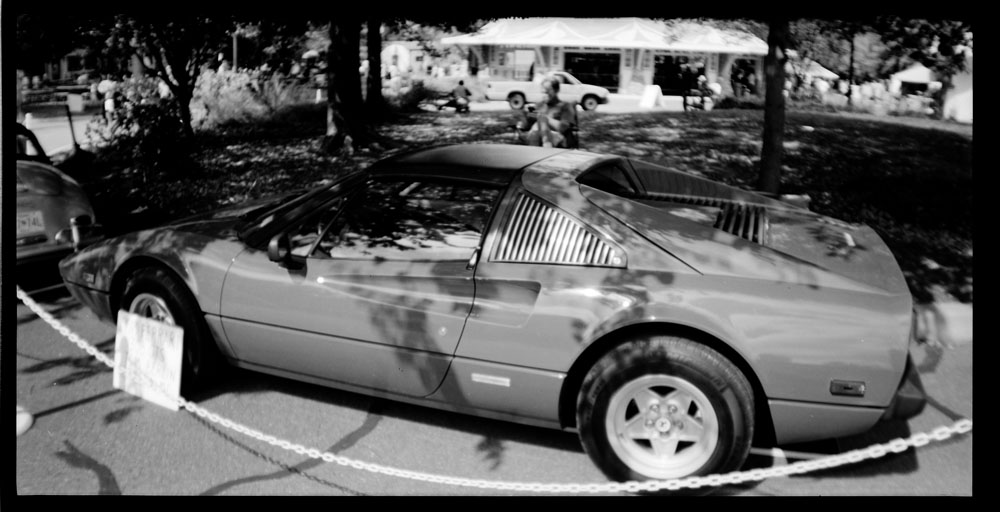
That weekend, they were having an end-of-summer-season festival at Glen Echo, which included a mini antique car show and the final running of the carousel for the year. Among the honored guests was this vintage Ferrari:
1979 Ferrari 308
In keeping with the spirit, sort-of anyway, of the whole Lomography lo-fi movement, I was running 10+ year out-of-date Ilford FP4+ through the camera. I don’t think it really made a difference, though, as you’ve seen shots I’ve taken this year using the exact same film through my Rollei, and if I hadn’t told you it was 10 years out of date you’d never know.
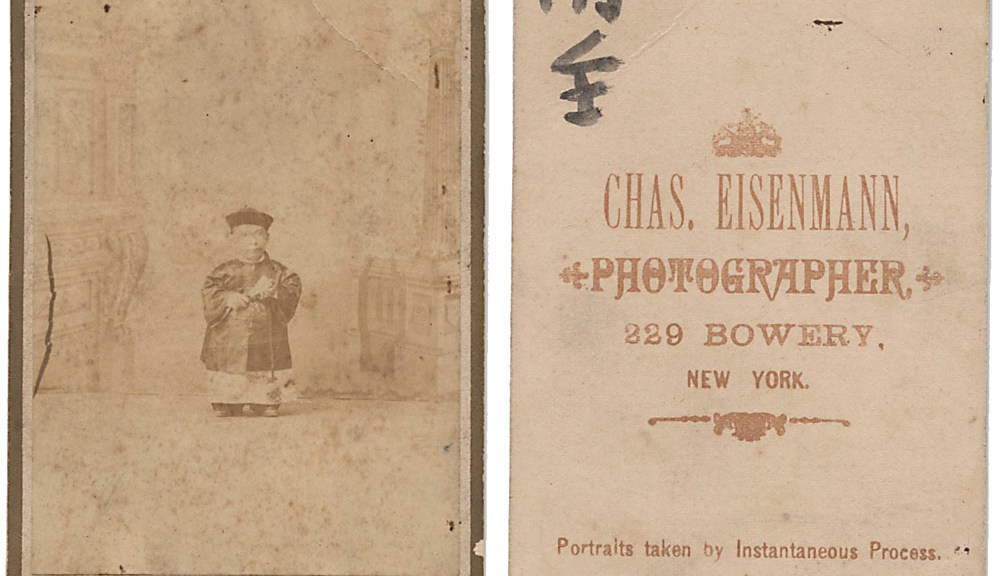
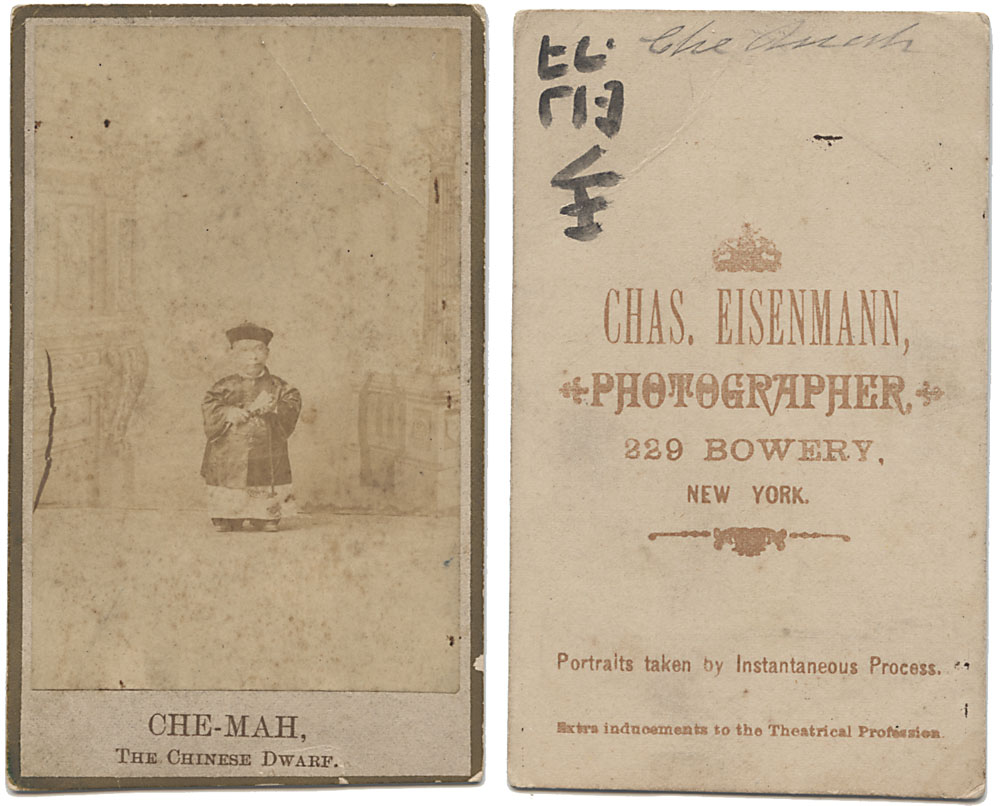
I haven’t been collecting much lately as I’ve been focused (pun intended) on shooting and creating images more. However, in a casual perusal of Ebay the other day I found this image. I’ve been wanting a CDV of Che Mah for a while. This one is rather faded and not in the best of condition, but I jumped on it as A: it was a reasonable price, and B: CDVs of Che Mah don’t show up all that often. I’ll shop around for another one in better condition later, but having this one fills a gap in my collection.
Che Mah, by Eisenmann
About Che Mah:
Like many sideshow performers, Che Mah had an exotic backstory. It was claimed that he was born in Ningpo in 1838 off China’s coast on the island of Choo-Sang and discovered by Barnum on one of his worldwide scouting expeditions. The reality is likely more mundane. After his death the book This Way to the Big Show: The Life of Dexter Fellows made the claim that he was Jewish and from London.1
Regardless of his ethnicity and country of origin, Che Mah was a popular attraction and throughout his career he worked in the Barnum & Bailey Circus, Kohl and Middleton dime museum in Chicago and Buffalo Bill’s Wild West Show.
Unlike many of the more diminutive performers of his day, he married a women far larger than he. His first wife, Louisa Colman was a normal-sized trapeze artist, his second, Norah Cleveland, weighed 200 pounds. Norah and he divorced after 14 years of marriage on the grounds his wife would not provide enough sex.2
Upon retirement, he bought a farm in rural Indiana but working a farm proved to be too difficult. He sold the farm and brought a house in Knox. Che Mah died in 1936 and was buried in Crown Hill Cemetery in Knox, Indiana.
1.Hartzman Marc, American Sideshow. New York: Tarcher. 2006. 27. Print.
2.Homberger, Francine. Carny Folk. New York: Citadel. 2005. 1-3. Print.
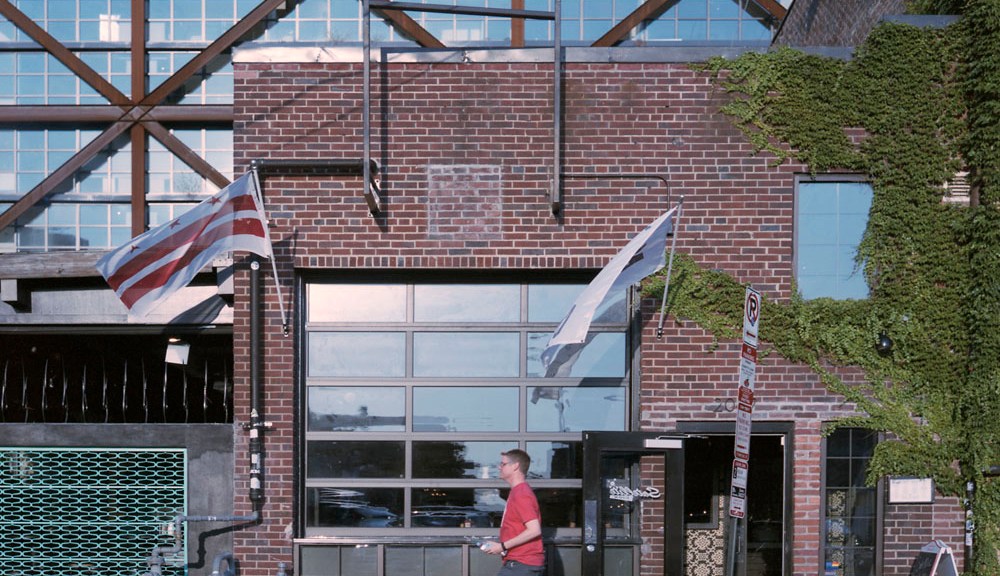
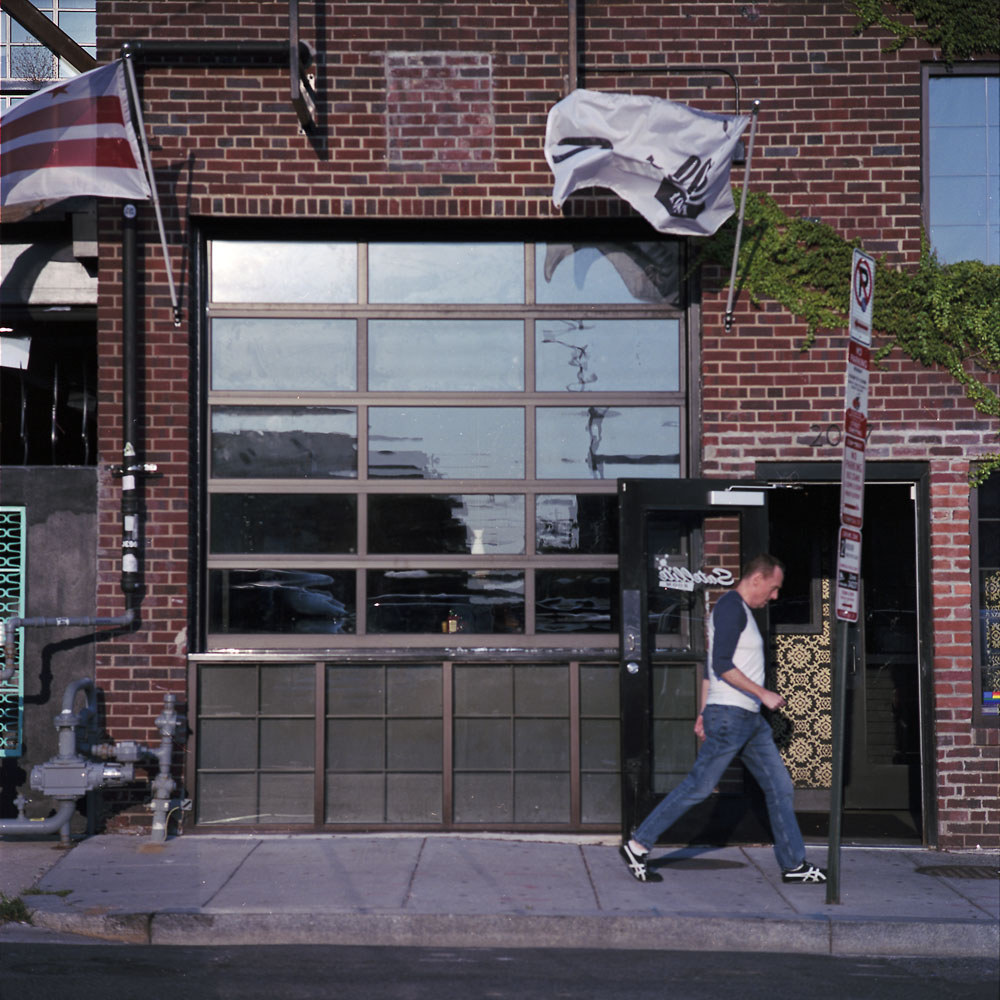
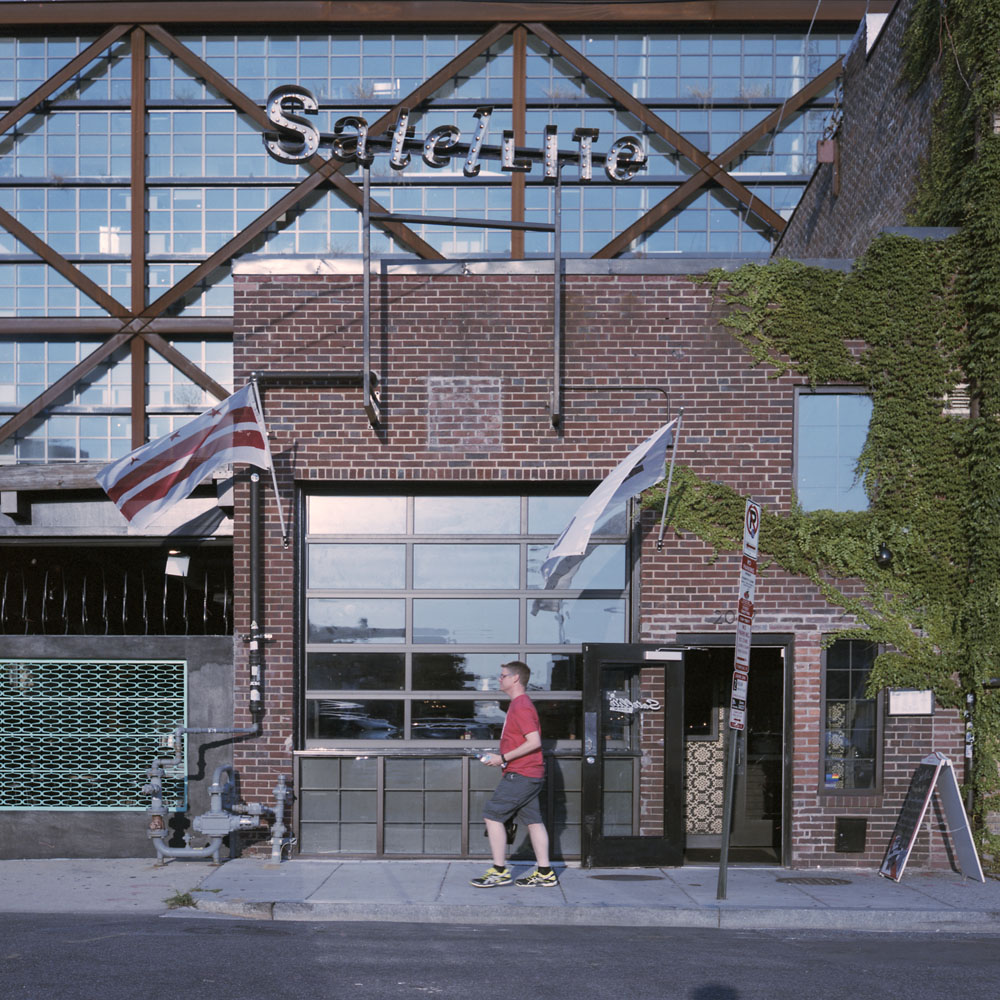
Just another little snippet of my neighborhood in Washington DC: the Satellite Room, a small bar/club on the back side of the 9:30 Club.
Satellite Room
You can see behind it the massive structure of the Atlantic Plumbing building, which will house a new outpost of the Landmark Theaters chain in addition to residential condos. Landmark Theaters specialize in independent, foreign and classic films, and this will be their third location in DC itself, with an additional location in Bethesda and one in Baltimore. Just another sign of the massive gentrification of the area – ten years ago it was a rare-for-DC industrial area with a few bombed-out row houses scattered between. Now it’s high-end theaters with bar service and million-dollar condos.
Satellite Room
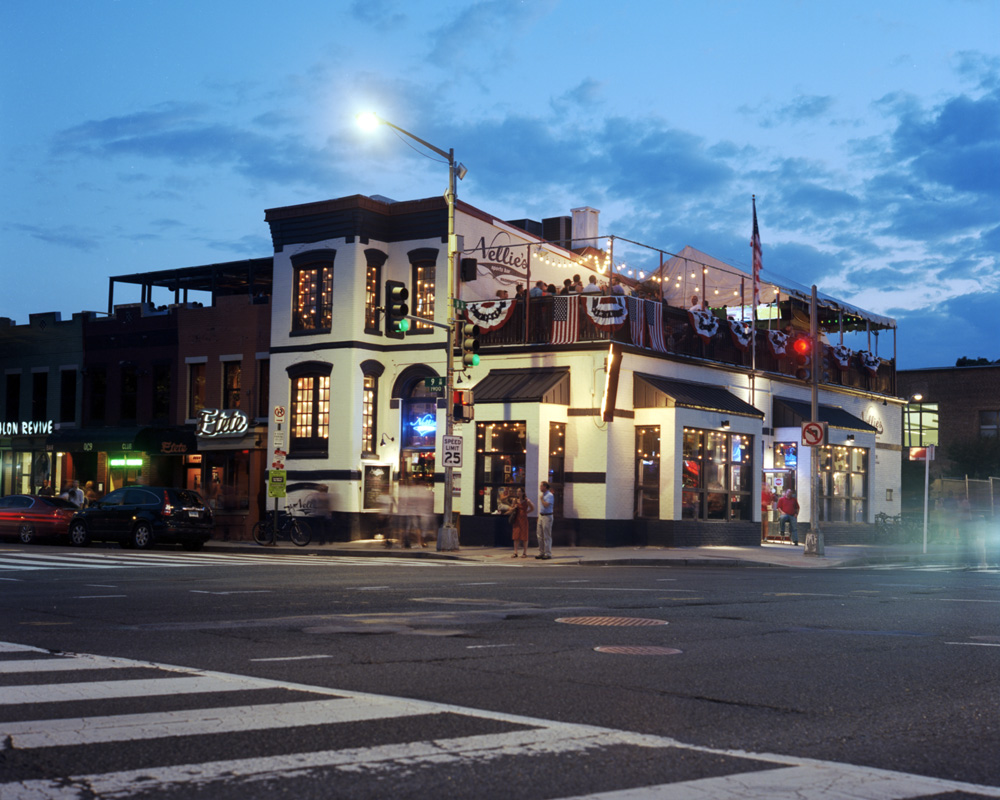
Clubs like the 9:30, the Satellite Room and Town helped pioneer the neighborhood making it desirable as a location to visit. With the more recent addition of Nellie’s (just across the street on 9th where U Street turns back into Florida Avenue)
Nellies Sports Bar, From Florida Avenue
and The Brixton, even the former dive bars have been cleaning up their acts and getting wine lists and 18 year old Scotch.
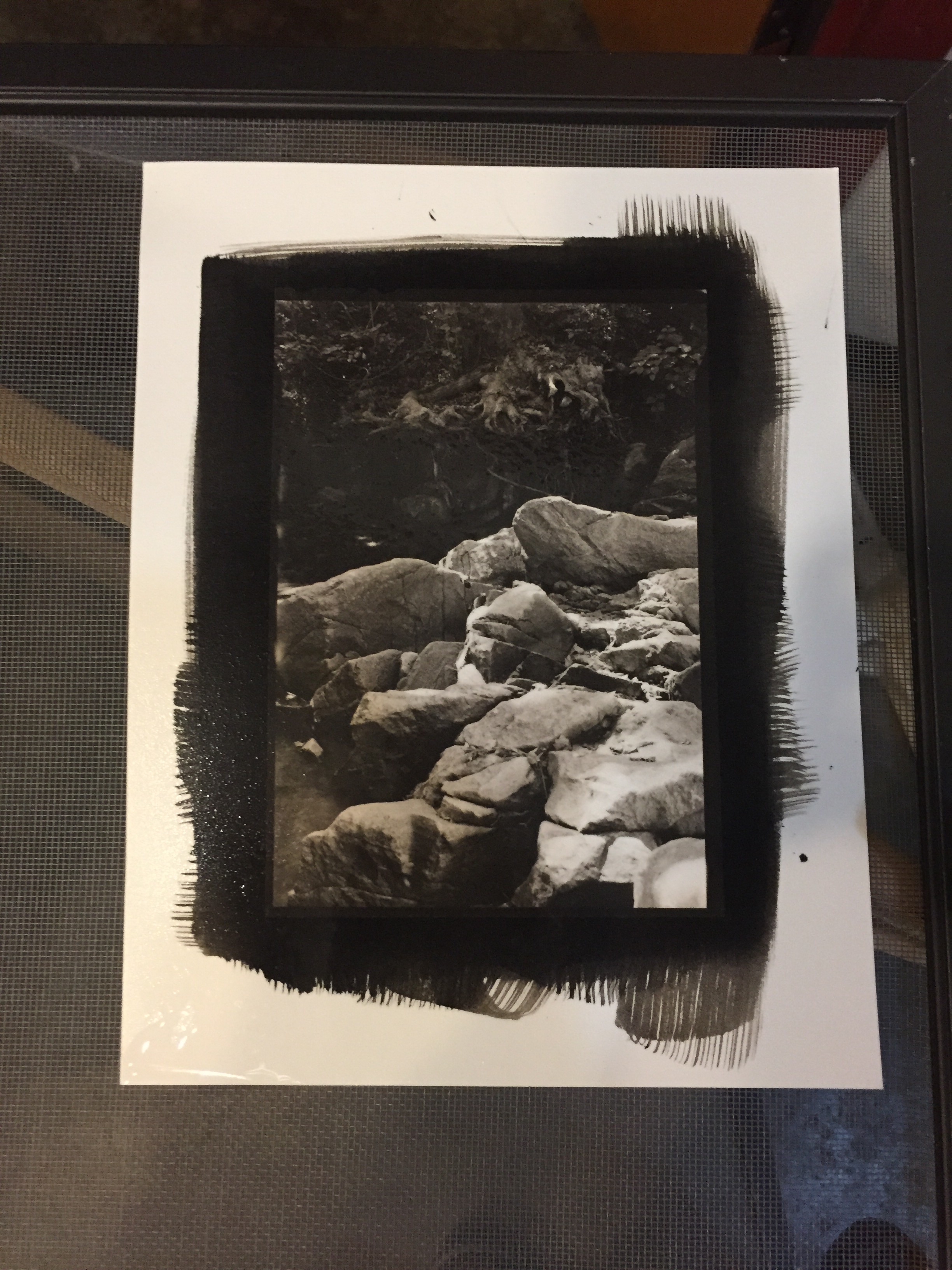
This weekend was module one of two in my revised Intro to Platinum/Palladium Printing class. Module One covered making images from in-camera film negatives. Yesterday we went out in the park at Glen Echo and shot some film with my 5×7. This first image is one of the student prints from that outing – the rocks and water in the stream that runs through the park.
Rocks, Stream, Glen Echo Park
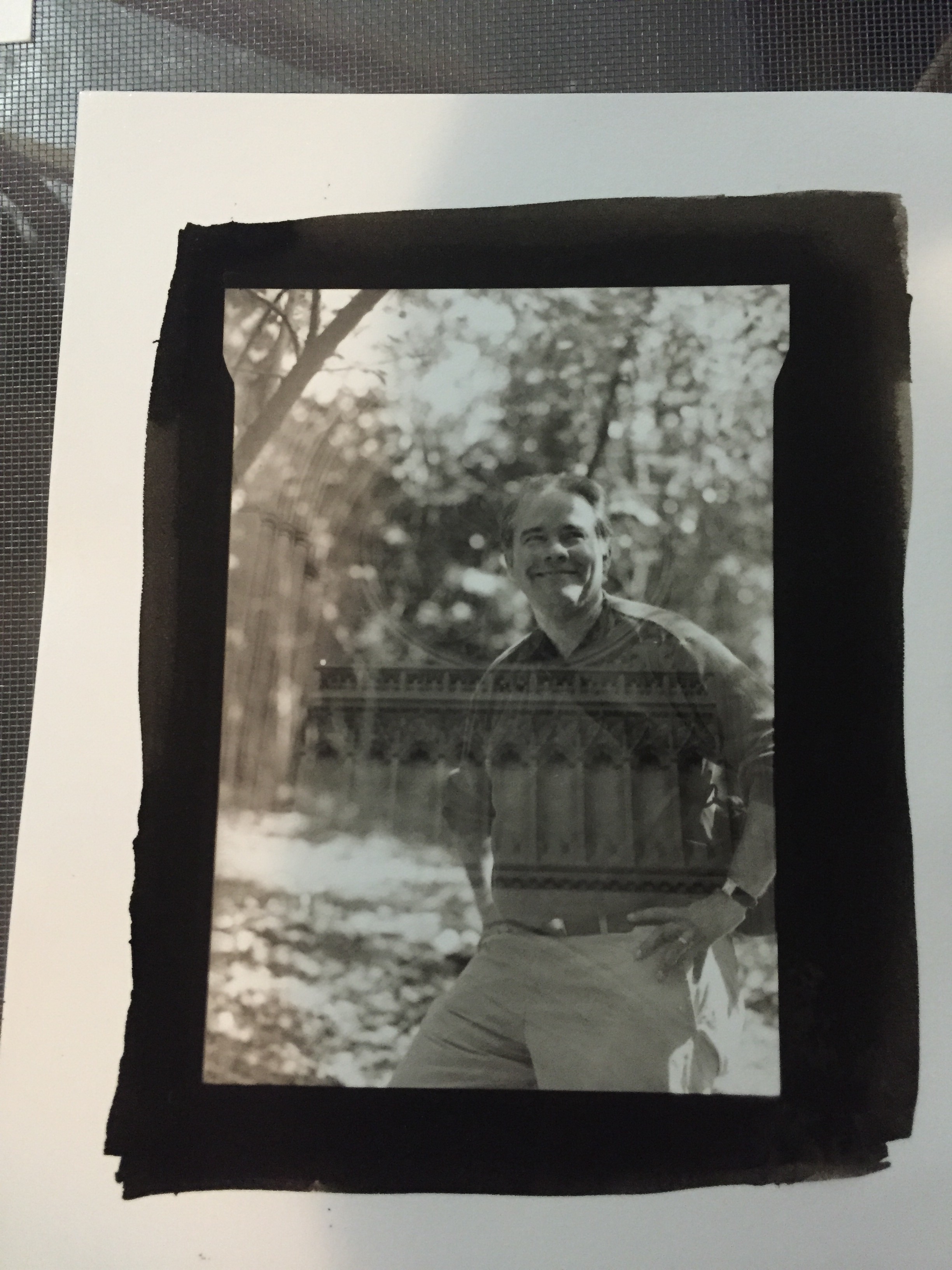
This second shot is a happy accident – one of my students wanted to do portraits, and shot this and another one (which we didn’t print) of two classmates. What we didn’t realize at the time, which was very much my fault, was that those two sheets had previously been exposed by me on an outing with my Intro to Large Format class to the National Cathedral, but not developed. So we had two negatives of students in the woods superimposed on the facade of the National Cathedral. In the other one, the student’s face was obscured by the rose window, but here it works well. We were joking that it would make a great political campaign photo.
Happy Accident – Double Exposure
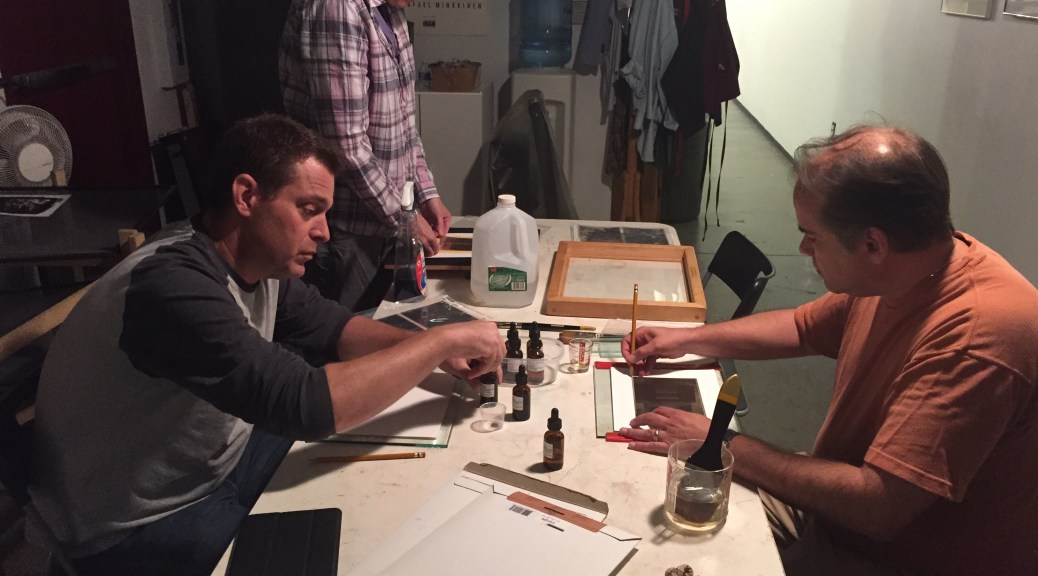
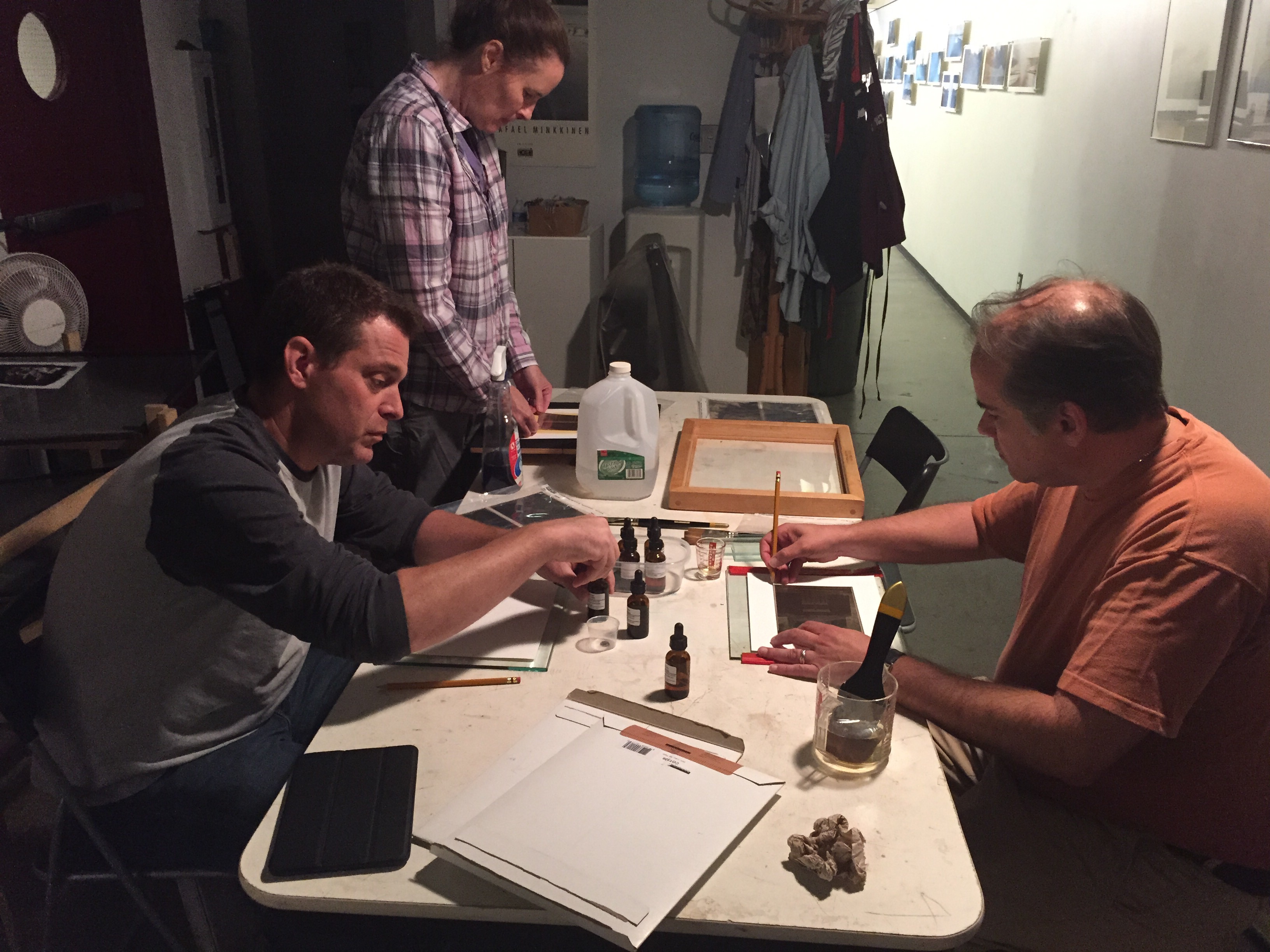
Here are my students busy coating paper and working hard.
Students Coating Prints
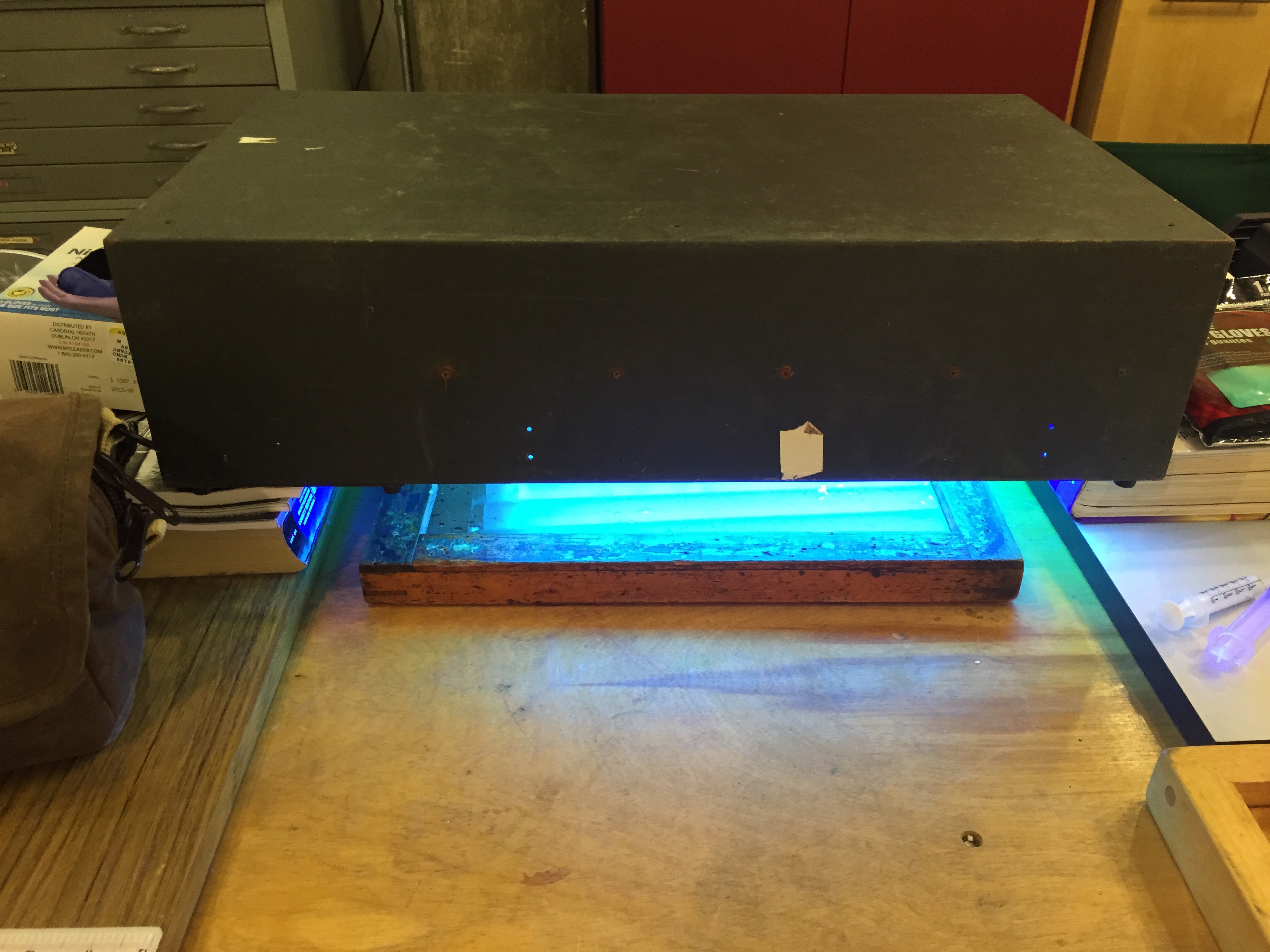
Another faculty member had been given this UV exposure unit by one of our long-time patrons, Grace Taylor. Grace is now retired from photography as she’s in her late 90s, and had given it to him when she stopped printing. At the time he passed it along to me, he said it might have an electrical issue and so may or may not work properly. I was leery therefore, but determined to give it a try. If it didn’t work, I would still have a fallback option of the blacklight compact fluorescent fixture I’ve used before. Fortunately, not only did it work, but it worked well. It gave us very fast exposure times (3 minutes was our base exposure, instead of the 6.5 I normally get with my own unit or the 7-9 we were getting with the CF fixture). So Grace, if you’re aware of this, a big thanks for your UV unit, it has found a new home and is once again being productive!
Grace Taylor’s Old UV Unit in Action
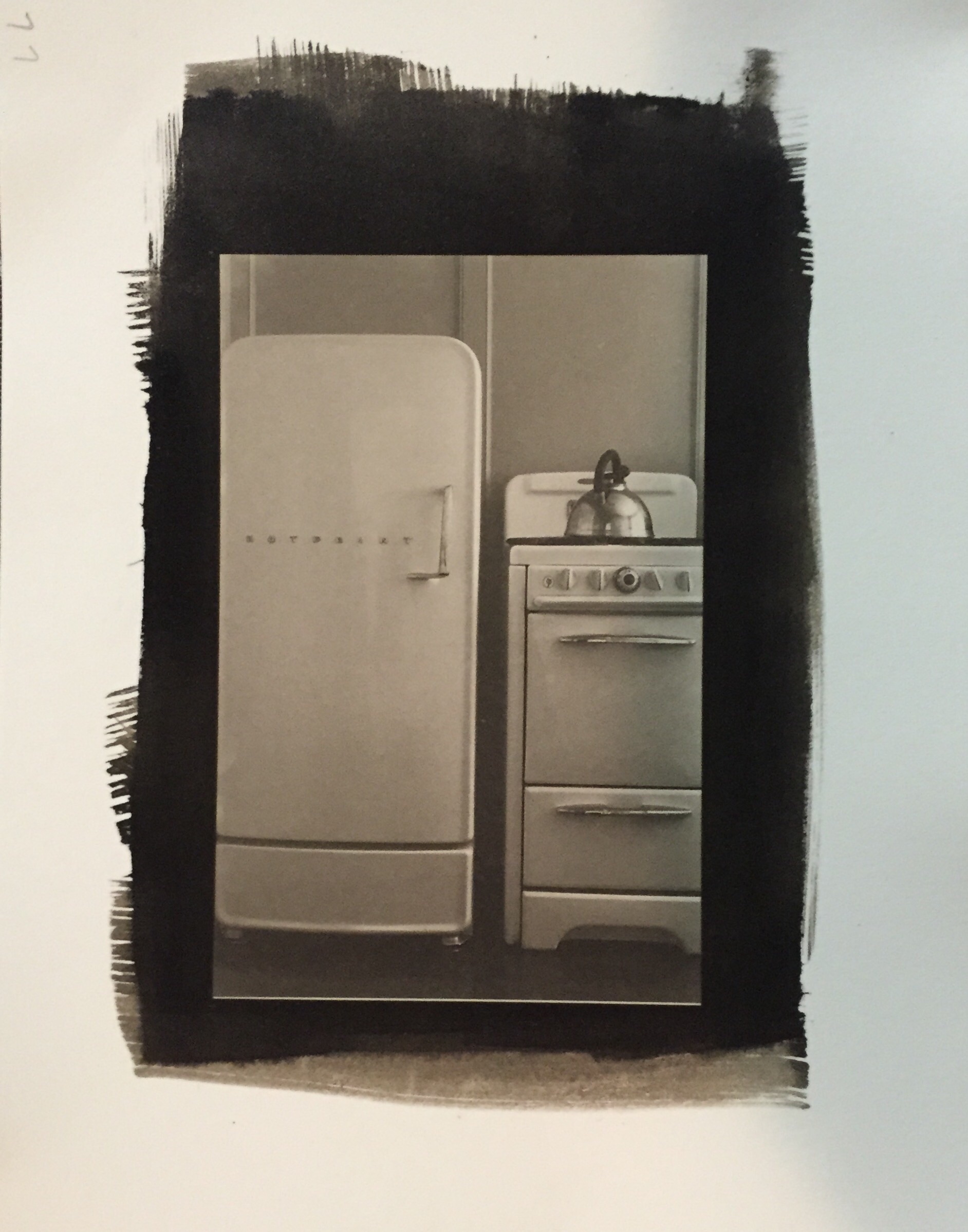
This was another student image, this time one that one of the students brought in, from a digital negative she had made herself. The shot is an interior of one of the hotel rooms at the Chateau Mormont in Los Angeles. This foreshadows next weekend’s module, making digitally enlarged negatives for alt process printing. She had made this negative using the Dan Burkholder method, including using the printer adjustment curve he supplied as a download. The curve he supplied is a good baseline starting point, but as we saw in several tweaks of the print through the day, using someone else’s curve is not a true substitute for making your own.
Chateau Mormont Interior – Digital Negative
I’ll have the students work through making their own curves next Saturday, and then we’ll make some digital negatives of our own and print from them. I’m having them use Ron Reeder’s book, Digital Negatives for Palladium and other Alternative Processes as the textbook for the digital negative process, specifically focusing on creating adjustment curves rather than using QTR to interpret the adjustments needed to create the negative. Ron covers both techniques in his book, and going through the ordeal of making a QTR to adjust the printer output has the advantage of being non-destructive to your digital file (meaning that it doesn’t make any permanent changes, so you don’t have to create multiple files to print negatives for each alternative process you want to use), but for all but the computer-geekiest of folks, it’s way too intimidating.
I have a great crop of students this time (well, I almost always do!) and I think I’m having at least as much fun as they are!
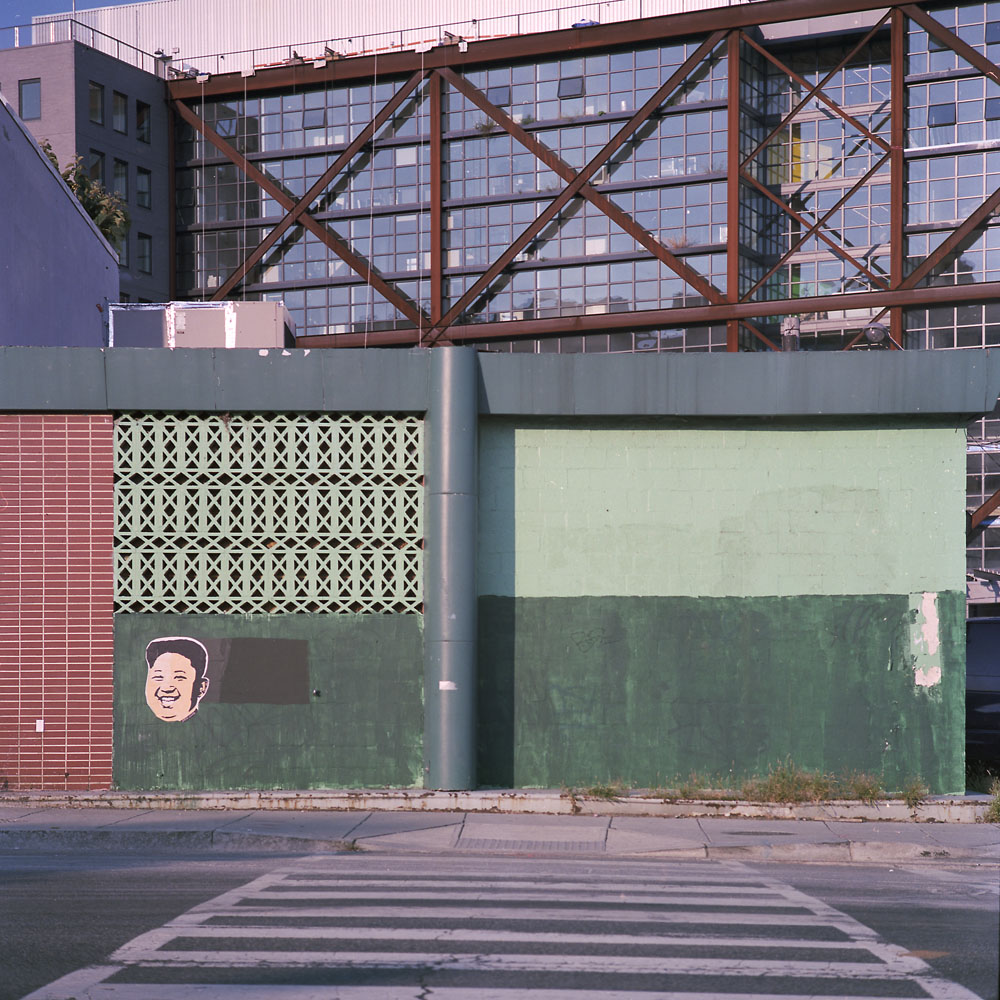
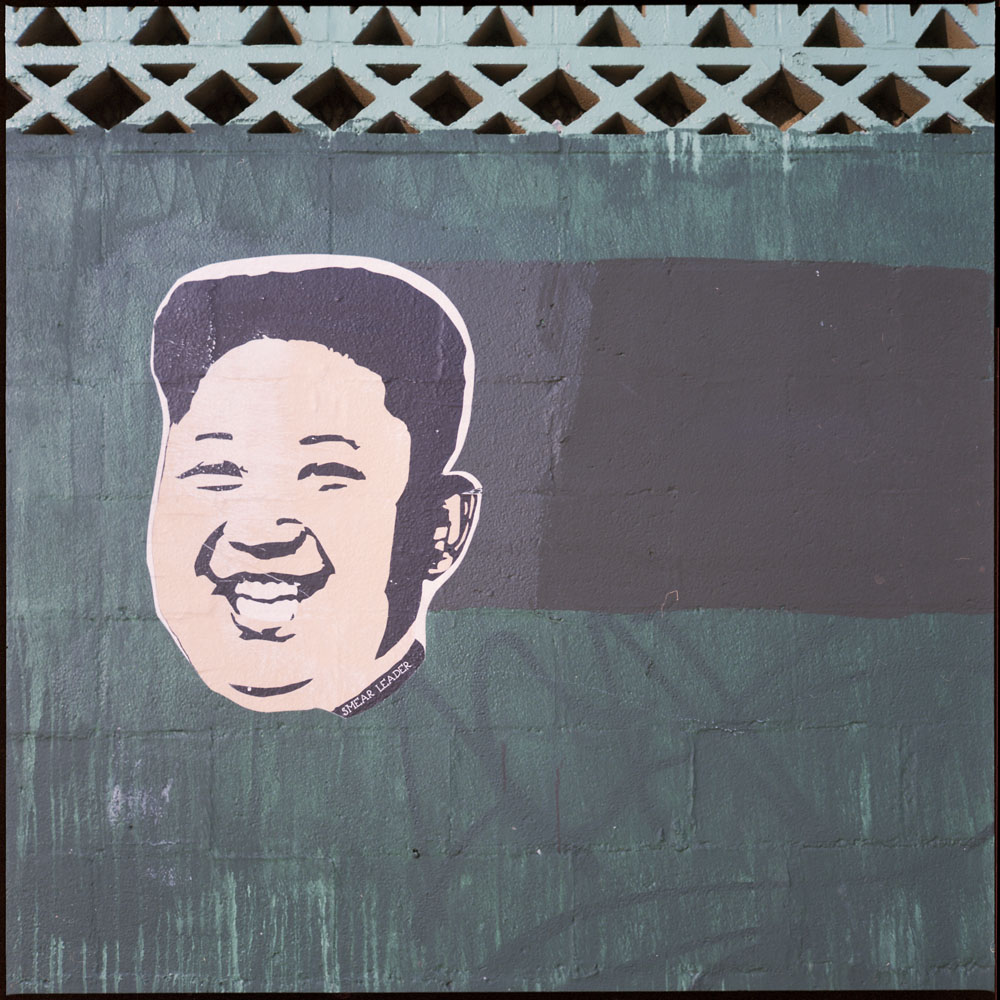
As seen in my neighborhood. Wheat-paste cutouts are becoming a new form of eco-friendly/sustainable/non-destructive graffiti. In this one, Kim Jong Un’s face has taken up residence on the wall of a building near the 9:30 Club.
Kim Jong Un Wall
Just because it’s gone hipster doesn’t mean graffiti has lost its edge for political and social commentary. Kim’s collar proclaims him “Smear Leader”.
 dcphotoartist