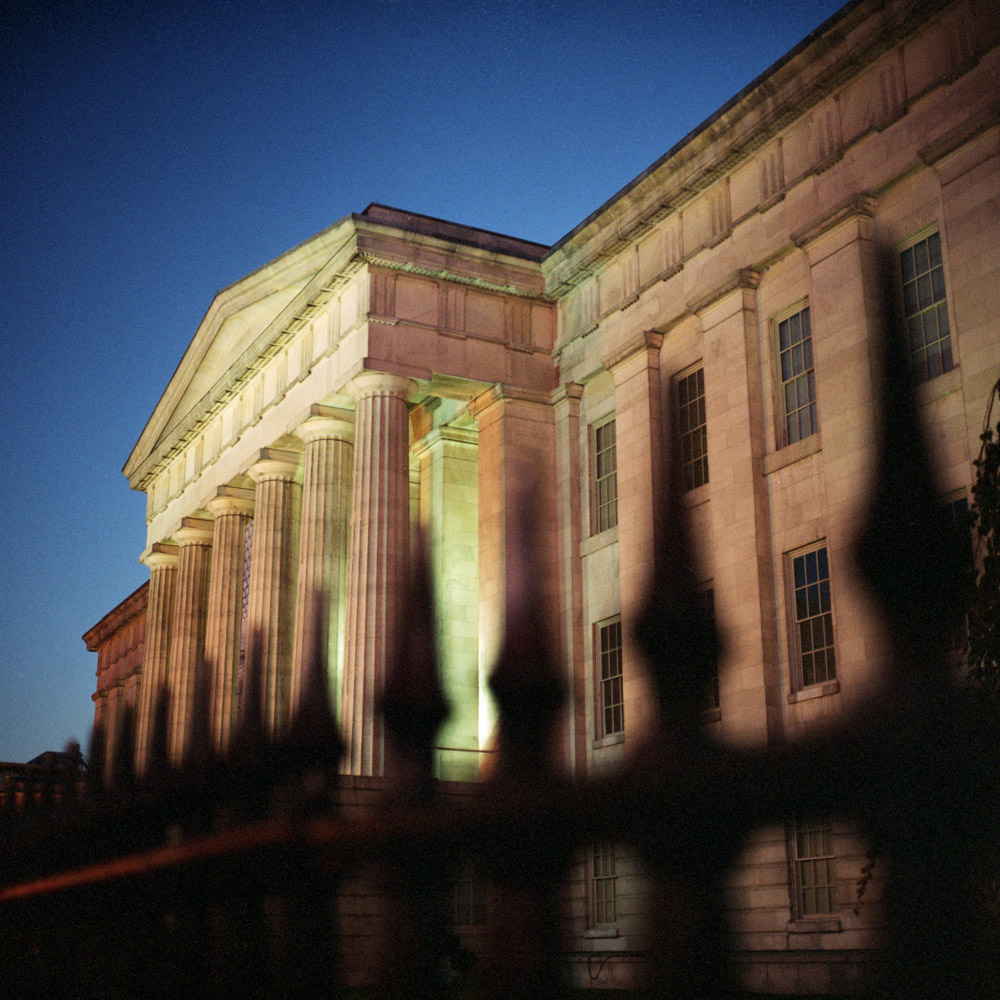
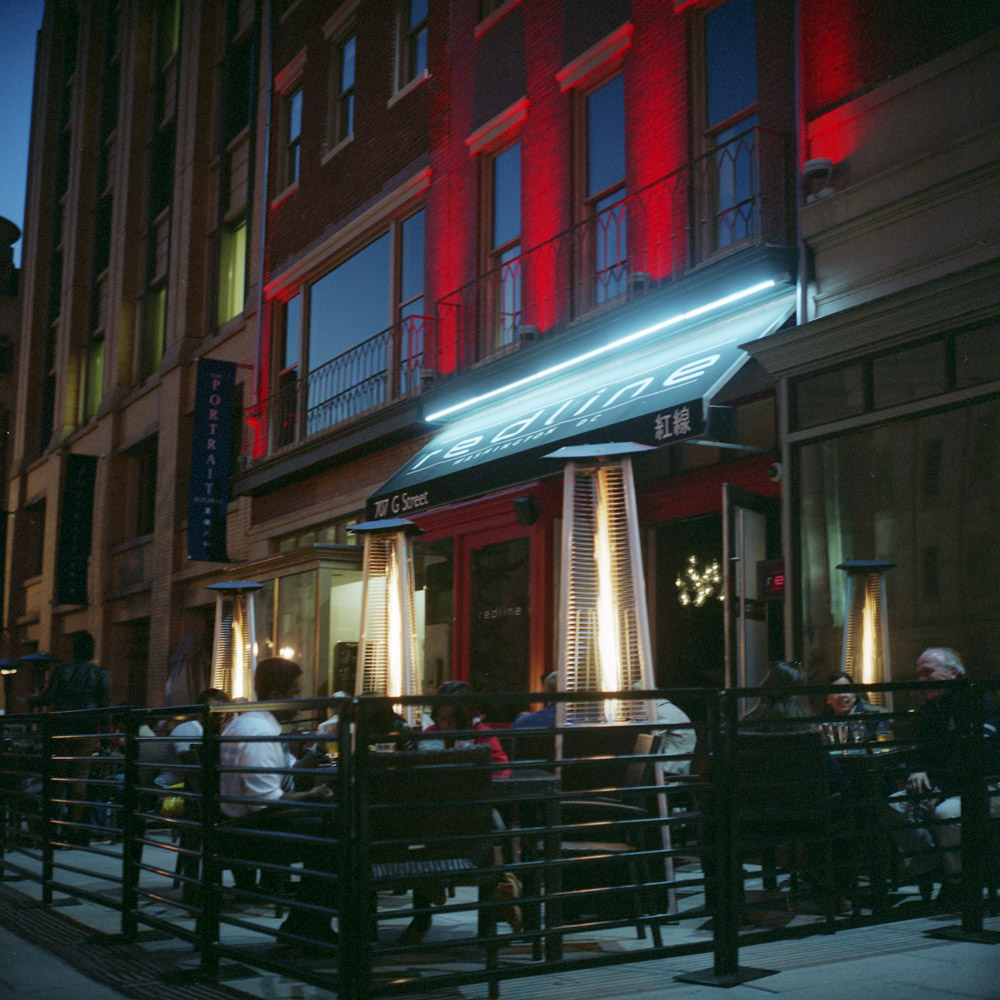
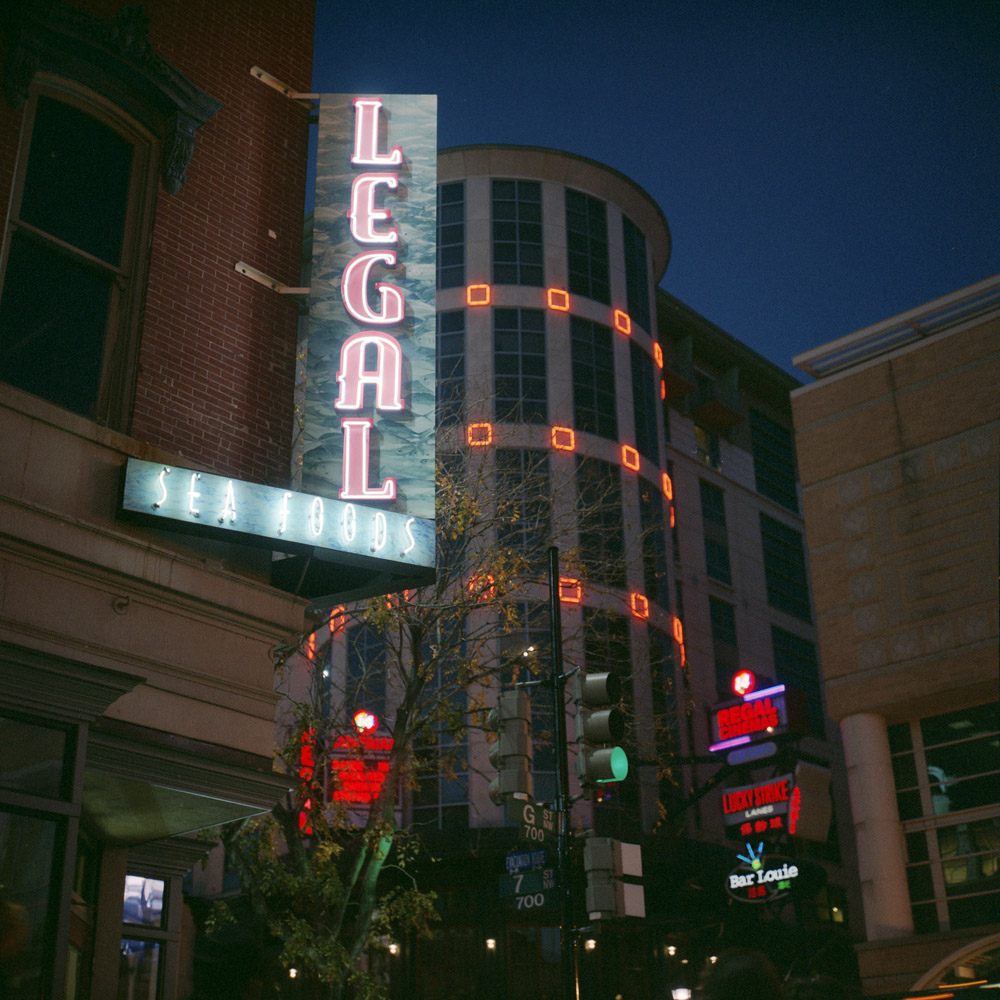
More of my DC nightscapes- I was testing out the Fuji NPZ 800 that I had in my film inventory. A surprisingly good result from a film I’ve had sitting around again for the better part of a decade.
National Portrait Gallery, TwilightRedLine Pub, ChinatownLegal Seafood, Chinatown
You can definitely see the grain in these images, but it’s nowhere near as pronounced as the grain in 400 speed 35mm film. It also handles mixed lighting pretty well, but it’s not Kodak Portra.
Oh, by the way, these were all hand-held. THAT’s why you shoot 800 speed film!
Terrific summary and great dispelling of the constant upgrade myth. A great photographer can make great images with a pinhole or a Brownie box camera, in addition to a CaNikSonEikaBlad. A mediocre photographer gets caught up in an upgrade chase thinking gear is the solution to a skills problem. Don’t get me wrong, gear is fun, and its always nice to have the right tool for the job – there are photos you can take with a Canon 5D that you can’t take with a Hasselblad, and photos you can take with an 8×10 Sinar you can’t take with a Leica (the old “don’t use a hammer to do a screwdriver’s job” adage). But when it comes down to it, it’s far to easy to blame the tool when we don’t get what we were looking for (“I would have gotten the photo if only I had an xxxx”). This is part of why I’m fixating on my Rolleiflex. It’s just one camera, with just one lens – it’s forcing me to pay more attention to what I’m shooting and how I’m shooting it rather than running around with two or three bodies and half a dozen lenses in two or more formats. My Argentina trip of a few years ago was a prime example – I had the 5×7 with six (SIX!!!!) lenses, 13 film holders (13!!!!), and a tripod, along with my Contax G1 with 45mm and 28mm lenses. While I did take some wonderful photos in each format, I’m pretty sure both suffered as a result. Certainly, there were photos I could not have taken with one that I did with the other. My Recoleta cemetery photos would not have happened with the Contax, and my street scenes in San Telmo and La Boca would not have happened with the 5×7. But by dividing my attention between the two systems and two ways of thinking probably meant that I wasn’t fully in the mindset of either system and then tried (and failed) to make images with one that would have been better done with the other.
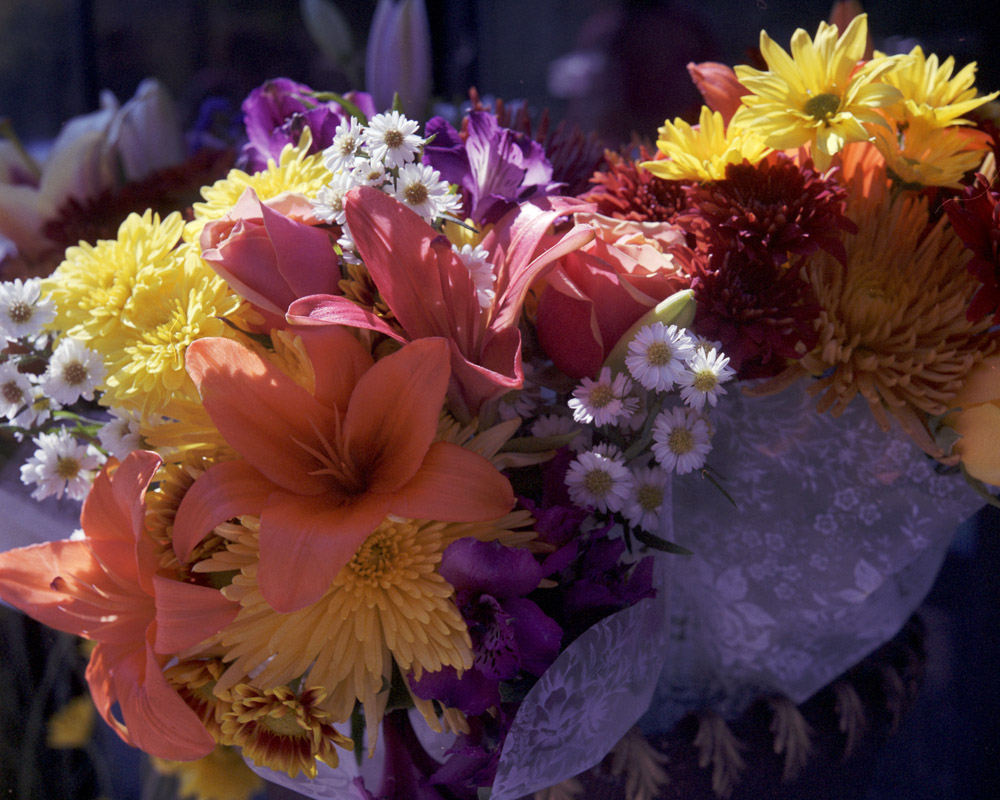
If you’re familiar with twin-lens reflex cameras, you know that they have certain limitations (close-focus capability or lack thereof, parallax compensation required, non-interchangeable lenses) for the most part (the Mamiya C22/33/220/330 family being the notable exception to most of the above). My Rolleiflex certainly falls into that category. One thing Rollei did was they came up with a special close-focus auxiliary lens set, which they called Rolleinar. Rolleinars come in four strengths, with the #4 being a rarity, and the #3 uncommon to find today. They’re basically diopters, but with a twist – because parallax worsens the closer you get, they include a special diopter plus prism for the taking lens so you can still compose a frame with relative accuracy. I have a Rolleinar 1, and I’ve been playing around with it. It’s good for getting closer for tight head-and-shoulders portraits, and for doing simple macro-ish photos of flowers and textures and the like. Here are a couple of shots I took with it outside the florist’s by my office – as you can see, it will get you close-r, but it’s far from 1:1 reproduction. Both of these were shot at or near minimum focus for the camera. Film is that same expired Fuji NPS 160 that I’ve been shooting through.
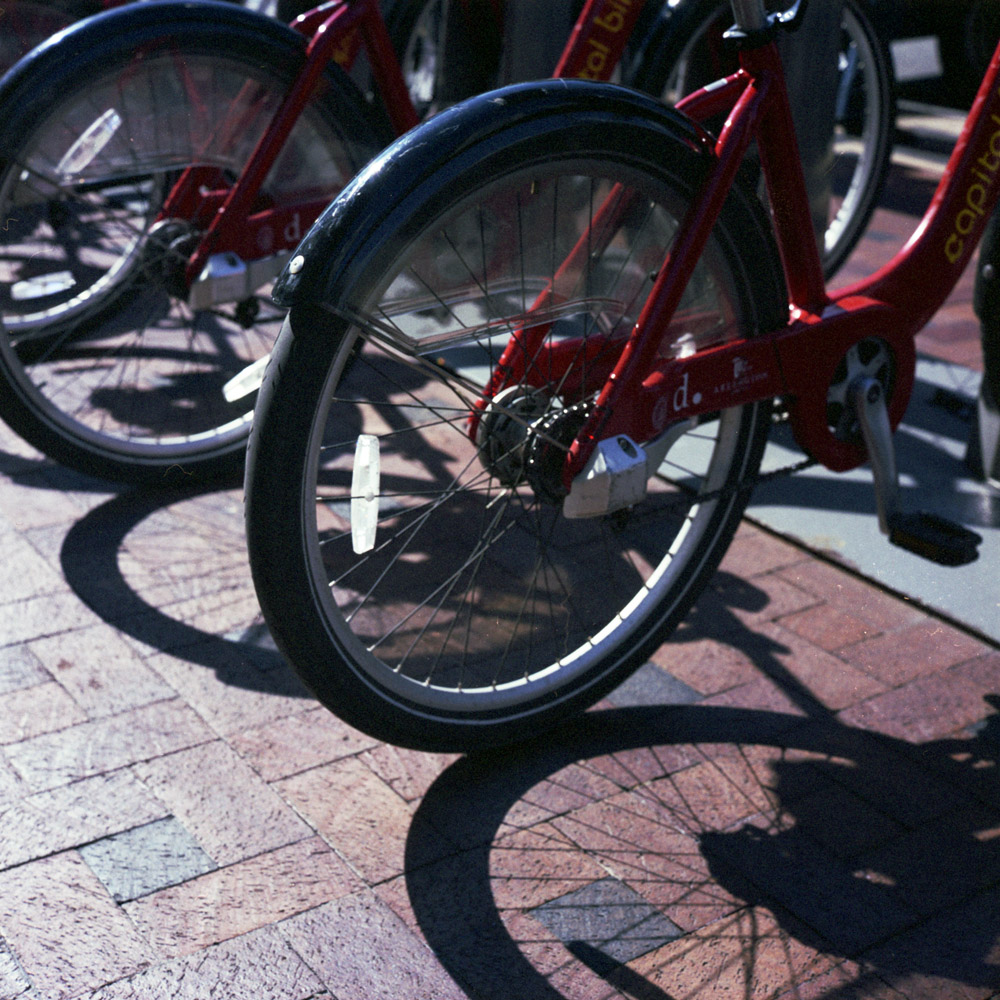
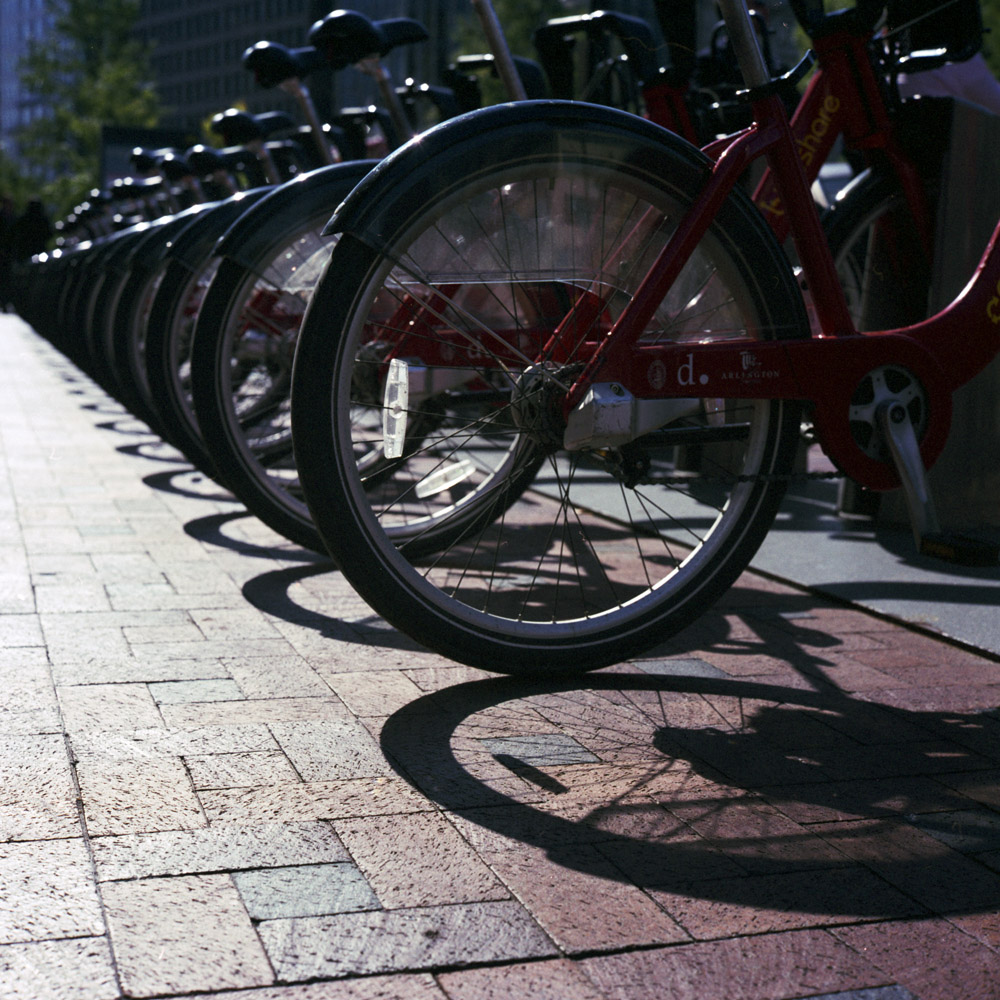
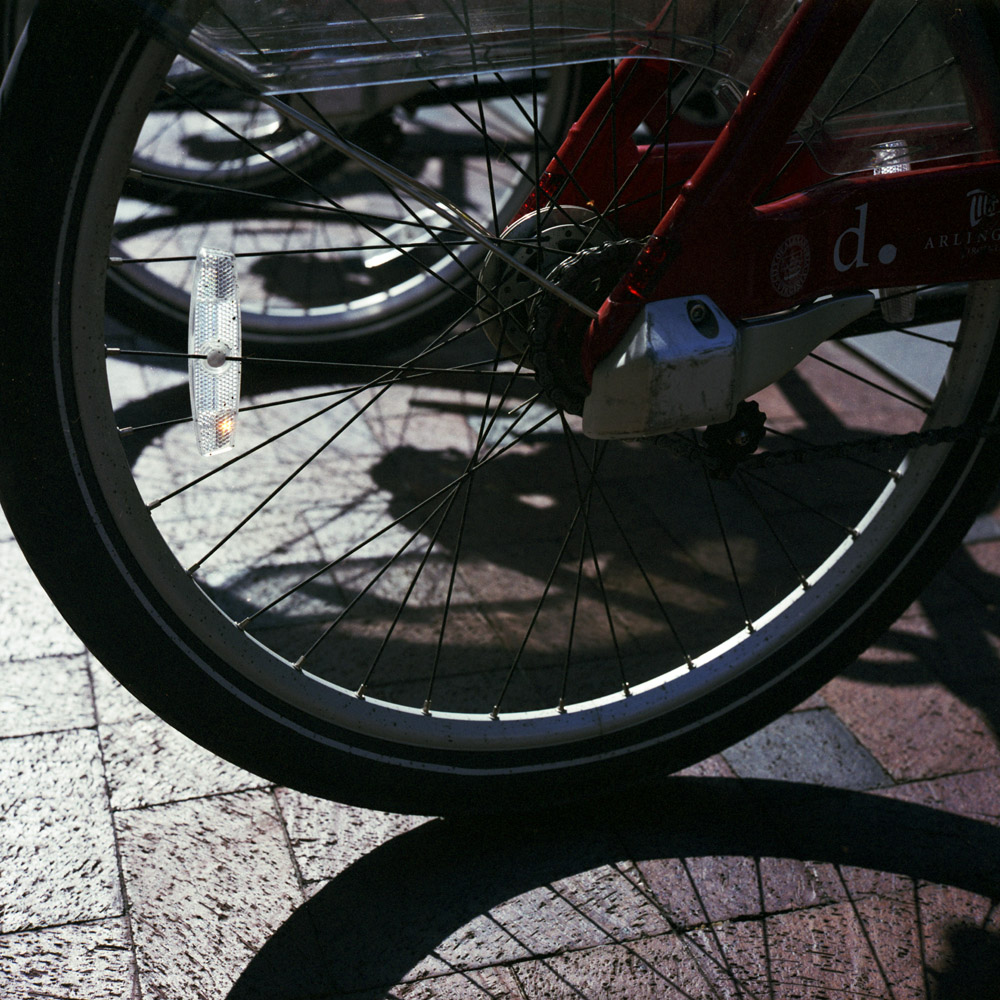
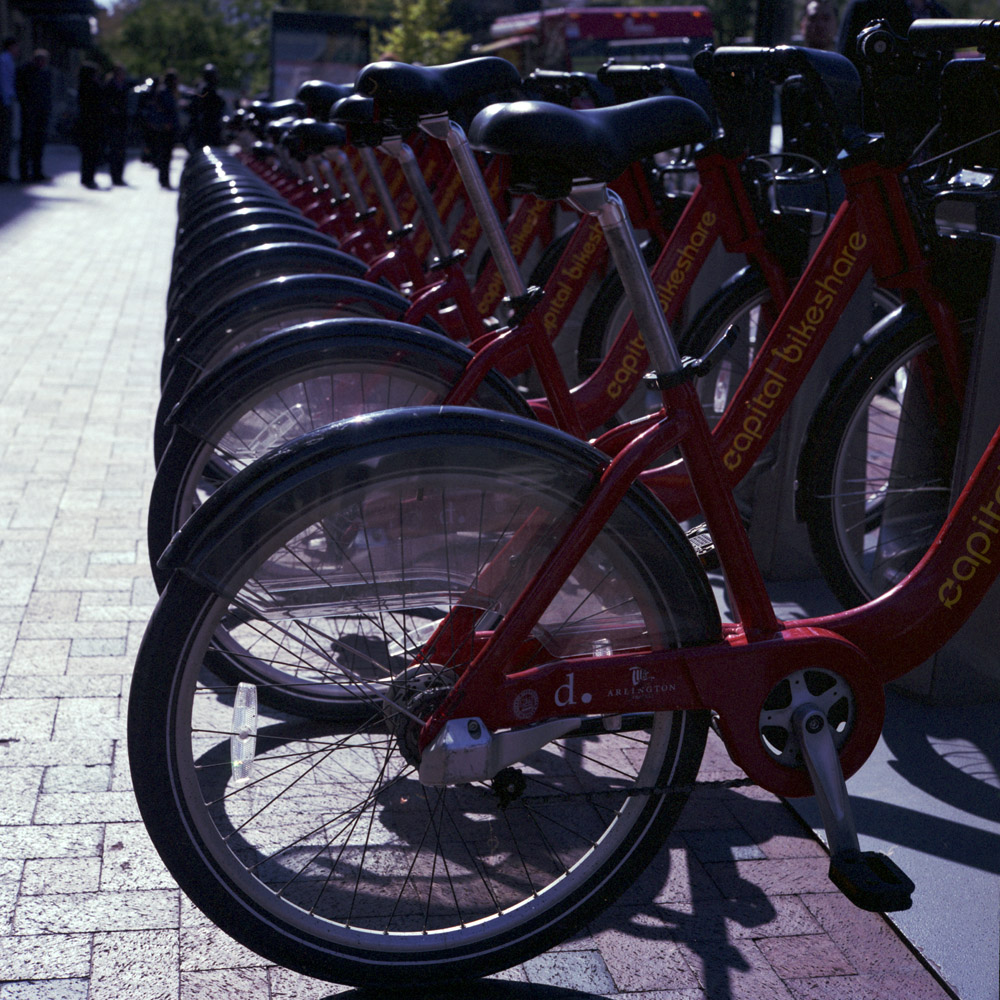
Here are some semi-abstract shots of the bikes of Capitol BikeShare, docked in their parking docks at Farragut Square. I saw the bikes’ shadows and the repeated patterns of wheels, spokes, seats and handlebars caught my imagination.
BikeShare #1BikeShare #2BikeShare #3BikeShare #4
More Rolleiflex 2.8E/terminally expired Fuji NPS 160 action.
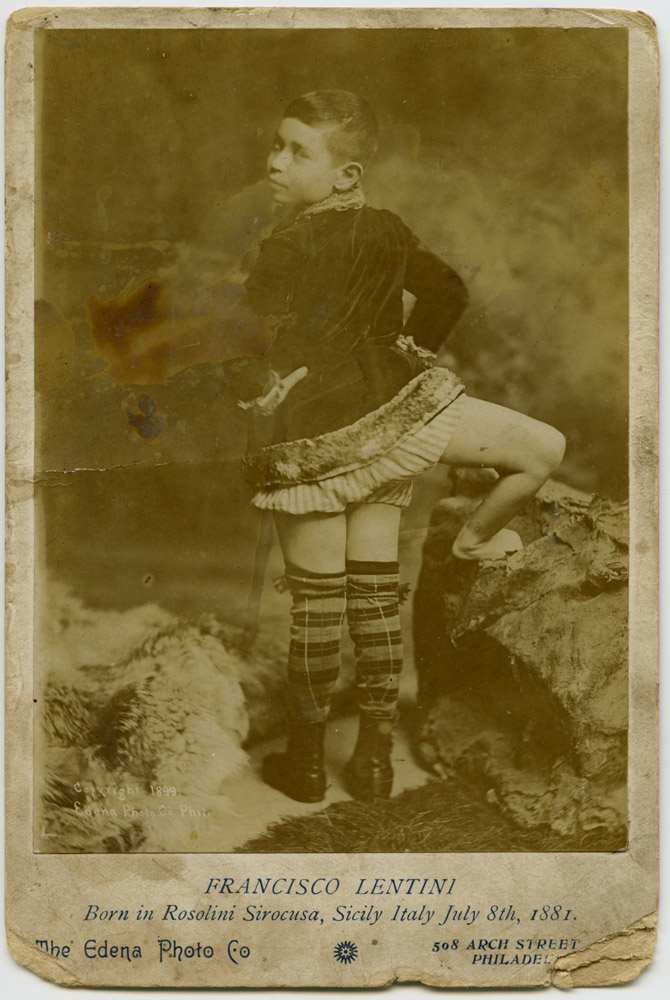
Frank (Francesco, Francisco) Lentini (May 18, 1881 – September 22, 1966) was born at Rosolini, near Syracuse, Sicily into a family of twelve children, seven sisters and five brothers.
He was born with three legs, two sets of genitals and one rudimentary foot growing from the knee of his third leg. So, in total, he had three legs, four feet, sixteen toes, and two sets of functioning male genitals, which were all that existed of a conjoined twin and jutted from the right side of his body. The doctors determined that since his twin was connected to his spine, removal could have resulted in paralysis. When his parents refused to acknowledge him, his aunt raised him but eventually handed him over to a home for disabled children. As a child Lentini had hated his extra body parts until he spent time at the home. There, he met children who were deaf, blind, and mute. He also learned to walk, ice skate, and jump rope.
At the age of eight, Lentini moved to the U.S. and entered the sideshow business as The Great Lentini, joining the Ringling Brothers Circus act. He gained US citizenship at the age of 30. His career spanned over forty years and he worked with every major circus and sideshow including Barnum and Bailey and Buffalo Bill’s Wild West Show. Lentini was so respected among his peers that he was often simply called “The King”.
In his youth, Lentini used his extraordinary third leg to kick a soccer ball across the stage, hence his show name, the Three-Legged Football Player. By the time he was six, Lentini’s normal legs were slightly different in length–one was 39 inches, the other 38 inches–but the third leg was only 36 inches, and the foot on it was clubbed.[1] Even more as an adult, while his extra leg was several inches shorter than the others, his primary legs were also two different lengths. He was heard to complain that even with three legs, he still didn’t have a pair. He married Theresa Murray, three years younger than him, and they had four children: Josephine, Natale, Frank and James. Frank Lentini died in Jacksonville, Florida on 22 September 1966.
Over on The Human Marvels, there’s a wonderful discussion thread below a photo of Frank in which a number of his descendants/probable descendants have chimed in with questions and reminiscences. It’s well worth a read.
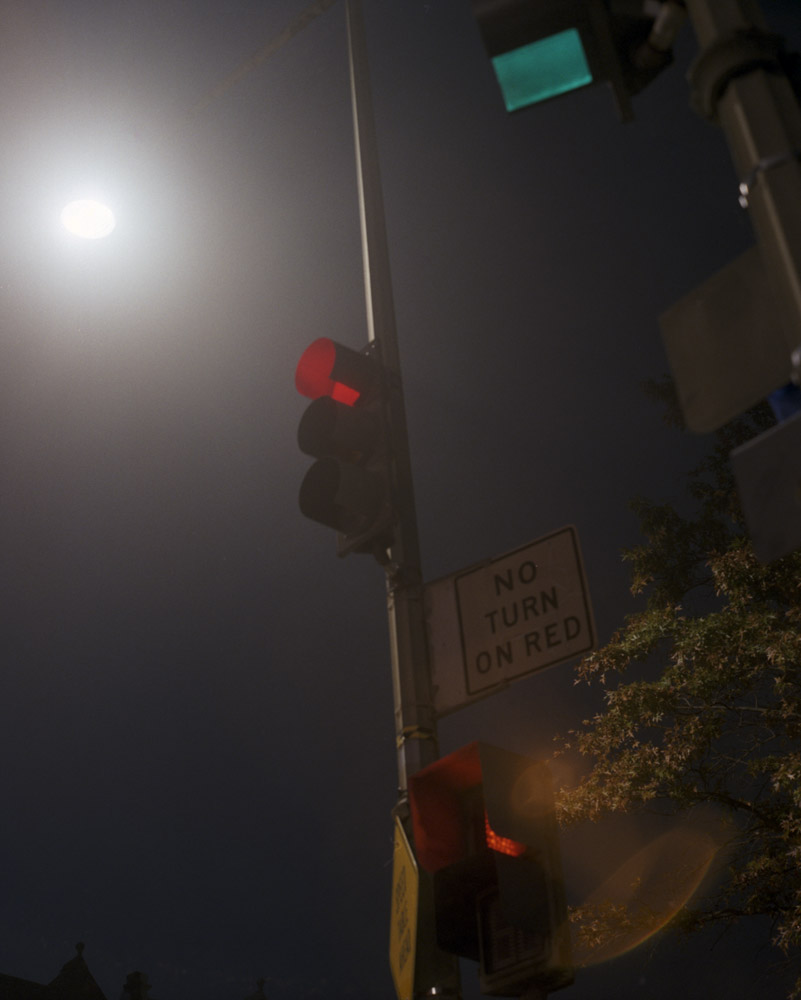
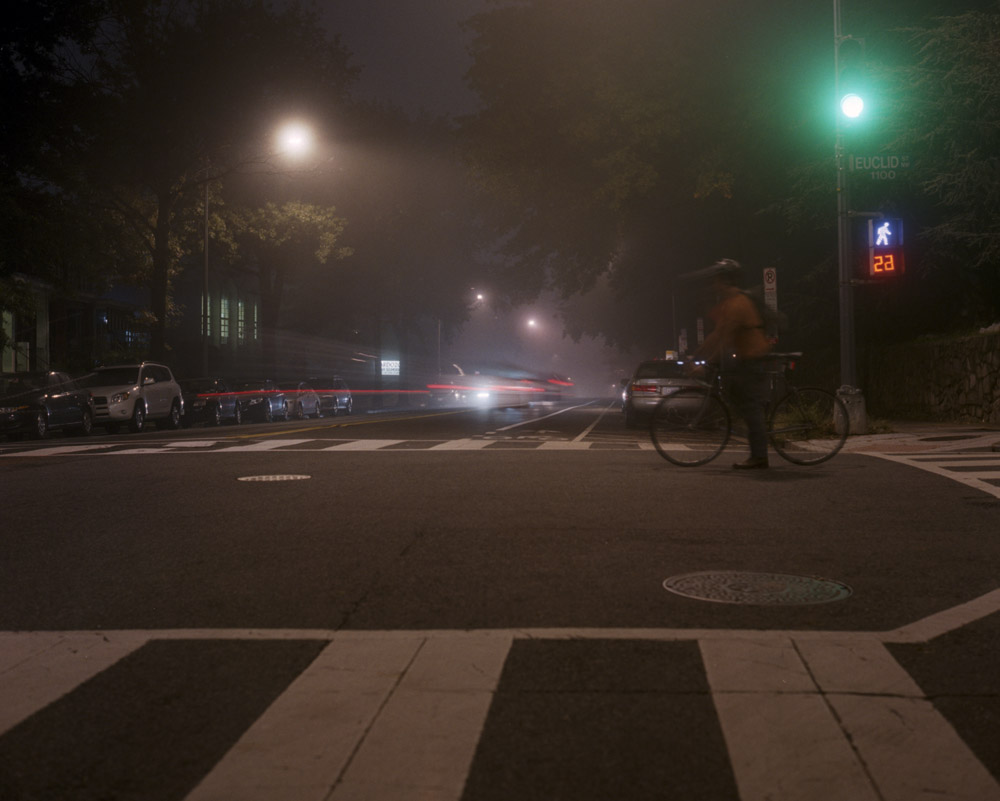
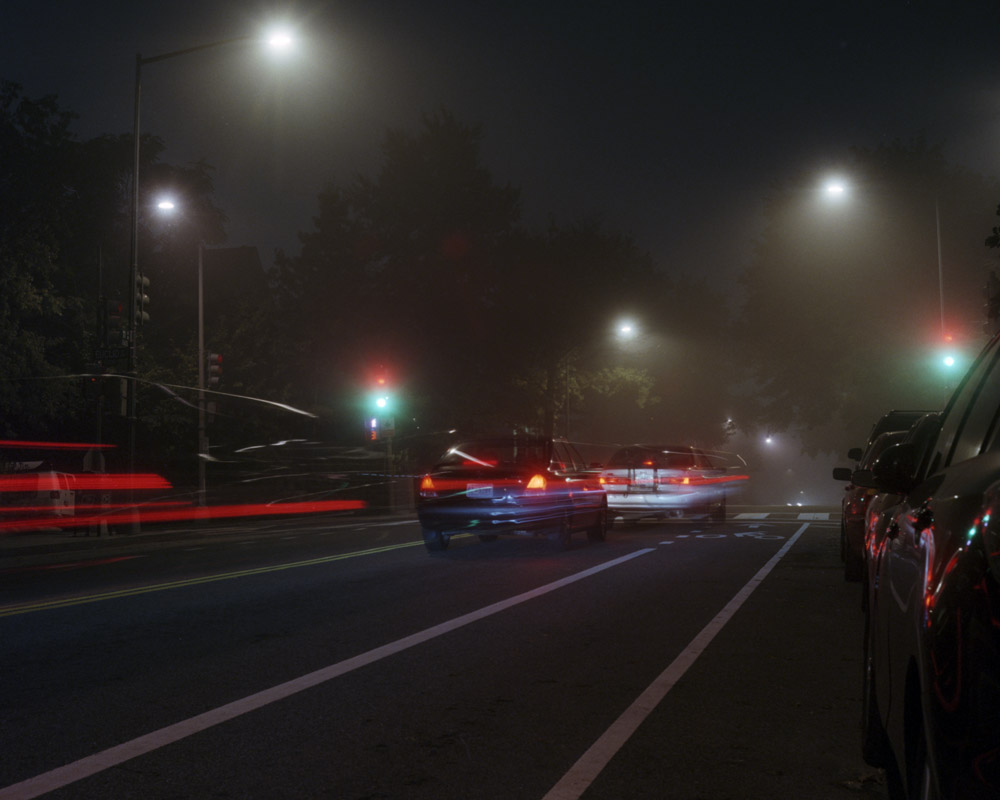
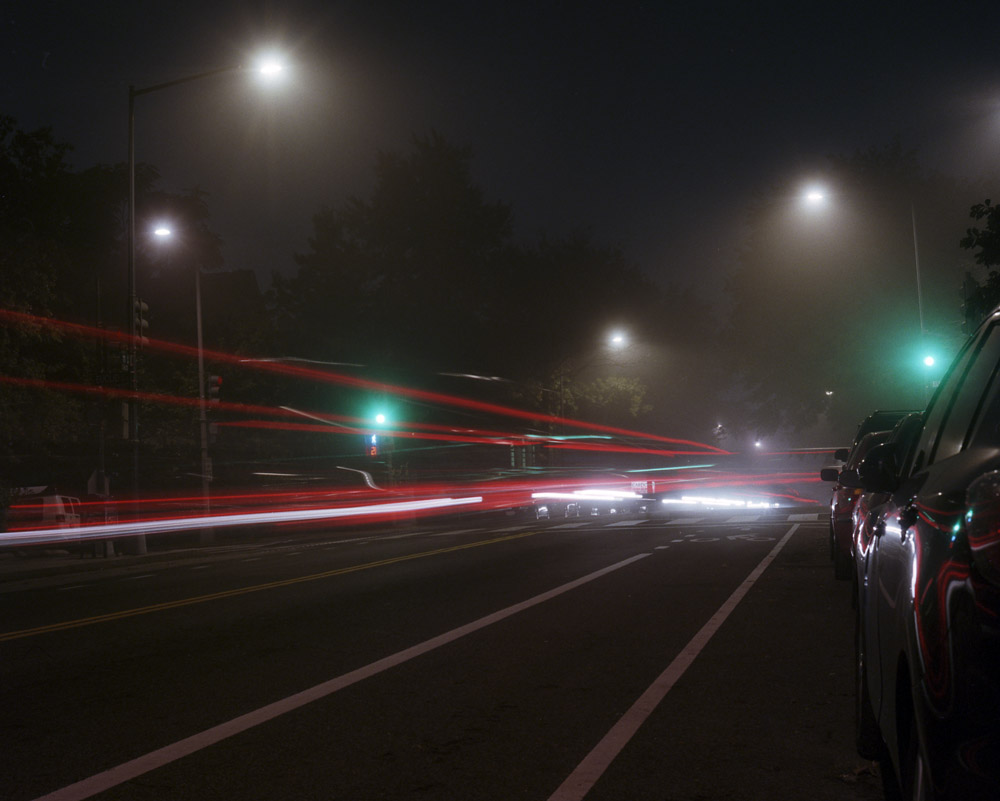
A few nighttime photos in the fog. I think these really captured the atmosphere of the evening. It had been warm in the daytime, then rained, and when the rain stopped, it was already dark, so we ended up with this cool fog. I wanted to capture that feel of the streets at night in the fog, and since I live somewhere very residential, I figured this was a pretty safe place to do it as there wouldn’t be much traffic to worry about if I stepped into the street for a four second exposure. All these were taken with my Rolleiflex, on expired Fuji NPH 400 film. The reason why I’m shooting all this expired film is not that I’ve got some kind of outdated film fetish, or that I’m a cheap-ass bastard and refuse to buy fresh film, but rather I’m just having fun experimenting and I don’t want to use “good” film on experimental stuff if I have some old film that nowadays is for all intents and purposes free but for the processing cost.
But what about the square, you say? Aren’t all Rollei photos square? Well, I do love square photos, and that’s one of the reasons why I love the Rollei so much. But there does come a time when you have to look at the photo and decide if a crop makes the image stronger. In all of these cases, the original square composition had too much something – too much sky, too much foreground, etc. So I cropped for more dynamic compositions that didn’t have so much dead space in them. I think these are much better.
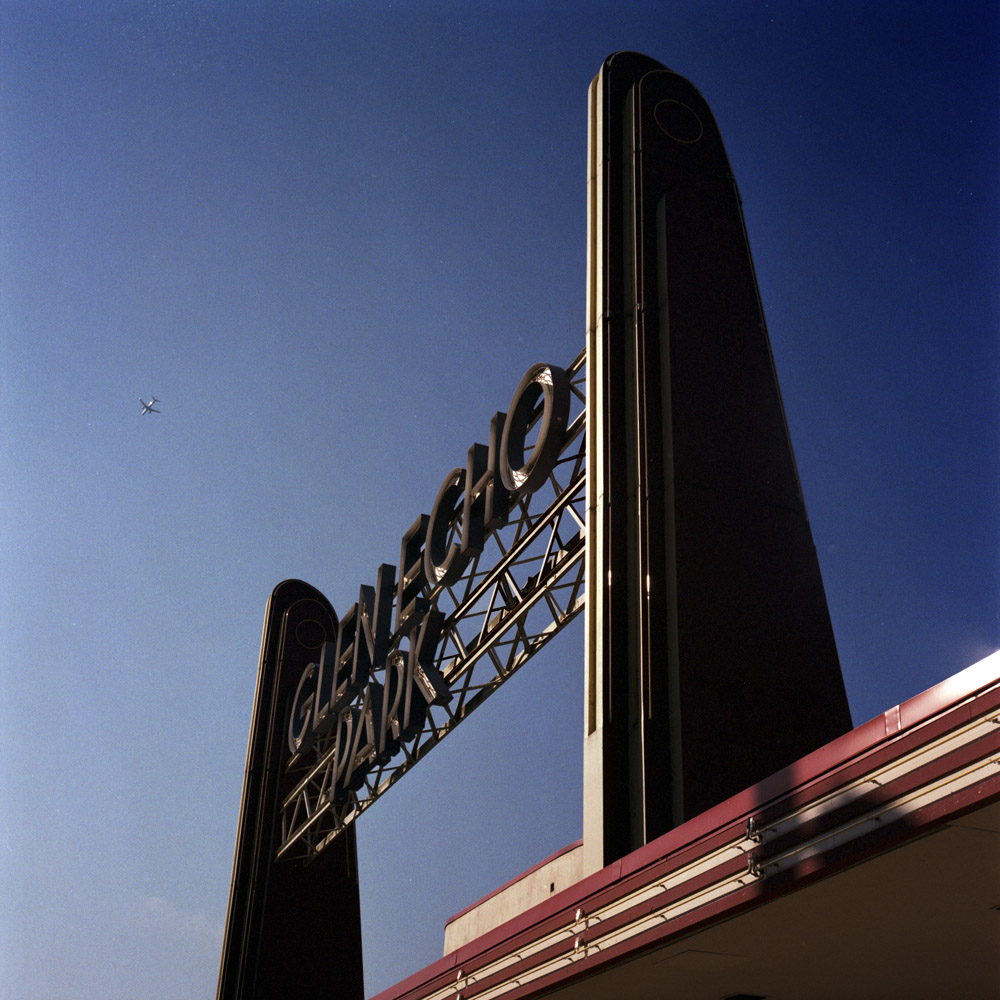
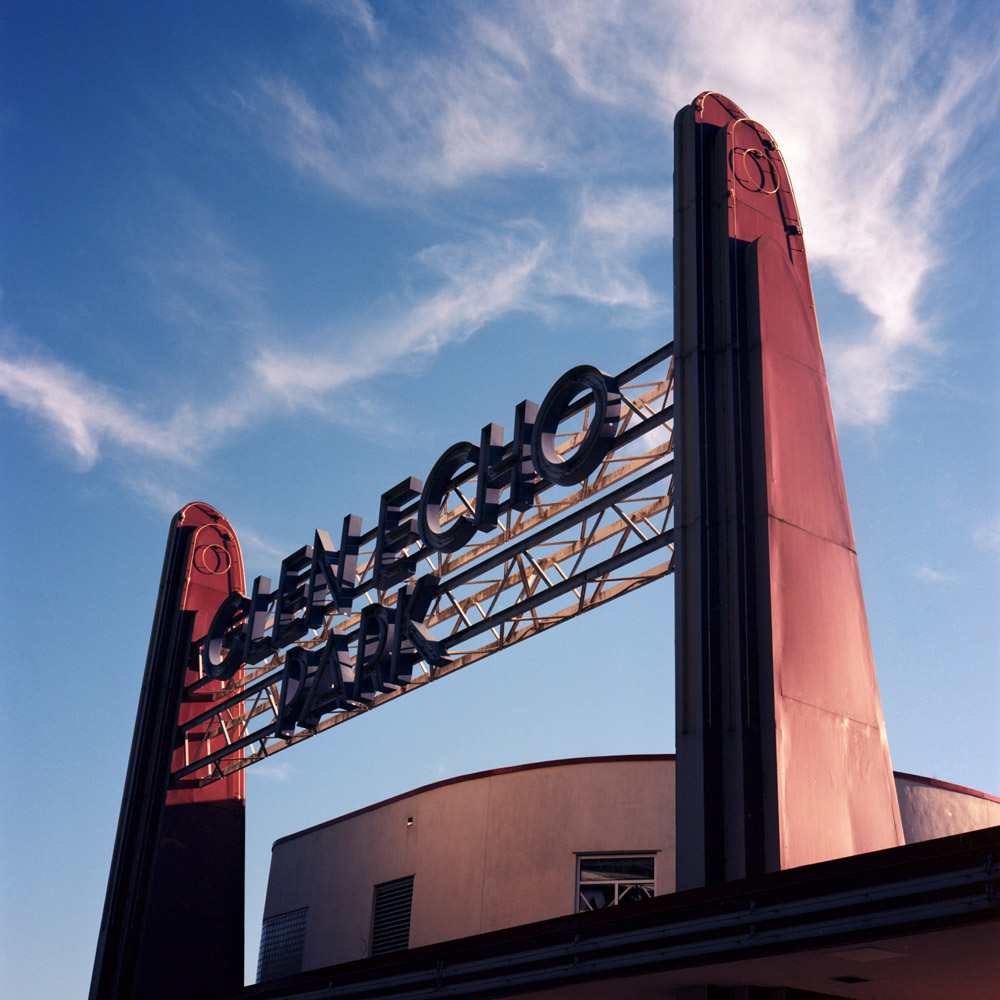
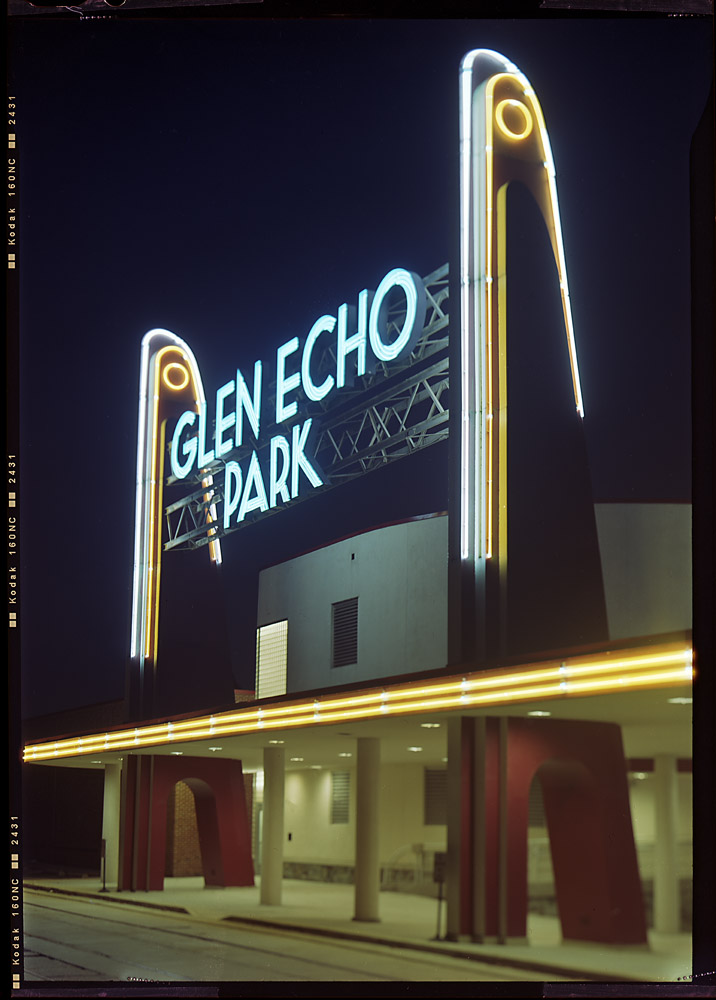
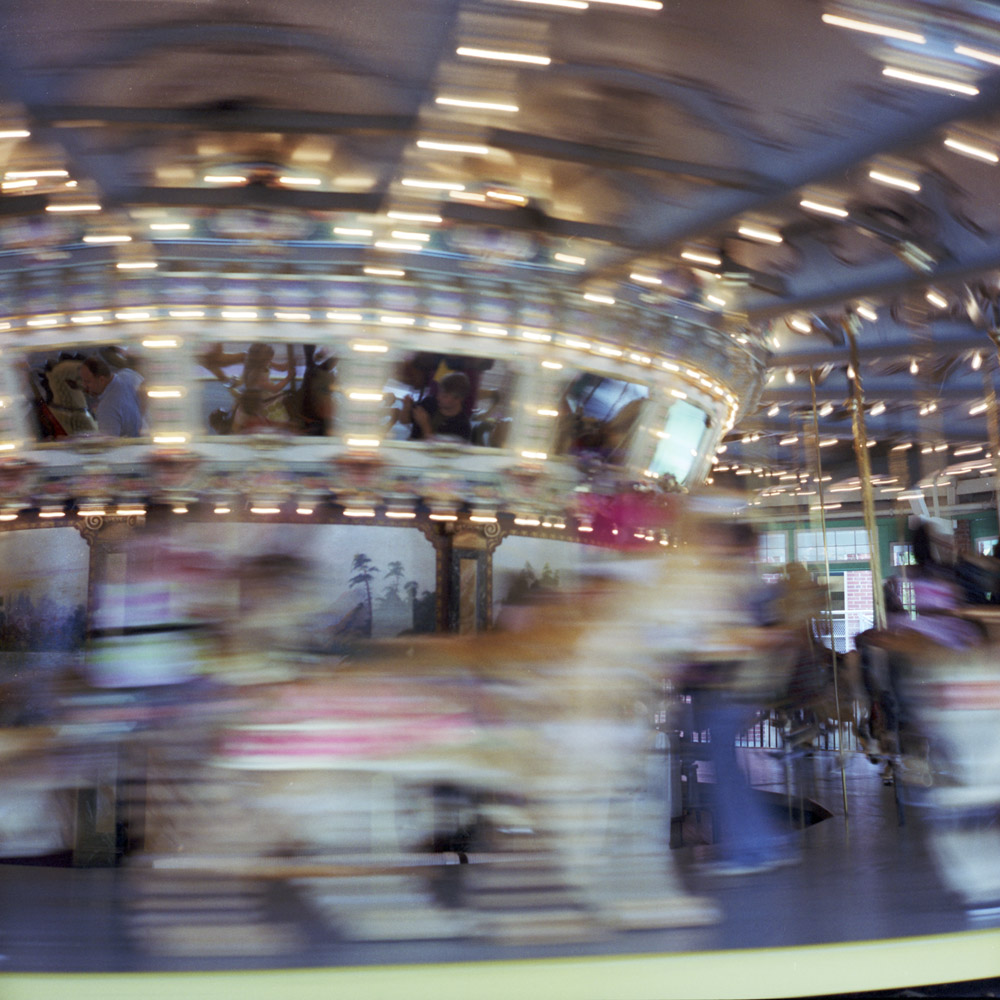
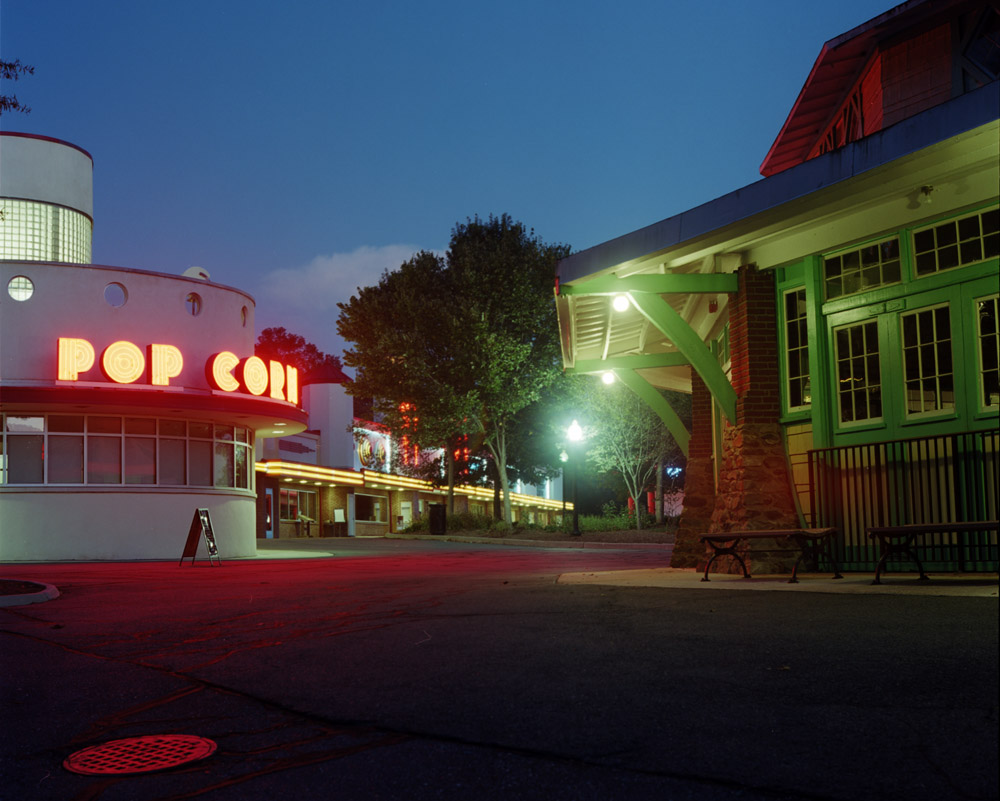
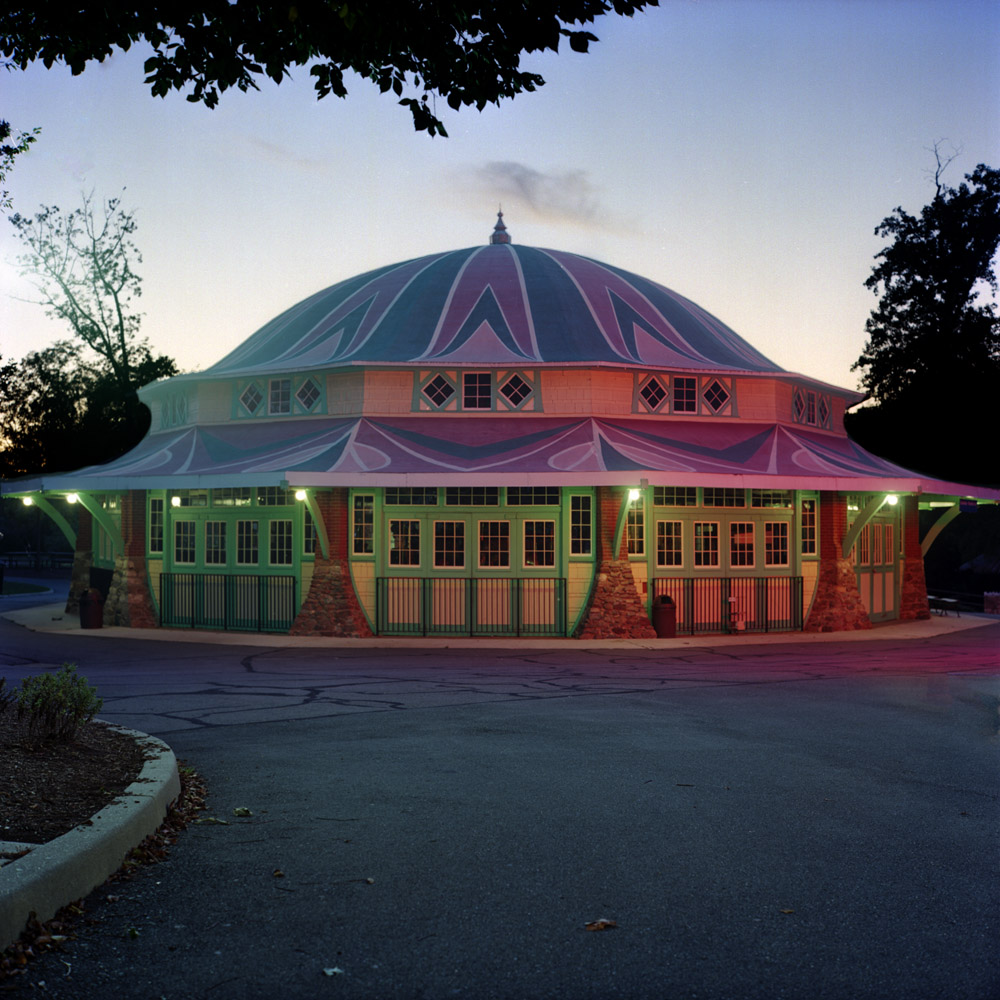
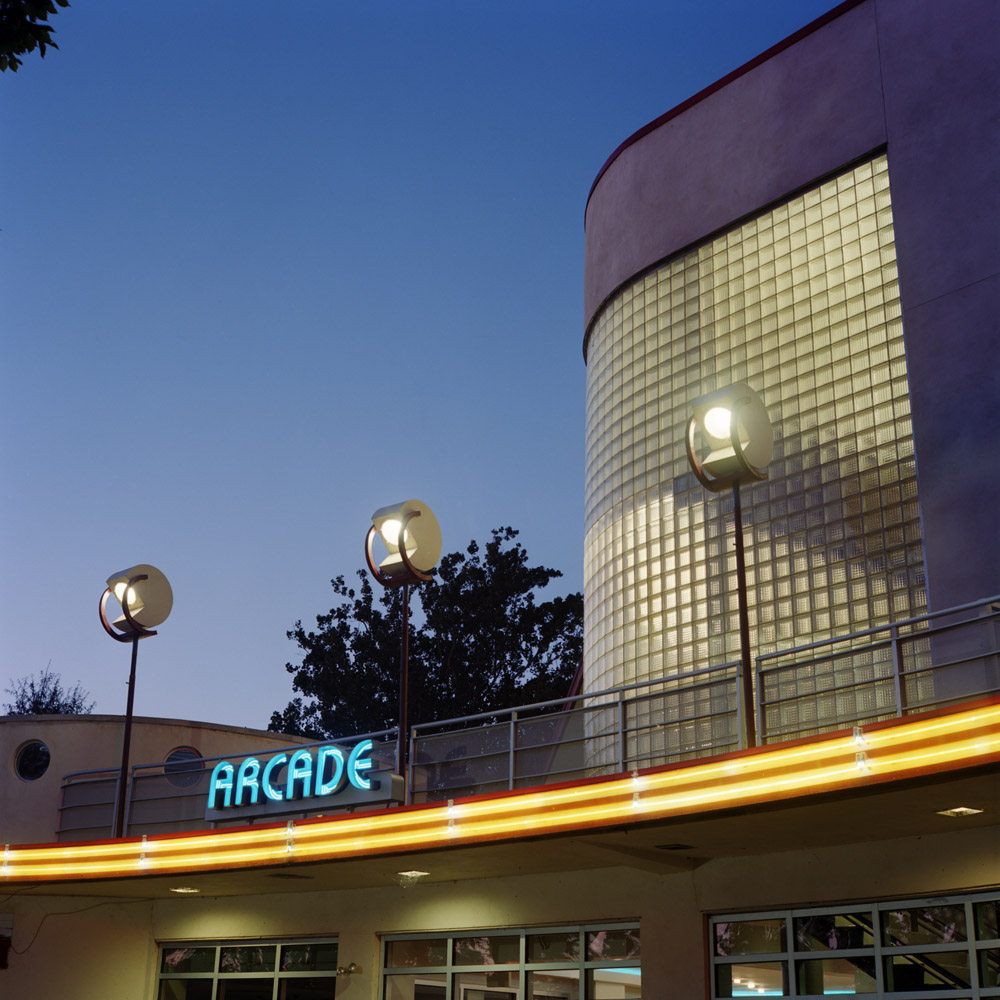
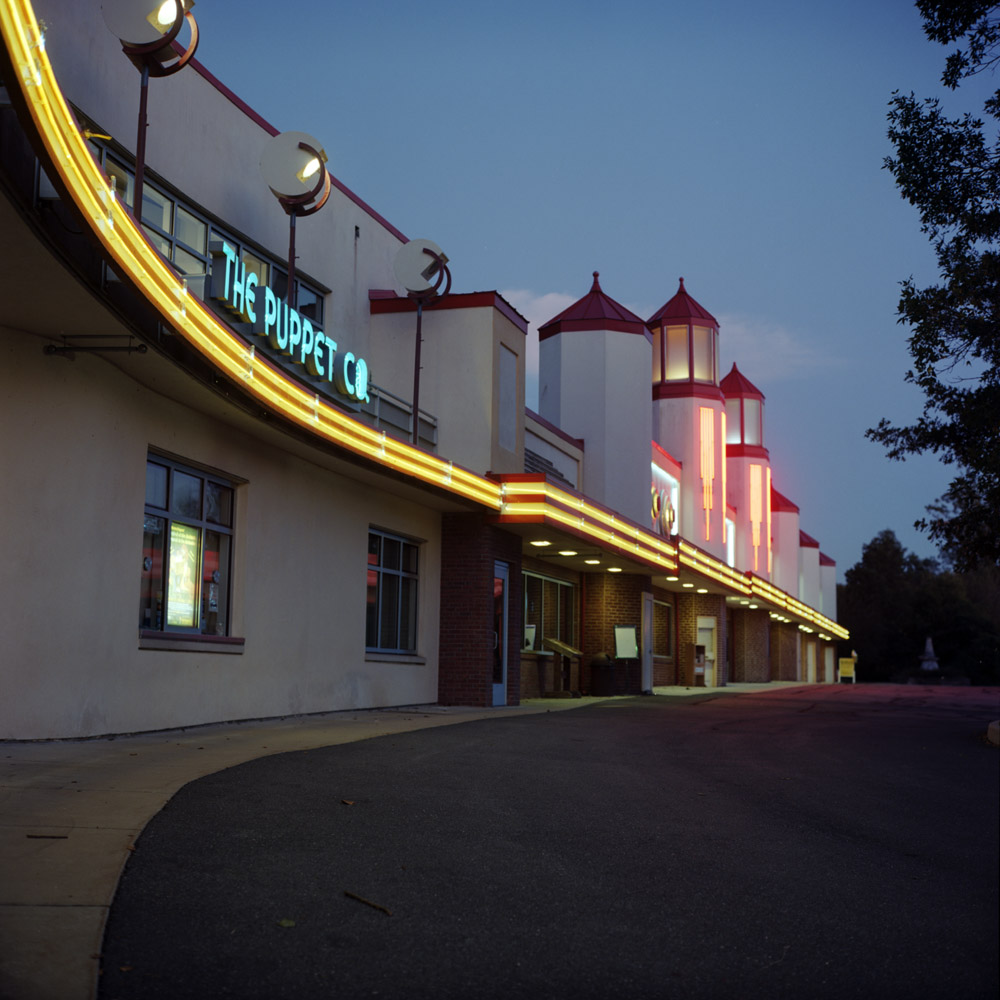
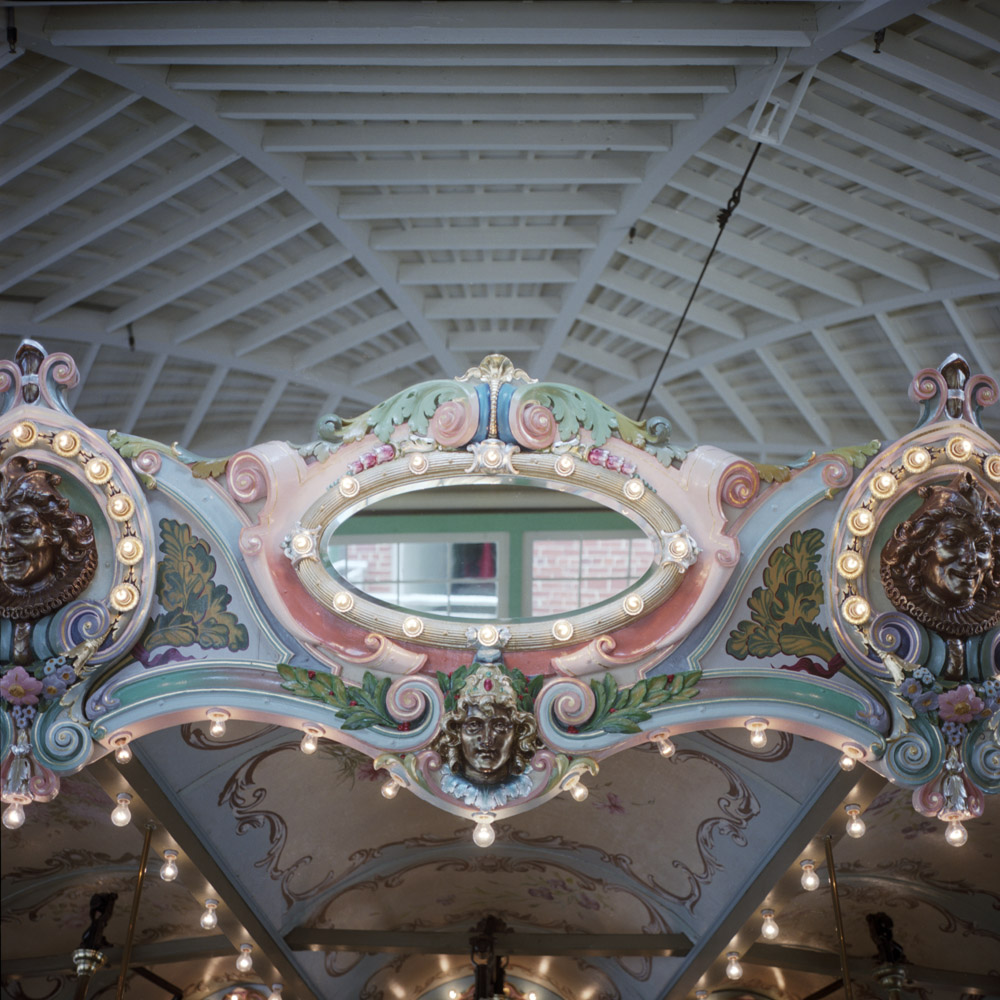
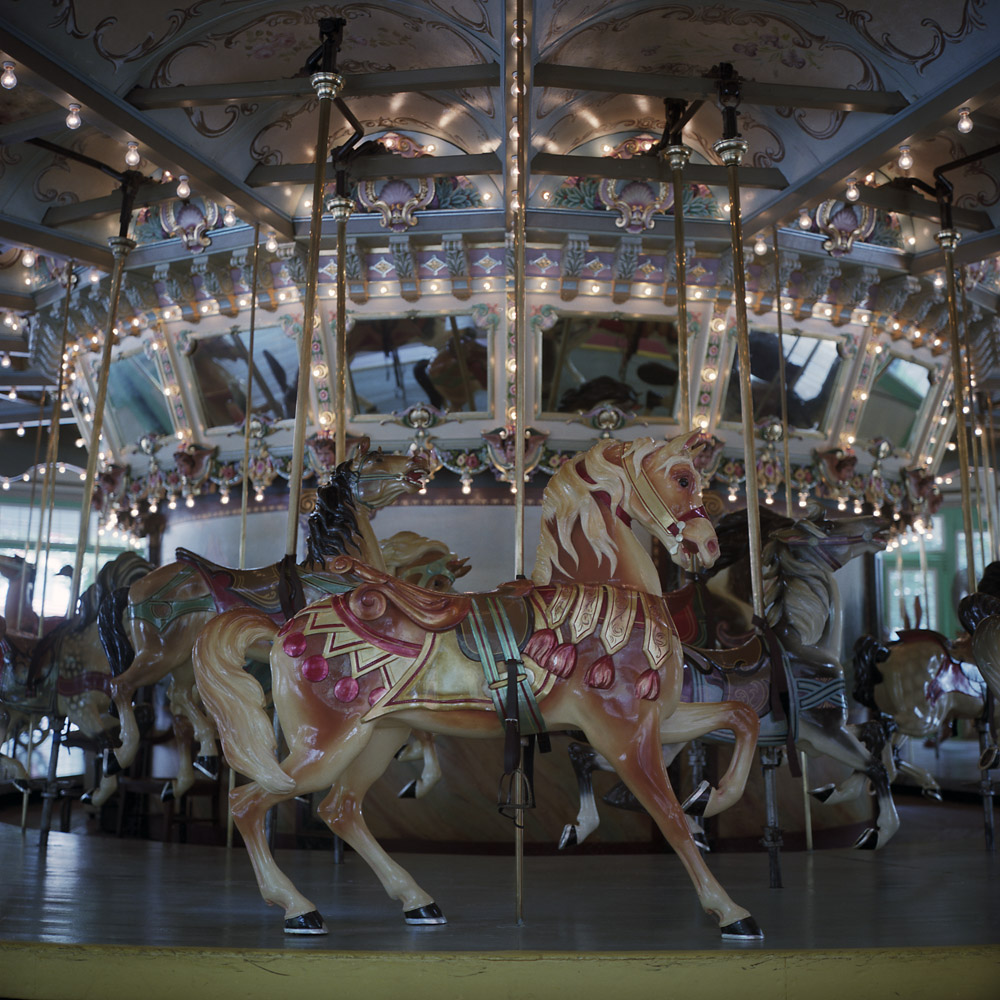
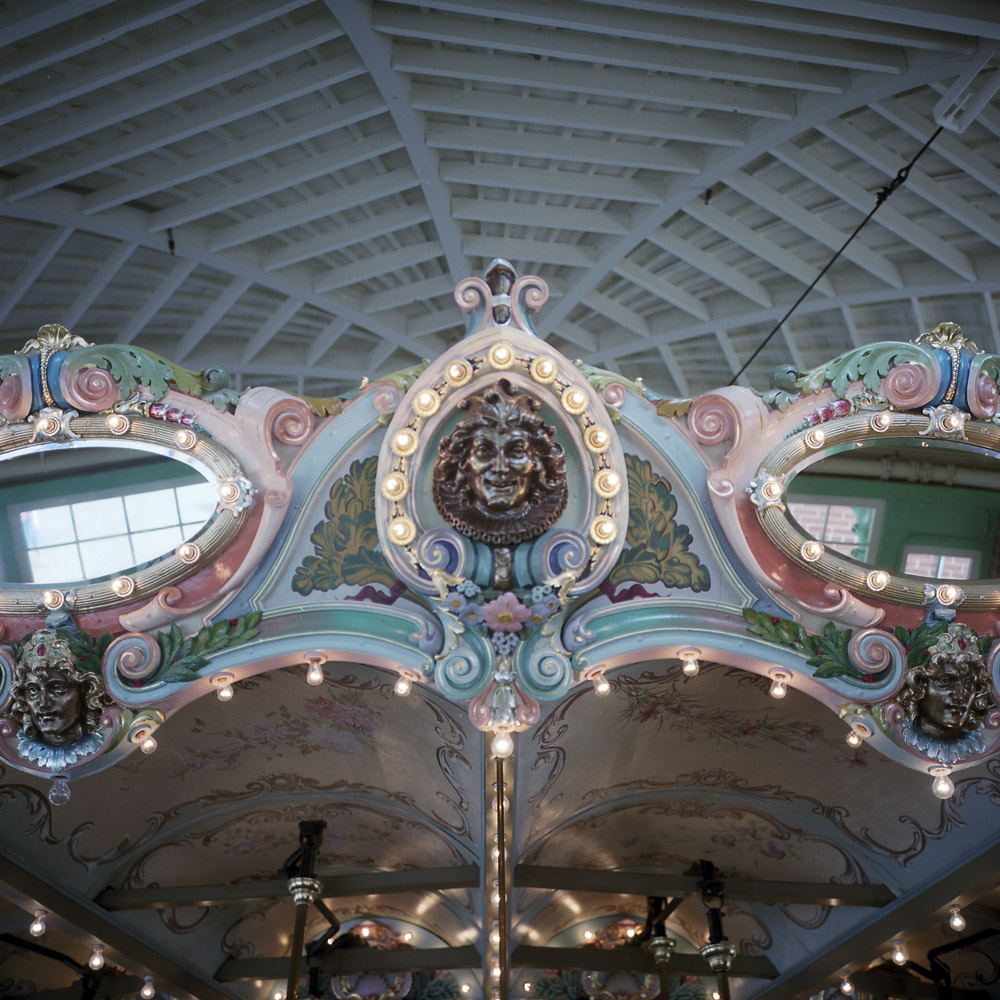
Just thought I’d do a re-visit of all my Glen Echo color work, to put them in one place. When I get a bit more organized, I’ll put my platinum/palladium Glen Echo photos together and do another mini-gallery. This has all been shot with a mixed bag of films and cameras. Mostly my Rolleiflex 2.8E, with one nod to my Canham 5×7 (the Glen Echo sign at night – it’s special enough it gets its own row). The films have been Kodak Portra 160NC, Kodak Ektar 100, Fuji NPS 160, and Fuji NPH 400. With the exception of the Ektar 100, most of the film used has been anywhere from a couple years out of date to almost a dozen years expired. Which says a lot about the quality of modern color film emulsions.
Part of the purpose of this exercise was in response to a discussion recently on an online photography forum I read where someone was complaining about how hard it was to take good photos in places you are familiar with. While I love travel photography (I’m getting ready to indulge in some serious travel photography early next year, probably one of those once-in-a-lifetime trips – I’ll keep you updated as the time approaches), I think it’s absolute baloney that you can’t take interesting photos of places you know and see every day. If anything, the opposite is true. But each type of photography requires a different mindset. Photographing on the road requires you to be able to filter out the extraneous detail because it’s ALL wondrous and new. Photographing at home requires you to turn off the detail filter so you start finding the interesting stuff you ignore because it’s what you see every day.
Photographing my own neighborhood is about recording and observing change – it’s like doing a series of portraits of the same person – this week in a suit, next week in a sundress, then later in an anorak, this year a little taller, next year a beard, the year after with a tan and a buzz cut. The Glen Echo photos are another form of portraiture, portraiture of a place. Places can have spirits and identities, and their face changes over time, just like a person’s.
Glen Echo Sign, Morning
Glen Echo Park Sign, Evening
Glen Echo Sign
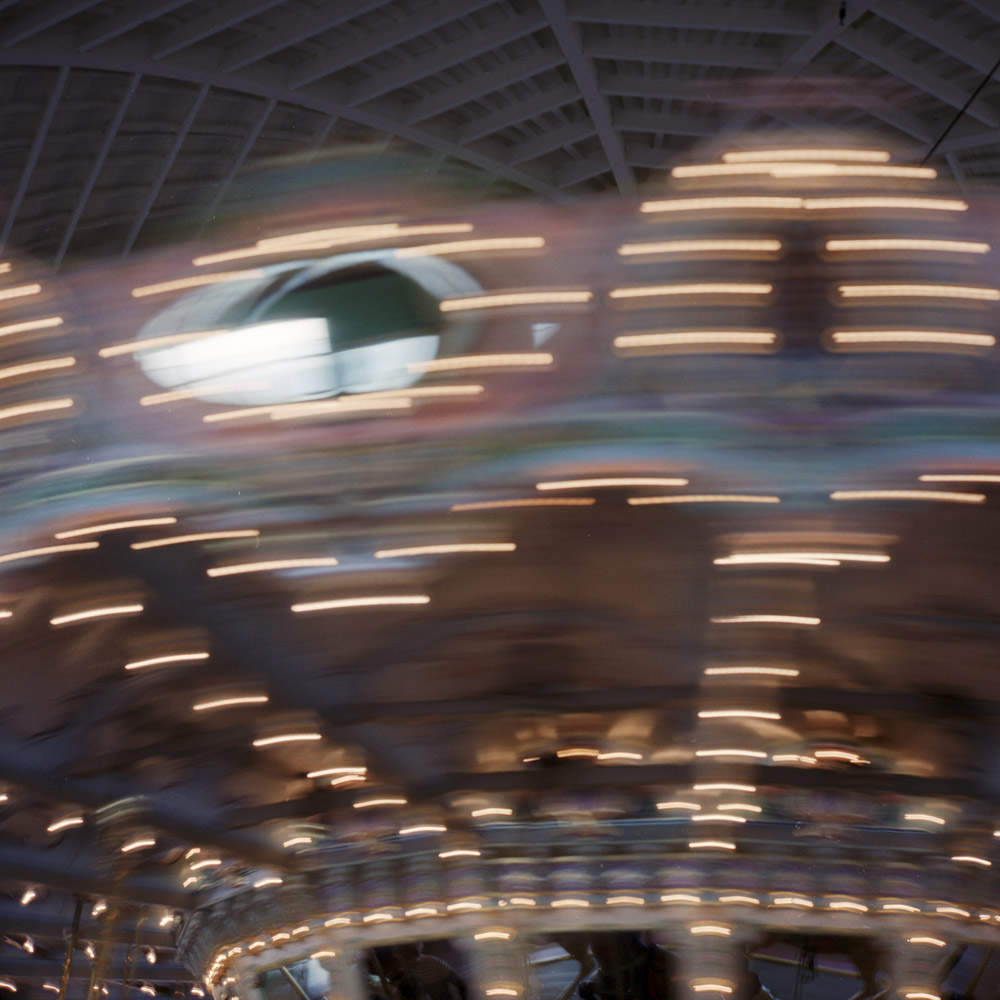
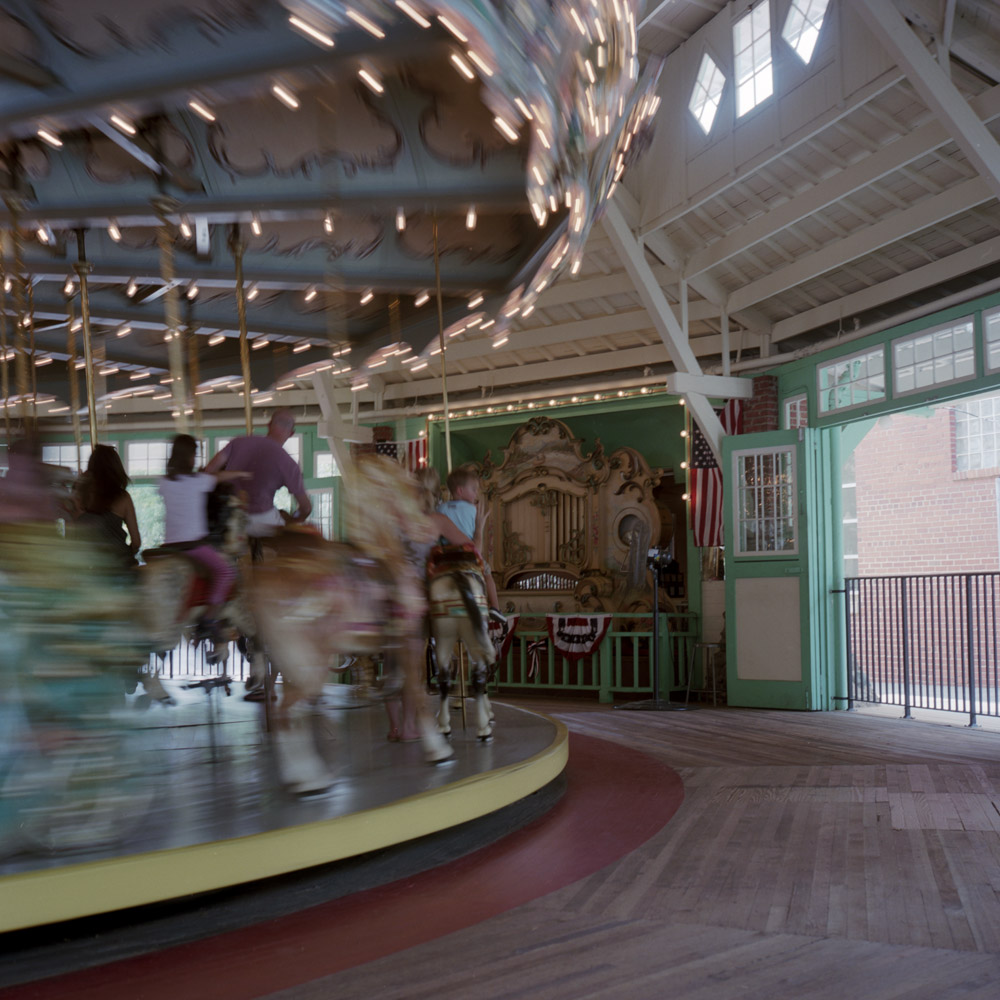
Glen Echo Carousel in Motion, #1
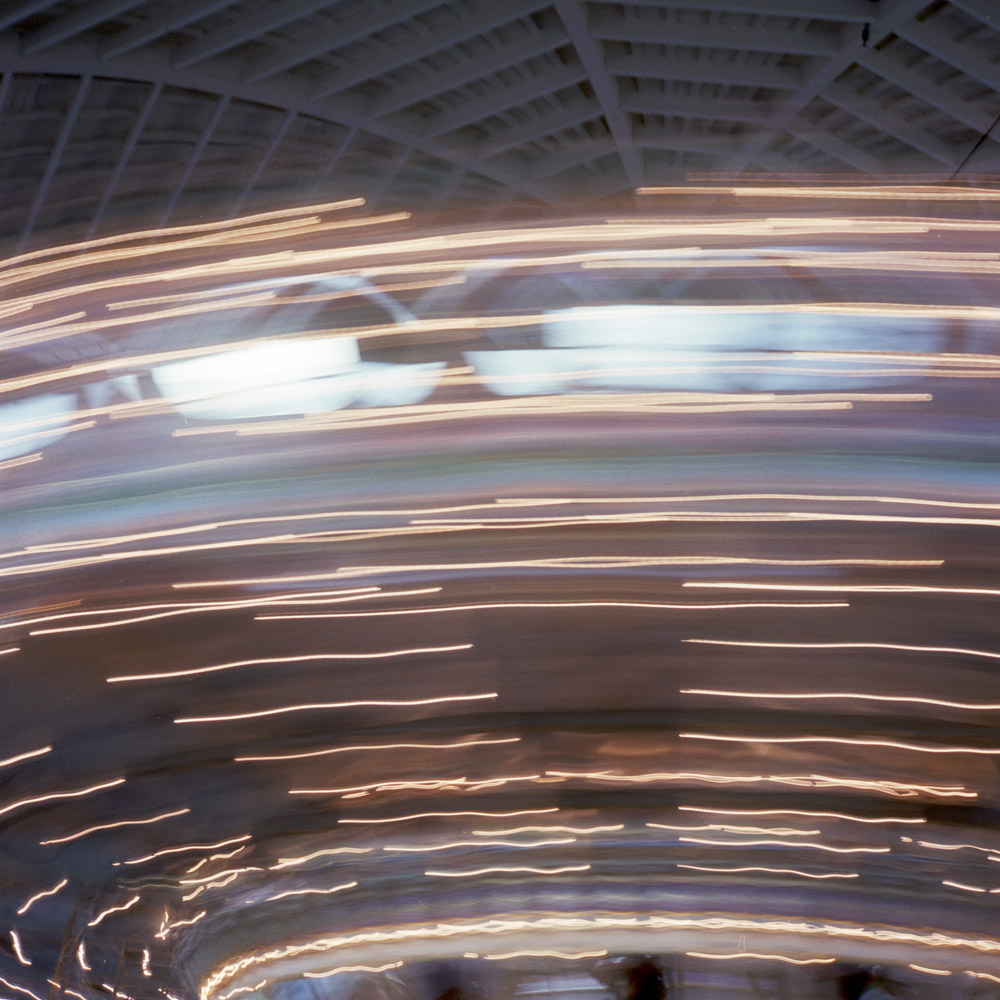
Glen Echo Carousel in Motion, #2
Glen Echo Carousel in Motion, #3
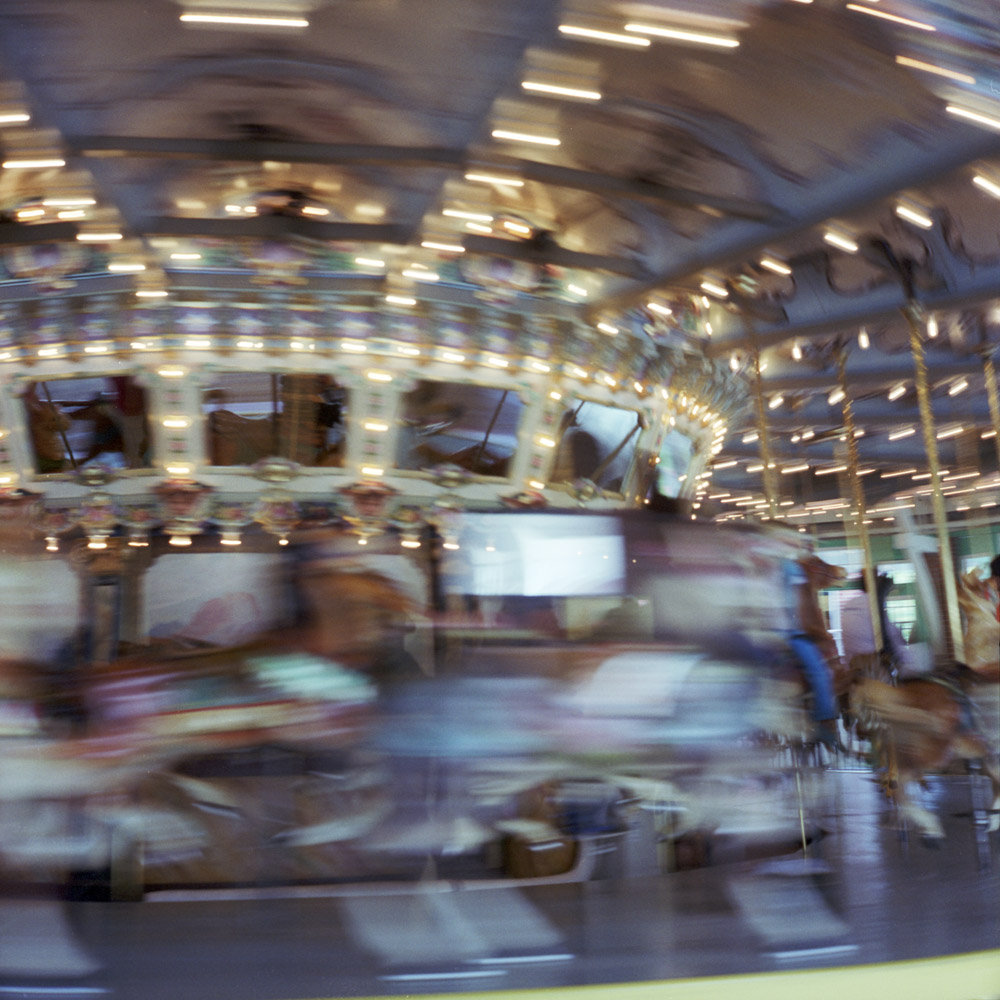
Glen Echo Carousel in Motion, #4
Glen Echo Carousel, Midway, Twilight
Dentzel Carousel, Glen Echo, Sunset
Glen Echo Arcade, Twilight
Glen Echo Arcade,Puppet Company, Twilight
Mirror and roof vaulting, Glen Echo Dentzel Carousel
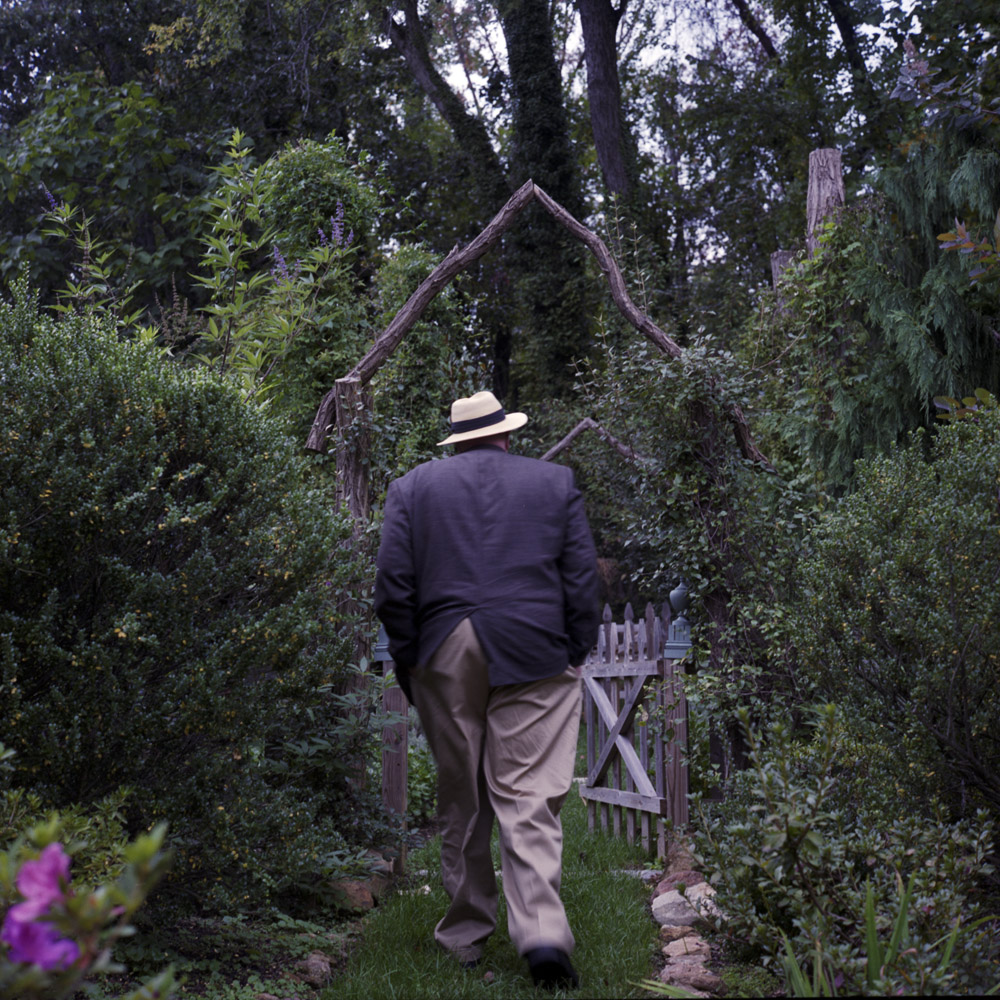
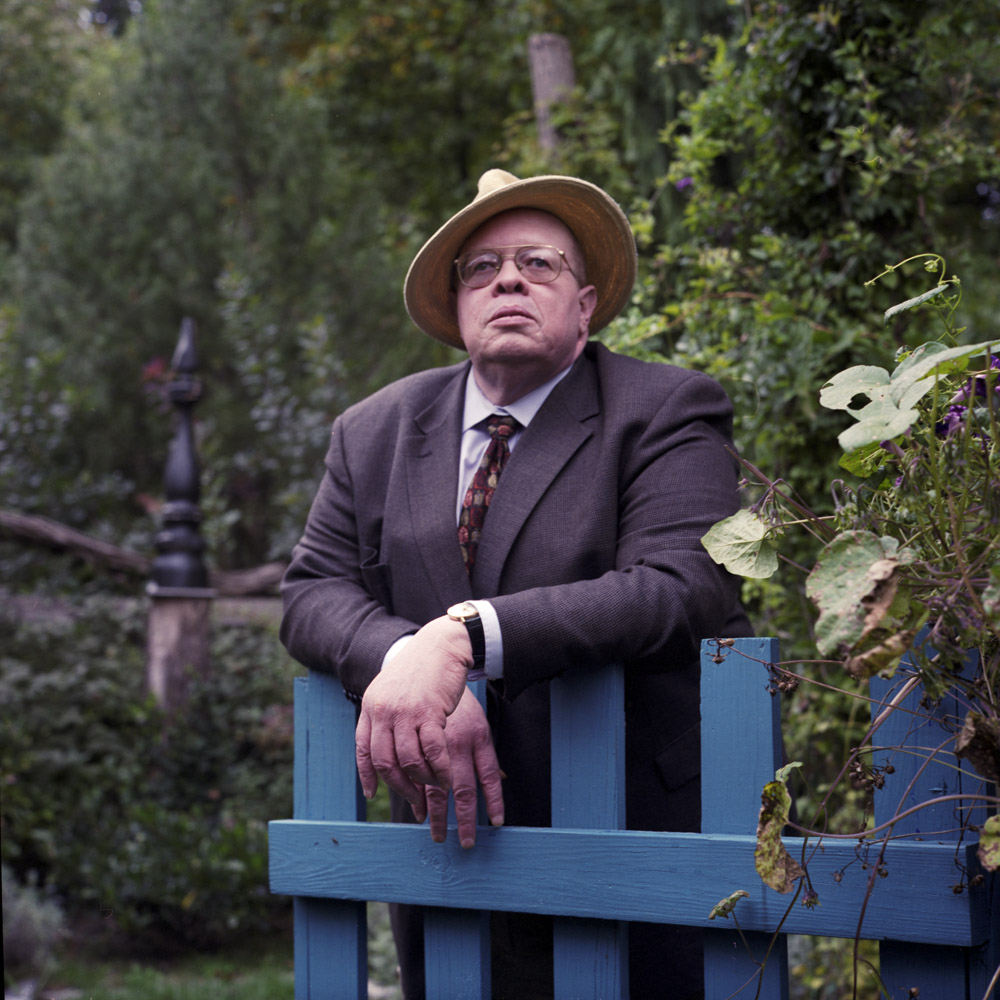
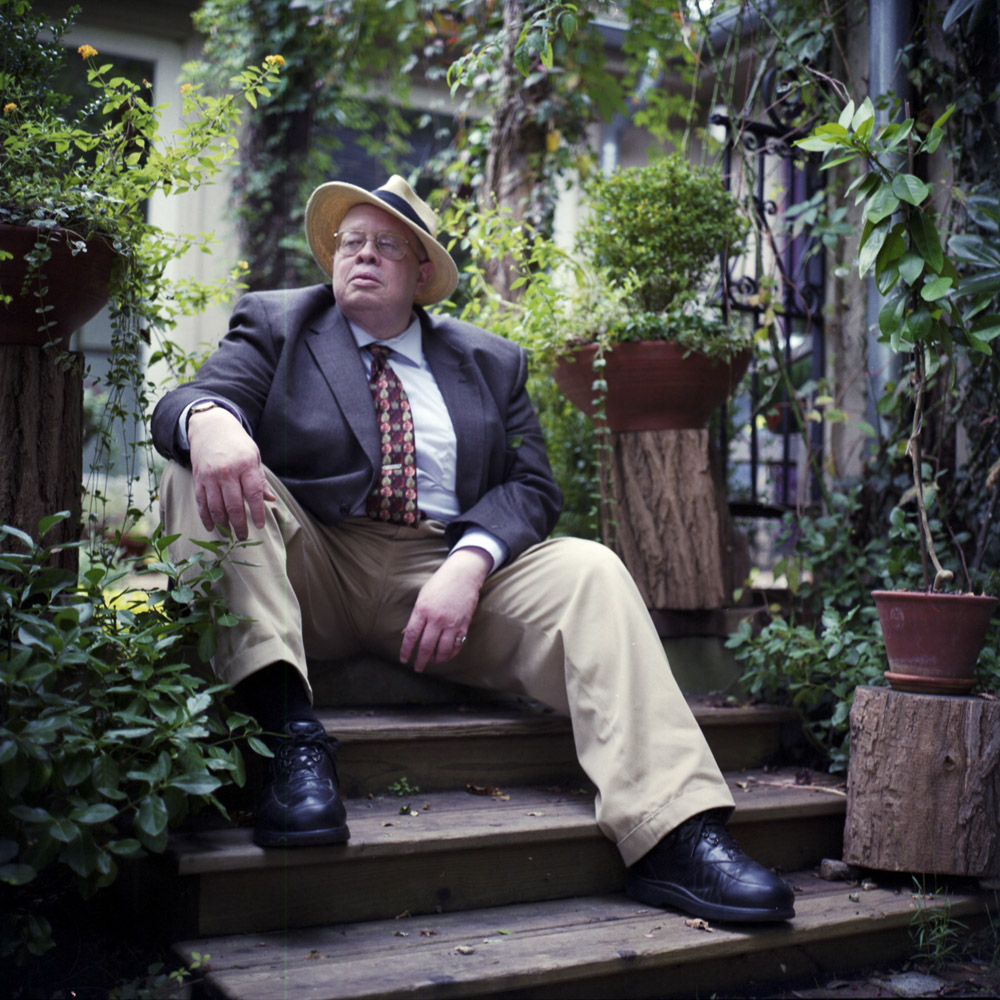
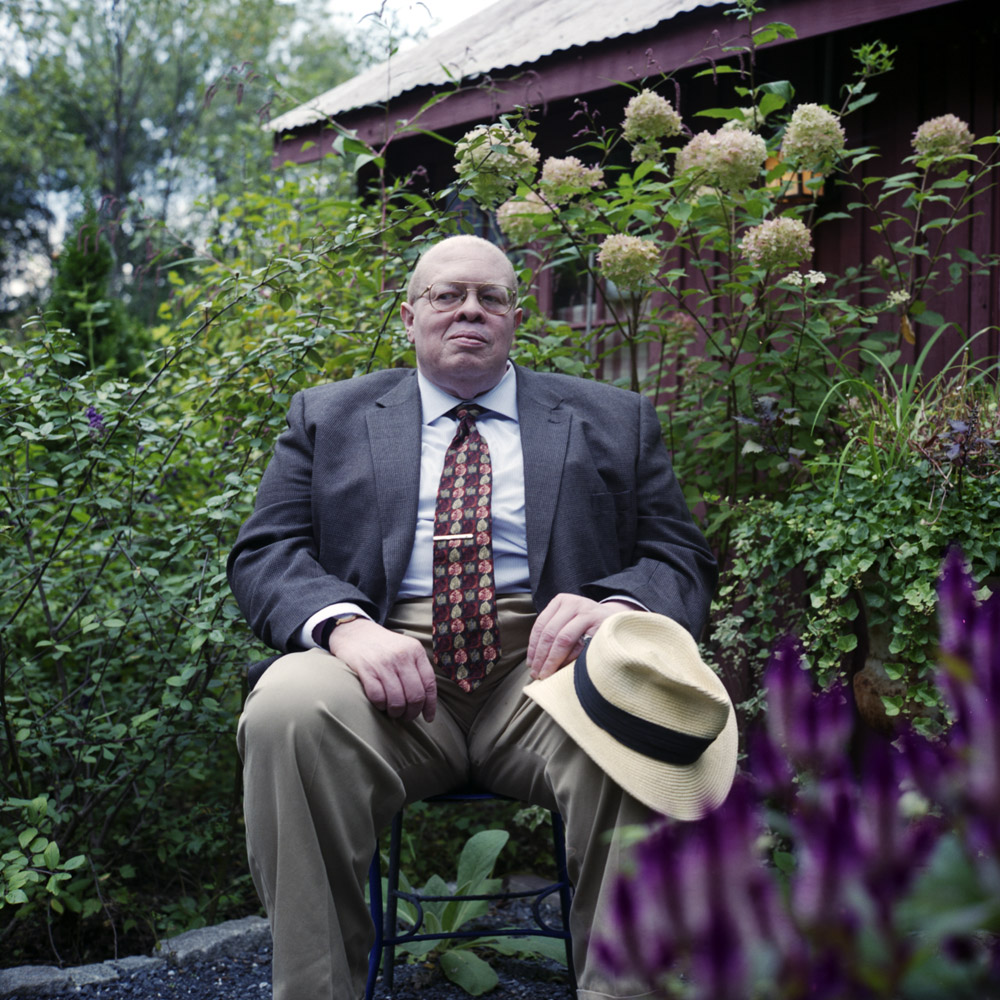
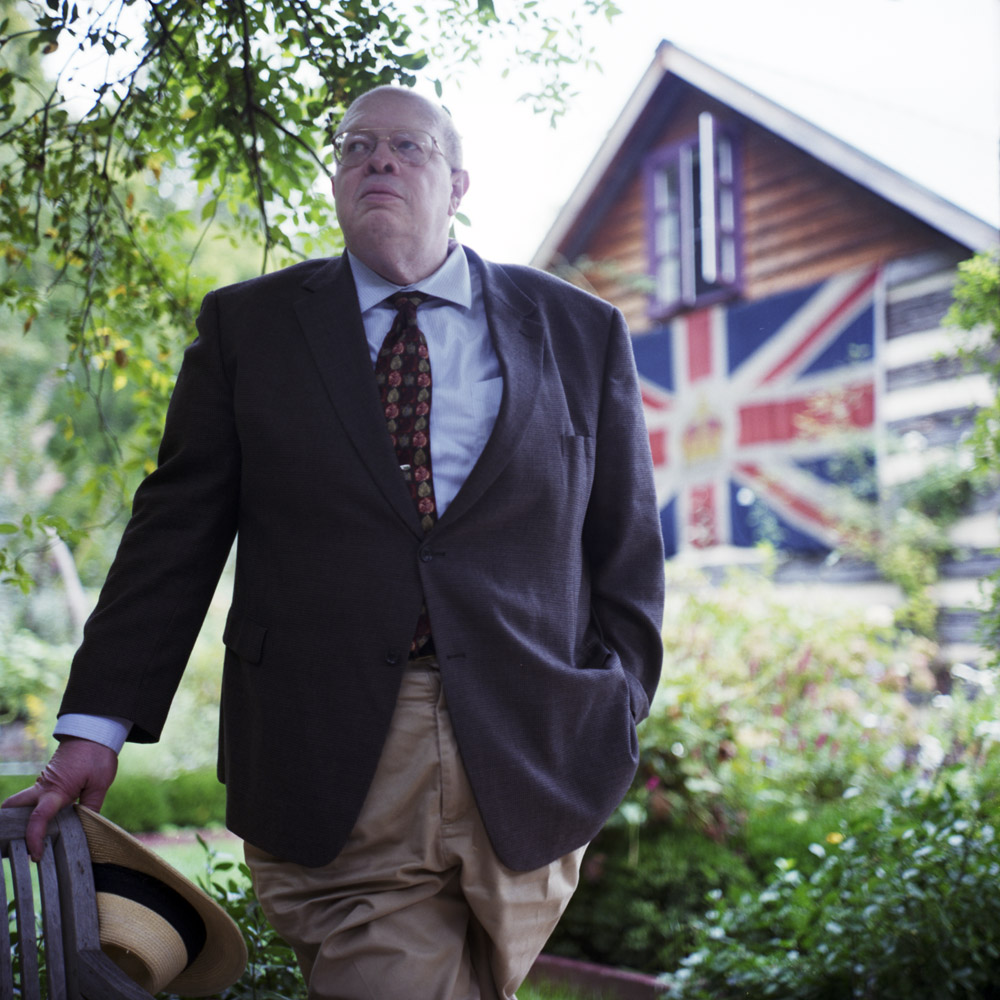
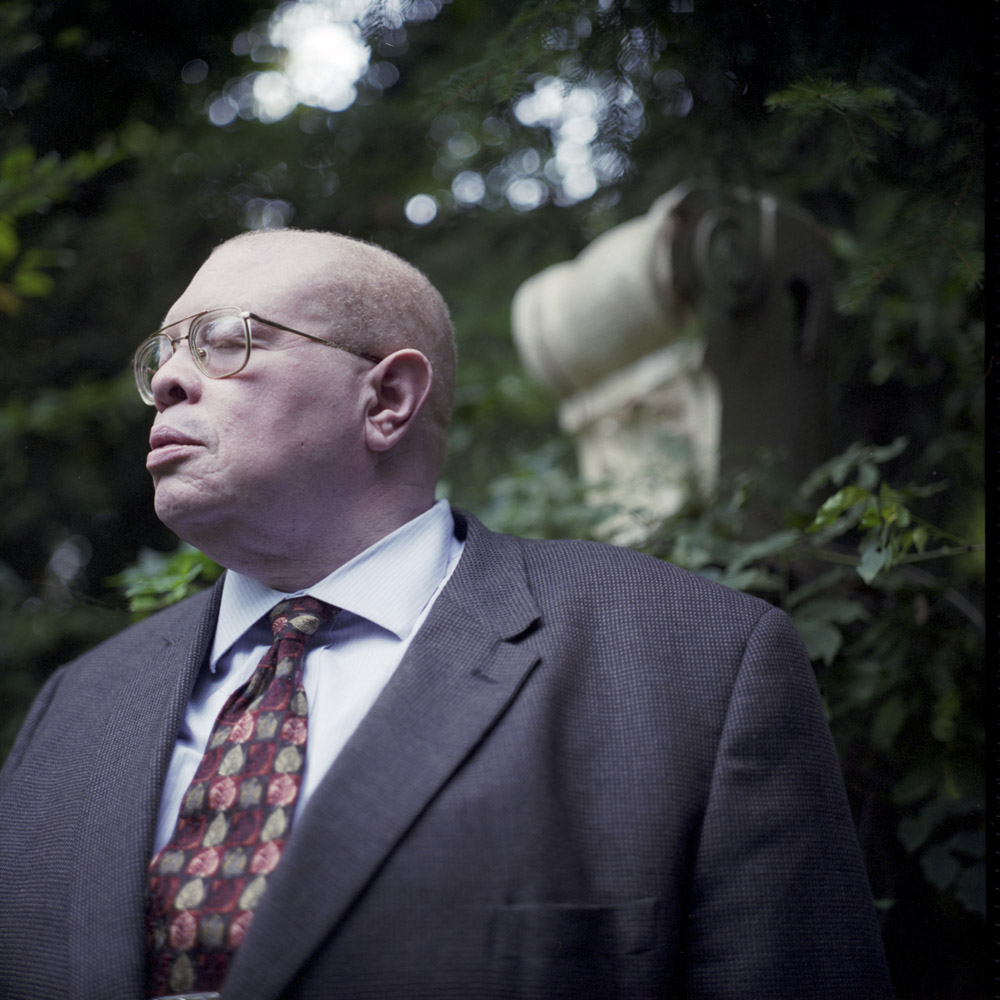
Two more photos of my friend, Charles, in his friend Henry’s garden.
Charles, in the GardenCharles, at the Garden Gate
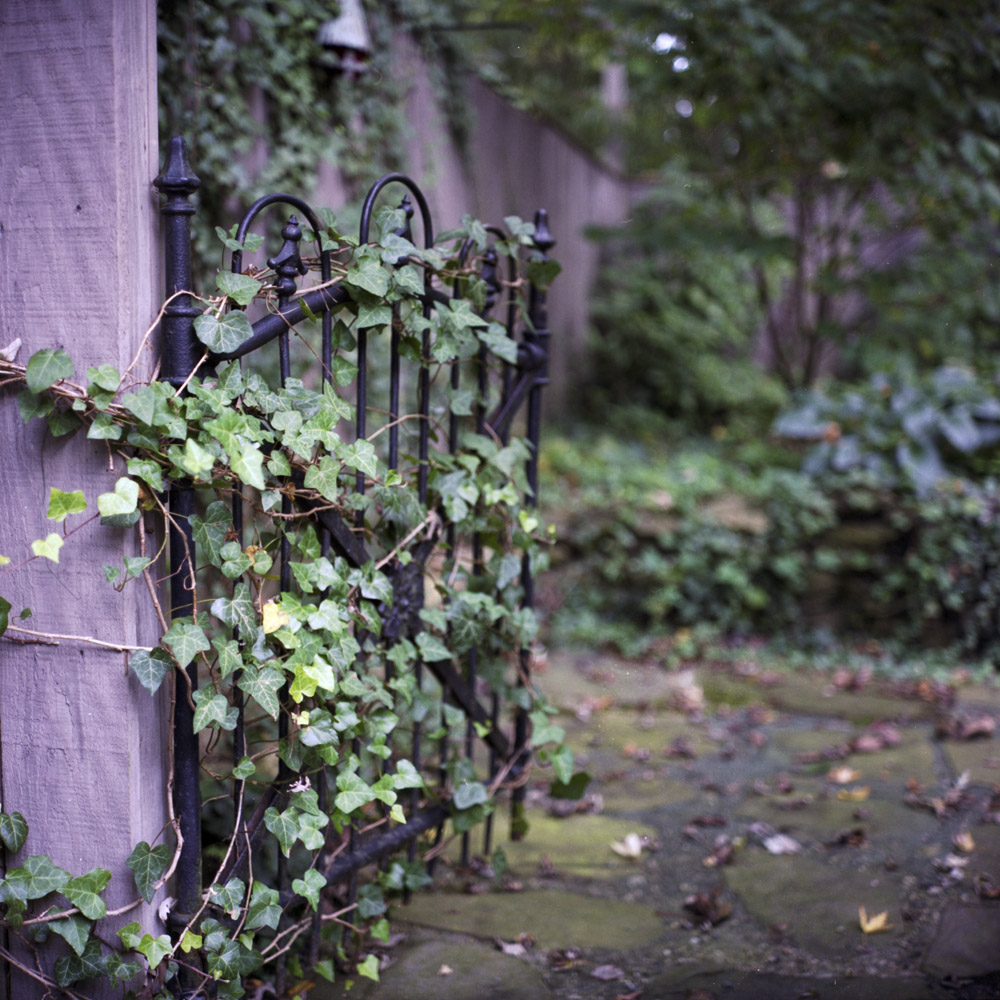
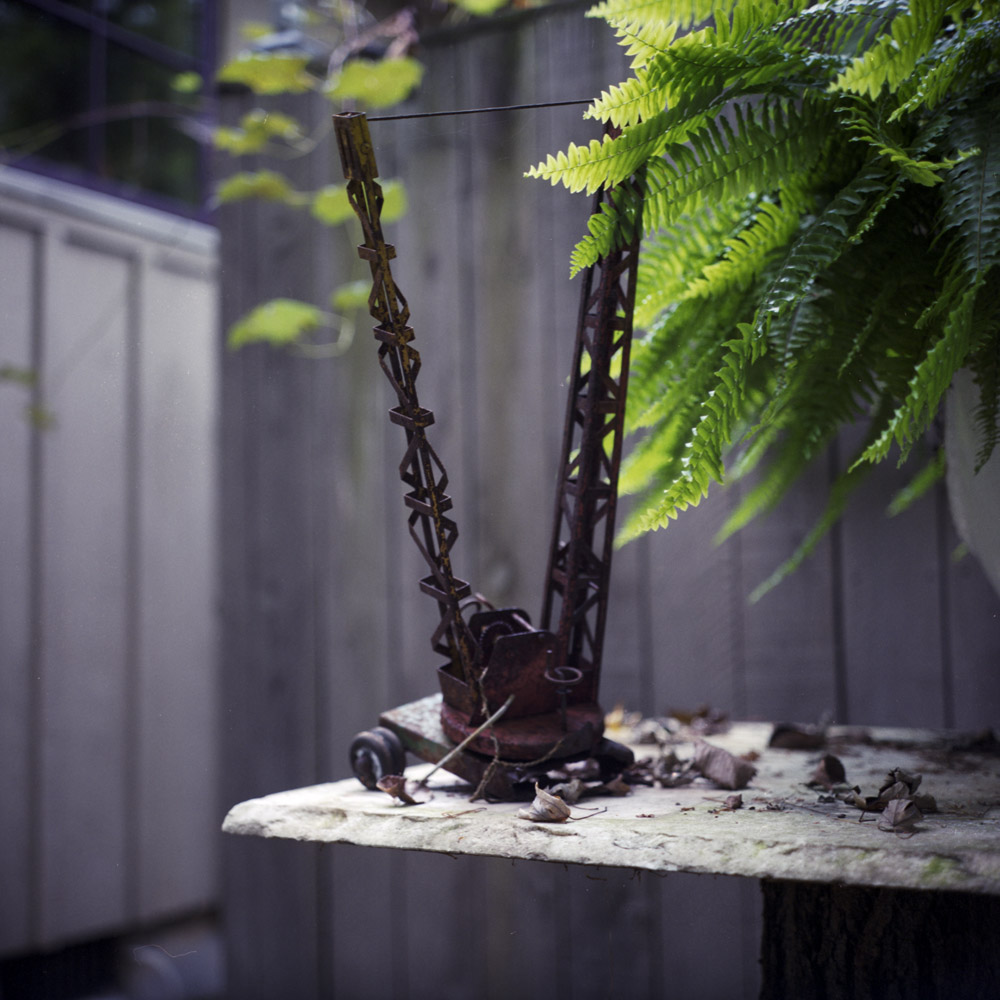
Sometimes a portrait doesn’t even have to include the person it’s about. In this case, the design of the garden, including the whimsies and follies, speak volumes about the garden’s designer.
Iron Gate, Henry’s GardenRusted Toy, Henry’s Garden
All taken with my Rolleiflex 2.8E, on Fuji Reala film. The film is easily 11 years out of date, but still produces excellent results. I wish I had a couple of bricks more of it in cold storage, but Fuji discontinued the emulsion in all but 35mm size a couple years ago.
Here are a few portraits of a friend of mine in his natural element. Charles is extremely fond of gardens and gardening, and this is one of his favorite gardens that belongs to a friend of his. I hadn’t seen him in several years, and so the other weekend I drove up to Baltimore to visit, and brought along the Rollei to shoot his portrait. I’m so glad I used some of my last remaining rolls of Fuji Reala – they did him justice. It was the least I could do to honor him as he’s been such a good and devoted friend over the years.
Charles, In Henry’s Garden, #1Charles, In Henry’s Garden, #2Charles, Rule Britannia, Henry’s Garden, #3Charles, Architectural Element, Henry’s Garden, #4
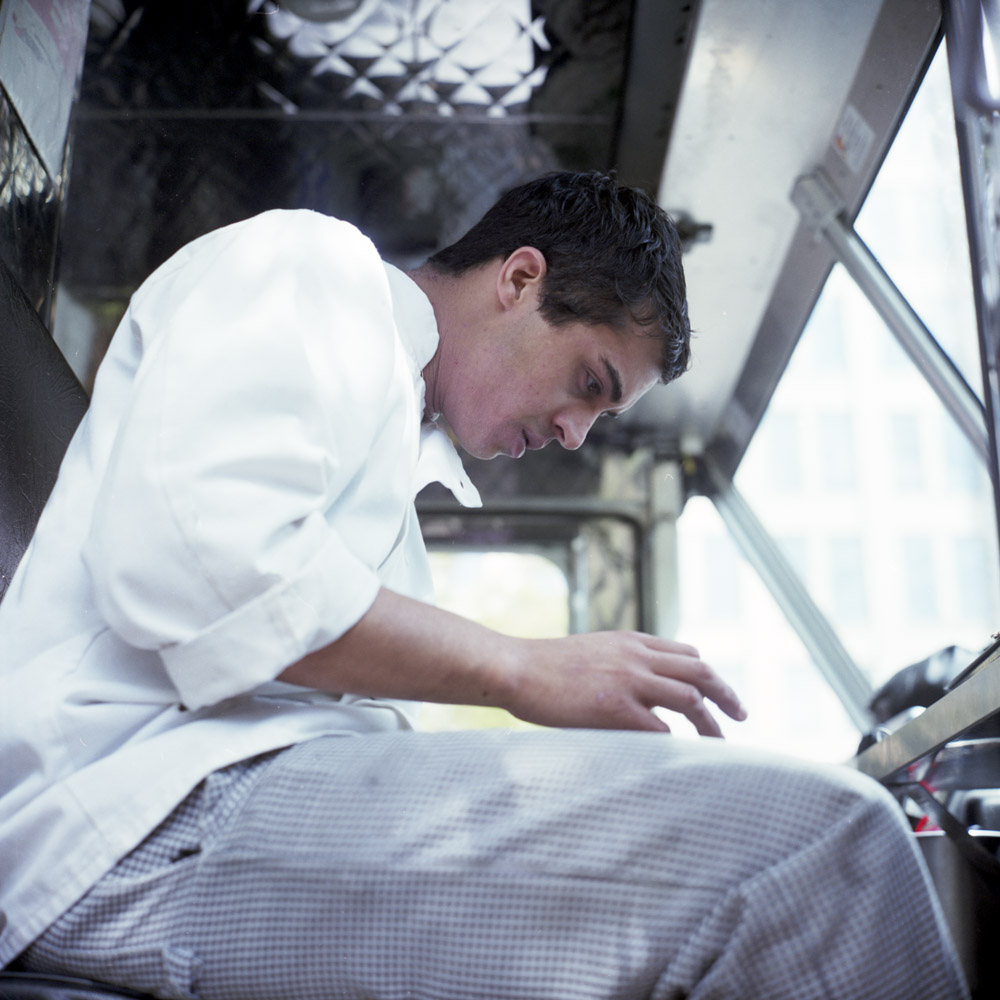
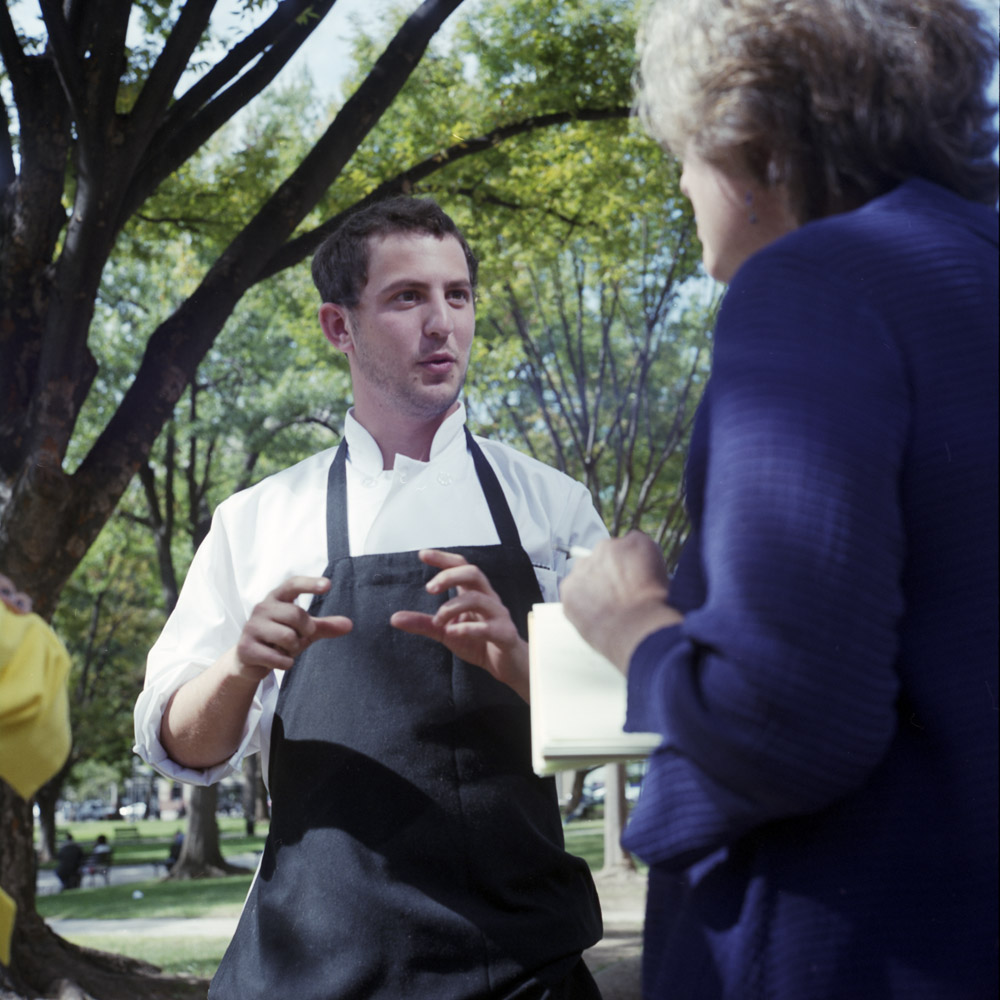
Here are a couple from my ongoing Food Truck series – the cashier and the head chef of Pepe, the Jose Andrés-helmed gourmet food truck here in DC. I THINK the young man giving the interview in the second photo may be Jose Andrés’ son.
Cashier, Pepe Spanish Cuisine Food TruckPepe Food Truck Chef Interview, Franklin Square Park
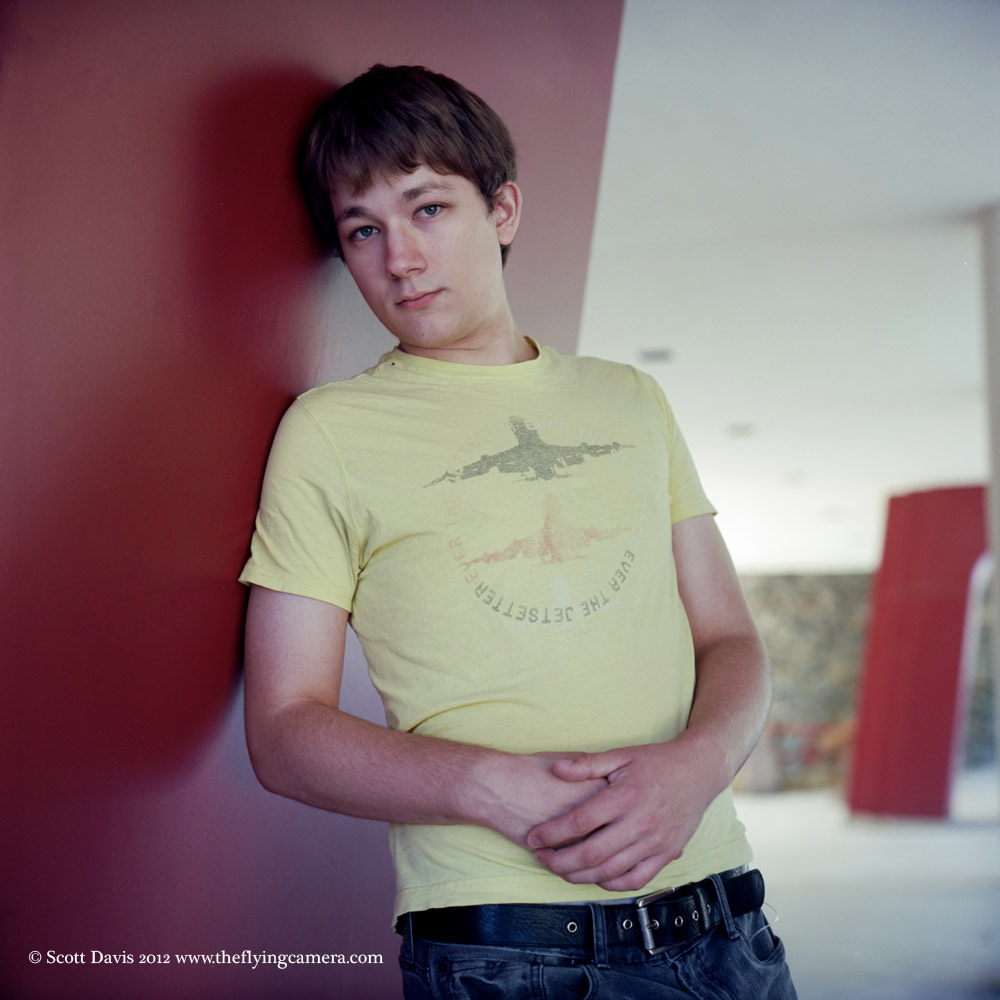
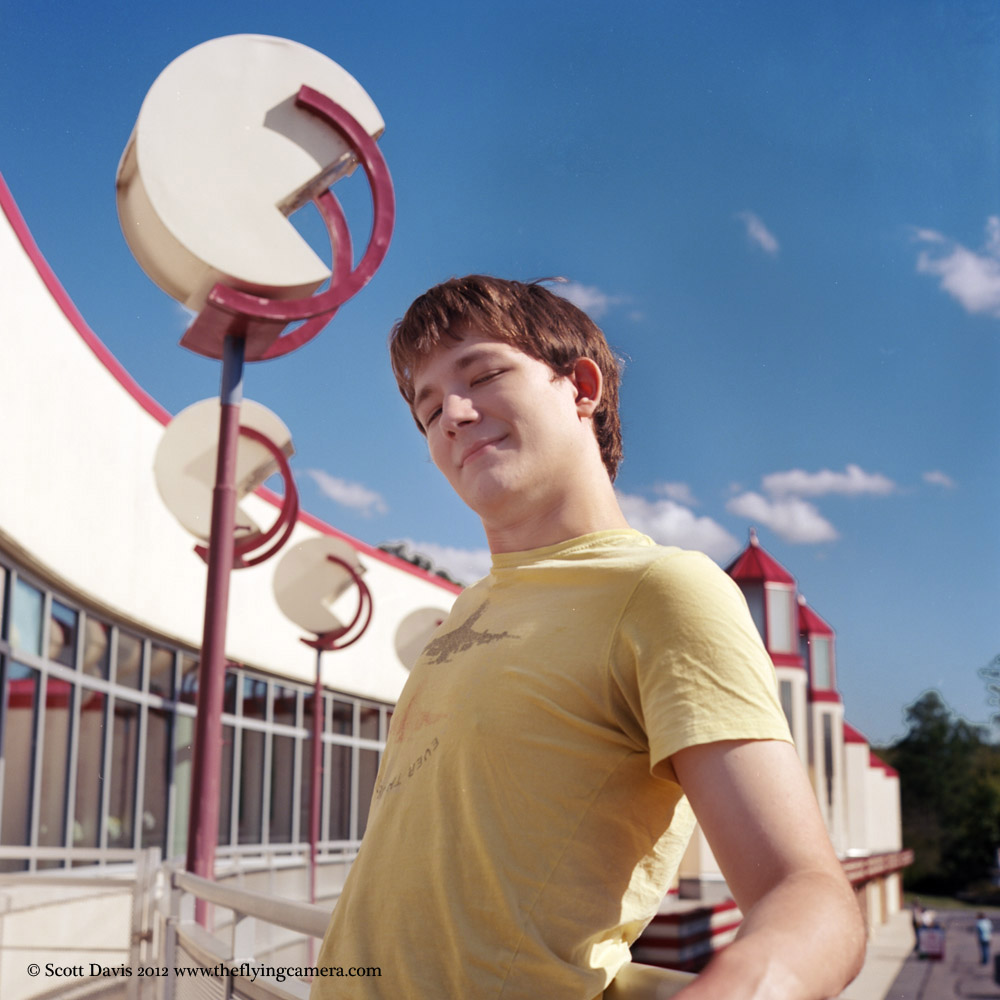
The following two are shots of a friend of mine who is thinking of getting into modeling, so we did a couple test portfolio pieces out at Glen Echo a month ago. I think he’s got the face for it, for certain. The trick will be to figure out if he can move and pose, and if he can get his body conformed to modeling industry standards.
James, Glen Echo Park #1James, Glen Echo Park #2
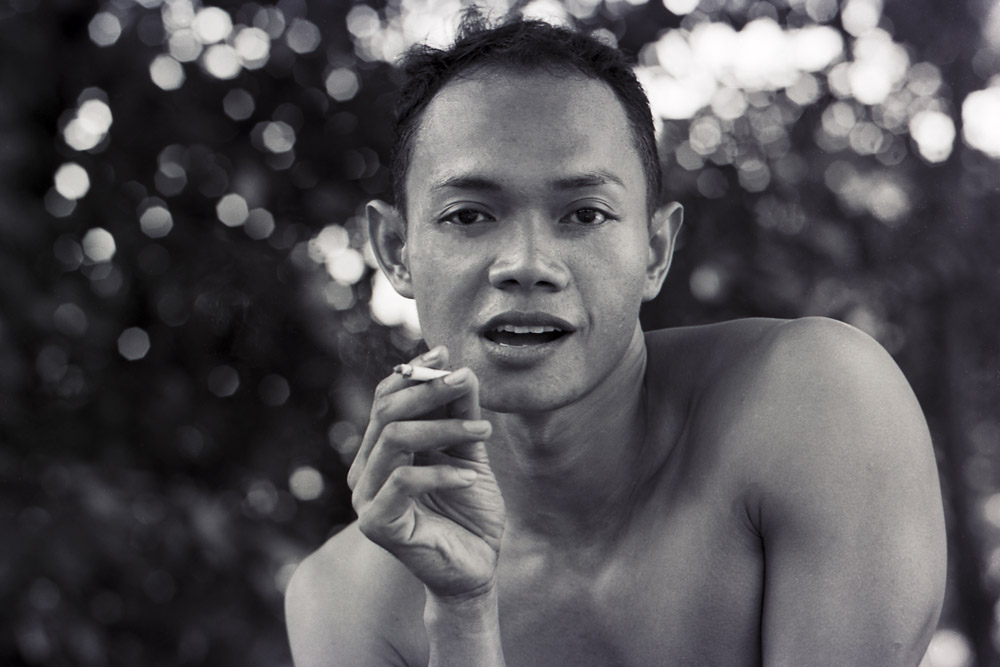
And last but not least, here’s one from the vaults of another very dear friend from Singapore. We went to Fort Canning and went up on the roof of the remnants of the fortifications to shoot some photos of him and some of his friends, and I grabbed this one between poses. It captures his personality absolutely, although he foreswears this photo now because he has quit smoking. But it still reflects his inner sparkle and cheek.
Mirza, Fort Canning, Singapore
I’m trying to get better at photographing strangers, and photographing unposed portraits. I find it incredibly easy to photograph people I know well because I can perceive little gestures and nuances that reflect their personality. The trick will be to get better at that kind of perception with total strangers, without imposing preconceived notions of what I THINK they are on them. Perhaps it’s an impossible chase, but it’s one I’m going to hazard.
Glen Echo Carousel in Motion, #1Glen Echo Carousel in Motion, #2Glen Echo Carousel in Motion, #3Glen Echo Carousel in Motion, #4
Just some more playing with movement studies using the Rolleiflex. This was shot with 11 year old expired film – Fuji NPS 160. It has held up remarkably well. Otherwise I don’t have a lot to say, as the pictures speak for themselves I think.
 dcphotoartist