All posts by dcphotoartist

Food glorious food…

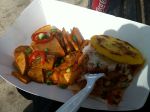
I know I’ve mentioned this once before, but I have to again sing the praises of the DC food truck scene. Today’s lunch was a Wonky Dog from the Eat Wonky truck – a gigantic hotdog topped with home-cut fries (skin on), squeaky cheese (yes, it really does kinda squeak when you chew on it), and gravy. It has been forever since I had gravy on fries, and I had forgotten how good that tastes! It’s amazing how a little lunch can bring back happy childhood memories. It’s comfort food of the best (and worst from a healthy-diet perspective) variety. Wonky also makes a kick-ass whoopie pie. I had one the other day with a nutella-hazelnut filling… heaven.

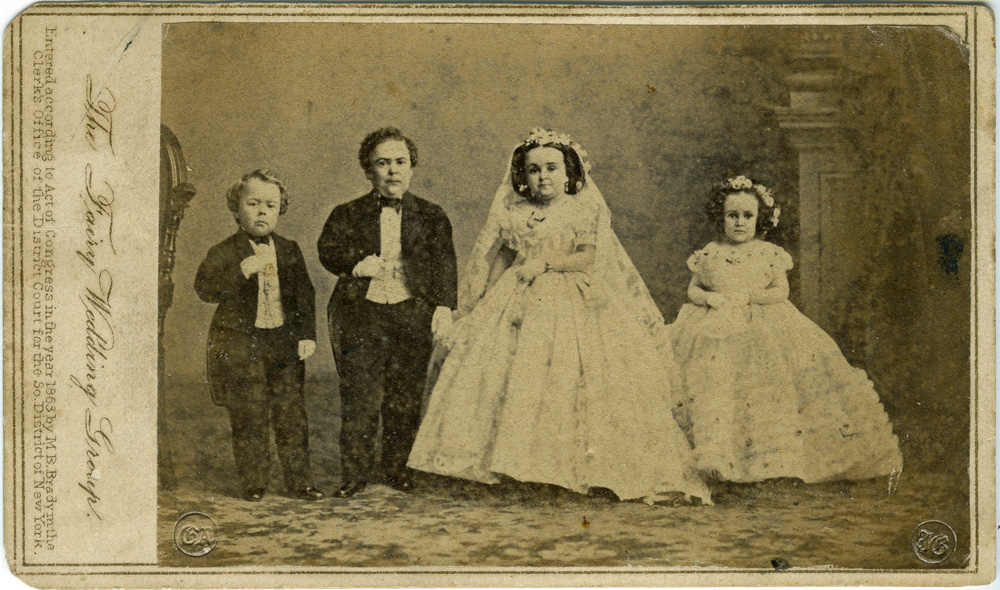
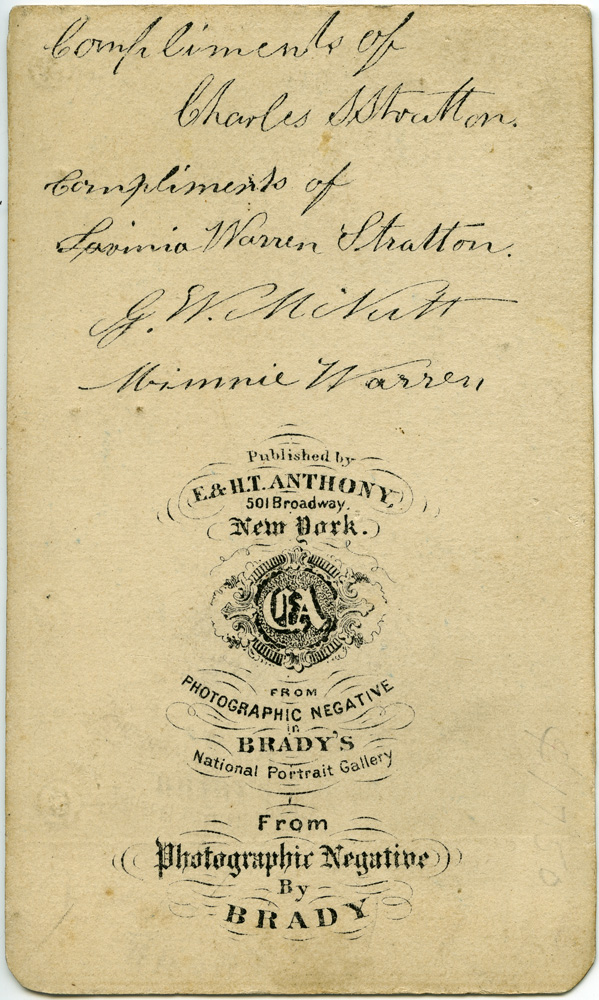
Tom Thumb’s Fairy Wedding by Brady

Ok, I’ve been waiting for a while to get this one. I originally saw a listing with a copy of this image on Ebay for somewhat north of $300. I debated and debated whether to get it or not. After much consideration, I passed on it, thinking that the signatures on the back were most likely facsimiles, and not original signatures. Patience paid off – another copy (the one I bought) showed up. While not quite as nice a condition, it actually looks much better in person than it does in the scans. My copy had the added benefit of being less than a quarter of the current asking price of the other copy I passed on.

For those not familiar with the subject matter, Charles Stratton, AKA General Tom Thumb, was a star of the P.T. Barnum sideshow and performer from the 1840s to the late 1870s. He was born a relatively large, healthy baby but stopped growing significantly before his second birthday. At his tallest he was 3 feet 4 inches. In 1863, he married another dwarf, Lavinia Warren. His best man was George W.M. Nutt, a fellow dwarf and performer in Barnum’s circus, and Lavinia’s bridesmaid was her younger sister, Minnie, also a dwarf. The event was dubbed “The Fairy Wedding” and was the social event of the year. Two thousand guests packed Grace Episcopal Church in Manhattan. After the wedding, Charles and Lavinia went to Washington where they were received by President Lincoln. Charles, Lavinia, George and Minnie posed for Matthew Brady who went on to sell CDVs of the photo as souvenirs of the wedding through his publisher, E. & H.T. Anthony. This is one of the E. & H.T. Anthony productions.

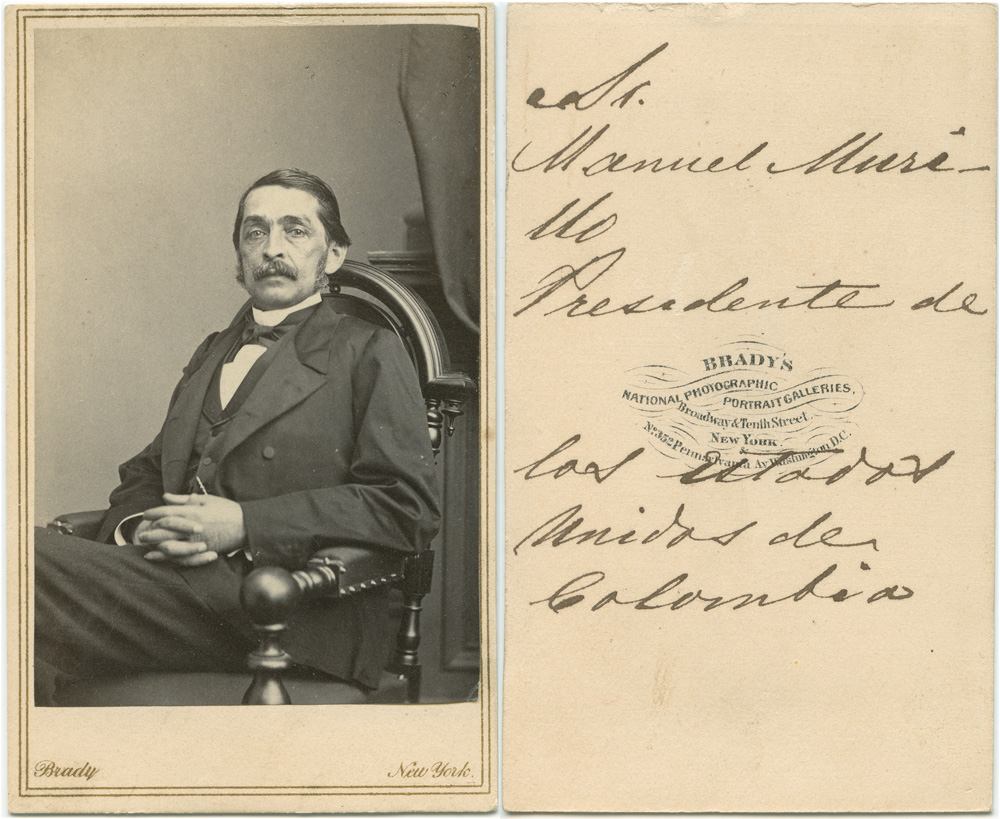
Manuel Murillo Toro, President of Colombia- Mathew Brady Studio, New York

Another recent acquisition. Manuel Murillo Toro, the President of Colombia from 1864-1866 and again from 1872-1874. Taken in the Mathew Brady New York studio. Probably the best-preserved Brady image I have. This image is most probably from the 1872-4 term, as he is labeled President of the United States of Colombia on the back. In his prior term as president, Colombia was known simply as Colombia.

Manuel Murillo Toro, Presidente of Colombia

More photos from the Connecticut weekend

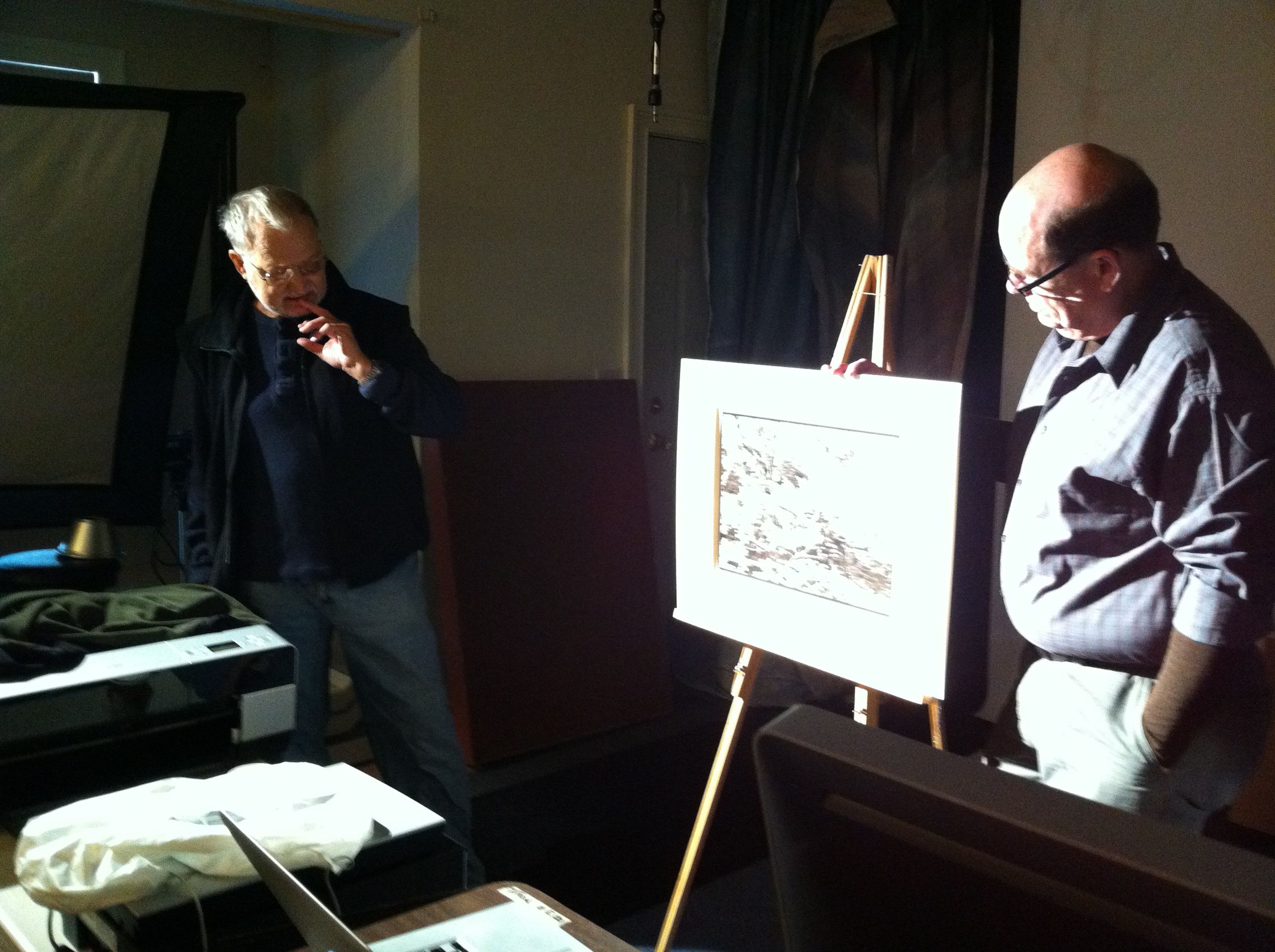
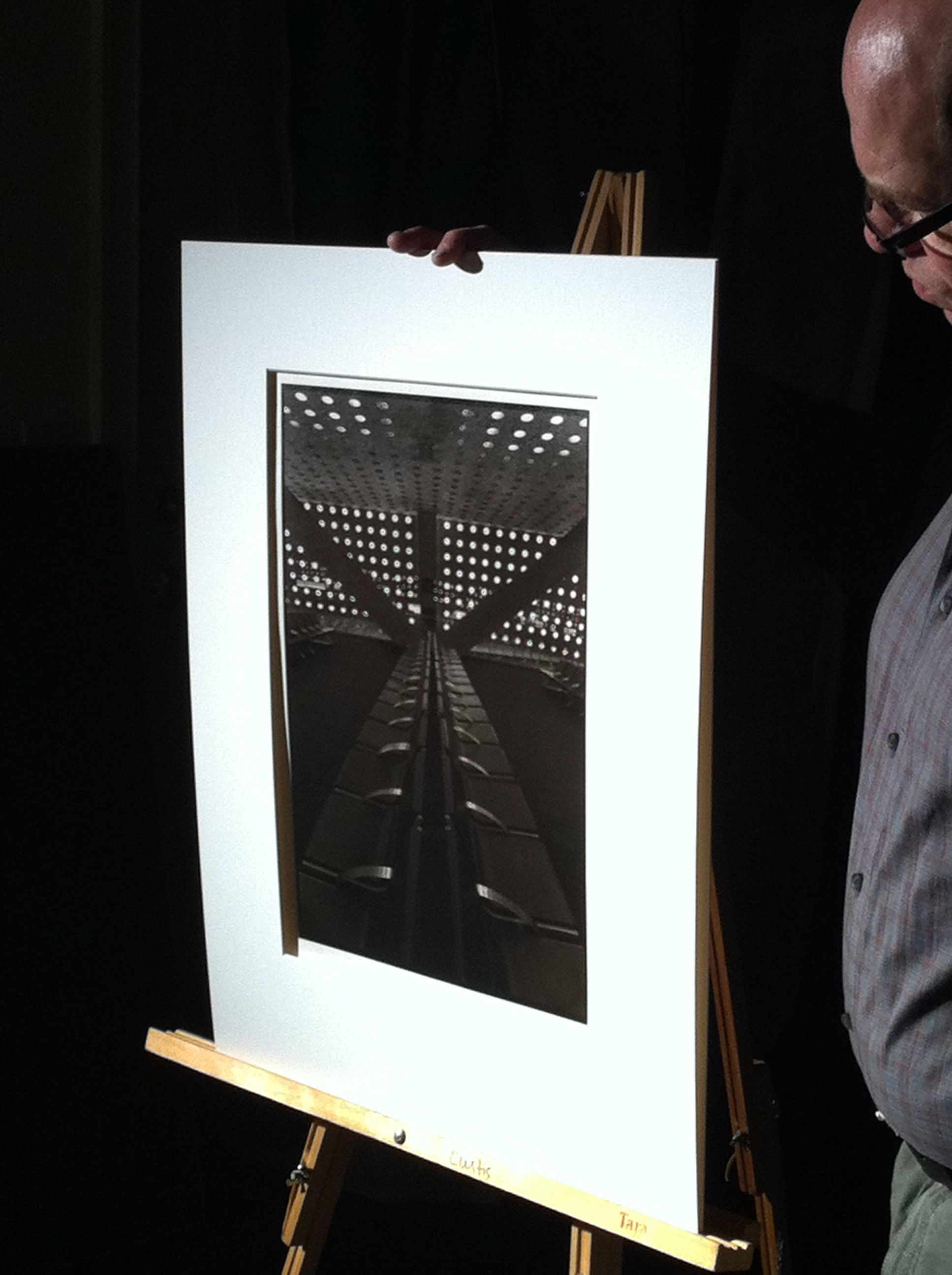
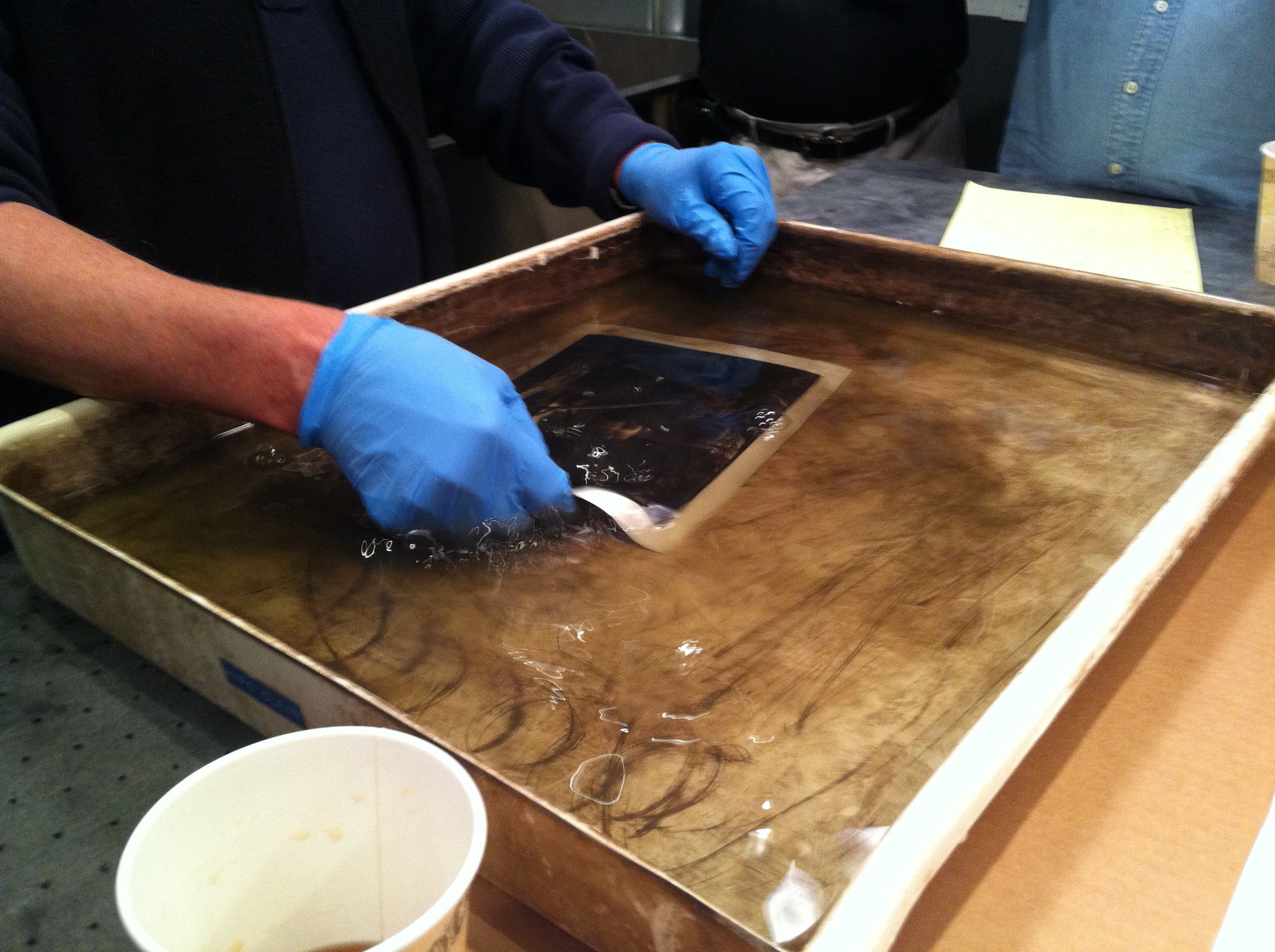
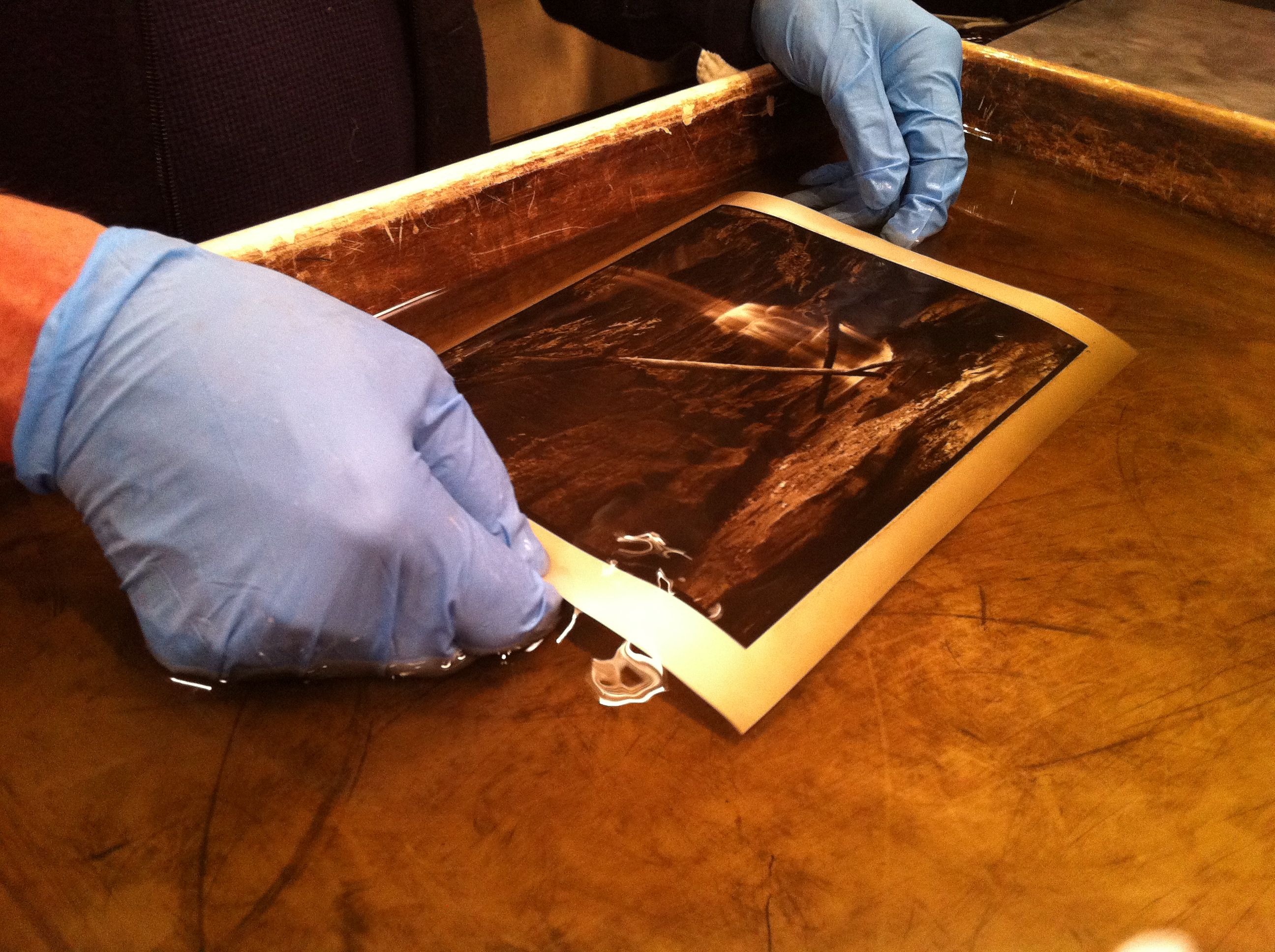
I don’t think it is obvious from these pictures, but one of the most striking qualities of carbon prints is the high relief surface. They look as much like etchings or engravings as they do photographs. This is caused by the hardening of the gelatin during exposure. Gelatin areas hardened retain their pigment and maintain density. Areas unexposed dissolve during development, leaving a void in the surface.

Something having next to nothing to do with photography…

… other than that I like to take pictures of it with my iPhone.

There’s this awesome and growing DC food truck scene. I had seen and heard a little about it, then when my office location made it possible to find them, I decided I’d give it a try. One bite and I was hooked! I track most of them on Twitter to know when and where they’ll be on any given day. There’s everything from barbecue to savory pies, Latin American to Laotian, pizza to pastries (mostly cupcakes). This has been the first useful thing I’ve found to do with Twitter – now I can plan my lunch outings and find way better food than the skanky Chinese buffet and the food-by-the-pound place within walking distance of the office. I’ve got some definite favorites –

  • Sabor’a Street – Latin American arepas with a gourmet twist. My favorite so far, the shredded barbecue pork arepa on corn cakes.
  • La Gloria Mexicana – cheap, good Mexican food
  • PORC – Purveyors Of Rolling Cuisine – a barbecue sandwich place, with homemade chocolate truffles for dessert.
  • Eat Wonky – hotdogs, sandwiches and mind-blowing homemade whoopie pies.
  • CapMacDC – to die for gourmet macaroni and cheese. I had a goat cheese macaroni with broccoli pesto and breadcrumbs I would expect to pay $15 for in a sit-down restaurant. Theirs? $7.
  • SweetBites – a rolling dessert truck with cupcakes to rival those storefront cupcakes for 25% less.

Did I mention that one of the bennies of the food truck scene is the terrific prices? Most mains are $6-7, and it takes work to spend more than $9 for lunch. There’s some interesting things going on – a significant number of Mexican/Latin food trucks, some rather exotic trucks (the Lobster Truck – home of the $13 lobster sandwich and the 1 1/2 hour line), and some experiments in fusion cuisine that don’t always fire on all cylinders. No matter, it beats the stuffing out of McDonalds!

Photo Weekend in Connecticut

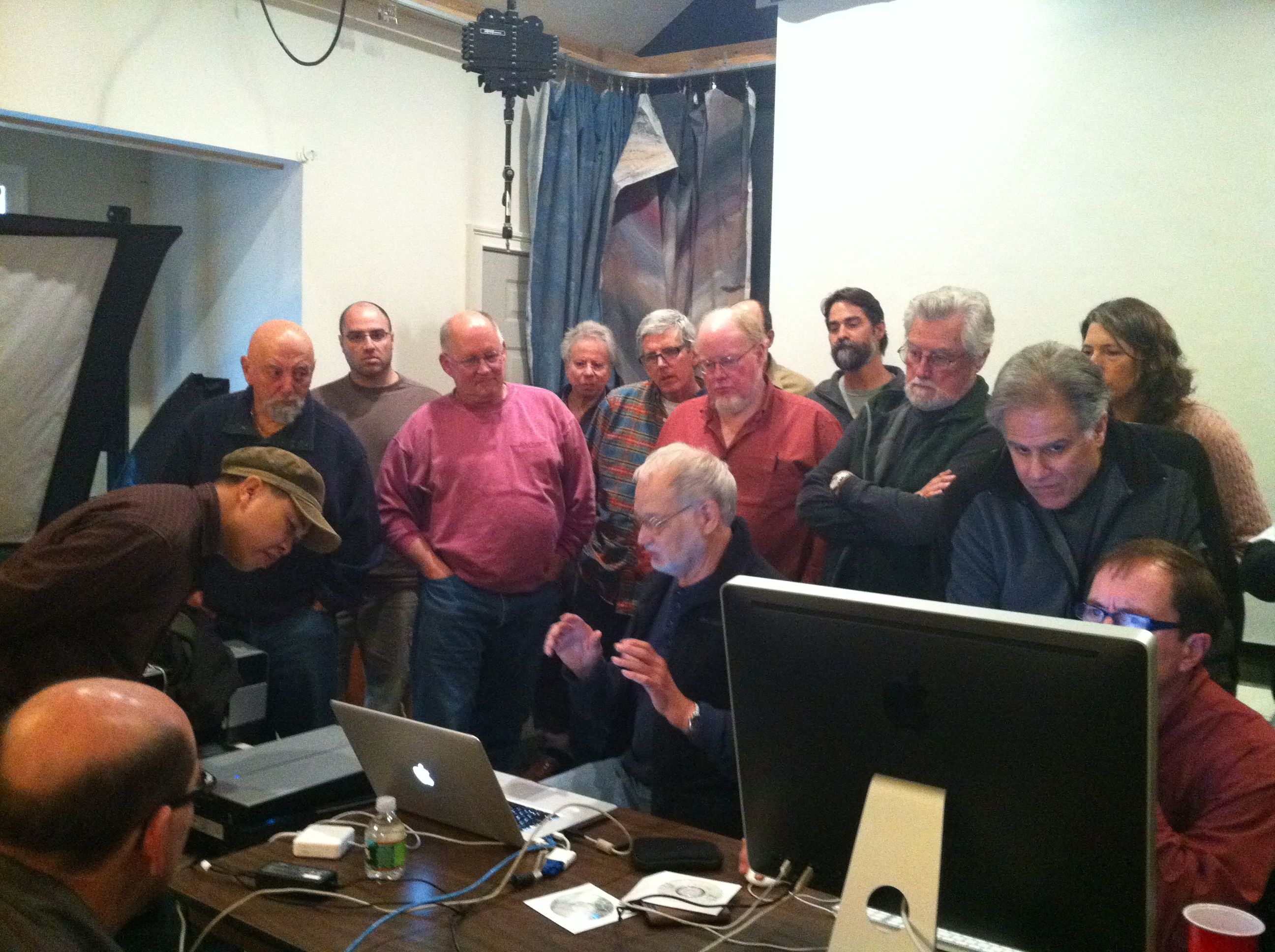
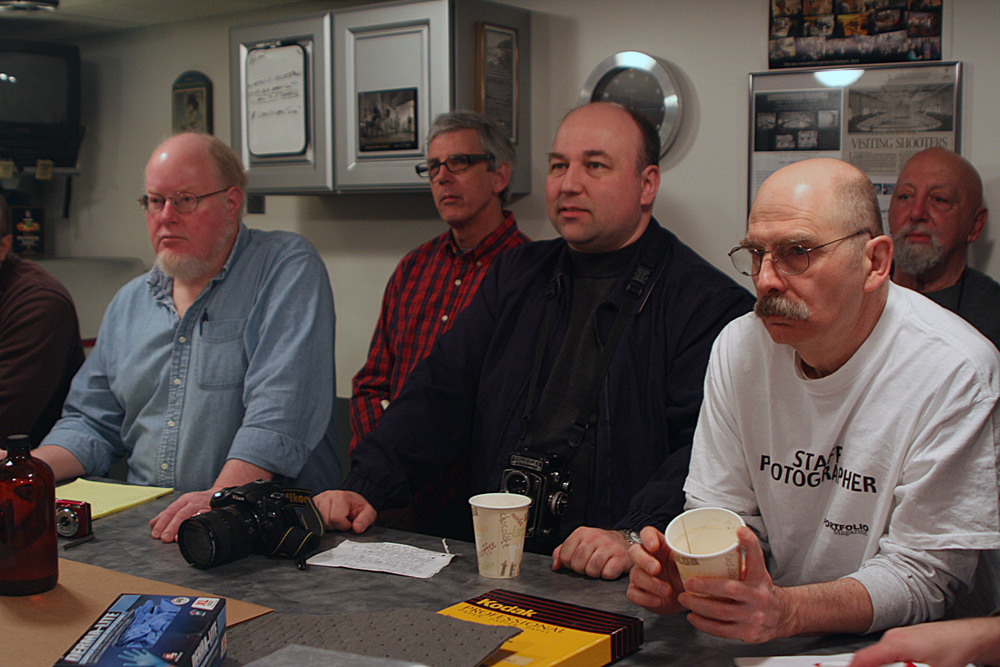
This past weekend I went up to Rocky Hill, Connecticut (just outside Hartford) to attend a two-day, three evening seminar and get-together, sponsored by the New England Large Format Photography Collective (NELFPC). The main theme of the weekend was to learn about digital negative making and carbon printing. The side benefit was most people brought examples of their current work to share and show after hours. What a terrific weekend! Our instructor for the weekend was Sandy King, an elder statesman for the chemical wet darkroom. A specialist in carbon printing, he is also the inventor of Pyrocat-HD (and its variants), a film developer with special benefit for people working in antique and historic photo processes.

Day one began with displays of some of Sandy’s carbon prints, and a discussion of digital negative making. Sandy does still use ultra-large format cameras from time to time (he has a 20×24 with 12×20 and 10×24 reducing backs), but he mostly travels with medium format gear and then scans his film to enlarge it digitally. He demonstrated the Precision Digital Negatives system for making digitally enlarged negatives, and discussed the benefits and flaws. He then discussed the QTR (Quad Tone RIP) method which has significant advantages over the PDN system, but is far more user-unfriendly to configure. We then scanned some film and made digital negatives to print from the next day.

After all the computer wonkery was finished for the day, dinner was served and the prints to show came out. I showed my two bodies of work, the platinum/palladium travel shots and the male nudes in gum and platinum I’ve been working on. Both series drew a lot of comments and praise, which was very nice. I was especially tickled when certain individuals who I hold in very high esteem made a point of complimenting me in private.

The next day we got down to the business of printing. Carbon is water-activated, like gum bichromate, and uses the same dichromate as a sensitizer. To make a carbon print, you first coat a gelatin and pigment (india ink mixed to taste with other pigment(s) to adjust the tone warmer or cooler) layer on a thin, flexible but non-absorbent medium (mylar or other similar material). This is your donor tissue. You then sensitize it with an ammonium dichromate and alcohol mix, dry it in a cool, dark place, then sandwich it with your negative, emulsion to emulsion, then expose to UV light. After exposing, you put your receiver paper (it can be anything from art papers to fixed-out silver gelatin paper) in a water bath, allow it to swell. After a minute, put the exposed carbon tissue in the water and sandwich it to the receiver paper. continue for another minute and a half or so, then take it out of the water. GENTLY separate the two, then place the receiver in another bath of warm water. You’ll see the image come up in the water bath. You can use a clearing bath as well, but it is not required. The clearing bath will greatly reduce washing time though, so it is a good idea.

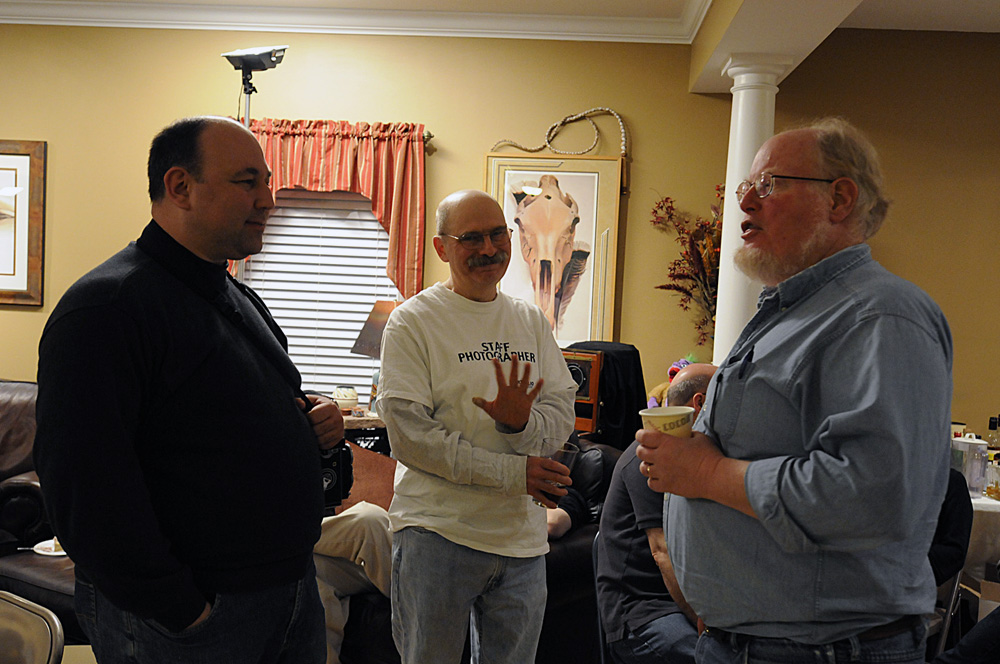
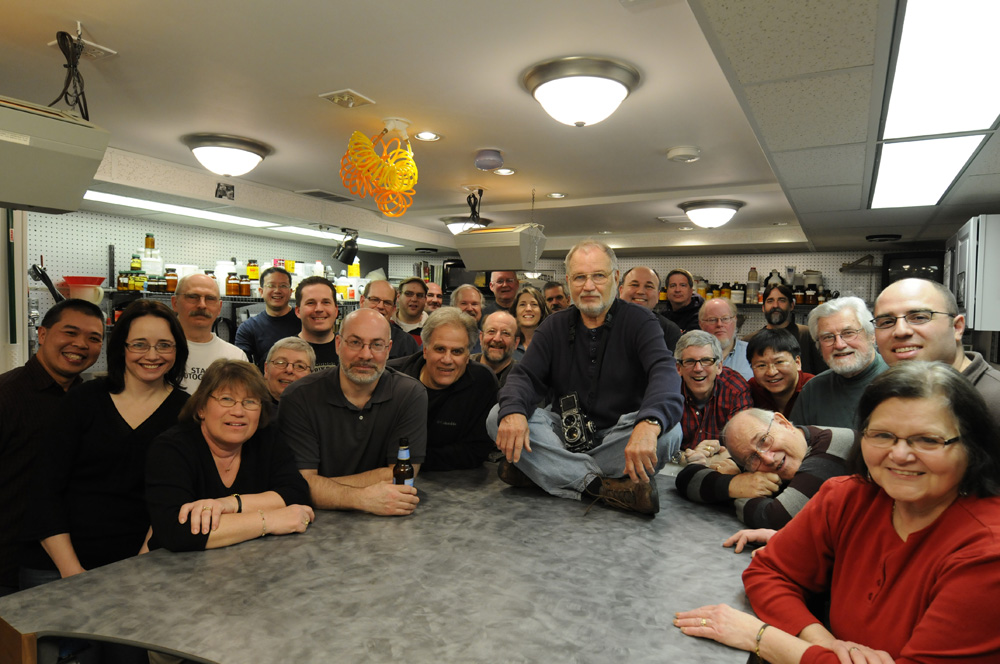
To me, while learning carbon printing from a master printer was an awesome reason to travel 400 miles, the bonus that made it worth the effort was meeting the people who attended. Steve Sherman (the beyond generous host – we used his gigantic and brilliantly designed darkroom for the printing sessions and his living room for the show-and-tell sessions, general hanging out, and consuming all the amazing food), Gene LaFord, Dave Matuszek, Jack Holowitz, Glenn and Marie Curtis, Sandy King, Jim Shanesy and Diwan Bhathal (fellow Washingtonians and my travel pals for the trek up and back), Alex Wei, Armando Vergara, Robert Seto, Tim Jones, Paul Paletti just to name a few all made the weekend a really enjoyable experience and I am dying for the next one!

In the group photo, the one on the right, Sandy King is the one with the rolleiflex in his lap – which happens to be my rolleiflex. When I can get the negatives from the trip scanned, I’ll post some shots here.
The new and improved studio

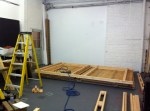
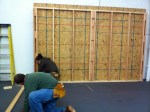
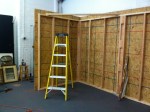
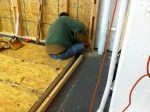
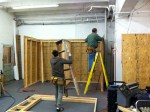
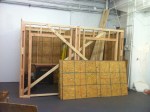
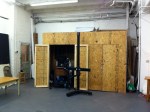
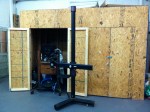
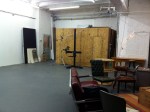
Well, after much hemming and hawing and consternation, the new storage locker for the studio is done! All my stuff is now safely stowed, and the studio looks a thousand times neater and more professional. Here are photos of the locker under construction:

One of the big challenges was the fact that the floor is far from level. The building was once a taxi/livery dispatch and maintenance facility. The floor has multi-directional slopes to it to allow for cleaning of spilled coolant/transmission fluid/oil. In one corner (opposite where the locker is) there’s even a covered-over maintenance trench for greasemonkeys to get under the cabs to change the oil.

Upcoming collectors show in New York

For those who might be interested, here’s a link to The Photography Collectors’ Show in New York next Saturday, March 19. I’m toying with the idea of going up to see it.

Here is a list of dealers who will be in attendance:

Steve Yager
Adam Forgash
Casey A. Waters
Christopher Wahren
D. T. Pendleton
Dennis Waters
Erin Waters
Greg French
Henry Deeks
Maria DiElsi
Thomas Harris
Stacy Waldman
Arthur Dristiliaris
Brian Caplan
David Chow
Dr. Stanley Burns
Glenn Vogel
Jack Domeischel
Julian Wolff
Larry Berke
Lisa Taos
Richard Hart
Richard Silver
Stephen Perloff
Stuart Butterfield
Susan Davens

In the spirit of past images

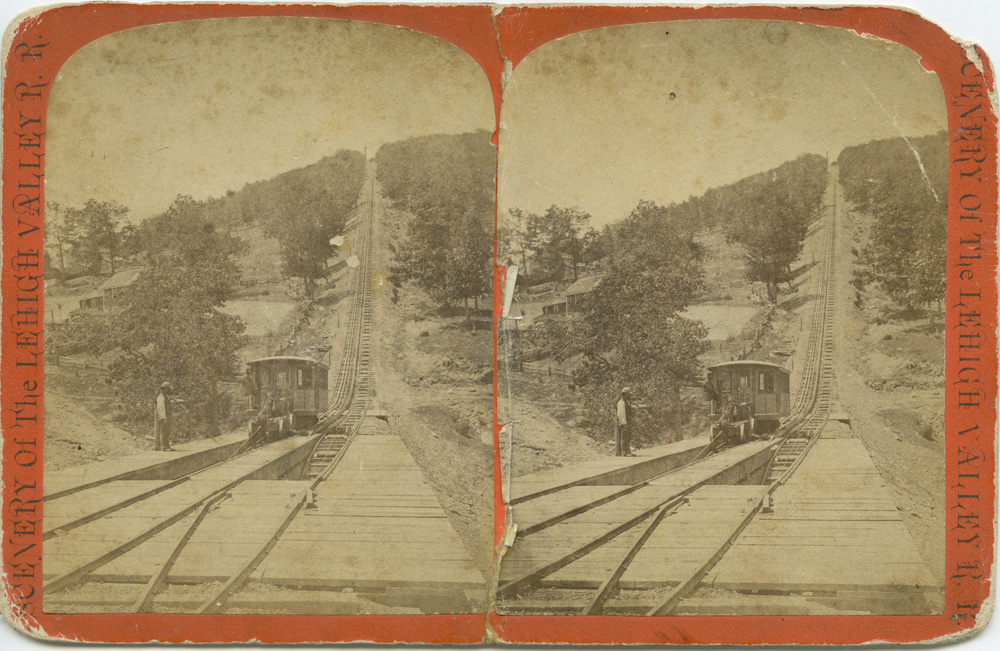
After digging up the stereoview of the Lehigh Valley Railroad station, I did a quick peek on Ebay to see if I could find any others. Whaddya know, my first search turns up another in the series. It’s in pretty rough condition, but I bought it anyway because it was going cheap. This is one case of a stereoview set that I’ll actually try to complete – there’s only 24 in the set. I have a casual interest in railroad memorabilia, as my grandfather was a conductor on the Pennsylvania Railroad’s Broadway Limited between Altoona an Chicago in the first half of the 20th century. I’m also a roller-coaster fan, so finding a photograph of the first roller-coaster is pretty cool (first roller-coaster you say? see the blurb below).

Incline, Lehigh Valley Railroad

This is a picture of the switch-back gravity railroad, which was originally built to aid in bringing coal from the top of the mountain to the railroad. It quickly grew into a tourist attraction, and then became the first roller-coaster in the United States, when it became dedicated to passenger service. The car would be towed to the top of the mountain on one track, then switch and fall down the other track propelled by gravity alone. There was a driver/brakeman in the car to prevent it from flying off at the bottom out of control.

The town is Mauch Chunk, Pennsylvania, now known as Jim Thorpe, PA, named to honor the Native American athlete. Ironically enough, Jim Thorpe was from Oklahoma, and his sole connection to Mauch Chunk is that he attended the Carlisle Indian Industrial School in Carlisle, Pennsylvania, and that Mauch Chunk was a Native American name approximately meaning “Bear Mountain”, because the mountain in whose shadow the town was built looks like the back of a bear. After he died in 1953, his surviving wife sold his remains to the town, which hoped that his grave would be a tourist attraction.

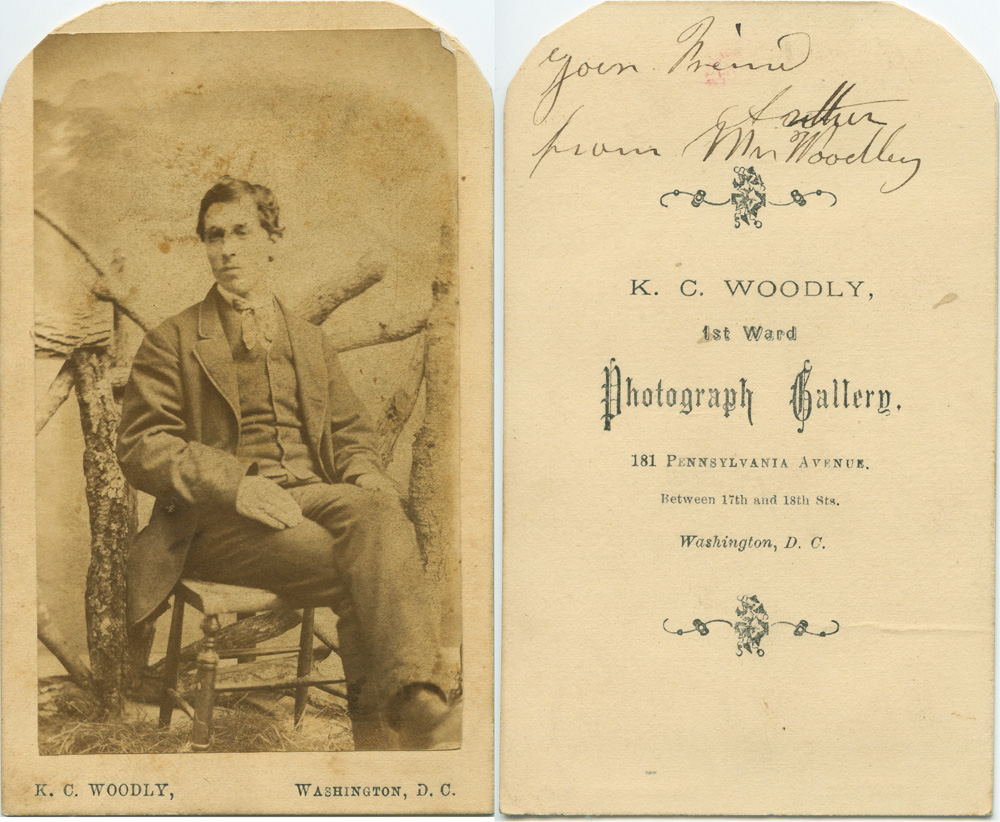
This next image is another recent acquisition – another Washington DC carte-de-visite. This one, if the inscription on the back is accurate, is a self-portrait by the photographer, or at least the inscription is by the photographer – “Your Friend – From Mr. Arthur(sp?) Woodley”. I’m curious if the Woodly on the card is a typographical mistake, as the signature really does look like it says “Woodley”. I’m also curious if the Woodley/Woodly is any relation to the Woodleys for whom Woodley Park was named. Given how small a town DC was in the 1860s, I’d say the odds are in favor.

K.C. Woodly CDV, Washington DC

The address on this one is a mystery – 181 Pennsylvania Avenue would put the studio on the Capitol lawn. Furthermore, he indicates that the studio is located between 17th and 18th Streets, which would make 1781 Pennsylvania Avenue a more likely actual address. I wonder if the printer was short on E’s and 7s when he ran these off.

Getting back into the studio again…

Yesterday, in a fit of activity, I got in to the studio and shot a few still-life photos. I’m participating in a print exchange through the Large Format Photography Forum (www.largeformatphotography.info/forum) and I needed to shoot some images for the exchange. The final images will be platinum prints. I decided to use a lead crystal cut glass decanter I have as a subject – I wanted something challenging to photograph and that would create some striking images. I got the inspiration seeing the decanter on my coffee table with the sunlight coming through it and casting a shadow. I brought it over to the studio and set it up on a sweep of white seamless paper, and lit it with just one light, as it would be in the real world (there is only one sun!). It casts a beautiful shadow on the seamless, especially the way the crystal is cut with these random little scallops out of the body. I used the Century Master portrait camera, which after having been hauled around a bunch is starting to get a bit loose. As always, the lens on it is my Seneca Portrait f5. I put the whole plate back on the camera for these shots, as it’s about my favorite format. I indulged in my film choice and used some of my remaining stock of Arista.EDU Ultra 200 (aka Fomapan 200). Arista.EDU Ultra is Freestyle Photo‘s house-label film, made for them by Foma in the Czech Republic. Foma discontinued the 200 a year or two ago when their source for one of the critical components dried up, and just started re-making it but only in roll film. It’s one of my all-time favorite films, not only because it was dirt cheap (1/3 the price of Ilford), but because it produced beautiful results – it has this old-time feel to the image quality from a reduced red sensitivity. Here’s a couple of shots of the setup (pardon the poor quality- they’re taken with my iPhone which is not the best in low light). I’ll post some scans later of the finished prints.

Studio setup #1

Studio setup #2