As an ardent bibliophile, I felt compelled to share this. Physical books are a sacred thing, yes even trashy paperback romance novels (well, maybe not romance novels… but you get the point). Books need to physically exist. Books need to be handled, read and loved. Go love a book today!
Category Archives: About Art
Shoot at the Renwick Gallery – Part 2
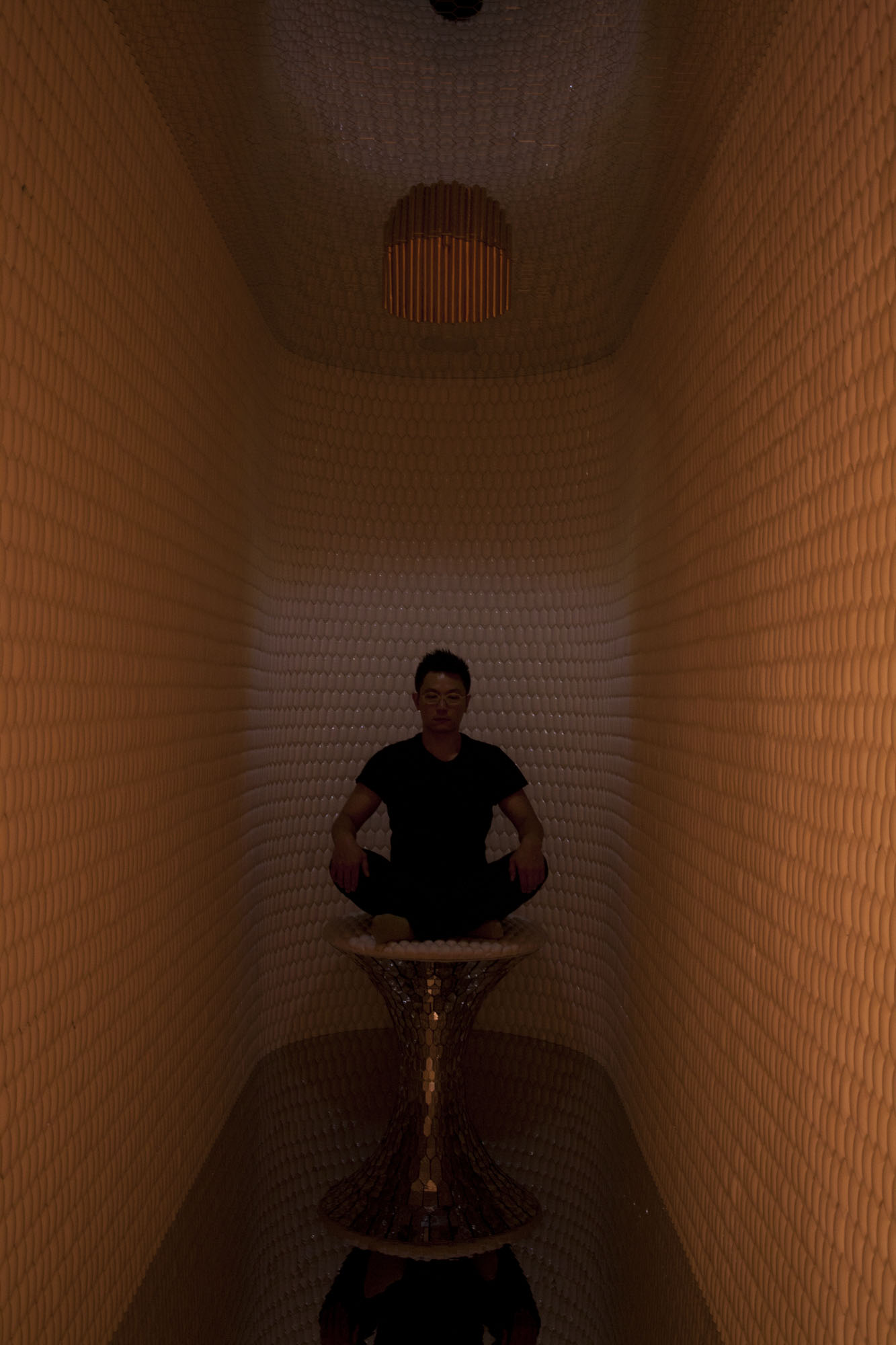
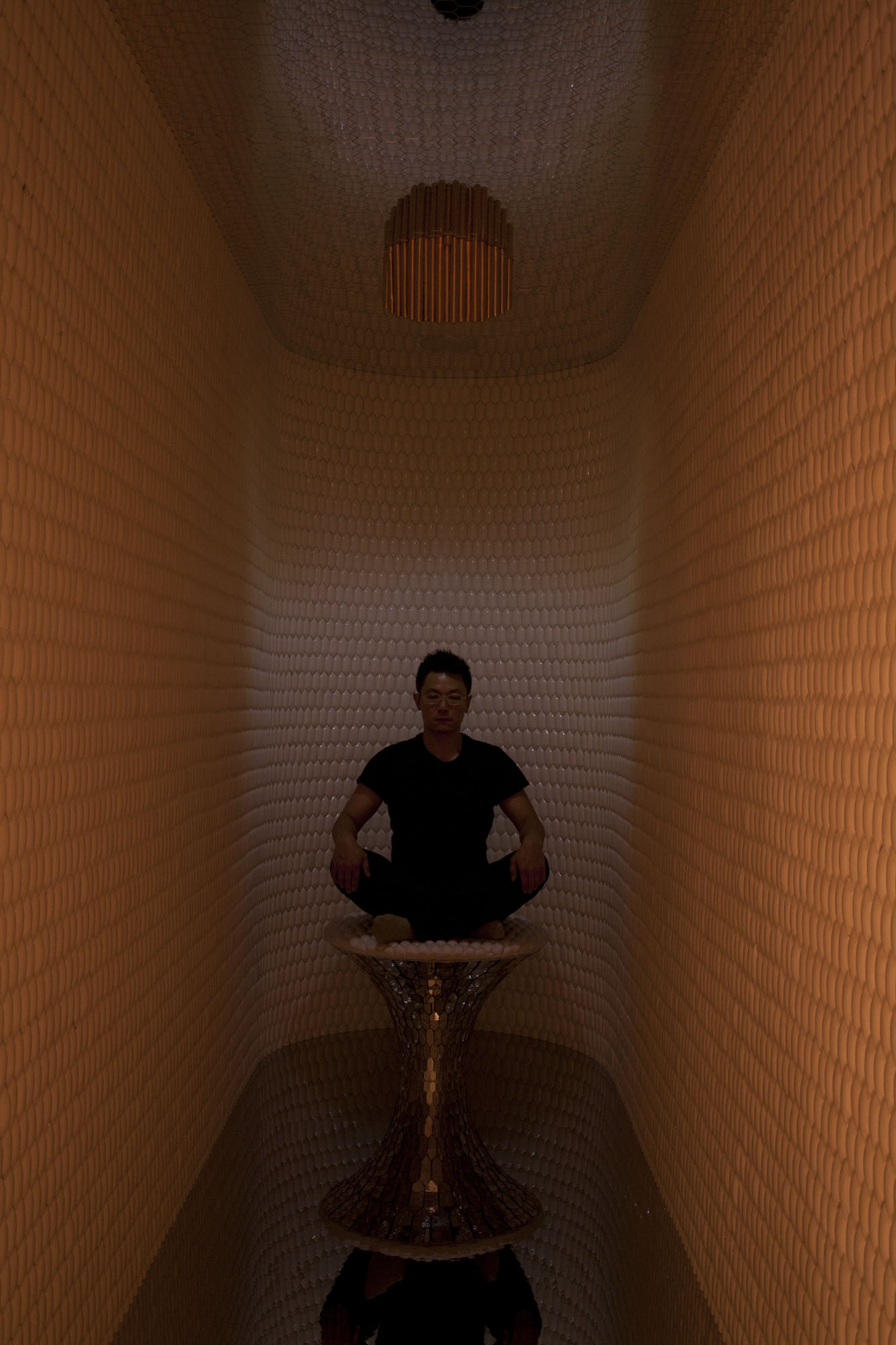
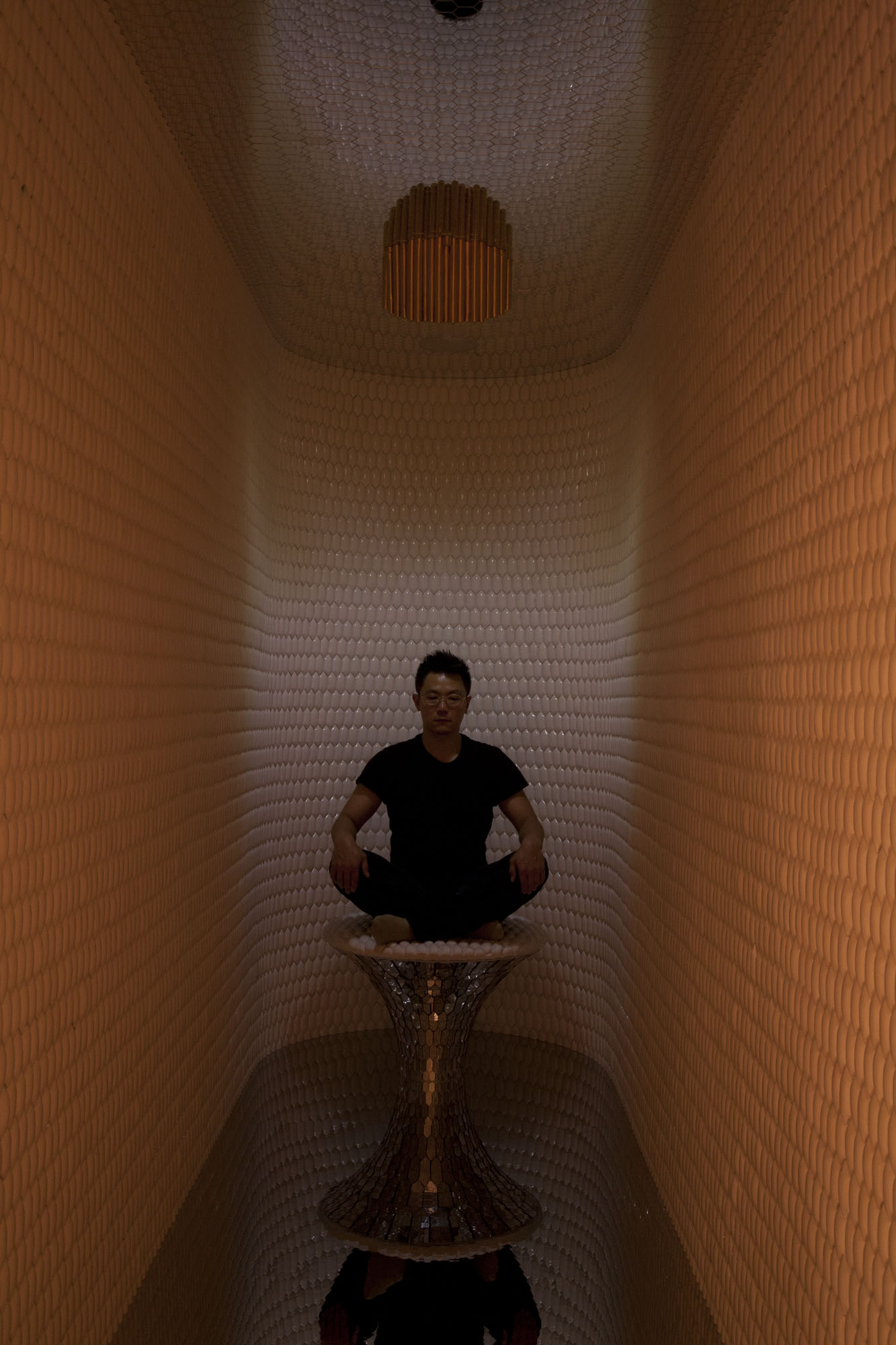
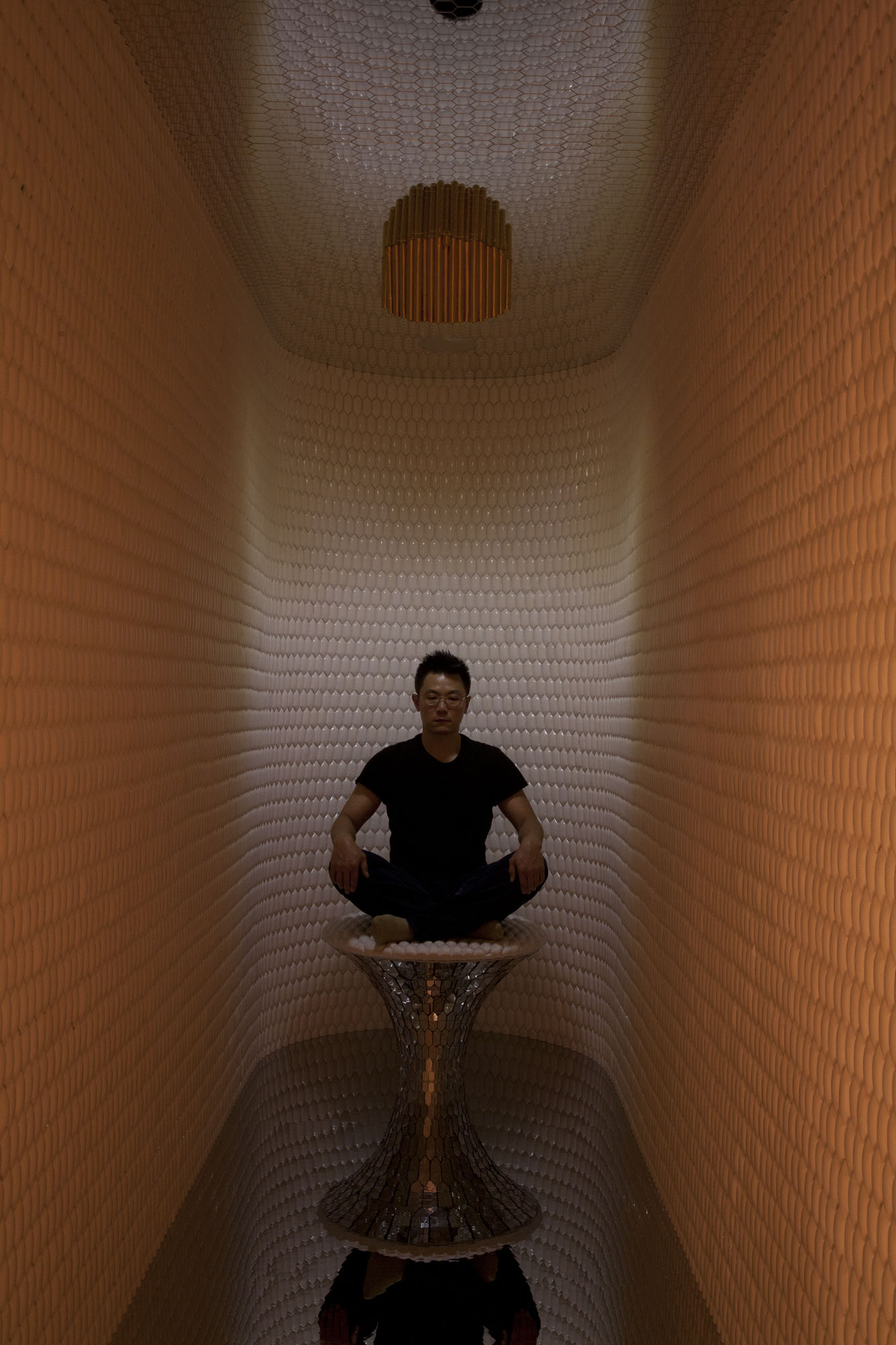
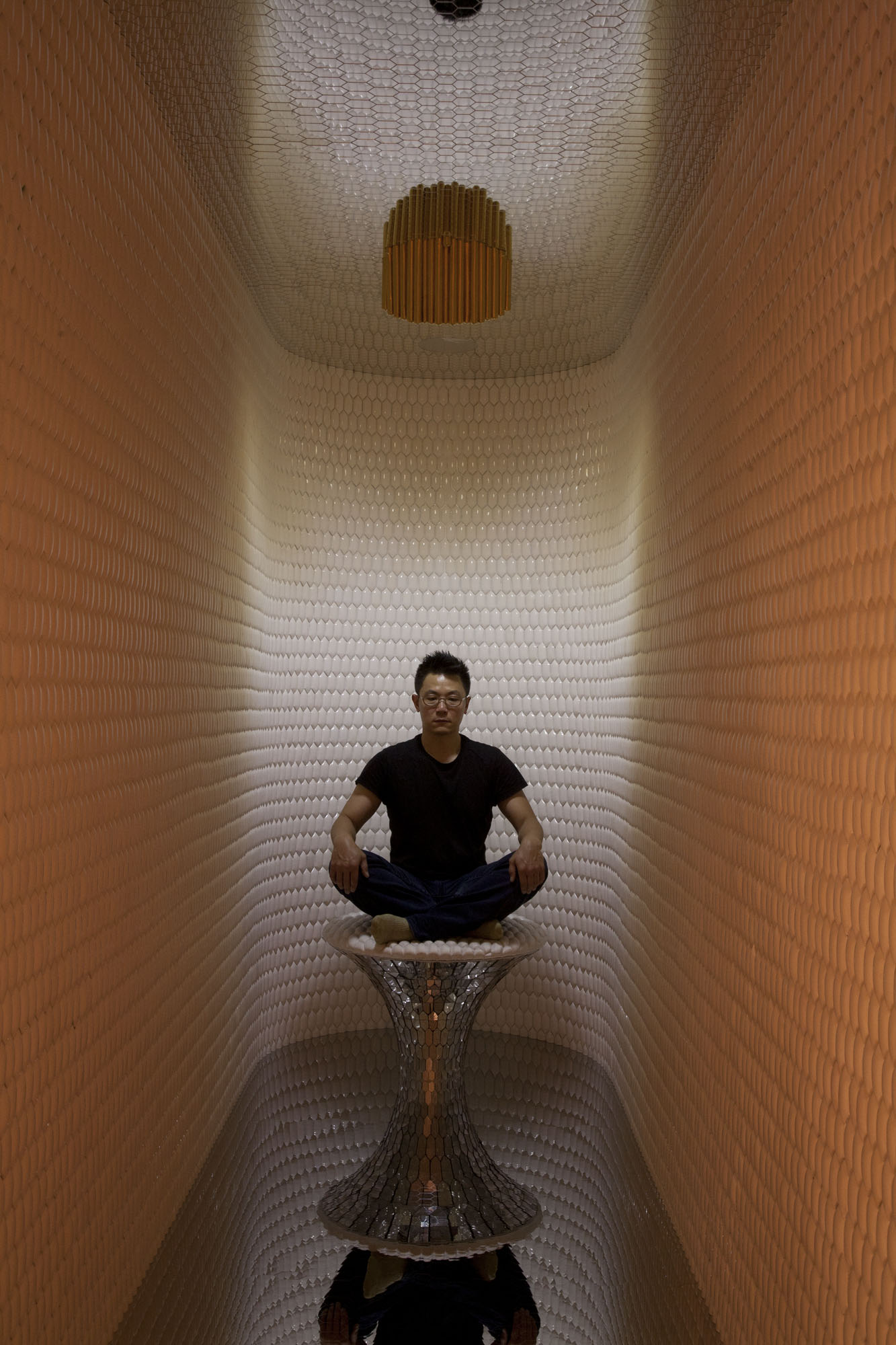
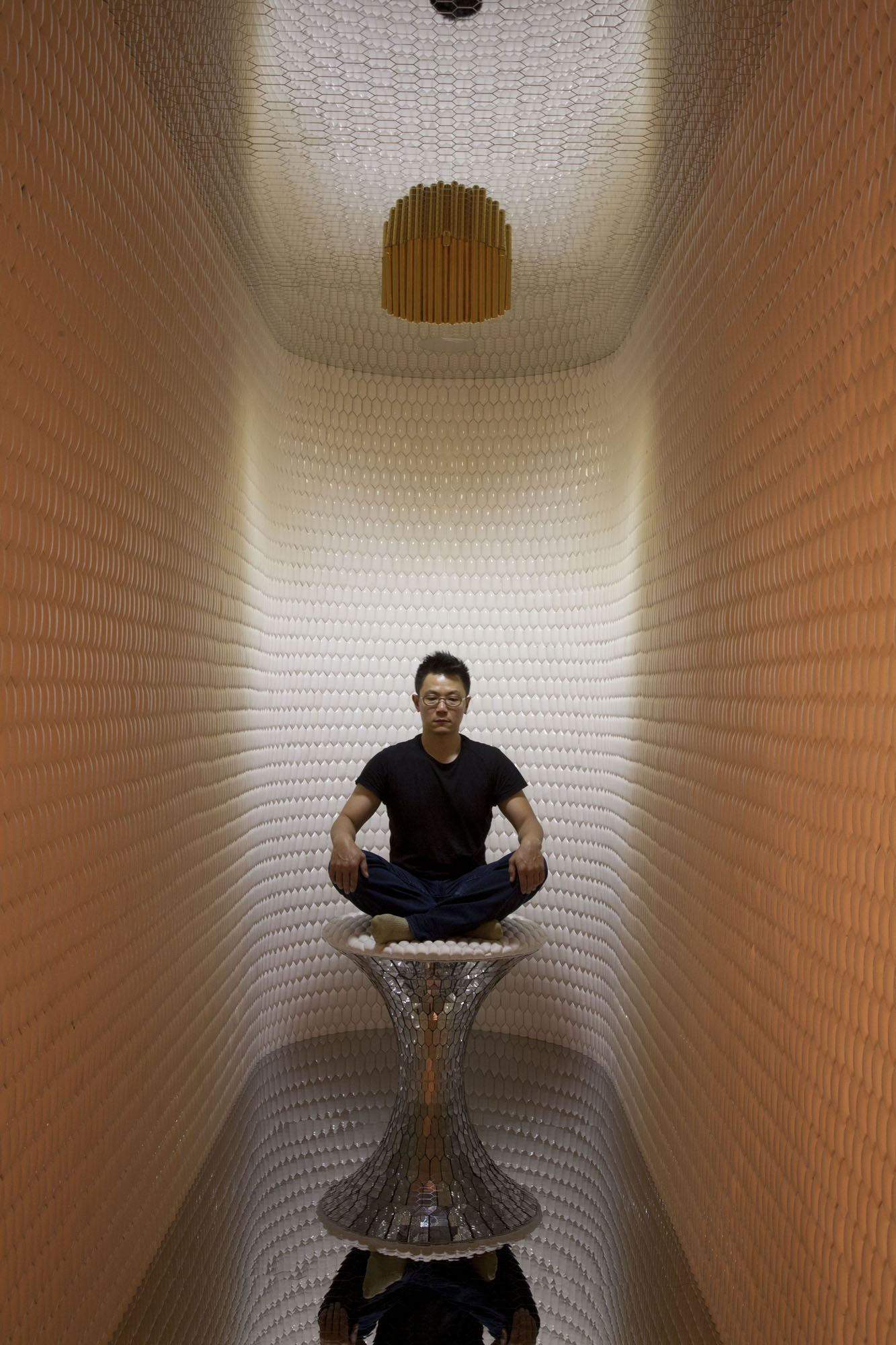
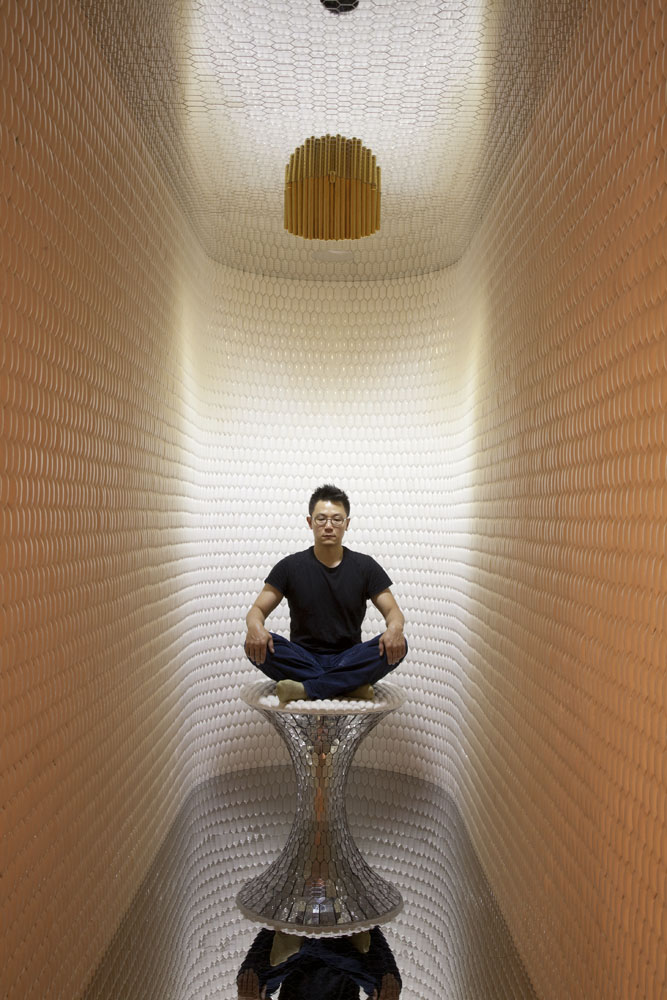
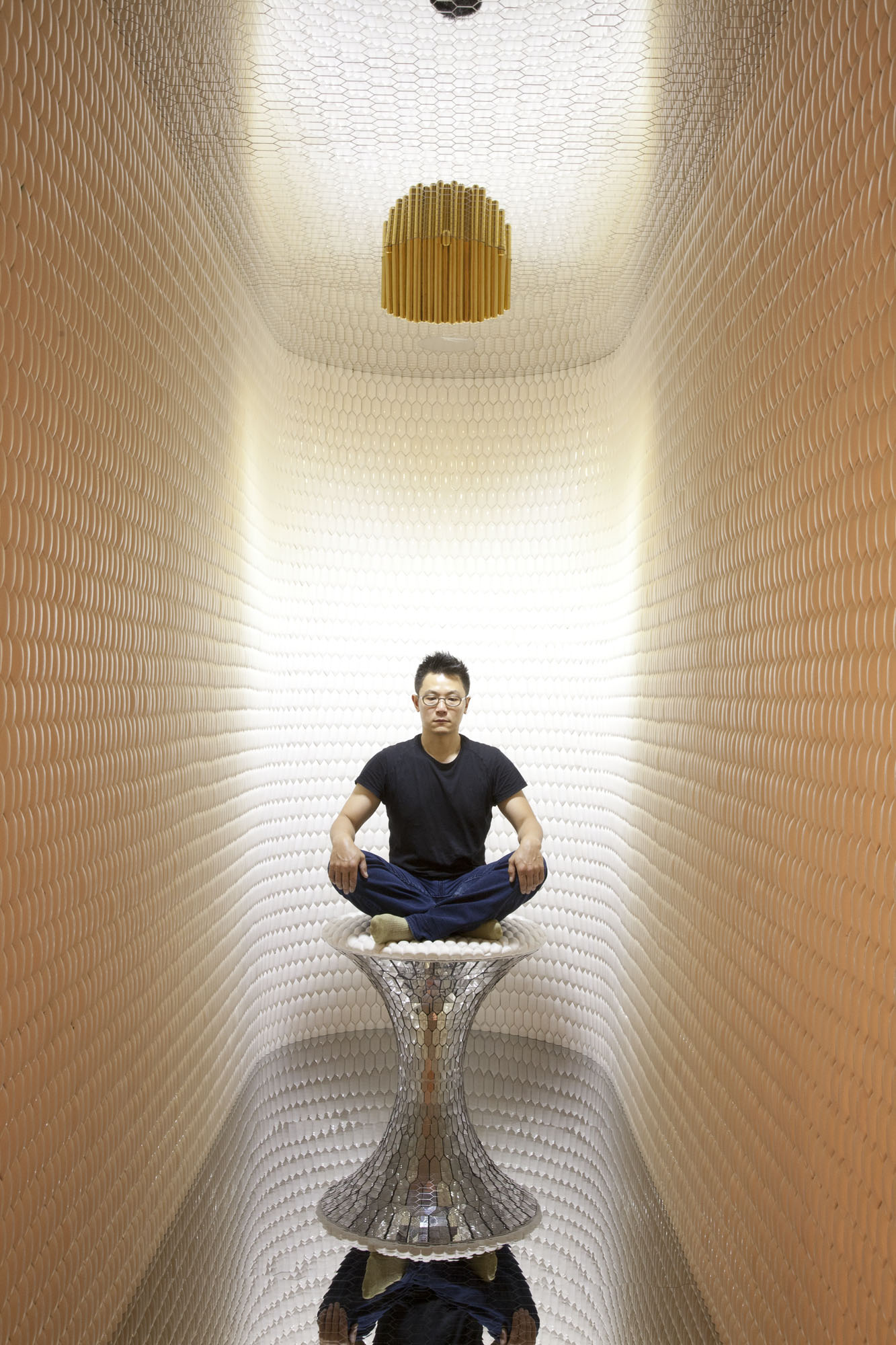
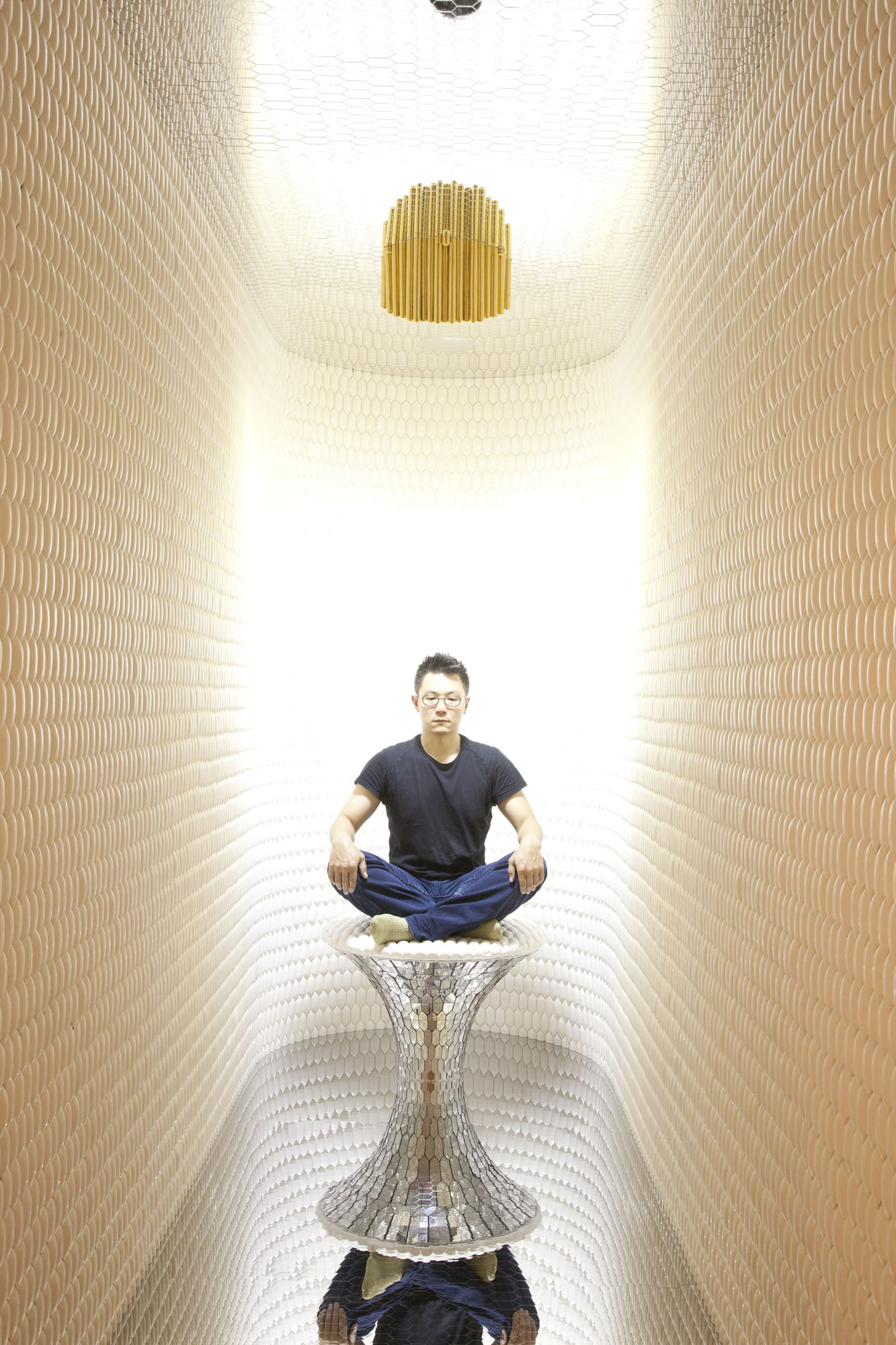
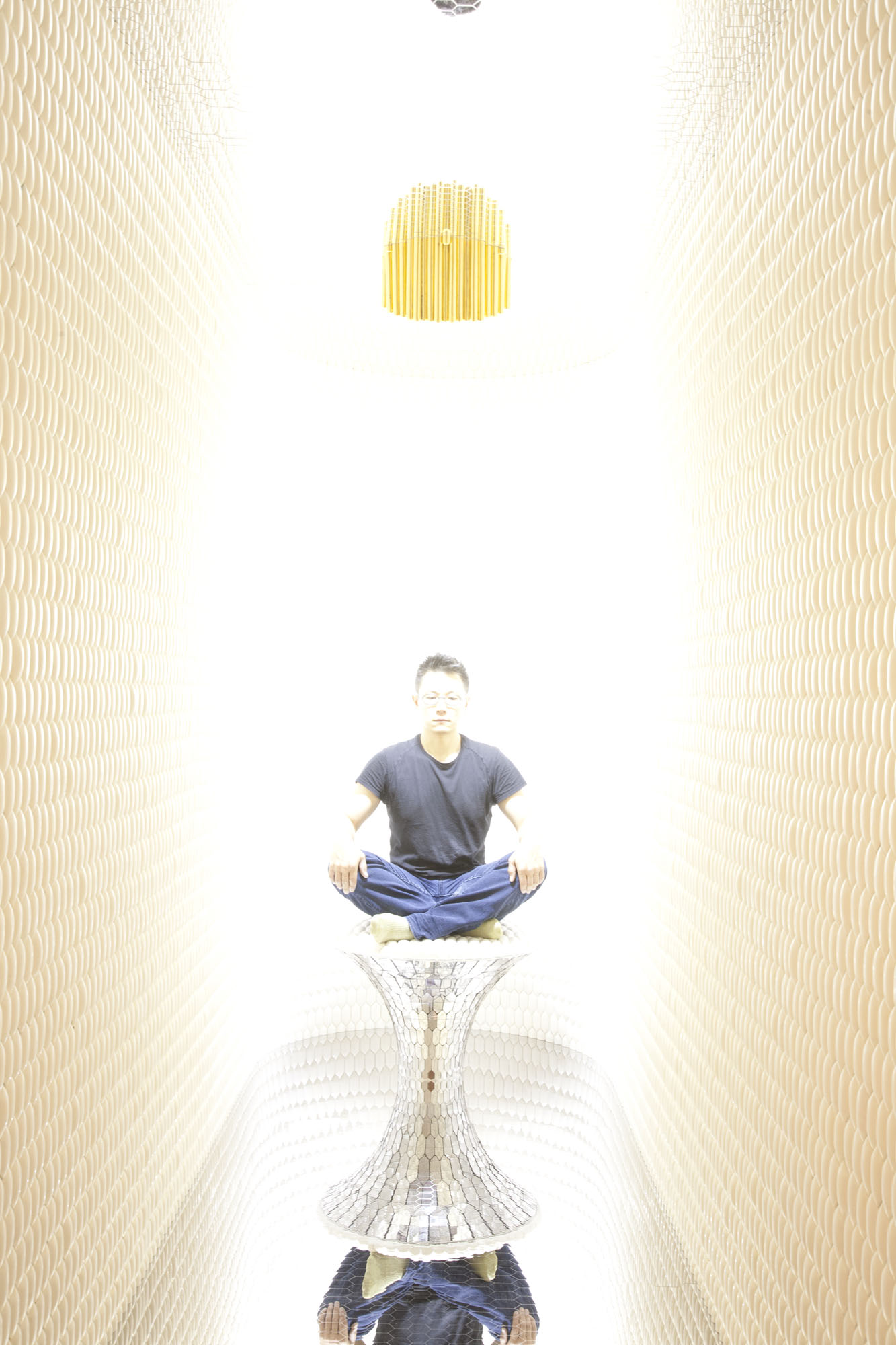
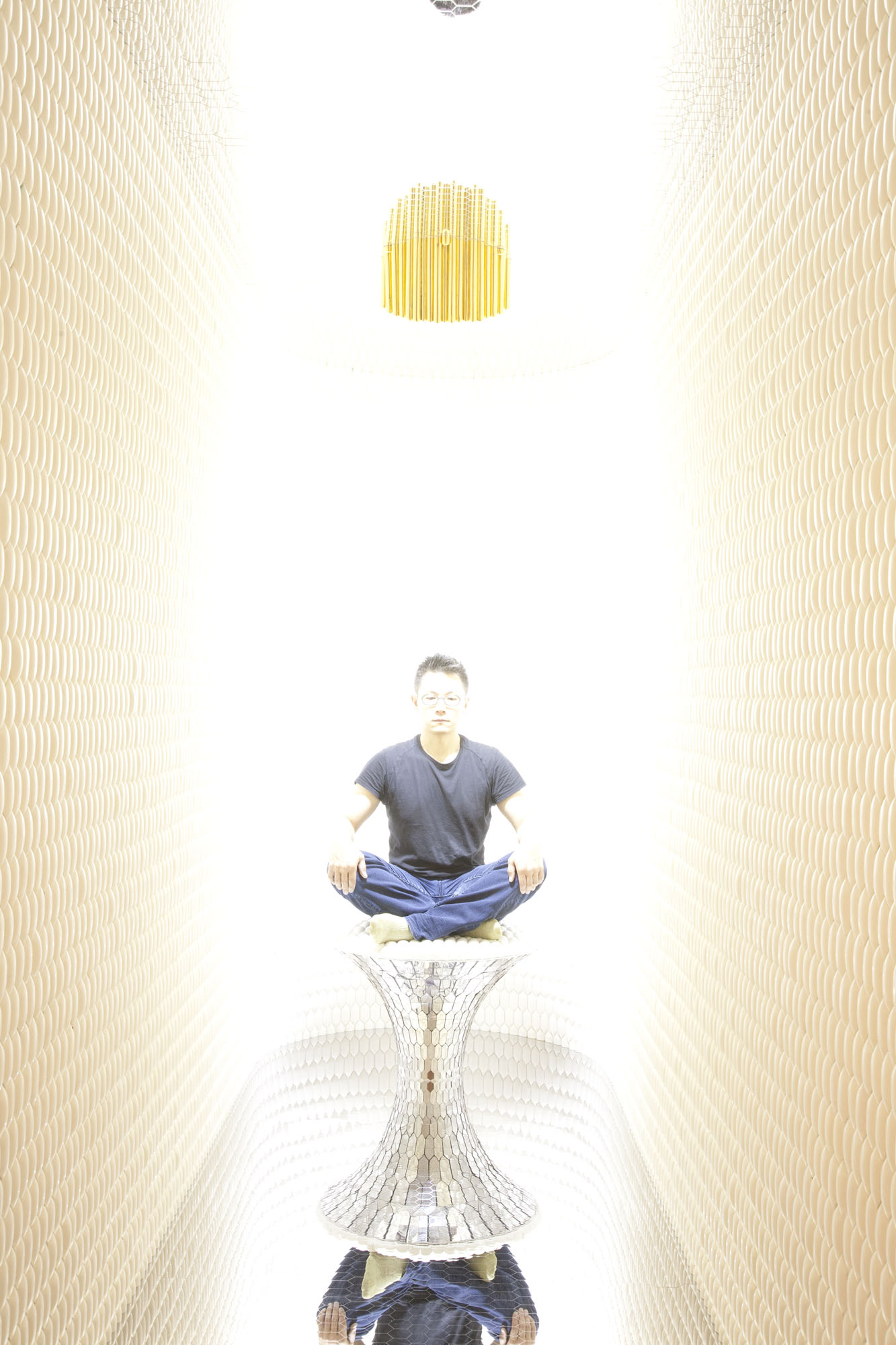
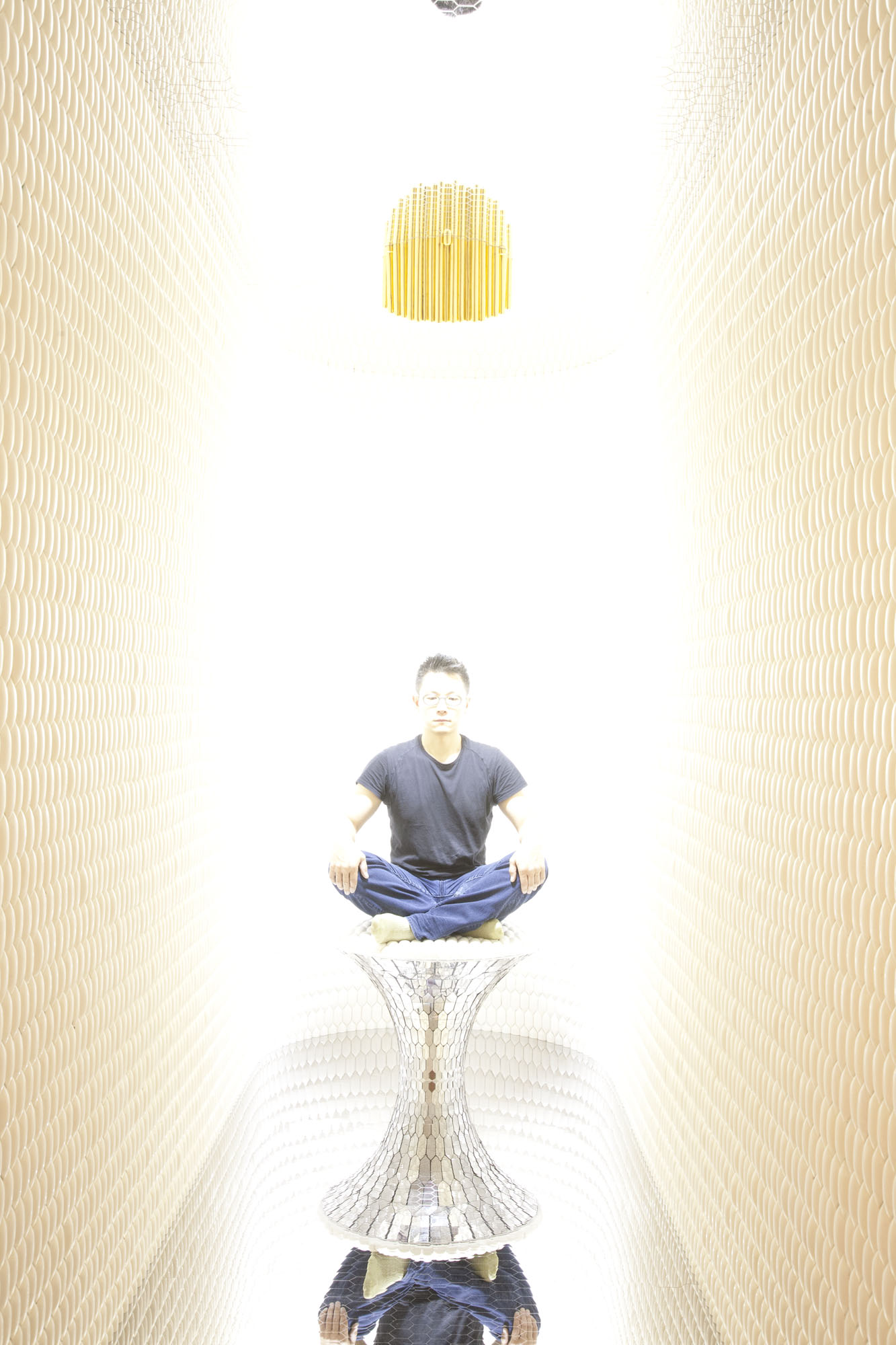
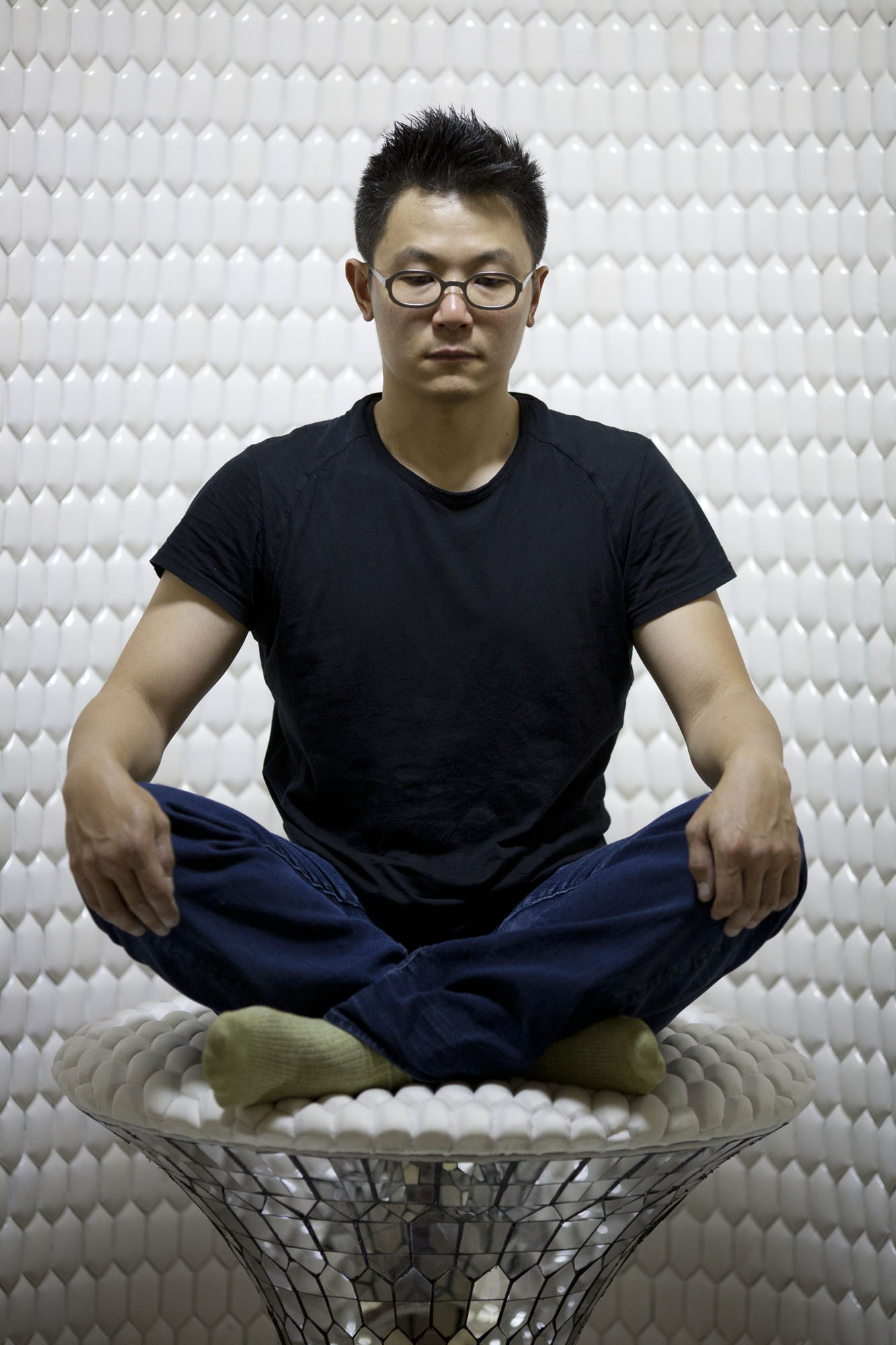
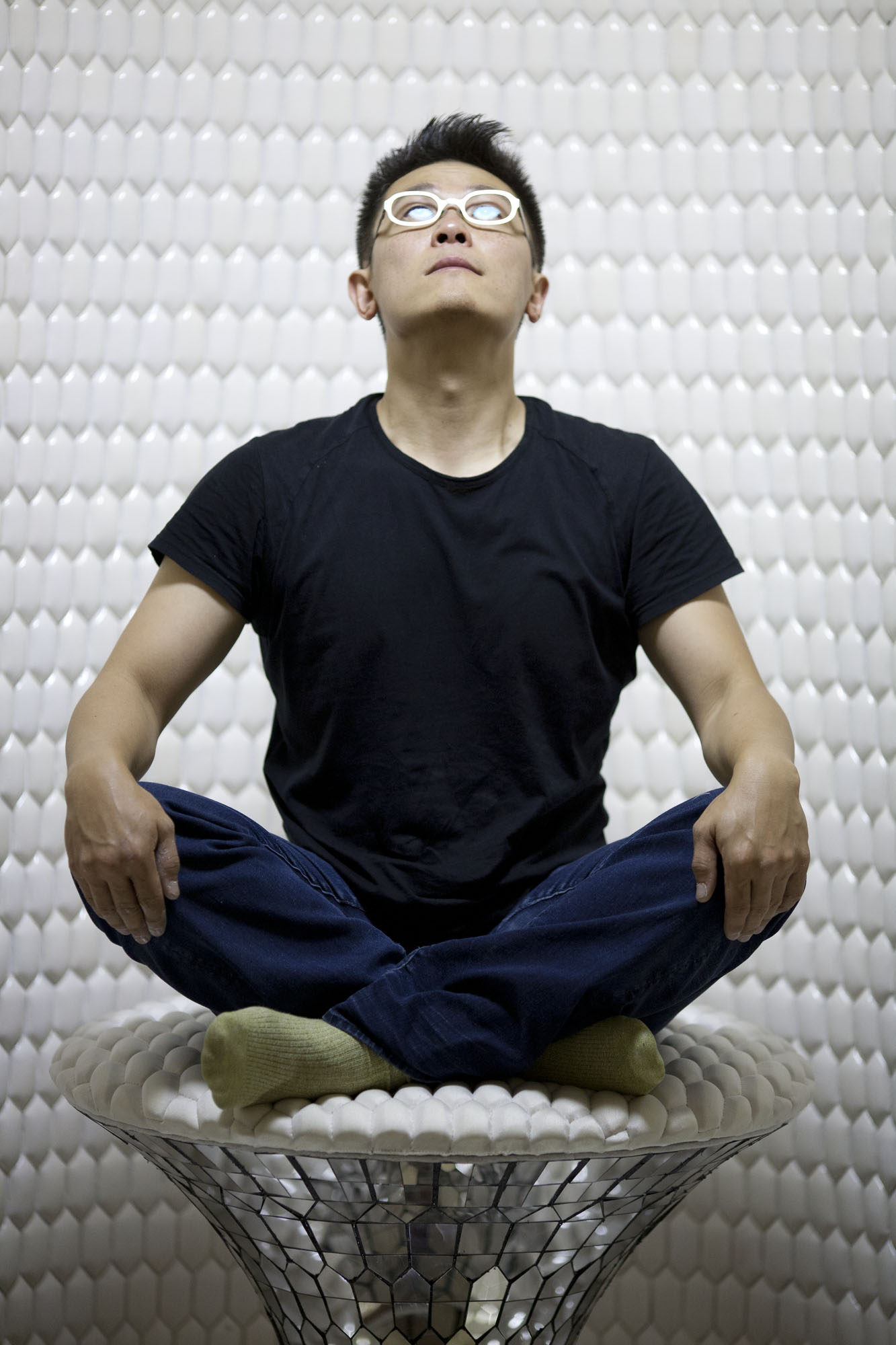
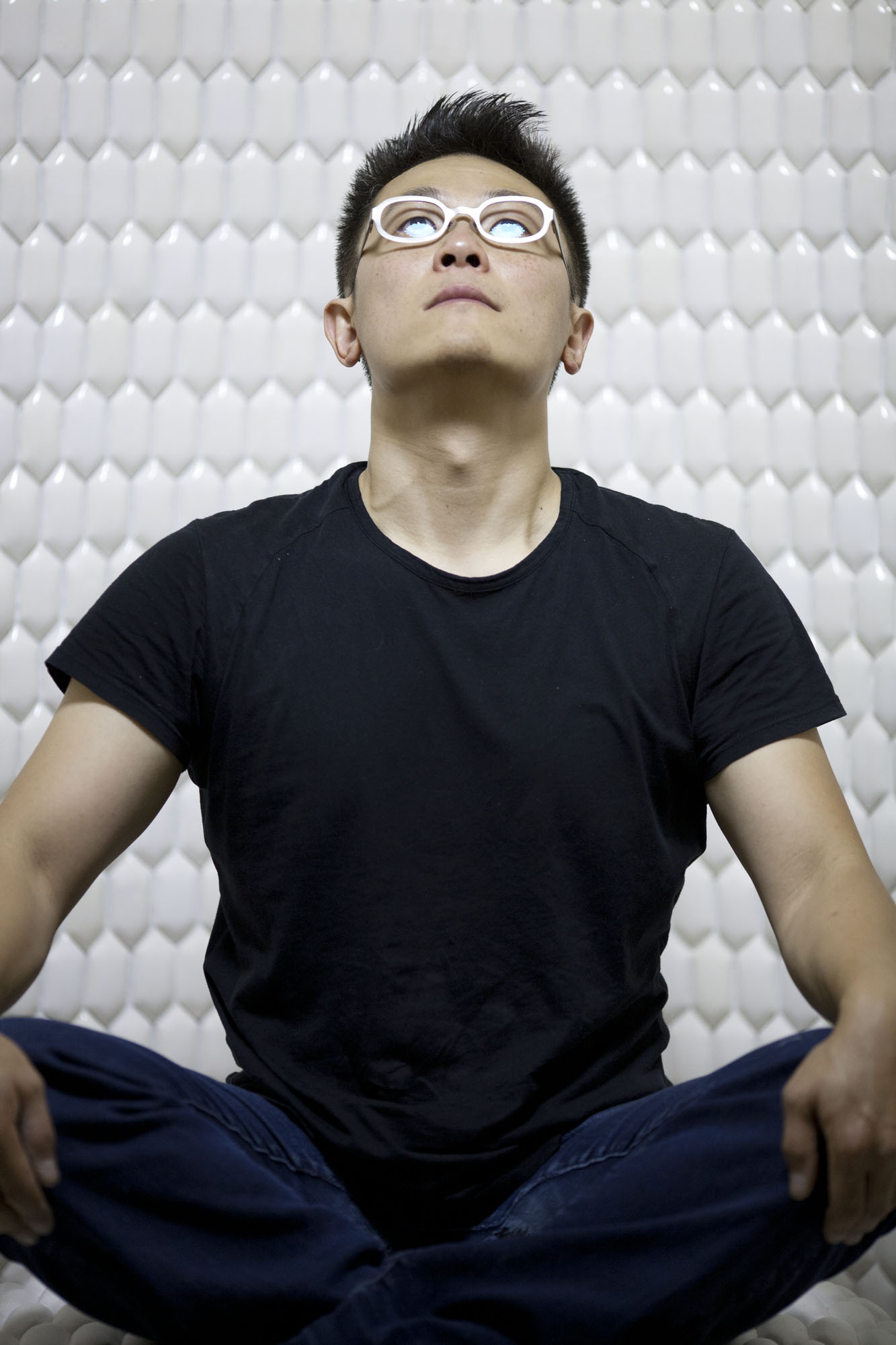
Here is a series of illustrations of the operation of the room. This shows the room getting brighter as Nick sits on the cushion (see, you do get to see his face after all!). Nick’s installation consists of a long, narrow room with the walls covered in elongated hexagonal tiles (each of which Nick made, and hand signed on the back!) . The floor and ceiling are covered in mirror tiles. The opposite end of the room from which you enter is rounded, and at the focus of the hemicircle, a mirror-based seat with a white cushion is located. In the ceiling is a series of LED lights. Sitting on the cushion triggers the lights and music, which build in intensity for approximately one minute before fading out.
Here is a link to the Renwick Gallery’s exhibit announcement:
and here is a link to Nick Dong’s website:
 |
 |
 |
 |
 |
 |
 |
 |
 |
 |
 |
 |
Here are three more images of Nick, up close.
 |
 |
 |
Shoot at the Renwick Gallery – Part 1
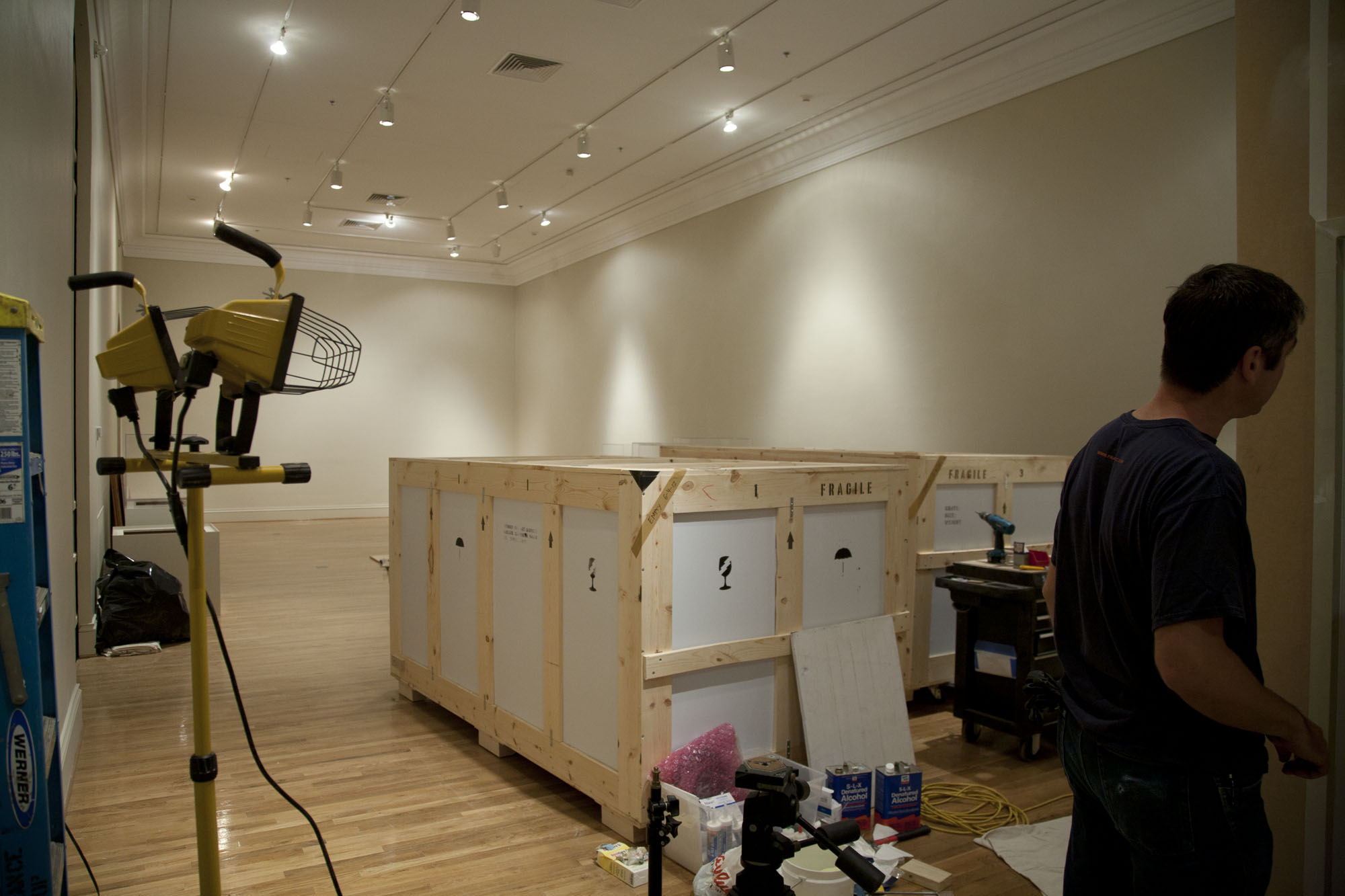
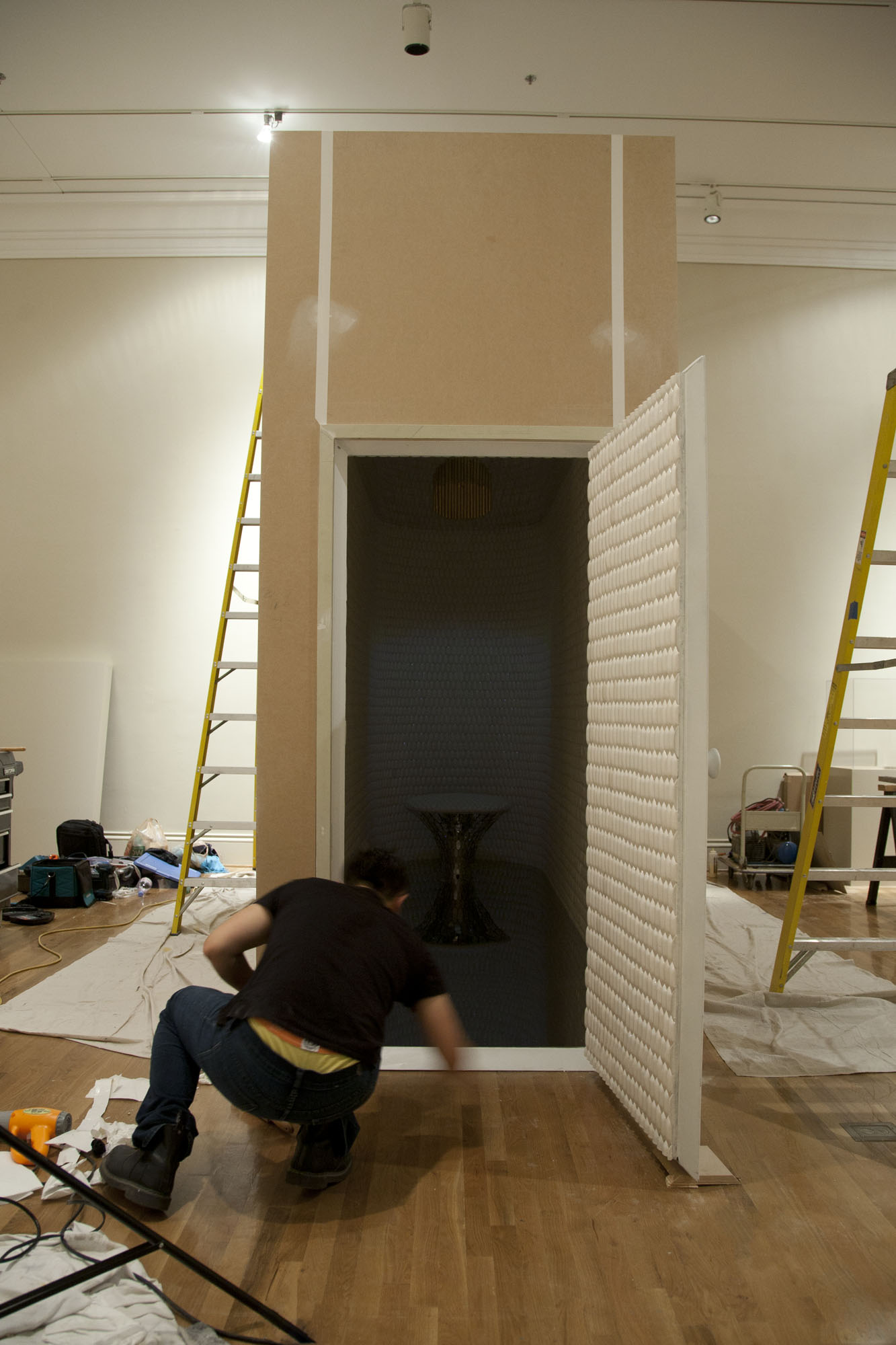
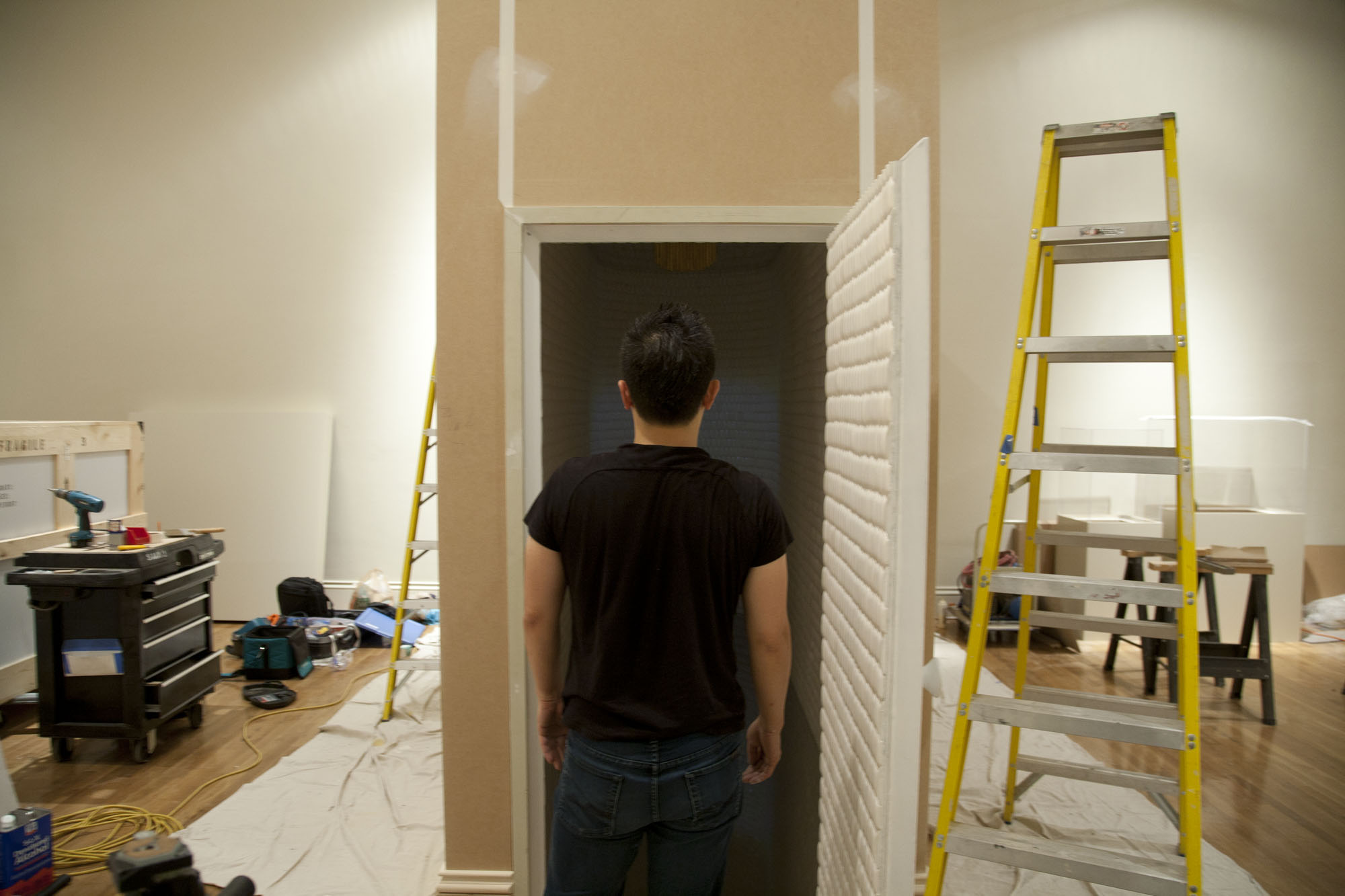
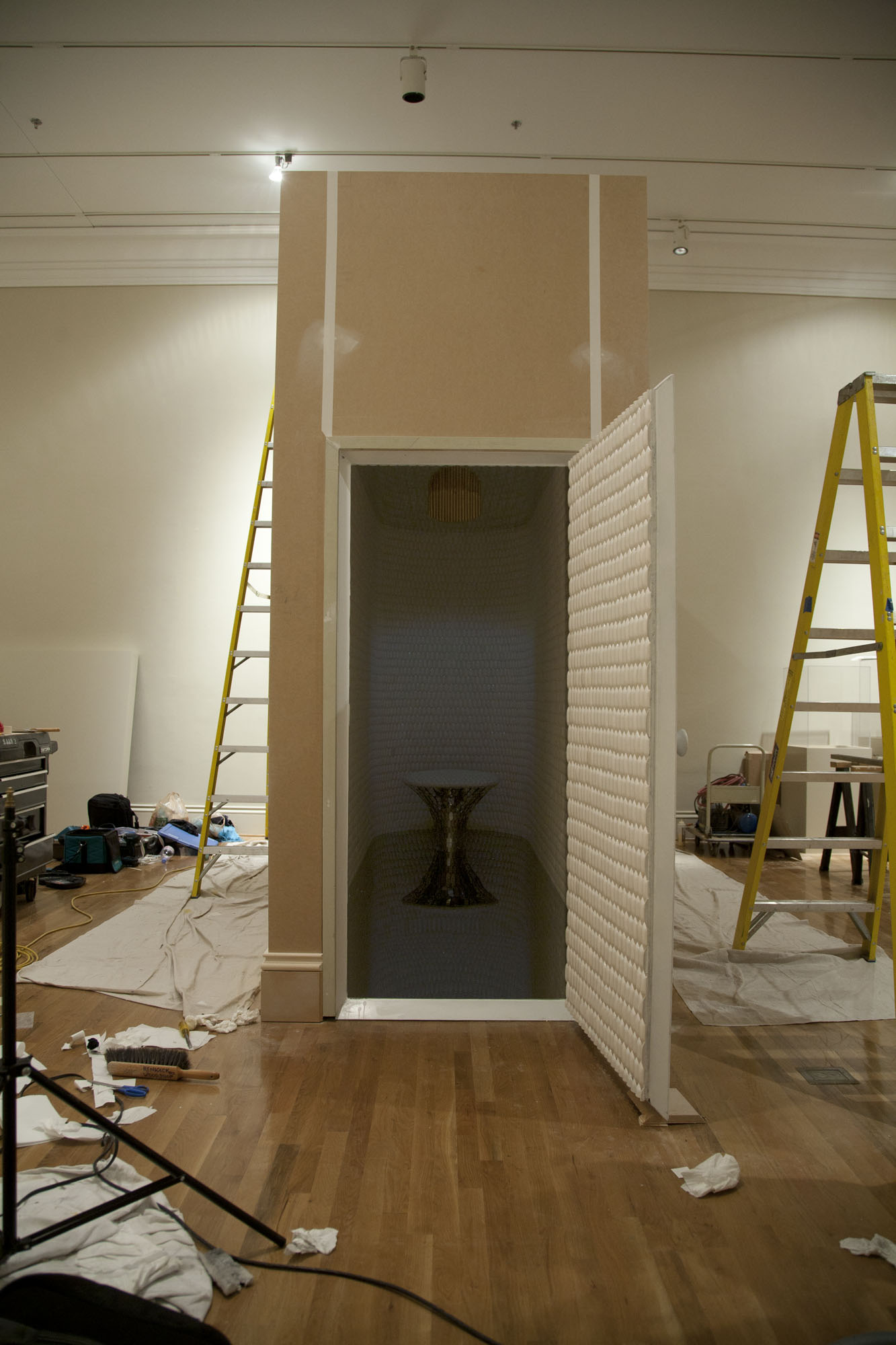
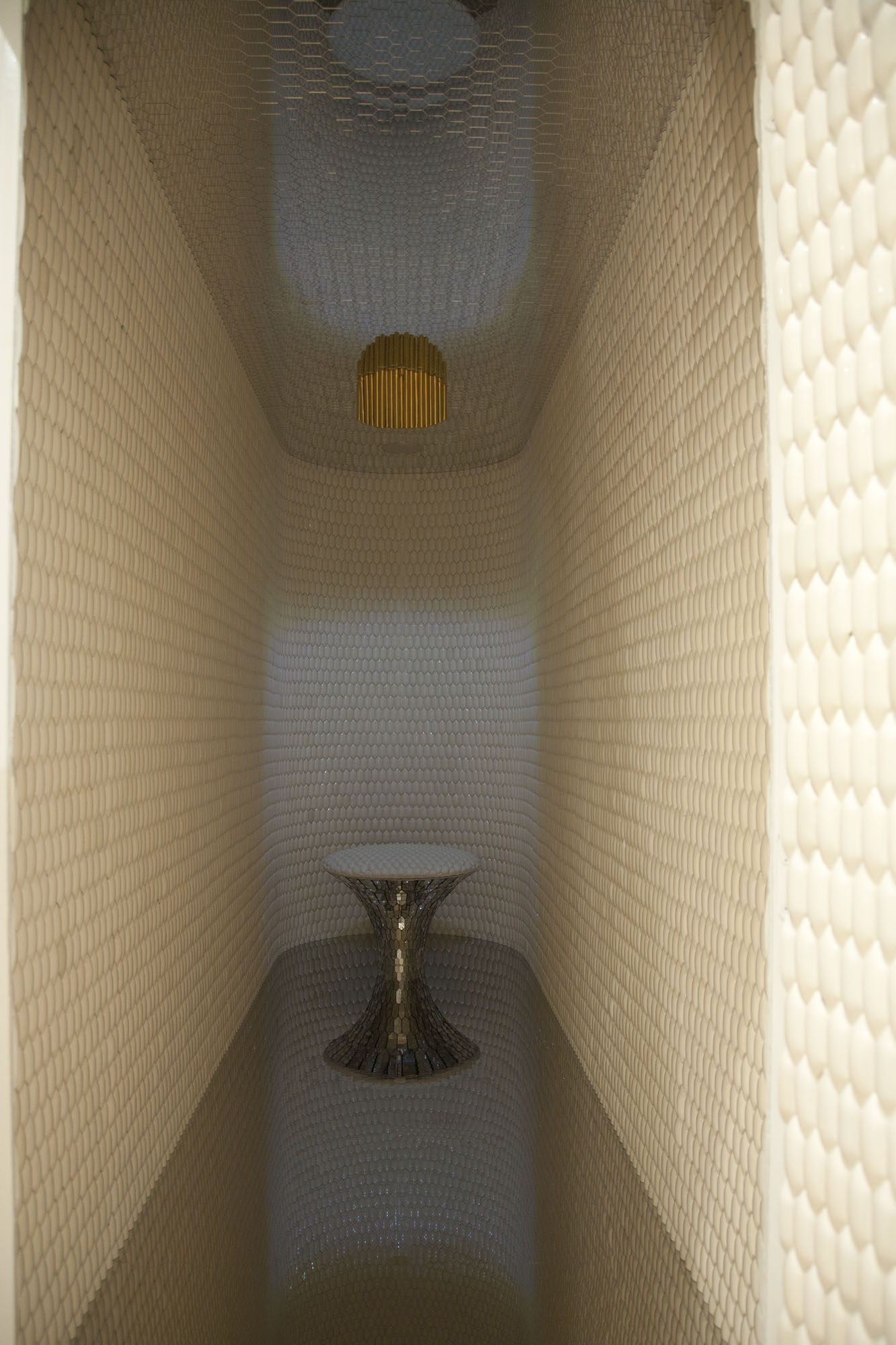
On Friday morning I had the great honor and opportunity to go to the Renwick Museum of American Crafts (part of the Smithsonian Institution) to photograph an installation piece by a friend of mine, Nick Dong, an Oakland, California based installation/mixed-media artist. His piece, “The Enlightenment Room” was chosen to be included in the Renwick’s “40 under 40” exhibit showcasing 40 hot and talented artists under the age of 40 working in “craft” media. Nick’s installation consists of a long, narrow room with the walls covered in elongated hexagonal tiles (each of which Nick made, and hand signed on the back!) . The floor and ceiling are covered in mirror tiles. The opposite end of the room from which you enter is rounded, and at the focus of the hemicircle, a mirror-based seat with a white cushion is located. In the ceiling is a series of LED lights. Sitting on the cushion triggers the lights and music, which build in intensity for approximately one minute before fading out.
 |
 |
 |
 |
Here is a link to the Renwick Gallery’s exhibit announcement:
and here is a link to Nick Dong’s website:
I tend to be a bit of a stick in the mud when it comes to my artistic tastes, but I was truly impressed by Nick’s installation piece. Every component was extremely well thought out and seamlessly integrated to produce a singular experience.
First Session of Intro to Platinum/Palladium Printing a success
I finished up my first session of my Intro to Platinum/Palladium Printing class today. I had eight students, all highly motivated and enthusiastic, and it was a big help in making the class succeed. I was a bit nervous as this was my first time running the class, and it was sold out. There was a very diverse audience – about half and half male and female, and age ranges from early 20’s to late 60s (maybe older than that, but it’s not a very polite thing to ask). I was really thrilled that everything went smoothly – on day one, we all talked about the process, shared work and little bios of our artistic backgrounds, and then went out in Glen Echo Park to walk around and shoot some images. We made 10 negatives all told, enough for everyone in the class to own one, with a couple spares. Since platinum/palladium is a contact printing process, we shot all the film with my 5×7. Most of the students had never used a view camera before, so it was an additional learning experience for them. I took the film home with me and developed it that night, so that students would have real live working negatives, properly developed, for the class, and to keep a sample to see what a good negative looks like.
Today, we got in to the darkroom early, set up and went through the process, end to end. I began with a coating demonstration, then exposed the print, developed, cleared, washed and dried it. Then I cut my students loose and let them coat and print away.
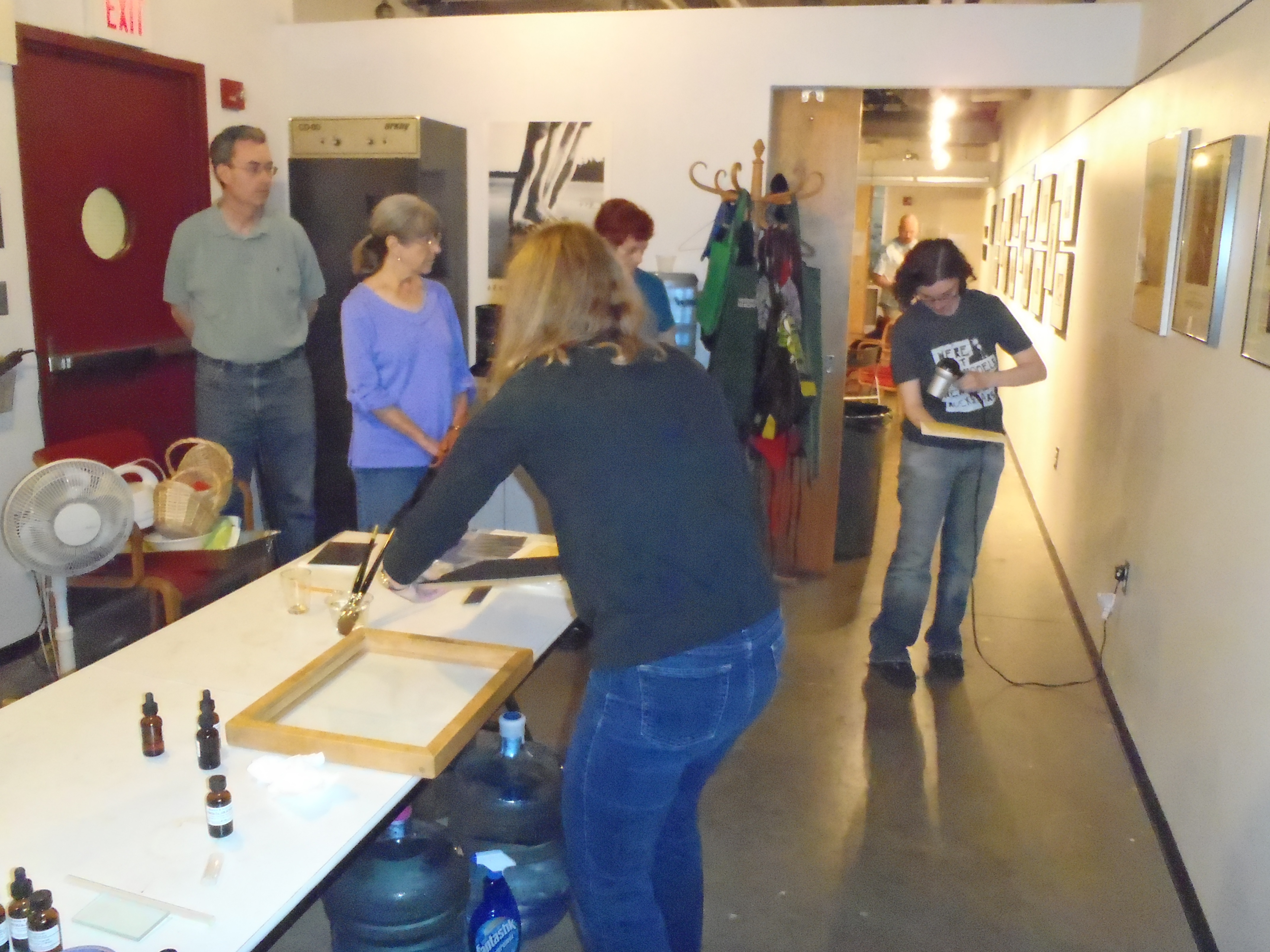
We used a combination of artificial UV light source and natural daylight – it was a cloudy overcast day, so actually not a bad day for doing pt/pd prints, but exposure times were LONG outdoors – with some negatives, up to 25 minutes. For a quick-and-dirty portable UV light source, I used a 16-socket PhotoDiox lamp house with black-light compact fluorescent tubes. It worked out great for exposing, if a little slow (the average exposure with it was 12 minutes), but we could only do one at a time with it. We still managed to get two prints done for each student, which is not bad for a single day printing session with so many people trying to use a small facility.
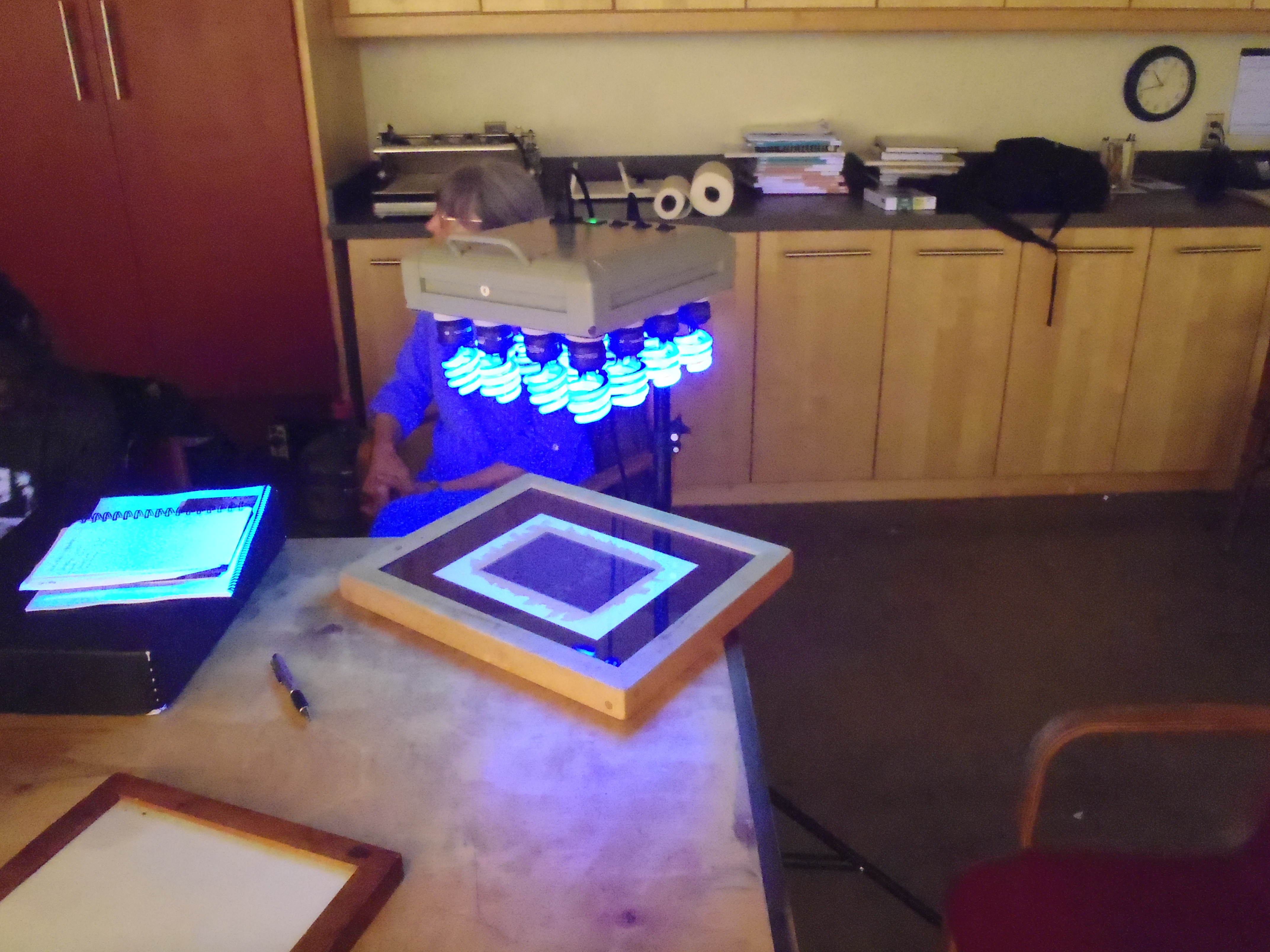
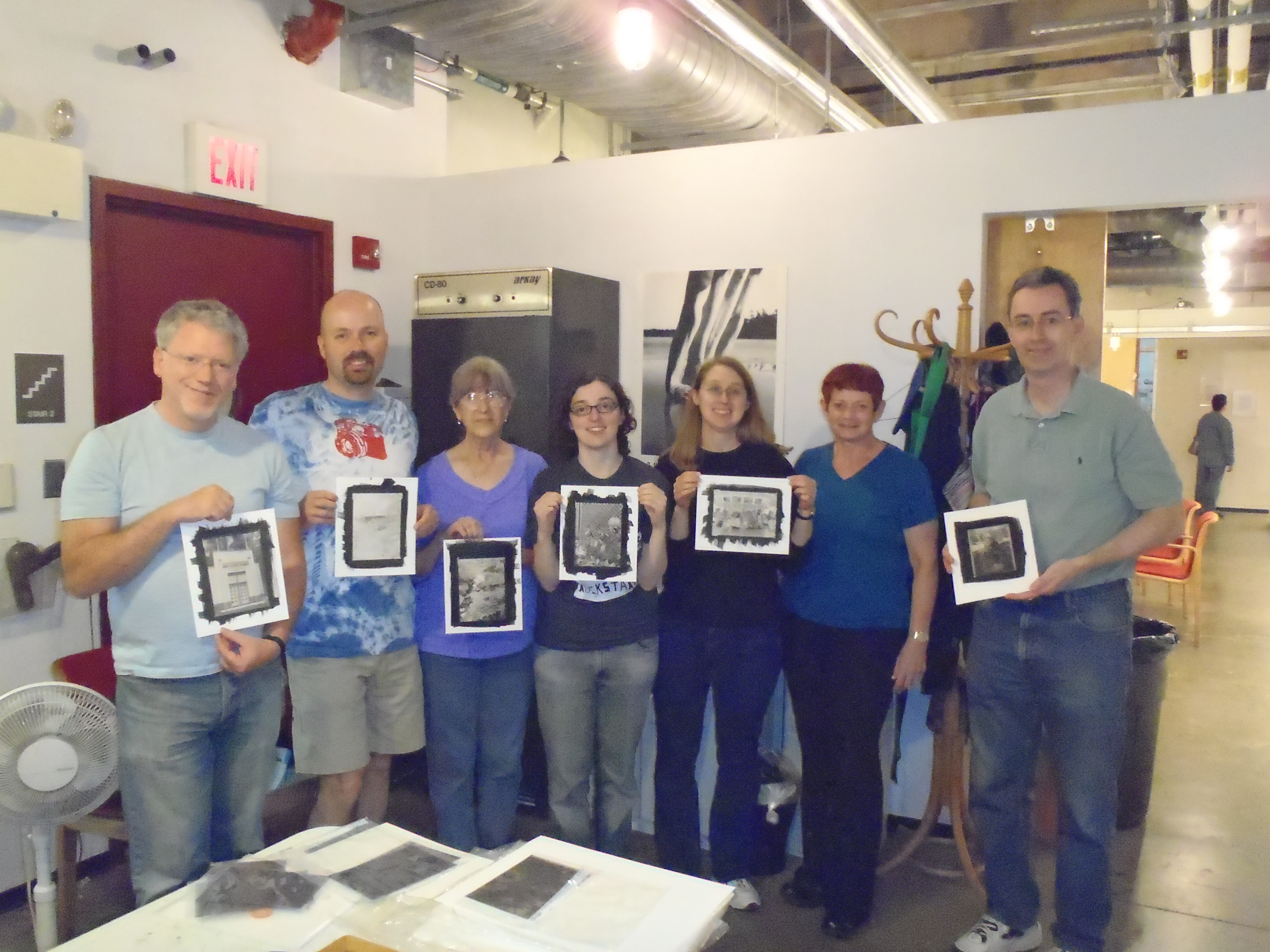
We got the chance to try both traditional develop-out palladium prints and printing-out Ziatypes (a variation on the theme but the image if fully formed during exposure and requires only a water wash step instead of development. Here are my students posing with their prints –
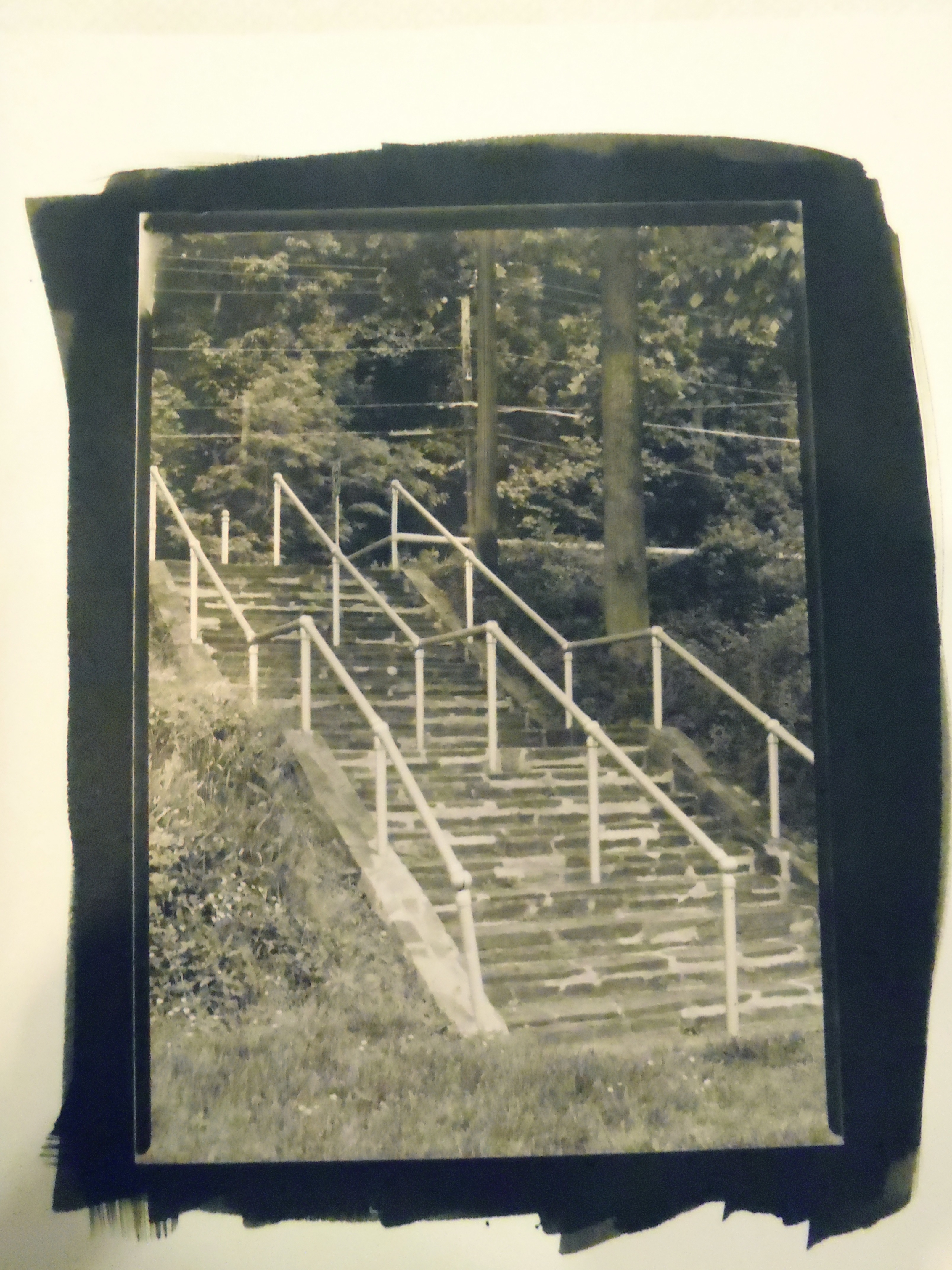
And here’s a finished print of one of the student images. The print is still wet, and the crappy Olympus digital P&S I was using didn’t white balance well, so my apologies in advance if the shot looks a little yellow –
Updates – Artomatic, Upcoming Classes
Well, everything is coming together, on time for once. I just picked up the new hard-copies of my Introduction to Platinum/Palladium Printing manual from FedEx/Kinko’s today. They look very nice. I hope the students will enjoy and appreciate them. It is 29 pages, spiral bound, profusely illustrated and with plenty of white space for note-taking. If anyone wants to buy a copy, email me and I can make the arrangements. They’re $30 each. Class is all set to run on Saturday, and I’ve even met a couple of my students already.
My picture frames for the Artomatic show arrived last night. It was a bit odd because the FedEx Ground guy not only left the packages themselves on the front steps, but he/she ALSO left a hang-tag on the door to tell me that the packages had been left on the front steps. Never you mind that you could barely open the front door to the house for the boxes; somehow I also needed to be reminded that the packages were there and needed to be taken in. Over the weekend I bought the paint for my wall – I got a gallon of flat black interior paint, that SHOULD be enough. My postcards are set to arrive on Friday – I’m getting antsy to see them!
I also had my first faculty meeting at Glen Echo Photoworks last night. It was very productive, and I’m looking forward to being a regular participant there. I’m especially psyched to find out that it is possible to arrange a human figure study workshop – given the general demographic at Glen Echo (there are lots of kids and kids activities there), I was concerned that they’d shoot it down, but if the studio sessions run at night, we should be fine!
I’m re-running the Intro to Platinum class in mid-October, and I’ll be doing the Advanced Platinum class in September. When I have dates finalized, I’ll post them along with a full course description here. Topics will include using digital negatives, printing in Platinum, advanced paper selection and handling, gum-over-platinum, fumed silica treatment and advanced contrast control techniques.
Photoworks Recap – Alternative Visions exhibit
here is the notice from the Washington Post’s Weekend section about the opening we had this past Sunday for the Alternative Visions show.
Washington Post Notice, Photoworks Exhibit
I was tickled that we got mentioned and one of the images by one of our artists was featured in the column, as the WaPo’s Arts section is notoriously unfriendly to local artists.
The evening was a big success – I think we had 50 people come for the artists’ talk and reception, despite the miserable weather all day. My work in the show was some of my 5×7 palladium prints from my trip to Argentina. One thing that I focused on in my artists talk was the story behind each photograph, as opposed to the technical details of its production, which other artists spent a fair bit more time talking about. I know if I went to a gallery talk by a painter, I’d much rather hear them talk about the content of their images than which brush they used. I think it’s a general shortcoming of photographers (I can do it too) to get caught up in the technical details of image production, in part out of a desire to share the knowledge to preserve it, in part to inspire others to try, and in part out of our own fascination and joy at the “wow, I DID this!” factor that is always there (for me at least) every time you successfully produce a print via a chemical process. 20 years on into this passion, I still have that “wow” factor every time I develop a print that works. In the first days of learning, I’d get the “wow” even if the print was crap, just because I made the chemical process work. I’m a little more finicky now and get excited when I see a GOOD print appear in the soup.
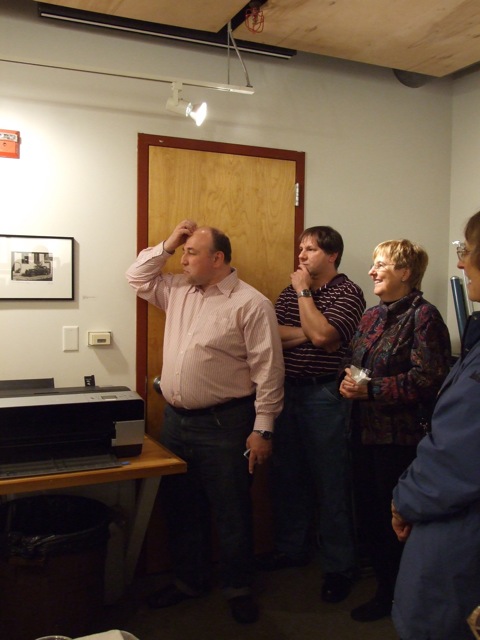
Anyway, here I am, talking about my work. You can see one of my prints to my right (your left) in the image.
On a separate note, my platinum/palladium printing class is officially sold out, so I will be offering it again in the fall. Stay tuned for dates/times. I’m very excited about the class, and can’t wait to see how it goes. I’ll also be offering some additional classes in the fall, including a Photo History class (probably) and a one-evening “Collecting and Preserving Antique Images” lecture, where I’ll be trotting out parts of my own collection for people to see real life examples of various antique photographic media.
Exhibition Review – Frida Kahlo: Her Photos
Yesterday I went to see an exhibit at the Arlington Artisphere of the photographic collection of Frida Kahlo, the famed Mexican painter, wife and lover of Diego Rivera. Frida Kahlo: Her Photos is open through March 25. This is the only stop in the United States for this show, so I wanted to make sure I got to see it before it leaves. One of the very interesting things about this exhibit is that Frida was working as a painter at the same time a major movement in photography was occurring, and the collection shows, albeit tangentially, the intersection of her life with Modernist photography. She grew up in an artistic household – her father was a photographer, and she painted him as such in a portrait. There is even a fine-art nude figure study her father took of himself in the exhibit. Most of the works on display are snapshots, showing the effects of an artistic life as captured by some of the great early and mid-century photographers: Edward Weston, Tina Modotti, Lola Alvarez Bravo, and Martin Munkacsi. These are almost all snapshots; in many cases, they are very small prints, and as such, Artisphere has arranged a system whereby visitors can borrow magnifying glasses to examine the photos up close. The downside to this is that the photos are often closely spaced on the wall due to their small size and the space limitations of the room, so sometimes it is hard to see other images because people are blocking them while examining another small image with the magnifying glass.
The entire exhibition is reproductions, not original images. The quality of the reproductions is in most cases first-rate; had I not read this in the introduction to the exhibit, with few exceptions I would not have known. This is a bit of a pet peeve of mine – I have seen several exhibits lately where substitutes for the original images were displayed. In this case there is a legitimate reason for the substitution – in Diego Rivera’s will, he specified that none of his or Frida’s photos were to leave Mexico. Without substitutes, this exhibit would not be possible. The only other legitimate reason I can see for using substitute images is in the case that the originals really are too fragile to display, or displaying them would mandate viewing conditions that would undermine the viewability of the rest of the exhibit. I like being able to see the frailties of objects, the fingerprints of age, time and care that have been deposited as signs of a rich and well-lived life. In this case, given that many of the original images were machine-printed snapshots made on dubious-quality paper, and some of the later color images were Polaroids, not known for their long-term color stability, setting the lighting at a safe level for the prints would indeed have compromised the exhibit.
As a general principle though, I would still argue against the propagation of substituting digital prints for original images; viewing a facsimile, even an extremely high quality facsimile, is really only one step removed from viewing the images online. This renders museums as physical entities obsolete. It also undermines the museum’s role and responsibility as a vehicle for education and connoisseurship, and preservation. Why worry about conserving art objects if we can just make simulacra and replace them time and time again as they wear out? Why worry about the authenticity of the object on display if the object itself is irrelevant, and the means to determine authenticity are lost because people can’t tell the difference between a silver-gelatin print, a platinum print and an inkjet? Lots of people can’t afford to own even a single example of the work of a named artist, let alone enough examples to derive a working knowledge of the artist’s methods and materials. Museums can, however, and by exhibiting the work, they can enable thousands to develop that critical eye.
Pier 24 museum in San Francisco – a photographic education
Over the weekend I went to see the Pier 24 exhibit space in San Francisco. It has only been open for a year or so (the current exhibit is their third ever, I believe). It represents a novel approach to the museum experience in general and photography exhibits in particular. The facility itself is located in one of the old waterfront warehouses along the Embarcadero (thus the name), directly beneath the Oakland Bay Bridge. The interior is divided up into roughly 20 rooms. Admission is FREE, but by appointment only. They allow twenty people at a time for a two hour block, so your distractions during your visit are minimized. Another way they minimize distractions is by having NO wall text – the floor plan flyer you get upon entering has the only labels for the exhibits, consisting of the photographers names who are hung in a given room. Absolutely maddening if you’re not familiar with everyone in a given room, but at the same time, quite liberating because it frees you from having to accept the curator’s “authoritative” context. The current exhibition, up through December 16, is entitled simply “HERE”. The theme is work that in some way connects to San Francisco – either taken in or near the Bay area or by photographers who called it home. Work exhibited spans the range from 19th century mammoth plate collodion images printed on albumen paper by Eadward Muybridge and Carleton Watkins to 20th century Modernist masters like Edward Weston and Ruth Bernhard to color mural prints by Richard Misrach and Larry Sultan, and even a five-minute video clip of the car chase scene in Bullitt with Steve McQueen.
Much of the work on display was not to my taste – I don’t like what has been derisively labeled “hedge fund wallpaper” by some New York gallerists referring to recent deadpan posed-snapshot color mural prints. However, there was enough early imagery to satisfy my inner antiquarian, and now that I’ve seen enough of that kind of work, I’m starting to appreciate it for what it is. I still wouldn’t accept money to hang in my house, but one example finally struck home as to what was going on in the photograph. There was a room with a series of VERY large color prints by Anthony Hernandez of vacant interiors. On the literal surface, they’re incredibly ugly, showing abandoned and/or ruined interior spaces with industrial carpets, missing drop ceilings, and junky furniture. One thing that did catch my eye though was the use of color itself. If you stepped back and looked through a defocused eye, the images became all about abstract color fields, geometric forms, and intersecting planes. The graphic abstract geometry creates a contrast with and tension against the literal detail of the photographic image, making your brain switch back and forth between the two characteristics of the image – the texture of the purple carpet, the gray popcorn ceiling and the white-washed faux-wood paneling in the hallway against the receding, intersecting planes of colors converging on a vanishing point in the far rear of the image. I think it’s this kind of tension in a photograph that has too often repelled me from post-modernist photography – it’s too easy to be fixated on and distracted by the details and not see the whole picture. I still don’t like the “posed deadpan snapshot”, whether it’s printed 4″x6″ or 40″ x 60″. But at least I can start to “get” another genre.
For more information about Pier 24, visit their website: http://www.pier24.org
CarbonWorks Blog by Richard Sullivan, FRPS
I wanted to put in a good mention for Richard Sullivan’s new blog, CarbonWorks. Richard is a brilliant photographer and photo chemist, co-founder of Bostick & Sullivan, the premier source for all things alt-process. I found his blog today and was reading up on some innovations he has discovered and published, including the Athenatype (a silver-based printing technique that yields a near-platinum print look) and a fumed silica treatment for alt process printing that helps boost dmax (maximum black density) a common shortcoming of many antique processes. Richard has been honored as a Fellow of the Royal Photographic Society for his work in reviving alternative/antique photographic processes and for inventing new variations on the same, specifically the Ziatype, a printing-out process variant on Platinum/Palladium. He is a master carbon printer (thus the blog title). He also teaches non-silver processes at Santa Fe Community College. Give the blog a read, and follow it if you’re interested in anything antique photo process related!
A Non-Silver Manual now available for free
I just needed to put in a good plug for this book. It’s what I learned gum printing from, and contains some very useful information on other alt processes. The book is “A Non-Silver Manual: Cyanotype, Vandyke Brown, Palladium & Gum Bichromate with instructions for making light-resists including pinhole photography”. It was available for sale for many years in a soft-cover spiral bound edition directly from the author, Sarah Van Keuren. Mrs. Van Keuren has decided that she no longer wants to maintain the book and deal with the printing and shipping, so she is making it available chapter by chapter for free to download on www.alternativephotography.com If you want a hard copy, you can contact the publisher of AlternativePhotography.com and see about remaining stock.
 dcphotoartist