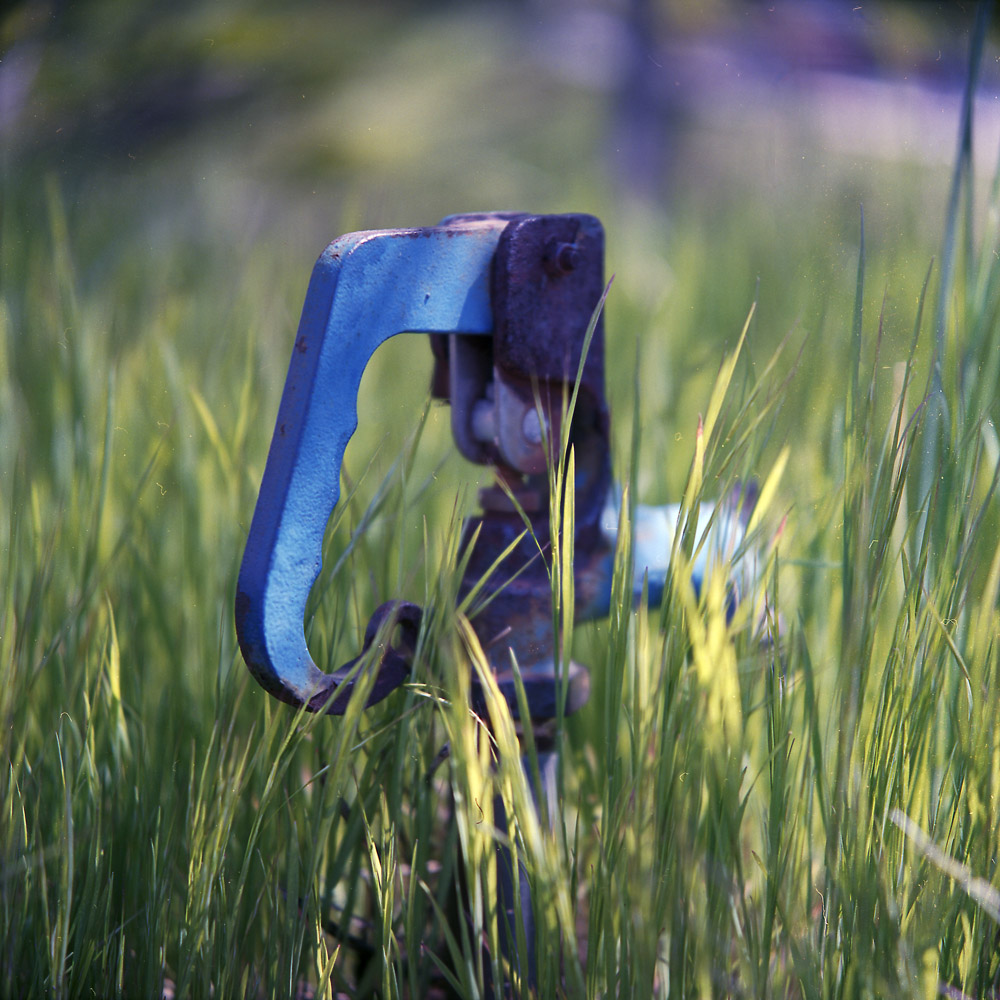
I saw this hose connector for watering the planter box down the street from my office and the blue handle contrasted perfectly with the new green grass around it. The light filtering through the tree leaves above the planter box made dappled patterns in the grass and softened up the scene so that the contrast was created through color as much as it was through brightness and darkness. The shallow depth-of-field really makes the blue of the handle pop out even more against the sea of green.
Hose Connector
It was also the perfect opportunity to test out the macro capability of my Tele-Rollei with the Rolleinar 1 close-up set.A friend of mine had advised me that the Rolleinars made for the standard Rollei work just fine with the Tele-Rolleiflex. There were a separate set of Rolleinars originally designed for the Tele, and they look somewhat different. I was concerned that the parallax-correcting prism for the viewing lens in the Rolleinar set for the standard would over-correct and the composition would be off, but it doesn’t, as can be seen here. The pump handle is in exactly the spot I composed for.
A recap of the World Health Organization images I’ve made. There are more coming, but they’re on several rolls I haven’t had a chance to process yet (I’ve got to get a couple more shot to run a batch).
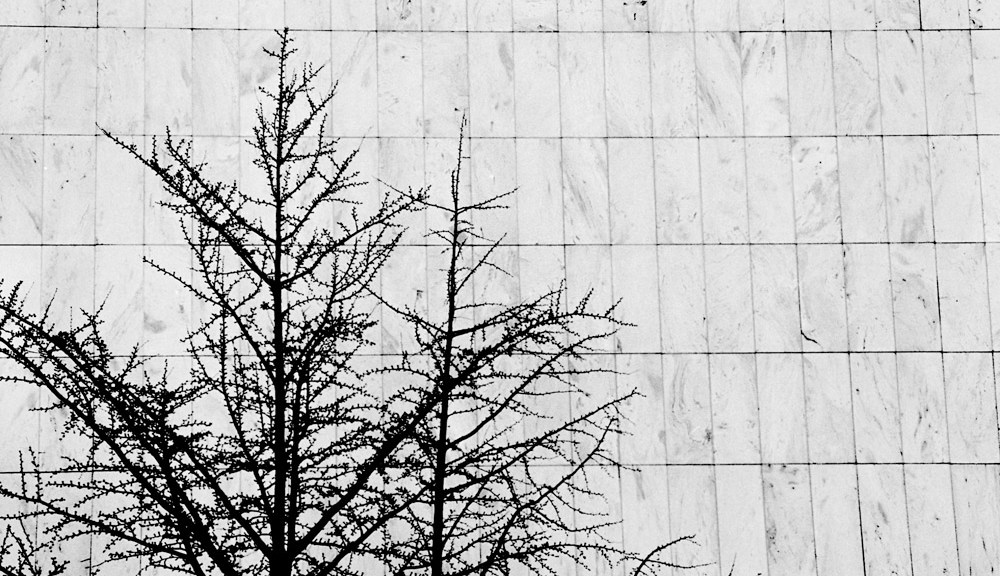
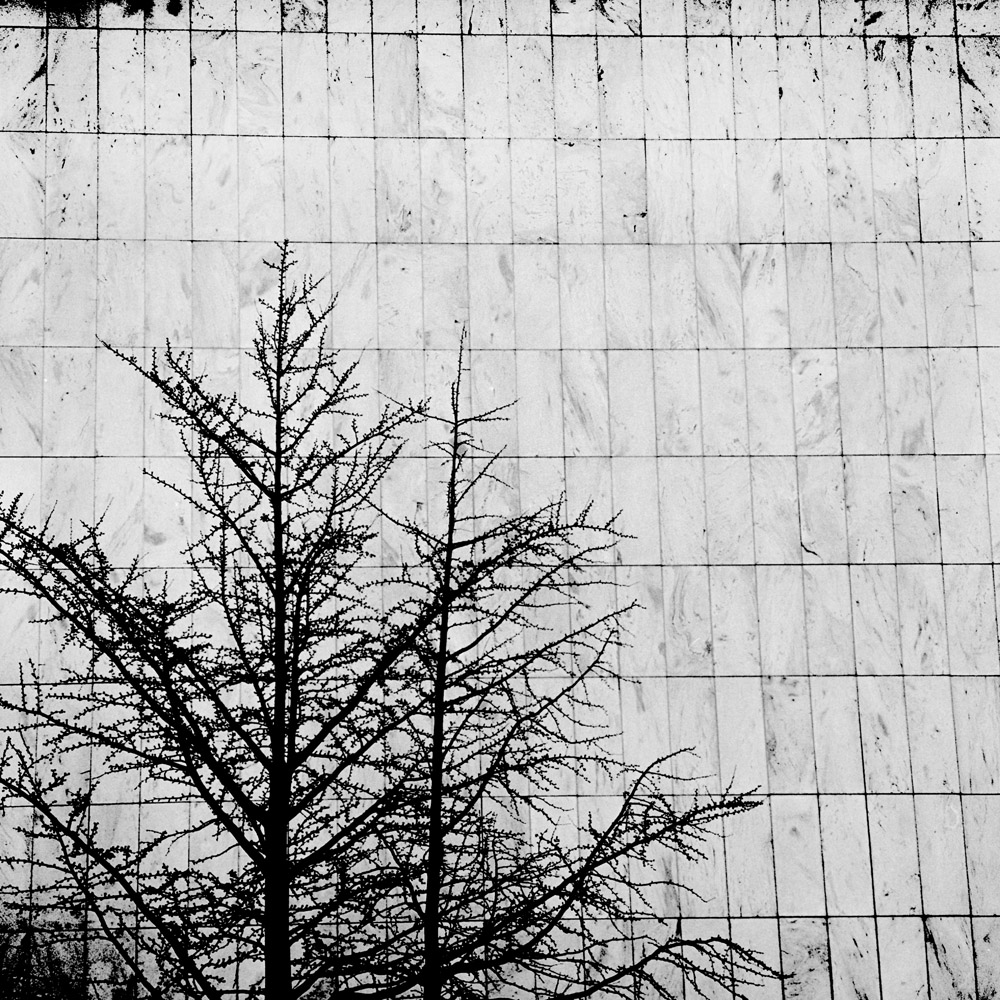
This first one is in some ways the most graphic of the bunch, if not the most abstract. In winter, near sundown, you can see this bare tree in front of the white marble wall on the end of the building. There’s the contrast between the black organic shape of the tree against the white rectilinear grid of the wall.
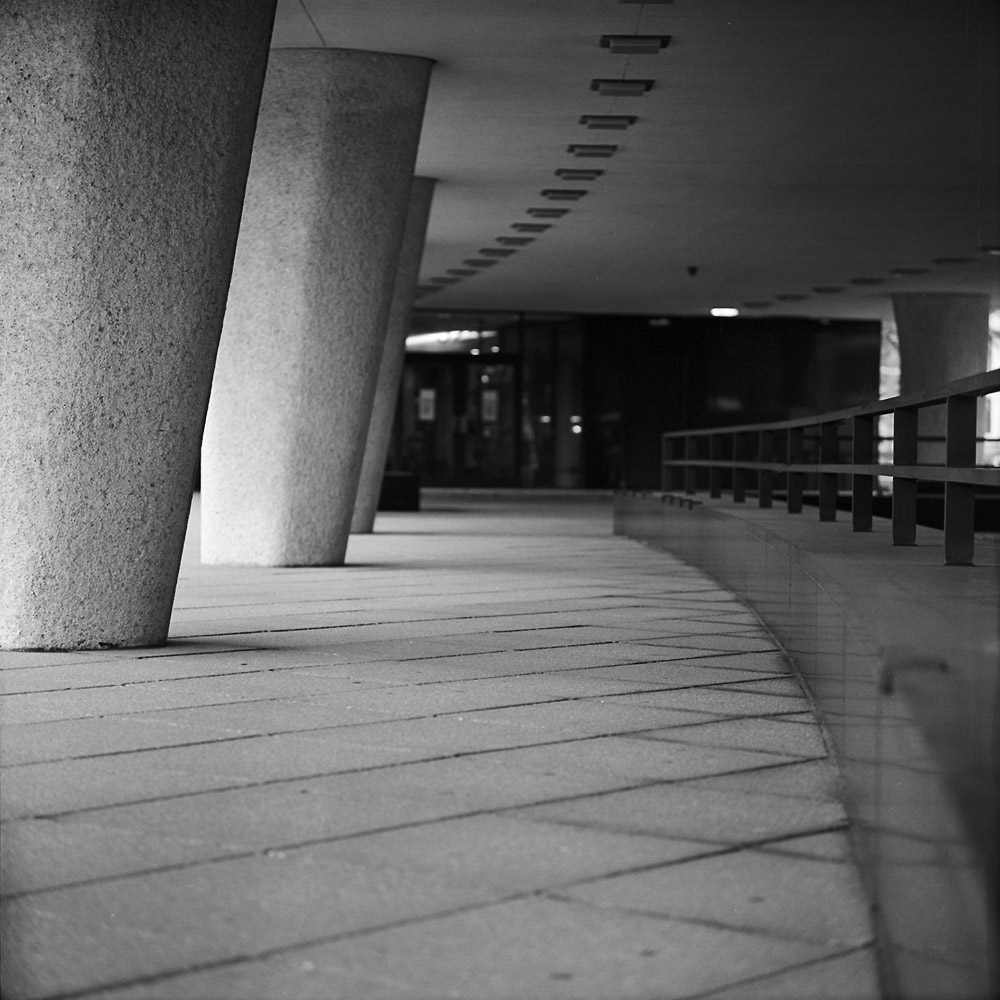
Tree, Stone WallThe rest of these don’t bear commentary because you’ve seen them before here on my blog. Go back and re-read the posts ( here, here, here, here, here, and here) for the details of my thoughts and ideas about the images.
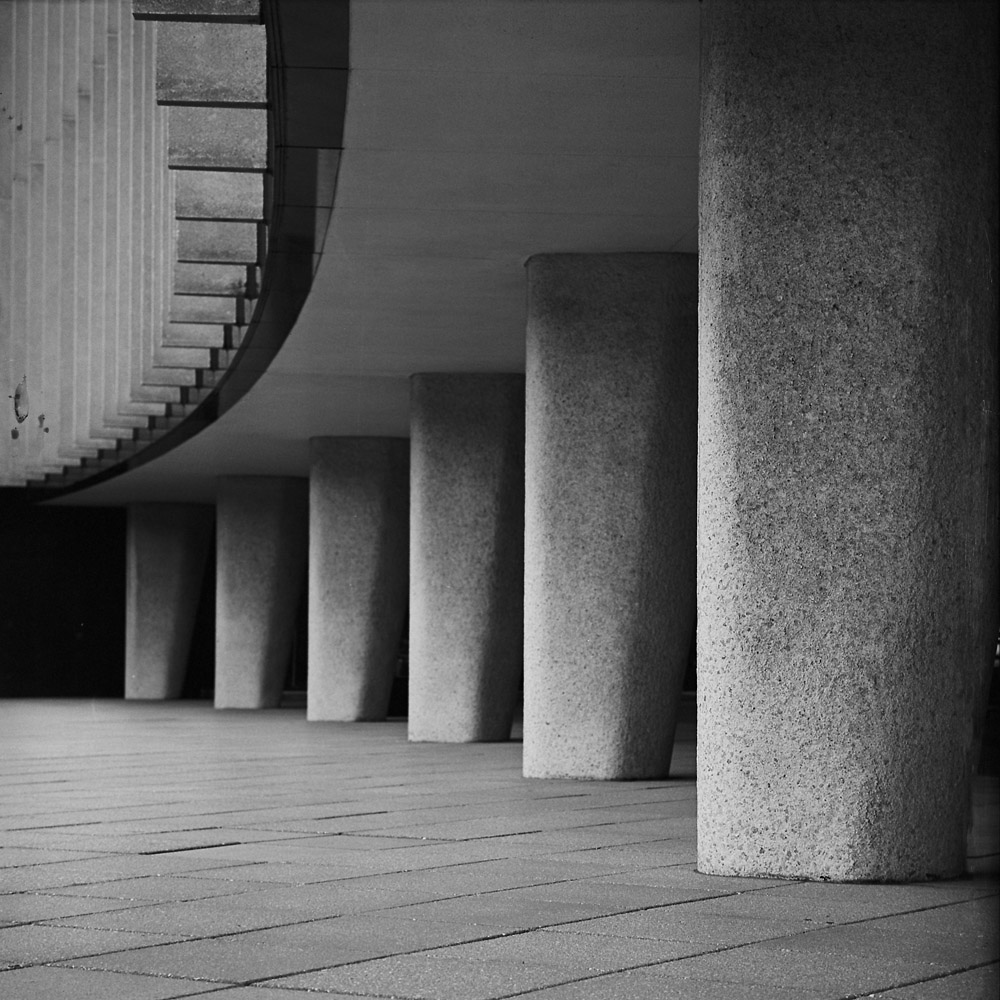
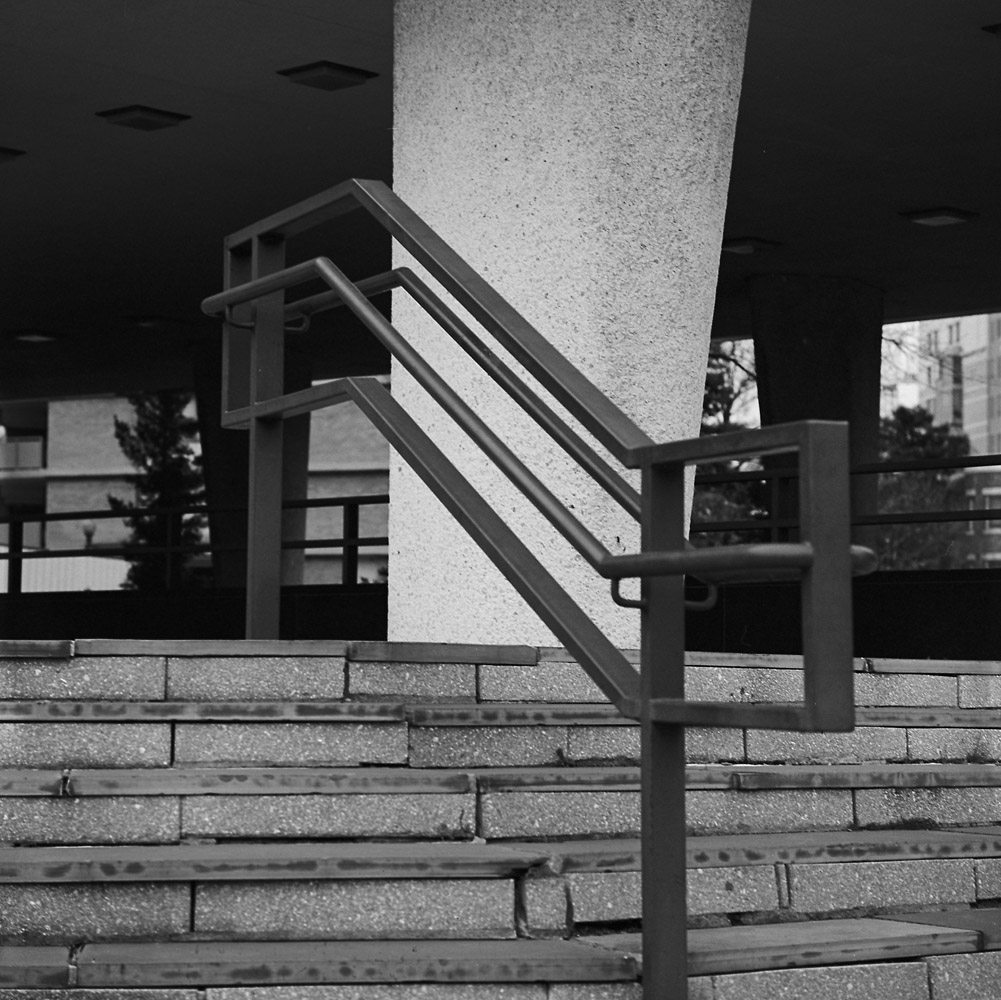
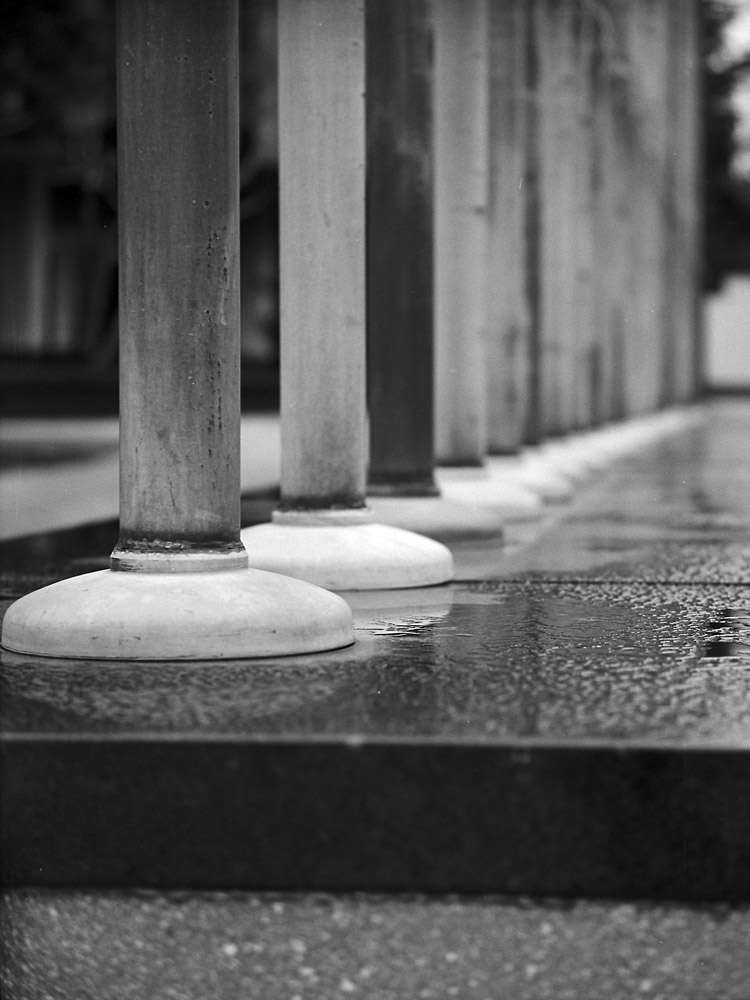
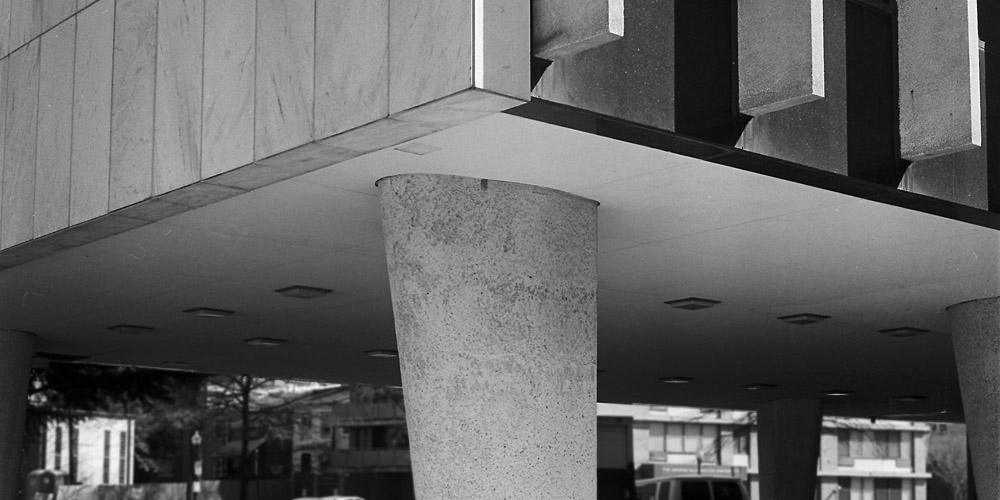
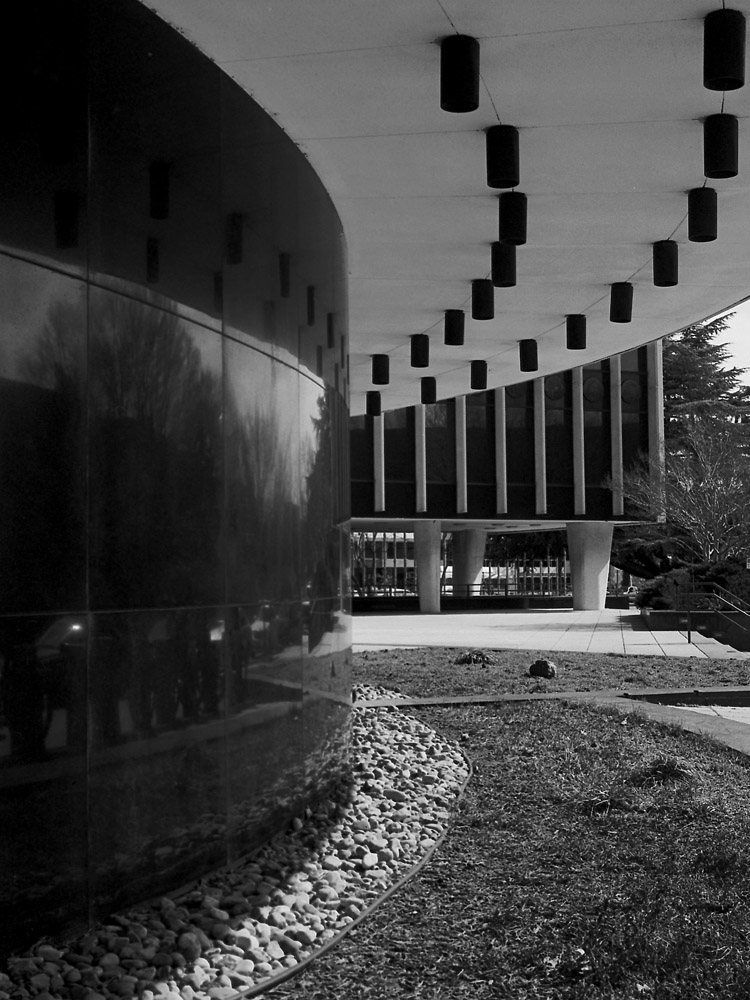
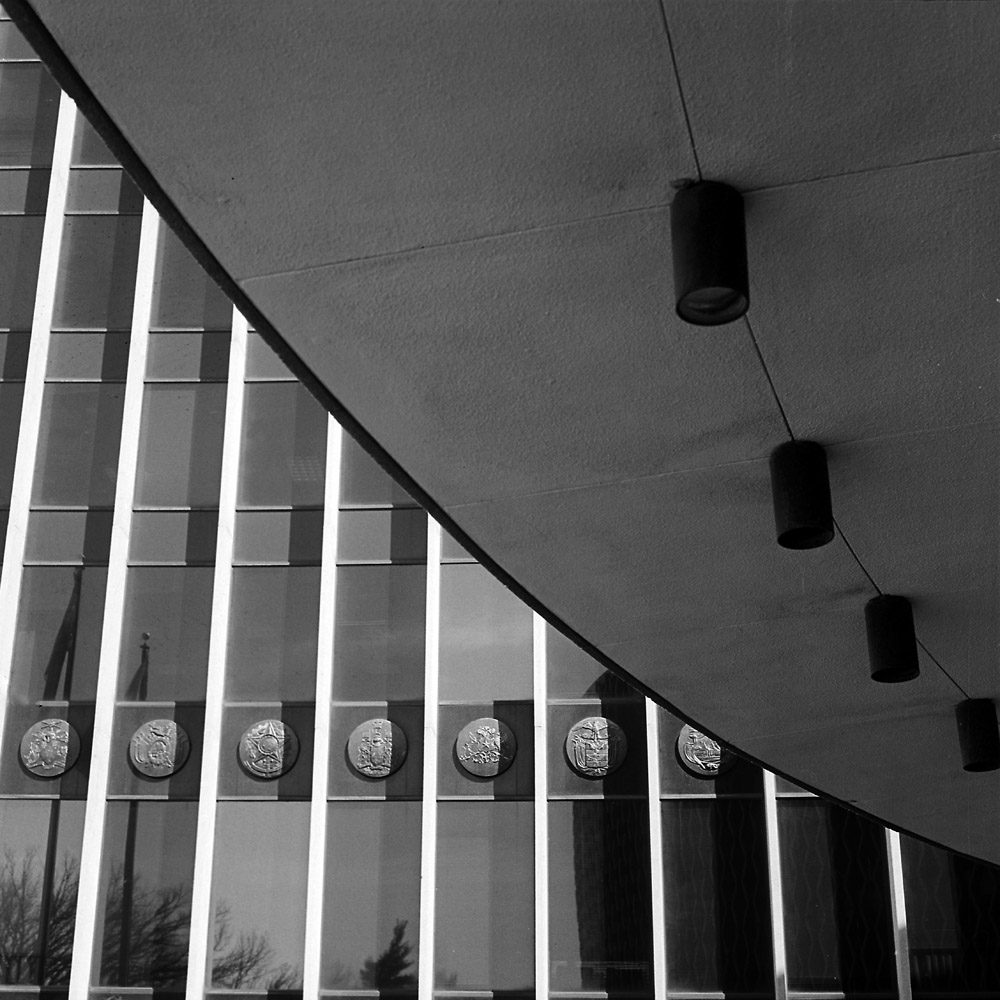
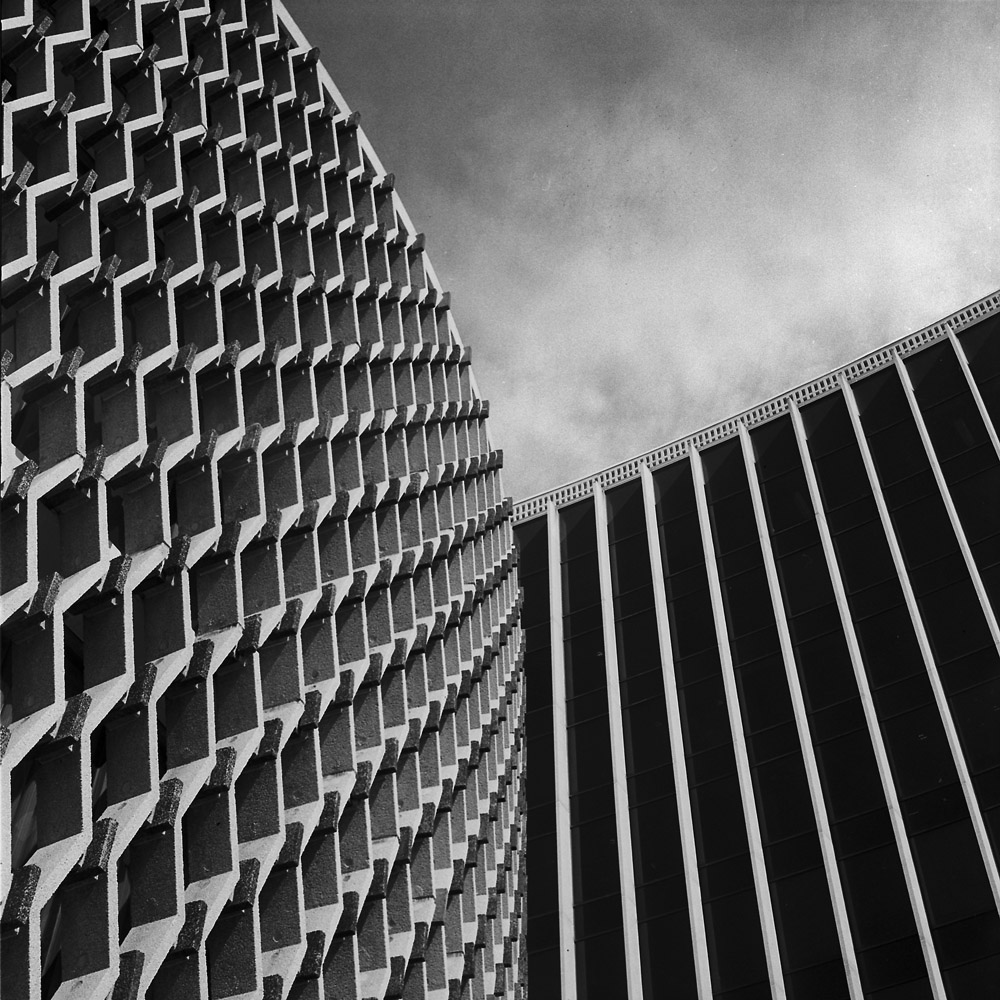
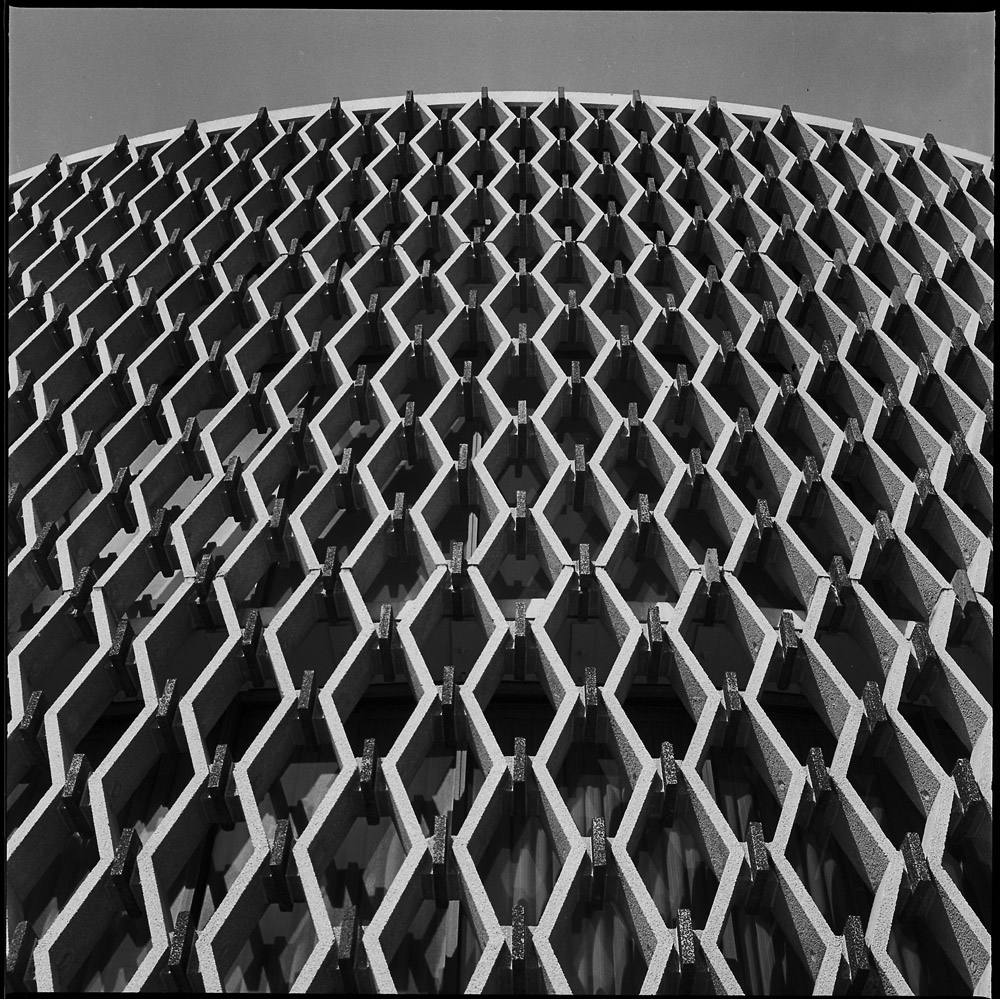
Underneath the WHO Columns Handrail Flagpoles WHO Column, Angle World Health Organization Curves Eaves, World Health Organization World Health Organization, Thirds World Health Organization, Cylinder PAHO/WHO Building WHO building WHO building Pavers, Reflection, Grass
This is a very dear old friend of mine who I’ve known for close on 20 years now. We originally met on an IRC chatroom (that’s really dating me – how many of you out there even remember what that was?) and stayed in touch long after. Simon came to visit me when I was living in Baltimore, then I ran into him again several years later at Chatuchak Market in Bangkok, quite unplanned and unexpectedly. Several years after that, he returned to Baltimore, this time as a graduate student. Now he lives outside DC and we get together periodically to keep up with what’s going on in our lives. We were having dinner the other night at a newish Italian restaurant in my neighborhood when I took this- he was just perfectly lit by the setting sun coming through the window. I think this perfectly captures his jovial inner spirit.
Simon Fong
I had the Rolleiflex sitting on the table next to me after taking this picture, and the women at the table next to us saw it and remarked on it. We ended up having a good fifteen minute conversation with them about photography and using film and old cameras. This is why I call the Rollei “the happy camera” – it gets so many people talking with you about photography, and always in a positive way. Everyone has good feelings about this camera.
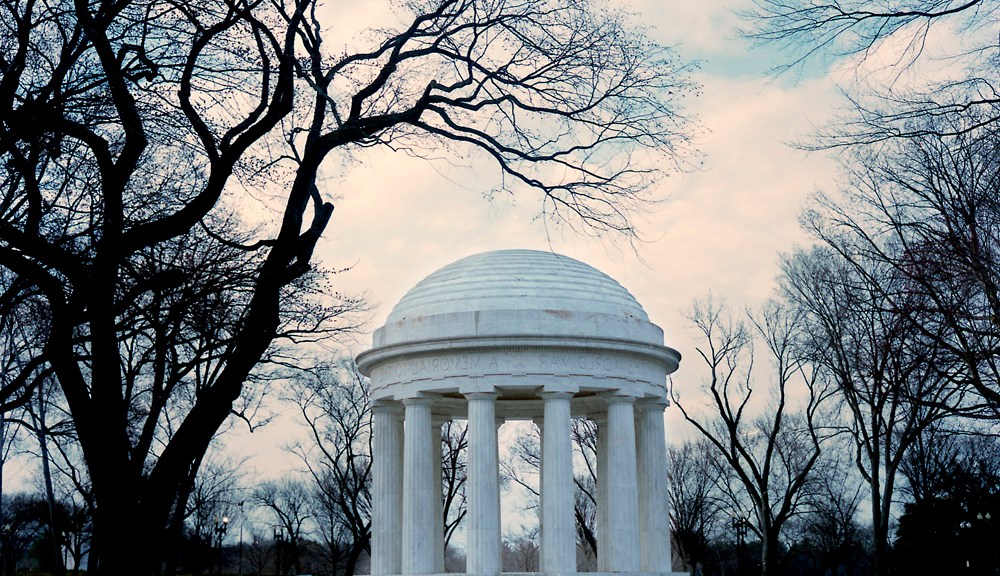
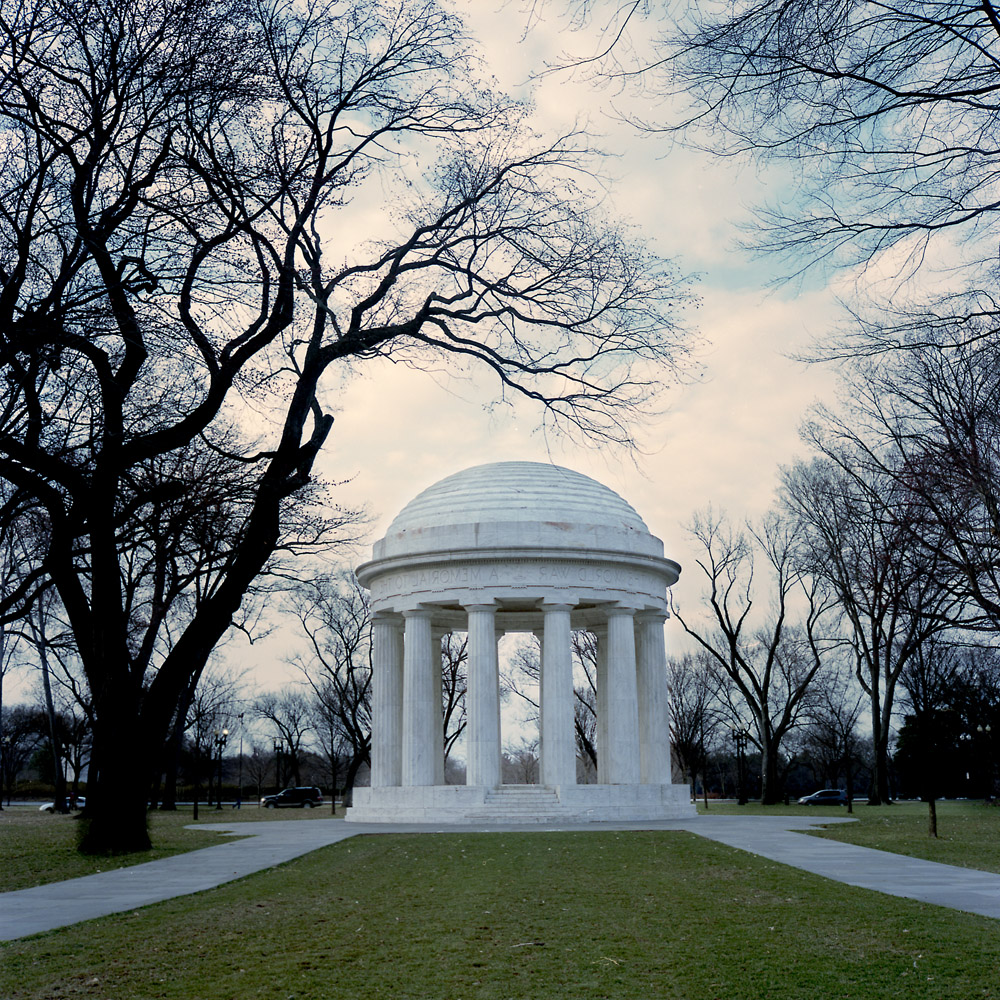
The World War I memorial, taken toward evening in early spring. The grass is obviously getting green but the trees haven’t come into leaf yet. Once the trees have gotten their leaves, the memorial is all but invisible from the road behind it.
WW I Monument
This is still one of my favorite monuments on the Mall because of its simplicity, and because it is doing double-duty – there is no national World War I monument, so this monument to the fallen from the District of Columbia stands for all the soldiers and sailors of that conflict.
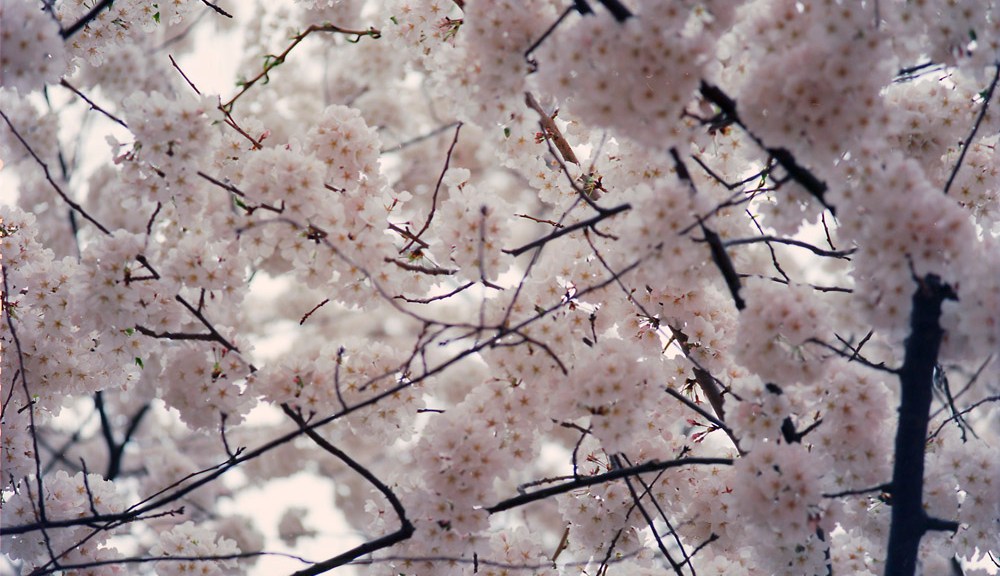
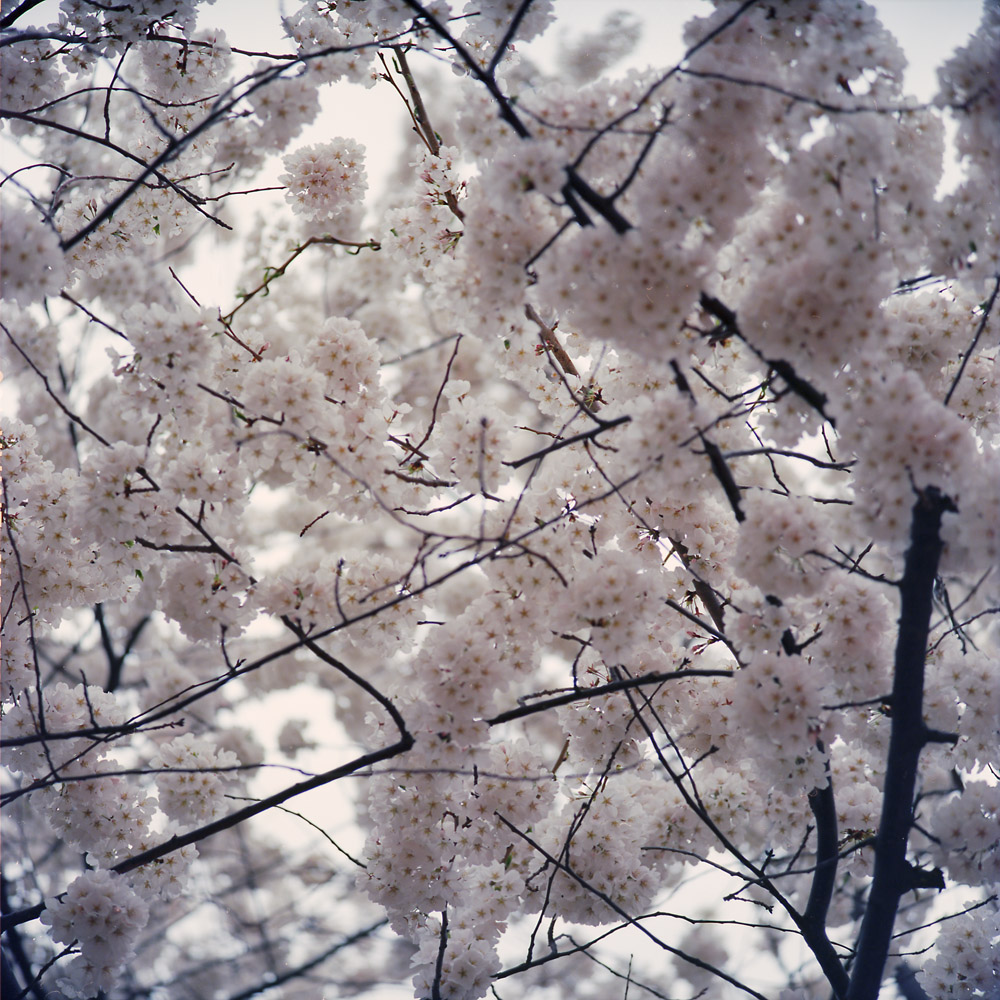
As a Washingtonian, I normally avoid the Jefferson Memorial and the Tidal Basin area at Cherry Blossom time like it was ground zero for the Zombie Apocalypse. The cherry blossoms may be beautiful, but the groves are so overrun with tourists with necks snapped back in positions normally reserved for car wreck victims as they stagger mindlessly about, blocking traffic, walking into your camera’s frame of view and not moving while THEY compose a shot, and pointing with arms at full length like the walking dead in the general direction of everything and nothing at the same time. Most of my photographer friends who want to shoot the blossoms do so at the crack of dawn when most tourists can’t be arsed to get out of bed to go see them. At which time I, too, can’t be arsed to get out of bed to go photograph them because I have a day job.
Cherry Blossoms, 2015
That said, there are other places to see cherry blossoms around DC that aren’t completely overrun. There happens to be this tree, for example, on the George Washington University campus in the front yard of a fraternity house no less. I caught this one on one of my lunchtime walkabouts. This was also with the Tele-Rolleiflex, shot basically straight up into the tree from a standing position (the tree is in a yard several feet above the sidewalk, so it was easy to stand beneath it and shoot up into the blossoms).
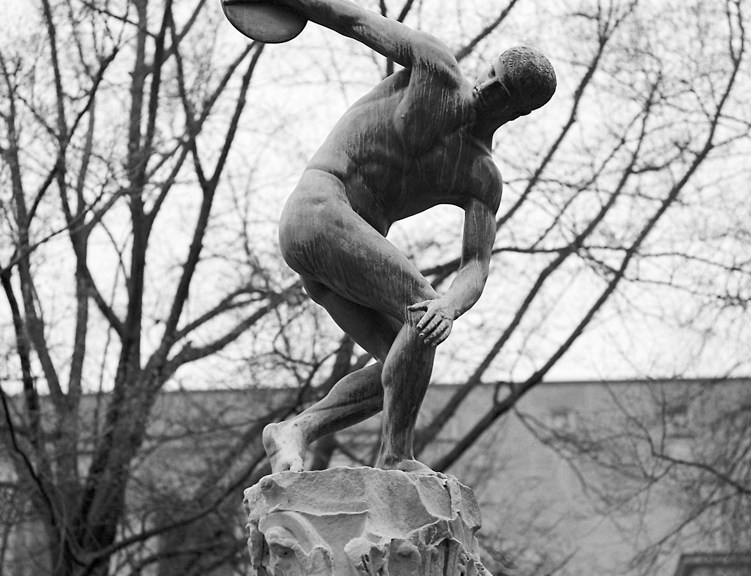
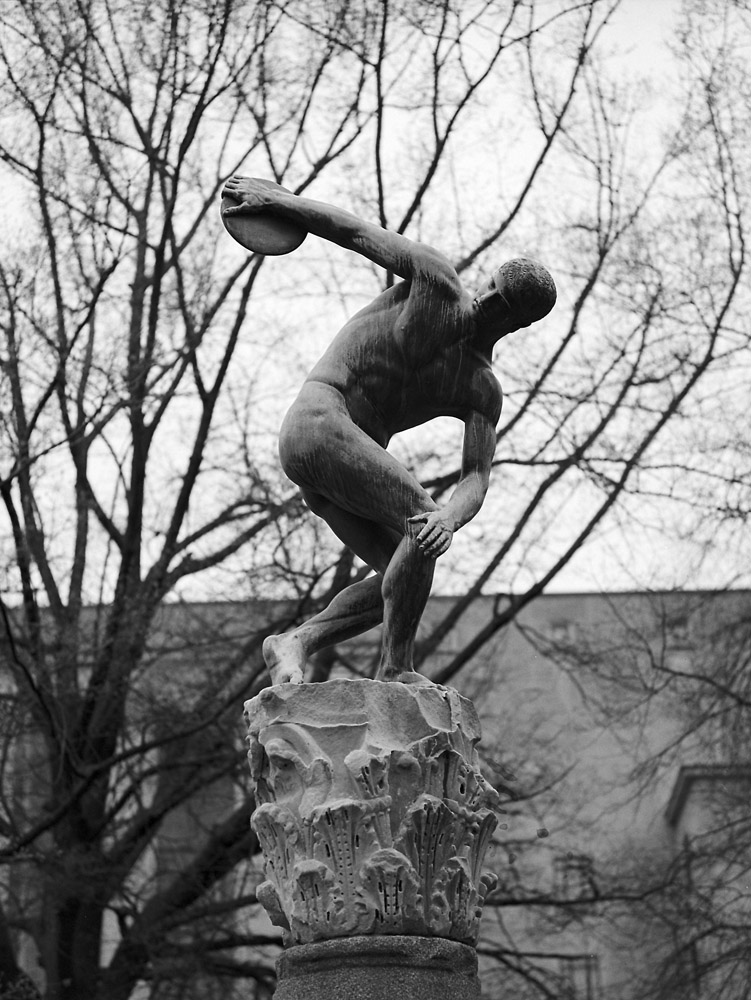
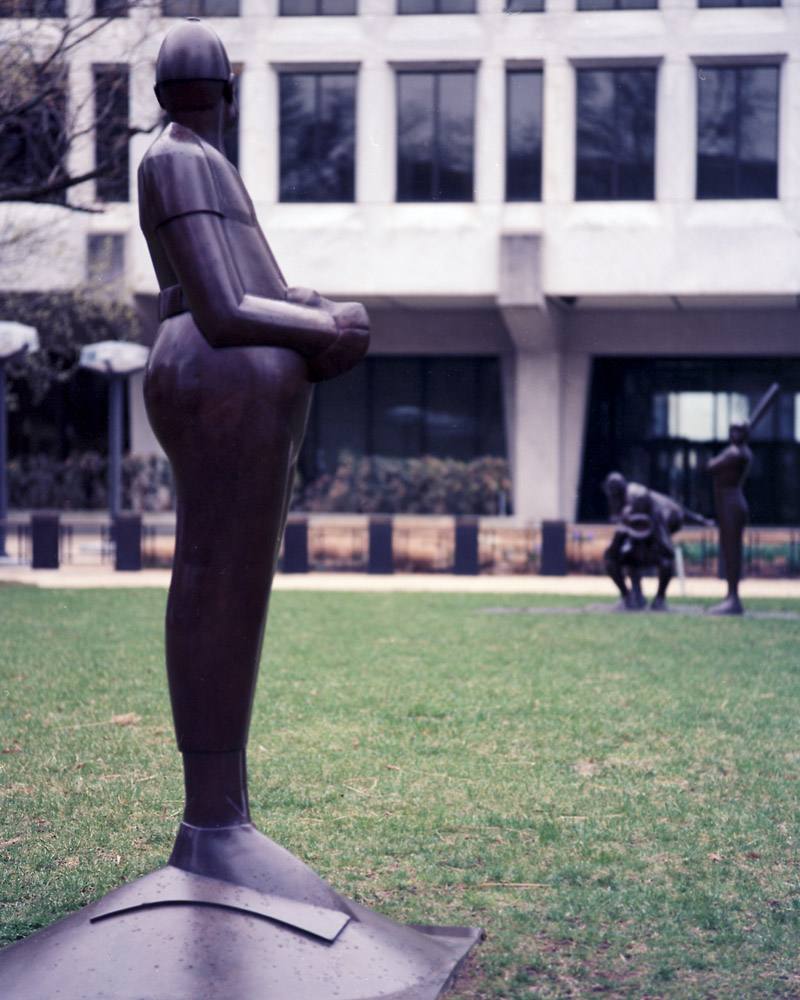
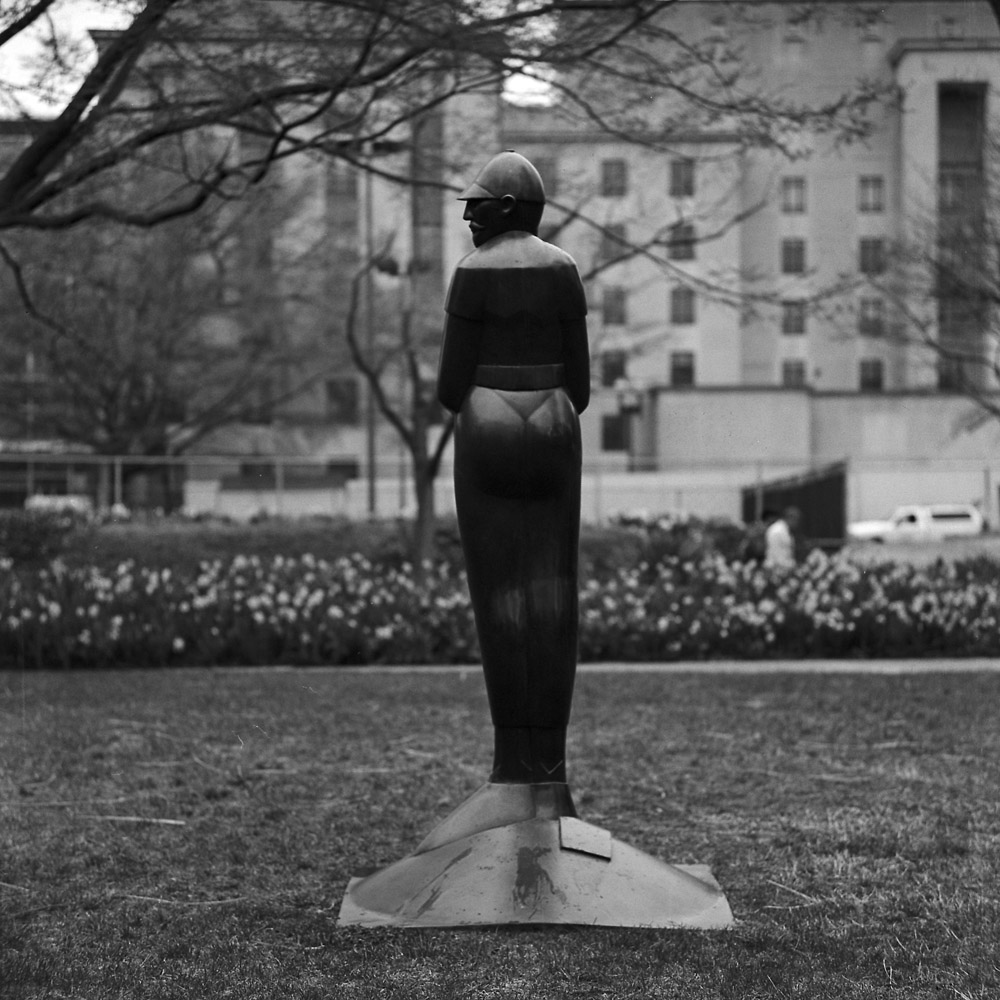
The Federal Reserve Board of Governors buildings in Washington DC have an incredible art collection inside. Most of it is not accessible to the public, as it is displayed throughout the working areas of the facilities. There is, however, an exhibition space inside one of the buildings that can be viewed by appointment – The Federal Reserve Art Collection. There are some pieces, however, that are on permanent public display. There is a gorgeous fountain that operates from April to November-ish (depending on weather) and on the north side of the Martin building, there is the baseball sculpture and the Italian bronze Discus Thrower sculpture. It’s not entirely clear from my reading that the baseball sculpture, entitled Full Count, is part of the Federal Reserve collection, but I believe it to be so from this article. The Discus Thrower, however, is not. It is a replica of the Discobolos of Myrmon, an ancient Roman bronze, given to the people of the United States by the nation of Italy in commemoration of the United States’ assistance in returning Nazi looted art after World War II.
Here is the discus thrower statue. He stands atop a marble column head carved to mimic an ancient Corinthian capital. The discus thrower is located in a city park which also houses a tennis court.
Discus Thrower, Kelley Park
I have two different takes on Full Count – one in color and one in b/w, each from a different perspective. The color image is viewing the sculptural group from over the pitcher’s shoulder. The white marble building in the background is the Martin building of the Federal Reserve.
Full Count, from the Pitcher’s View
The black-and-white image is my take on just the pitcher, from a profile view. Both were shot on the same rainy, overcast day.
Pitcher, Full Count
I think the two images side-by-side really brings out what I was talking about yesterday regarding emotional impact of an image in one medium vs the other. There’s no judgment value being placed on that difference – each one has its own equally valid resonance, and there’s no need to prefer one medium over the other, just as joy and sadness are equal emotional partners.
All three images were shot with my Tele-Rolleiflex. As I’m getting used to shooting with it, I’m really liking the images it makes. It just takes a bit of practice to get to know when to use it and how best to use it to take advantage of its strengths.
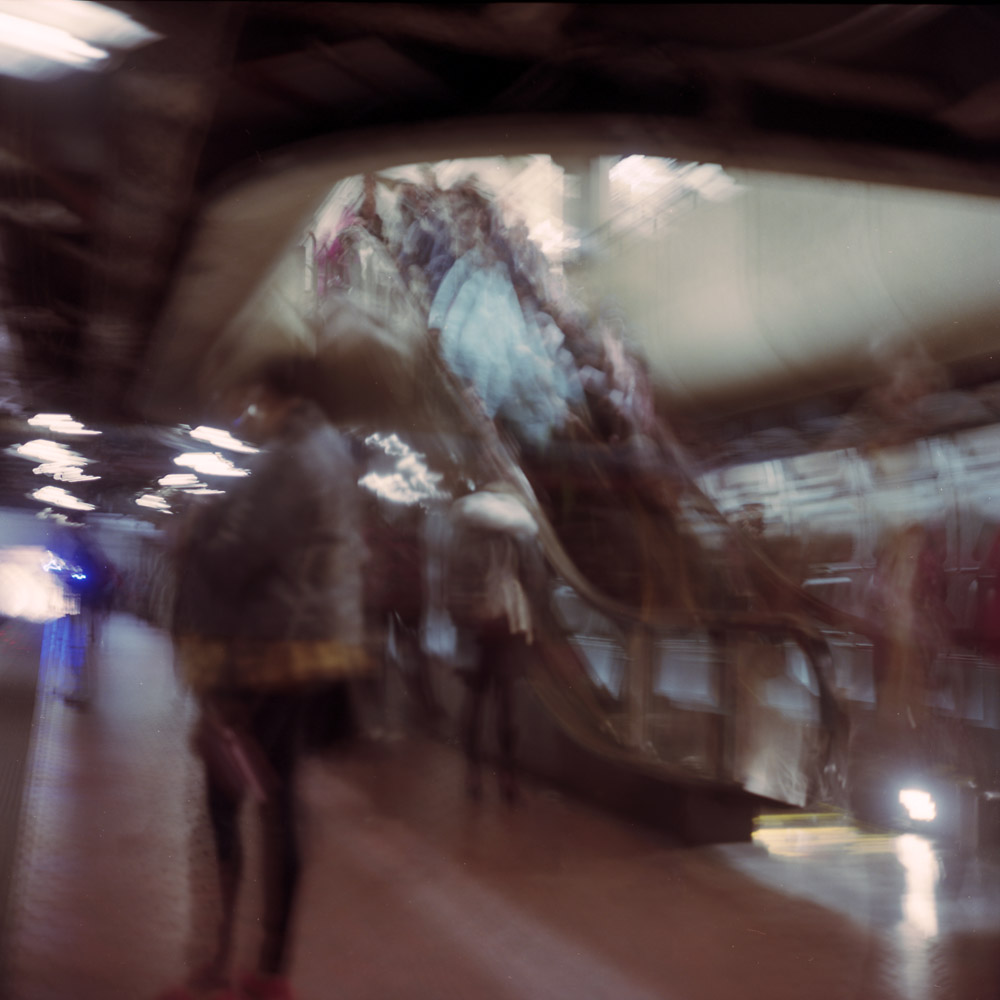
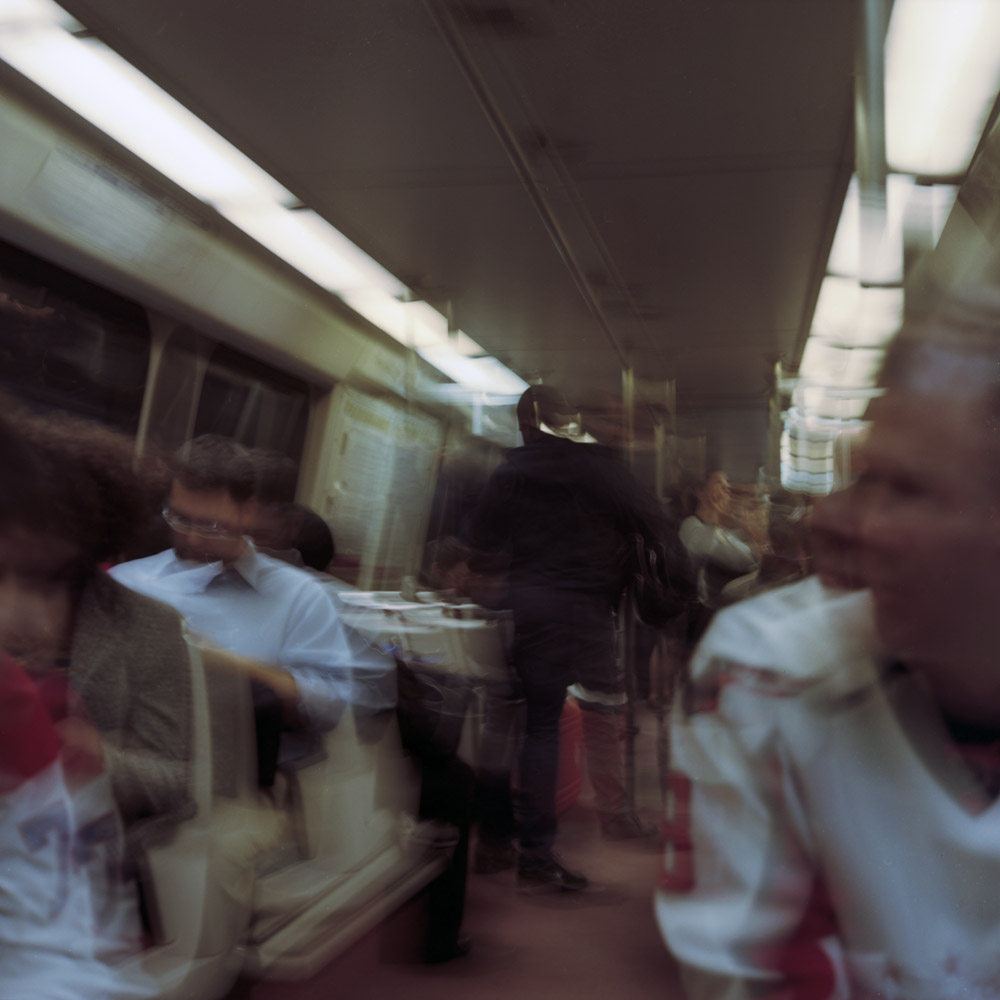
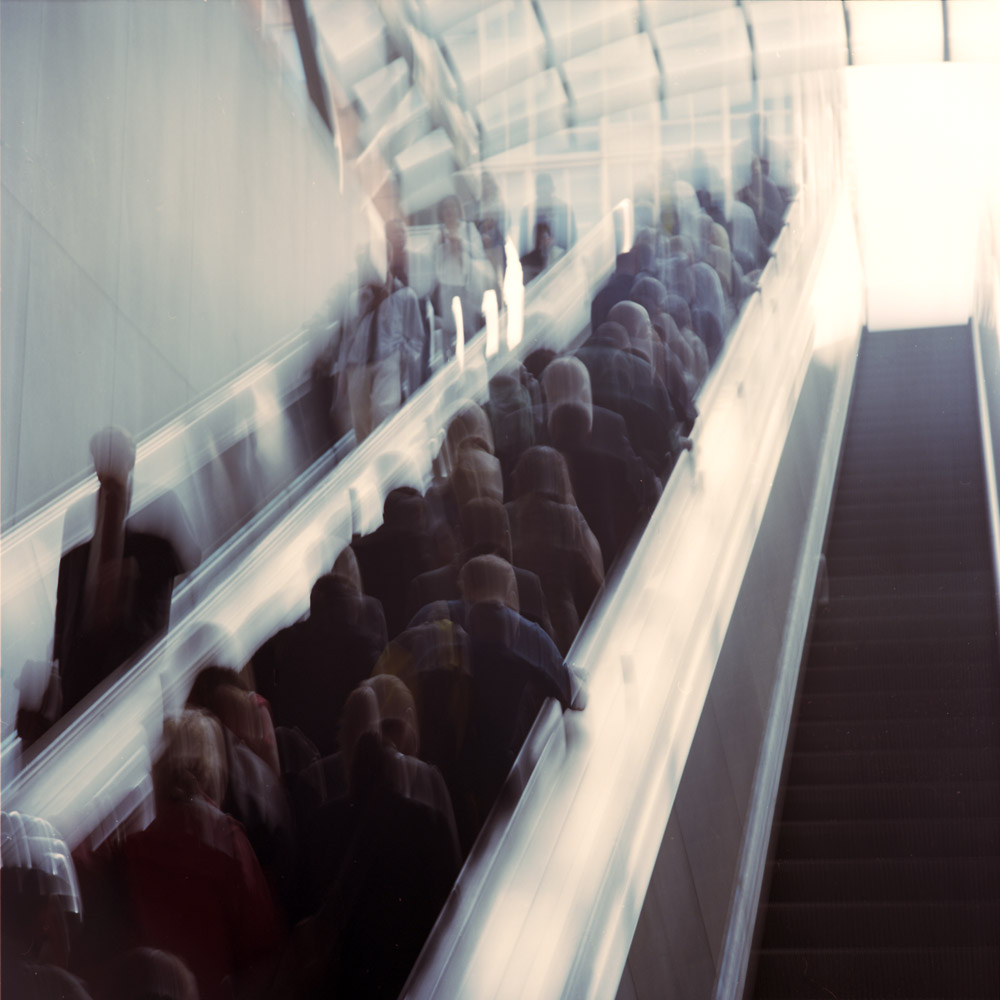
This time, instead of being so infrastructure-focused, I thought I’d try being a bit more people-focused in my Commuter Diary. It’s one of the hardest things about this project – adding in the human element, getting a little less first-person in the experience and showing the other people using public transportation, while keeping it abstract. There’s a natural tendency when photographing people to want them to be absolutely sharp, clear, and obviously the main subject of the image. Well, when you’re throwing sharp, clear and objective out the window, how do you photograph people?
Riding the subway always involves a descent, a passage, and a re-emergence. It’s a normally terribly un-heroic journey that bears a very vague passing resemblance to the hero narrative of Joseph Campbell. Unless of course you’re claustrophobic and/or agoraphobic, whereupon riding the subway is an anxiety attack waiting to happen, and surviving the ride is a transformative experience.
Here is the descent into the underworld:
Crowded Escalator
The passage through:
On The Train
Emerging on the other side, returning to the daylight and the world of mortal men, the escalator ride up is both salvation and alienation, because who would understand or even believe your having done battle with a steel dragon and survived?
Morning Emergence
These are some first attempts at bringing the “experiential” style of photographing that I’ve been doing to bear on people. There have been a few attempts at doing pictures of individuals this way but they, at least to me, really don’t work. Maybe I’m being too rigid in my thinking, or maybe I’m dead on the money. Time will tell.
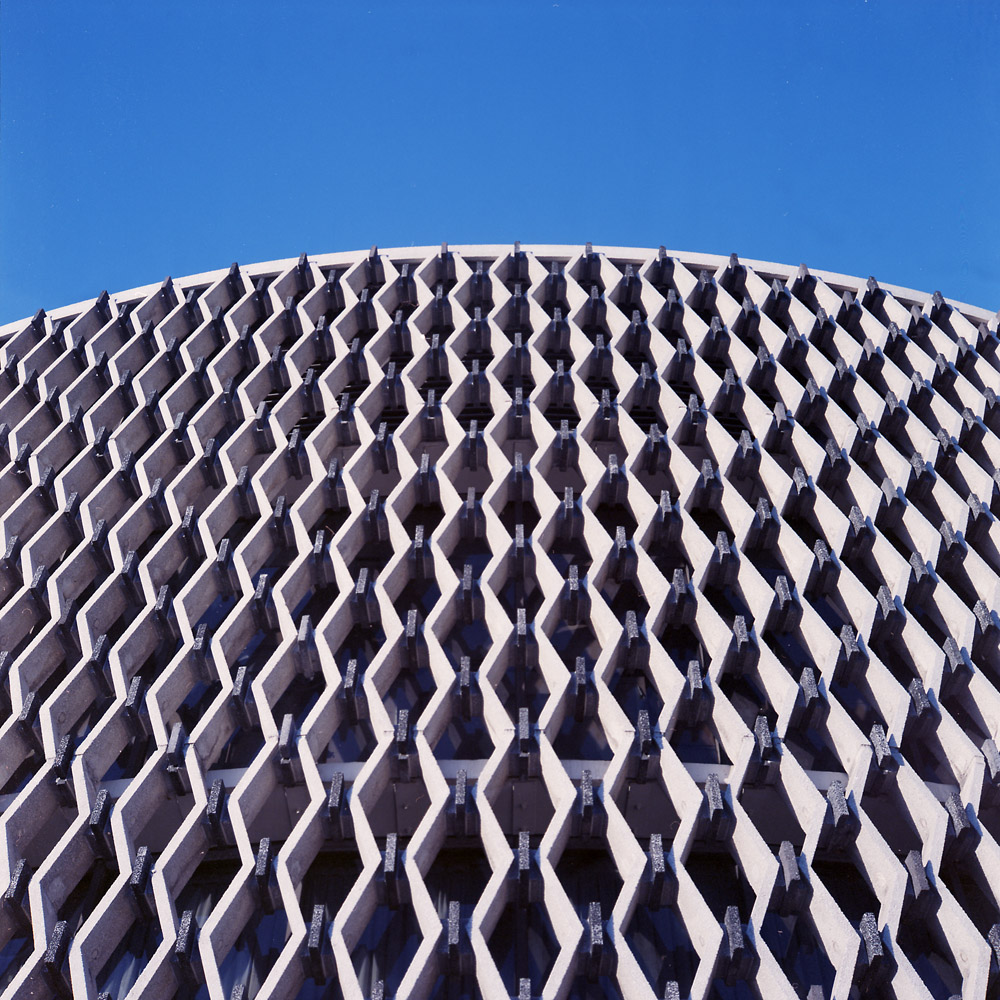
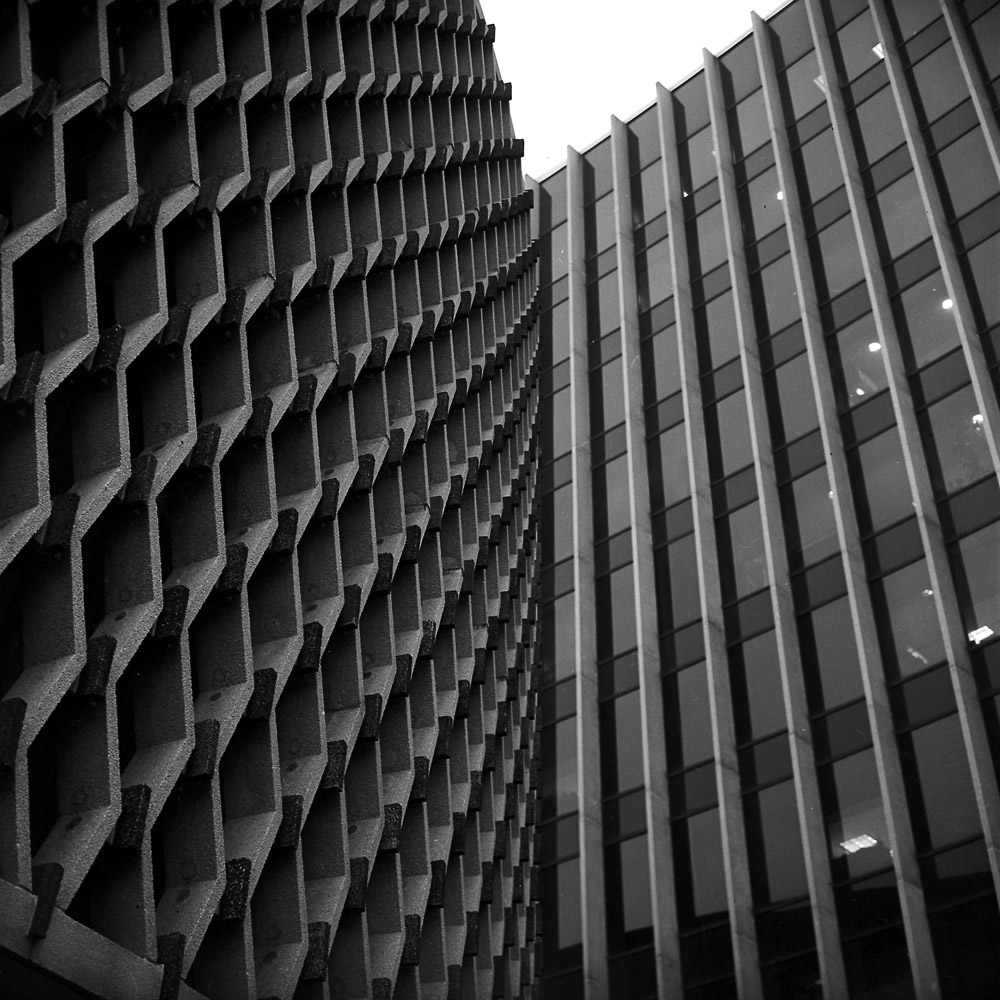
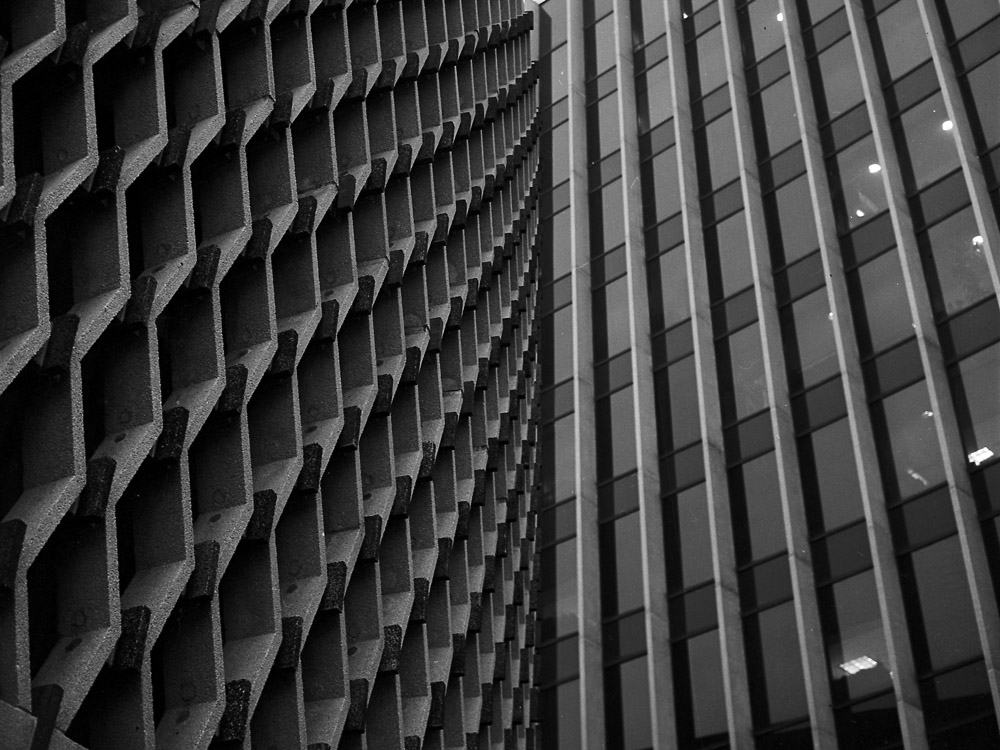
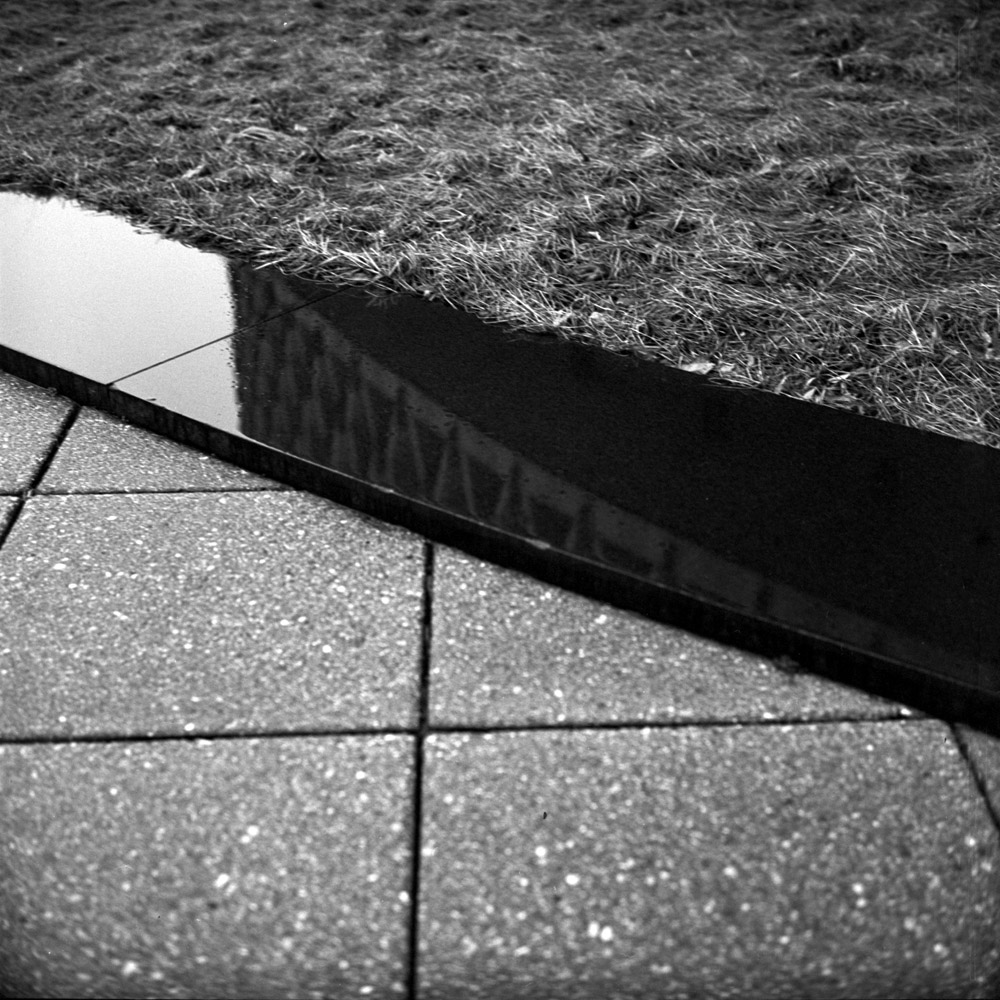
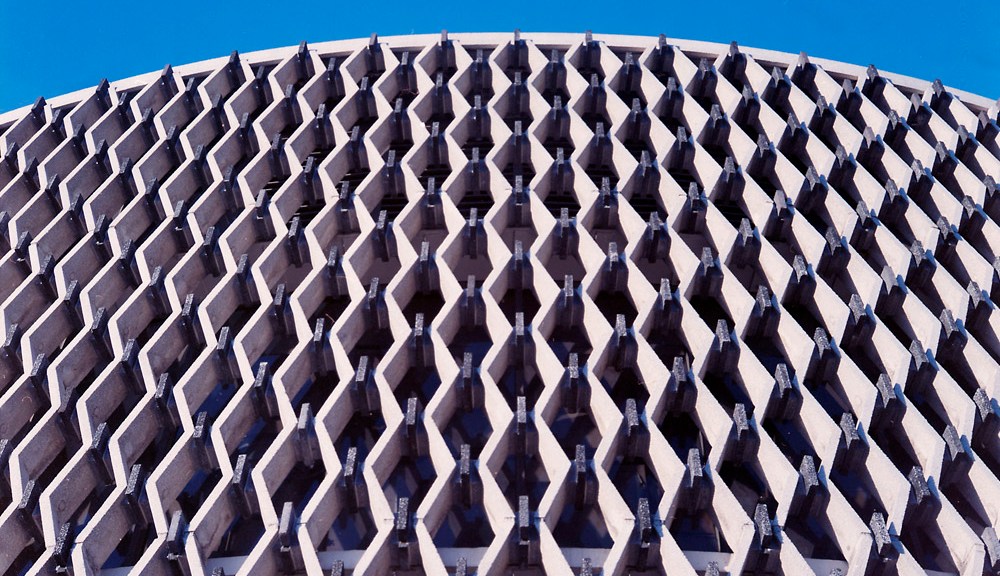
I previously posted some b/w abstracts of this building, taken on a cloudy, rainy day. Here it is on a glorious, cloudless sunny day. Yes, that actually is the color of the sky; no Photoshop trickery was used to create that.
PAHO/WHO Building
I love the dramatic contrast between the clear, textureless blue sky and the geometric dynamism of the brick latticework over the building facade.


 dcphotoartist