Here’s one instance of where Richard Daley’s admonition to “get out, vote early, vote often” is actually legitimate! Please go visit my entry in the Onward Compé `14 competition, and vote for me in the Peoples’ Choice category. You can vote daily, so please do!
Category Archives: Exhibitions
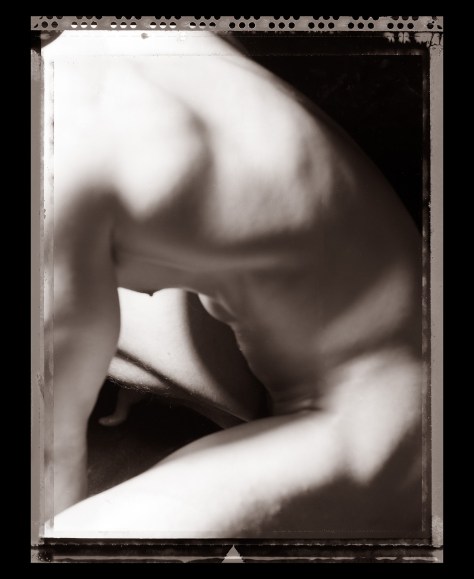
Paris Photo 2013: A Selection (NSFW)
Great writeup on some personal highlights from Paris Photo 2013. I wish I could have attended, perhaps next year.

Here’s a selection of some photographs and photographers that I wouldn’t mind to have in my collection, or that I didn’t know or just caught my attention in the Paris Photo 2013 along with some of the classics and masters. Some were quite interesting as single photographs, others as installations of series of photographs.
Nobuyoshi Araki, had an installation with 162 photographs, right in front of the works by Eikoh Hosoe that I wrote already about in the previous post.
Richard Learoyd, 2 wonderful portraits of Agnes, makes her enchanted human character in her fragility, as if warmed by the tones.
Yes, Vee Speers caught my attention with her technique of hand colouring over photographs. A series that she did some years ago and now picked up to paint: Bulletproof. You can see more of her work in the previous post as well.
And Julie Blackmon…
View original post 352 more words
Another image published – Eastern Sierra Center for Photography website
I submitted a photo to a call for entries from the Eastern Sierra Center for Photography the other day, and the photo was accepted! It’s even #1 in the series. The photo is one I took a while back of the Surratt house in Washington DC. The theme of the photos was “Motels”, based on a quote by William Borroughs –
“Motel, motel, motel, broken neon arabesque, loneliness moans across the continent like fog horns over still oily water of oily rivers.”
The motel connection in my image is a little tenuous, but Mrs. Surratt took in boarders to her home to help pay the bills before she was hanged for her alleged role in the Lincoln assassination (she was the first woman ever executed in the United States for a crime she may have only ever been tangentially involved in). I also felt the mood of the scene put into image the words in the Burroughs quote.
There was a requirement that the image be made with a large format camera (one of the primary missions of the Eastern Sierra Center for Photography is the promulgation of large format photography).
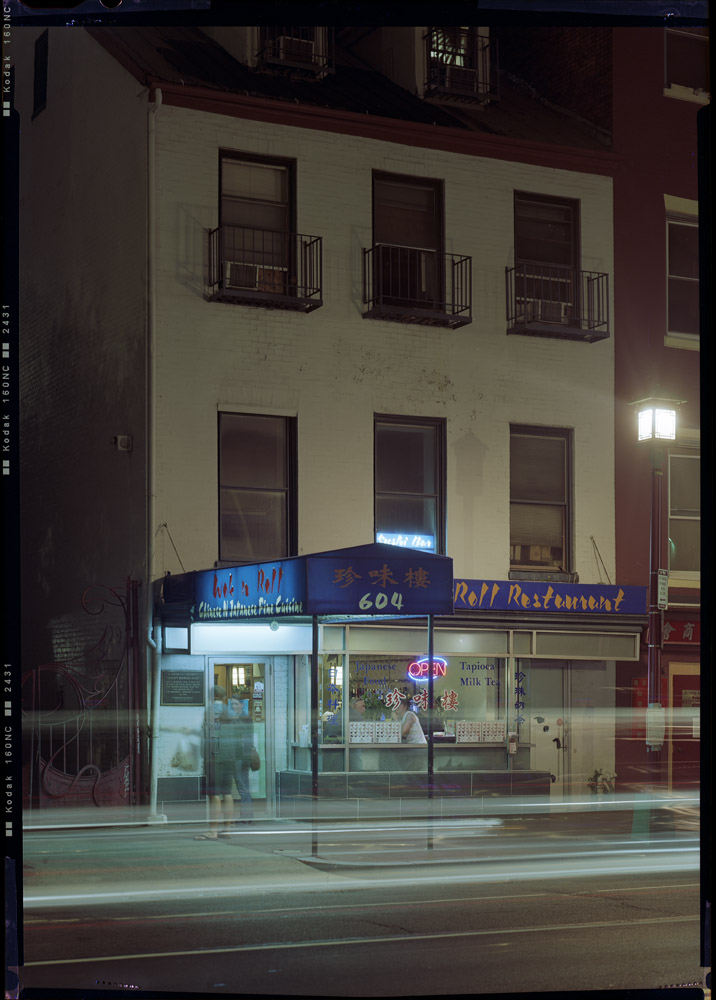
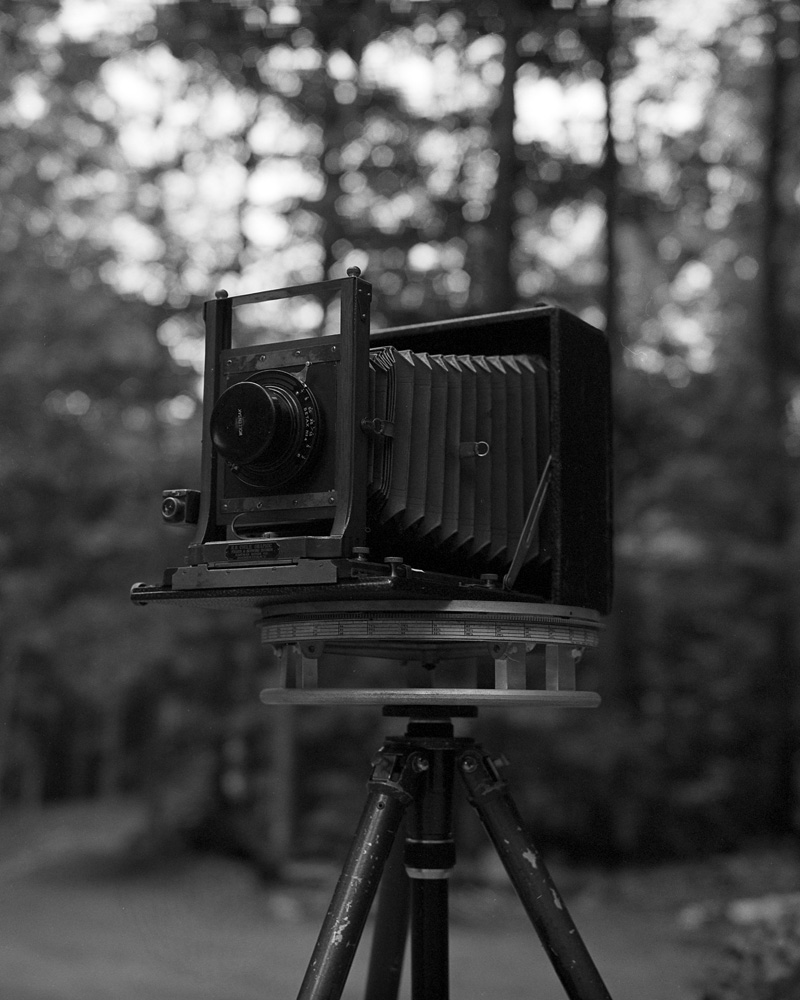
The photo was shot on Kodak Portra 160 with a Canham 5×7 wood field camera using a Kodak Commercial Ektar 12″ lens.
Please go visit the Eastern Sierra Center’s website and read about their very worthwhile mission – supporting the continued use of view cameras for contemporary (and future – they have a program to expose kids to view cameras!) photography.
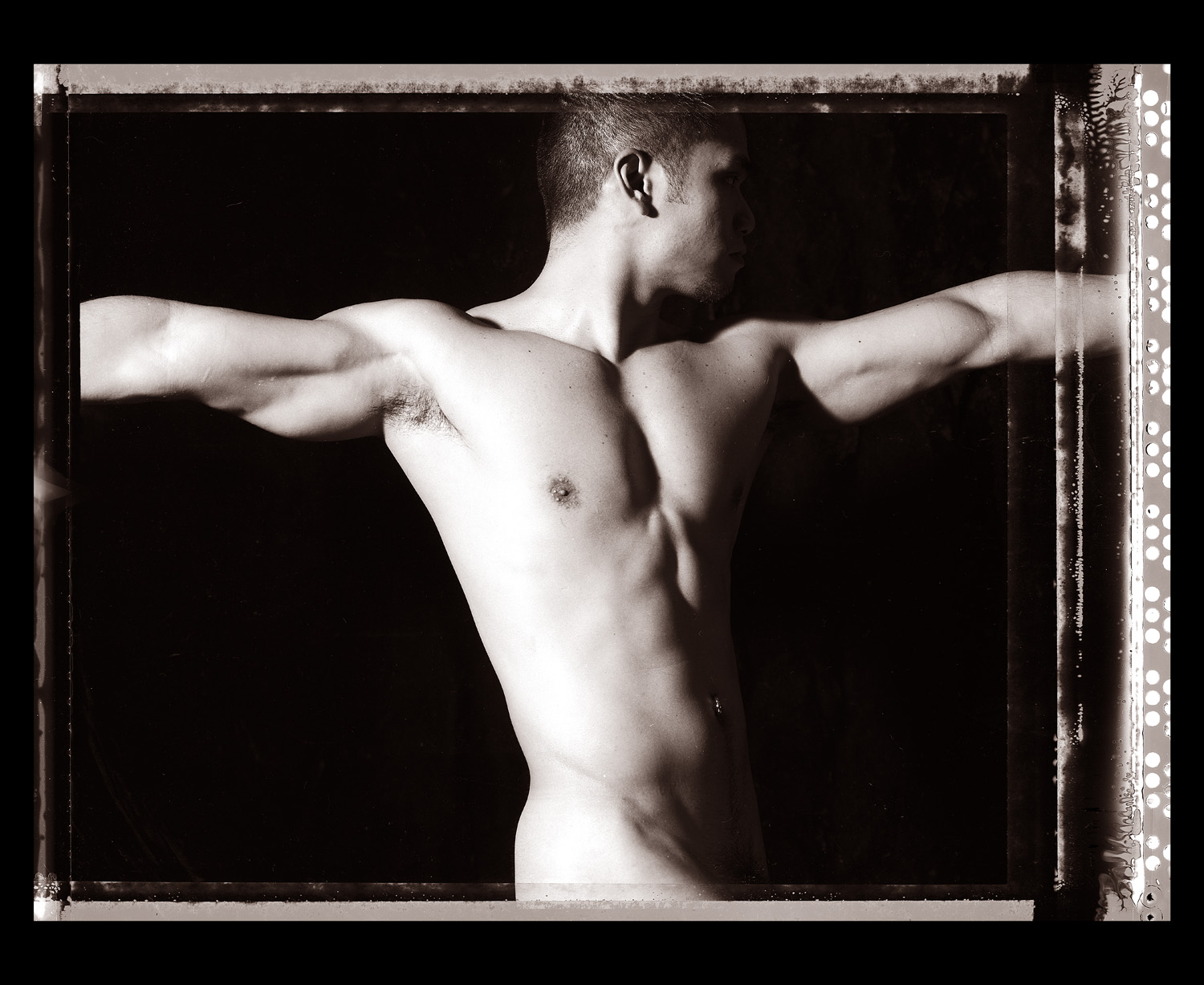
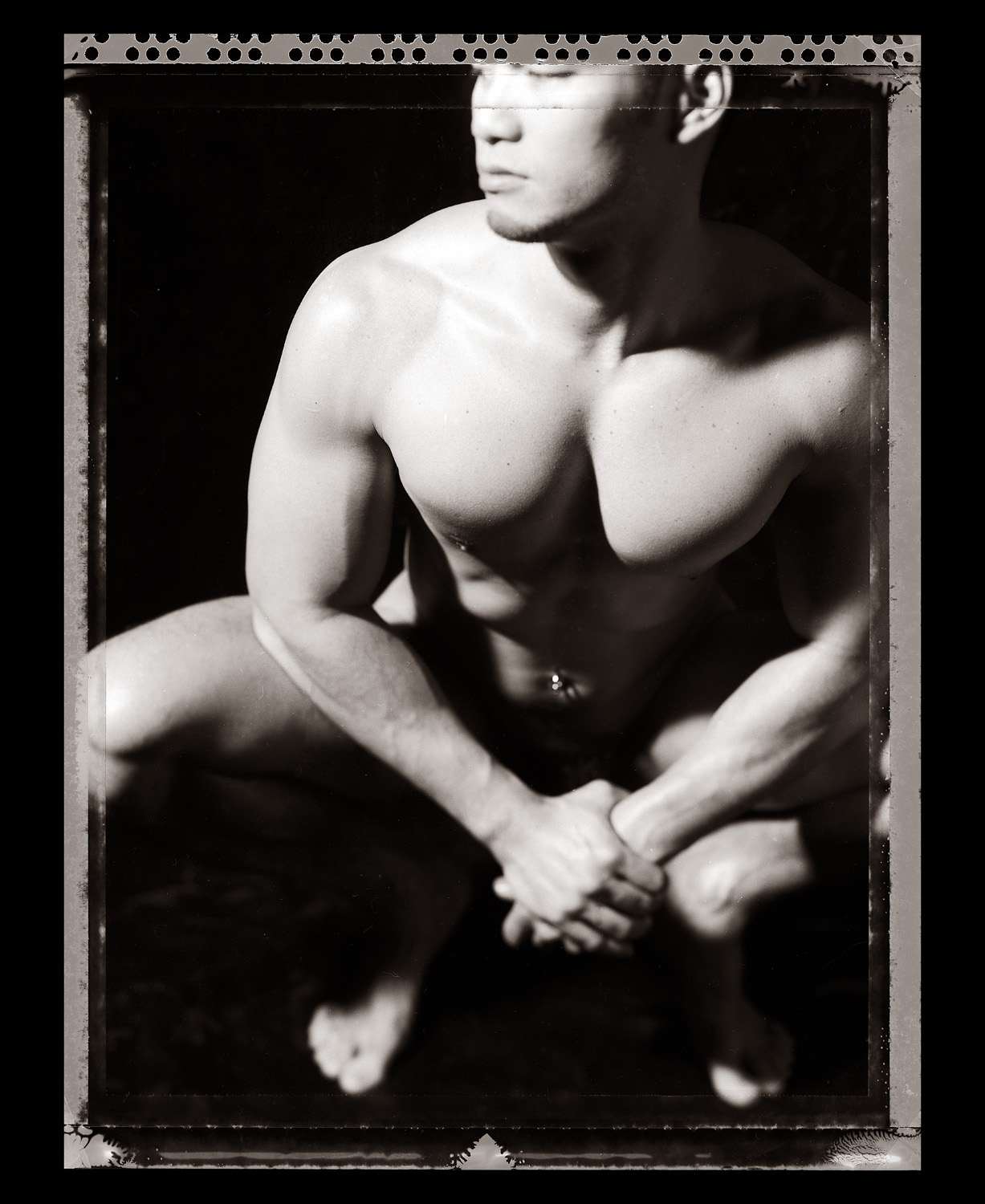
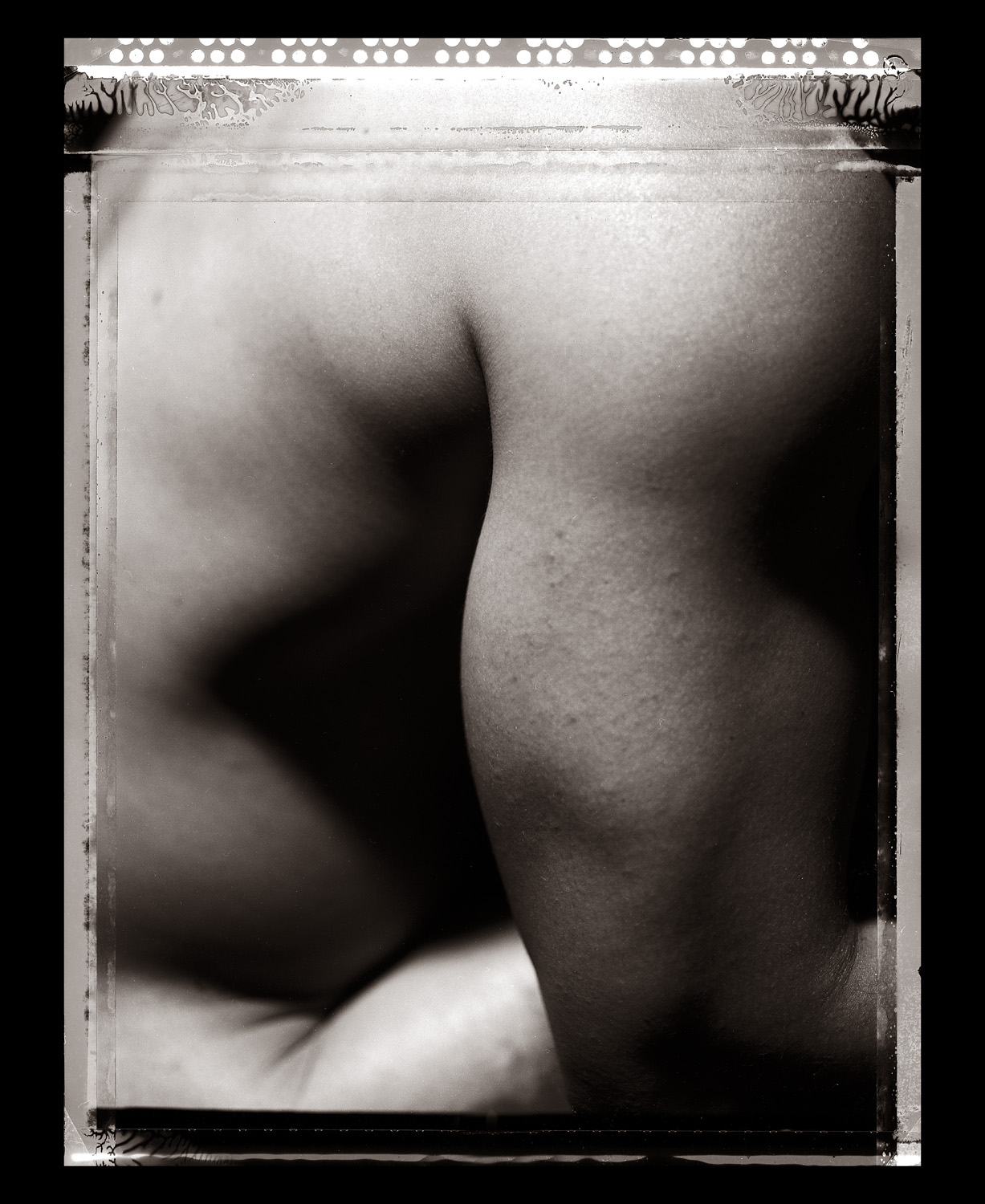
More Figure Studies (For Juliette)
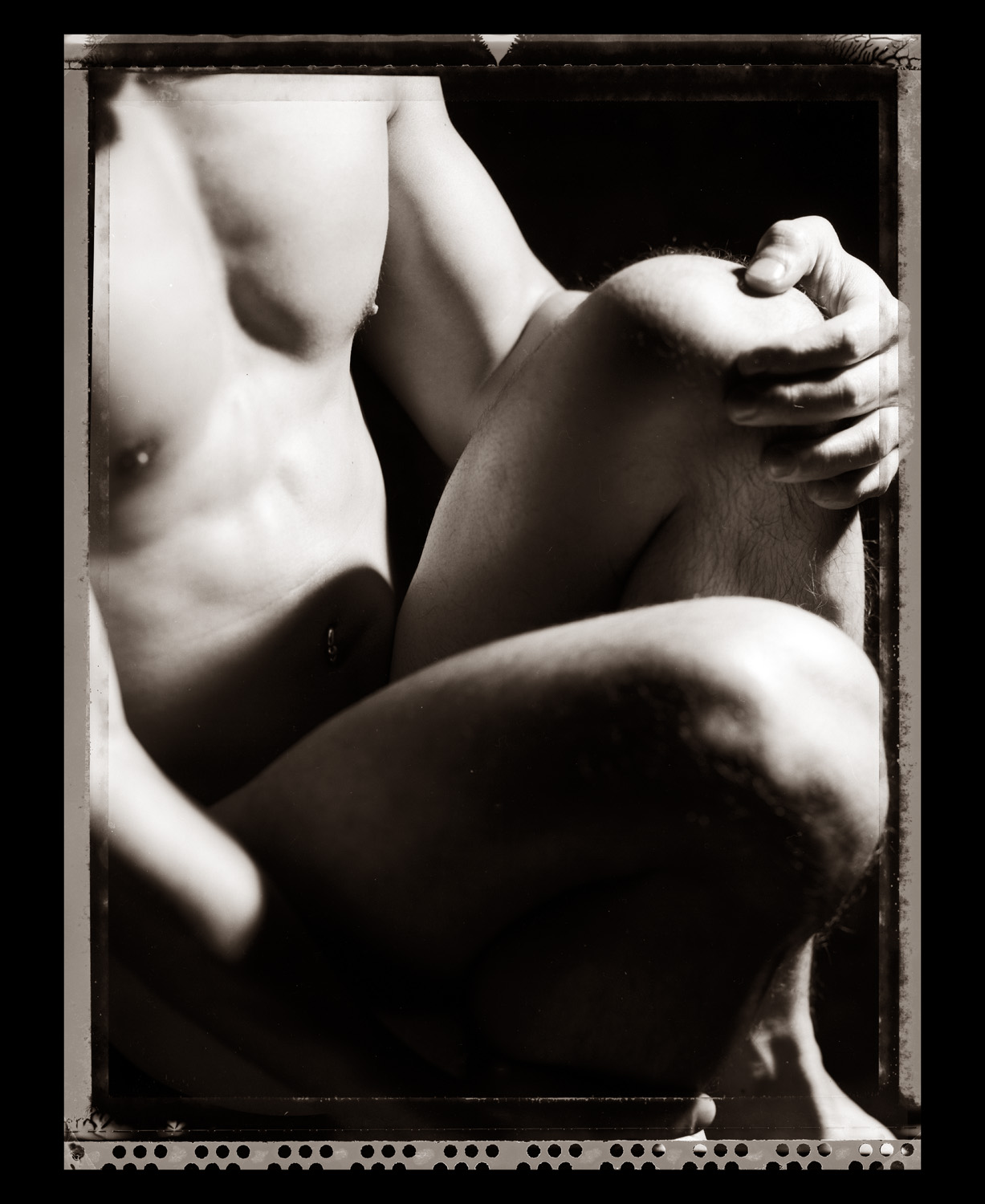
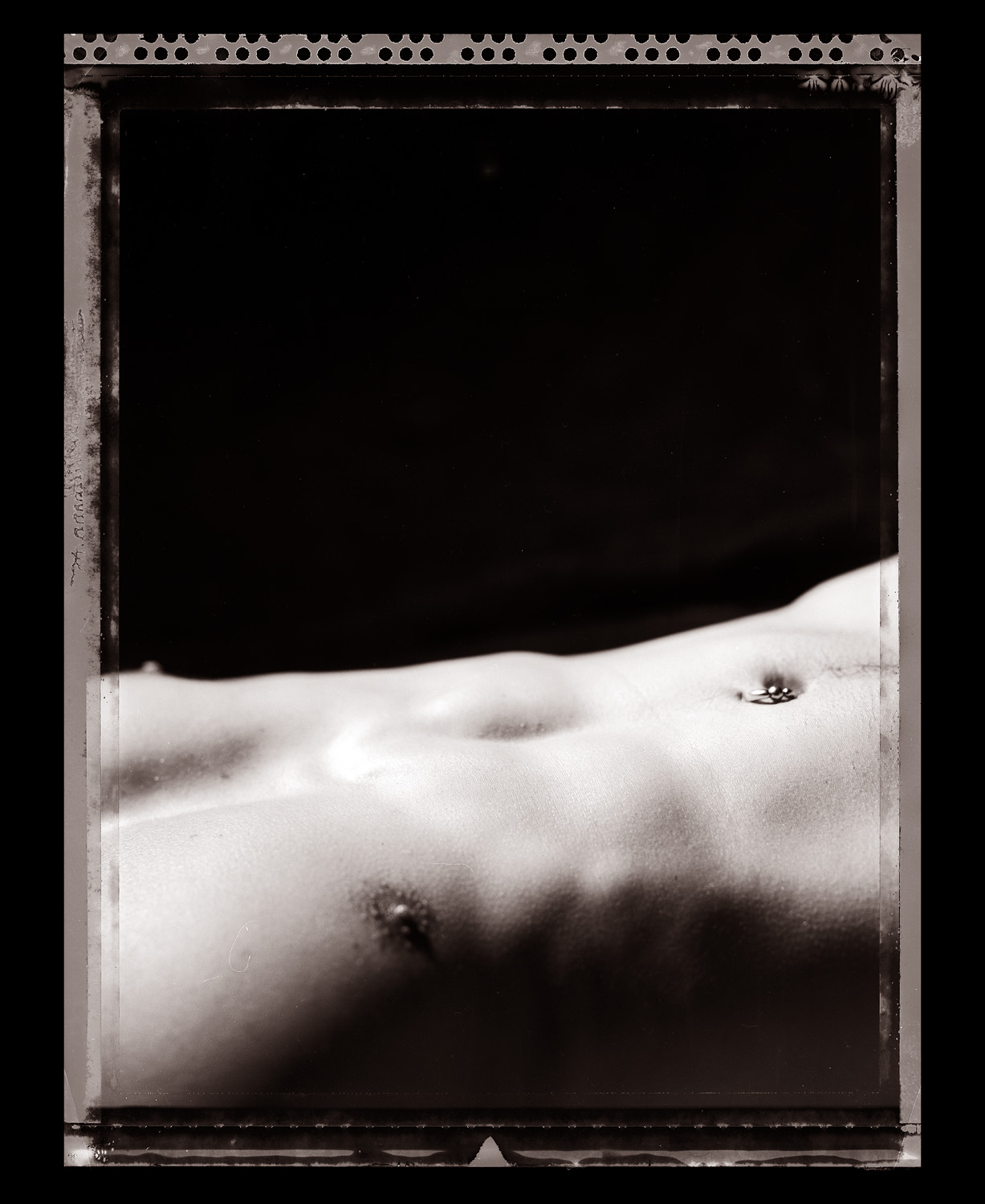
Since I got a request for more of the figure studies, I thought I’d post a few. These were all done on the old Polaroid Type 55 Positive/Negative film. What made Type 55 unique was the fact you could produce both a print and a re-useable negative. The catch always was that you got either a good negative and an overexposed print, or a good print and a thin negative. I think most people opted for the blown-out print, because the stuff was too expensive to throw away the negative.
Submitted work to Onward Compé 2014
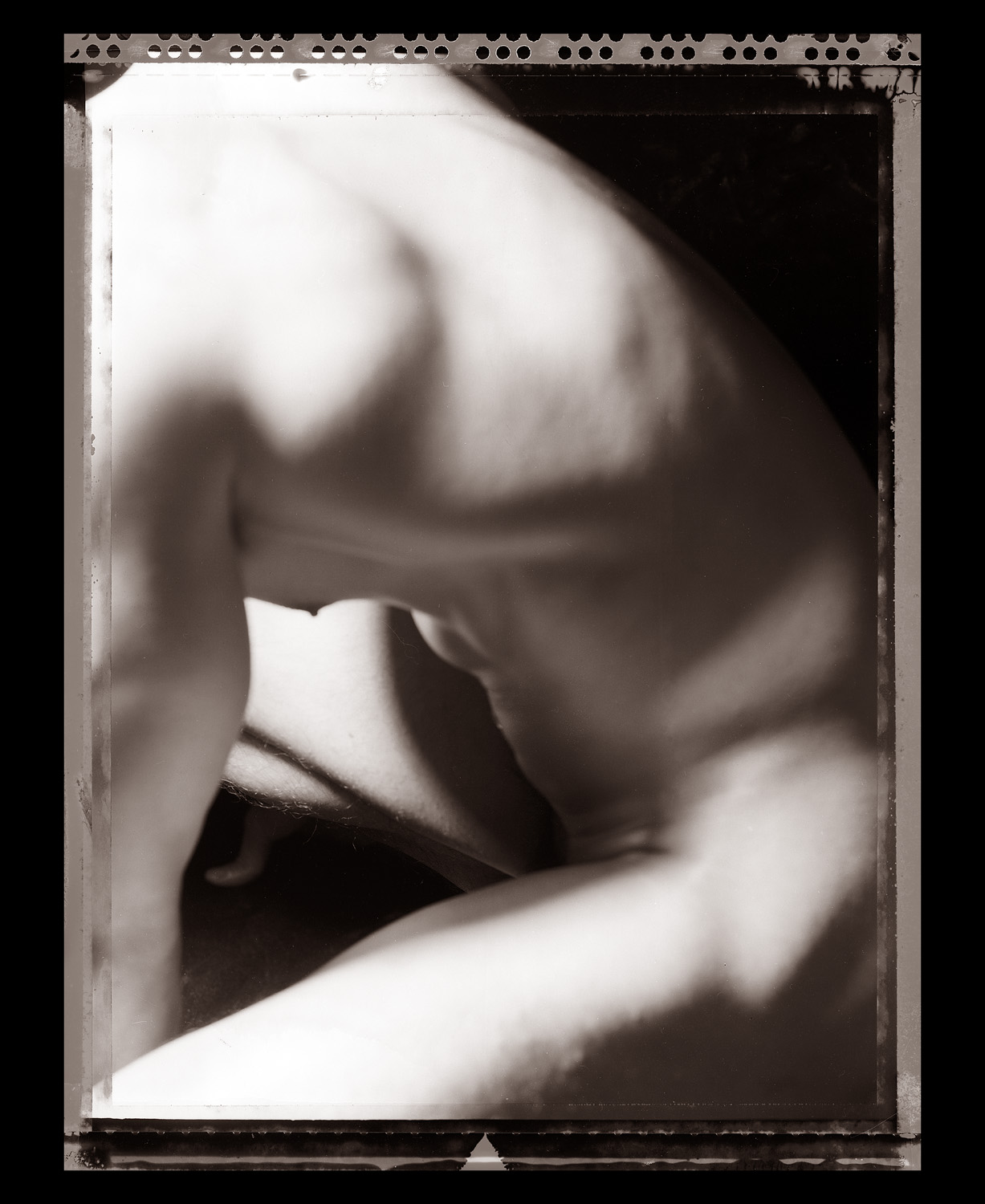
I submitted three photos to the Onward competition for emerging photographers. Emerging is defined in this case as not having a current ongoing relationship with an art gallery. I’ve had shows, both solo and group, but I’m not represented by any art gallery on an ongoing basis. Perhaps by the time I retire it will happen. In any case, Onward will be good exposure for my work (this time I’m submitting some of my older pieces, male figure studies shot with Polaroid Type 55 back when it was still available).
There are two rounds of judging – the first round, by JPEG only, will be complete and the results announced by December 16. A second round will be judged from actual submitted prints come January, with final results by February 1. The exhibition will take place in March at Project Basho in Philadelphia.
here’s a teaser of one of the images I submitted.
From my Platinum/Palladium Master Class
If you’ve been following my blog long enough, you know I teach antique and historic processes at Glen Echo Photoworks. I have been teaching a one-on-one master class for the last several weeks. Last session we shot some negatives and processed them in Pyrocat HD, a staining developer. This week, we printed some of the negatives we shot, as well as an old negative Anh, my student, had in his portfolio.
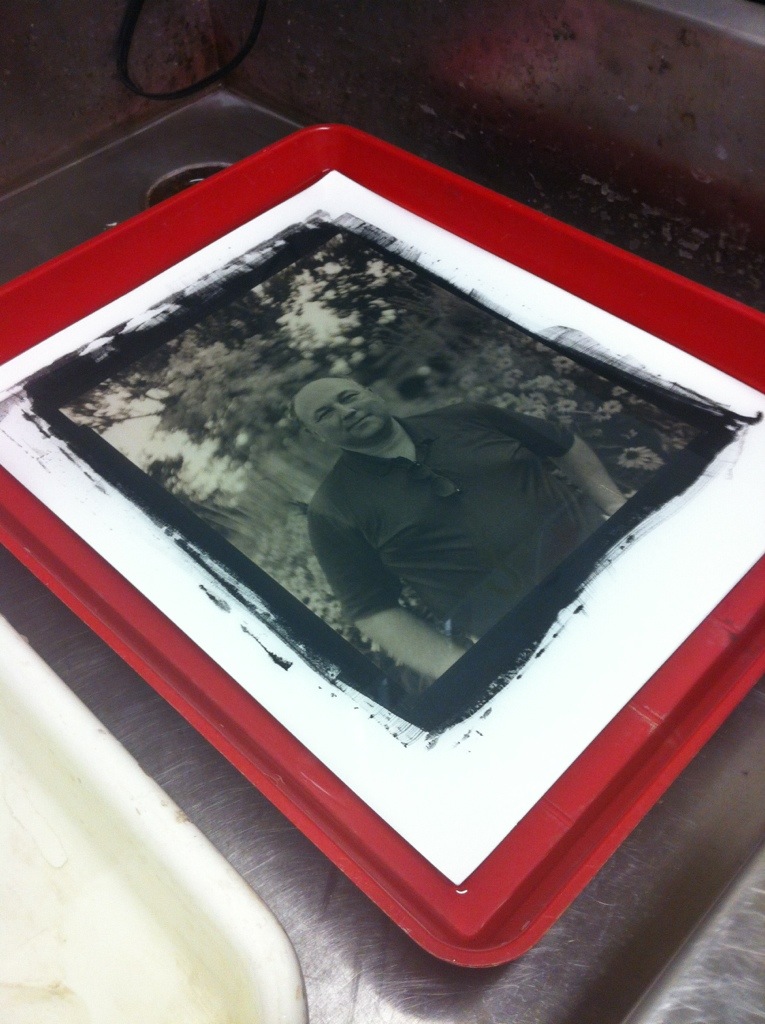
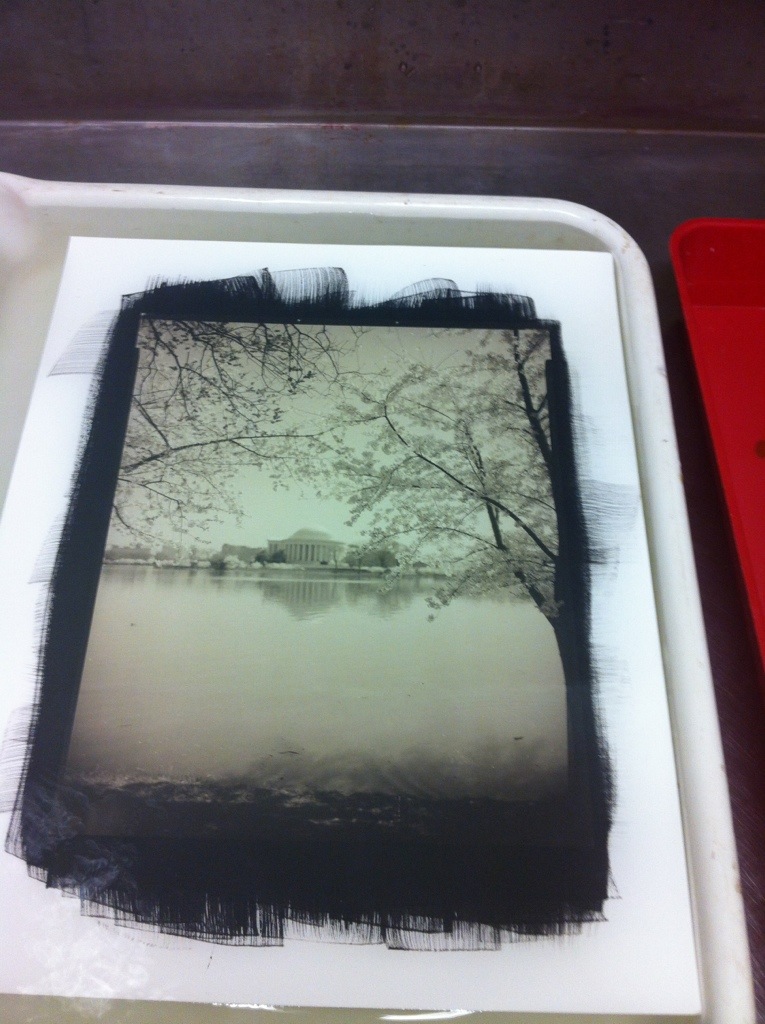
The Jefferson Memorial shot was his existing negative – in the silver gelatin print, the dome of the Jefferson was blended in to the sky at the brightest highlight. You can see even from this phone-cam snapshot that there is tonal separation between the dome and the sky, where the dome is actually the brighter highlight, but still retains detail. THAT is what printing in palladium is all about – that rich, delicate level of detail it is capable of recording in highlights and midtones. And the cherry blossoms have an extra delicacy about them too.
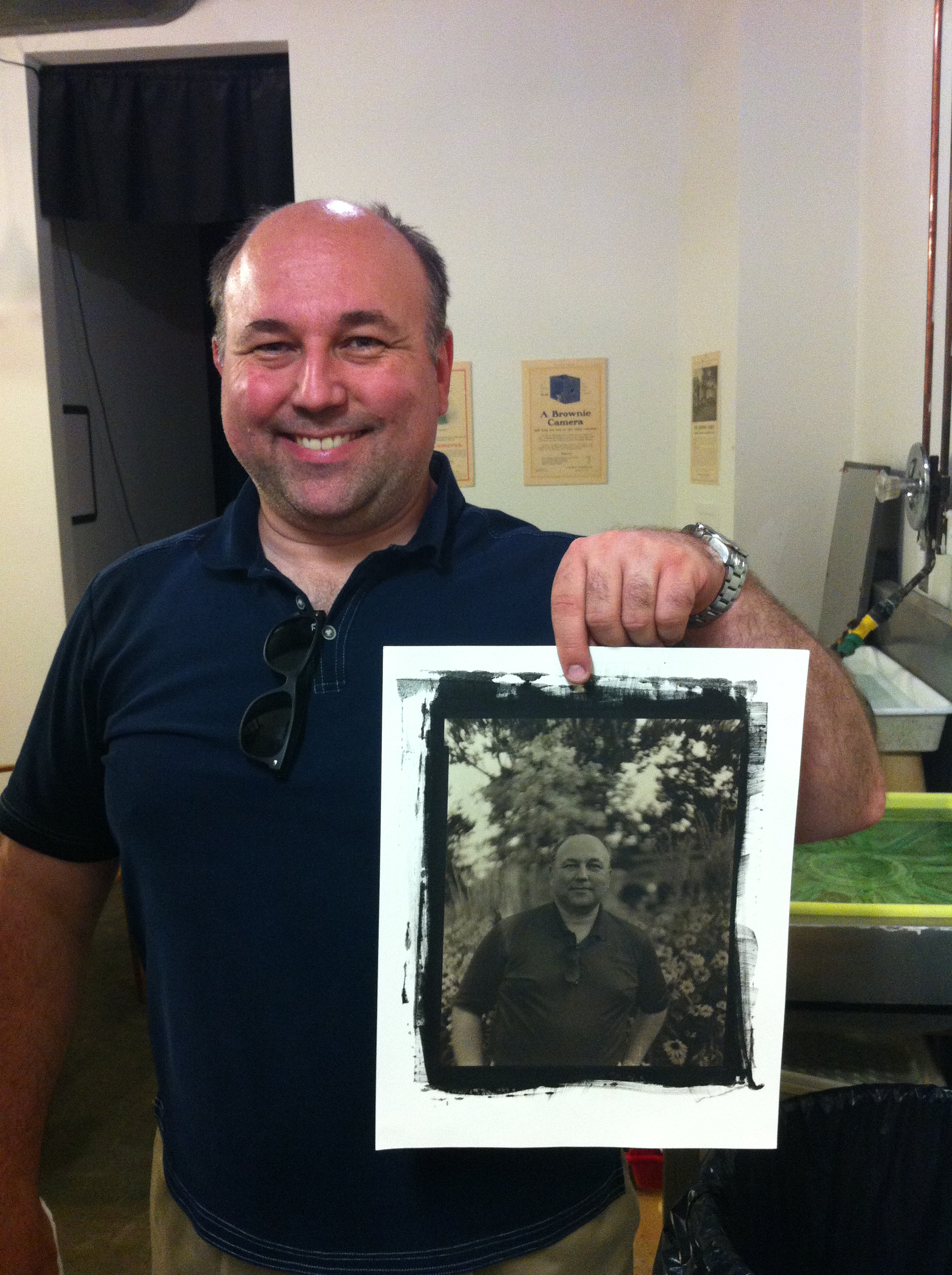
Here’s a shot he took of me holding the portrait he did last week. This could probably use just a little more contrast, but not bad for his say 5th ever palladium print 🙂
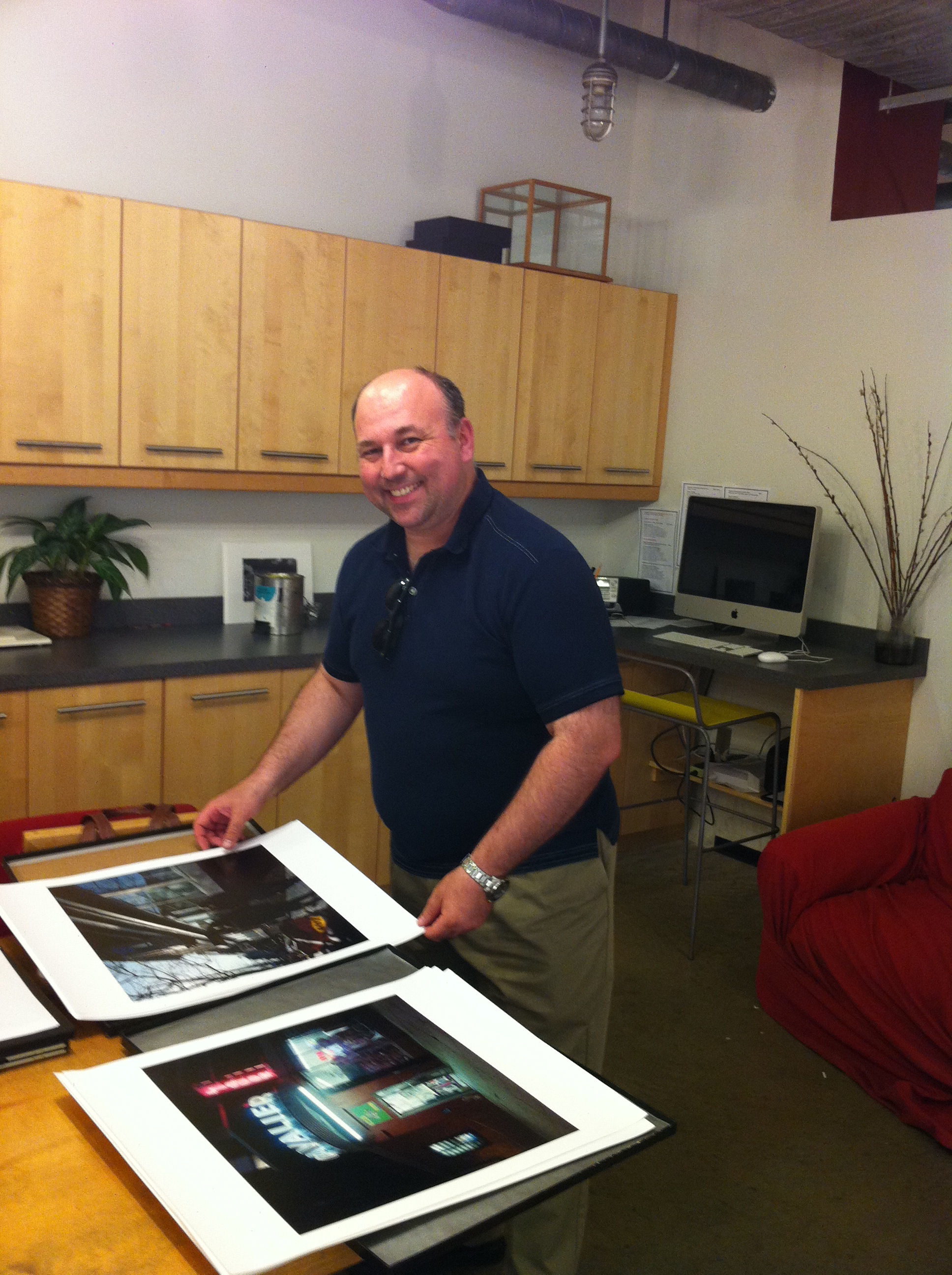
I brought along my portfolio of the actual prints I’m putting in the Colors of Night show for him to take a peek at. Here I am showing the prints.
Finished!!!
After a LOONG weekend of playing with my printer to get it to cooperate (running out of four different inks @ $60/cartridge, figuring out how to solve problems with head strikes on my prints, running out of paper at $115/box thanks to the aforementioned ink shortages and head strikes), I now have my show completely printed. Eight prints are already framed and ready to go, the remaining 12 are going to be framed tomorrow, and the show hung on Tuesday after work. I’ve done shows before, and of course it’s always hard work, but this is the biggest show I’ve done in terms of volume. Even my biggest past Artomatic was probably 12 prints. I’m very psyched about the show. Here’s a recap for those who can’t make it to the opening (REMINDER: August 2, 7-10 PM, Mad Momos Restaurant, 3605 14th Street NW, Washington DC). This exhibit pays tribute to the parts of Washington I pass through on a regular if not daily basis. I want to show what this town looks like to a resident, as well as showing it in an unfamiliar way even to those folks who do see these things all the time. As I mentioned in my blurb about the reception, I love the way color distorts and transforms at night because we no longer have a single, unidirectional light source of uniform color and quality. I’ve started these photos with late evening/sunset/twilight and progress into deep night to capture the feeling of that time of day. I hope these photos express that sense of drawn out time and transformed space, be it through blurred motion or the interplay of lights.
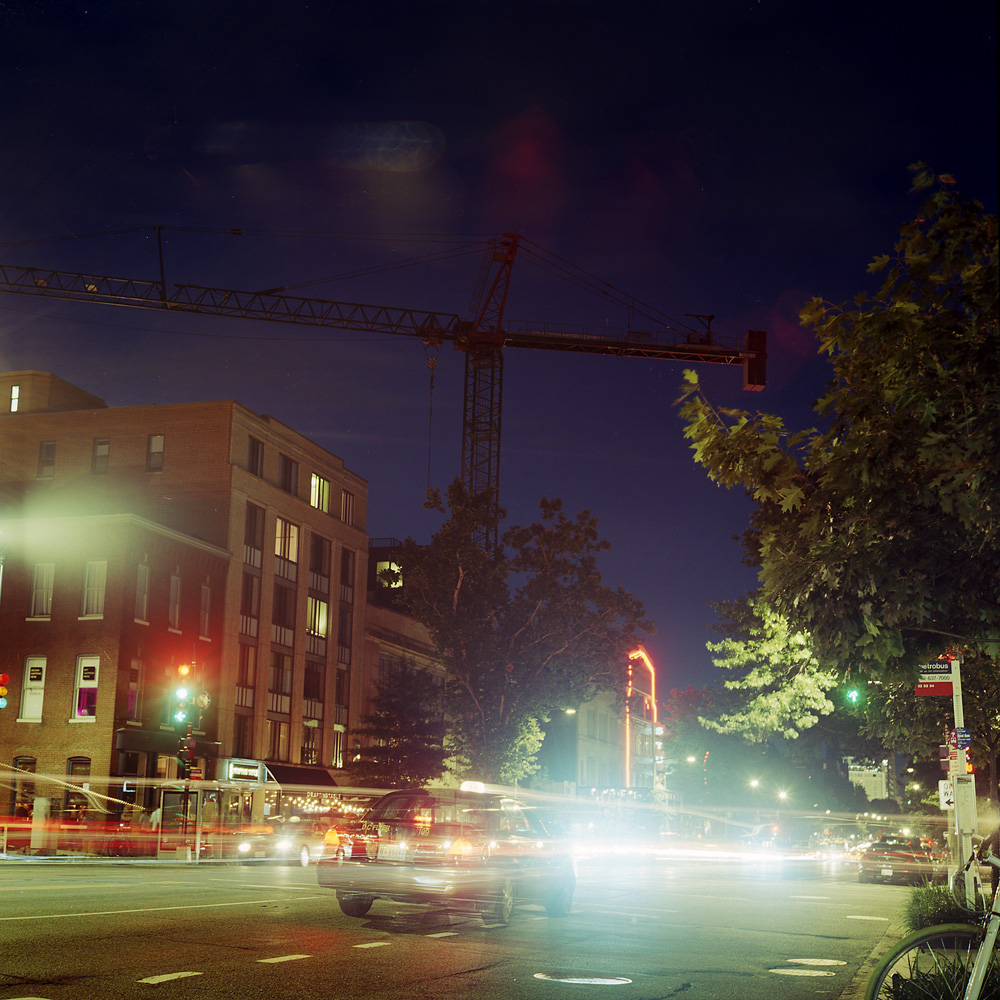
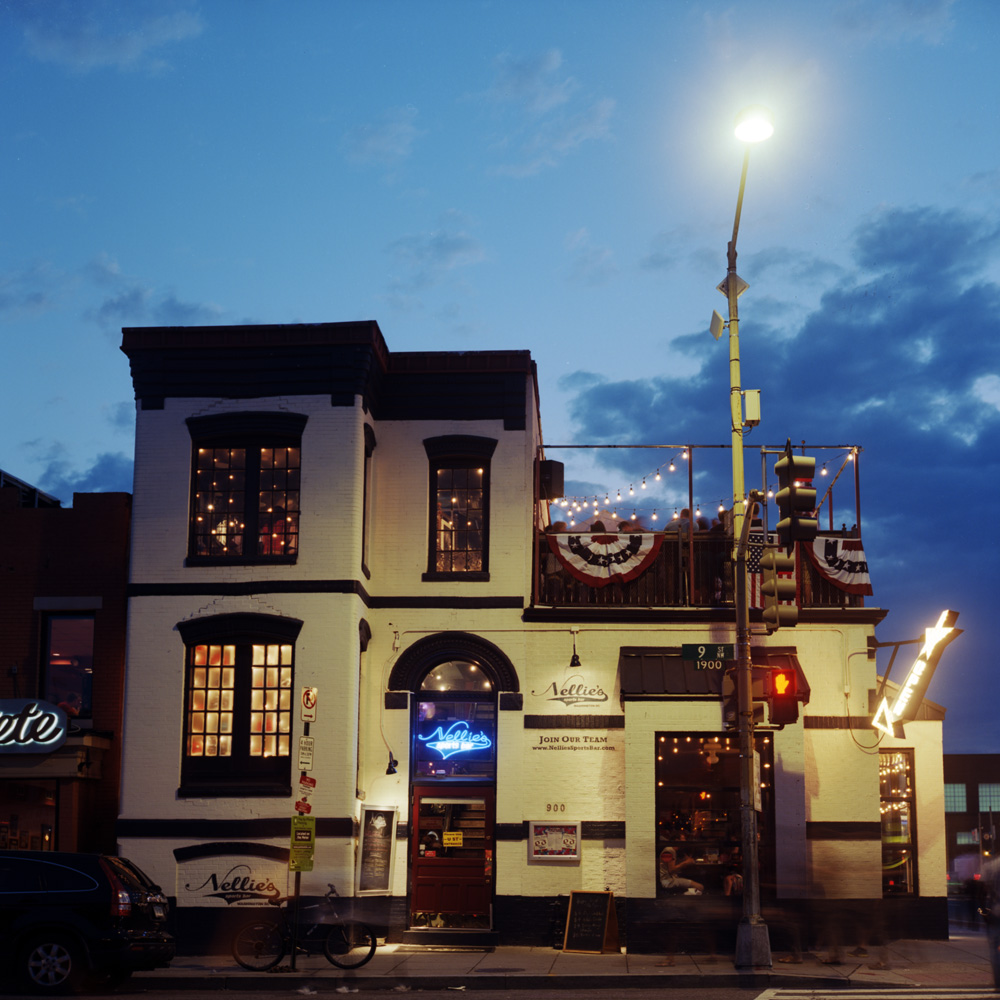
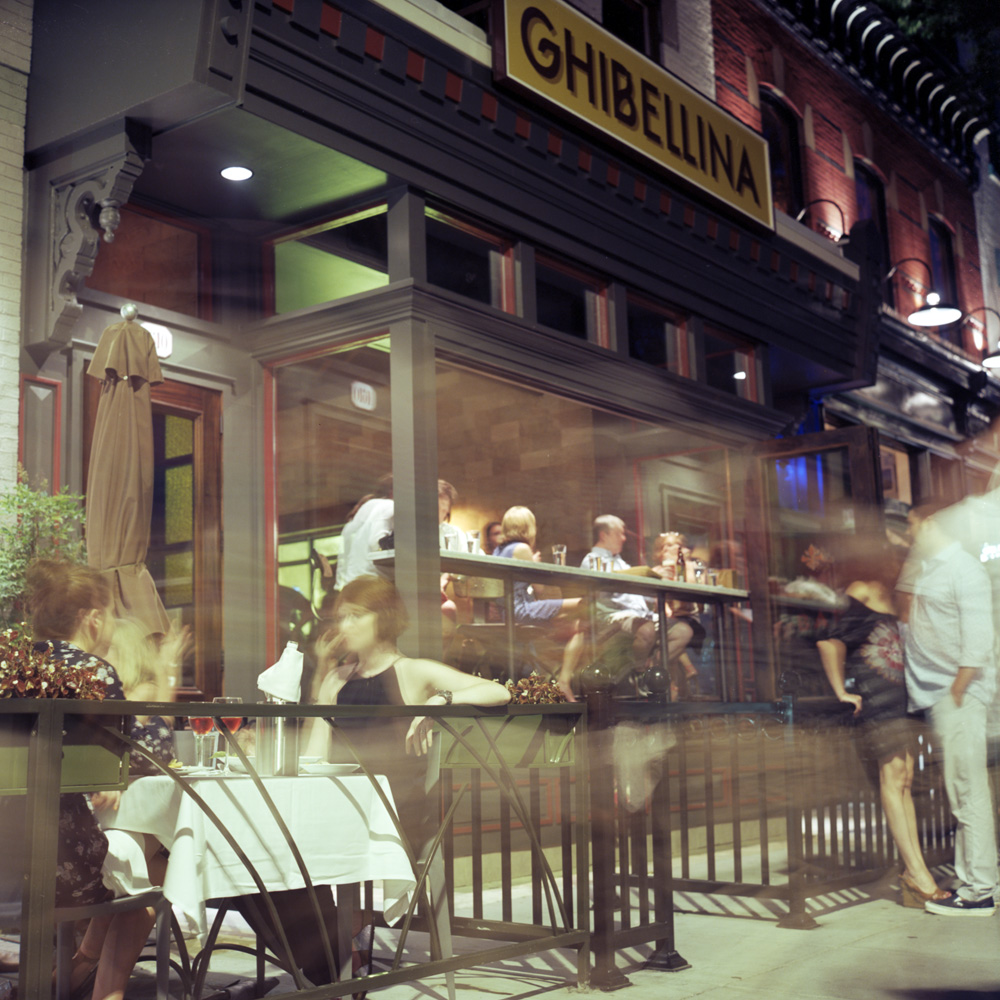
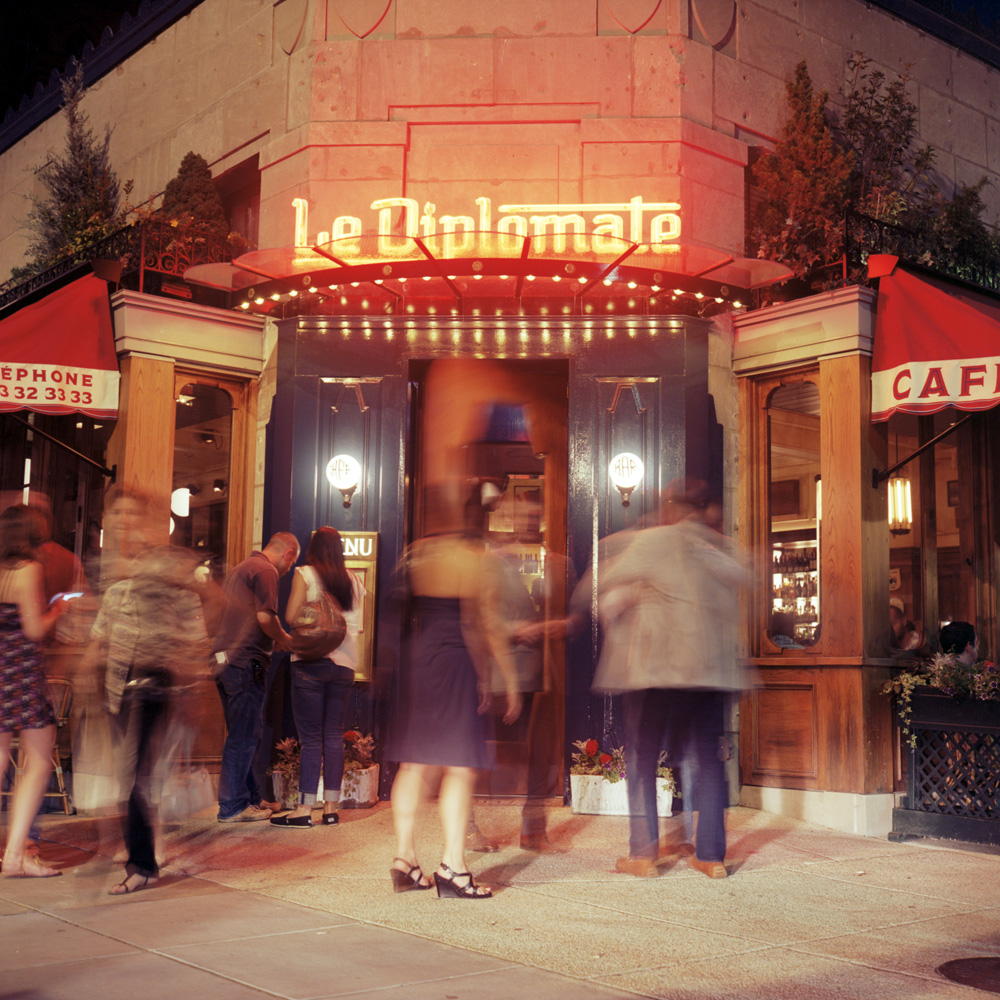
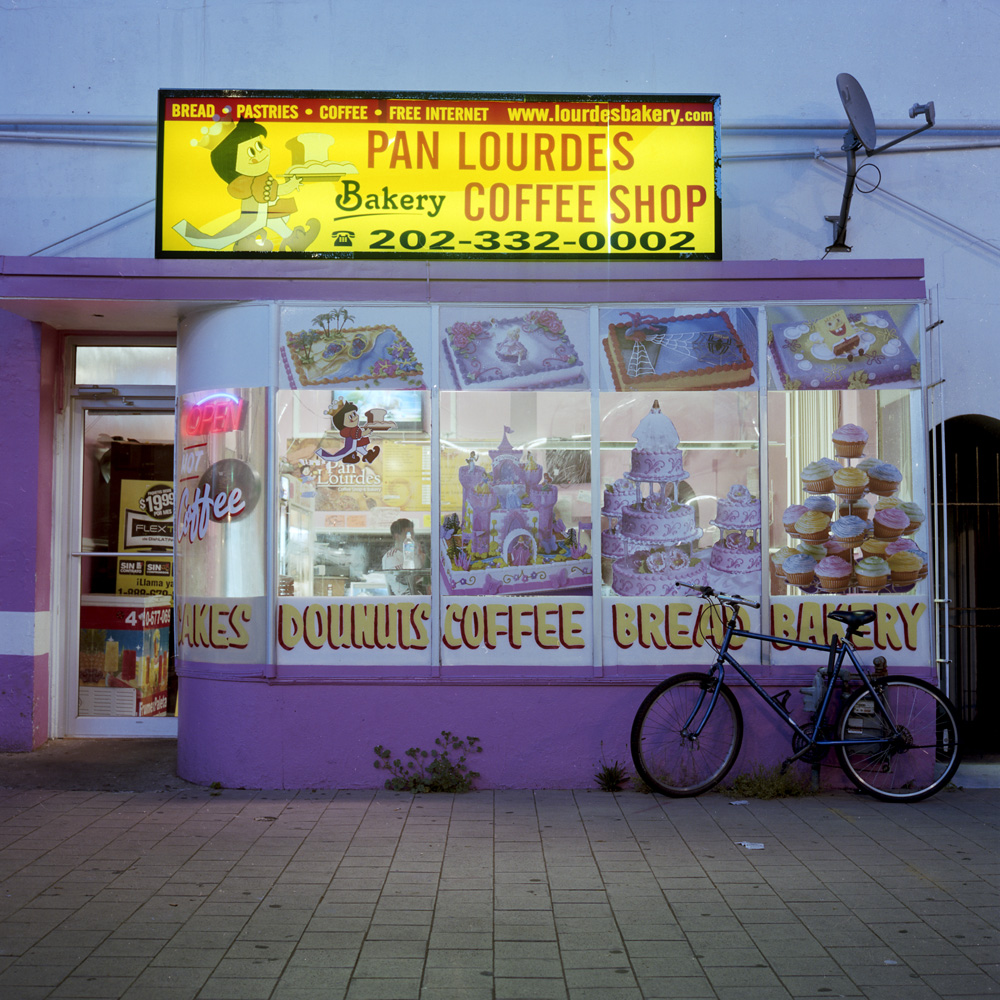
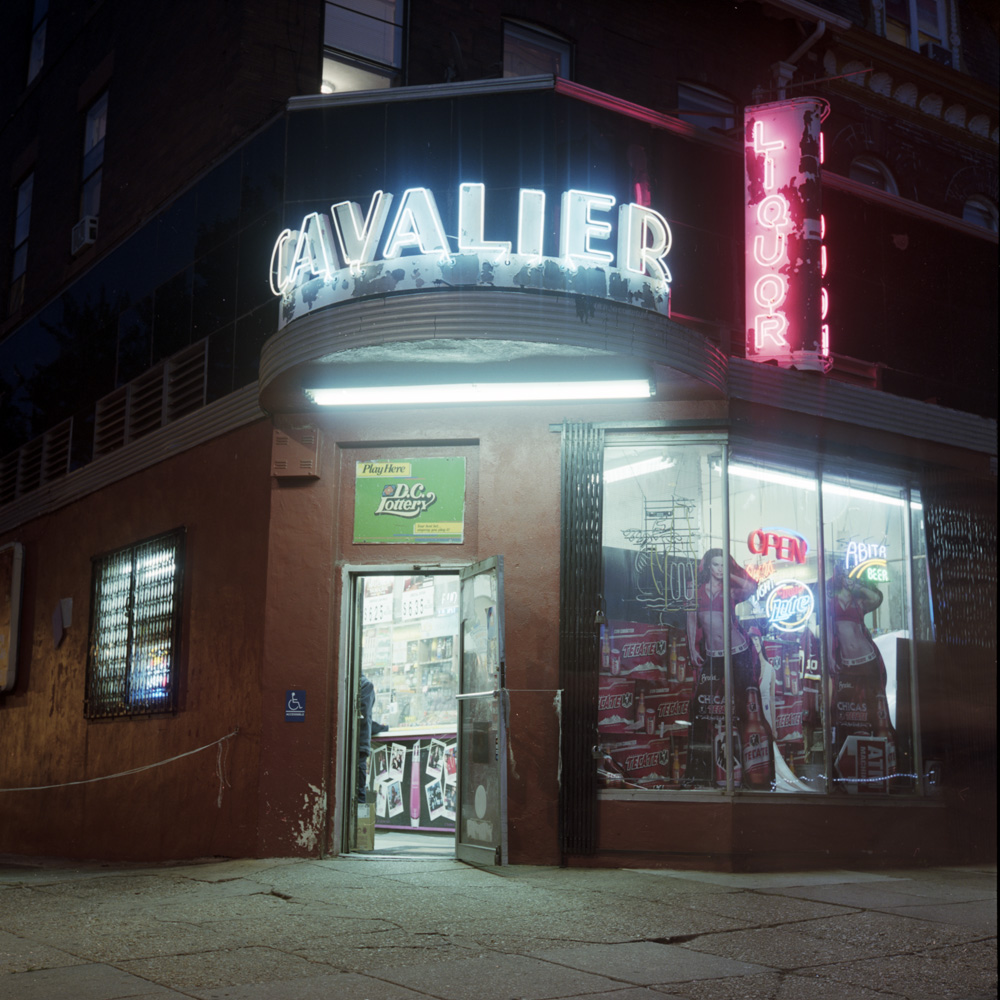
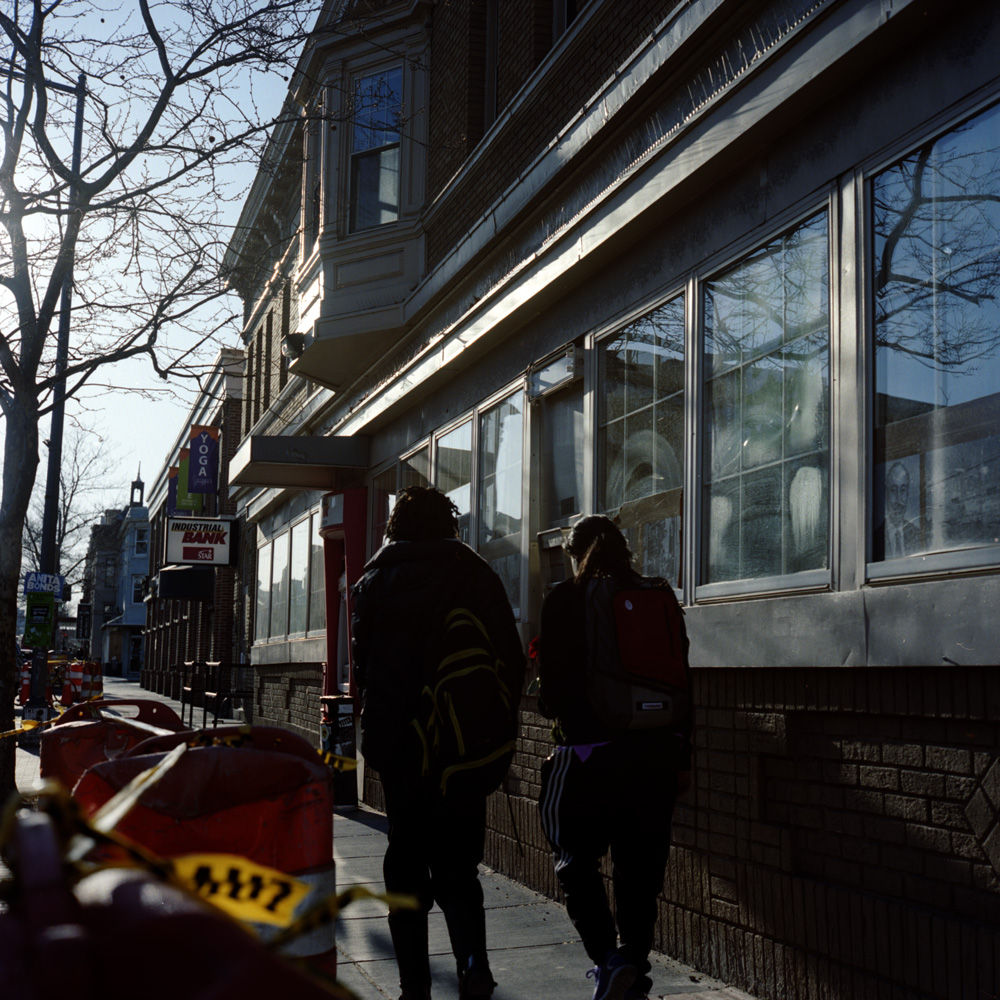
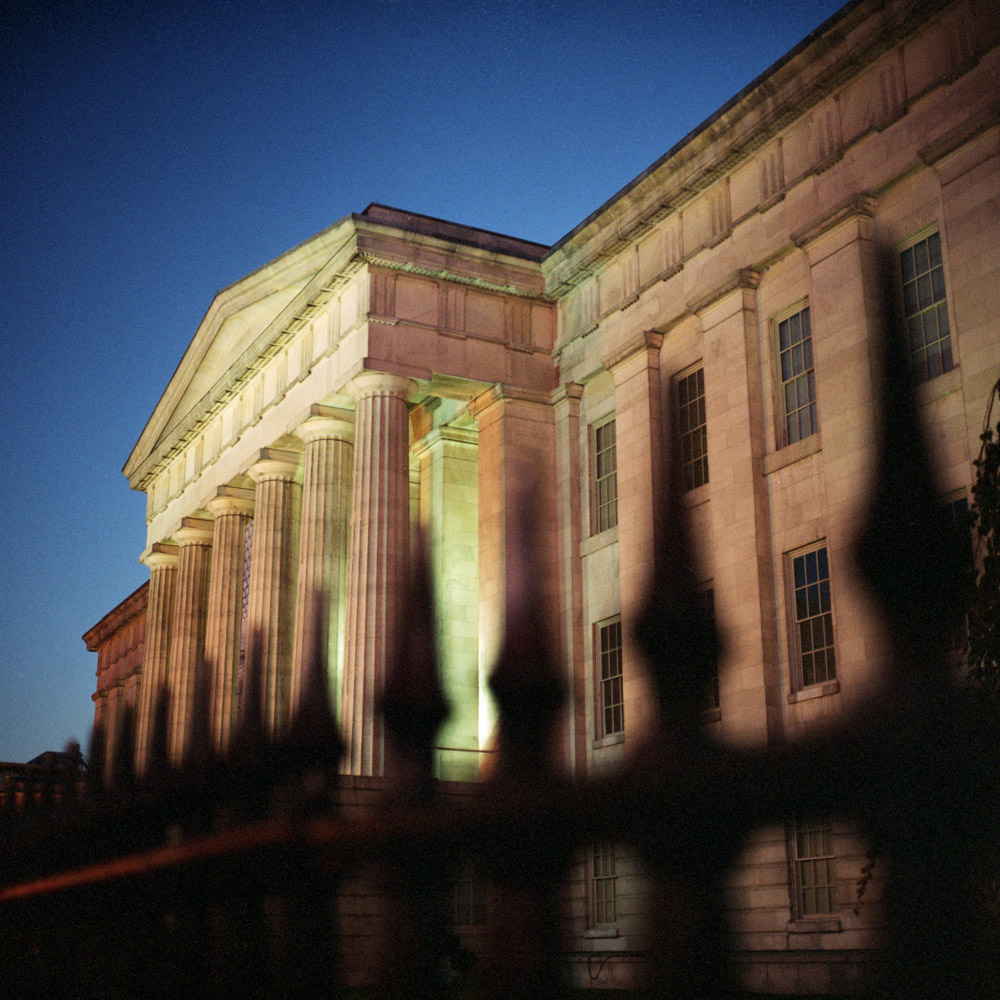
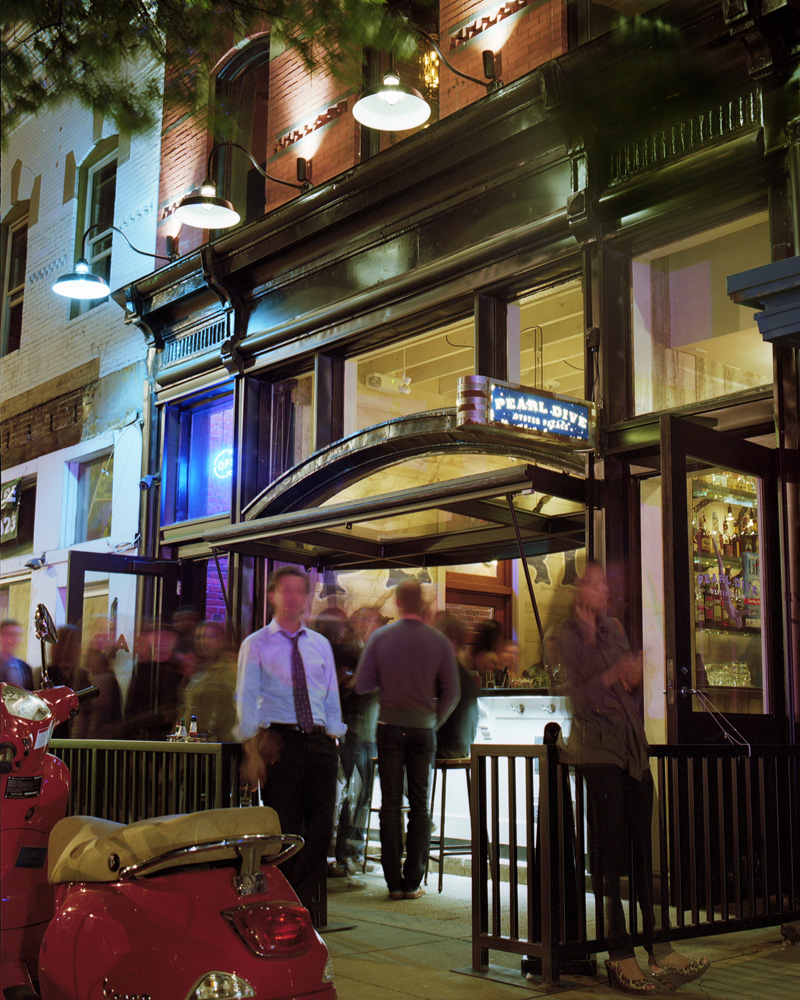
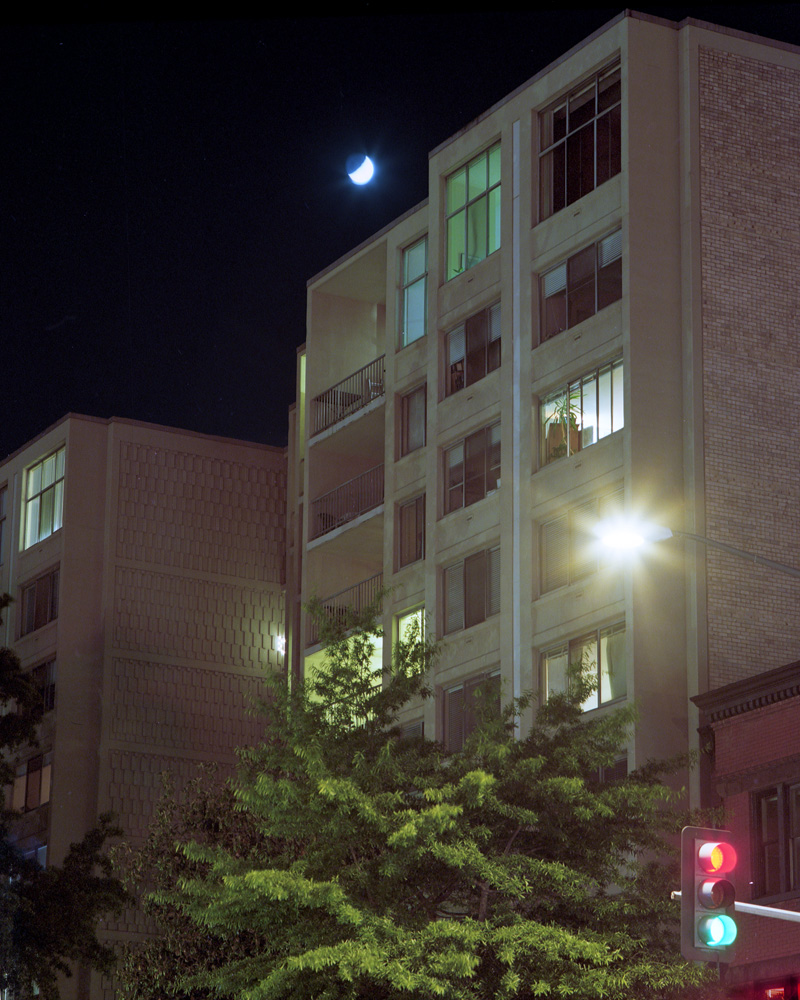
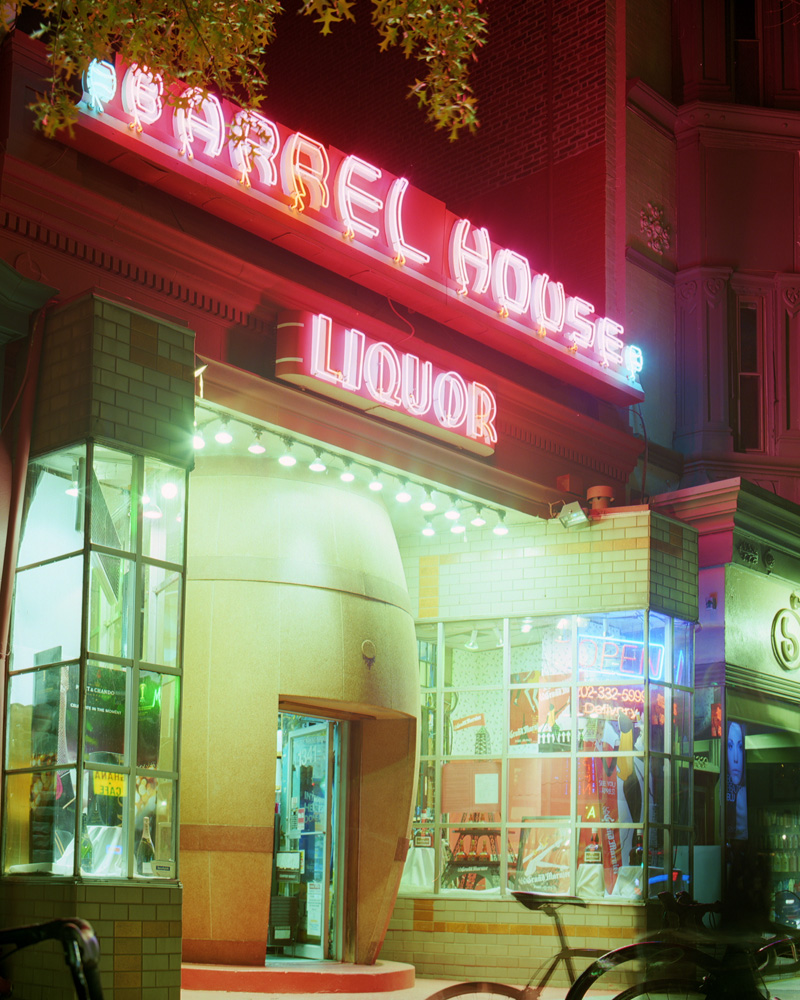
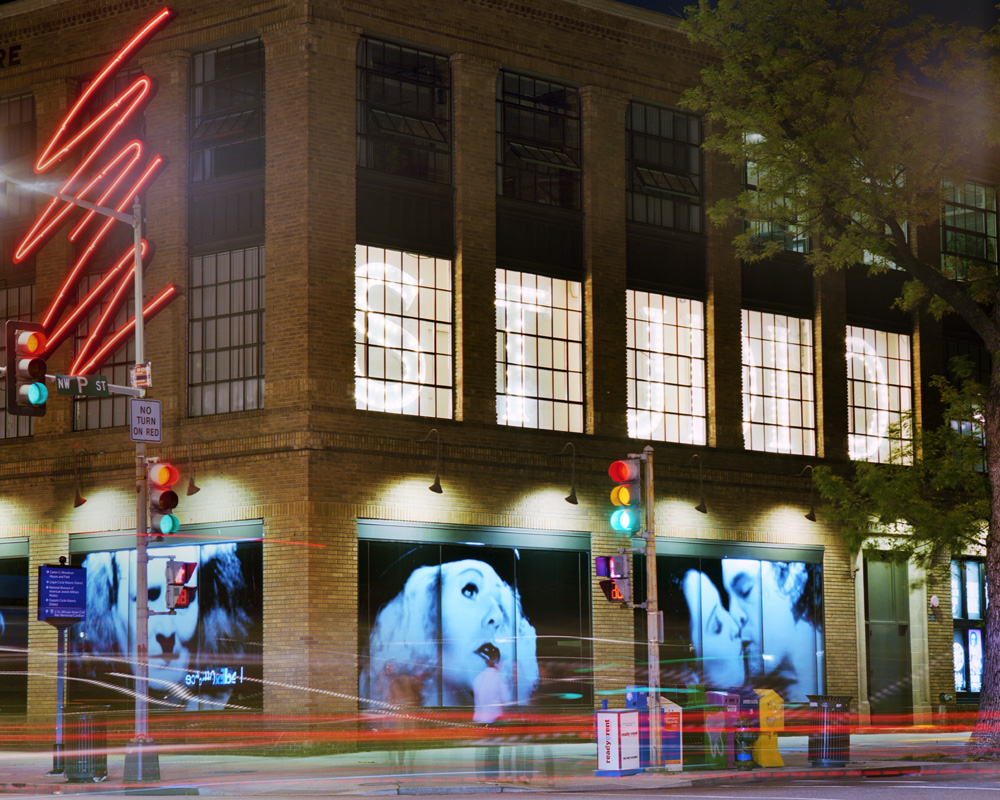
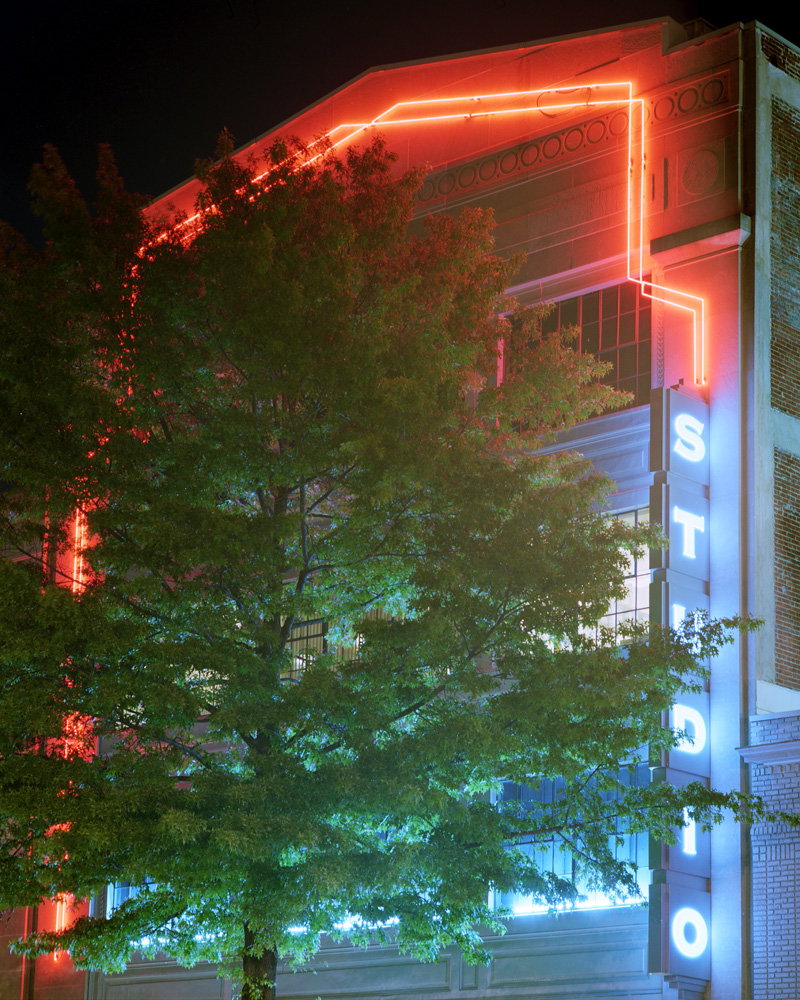
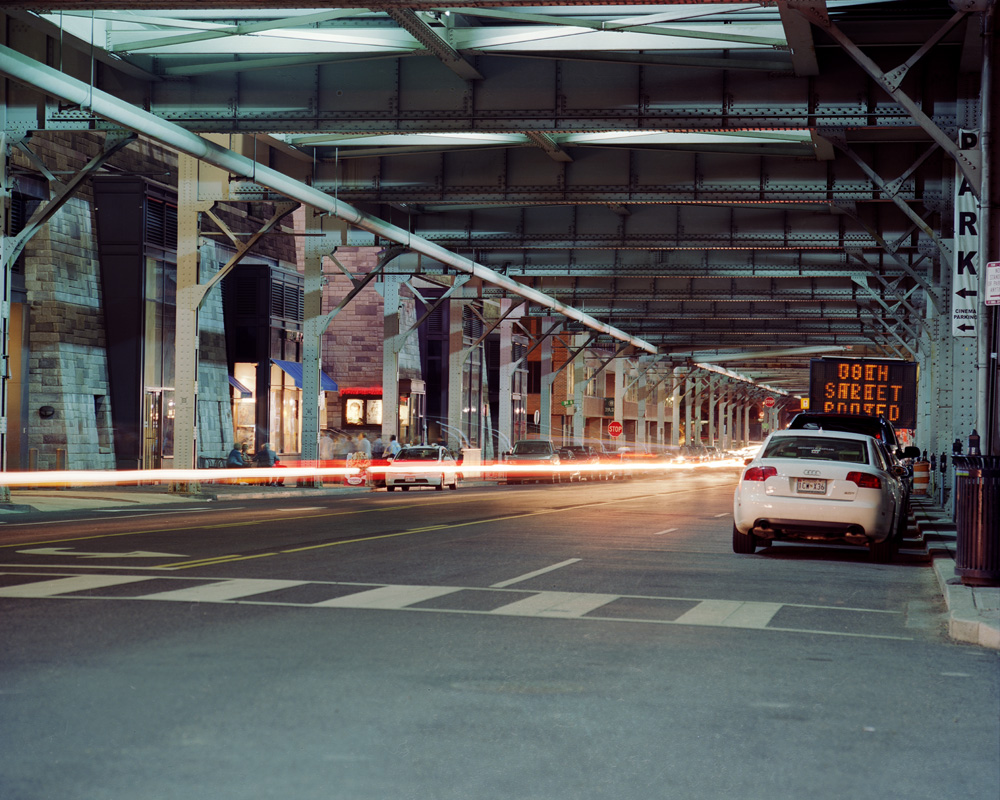
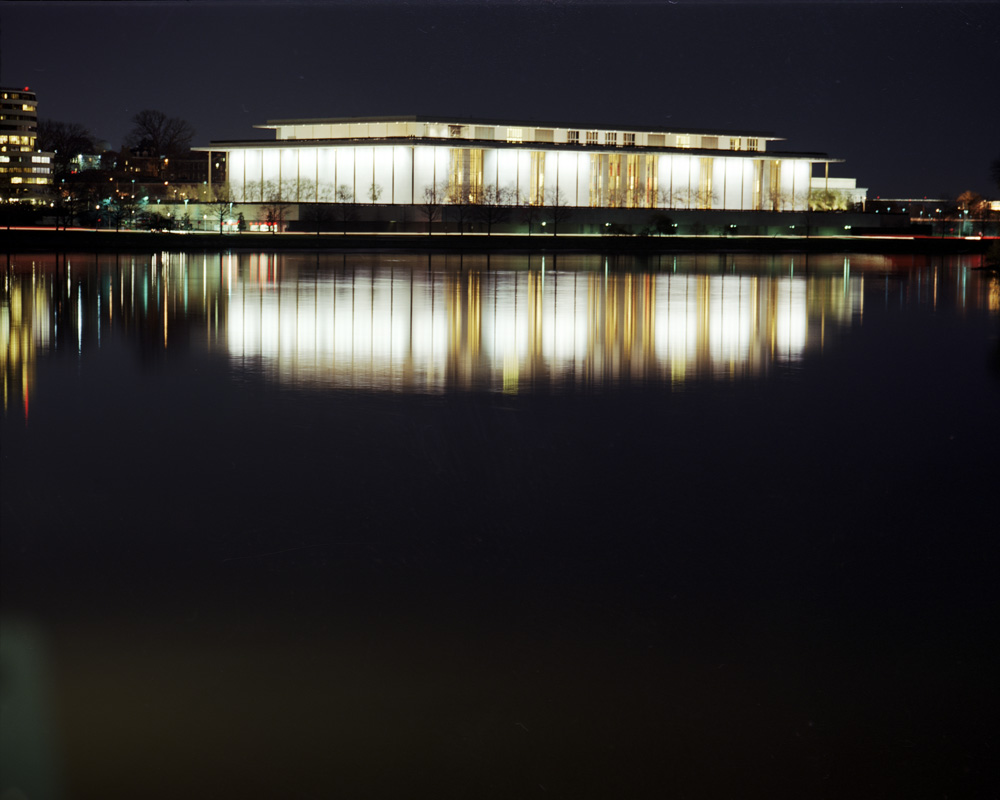
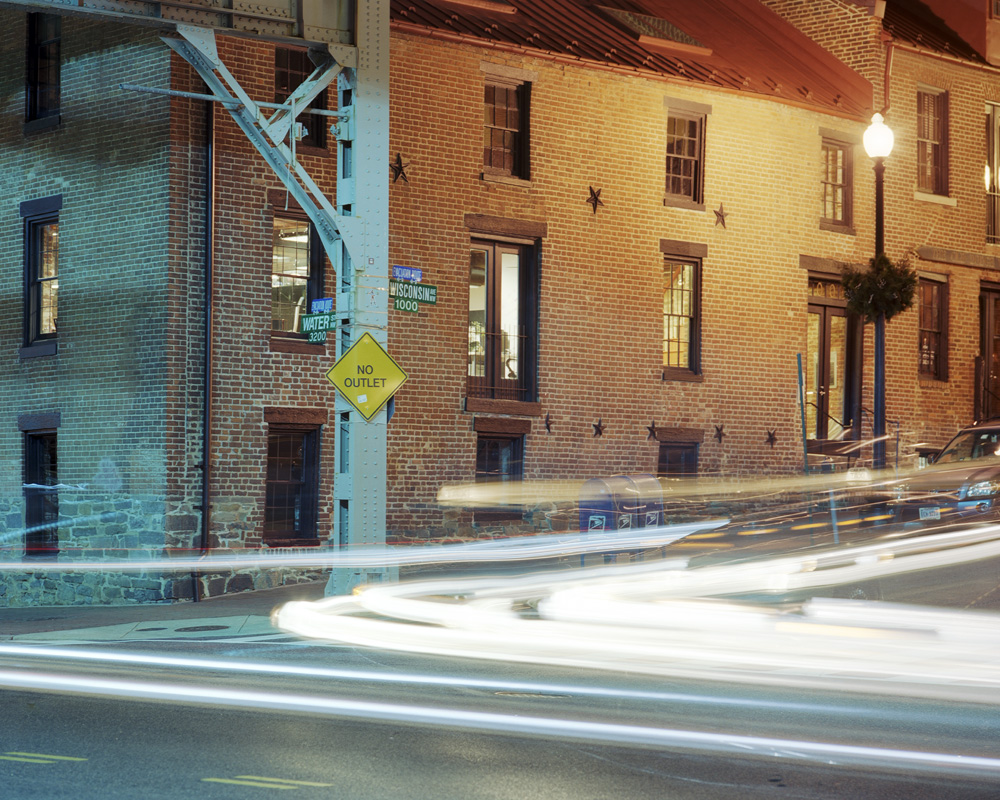
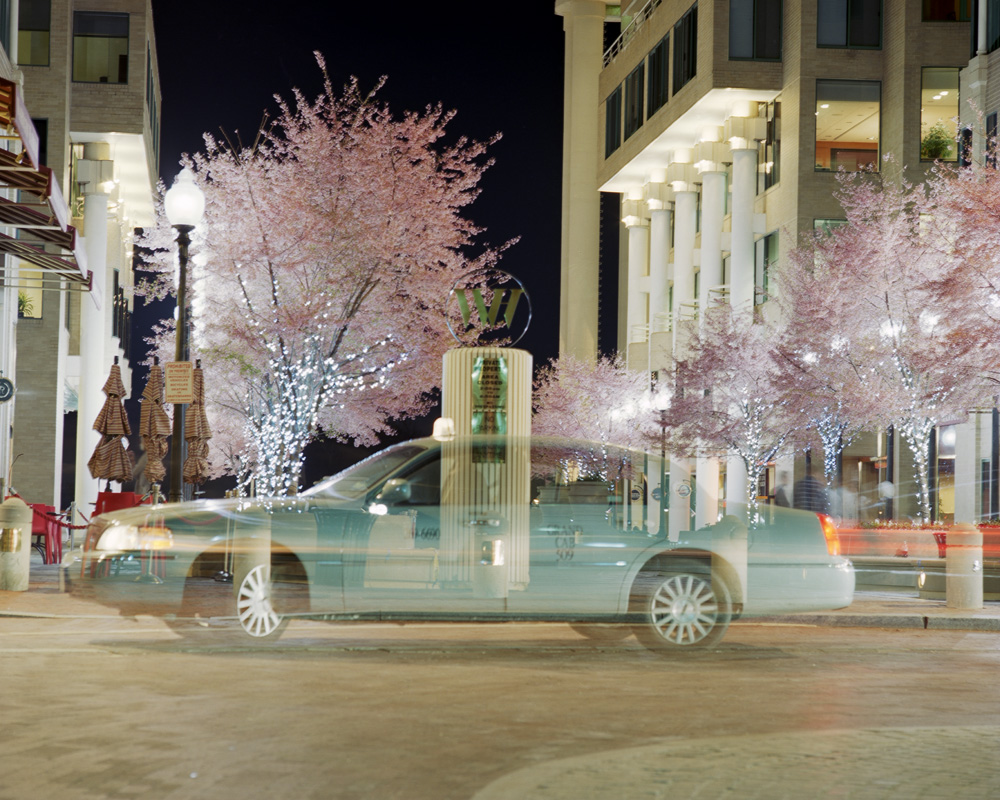
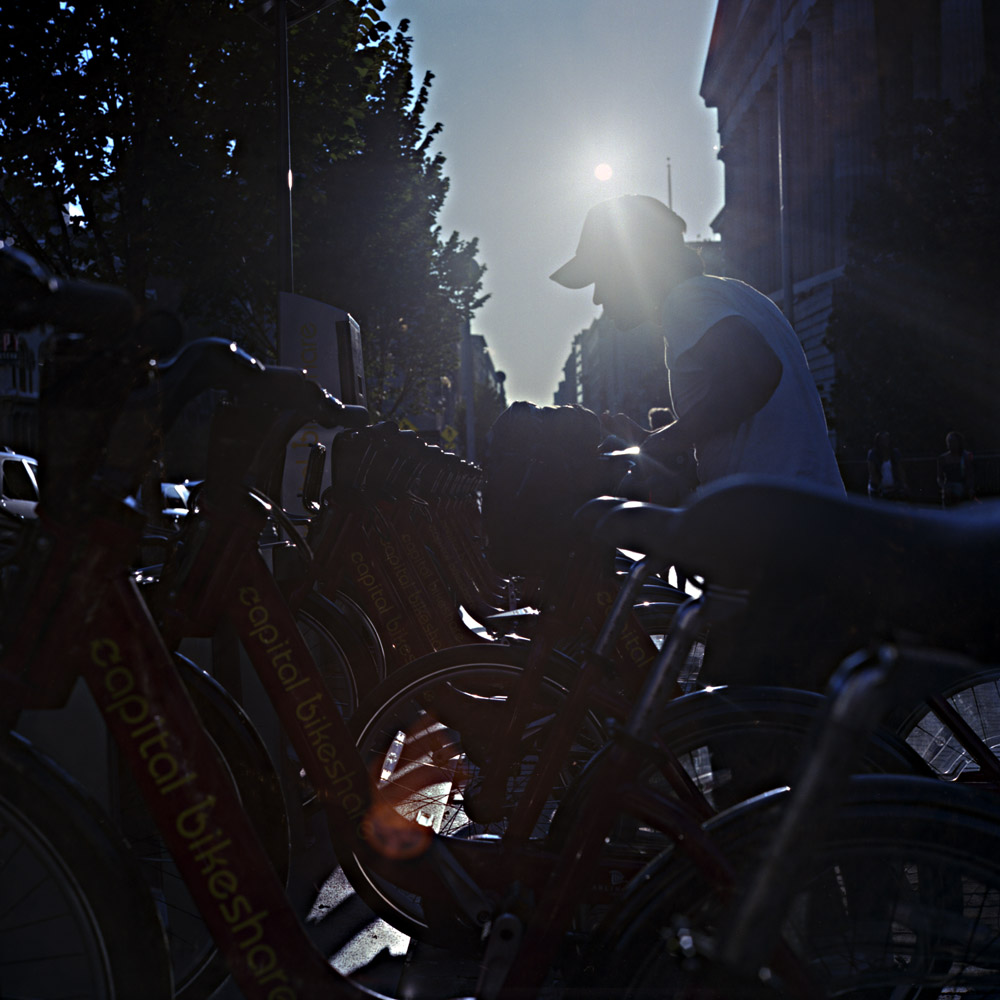
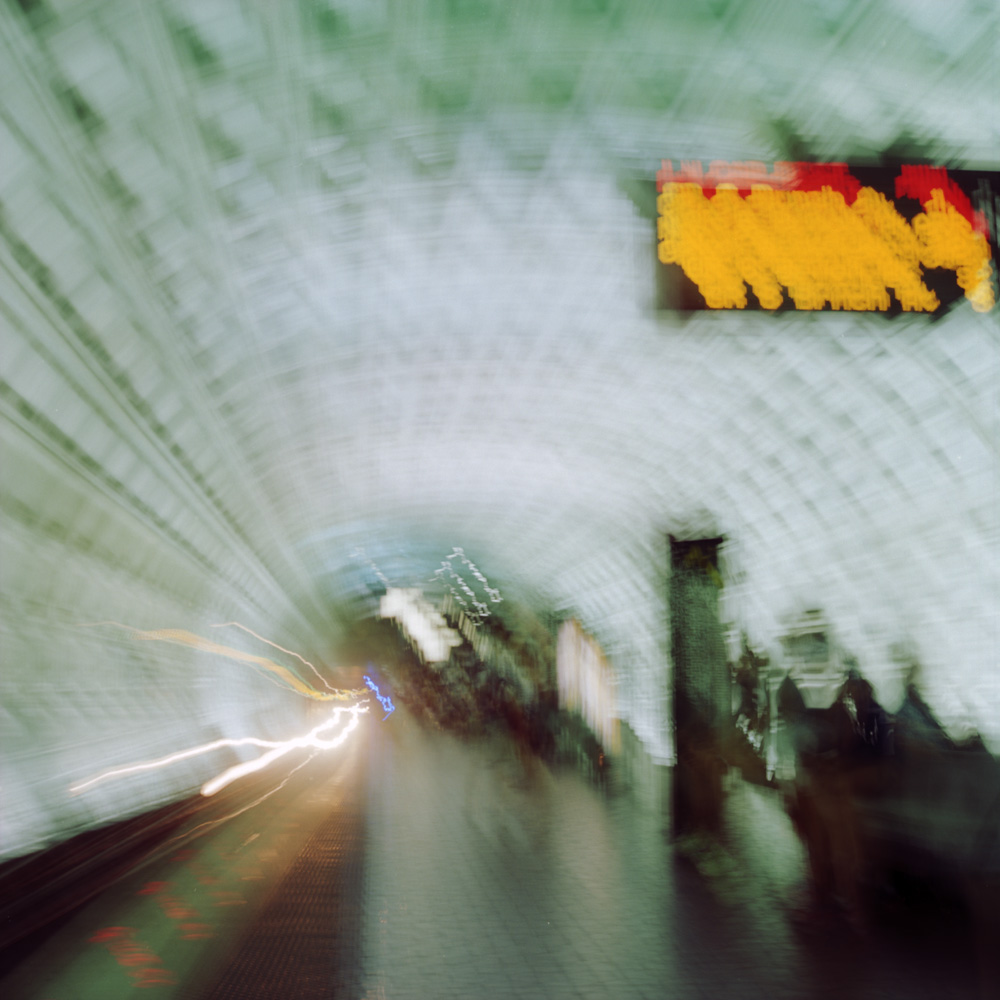
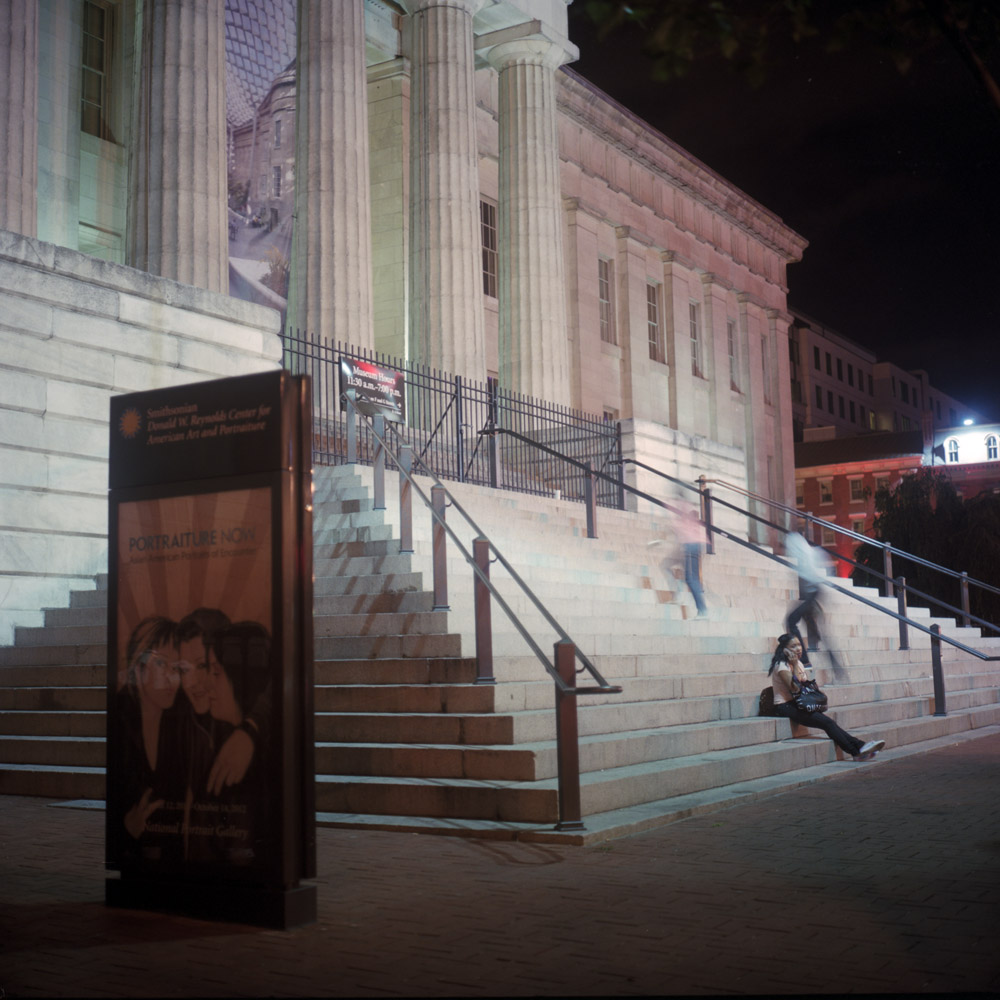
If any of you have ever produced a photography exhibit, or any other art exhibit for that matter, you’ll have an understanding of just how complicated an effort this is. I’m lucky in that I am able to do my promotional work online for the most part (this blog, email blasts, internet forums, etc), and I already have promotional postcards printed from the last time I exhibited some of this work. It would not surprise me if I did a truly serious accounting of what it cost to put this show up on the wall and the bill came in somewhere north of $2500. I know the framing bill alone is in the region of $1100-$1200. Postcards? about $200 for good quality printing from Modern Postcard. Paper and ink? $300. And that’s just the obvious, not counting the two years it took to shoot the images, the film and processing, the editing process, the dinner bribe for my friend who helped with the editing, and all the hardware and software (21.5″ iMac, Epson V750 scanner, Epson 3880 printer, Photoshop CS5, SilverFast AI 8, Gretag-Macbeth EyeOne calibration software and hockey-puck). To say nothing of 20 years of accumulated experience required to produce images like these.
Opening Reception Invitation – Friday August 2, 7-10pm
I’m having an opening reception for my exhibit, “The Colors of Night” on Friday, August 2, from 7-10pm at Mad Momos Restaurant, 3605 14th Street NW. The exhibit runs from August 2 to the end of October.
From the Mad Momos invite:
Mad Momos is proud to present photographs by DC area photographer, Scott Davis. Please join us for the opening reception to enjoy the photos, meet the photogrpaher and sip on complimentary California Champagne.
What is the color of night? It is indigo, it is fluorescent cyan, it is neon reds, yellows and blues. It is sodium-vapor pink, and glowing incandescent orange. It is all of the above, filled in with the colors of your imagination. It is the color of time slowed down, motion blurred, things and people half-seen through their background, perceptions distorted.
I have been shooting a lot of night-time work both in black-and-white and color, for several years now. Photographing long exposures at night gives you a creative freedom to accept serendipitous happenstance in your work that you would reject if caught in 1/60th of a second. Blurred motion becomes a good thing. People become icons. Cars are ghostly, their tail lights and headlights reduced to abstractions and records of things that were, like handwriting on paper. Colors become incredibly rich and even more important, since sometimes it is only by color that you can define and understand an object. The mixed lighting you find in a photograph of a night scene changes our perception of mood in a way you aren’t aware of when you are there – your brain color-corrects light sources automatically so things look “right”, but capturing them on film, which can only record what’s actually there without interpretation, reminds us that we do in a manner of fashion walk through the world with rose-colored glasses.
Photostock 2013 – Some Black and White Work
Since Photostock is all about photography, I thought I’d lead off this post with photos about cameras and taking pictures. The first photo is Jaime Young’s 9″ Cirkuit panoramic camera. A Cirkuit is just an ordinary Graflex field camera, but with some special modifications – it comes with a giant geared wheel and a series of reducing gears and flywheels to make it rotate up to 360 degrees and a special back that holds a 9″ tall roll of film. You can change the speed of rotation and the amount of rotation through changing gears and flywheels and adding stops to the large geared wheel. Jamie did a big group shot with the Cirkuit at the workshop facility dedication ceremony, where we had almost 70 people. The Cirkuit was absolutely needed this year to get the whole group shot done. One of the cool things about the Cirkuit is that because it rotates at a relatively slow speed, once the lens passes you, you can get up, run around, and get back in the picture, so you appear twice (or more). I’m itching to see the final print from the Cirkuit – some folks did just that, the run-around, and so they will be in the photo two, three, or in the case of one or two jokesters, even four times.
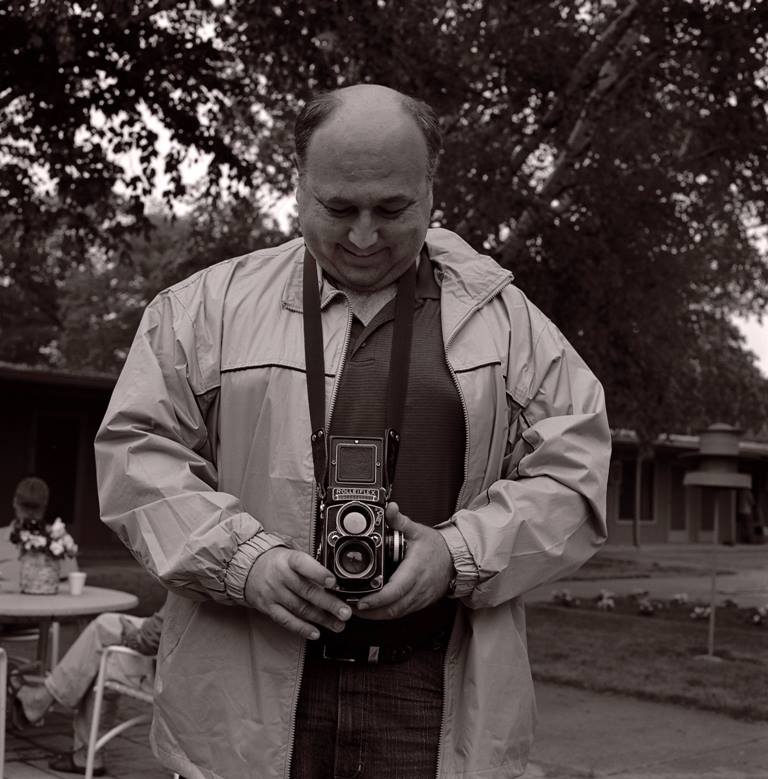
This is Steve Zimmerman, with his Rollei. We shot dueling Rollei photos of each other in a fit of silliness. His Rollei has a great story – he was out photographing in downtown Minneapolis, and some guy walked up to him and struck up a conversation about cameras and photography. The guy then pulls a BRAND NEW, IN ORIGINAL BOX Rolleiflex 2.8E, AND an equally brand new Leica M3 with the Summicron f2 lens out of a bag, and gives them to Steve for $100 each. Steve tried to pay him more (each of them was worth about 10x what he paid for them!) but the guy insisted on the cheap price, because “I know you’ll enjoy and appreciate them”.
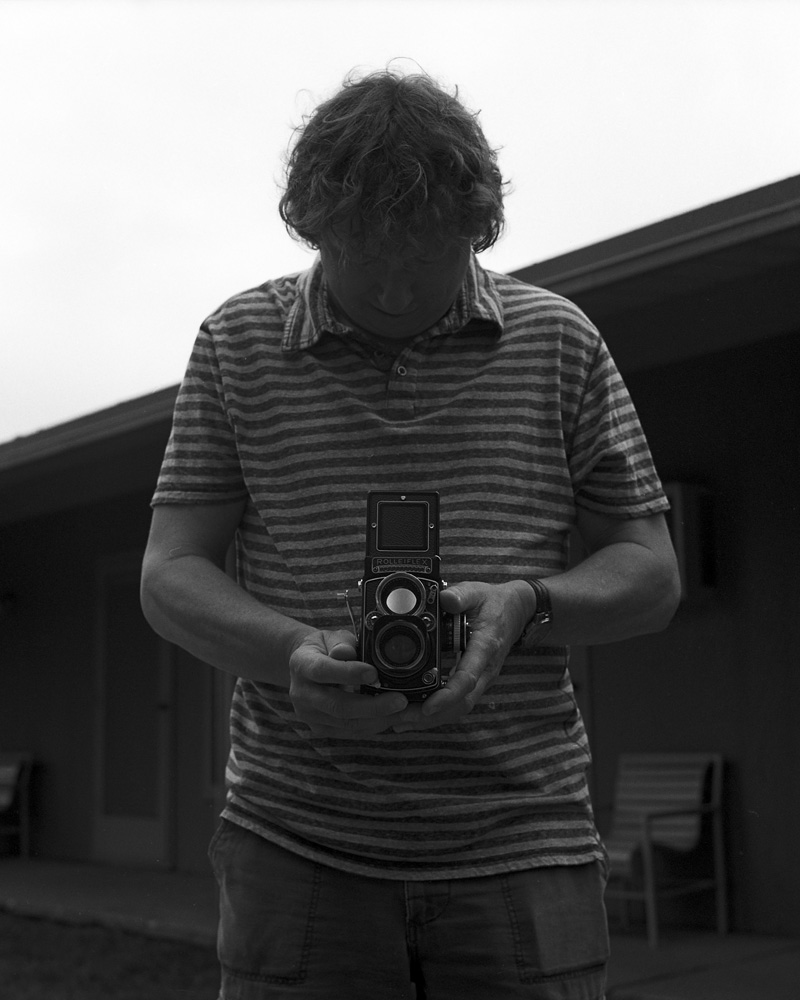
Here’s Steve’s shot of me… why couldn’t he have photoshopped a full head of hair onto me? It would have helped compensate for the double chin…
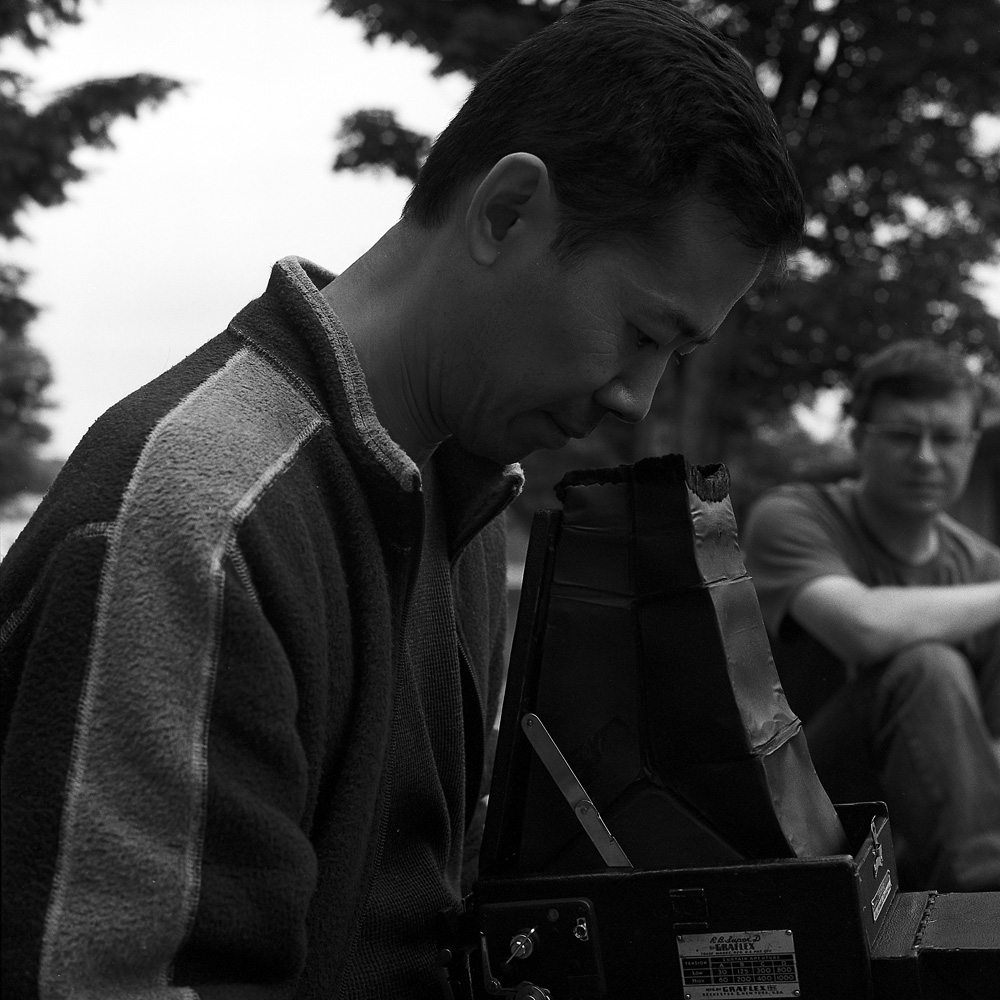
Someone (I forget who) brought a beautiful RB Graflex Super D 4×5 SLR to the event. Here is Dan Lin, a fantastic photographer who I’ve done a print trade with before, playing with the Graflex. Alex L is in the background.
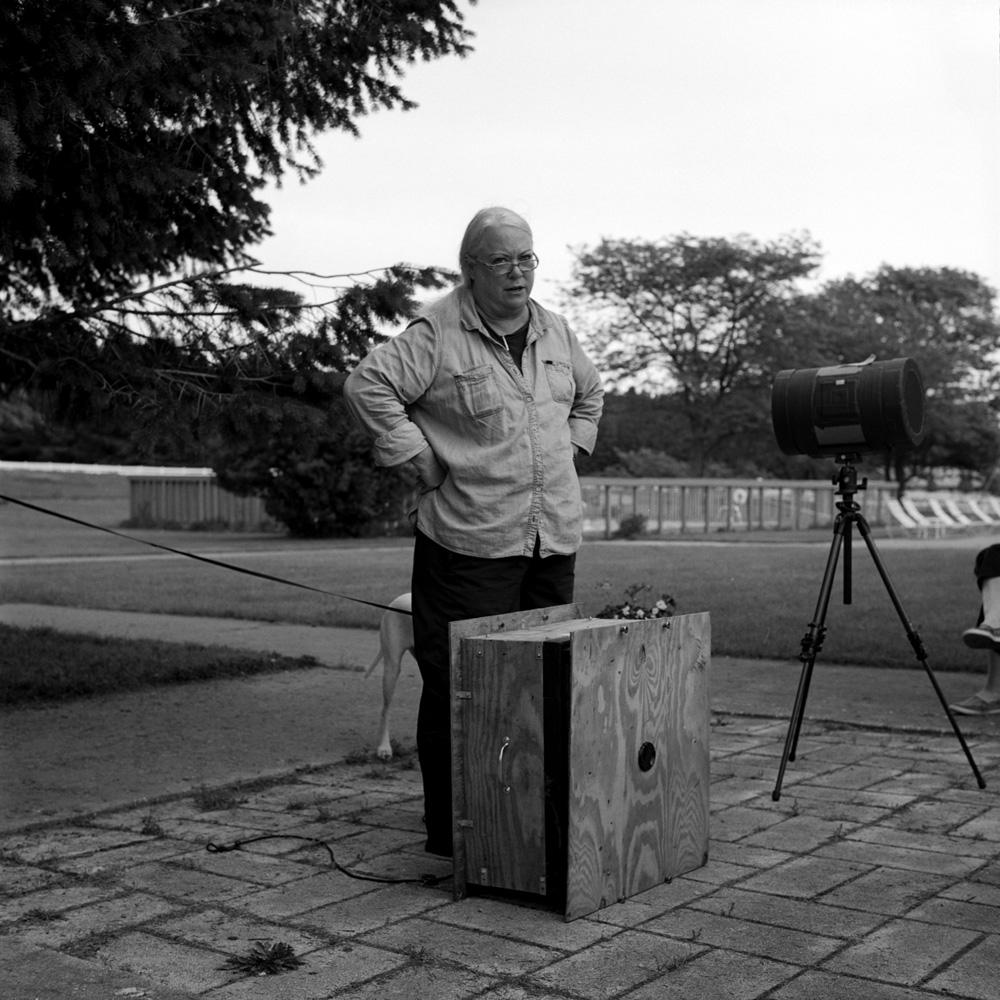
And here’s Judy Sherrod again, with her pinhole cameras. The one in front of her is the first version of her 20×20 wet plate pinhole box camera, made of plywood. It has since been retired and replaced with a new, better built one. The drum on the tripod behind her is an anamorphic pinhole. The pinhole is in the end of the tube, but the paper or film goes around the inside, instead of on the opposite wall of the camera. This works because of the way a pinhole works. The pinhole projects light in a very wide circle, not just a cone like a lens does. Doing so allows you to make some very different images.
Here’s Dorothy Kloss with her creepy doll. She likes collecting antique dolls, and the creepier the better.
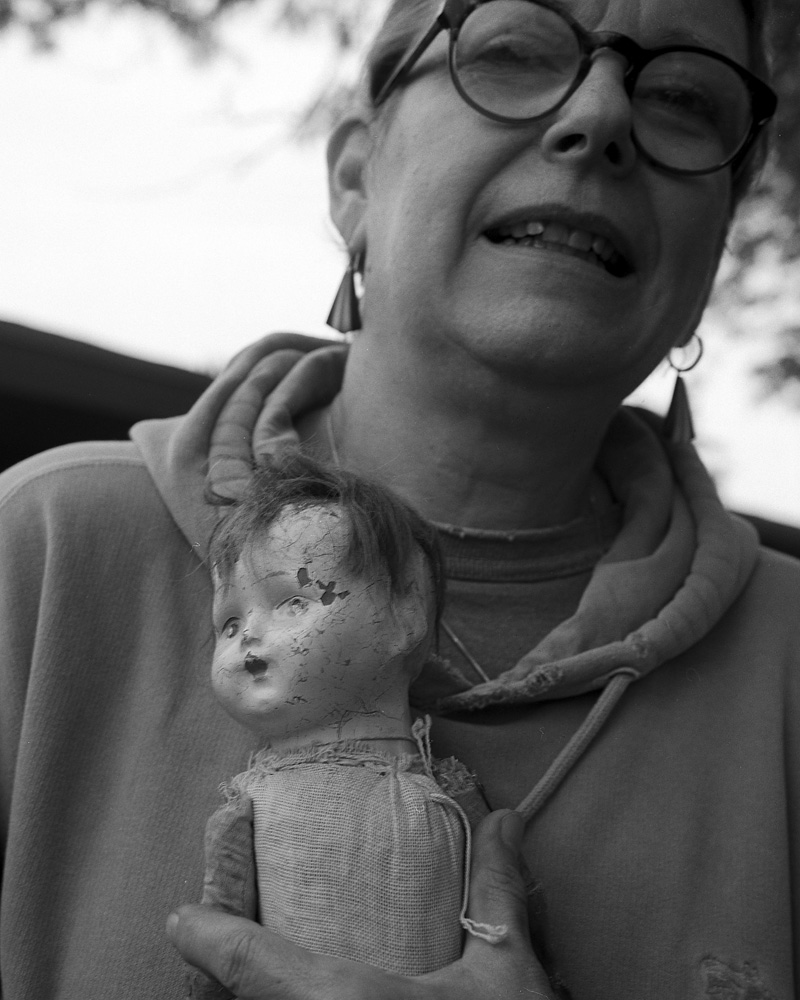
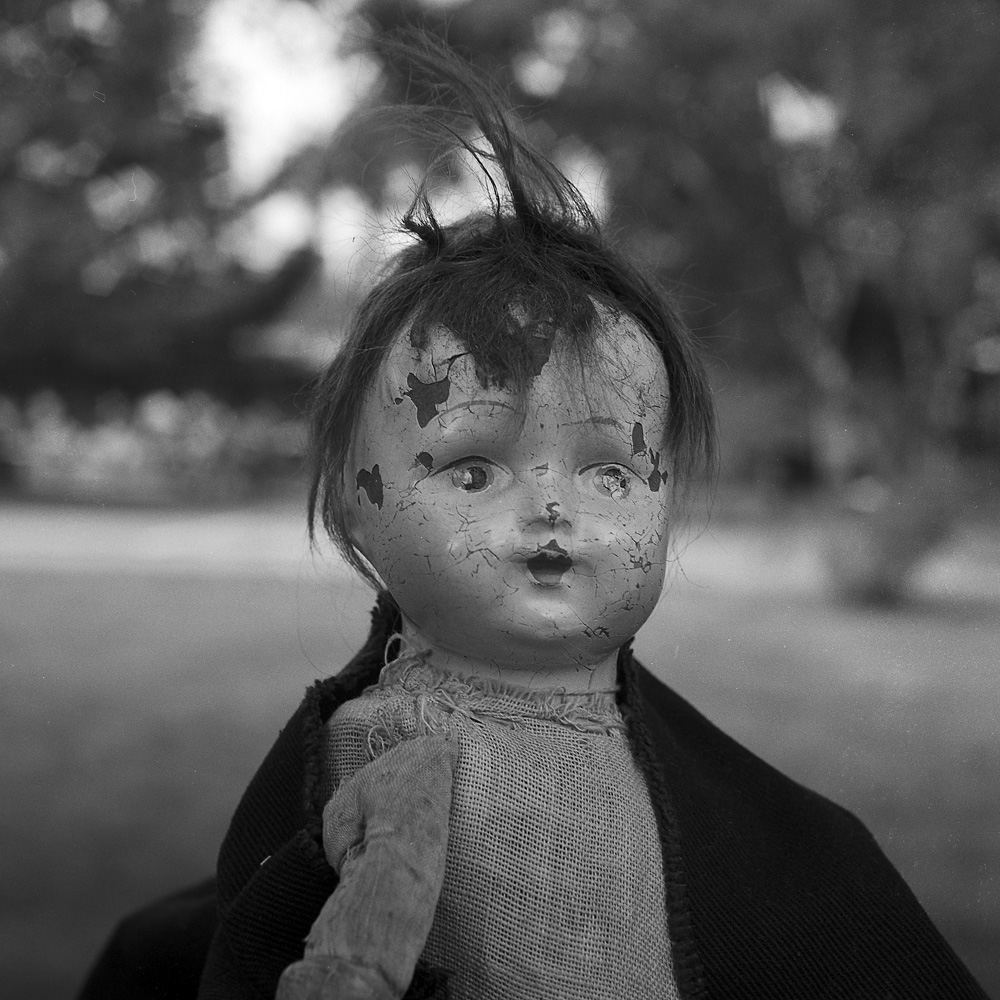
It seems everyone has a Rolleiflex story somewhere or other. I was playing around with my Rollei and it reminded Dorothy that in some boxes of her father’s stuff, she has his old Rolleiflex, and maybe the Rolleinar close-up filters like I have and was using for the shot of her with the doll and this photo of the doll by itself. It inspired her to go dig through her dad’s stuff and find it when she got home.
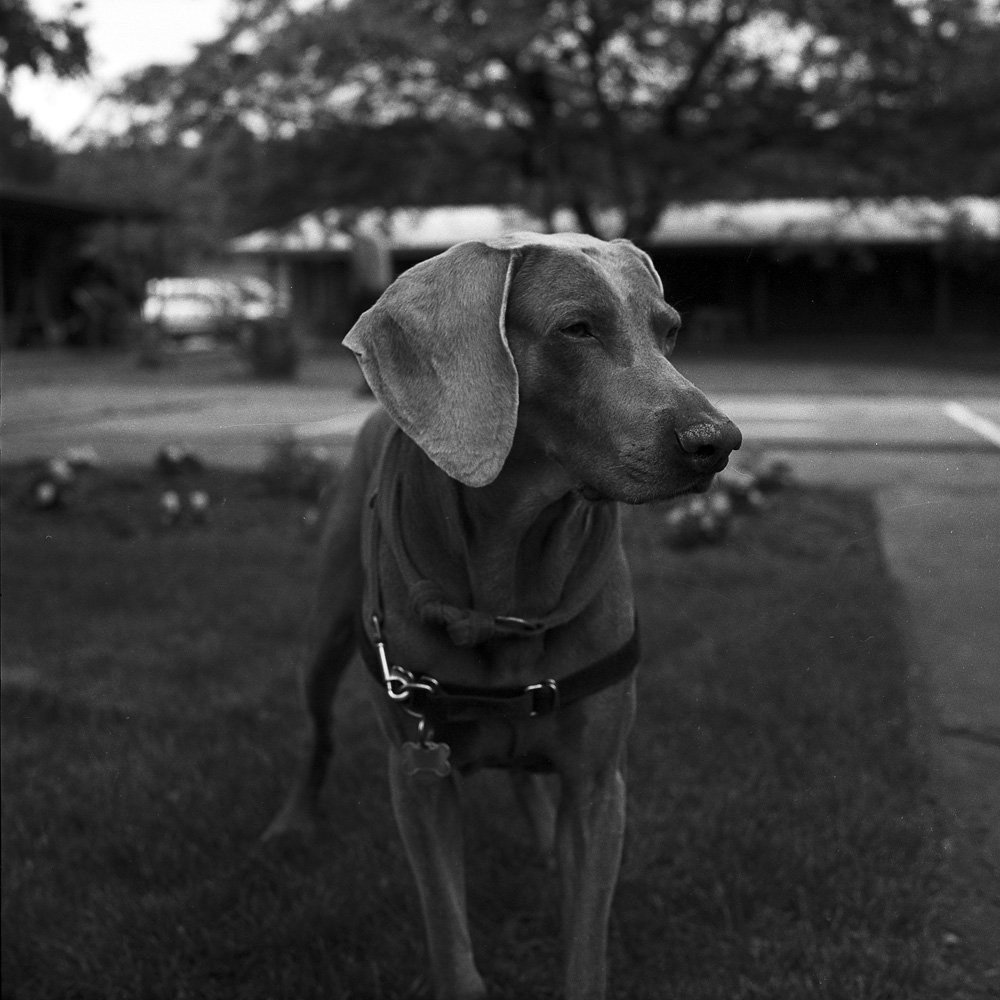
Pele the Weimeraner. Pele was a great dog and a fine addition to the Photostock community. He is very attentive and friendly, and you can see in the subsequent photo of him with Arnaldo, his owner, very fixated on his ball.
Arnaldo, in the posing chair with head clamp, waiting for the wet plate collodion portrait that Andrew Moxom took of him to develop, playing with Pele.
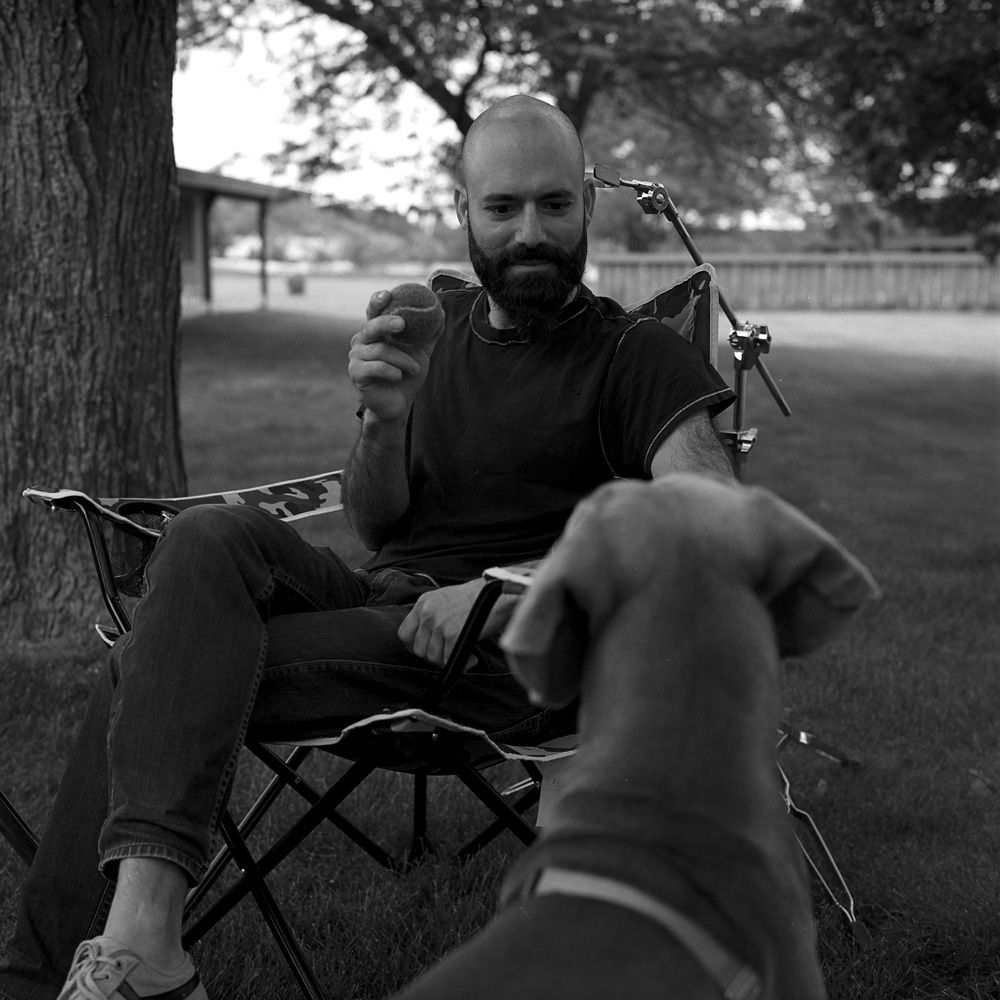
Arnaldo. Arnaldo is a photographer from New York City. He drove to Photostock from New York in a 1980s vintage Porsche 944, and continued on to the Southwest (New Mexico and Arizona if I’m not mistaken) afterward.
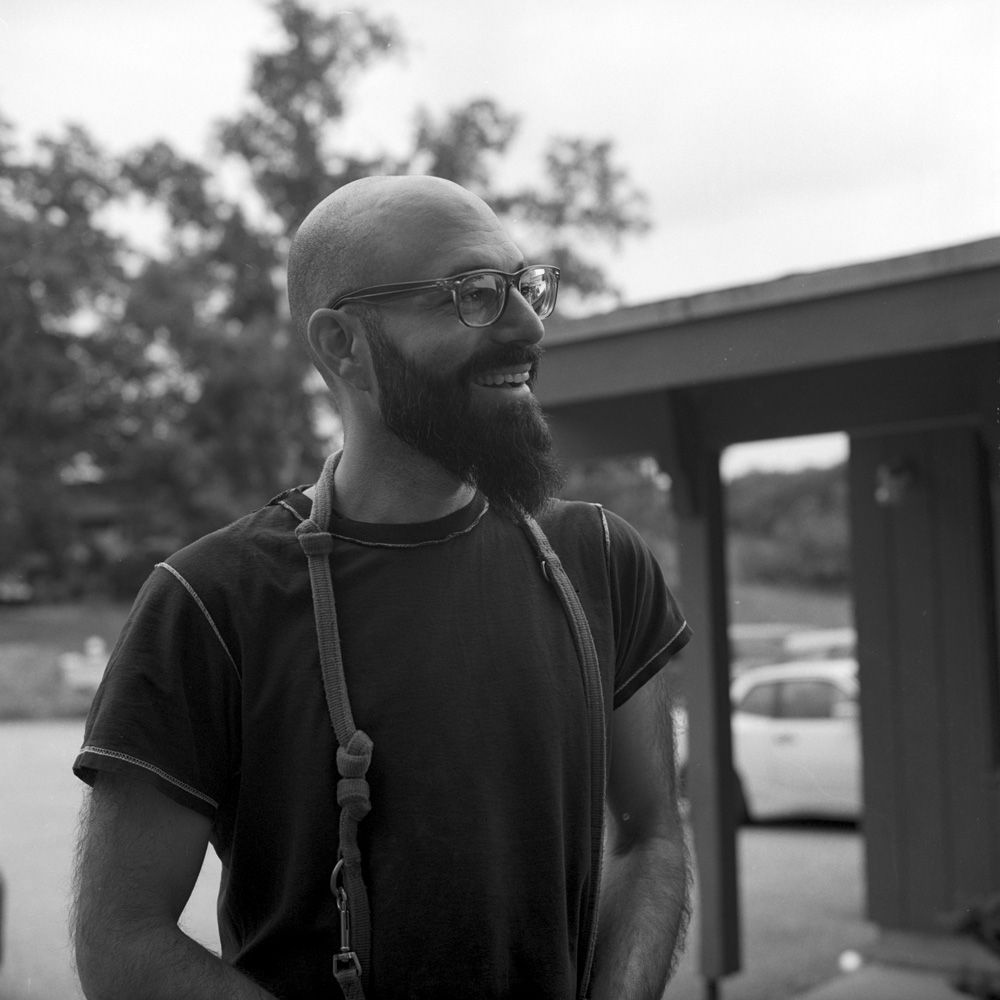
Mat Marrash. Mat runs the Film Photography Project podcast, and does AMAZING 11×14 Infrared (!!!) photographs. Yes, I said 11×14, as in 11×14 inch film. He has a stock of Efke 11×14 infrared film that he’s working through – the Efke is no longer made, so once his stash is gone, that’s it.
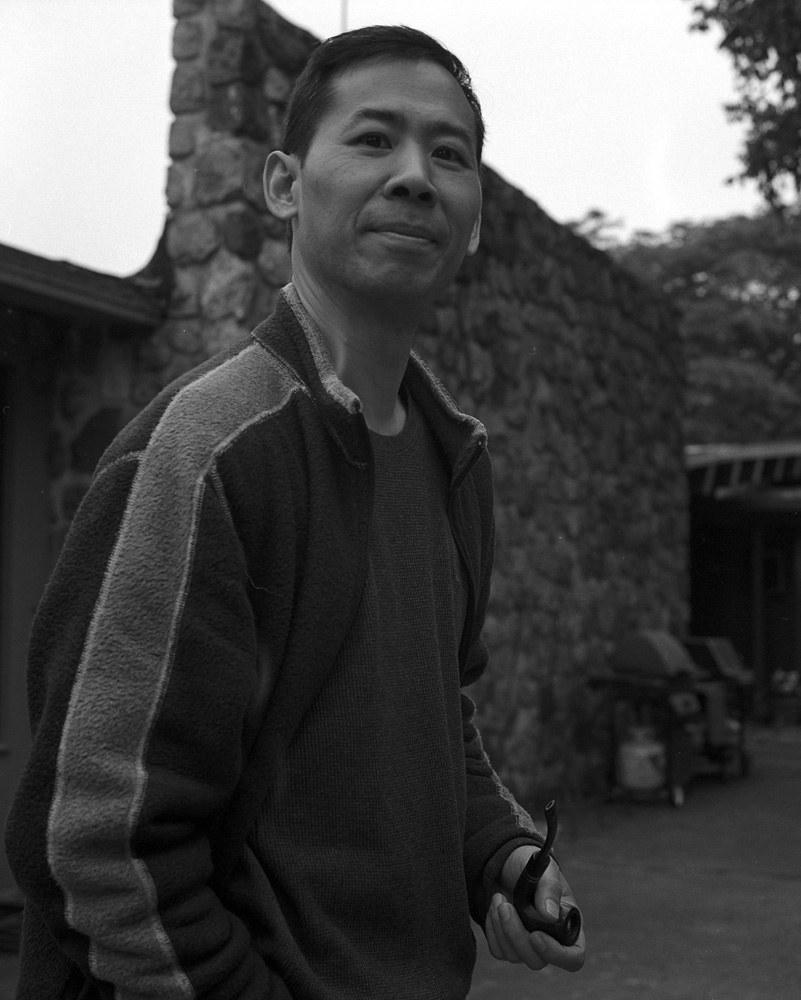
Here’s a portrait of Dan Lin, without the Graflex, but with his pipe. I don’t think I got one of him wreathed in smoke from it, but I might have one like that on one of the remaining rolls from the trip I still have to develop.
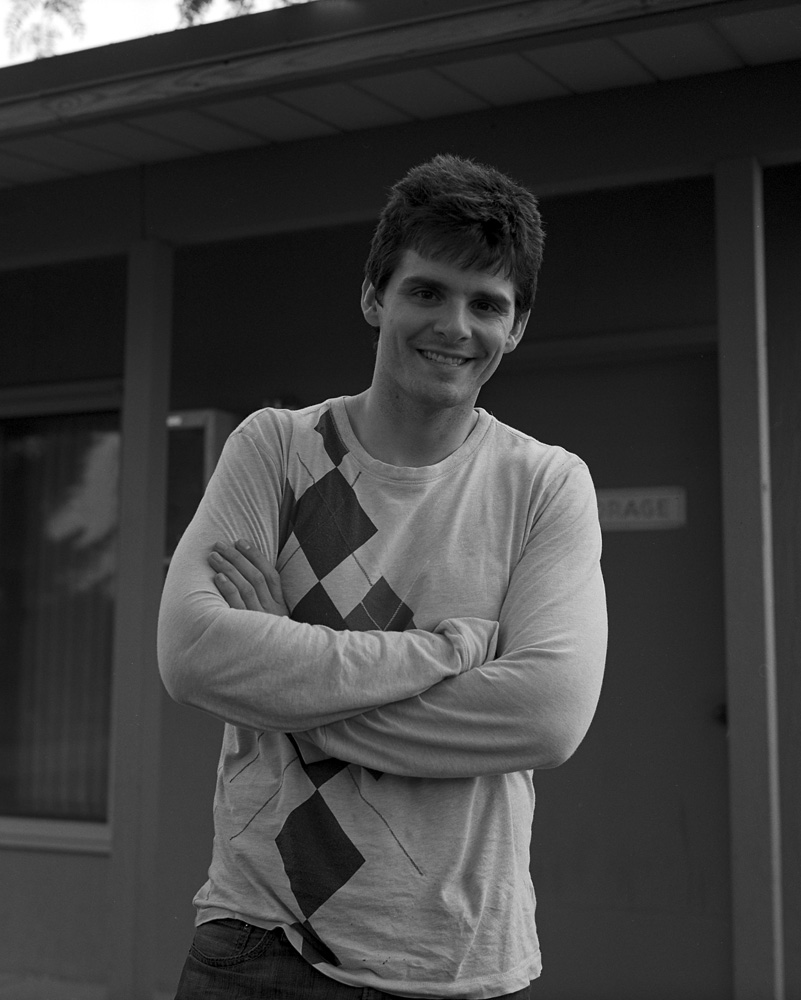
And in the closer for this post, is Evan Schwab, the son of Bill Schwab, our host and organizer for the event. Evan is a terrific little guy, very smart and a good conversationalist. A kid even WC Fields could like.
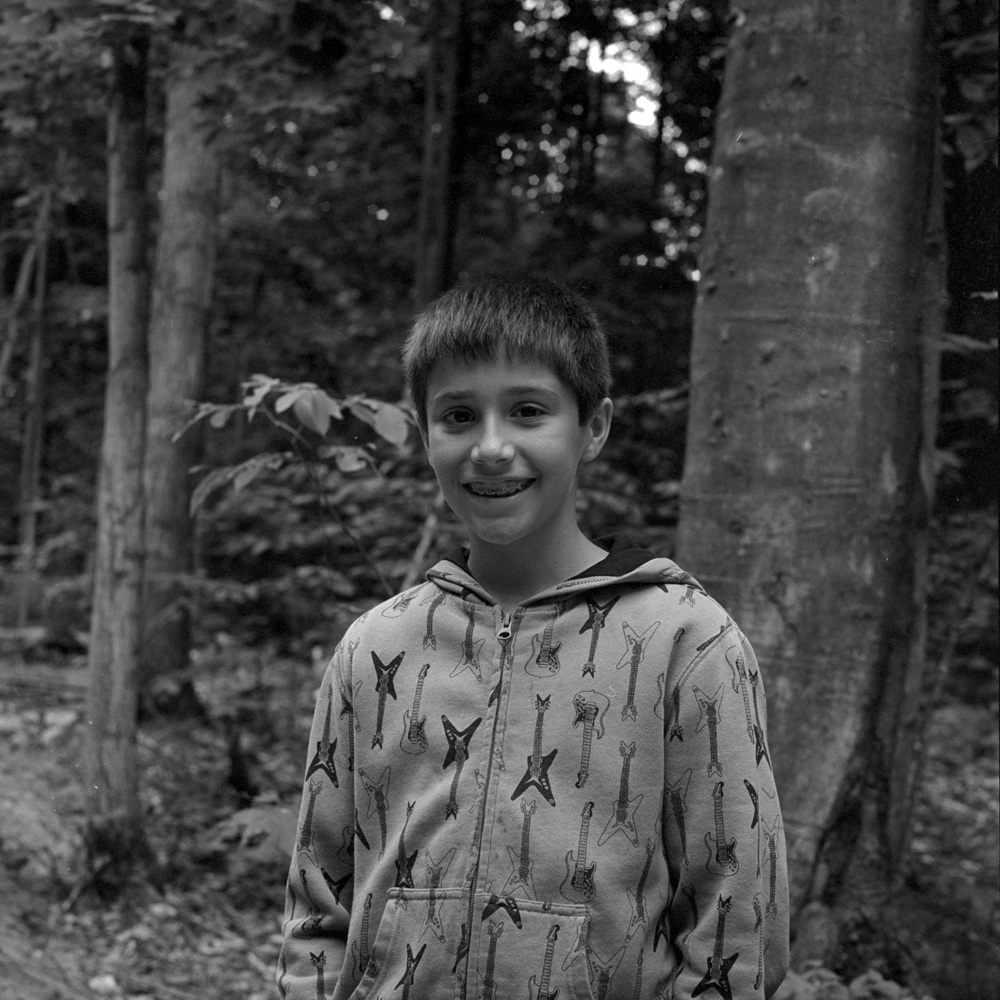
Photo of me
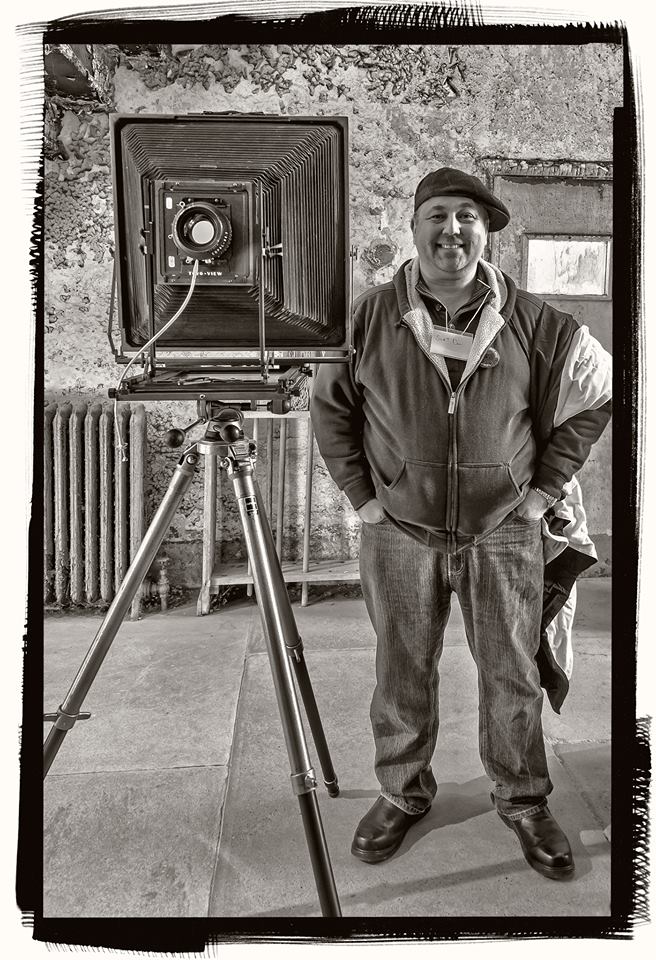
Here’s a photo of me at Eastern State Penitentiary with my Canham 14×17, courtesy my friend, Tom Finzel. He does a lot of HDR stuff and does it with subtlety (well, most of the time 🙂 ). I really like the image he made – I look good in this shot, which is all the more amazing since I smiled and held steady through about 15 seconds worth of HDR multiple exposures. I would have made a good model for a daguerreotypist!
Tom was trying to make an image that looked like platinum/palladium. While the color’s too neutral, it’s not a bad likeness.
 dcphotoartist