Tag Archives: Glen Echo Photoworks

Intro to Platinum/Palladium printing – now with Digital Negatives! September 19-20, 26-27

I’m going to be running my Intro to Platinum/Palladium Printing class again this fall, with an expansion into making digitally enlarged negatives. The new class will be a two-weekend course, September 19th & 20th, 26th & 27th. The 26th will be from 1-5 pm due to a morning scheduling conflict, but the rest of the sessions will be from 10 am – 4 pm.

Platinum/palladium is the catchall term for two chemically interchangeable but visually distinct printing processes first pioneered in the 1870s by William Willis. As the names imply, they use platinum and palladium as their primary metal salt in image formation. A platinum print will be more of a cool gray tone with higher contrast, and a palladium print will be more of a rich chocolate-brown tone with lower contrast. They are capable of producing very long tonal scales, rendering very fine gradations, therefore needing very little if any manipulation during printing. Platinum/Palladium are also among the most archivally stable printing processes – when properly processed and displayed, your prints will last as long as the paper underneath them.

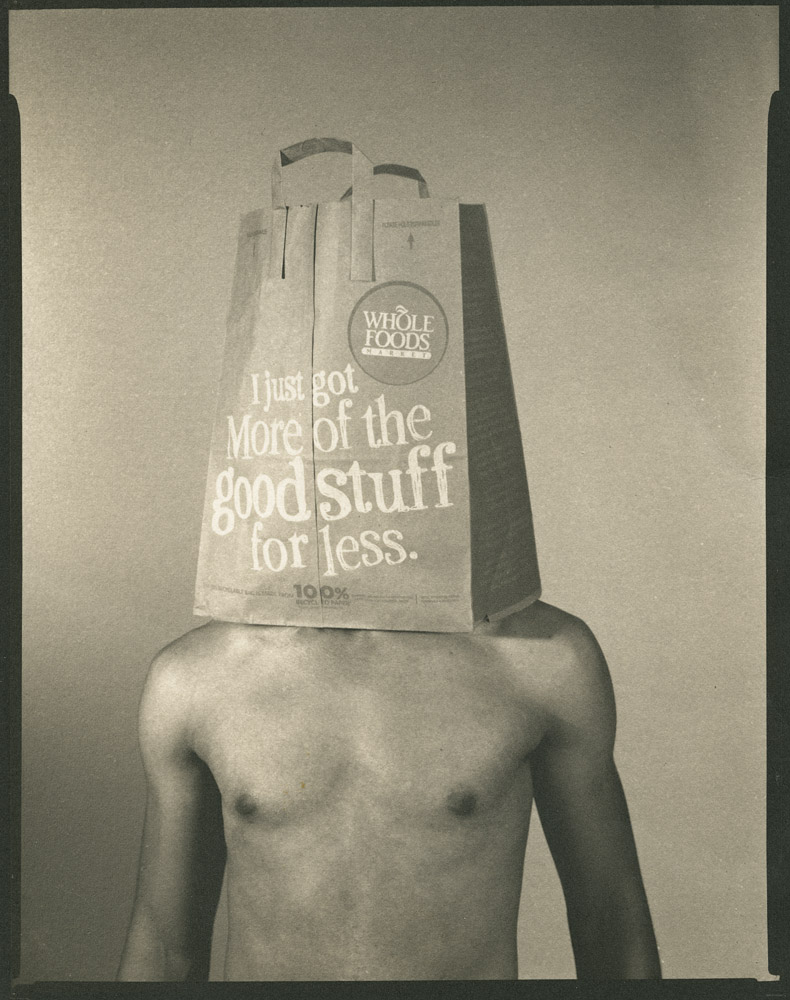
More of the Good Stuff

I traditionally have limited the class to working from in-camera negatives because I want to give people the best possible opportunity to start by making successful prints. As a friend of mine, Ian Leake, puts it in the new edition of his book on Platinum/Palladium printing, “it is possible to make a successful print from a problematic in-camera negative, but it is extremely difficult to make an even marginally successful print from a problematic digital negative” (I’m paraphrasing here).

The addition of making digitally enlarged negatives opens up the process to a whole new range of photographers, as shooting large format is both an encumbrance and a cost that is not for everyone. We will still begin the class with a full weekend of making in-camera film negatives and printing from those negatives. For that class, I will supply the camera and the film. We’ll make our images in and around the park, process the film, and then spend the next day printing.

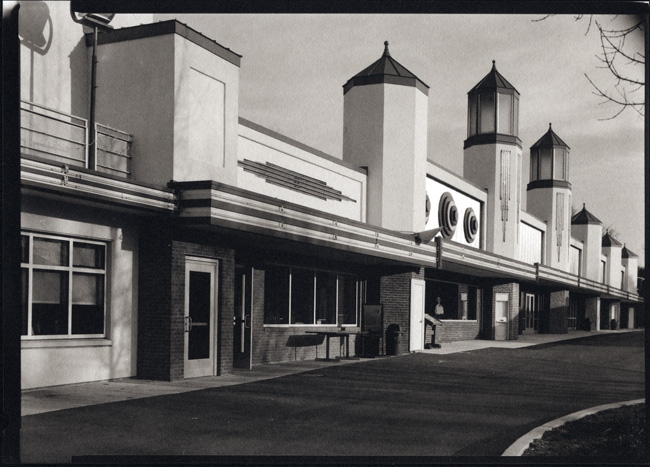
Glen Echo Midway
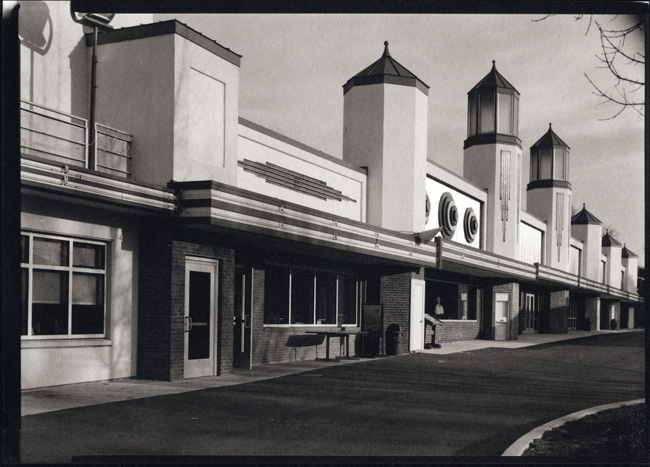
Glen Echo Midway

The second weekend will be devoted to making digitally enlarged negatives and printing from them. We will cover scanning, preparing your file, and printing the negative. I have a required text for the course, Ron Reeder’s “Digital Negatives for Palladium and Other Alternative Processes” which you can order on Amazon. Ron gives a very concise, clearly illustrated and explained step-by-step for how to produce a proper digitally enlarged negative, tailored to the process you want to print with. His technique is not limited to platinum/palladium, but once learned can be applied to any and all alternative processes.

To register for the class, click the link below.

Register for the class

Intro To Large Format Class – Portraiture Session

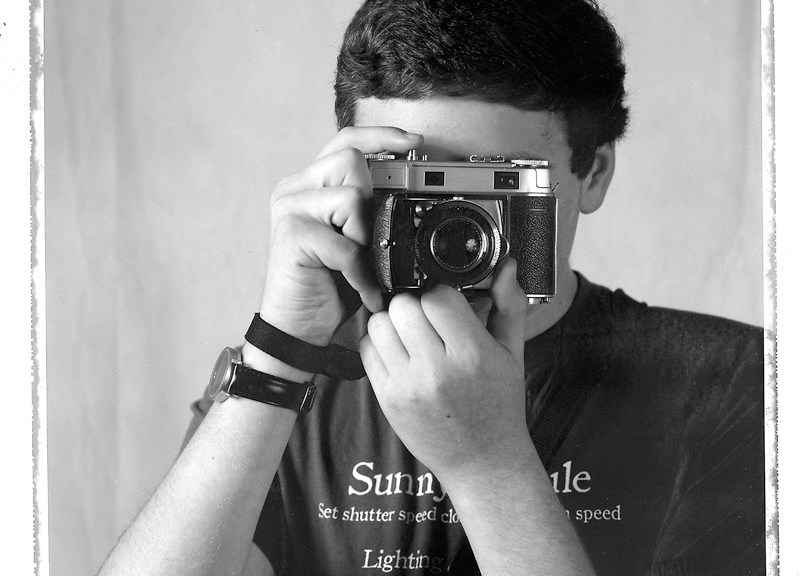
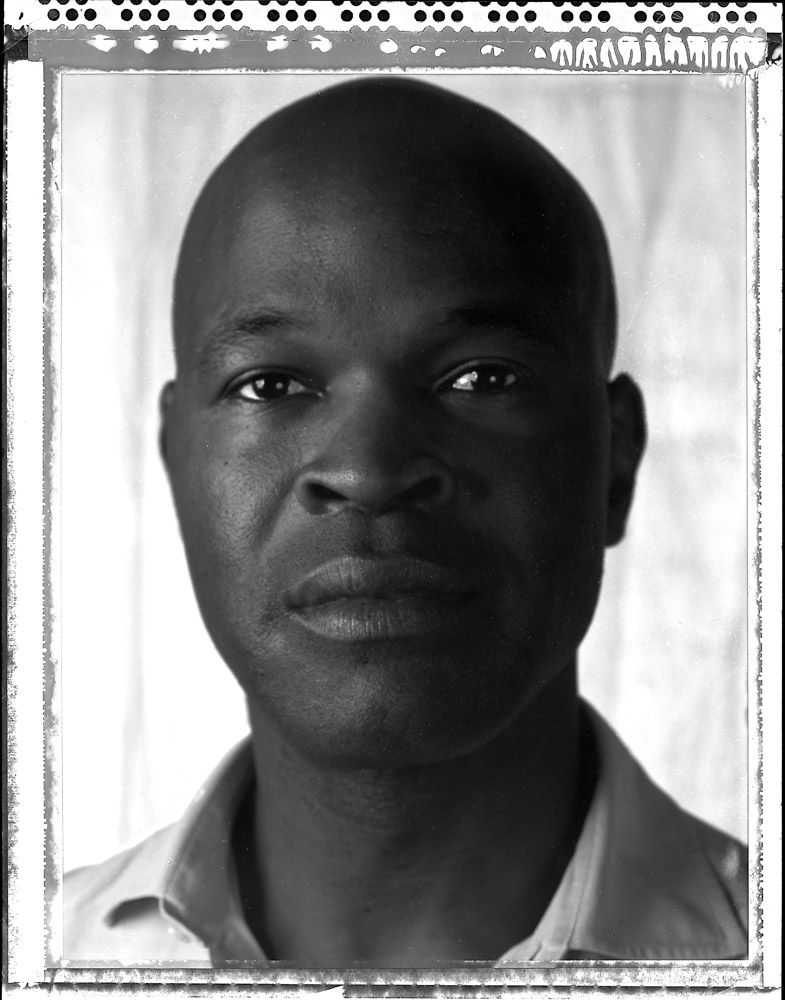
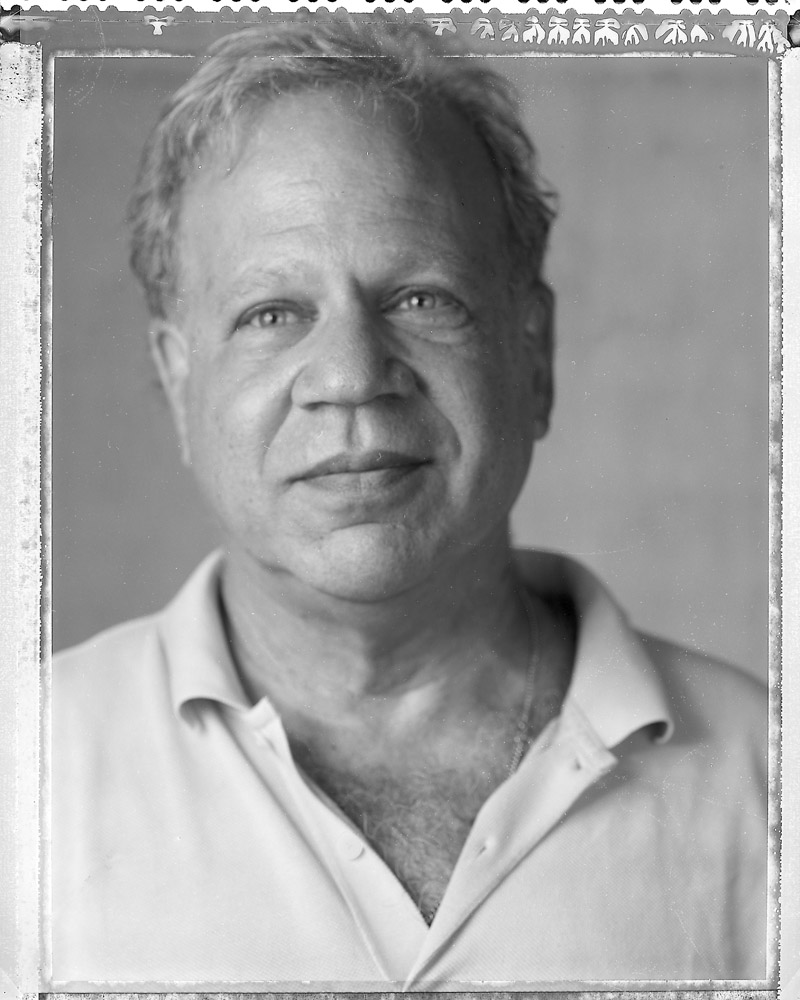
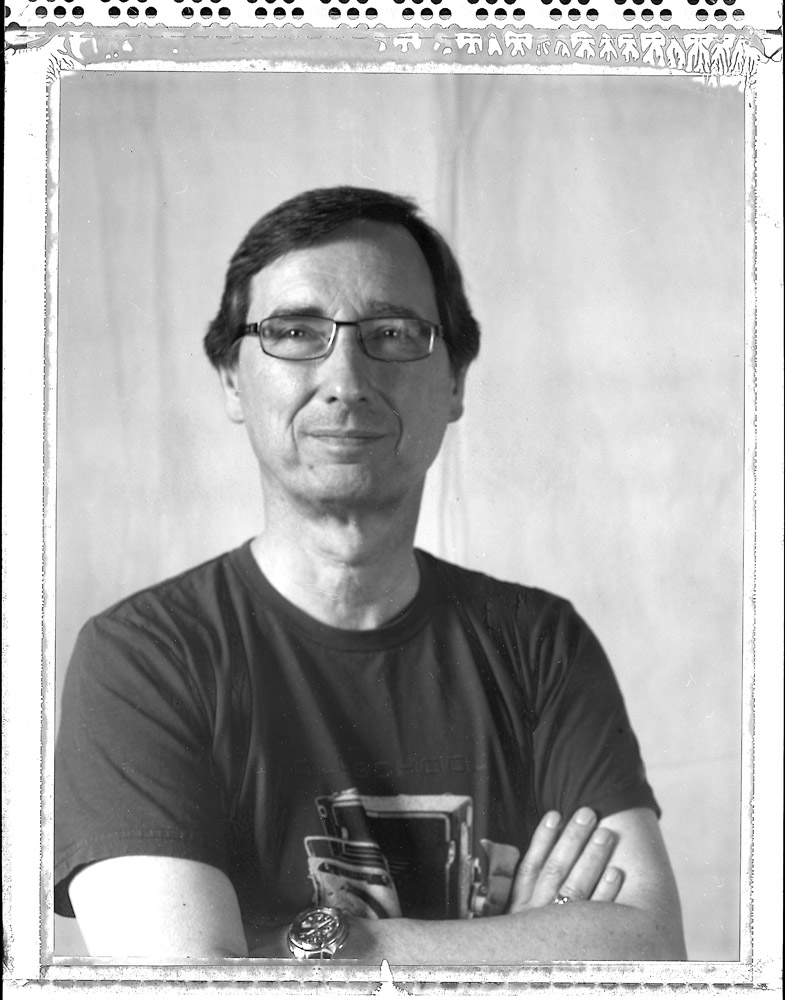
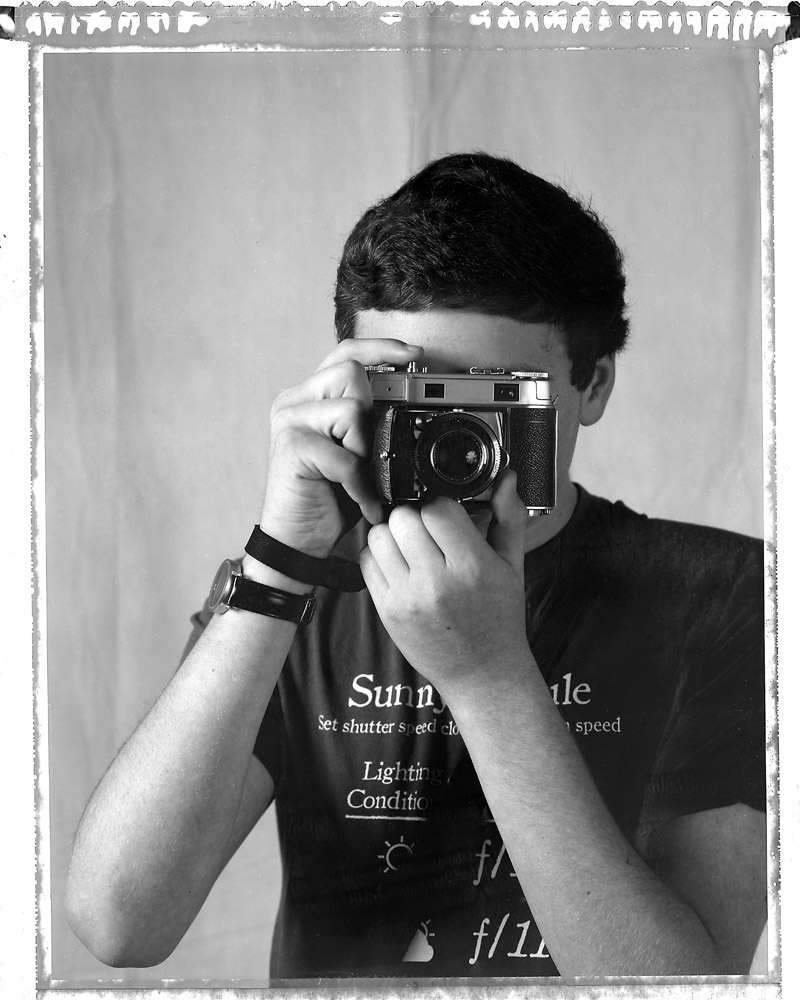
This weekend was the next-to-last session of the Intro to Large Format Photography class I’m teaching at Glen Echo. As a treat, I broke out some of the last remaining sheets of Polaroid Type 55 I have in my personal stash. We had a lot of fun setting up portraits and posing for each other. One of my students even brought along his 6×17 panoramic camera and took a couple frames of all of us in the studio together – a couple were serious, and one was very silly (I gave someone next to me bunny-ears).

Sean L.
Sean L.

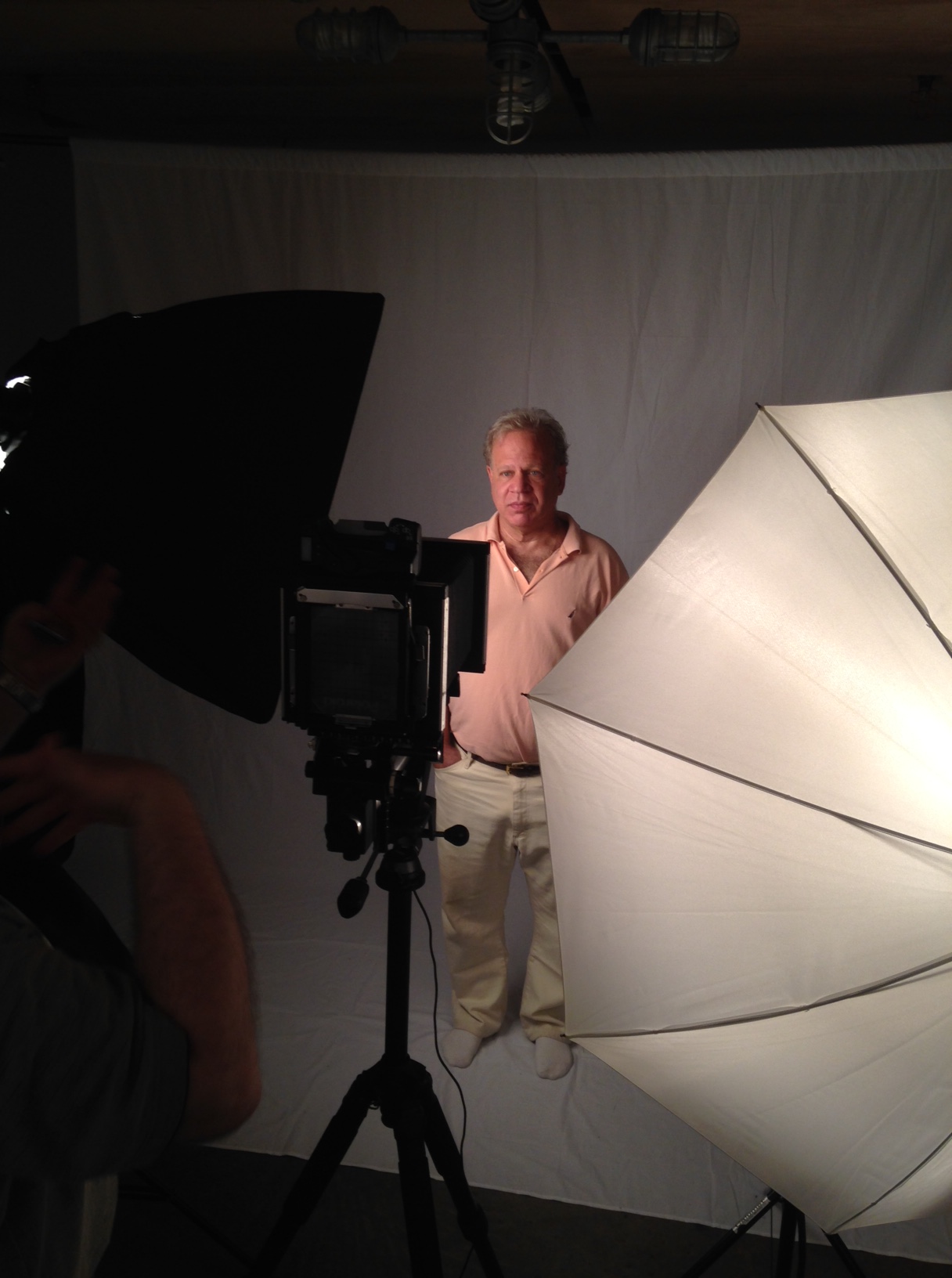
We covered the fundamentals of not only how to use a view camera for portraiture (movements – not many – focusing, bellows extension factor, lens selection) but also basic studio lighting. Given that we were limited on time and had lesson objectives to cover, I dictated the lighting setup with just a main and a fill, driven off my Calumet Elite 2400 W/S unit. It’s a lot of power for just 4×5, but I wanted to give people a real studio experience (that and the moonlights I would have used that are at the school are at the moment buried in the storage closet under dozens of boxes from the exhibits currently hanging in the gallery space).

Dean M.
Dean M.

We rigged a softbox on the main light and an umbrella on the fill. The softbox was camera left, and the fill was beside the camera. I used a 240mm Docter Optics f9 Apo-Germinar as my lens because the focal length is a nice one for studio portraiture (not too long, but not too wide either), it’s mounted on a lens board to fit my Sinar (some of my other portrait lenses are on different lens boards), and the shutter has good working flash sync (some of my other portrait lenses are in archaic shutters that don’t have reliable flash syncs – and yes, I’ve had them overhauled but they still don’t work 100% of the time). f9 is a bit dim for a traditional portrait lens, but I think this one produced outstanding results (further confirmation that that lens was a phenomenal buy and well worth every penny).

Anthony R.
Anthony R.

Polaroid Type 55, for those who are unfamiliar, was an instant film that produced both a positive print and a re-useable negative. Artists have loved the negatives not only for the incredibly fine grain and sharp detail, but for the artifacts at the edges that the Polaroid process produced. It hasn’t been made since 2008, so any Type 55 anyone is using is old stock. There is hope on the horizon for a replacement as a group called “New55” is creating their own improved version. One of the challenges of the original Polaroid Type 55 was that the negative film and the print were not equally sensitive, so you had to decide if you wanted a good print or a good negative – a good print gave you an underexposed negative and a good negative gave you a washed-out print. New55 will have one advantage over the old stuff – the instant print and the negative will be speed-matched so you won’t have to expose for either a good print or a good negative.

Ari G.
Ari G.

I can tell from the negatives that my Type 55, which outdated in 2006, is starting to get a little long in the tooth, as they have begun to lose some contrast. I’ve tweaked it a fair bit in Photoshop to get these negative scans to look good. I’ll try printing them in the darkroom and see what I can do with them – they may print much better than they scan.

Glen Echo Intern
Glen Echo Intern

Here are some behind-the-scenes shots, taken by one of my students.

Dean M, Posing
Dean M, Posing
Sean L, Polaroid Print

Intro to Large Format Photography @ Glen Echo – Sold Out!

I have to toot my own horn a little today – my spring session of Introduction to Large Format Photography is sold out! I’m even adding three additional seats today to accommodate the folks who contacted me yesterday about registering. The class will cover the basics of how to use a large format camera. We’ll get an understanding of the camera itself – the various types of large format camera, the components of the camera, how to use it, and especially in this digital day and age, WHY to use it. To paraphrase Edward Weston’s comment about color photography: “There are things you can say in large format that you can’t say in anything smaller”. We’ll have specific lessons on film handling and processing for large format, portraiture, studio/tabletop photography, and architecture.

Glen Echo Midway
Glen Echo Midway

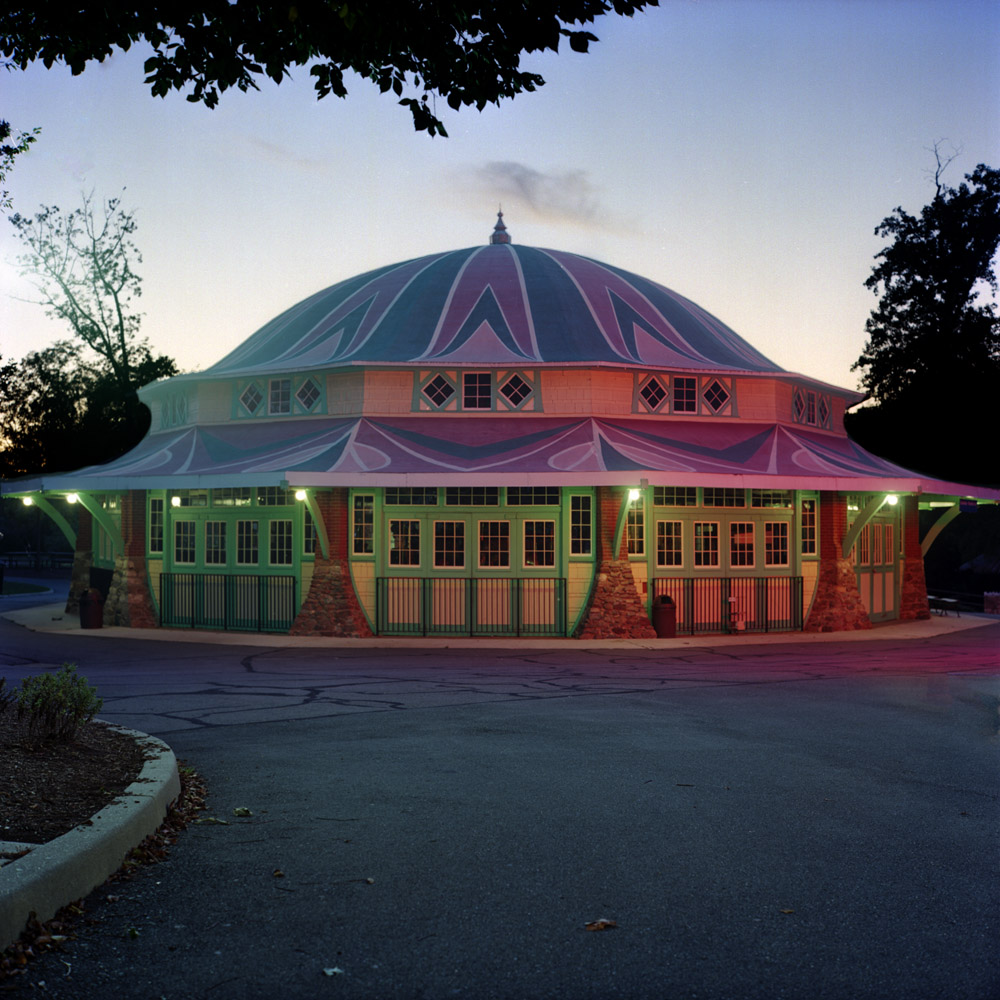
I teach at Photoworks Glen Echo, a non-profit photography education center in Glen Echo Park, which is operated by the National Park Service. Glen Echo Park is a former amusement park a few miles away from downtown DC in Glen Echo, Maryland on the banks of the Potomac River. Originally envisioned as a suburban housing development for the elite of Washington at the end of the 19th century, the only resident to ever build and take up residence was Clara Barton. It became a Chataqua meeting center, and then in the early years of the 20th century, an amusement park. It rose to its peak by being at the terminus of a street car line running out from Georgetown (a neighborhood in DC and formerly a separate incorporated city in itself). The park endured changing demographics and evolving tastes, but closed up shop in 1970. The US Park Service took over and converted it into a community art center where people can come to learn pottery, glassblowing, cast and fused glass, stone carving, photography, painting. There is a children’s dance theater and puppet theater, and the 1902 Spanish Ballroom has square, contra, ballroom, and swing dancing events practically every night of the week. The centerpiece of the park is now and has been since its installation in the 1920s, the Dentzel Carousel which is freshly restored and fully operational. The carousel offers rides daily from May to October.

Dentzel Carousel, Glen Echo, Sunset

Photoworks is the photography center, located in the Main Arcade building. This year marks their 40th anniversary. They offer a full range of classes from introductory photography for children and teens to advanced classes on topics such as The Long-Term Photo Project, iPhone Fun (getting the most of mobile device photography), Photographic Editing and Presentation, and Platinum/Palladium Printing. Photoworks has a full wet darkroom for film processing and black-and-white printing up to 16×20 inches, a fully equipped digital darkroom with Macintosh workstations, Epson flatbed scanner and Nikon 35mm dedicated film scanner, and Epson printers for up to 24″ wide prints.

Photoworks 40th Anniversary Gala and Fundraiser

Photoworks 40th Anniversary
Signature Gala

Saturday
February 21
8-10 PM
Photoworks Gallery @ Glen Echo Park

Silent Auction and Photography Raffle
Champagne and Desserts
Black and White Attire Suggested

Come Celebrate the Photoworks Community!

Step 1: RSVP lgmphotoworks@gmail.com
Step 2: Purchase your Gala Ticket

2 Ticket Options
Platinum Gala Ticket
$150 ticket admits 1 and includes SIGNATURE PHOTOGRAPH

Silver Gala Ticket
$50 ticket admits 1 person to the event

Click Here for Ticket Purchase

Final Notes:
1. Space is limited!
2. We recommend that you purchase your tickets before Feb 7th
3. Visit www.glenechophotoworks.org to purchase tickets
4. RSVP lgmphotoworks@gmail.com to save your spot

Questions? lgmphotoworks@gmail.com
Visit us on facebook at glenechophotoworks

I will have a piece in the fundraiser:

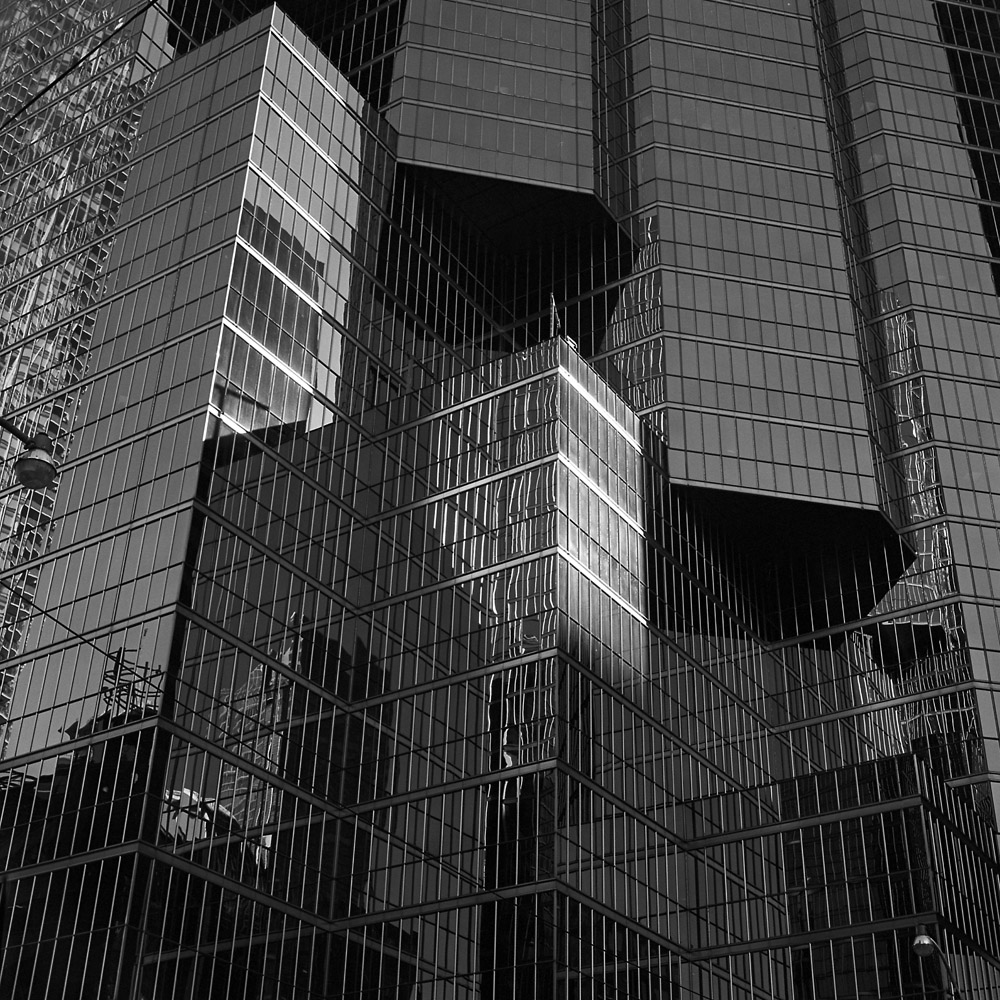
Two Streetlamps, Reflections, Glass and Steel
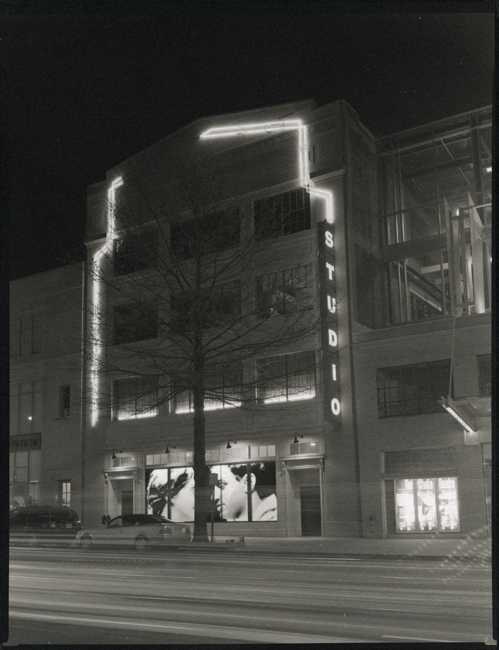
Romeo & Juliet

Oriental Seagull VC-CLS Cold Light enlarger head manual

I think I mentioned this previously – there was a man here in DC who was getting rid of his darkroom and contacted the school where I teach about donating it. He also sent the inquiry out to all the faculty. One of the items he was disposing of was an Oriental Seagull VC-CLS variable contrast cold light head that fit a Beseler 45Mxx series enlarger. I happen to have a Beseler 45-series enlarger, so I told him I would be interested in the head. At the time he delivered it to me, he didn’t have the owners manual with it, but said he thought he still had it and would get it to me if he found it. Being the skeptic that I am about such things (I know myself and my best of intentions), I started searching online for a copy. Nobody had one. I had several requests, though, from folks saying “if you do get it, could you please please pretty please with sugar on top make me a copy”. A few days later, I got an email from the man asking me for my mailing address – he found the manual and would mail it to me. Now I have it and I’ve made a PDF file out of the manual. I’m posting it here for folks who need a copy.

Seagull VCCLS Manual

As a side note, I spent half of Saturday this past weekend unpacking and cataloging the darkroom equipment he donated to my school – 16 boxes in all, including some beautiful enlarging easels, a 16×20 print washer, an Omega D-series enlarger with 35mm, 2 1/4 square, 2 1/4 x 2 3/4, and 4×5 negative carriers, and a Beseler 45-series enlarger complete with Adjus-table (a specialized table made to fit the enlarger that would allow you to drop the baseboard so you could make bigger (20×24 or even larger) prints without having to flip the head and do wall projections). Every darkroom accessory you could think of was in this bundle, including the empty 1 gallon and 1/2 gallon chemical storage bottles. The bottles, and the darkroom trays, and everything else for that matter, was packed in styrofoam peanuts and bubble wrap sufficient to protect it from a nuclear apocalypse. If I don’t see another styrofoam peanut for a year, it will be too soon.

Upcoming Course – The Narrative and the Male Figure

An introductory video discussion about my upcoming class at Glen Echo Photoworks. The course runs on Fridays, from September 19 to November 7, from 7-10pm. The concept of the course is to introduce students to the use of the human figure in narrative photography – telling a story with pictures whether it is a single image, a diptych or triptych, or a series. We will cover the historical use of male figures in narrative photography, from Hippolyte Bayard’s nude self-portrait as a drowned man in protest of having withheld his announcement of the photographic process he invented so that Daguerre could go first (and get all the credit and financial rewards that came from being first) to modern photographers like John Dugdale, Arthur Tress, and Duane Michals. We will also look at the use of the male figure in relation to questions of gender, sexuality, and identity. To register for the course, click here – The Narrative and the Male Figure

Upcoming classes at Glen Echo Photoworks, Glen Echo, Maryland

I’m offering three classes coming up this fall/winter at Glen Echo Photoworks, a center for creative photography and photographic education at Glen Echo Park in Glen Echo, Maryland, just outside Washington DC.

The Male Figure in Narrative Photography 9/19 – 11/7/2014 Fridays, 7-10pm

Go beyond standard figure studies. Research historical context and learn to use the male nude form to tell a story in a series or just a single frame through posing, lighting, using props and capturing emotions. What is “narrative photography”? Narrative tells a story either in a series, or a single image. From the earliest days, photographers have been using the male figure to tell a story in their work, be it as a stand-in for himself (Hippolyte Bayard) to express his response to criticism, to confronting eroticism and gender confusion in the world of Latin American bullfighting (Reuven Afanador) or a tool to process inner personal anxieties (Connie Imboden). This course will examine the use of the male nude in narrative photography. We will use examples from historical and contemporary photographers as a background to inform and inspire our own work. Students will be encouraged to create both single image and serial narratives to take their work beyond mere figure studies. We will also discuss issues relating to gender and sexuality with regards to the use of the male nude. We will cover understanding of the male form, posing, basic lighting, the use of props, and basic nude model etiquette. Students will be expected to know how to use their cameras, light meters, and how to process and present their own images. Weekly research topics will be assigned. There will be three shoots with one or more models, plus classroom instruction and discussion sessions. $350, plus $150 model fee.

Introduction to Platinum/Palladium Printing – 11/8 – 11/9/2014 (Saturday/Sunday, 10am-4pm, two day intensive weekend workshop)

Platinum/Palladium is one of the most beautiful alternative processes. This course demystifies the process and teaches how to make good negatives, select papers, coat emulsions, and process prints for archival stability. $350, plus $100 materials fee, payable to the instructor.

One Camera, One Lens – Learning to See 1/15 – 3/7/2015 (Thursday 7-10pm)

Too often our gear keeps us from making better pictures. Photographers often fall into the trap of thinking that more gear is the solution to every problem, when in fact it can be a crutch or a burden. This course teaches how to simplify and focus our creative vision so the camera gets out of the way and becomes a tool not an obstacle. Students will use a camera of their choosing, and a single lens. They will select a project in the first class and follow through on that project, presenting images for critique each week. Students choosing to work with wet darkroom techniques will be expected to know how to process and print their own film; students working digitally are expected to have a working knowledge of their camera and digital image processing tools of their choosing. No changing lenses allowed! $350

The courses will be posted soon to the website, but in the meantime if you want to find out more about Photoworks, please check out their website and their Facebook page-

http://glenechophotoworks.org

https://www.facebook.com/glenechophotoworks

Photoworks is one of the few facilities with regularly scheduled open darkroom times, and at $8/hr for wet darkroom (bring your paper, we provide the rest!), it’s hard to beat!
New teaching tool, and upcoming class

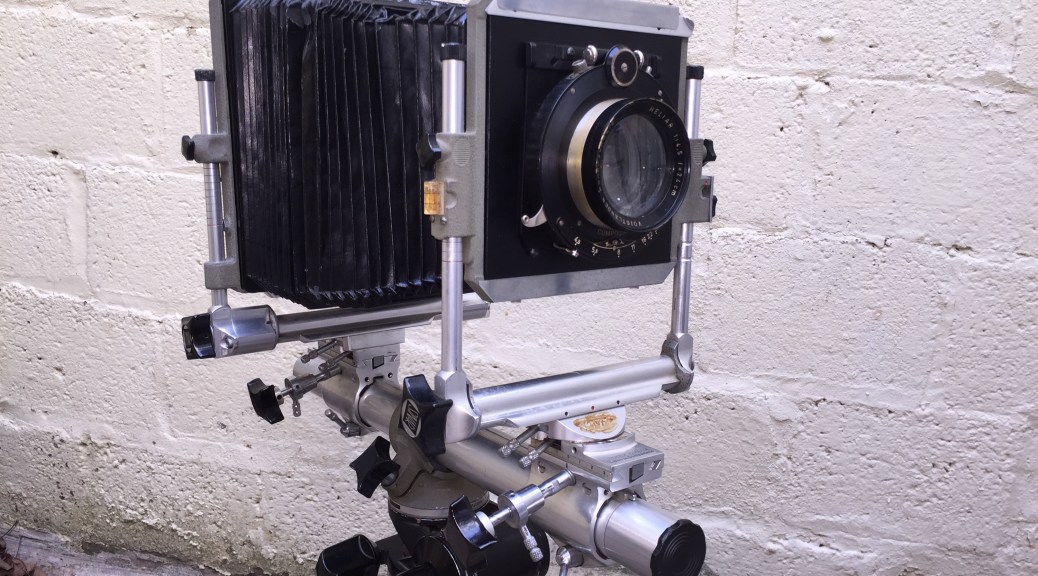
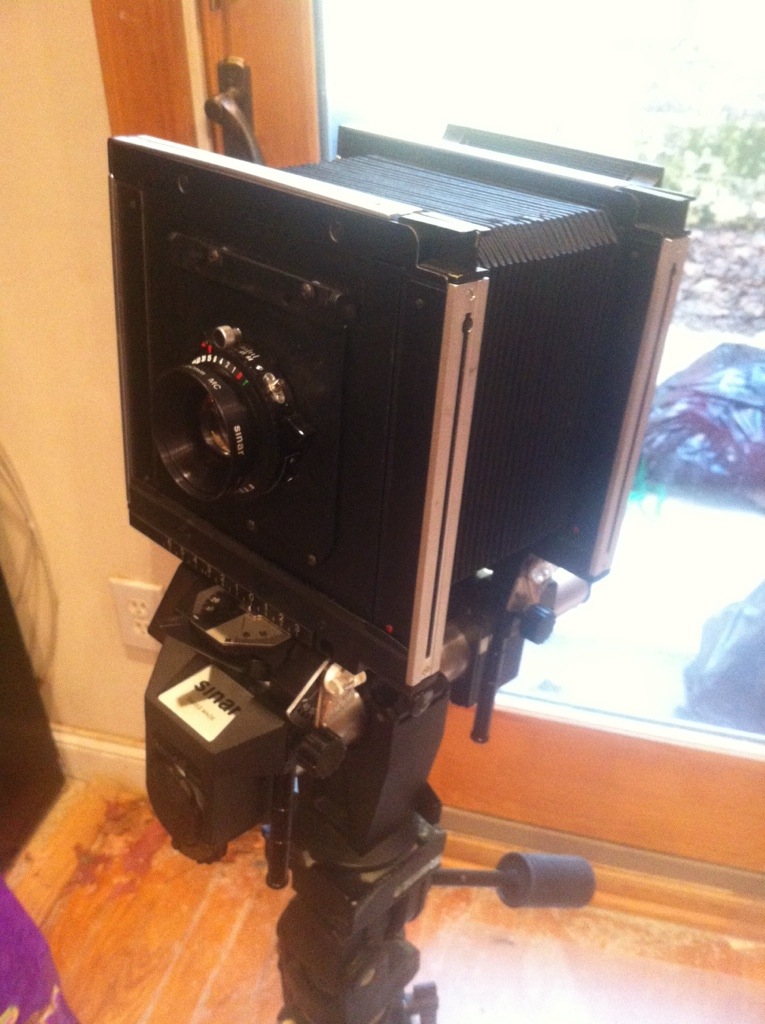
I got my new teaching tool for my Introduction to Large Format photography class. It’s a Sinar F 4×5. Sinar cameras were the first modular large format system with standardized components that would let you build 4×5, 5×7 and 8×10 cameras on a common architecture. While the F has certain limitations (base tilts, friction driven movements), its a fantastic entry-level camera and very light-weight for a studio monorail camera (about 7lbs).

20140323-184708.jpg

I’m running the course starting April 5 through May 10. The course covers camera handling, film loading and processing, using movements for perspective and depth-of-field control. Individual modules will include landscape, portraiture, architecture and tabletop shooting. For more information check out the Glen Echo website –

Photoworks Course Listings

to register, click –Register Here

I got the camera at KEH Camera online. They have a very limited selection in inventory at any one moment, but their prices are excellent. The Sinar F is a good starter camera and one I highly recommend for students looking to get started in large format. There are lots of other good cameras, of course, and it all depends on what you need from your camera – for some people, a field camera may be a better solution. My primary large format camera is a Canham field camera because I like to travel with it, but it has it’s own limitations (fixed bellows length, limited movements). I’ll cover all the quirks of large format cameras in the class, so to learn more, sign up!

PhotoSlam 2013 – part of FotoWeek DC 2013

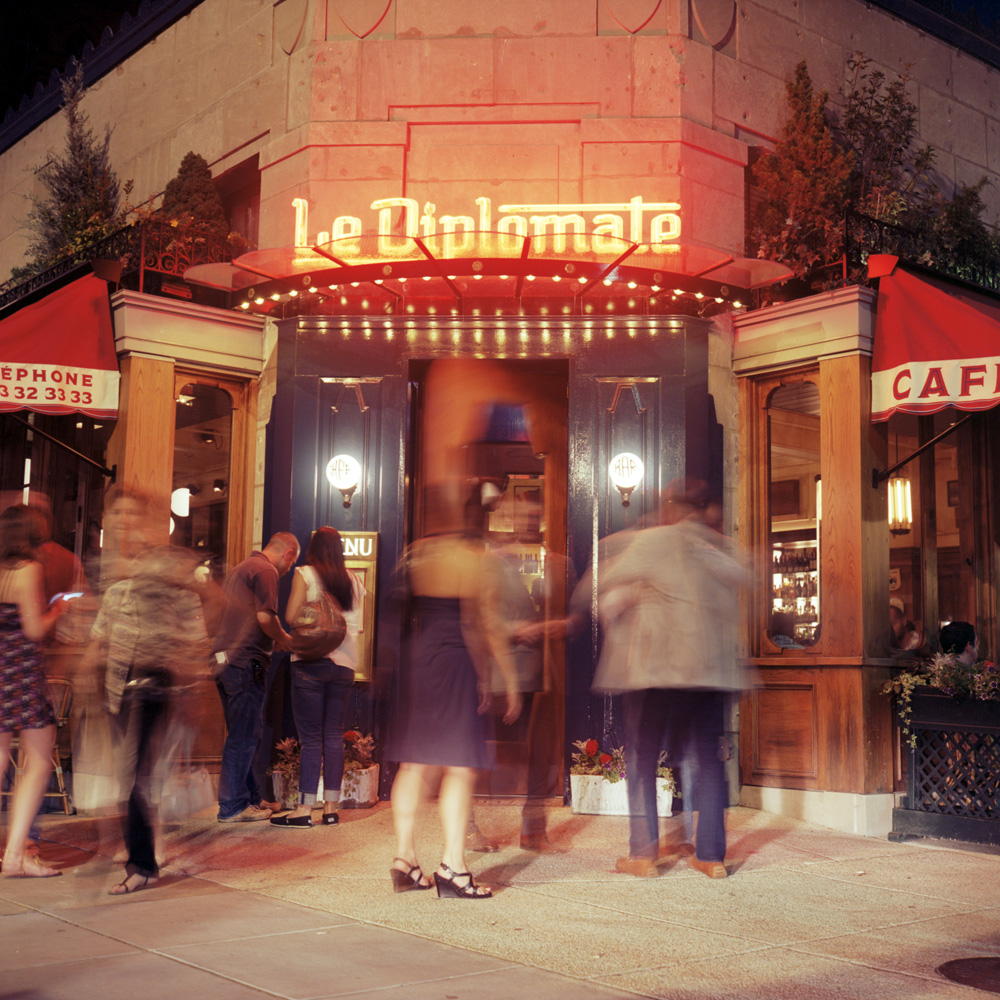
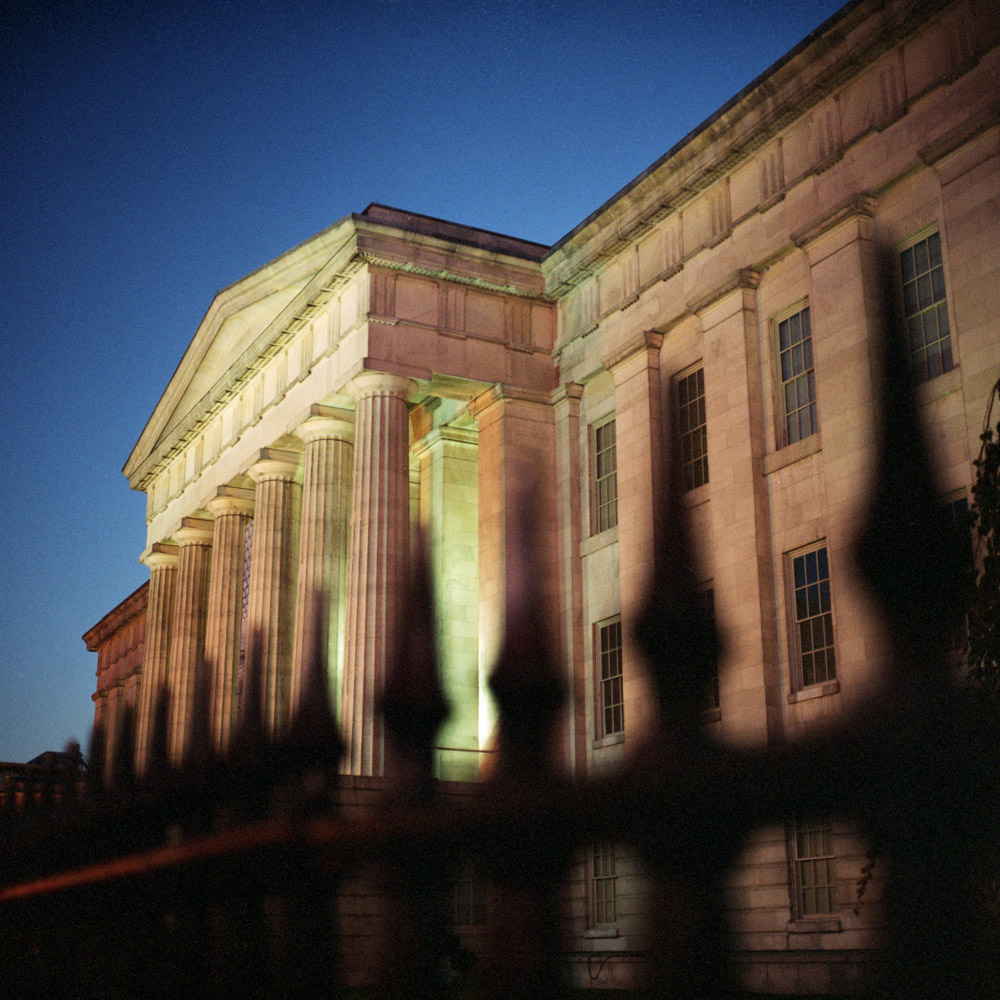
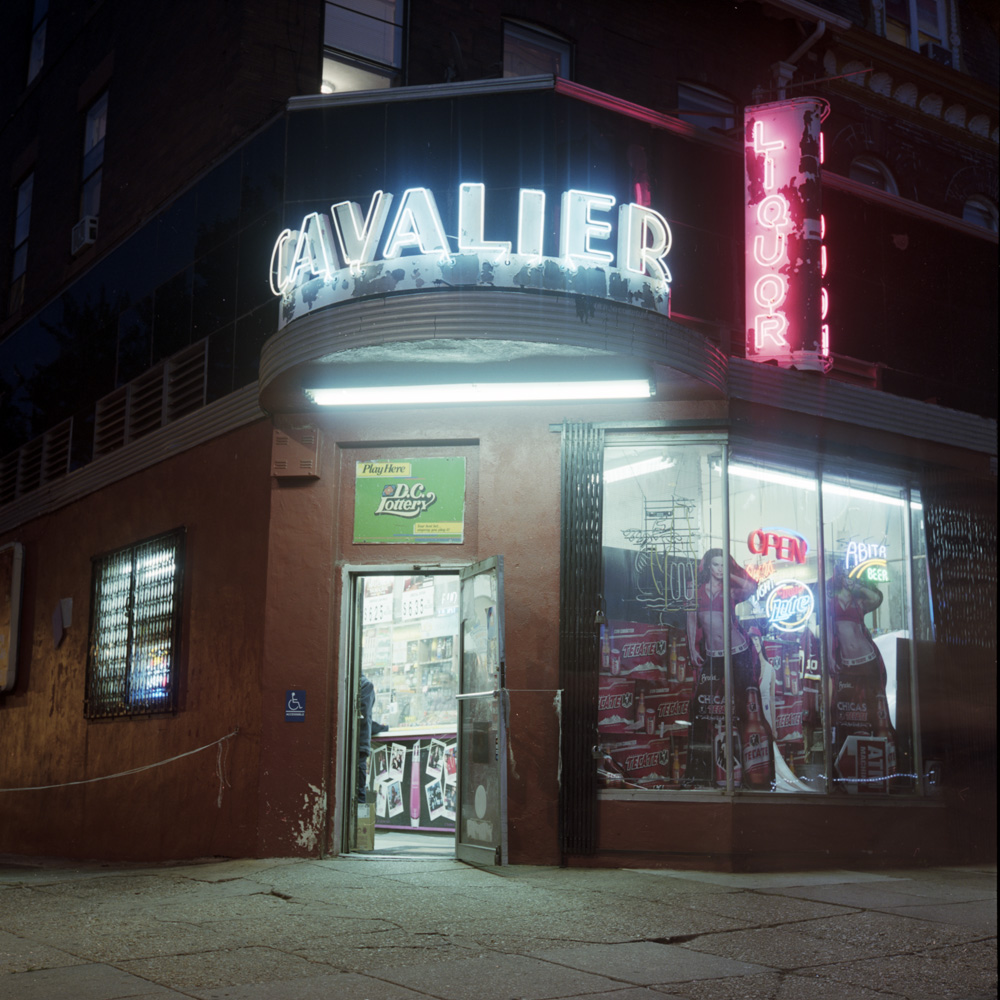
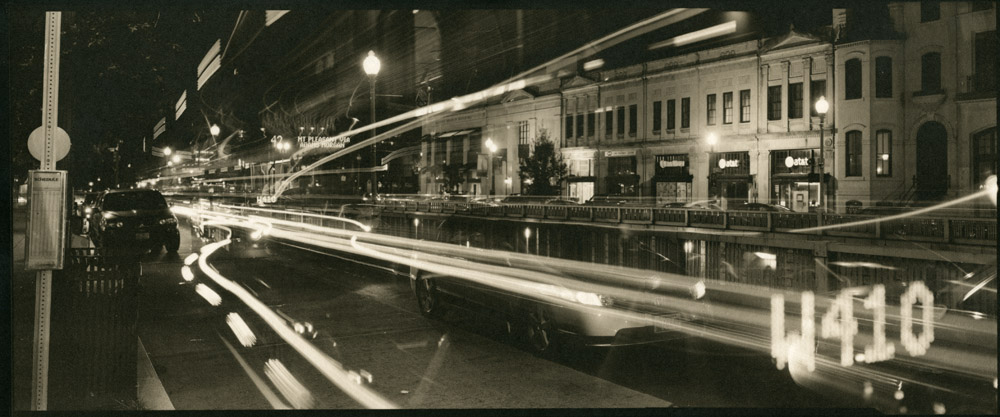
I submitted six images to PhotoSlam, one of the events of FotoWeekDC 2013, and have been accepted! PhotoSlam is like a poetry slam, but with photos. Photographers put their work up on a projector screen, and the audience votes. PhotoSlam is curated, so it’s not just show up with your thumb drive and take a turn – you have to submit your five piece portfolio in advance, plus a single “best-of” image. The prize is a show of your work at PhotoWorks next fall. PhotoSlam will be held at Busboys and Poets, 14th and V Streets NW on Sunday, November 10. The show starts at 8pm, but get there early as the room fills FAST (it is recommended that you be in line at 7:30). There is a requested $15 donation at the door. Please come out and support me if you can make it, I’d love to see you all there. And if you do come, please let me know! For those who can’t make it, I’ll be showing work from the DC at Night series that’s (still!) up on the wall at Mad Momo’s Restaurant.

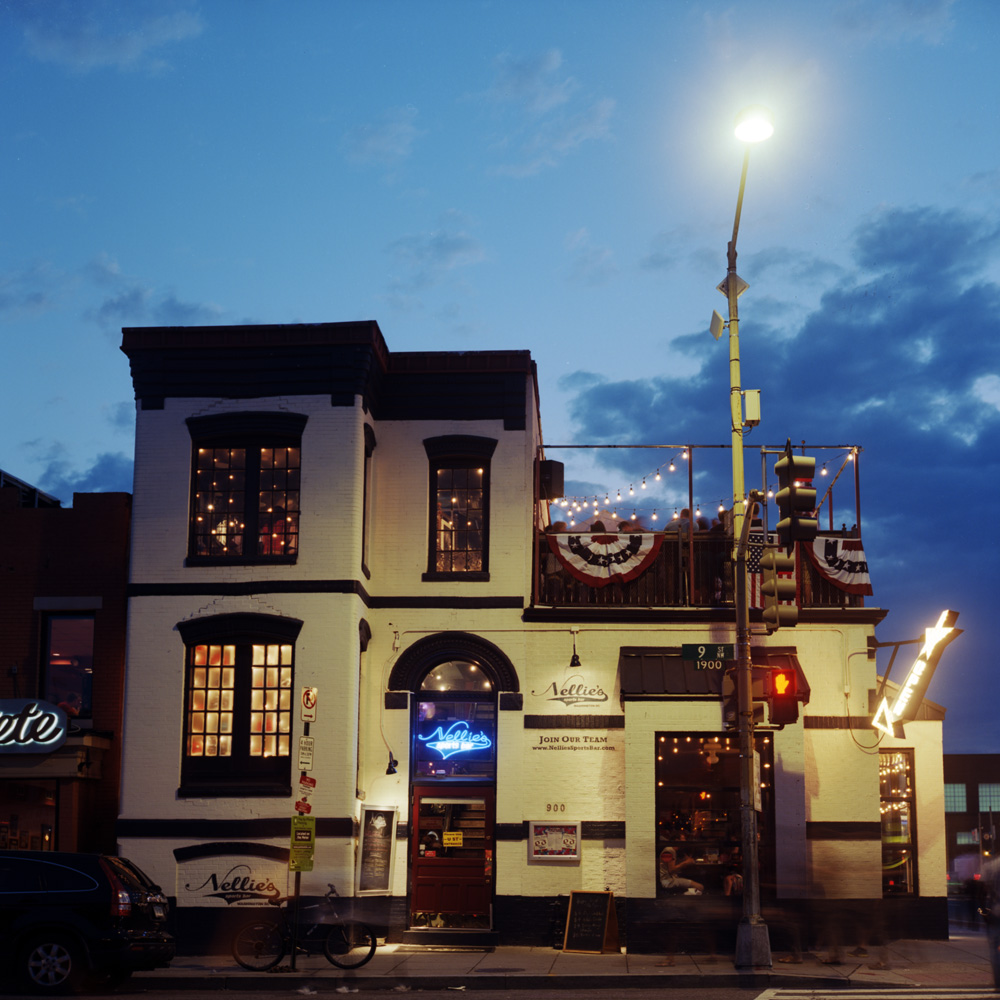
Nellies Sports Bar, From 9th Street
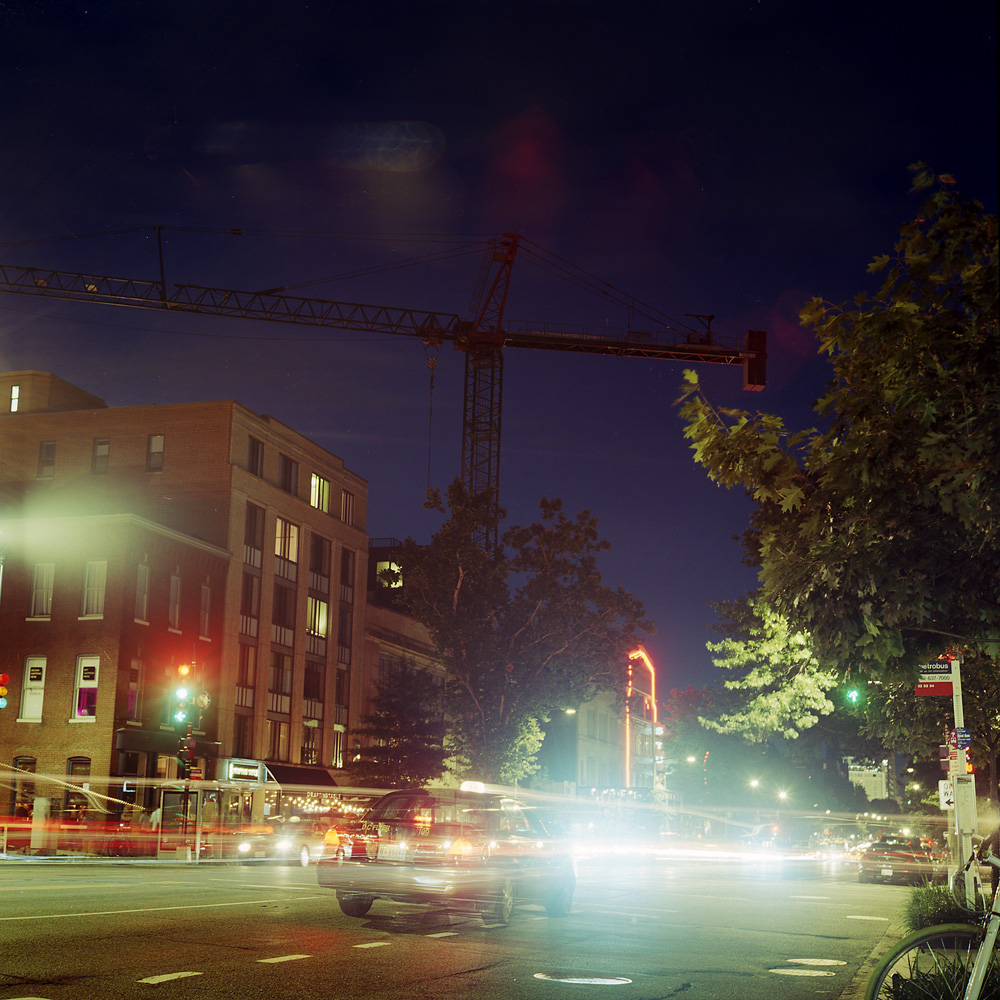
Crane, Traffic, 14th Street, Dusk
Le Diplomate
Le Diplomate
National Portrait Gallery, Twilight
Cavalier Liquor
Cavalier Liquor

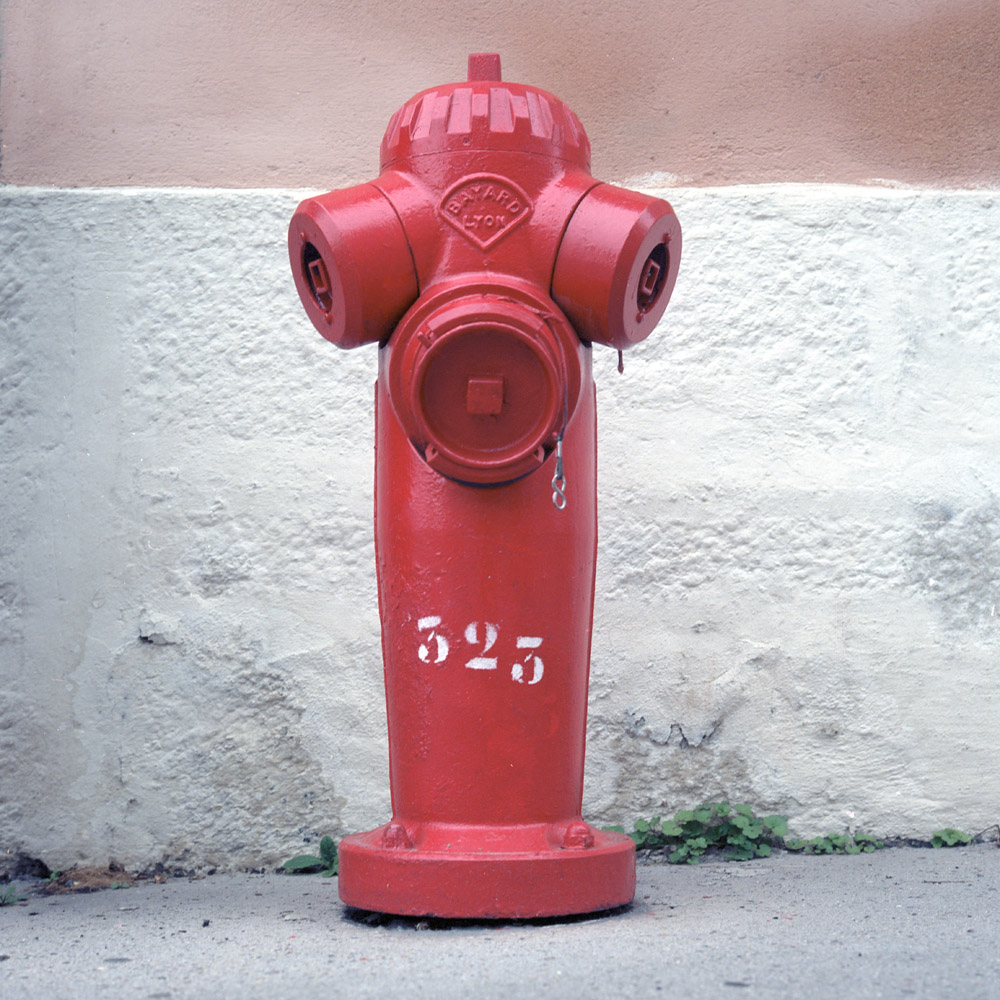
And the “best of” single image that I’m submitting is:

Fire Hydrant, Chalon-sur-Saone

More student work from Advanced Topics in Platinum/Palladium

Trolley Stairs, Glen Echo Park

This is a blended platinum/palladium print (60% platinum, 40% palladium) print, on Bergger COT320 paper. This was by a student from my Intro class, but I reprinted it for this session (the student left the negative behind after the Intro class, and I happened to really like the shot anyway). This one was coated using a glass rod as opposed to a brush, to demonstrate the difference in the coating technique, and the final appearance of the print.

Crystal Pool, by Patrick Brown

This is a palladium print on light Kozo paper, by Patrick Brown, one of my students in Advanced Topics. He was also in my Intro class. It’s so nice to get follow-on students so you can see their progress!

Kozo paper is a Japanese paper made from tree bark, and it is surprisingly strong for as delicate as it is – this is perhaps a 90 lb paper. It does have a tendency to dissolve in aqueous solutions, but if properly masked when developing, the image area can be preserved, even if the edges do get fringed a bit. This is a perfect example. I included the paper margins to show more clearly what the paper texture looks like.

We had some challenges this class session – the original idea was to try out some different paper types, and I had obtained a sampler of several kinds. We started the morning with Stonehenge, which was supposed to be a good paper, but something was dramatically wrong with the batch we got, as we were making 30 minute exposures and still coming up weak and flat. After this is over, I’ll get a little more for myself and try pre-acidifying it to see if that helps, but no mention of acidification was made in the sample kit and I couldn’t find any reference to acidifying it online. Fortunately we didn’t waste too much time before figuring out it was the paper at fault and not the chemistry, and life moved on.